Winter of Cagney: Angels With Dirty Faces (1938) (With A Big Spoiler)

James Cagney was only 5 foot 5 inches tall, but he commanded the attention and wielded the presence of a giant. When he walks on screen in a movie everyone focuses on him. He has that confident swagger, that “don’t mess me with me” attitude you can’t look away from.

Every movie I’ve watched this winter for my Winter of Cagney marathon/feature (whatever you want to call it) has only solidified for me what a brilliant actor Cagney was. Were there times that Cagney was Cagney no matter the role? Yeah. Sure. Happens with any actor.

But did that subtle smirk and those heavy-lidded eyes often bring a smile to my face because I knew some sharp or smart-mouth comment was about to come out and I didn’t care if he does it every movie? Absolutely.

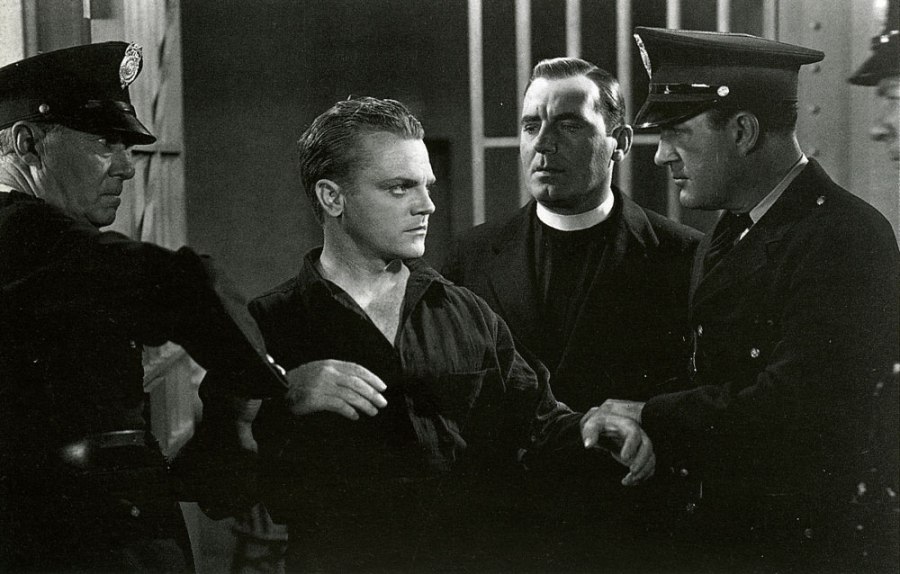
I had to wait two months to watch Angels With Dirty Faces with him, Pat O’Brien and novice at the time, Humphrey Bogart, and had to buy it on DVD but it was worth it. The movie wasn’t what I expected and part of me wanted it to end differently but ultimately, it was a movie about loyalty and friendship between two childhood friends and how even when you think a person can’t change or do the right thing they will for those they love.
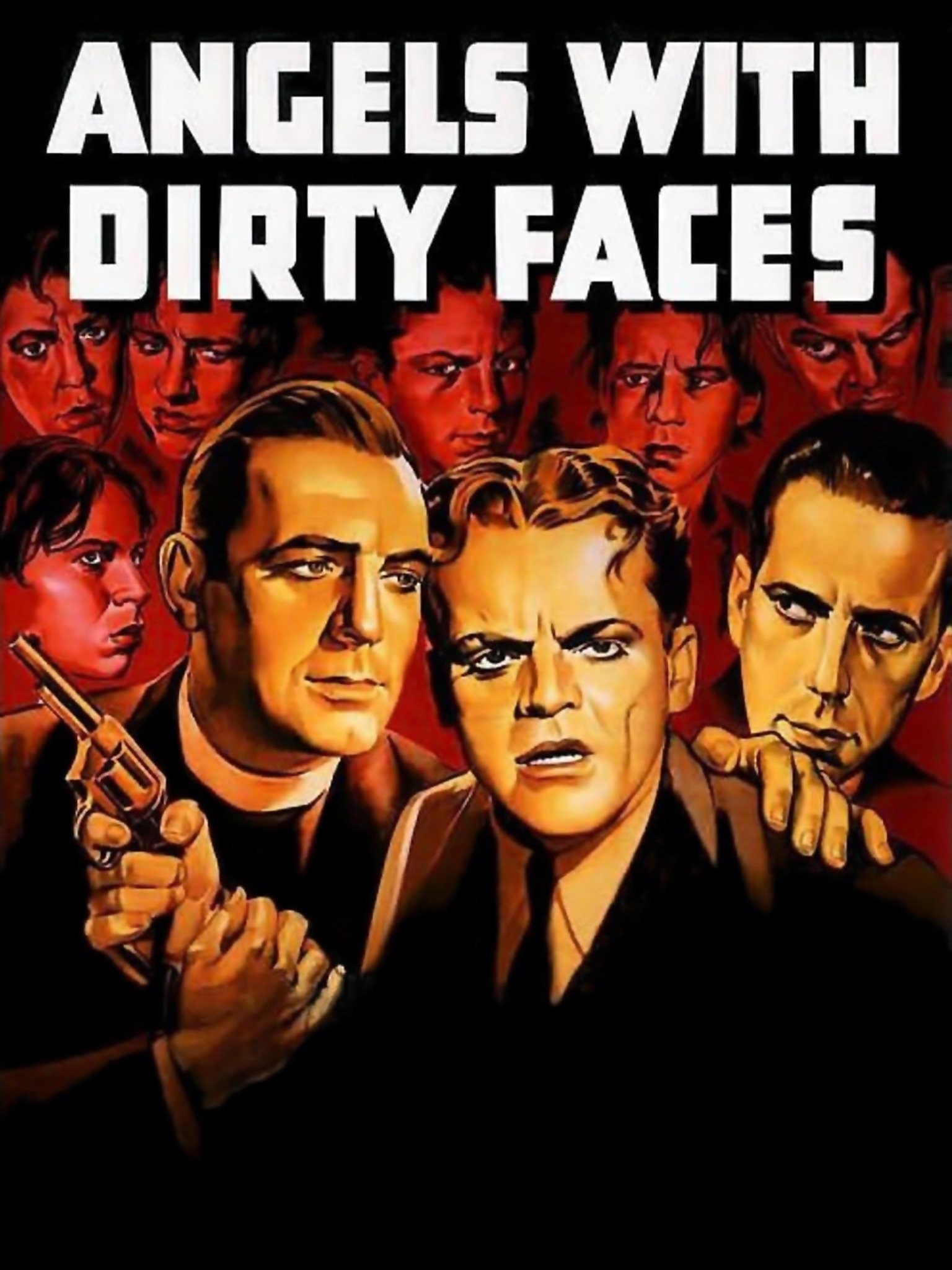
That’s why the ending had to be what it was.

It was hard, but it was necessary.

Enough about the ending for now, though, let’s talk a bit about the beginning of the movie and what it is all about overall.

Rocky Sullivan and his best friend Jerry Connelly have gotten into crime at a young age. They try to rob a railroad car and are caught. Rocky ends up getting caught and sent to reform school while Jerry escapes.

This sends the two down different paths, and 15 years later, Rocky is a hardened criminal who just got out of jail for armed robbery, and Jerry has become a priest.

Rocky comes back to the old neighborhood, but not for good reasons. He’s back for the $100,000 his crooked lawyer, Jim Frazier (Bogart), said he’d hold for him until he got out of jail, as long as he took the full blame for the robbery. Frazier helped set up the robbery and is in control of a lot of the crime world, keeps a lot of criminals out of jail, and also blackmails city officials and law enforcement.

Jerry is thrilled to see Rocky, but has no idea how deep he’s still into the crime world.
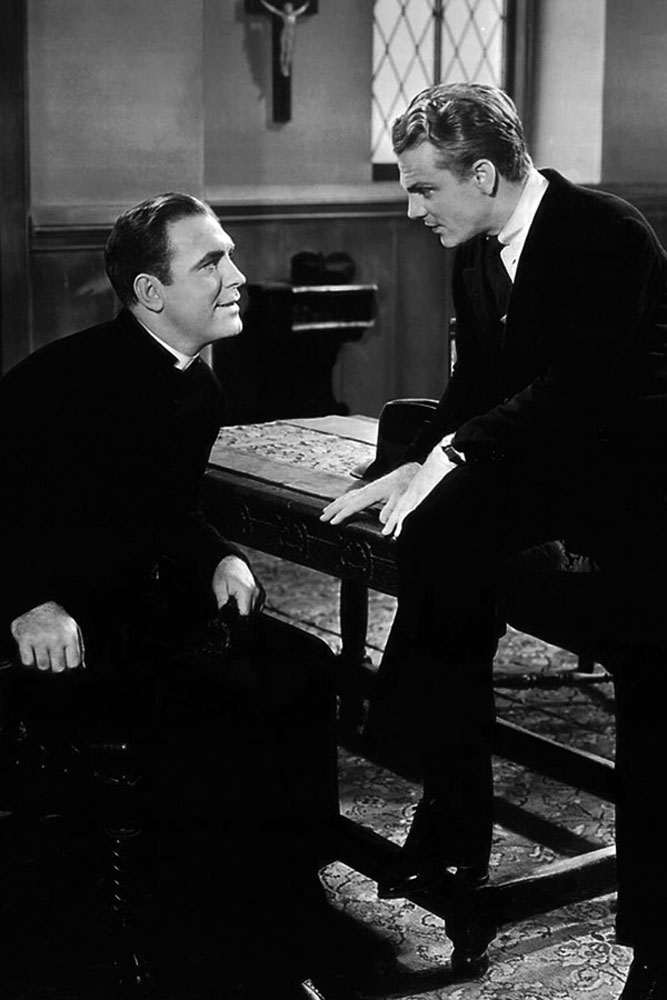
He encourages him to turn his life around and even lets Rocky get involved with mentoring a group of boys known as The Dead End gang.

Here is something interesting my husband read about the “gang.” They were actually an acting troupe who didn’t only appear in this movie, but started on Broadway in a play called Dead End in 1935. From there, producer Samuel Goldwyn brought them to Hollywood to turn the play into a film and then their popularity grew until they were making movies under various names, including the Little Tough Guys, the East Side Kids, and the Bowery Boys, until 1958.

Unfortunately, Jerry learns the hard way that Rocky has not turned his life around and begins a campaign to expose Frazier, Rocky, and everyone who is corrupt in the city.

What will result is two old friends both wanting to save each other from deadly fates.

This aspect of the film is what makes this movie more than your average gangster film. It becomes a psychological study on what two good friends will do for each other.

The film might not have become this if it weren’t for the Hays Code, which was a code set in place in …. By the film industry that required movies to not allow a variety of things to be seen, including glorification of criminals, violence, or sex.

No movie was to make the audience sympathetic to a criminal under the code.
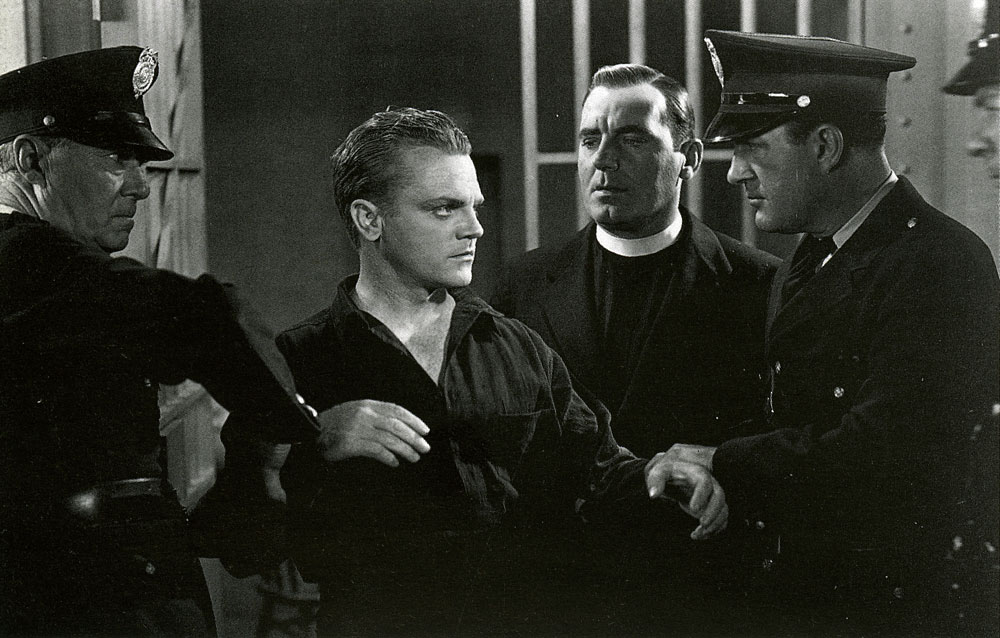
That’s why this movie ended the way that it did and because I wasn’t sure if some of you would want to watch this film, I wasn’t going to show how it ended, but I feel like I have to talk with someone about this ending so this is your WARNING! that I am going to discuss the ending.

Skip this section if you don’t want to know what happens!

Are you ready?


Okay….

Here goes…

Rocky honestly might have been able to go straight or only serve a little time for one of his crimes after he got out of jail but when he overhears Frazier and another criminal say they are going to gun Jerry down to stop him from trying to expose them, Rocky takes matters into his own hands.

He guns them both down, runs off, and is cornered by the police in a warehouse.

Long story short, Jerry convinces him to come out, and Rocky goes to jail for murder.

He doesn’t receive a pardon from the governor, so he has to go to the electric chair. Jerry sees that the boys from The Dead End gang see Rocky as a hero, and he knows that the media is going to be there for the execution (what a different time) so he asks Rocky not to be strong at the end. He asks him to, instead, going yellow — act like a coward. He wants Rocky to look weak at the end so the boys say, “Aw man. That guy was a loser. Being tough didn’t get him anywhere. He died a criminal and a coward. I don’t want to be that way.”

Rocky refuses. He isn’t going out that way and he tells Jerry that.

There is this long walk down a dimly lit hallway (the cinematography is just great here by the way) and we viewers are wondering the whole time what choice Rocky is going to make. As he walks into the room with the electric chair he breaks the fourth wall a bit by staring us down.
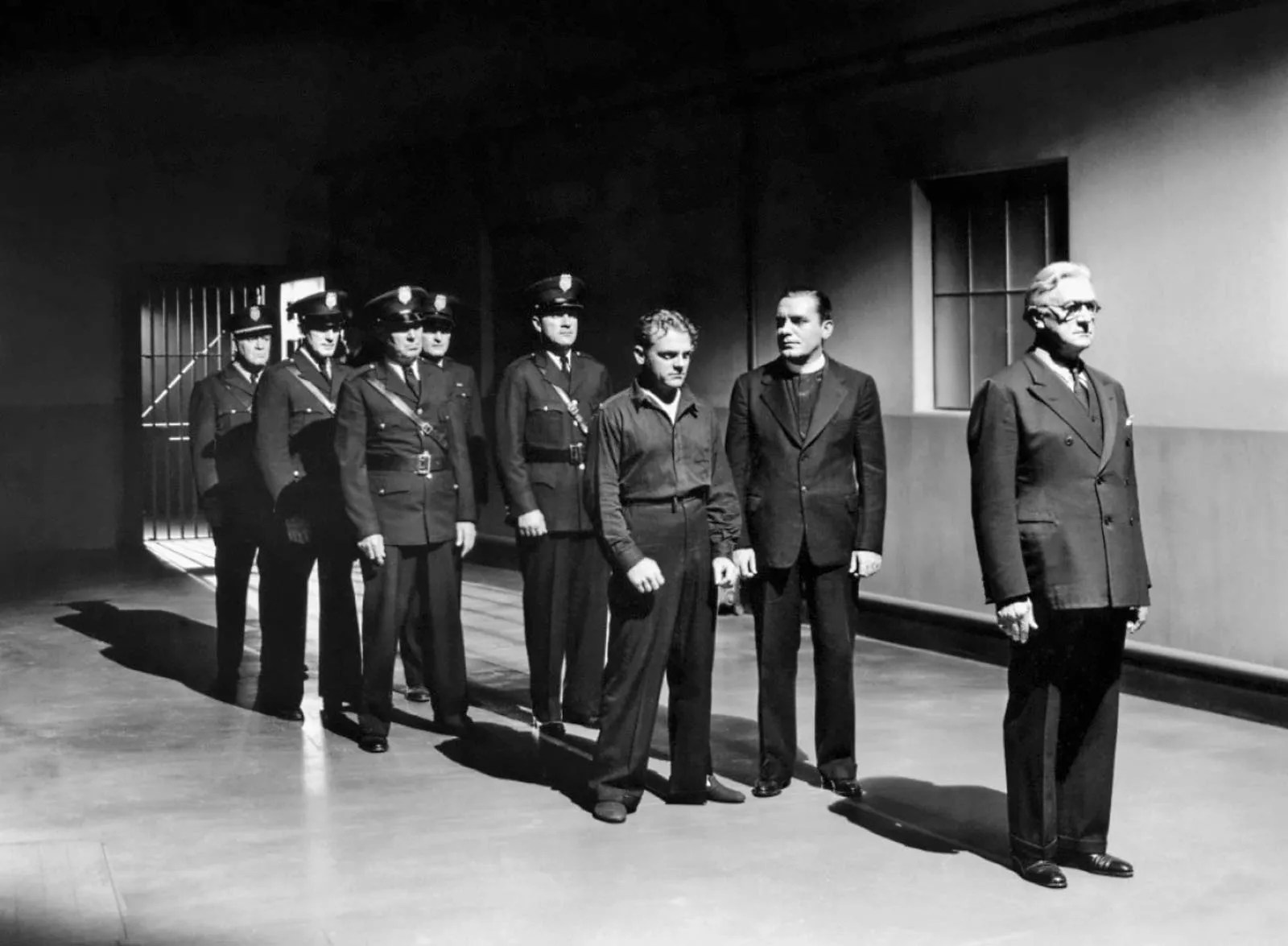
Then in the end, right before he’s tied into the chair, he cracks. He begs for mercy, says he doesn’t want to die. All we see his shadow on the wall and Jerry’s face, tears in his eyes. He isn’t praying out loud. Rocky didn’t want him to.

“If you’re going to pray, do it silently, okay?”

I actually teared up at the end and again when I was telling my son about the ending because the Hays Code may have forced an ending where Cagney’s character couldn’t look like a good guy but ultimately he still looked good.

It forced an ending where we saw Cagney’s sacrificial love for his friend. He gave up looking like a tough guy with his dying breath because he knew looking like a coward would make his friend happy, make him feel like he was helping those young men.

I do, however, wonder how the movie would have ended if it hadn’t been for the Hays Code. Would Cagney have done the same thing or would he have essentially flipped his friend off (without the actual gesture) and died the way he wanted to? I’m not sure… I think either ending would have made the movie intriguing and thought provoking.

I really like the thoughts of Joseph D’Onfrio in his article for TCM on this:

“Whether the Hays Office was satisfied with the results of Angels with Dirty Faces now means very little. The fact is that audiences have debated the final climactic scenes of the movie for generations. In those scenes, Pat O’Brien, the former child-thief turned priest, asks his old pal Cagney to perform an act of cowardice so The Dead End Kids would not follow in his footsteps. The ending seems to indicate that Cagney finally sees the light and redeems himself by playing role model to the nth degree. Or does he? Are the actions of Cagney only a feeble attempt at mock-redemption? Are the pronouncements given by Pat O’Brien at the picture’s end merely pious bromides? Cagney said he wanted to leave it up to the audience to judge if Rocky Sullivan does what he does at the end to help the Kids or whether he does it simply out of fear and despair.”
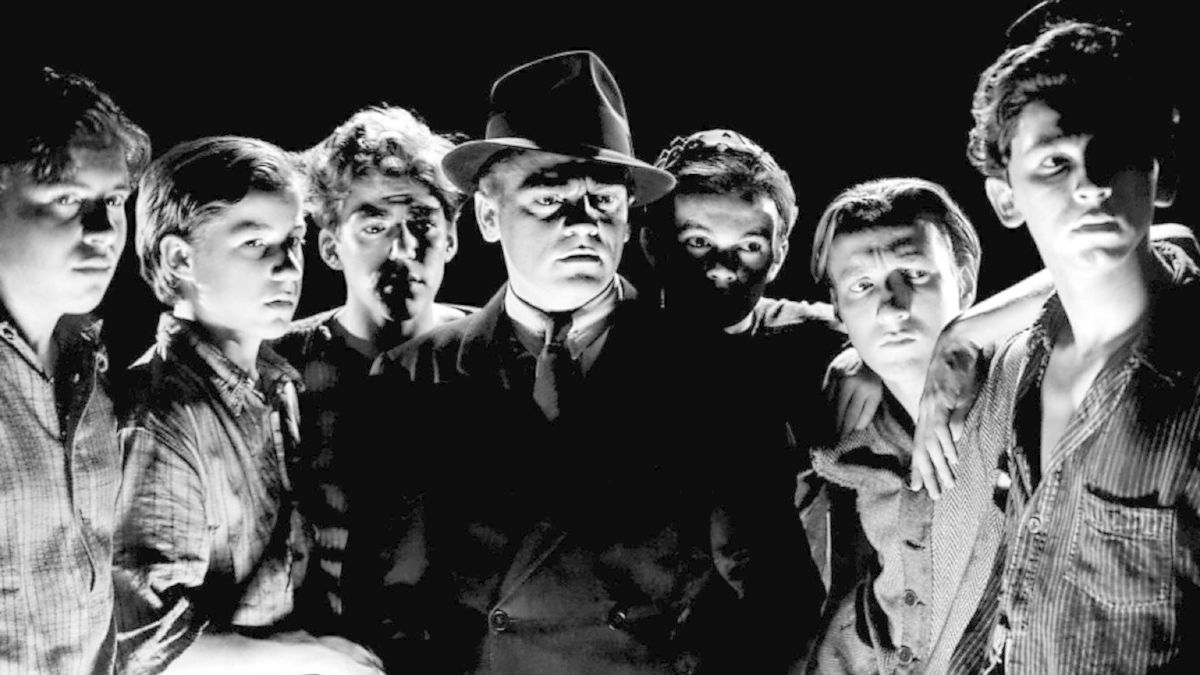
Cagney was highly praised for his performance in this film and won his first Oscar for his portrayal of Rocky, which, he wrote in his autobiography Cagney on Cagney, was actually him imitating someone he’d seen on the streets of New York City when he was growing up.

“Rocky Sullivan, was in part modeled on a fella I used to see when I was a kid,” Cagney wrote. “He was a hophead and a pimp…He worked out of a Hungarian rathskeller on First Avenue between Seventy-seventh and Seventy-eighth Streets…All day he would stand on that corner, hitch up his trousers, twist his neck and move his necktie, lift his shoulders, snap his fingers, then bring his hands together in a soft smack. His invariable greeting was “Whadda ya hear? Whadda ya say?” The capacity for observation is something every actor must have to some degree, so I recalled this fella and his mannerisms, and gave them to Rocky Sullivan just to bring some modicum of difference to this roughneck. I did that gesturing maybe six times in the picture – that was over thirty years ago – and the impressionists are still doing me doing him.”

Like other movies Cagney was in, there was some shooting going on and like movies back then, real bullets were used in at least one scene. Cagney had learned his lesson after he was almost gunned down during the filming of The Public Enemy in 1931.

This time he told the director, Michael Curtiz, that he wouldn’t stand in front of a window as ordered and let a machine-gun expert fire away at him, which worked out well since a hail of live bullets shattered a window pane where Cagney’s head was supposed to be.
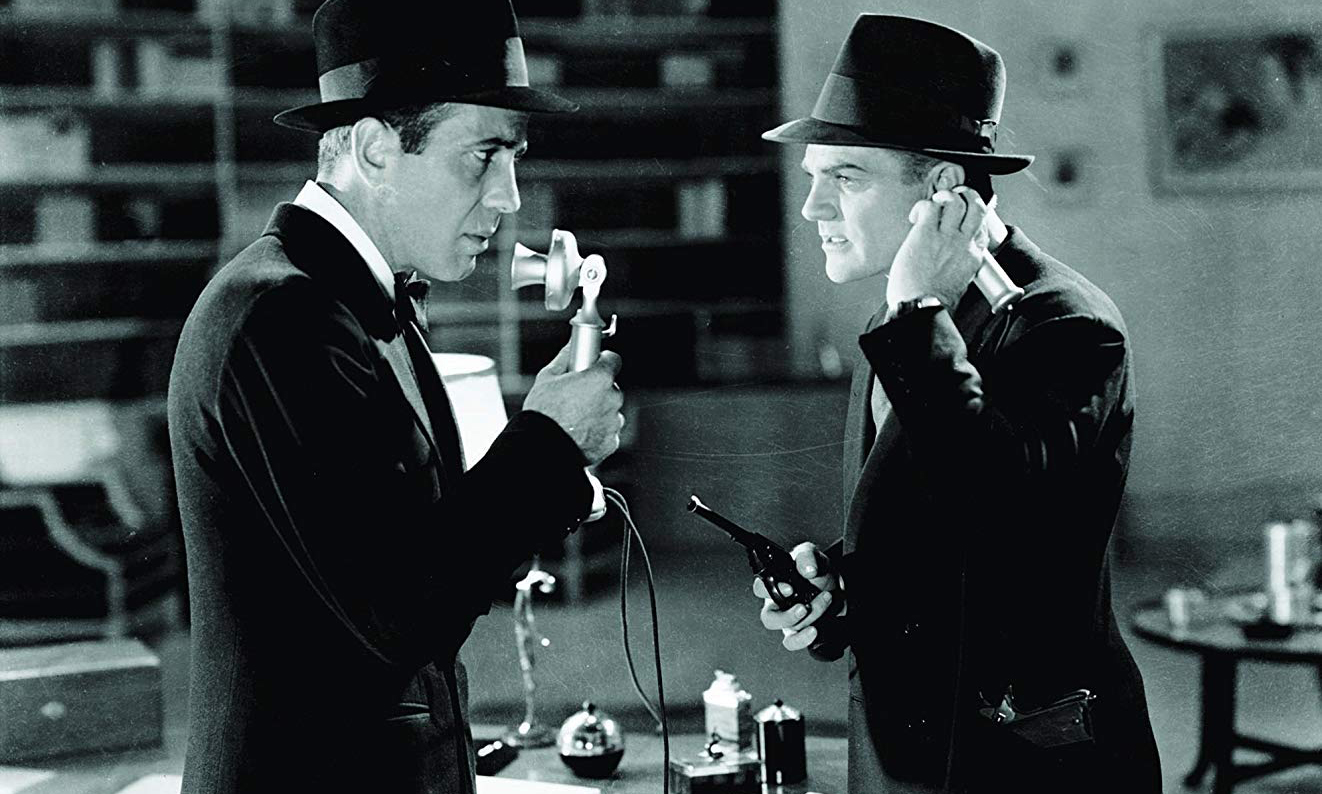
This would be Cagney and Bogart’s first, but not last time, working together. They appeared together in two more movies  in 1939: The Roaring Twenties (1939) and The Oklahoma Kid (1939). In each of the three movies they portrayed rivals.

A little trivia:

Here is a funny tidbit pulled right from an article by  D’Onfrio on TCM.com: “The genuine article, the Dead End Kids were hard nosed guys from the slums, who enjoyed being pranksters, and gave everyone a playful hard time while making Angels With Dirty Faces. Rumor had it that on a previous film with Bogart, the Kids poked fun of Bogie’s tough guy movie image and even tore the actor’s pants off in an off-the-set incident, which encouraged him to steer clear of the Kids thereafter. Only Cagney, with a similar background to the Kids, would stand up to them. One day the Dead End ringleader, Leo Gorcey, decided to play around and ad-lib a scene with Cagney. In his autobiography, the actor wrote, “I gave Leo Gorcey a stiff arm right above the nose – bang! His head went back, hitting the kid behind him, stunning them both momentarily. Then I said, “Now listen here, we’ve got some work to do, so let’s have none of this ******* nonsense….Understood?” “Yeah,” they said. One of the kids turned to Gorcey and said, “Who the hell you think you got there – Bogart?”

***

Pat O’Brien and James Cagney were good friends in real life and made several movies together, including a screwball comedy about Hollywood producers called Boy Meets Girl.

***

The original previews for the movie included a newsreel that featured the signing of the Munich Peace Pact and a speech by FDR about peace at the  World Fair.

I often forget to share where I found a movie, but I will tell you that this time I could not find this movie streaming anywhere. I had to buy a Blu-Ray of it off of Amazon but it was worth it. There are extras on the Blu-Ray that I watched last night.   

The original trailer and the cartoon that was shown at the beginning in theaters were on there, along with the trailer for Boy Meets Girl, the newsreel, a musical short, “Out Where The Stars Begin”, a looney toons feature called Porky & Daffy, commentary by Dana Polan, and the Lux Radio Theater Broadcast of the movie from 1939.

My husband said we should buy more Blu-Ray’s and DVDs so we can get the extras and I agree. We decided we will be buying one or a set once a month.

So this is the end of my Winter of Cagney. I didn’t get to watch Man of Many Faces since I couldn’t find it streaming but I hope to buy the Blu-Ray of it soon.

Up next I’ll be watching some Bette Davis movies but I won’t be starting them until April.

If you would like to read about the other movies I watched, you can see them here: https://lisahoweler.com/winter-of-cagney/


Sources:

https://www.tcm.com/articles/18627/angels-with-dirty-faces

https://bestmoviesbyfarr.com/actors/tough-guy-the-versatile-appeal-of-james-cagney/#:~:text=As%20for%20his%20distinctive%20acting,spring%20like%20a%20bantam%20rooster


If you want to find clips and thoughts about vintage movies and TV, you can visit me on Instagram on my Nostalgically Thinking Account (https://www.instagram.com/nostalgically_thinking/) or on my YouTube account Nostalgically and Bookishly Thinking here: https://www.youtube.com/@nostaglicandbookish


If you enjoy the kind of content on my blog and all that goes into it, you can support my writing for $2.99 a month or a single donation. Learn more here: https://lisahoweler.com/support-my-writing/

Comfy, Cozy Christmas: We’re No Angels

Erin from Still LIfe, With Cracker Crumbs and I have been posting about Christmas movies, books, and all things Christmas for the month of December. We’ve been sort of doing our own thing – such as watching whatever movies we wanted to watch on our own — but this week we both watched We’re No Angels (1955) so we would blog about it together. (This post is part of our Comfy, Cozy Christmas. Don’t forget to share your Christmas memory posts or any posts related to Christmas on our link up HERE, or at the top of my page.)

Erin suggested this movie and I’m glad she did because I had never heard of it before. It was certainly an out-of-the-box Christmas movie and a lot of fun. The subject matter and some of the lines were actually jaw-dropping to me and weren’t something I would have expected in a movie made in 1955.

The movie stars Humphrey Bogart (Joseph), Peter Ustinov (Jules), and Alto Ray (Albert).

The men are escaped convicts on an island called Devil’s Island off the coast of France. There are other convicts on the island in prison uniforms but they are on probation or parole, working at local businesses. The fact there are so many convicts wearing the same uniforms makes it easy for the men to blend in.

They make a plan to find a business they can rob and get money from so they can leave the island on a boat. A chance meeting with a doctor on a ship who needs to deliver a message leads them to a clothing store where they meet Felix Ducotel and his family. Felix is managing a store and they offer to repair his roof as a way to get their foot in the door, so to speak, so they can rob him later that night. He accepts and from the roof the three men begin to learn about Felix’s family – including his wife, Amelie and daughter, Isabelle.

Soon they are wrapped up in the family’s drama. They learn the business, owned by Felix’s cousin, is failing. Isabelle is in love with a man named Paul. Her mother wants to know why she isn’t married and giving them grandchildren already (umm…because she’s only 18. Hello??!) and the couple is stressed because the business is failing.

I will not spoil the movie but I will say that the men end up deciding to cook Christmas dinner for the family and steal most of what they need to do so. They keep offering to help the family, partially because they would like some of that dinner too, and partially to build trust to they can kill and rob them.

Things are crazy enough with their plan but get even crazier when Felix’s cousin (portrayed by Basil Rathbone, who was in the Sherlock Holmes movies of the 40s) arrives with Paul. Yes, that Paul. The Paul that Isabelle is in love with.

Absolute chaos ensues for the rest of the movie. So much of it was so funny but at times I felt bad for laughing at either how suggestive some of the jokes were or how they made light of horrible crimes. I would definitely say this movie featured a lot of dark humor.

Some particularly memorable quotes from this movie for me:

Isabelle: “I’ve never been attractive to men.”

Albert: “I’m a man.”

Isabelle: “And you find me attractive.”

Albert: “I could go to jail for the way I feel if I wasn’t there already. Now put a pretty smile on your face and don’t hurt your family.”

Isabella expresses surprise that Albert is a convict with the way he talks.

“I wasn’t born in a cell you know,” he tells her.

Isabella says, “You don’t look like a criminal to me.”

He responds. “If crime showed on a man’s face, there wouldn’t be any mirrors.

***

We came here to rob them and that’s what we’re gonna do — beat their heads in, gouge their eyes out, slash their throats. Soon as we wash the dishes.

– Joseph

***

  • Albert I read someplace that when a lady faints, you should loosen her clothing.

Joseph [Sarcastically]  It’s that kind of reading that got you into trouble.

****

  • Joseph I’m going to buy them their Christmas turkey.

Albert “Buy”? Do you really mean “buy”?

Joseph Yes, buy! In the Spirit of Christmas. The hard part’s going to be stealing the money to pay for it.

This movie was based on a play called We Three Angels. When it released as a movie some critics said it wasn’t as good at the Broadway play and that it was a “misguided” film.

The movie grossed only $3 million and was the 34th highest grossing film.

There was a remake of this movie in 1989 starring Robert DeNiro, Sean Penn, and Demi Moore.

The film was directed by Michael Curtiz whom Bogart had worked with three times before in the movies Angels with Dirty Faces (1938), Casablanca (1942) (Curtiz won a best director Oscar for this), and Marseille (1944).

This film was definitely a departure from their previous films.

To see what Erin thought of the film, hop on over to her blog:https://crackercrumblife.com/

Have you seen the film? What did you think of it?

I hope you will join Erin and me in January when we will be watching movies based on Jane Austen’s books. We’ll be sharing more about that toward the end of this month.

Comfy, Cozy Cinema: The African Queen

For the next three months, Erin from Still Life, With Cracker Crumbs and I will be watching cozy, mysterious, or comfy movies. Erin made these awesome graphics detailing what we are doing and what movies we will be watching.

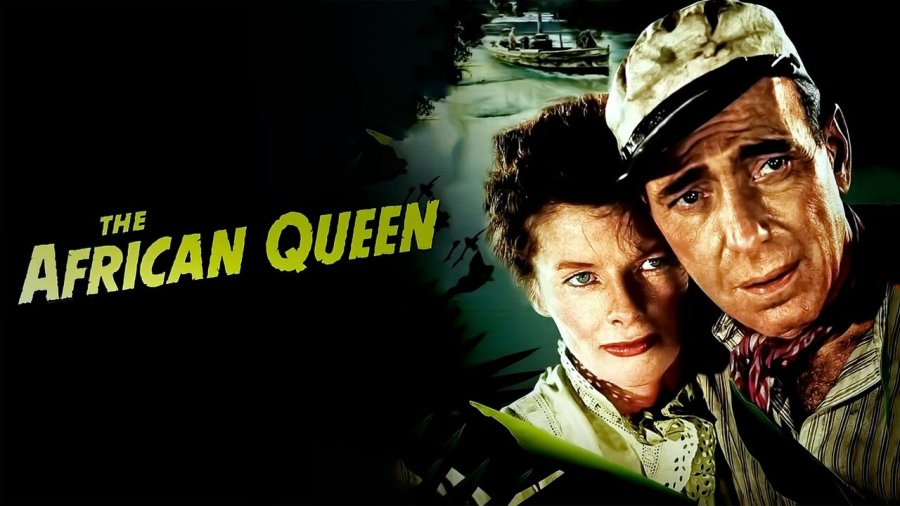
This week we watched The African Queen, which I am not sure was really a comfy, cozy movie but I forgot some of the details when I suggested it. I’m not sure why I picked it for this feature, but it’s still a good movie and we did find some cozy(ish) moments in it as a romance began to blossom in the middle of a very stressful situation.

The movie, released in 1951, stars Katherine Hepburn and Humphrey Bogart. It was directed by John Huston.

It is both an adventure movie and a romance.

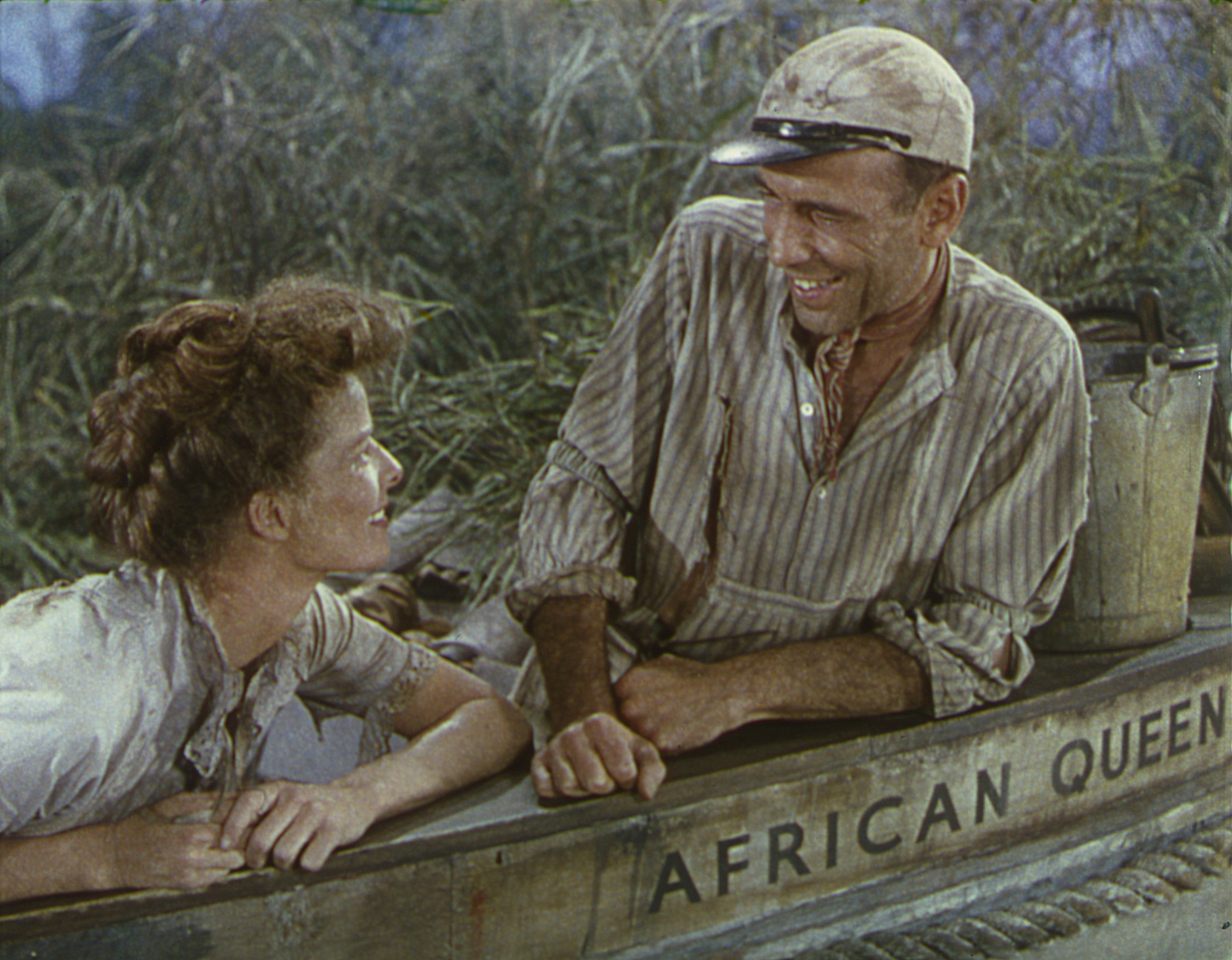
Katherine plays Rose Sayer, a missionary in Africa, and Humphrey portrays Charlie Allnut (which Katherine pronounces as Ulna throughout the movie).

Rose had stationed been in African villages with her brother for a decade and meets Charlie when he travels up the river in his small, rickety steamboat to deliver mail and other supplies. The steamboat was dubbed The African Queen by Charlie.

On one visit Charlie tells Rose and her brother Sam that he probably won’t be there for two months because war has broken out. The movie starts in 1914 so this is the beginning of World War I.

He leaves and within a matter of hours or days, or I’m not sure which, the Germans march through with an army made up of Africans and begin to burn down the village. This leaves Rose’s brother in a state of shock and also affects his physical health and he passes away a couple months or so later.

Rose is now alone in the village but luckily not for long as Charlie finds her and she asks him to take her with him up the river.

Rose and Charlie are very different. She is very prim and proper and British and he is very “uncouth” one might say. My husband said that the movie is based on a 1935 novel and that the main characters in the novel are both British. Charlie has a cockney accent.  Humphrey refused to try to pull that accent off so he was made Canadian for the sake of this movie.

The chemistry between the two is great with them bouncing quips off each other throughout the film.

When Rose finds out they are upriver from a German ship that will be used to launch an offensive against the British, and that Charlie has potential weapons on The African Queen, she decides they will travel this very dangerous river with rapids, crocodiles, and a German fort, and blow up the German ship.

Charlie, for his part, thinks she’s nuts but agrees to help her – that is until things get more and more dangerous and he’s certain they are going to die in the rapids.

When he tells her in the beginning that it isn’t possible to take the steamboat down the river she says, “How would you know? You’ve never tried.”
He scoffs. “I’ve never tried shooting myself in the head either.”

In another scene, Charlie gets drunk on the gin that’s on the boat and Rose is not happy about it.

“Oh come on,” Charlie says. “It was just human nature.”

Rose raises her chin and says, “Human nature, Mr. Allnut, is what we are put on this world to rise above.”

There are several comments or lines like that throughout the film which turns romantic somewhat by accident when Charlie celebrates one of their accomplishments and kisses Rose on impulse.

Kissing and being romantic was most likely a huge challenge for Katherine because she, like most of the cast and staff, caught dysentery and malaria and was very sick for the time in Africa.

Huston wanted the film to be as realistic as possible so he shot on location in Uganda and the Congo for part of the film with the rest being shot in London, outside and on a sound stage. Scenes where the actors were in the water were deemed to be too dangerous in Africa.

It was so realistic that Katherine and others got sick, as I mentioned, and during one scene when she’s playing the piano, she actually had a puke bucket off-scene just in case and I guess there were a few “cases.” Poor woman.

Boggie later joked that he and Huston didn’t get sick because they drank whiskey instead of the local water.

As a bit of trivia, the only Oscar Boggie ever won was for this film. Katherine was nominated for best actress but did not win. Huston was also nominated for best director but didn’t win.

Katherine won four Oscars and was nominated 12 times over the years. She also won an Emmy and two Tony Awards.

This comment came from my husband who always has a cheery note about when or how one of the actors died as we watch a movie: “To think he (Boggie) would only have five more years after this.”

At one point, when Charlie apologizes for getting drunk Rose says that is not upset about that.

“You think it was your nasty drunkenness I minded? You promised me you’d go down the river.”

“Well, I’m taking my promise back,” Charlie says.

Little Miss looked at me and said, “Fun fact. You can’t take back a promise.”

So there you go. Some wisdom for your day.

When this movie came out, both Boggie and Hepburn were older and some critics said moviegoers wouldn’t want to see two old actors fall in love.

According to movie critic Roger Ebert, though, that wasn’t true. Many people wanted to see the movie and loved it despite it being released at the same time as A Streetcar Named Desire with Marlon Brando and Vivien Leigh.

The novel was much darker but Huston credited Boggie and Hepburn with making the movie have some humor in it.

“They were just naturally funny when they worked together.” Miss Hepburn, on the other hand, gives the credit to Huston. “The humor didn’t just grow, it was planted. The picture wasn’t going well until Huston came up with the inspiration that Rosie, my role, should be played as Eleanor Roosevelt.”

Ebert said of Bogart’s role: “Whatever the case, the many scenes Bogie and Kate play together are superb. Bogart, as the gin-swilling proprietor of a banged-up riverboat, created a strange little laugh for his role. He was shy, amused and intimidated by this Bible-reading missionary lady who washed out her unmentionables each and every night. And the laugh, meant to conceal his unease, also serves to display the thoughts of a taciturn man. He does not often laugh at the things Rosie finds funny.”

There was one scene with leeches and I wanted to know if they were really on Boggie. A quick search online brought me to a site full of trivia which let me know that: “While filming the scene where Charlie finds his body covered with leeches, Humphrey Bogart insisted on using rubber leeches. John Huston refused, and brought a leech-breeder to the London studio with a tank full of them. It made Bogart queasy and nervous, qualities Huston wanted for his close-ups. Ultimately, rubber leeches were placed on Bogart, and a close-up of a real leech was shot on the breeder’s chest.”

It is an interesting site and I was going to leave a link here to it but it says the site is not secure so I won’t do that – just in case.

The bottom line was that I did like this film but it wasn’t necessarily comfy, cozy or creepy. I guess it was a mix of comfy and adventure.

To read about Erin’s take on the movie, hop on over to her blog: https://crackercrumblife.com/

If you would like to join in on our Comfy, Cozy Cinema you can print out our watch/post schedule here:


Arsenic and Old Lace (Sept. 28)

Oct. 5 (break for us or you to catch up!)

The Lady Vanishes (October 13)

Strangers on a Train (Oct. 19)

Rebecca (Oct. 26)

Little Women (November 2)

Tea with The Dames (November 9)