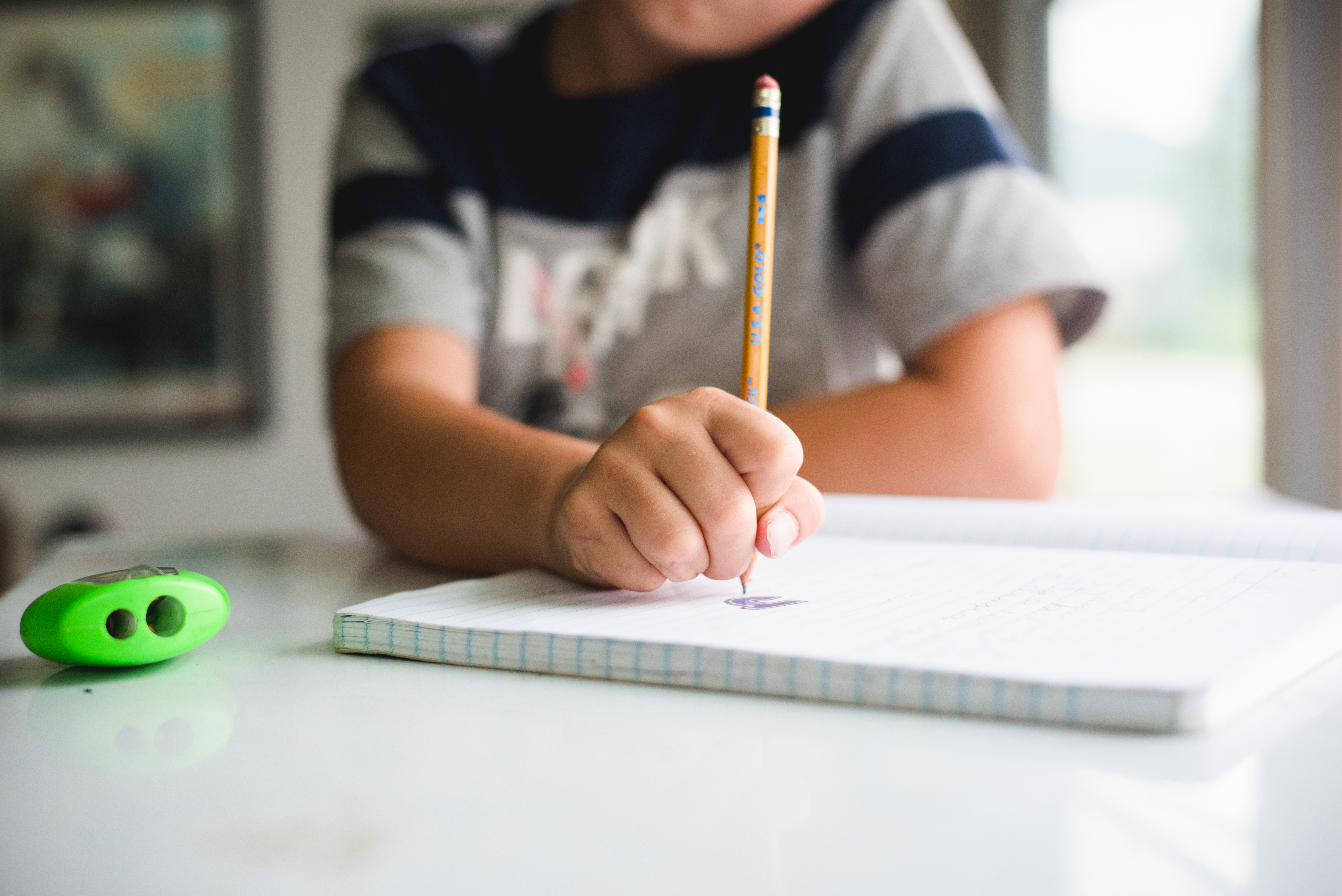
Yes, you can homeschool your children. No, you don’t need a teaching degree. Links for parents ready to step into the world of Homeschooling

From what I am seeing online, there are even more new homeschooling parents this year than last year. Also again this year I am seeing parents doubt their ability to homeschool, questioning if they can do so if they don’t have a teaching degree. As a parent who just started her fourth year of homeschooling, I can tell you that one, you don’t need a teaching degree, and two, yes you can do it. It might have challenges, but, yes, you can do it. I am saying this even after having a mini breakdown this morning as I worried I am not doing enough or doing it right.

Last year I wrote a couple of blog posts aimed at helping new homeschooling parents connect with some resources to help them. My posts were aimed more at “traditional” homeschooling parents — those who choose their curriculum and teach their children themselves — versus those who sign their children up to a cyber charter school or online school.

With cyber/online schools, your children are given their assignments and lessons exclusively online. In traditional homeschooling, which is what I am doing with my children, the schedule is a little more flexible and what you teach can be changed, adjusted, or updated, even if you are using a set curriculum.

Neither way is superior to the other, but one way or the other can be superior to a family based on their personal situation.

For us, our option for schooling had to move away from the stricter educational process due to the fact my son had lost all love for learning at his past school. He needed a more relaxed, flexible approach to help encourage an interest in learning again. It hasn’t totally worked because school is still school and kids don’t always love school, but he can explore topics further at his own pace if he wants to, versus waiting for his class members to catch up.

Because my experience comes from a place of “traditional” homeschooling, my post today will mainly offer advice to parents who have chosen to educate their children this way.

As an aside, related to online school, my neighbors’ daughter is currently doing her classes at home through the local school district and she is able to have a flexible schedule similar to ours. Not all online schools keep a child or parent from being flexible, though some do.

The flexibility for my neighbor’s daughter has benefited her because she can work at her own pace, work a job, and also have a schedule where she can visit more with family. It benefits her parents because all of her assignments are on the computer for her and she does them on her own and at her own pace, as long as all assignments are handed in by the end of the week.

For our family, I like the flexibility of being able to give my children assignments and even changing them if need be so we can study an aspect of a subject less or longer or take field trips, outings, etc. I like being able to use different curriculum and maybe even changing it in the future or in the middle of the school year if it isn’t suiting my child’s learning style.

Most parents I see jumping into homeschooling this year are completely lost, just like I was three years ago. I see them in groups asking, “Where do I even start?”

That’s a good, scary question, but it doesn’t have to be scary at all. Online searching is your friend. You will find that homeschooling parents love to help other homeschooling parents by sharing resources on their blogs, sites, or social media. Here are a few I pulled offline after a quick search.

This list will also not be the most definitive list. There are so many options out there for homeschooling and so much information that it literally makes my head spin. Looking it all up gives me hot flashes and makes me dizzy so I search only so much.

https://hslda.org/legal

https://www.healthline.com/health/childrens-health/thinking-about-homeschooling-heres-what-you-dont-have-to-do

https://www.lucidchart.com/blog/8-homeschool-tips-and-tricks

https://thesurvivalmom.com/my-top-16-tips-for-beginning-homeschoolers/

https://www.horizoncharterschools.org/5-tips-for-homeschoolers/

https://simplehomeschool.net/advice/

https://www.thesimplehomeschooler.com/8-homeschool-moms-share-their-best-advice/

One of the main aspects of homeschooling that a new homeschooling parent is worried about is, of course, curriculum. It was my first concern as well.

There are literally hundreds of curriculum options available for the homeschooling parent. Some are online, some are in textbook form, and some are a mix. I found a couple of sites/blogs with curriculum ideas and a couple with actual reviews. One of the most popular sites for curriculum reviews is Cathy Duffy’s Homeschooling Reviews https://cathyduffyreviews.com/. She reviews a variety of curriculum, much of it, but not all, faith-based.

A quick internet search also brought up a couple of other blogs with curriculum suggestions:

https://www.verywellfamily.com/best-online-homeschool-programs-4842632

https://www.thehomeschoolmom.com/homeschooling-101/choose-best-homeschool-curriculum/

https://www.howtohomeschool.net/homeschool-curriculum/the-best-homeschool-curriculum-list

https://nyhen.org/homeschool-curriculum-reviews/

https://hslda.org/post/selecting-my-curriculum

For us, we are currently using the following curriculum (but this could change in the future, which is a tip I give to new homeschooling parents: don’t be afraid to switch up the curriculum when it isn’t serving your child.):

For the first grader

Math: CTC Math (online program) and The Good and the Beautiful (finishing the K-level and will start the level one later in the year.)

History/Literature: Notgrass Our Star-Spangled Story

Science: Right now we are using School Zone Big Science 2-3, but I am searching for a set curriculum and hope to purchase one later this month.

Reading/Grammar: The Good and the Beautiful Language Arts for Kindergarten (will be moving to the next level by end of October or beginning of November. We are just finishing up last years.)

Art: various lessons

Music: None yet. Searching.

For the Ninth Grader:

Math: CTC Math (online)

History/Literature/English: Notgrass World Geography (comes with a set of books for the literature/writing/English component so it can be used for social studies and English credit), Apologia Literature.

Social Studies: Notgrass World Geography

Science: Apologia Exploring Creation with Biology 2nd edition (there is now a third edition, which we chose not to use after the author of the second edition pointed out some major areas in the textbook).

Economics: Notgrass Exploring Economics (also can be used for a half an English credit)

Grammar: Fix-It Grammar (our first year using this. May be a little too simple for a ninth grader. We will see how it goes.)

Art: various lessons

Music: none yet. Searching.

Books on our lists to read this year (or try to) through the Notgrass curriculum include:

First grader (I am reading them to her):

  • Benjamin West and His Cat Grimalkin by Marguerite Henry
  • Toliver’s Secret by Esther Wood Brady
  • Freedom Crossing by Margaret Goff Clark
  • Farmer Boy by Laura Ingalls Wilder
  • Mountain Born by Elizabeth Yates
  • Emily’s Runaway Imagination by Beverly Cleary
  • The Year of Miss Agnes by Kirkpatrick Hill
  • Katy by Mary Evelyn Notgrass

Ninth grader:

  • Know Why You Believe by Paul Little
  • Blood Brothers by Elias Chacour with David Hazard
  • Patricia St. John Tells Her Own Story by Patricia St. John
  • A Long Walk to Water by Linda Sue Park  
  • The Day the World Stopped Turning by Michael Morpurgo
  • Kidnapped by Robert Louis Stevenson
  • Lost in the Barrens by Farley Mowat
  • Boys Without Names by Kashmira Sheth
  • Revolution Is Not a Dinner Party by Ying Chang Compestine
  • Ann Judson: A Missionary Life for Burma by Sharon James
  • The Country of the Pointed Firs by Sarah Orne Jewett
  • Tales from Silver Lands by Charles Finger

We may not get through all these books, but they are part of the curriculum so we will see how we do.

Tomorrow I’ll offer some additional homeschooling tips, especially if you are homeschooling outside of an online school setting.

Until then, here is a link to a few other posts I wrote about homeschool in 2020 and a couple I shared about how own homeschooling journey recently. Some of these post may have links that have since expired.

Homeschooling Notes: Learning doesn’t have to happen at a desk

More links for parents suddenly homeschooling

Suddenly homeschooling? Here are some tips and links to help you out. Sorry, I can’t send wine.

How homeschooling has made life easier and less stressful. Well, sometimes anyhow.

Homeschooling Notes: Learning doesn’t have to happen at a desk

 We started homeschooling this week, a day earlier than we planned because we thought we were going to visit my aunt and would need our originally planned first day for traveling. When that trip was postponed, we decided to stick to the new first day, which surprisingly didn’t bother either child.

I was way more prepared than I ever have been since starting this homeschooling journey in April of 2018. Yes, you read that right. I was prepared. Crazy. I know.

I not only had the curriculum purchased, but I started drawing up lesson plans at the end of last week.

What in the world has happened to me? I have no idea.

I was excited for this school year to start, partially because I was actually organized.

We have some great curriculum this year and some exciting opportunities to utilize them to their full potential.

I have started us off light this week, with only three subjects a day for the oldest and two or three for the youngest.

I couldn’t wait to break open the curriculum I had bought for Little Miss. She, however, thought we should deviate from that curriculum and reminded me that learning isn’t only found sitting at a desk (or in our case, the dining room table or couch or sometimes the coffee table in the living room).

I left science for last because I had a feeling it might get out of hand once we started it. Little Miss likes hands-on learning and she loves coming up with ideas on how to make the most of those learning moments, usually not by using a book but by doing something.

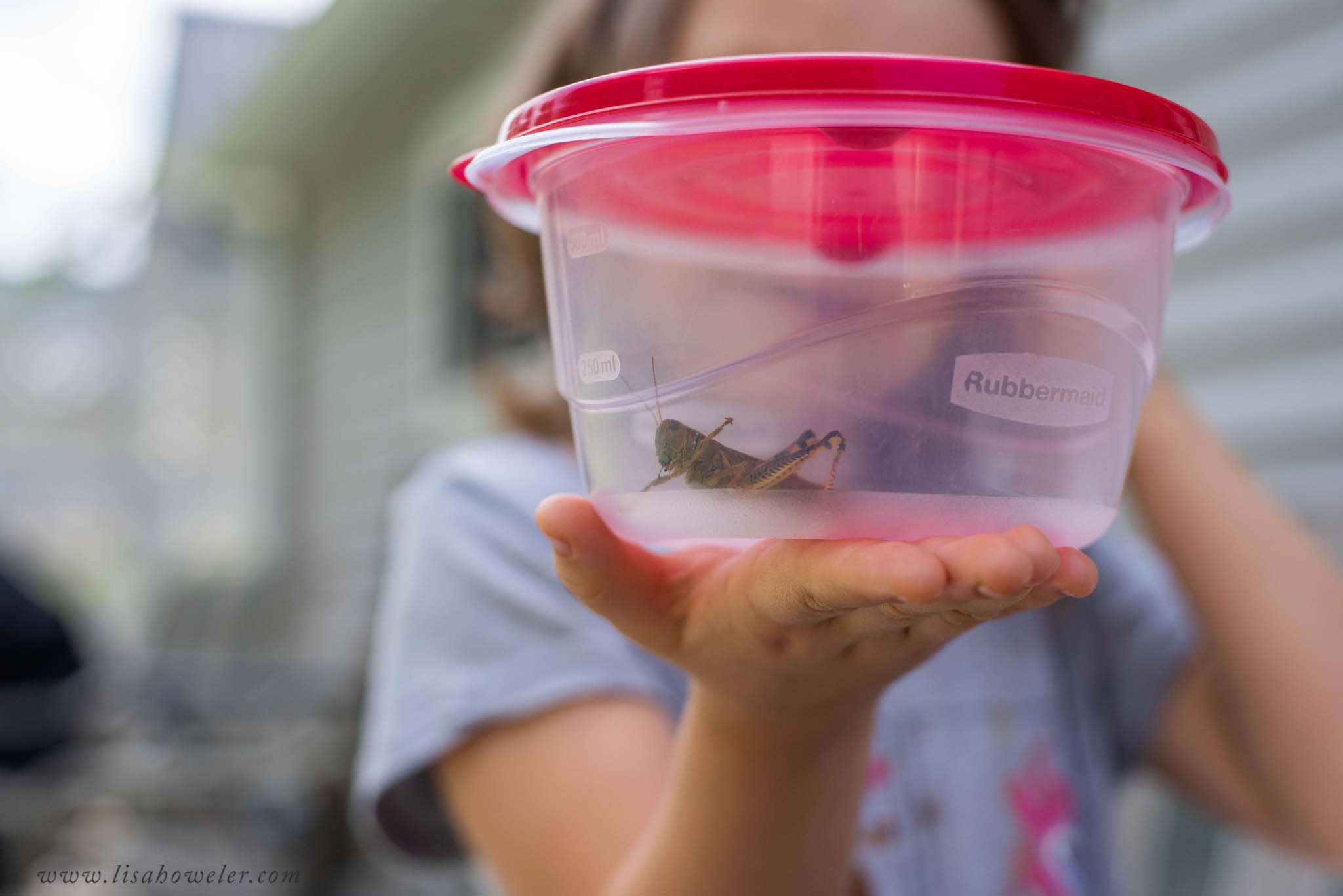
On our first day, I started a unit on insects and Little Miss became excited when she saw a section on the worksheet about how to make a jar to collect bugs. Little Miss was collecting bugs all summer, especially grasshopper and katydids, so, of course, this was right up her alley. We cut the top off a water bottle, closed it with a rubber band wrapped around a paper towel stretched over the top, and headed outside. The next half hour was spent with me trying to read Benjamin West and His Cat Grimalkin by Marguerite Henry, which is part of our social studies/language arts curriculum, to her, while she hunted down bugs.

It was all going fairly well until she called out, “One just hopped toward you!” and when I looked up something black was flying straight at me and bounced down the front of my shirt. I screamed so loud I’m surprised the neighbors didn’t call the cops, thinking I was being murdered.

We didn’t have much luck in the yard so Little Miss wanted to go to the garden. While there I picked some tomatoes, and she found an absolutely huge grasshopper which she caught and we put in a larger container for her to study for a bit.

I tried to keep an open mind the next day, but I had a list I thought we should complete that day. This is the first year that I legally had to file an intent to homeschool for Little Miss, so I want to make sure I can show we did actual schoolwork at the end of the year. While I was trying to tick off my list, Little Miss had other ideas.

“Hey, can we go splash in the puddles?” she asked.

We were getting rain from the remanents from Hurricane Ida.

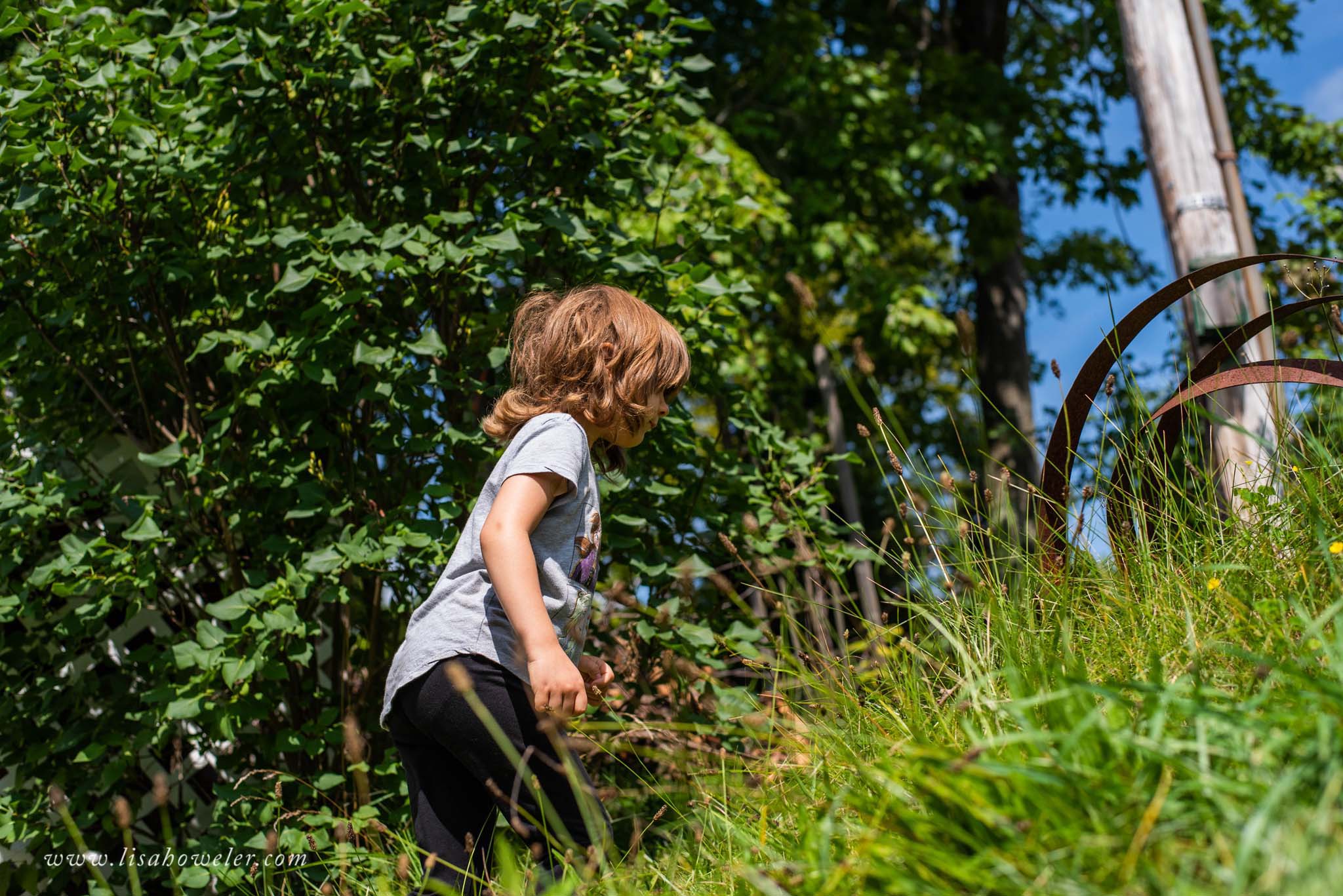
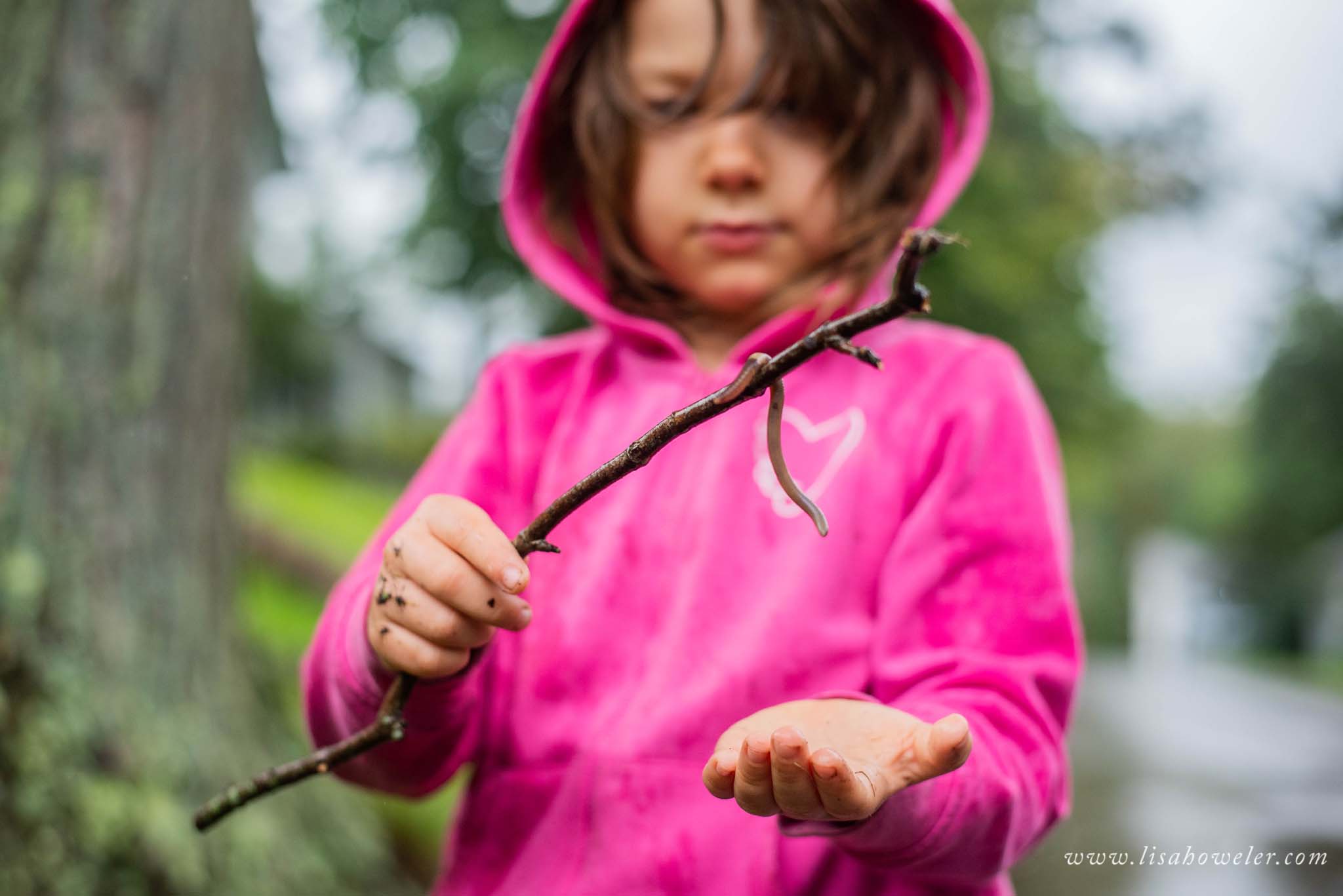
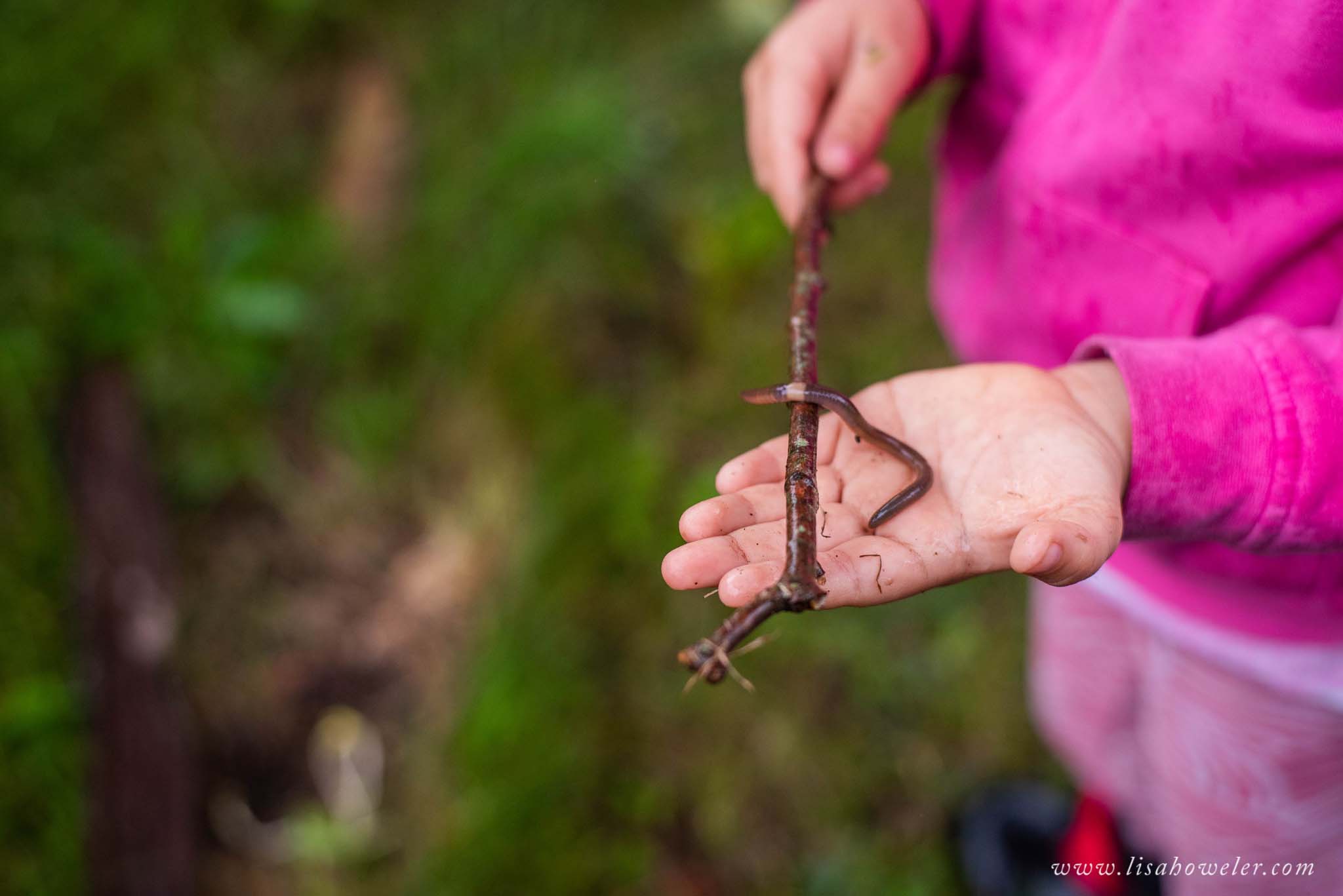
I told her, ‘no,’ because I had my plan, but then I decided we could do it if we tied it into her science lesson about insects. So there were, standing in a steady rain while she splashed in puddles, then lifted rocks and searched for bugs and worms, telling me all about the bugs as we looked as if she was the teacher.

“Oh, I found an isopod!” she cried lifting a rock in our front yard, with no fear of what she would find.

“And what’s an isopod?” I asked.

“They are the ones that roll up when you touch them,” she said and then proceeded to ramble off some more information.

Later, I looked them up so we could learn more about them and learned they have seven pairs of legs, flat backs, and aren’t actually insects, which have six legs.

Little Miss’s favorite isopods to look at and collect are roly pollies, which are also called pill bugs.

The Boy and I are easing our way into his lessons. This week, in addition to reading from his World Geography and Economics books, he is reading a book called Know Why You Believe by Paul Little, which is written for Christians to helps us learn more about why we believe what we believe because even longtime Christians have doubts or questions. We will add science next week. His English is part of his World Geography but later in the fall, we will add some grammar lessons.

He and I are also watching To Kill A Mockingbird, after reading the book at the end of last school year. We watched half an hour of it, Little Miss saw a dog being killed (it was not graphic) and fell completely apart, even though she has seen much more frightening scenes in movies or shows involving dragons, monsters, or supervillains. We have decided to watch the rest with her either out of the room or wearing her headphones.

It is still raining as I write this, so I’m not sure what today’s lessons will lead to, but I can be sure that they won’t be the simple, straightforward lessons I had planned, and that, in my mind, is a good thing. Being able to wander off in different directions is one of the biggest reasons we homeschool. If one of the children becomes interested in a subject that jumps off of the subject that we are on, then we go with it. It keeps them curious and in a mode where learning is fun and not an obligation.

Hopefully I can remember that for the rest of this school year.

Educationally Thinking: Homeschool wrap up

We finished our school year last week and then tied up a few loose ends the beginning of this week. On Wednesday we met with our homeschool evaluator who wrote up a quick letter to the local school district to confirm we had completed all the requirements under our state’s homeschool law.

Honestly, it’s a little disconcerting and depressing to have your entire school year — all that hard work and volumes of text read and answers to math problems hammered out — boiled down to three vague paragraphs. I understand that it’s all that is required by the state and my evaluator doesn’t feel that she should provide more than is necessary, but it’s still a bit of a let down after an entire year of lesson planning for six subjects every weekday, gathering together a portfolio, selecting examples of your child’s work, organizing a list of all the textbooks you used and books your child read, and then not having most of that mentioned in those paragraphs.

The school district or state never even sees all the hard work we did when all is said and done and in some ways that might be a good thing. But in other ways it would be nice if they knew we actually take homeschooling seriously and really do educate our children, not simply let them play video games all day and call that school.

It should be noted that none of this  is a complaint against our evaluator in the least. She’s amazing. She homeschooled both her girls from grade school to graduation. She knows her stuff. She’s doing her job. It’s just a reminder not to look at that one sheet of paper and draw the worth of our entire school year from it’s contents.

Since I didn’t have to report what we did to the school district, I will use my blog to brag on my 14-year old. He read seven books this year, including four classics: To Kill A Mockingbird, Silas Marner, Lord of the Flies, and A Christmas Carol. He also read the three final Harry Potter books. We almost finished a course in economics as well and plan to continue that course next year. And of course he finished courses in Math, history, science, grammar and English.

We did have to  complete a standardized test this year since The Boy was in 8th grade. Standardized testing is required in fifth, eighth and eleventh if I remember right.

I did not have to provide a portfolio or any information for Little Miss because under state law she doesn’t even have to start attending school until she is six and she was not six when the school year started. I will file an intent to homeschool form for her with the school district for the upcoming school year and I will consider her in first grade since we worked on kindergarten curriculum this year.

Overall, our homeschool year went well. We learned about a lot of things but I do see a lot of room for improvement for The Boy especially. We will have to increase our focus on science this next year and also add some more music and art as well as a writing and spelling curriculum for him.

For Little Miss we will focus more on science and history this upcoming year. Little Miss is also going to be having a few days a week of lessons during the summer so she doesn’t forget what she has learned.

We may choose to have set curriculum from one curriculum company this year as well but I have not decided that yet.

I know most parents love when homeschool or school is over for the year and they have a break all summer but I actually miss it. I liked making lesson plans and reading the lessons with The Boy. I liked knowing that each day I had a purpose other than cooking dinner and letting the dog in and out of the house and writing my silly stories. Luckily I now have a summer to begin planning for next year. I also will be teaching Little Miss some starting next week, as I mentioned, and starting in July The Boy will begin reviewing math lessons so he doesn’t forget everything he learned this year.

If you are a homeschooler, I’d love to hear about your homeschool year. Is it over yet? What are your plans for next year? Let me know in the comments.


Educationally Speaking: Homeschooling Updates

For those who might be new to my blog, I started homeschooling my children a couple of years ago, so our homeschooling journey is unrelated to the reason others are homeschooling these days. That isn’t to say our experience is more valid than others, this is simply an explanation of our homeschooling journey.

My situation may be unique to some homeschooling parent since I am teaching a Kindergartner and eighth grader, but I also know many parents teaching ages from preschool up to 12th depending on how many children they have. So, really, it’s not that unique, I suppose, but it is a challenge for me at times.

What is interesting about teaching these two age groups is that we can overlap some of our lessons, especially for the Kindergartner who can often learn from her brother’s science and history lessons, as long as the history isn’t about wars or genocide, which is obviously a little too heavy for her young brain.

What we learned last month or are doing this month. The Boy:

History

We are continuing to use Notgrass History’s From Adam to Us for history.


This past month we mainly focused on Rome and its rulers, including Julius Caesar. I’m sure I studied Julius Caesar at some point during high school or college, but I don’t remember a lot about it (I’ve mentioned before that my schools seemed to only discuss the landing of the Mayflower, the Revolutionary War, and the Civil War and then start back over at the beginning of the next school year and review those same topics again. I swear we never even learned about the World Wars or Korea or Vietnam.). It was very interesting to me to learn how Julius Caesar came to power and that he was a general before he was declared “dictator for life” by the Roman Senate.

I found an interesting video on Caesar and this part of history, but my son spent the time watching it criticizing how they portrayed Roman weaponry and battles (not bloody enough for him apparently).

In February we also learned about Alexander the Great, the Great Wall of China and Judas Maccabeus.

I have started creating my own quizzes for The Boy’s history lessons, which is fun for me because I am able to read over the chapters and learn along with him. Notgrass may offer quizzes for this unit, but I didn’t see one so creating my own allows me to make the quiz as difficult or easy as I like. Plus it means I am reading the chapters along with him and learning more myself.

English

The Boy and I finished reading  Lord of The Flies for English and we used a supplemental curriculum I ordered off of Christianbook to focus on vocabulary and specific plot points and literary analysis. The curriculum was ordered from Christanbook, but it is not strictly Christian curriculum, for anyone who is curious. It provides quizzes for every two chapters and an exam for when the book is finished.

The Boy did not enjoy discussing the symbolism of the book. He said something along the lines of it being a depressing book and he didn’t want to analyze all the reasons why. I’m summarizing his complaints, so I may not have quoted him accurately (in case he one day reads this and says, “I never said that!!!” Which he often does when I repeat things he has said.)

I plan to take a week break and focus on some Mark Twain short stories or excerpts, and then move on to To Kill A Mockingbird for April and May. I had considered reading The Adventures of Huckleberry Finn but I think The Boy might appreciate a break from the challenging language for the rest of the school year since we read Silas Marner in the beginning of the school year. One of the most fun aspects of homeschooling has been able to read classic books I either read in school or wanted to and books that public schools are trying to ban because many have lost the critical thinking needed to understand we can learn from books even if they have words or ideas in them we don’t agree with.

The Boy is also completing assignments from Wordly Wise for English, which focuses on vocabulary. We started grammar lessons from Saxon again this week. Don’t get me started on Grammar. I know that some grammar obsessed people are thinking, “we won’t because your grammar is atrocious”, but good grief some is the terms that are in this grammar book are insane and I have never heard of them and could not identify them in a sentence to save my life. Apparently I never needed to know all that for my 14-years writing as a reporter or my 43 years of life. I am convinced that grammar teachers teach children grammar so those children can become future grammar teachers and they just repeat the cycle over and over. People don’t even use half that stuff as adults and could care less what an adaptive phrase is. Oops. I guess I got myself started on grammar. (Also, do note that I  understand the importance of grammar. I also understand the importance of not over doing it and going so in depth your brain explodes.)

Math

For Math he is continuing CTC Math and we have discovered additional testing and worksheets that I hadn’t noticed before. He is not appreciative of this latest development because it means more work for him. One issue with this online program is that if he misses one question it brings his grade down and if he misses two he can end up with an “F”. He can make these mistakes by hitting a number by accident. So far, doing the test again doesn’t seem to improve the grade but I am going to contact the site administrators and see if there is a glitch with that.

Economics

We are using Notgrass’ Exploring Economics for Economics and they include history and some Bible along with all the economic terms and history and analyzing. So far it is one of my son’s favorite subjects.

It isn’t his favorite subject this week because I am making him study five units for a unit exam at the end of the week. He is used to me allowing open book tests but I told him we are going to try studying the old fashioned way and doing tests that way too. He is not a fan of the old fashioned way.

Little Miss (Kindergarten)

History

Little Miss has her own history lessons about the time around The Revolutionary War and early American history. We use old episodes of Liberty Kids from YouTube to supplement her lessons. I do not have a specific history curriculum for her this year, but will next year. She also watches some of the videos we watch for her brother’s history lessons, if they are not too violent, or she listens along with Notgrass.

Science: We are doing a unit on deserts for the next couple of weeks and will be doing separate little lessons on some of the animals of the desert. This is a plan I am putting together on my own, but will include some reading, math, coloring, comprehension, and simply learning about the different kinds of deserts (colder and warmer ones).

English:

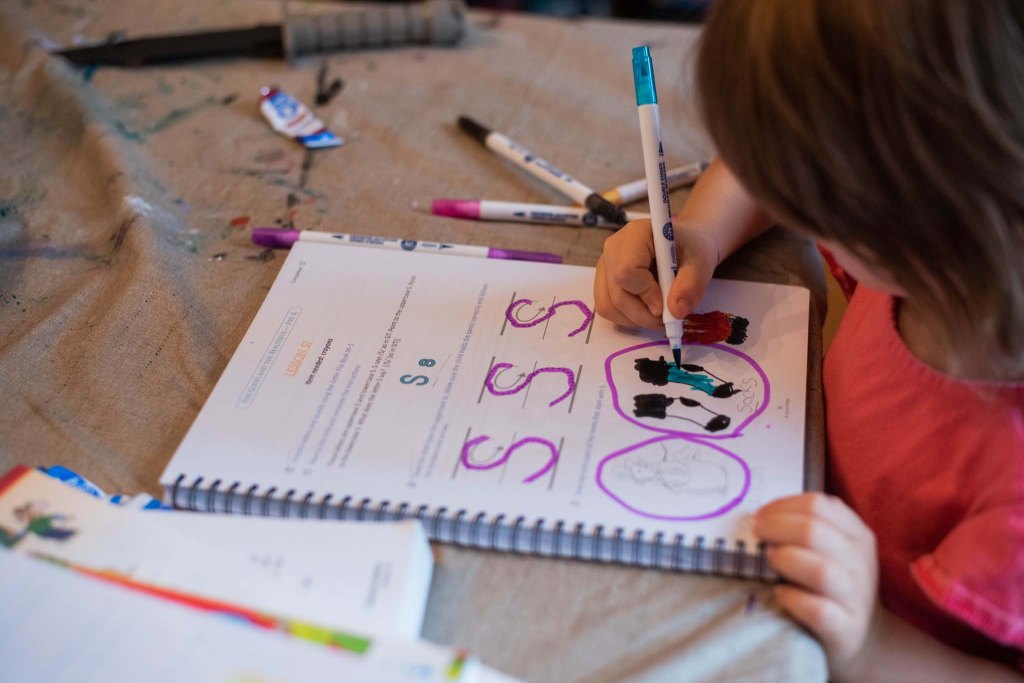
Little Miss is working her way through language arts curriculum from The Good and The Beautiful. I would say English is the most difficult for her in many ways because she seems to forget her letters and how to sound out words one day and remember it all again the next. I don’t know if it is she really doesn’t remember how to do it all or if she is just showing her stubborn streak (which she totally gets from her father’s side of the family) and pretending she doesn’t remember how to do any of it. Either way, it makes me want to scream some days so teaching her is also teaching me patience. Every day. All week long.


Math

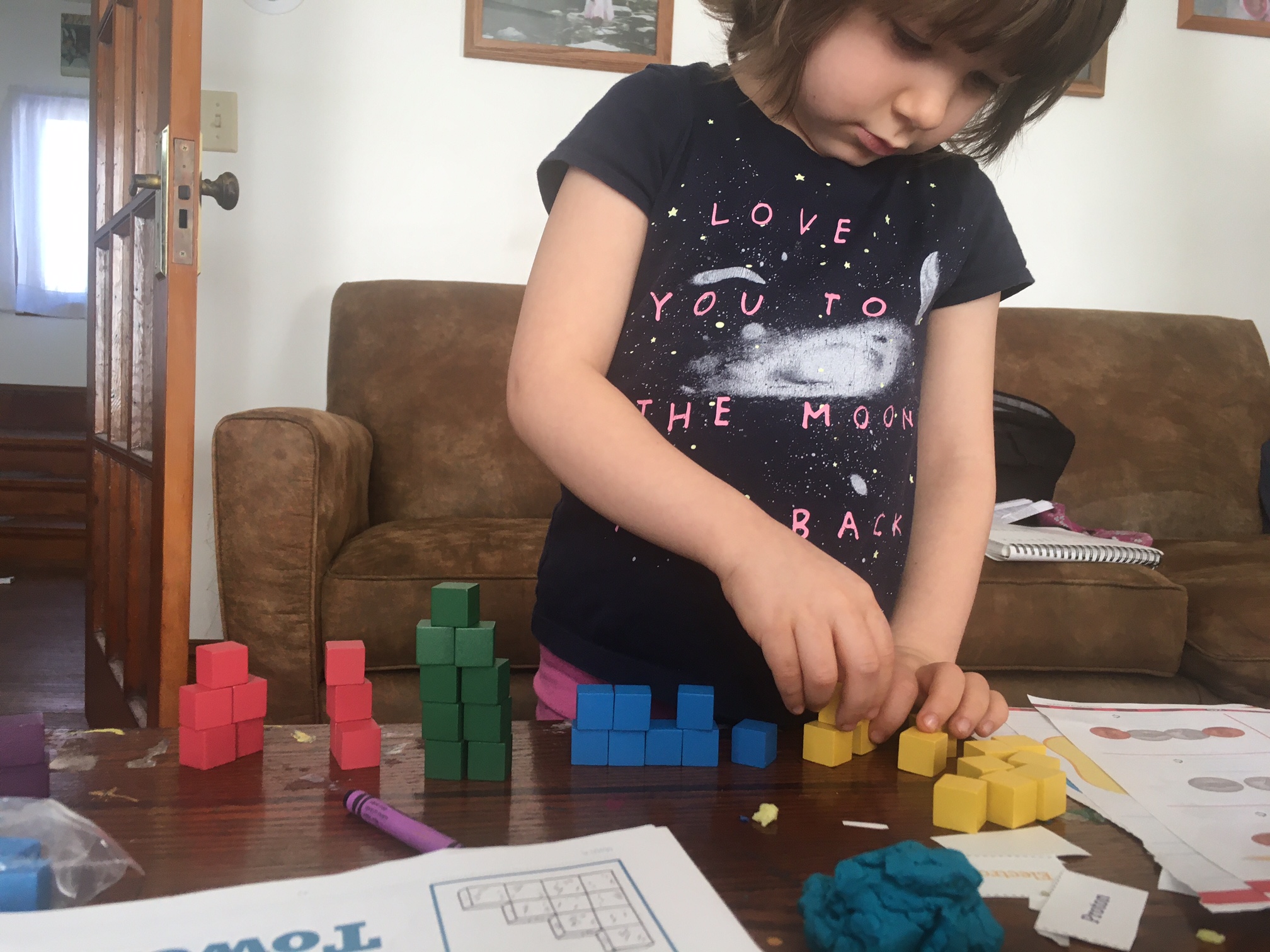
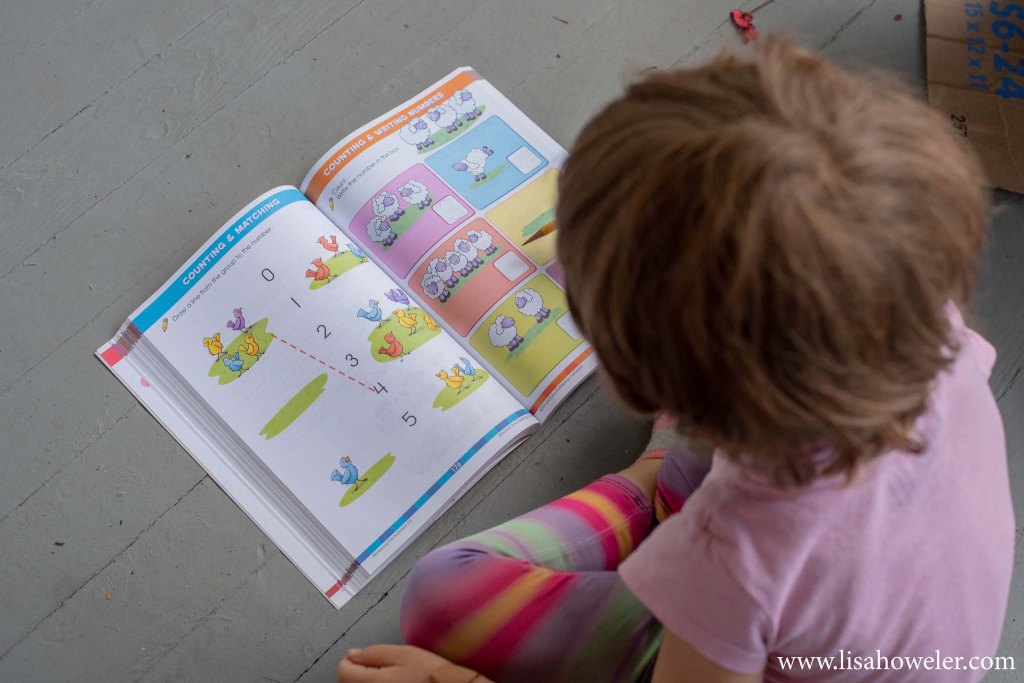
Math is Little Miss’s thing. She loves it. She does not, however, always love doing it the way she is asked to do it. We are currently working with a curriculum from The Good and the Beautiful which utilizes manipulatives so the child can use some hands on activities to solidify not only numbers and how to count, but also how to recognize patterns and follow directions. The other day I asked her to use the wooden blocks the curriculum came with to build a stack of blocks the same way it was built in the photo. She did it differently and when I corrected her she flopped her hands at her side, flounced a small amount, and rolled her eyes up to the ceiling.

“Well, that’s not how I do it,” she huffed.

I told her it wasn’t about how she does it this time. The assignment was to follow the directions. She responded with another eye roll and arm flop so I finally completed the build for her and told her why it was right and hers had been wrong.

“That way is boooring,” she informed me.

A lot of what we do is “boooring” to her right now so I have skipped ahead in math to give her more of a challenge. That will only work if she does it the way she is asked to, but then again, letting her change things up can help her as well, as long as she comes up with the right answer.

The other day I skipped ahead to look for challenges and we stumbled on “odds and evens.” I asked her to wait to do the activity until I could figure out the right way to explain odd and evens to her. She barely listened when I did explain, interrupted me and started completing the activity on her own so apparently she didn’t even need me to explain what it meant. Her brain moves quit fast when it comes to mathematical concepts, which means she is absolutely nothing like her mother and a lot like her father, which is not a bad thing.

Science

Little Miss and The Boy both use The Good and the Beautiful’s Energy Unit. I teach them at the same time twice a week and we may increase that to three times a week for the remainder of our school year.

Art

We do art whenever and wherever but I try to encourage the youngest, at least, to do some form of art through painting, drawing, or crafts throughout the week.

This week I set up a meeting with our homeschool evaluator for the end of our school year. In our state we file an intent to homeschool letter with the school district we live in at the beginning of the school year. We also file an affidavit attesting to what we will teach our children throughout the year. Our state recently lowered the compulsory age for children to attend school to six, when it was previously eight. I think I have that last age correct.

Anyhow, because Little Miss turned 6-years old after the Sept. 1 deadline we did not have to file an intent to homeschool for her this year. Technically I didn’t even have to teach her this year because I don’t have to file an evaluation for her at the end of the school year (prior to July 1). Regardless I taught her last year and I am again teaching her this year. Last year we focused on preschool and kindergarten and this year we are focusing on kindergarten and branching into first grade.

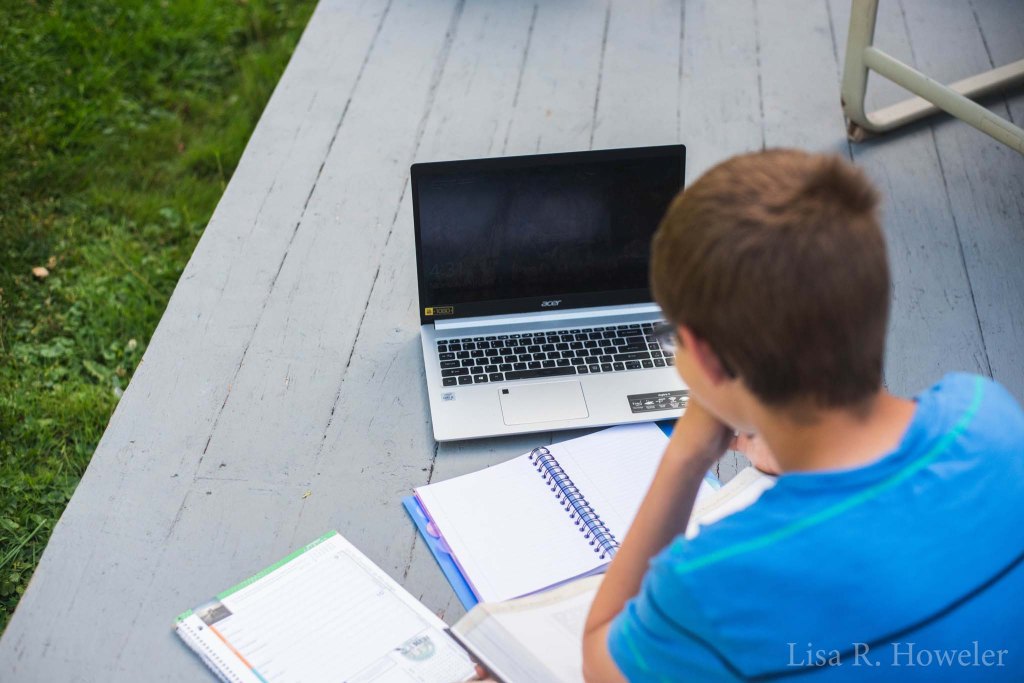
I do have to file an evaluation for The Boy and he also has to take a standardized test, which he can do on the computer. I know the children are anxious for the school year to be over, but, alas, they still have about three months left so they will have to hang in there. Luckily our weather is warming up so at least they can do some of their work outside on the porch or even scrap part of that work for a couple of field trips.

Educationally Speaking: Homeschooling updates or why I have more gray hair now

Based on the title you might think my children are causing me stress during our homeschooling journey, but they are not.

I’m causing my own stress by worrying I’m not teaching them correctly and comparing our journey to the journey of other other students, homeschooling and otherwise.

Or at least this is what I had been doing for part of our school year but in the last month or so, something clicked and I realized my children are following their own educational path and that’s not only okay, but a good thing.

In addition, the students who are attending public school around us right now aren’t even receiving a consistent education with students being pulled in and out of the classroom and tossed onto virtual learning on a whim. I can’t even imagine how hard it is for public school students right now to figure out whether they are coming or going in their subjects.

I think some parents who do not homeschool their children, see homeschooling parents as being foolish, unqualified, and unable to provide their children an actual education. In some cases, this may be true, but in the majority of cases, a parent truly can provide a very well rounded, high quaility education for their children at home. One reason they can do this is because of the plethora of homeschooling and educational resources available to parents, students, and teachers in book form and online.

Another reason they can do this is because of all the support available within the homeschooling community. Homeschooling parents love to see other homeschooling parents succeed, no matter why a parent has decided to homeschool.

One thing I have had to overcome with the idea of schooling at home is my preconceived notion that children have to be sitting at a desk with school work for six hours at time to be properly educated . This really isn’t realistic and isn’t even how children are taught in public schools. In public schools there are breaks for recess and lunch and extracurricular activities, so a child isn’t strapped to a desk for such long periods, but somehow new homeschooling parents seem to think our children should be.

One of the benefits of homeschooling is that it isn’t traditional schooling, which means it doesn’t have to operate like traditional school.

I find that Little Miss (6) does much better with short spurts of learning and breaks in between for art, creating or playing. Since we are homeschooling, we have that luxury and flexibility to allow that for her.

She’s also learning a lot more with this style of education than I first realized.

During the beginning part of the school year, I really felt like I was failing her because she is behind on her reading, or at least I feel she is behind. On one particulary frustrating day I wanted to cry I was so frustrated. I gave up on reading for a bit. Instead, I handed her a paper about sea animals and said she could color the animals. The paper suggested the child look at how plants and animals rely on each other, but also how some animals rely on another animal to survive.

I explained this to her and she said, “Oh, you mean like this Oxpecker bird and the crocodile.”

I looked at her with wide eyes and waited to see what else she would say.

Without prompting she said, “So, the Oxpecker bird helps the crocodile because it cleans its teeth and the crocodile helps the Oxpecker because it gets fed. Symbiotic.”

“What’s symbiotic?”

“Their relationship. It’s symbiotic.”

Symbiotic? Whoa. Where had that word come from?

“Where did you hear that word?”

“Wild Kratts,” she announced.

If you don’t know, Wild Kratts is an animated show on PBS about wild animals. It is a shoot off of other shows with the Kratt brothers (Zomoomafoob, etc. ). The brothers travel the world (or at least pretend to) and encounter different animals and teach their young viewers about the animals. Wild Kratts presents them as animated characters who have joined with other characters to rescue various wildlife.

It wasn’t only that she had learned the word that startled me, but that she had retained the information, was able to repeat it clearly, and also remembered the rather large word to describe the relationship.

She moved on as she pointed to a fish on the page and slid her pencil across the paper to indicate it was related to the shark on the page.

“So this is a Remora fish,” she announced, pointing to the picture of the fish, which was not labeled. “Remoras hang on to the shark and when the shark kills something there will be little bits of food for the Remora to eat. It swims underneath this shark because it gets the pieces of food that drop from whatever the shark is eating. They have a symbiotic relationship. Their relationship is kind of different from the others. I mean, Remora is a fish and the shark is eating fish so it’s a little weird for him, but it still gives him a meal and it’s still a symbiotic relationship. It’s good for the environment. It’s how everyone survives.”

I just sat and stared at her and wanted to cry, this time from joy. Thirty minutes earlier I had been in tears because she was writing her “c” backward and blanked on identifying “s”, but here she was now defining symbiotic for me. And when she couldn’t figure out I wanted her to combine the sounds of letters together to create words? I was like “Oh my gosh. She probably has a learning disability.”

Mind you, this was the first week we were really focusing on blending sounds so why my mind went to her having a learning disability, I have no idea, other than I knew I’d have to research how to teach her differently if she did have a learning delay. I wanted to nip it in the bud early so she doesn’t struggle later.

I should have realized she is learning a lot more than I thought by how she speaks about activities or crafts, such as when she was making slime and was explaining to me, “You mix it until, well, you know, you get the right consistency.”

She couldn’t explain what consistency was with an official definition, but she knew that her slime had to be either thicker or thinner and knew that was somehow related to the word consistency.

My son was similar at her age. Reading letters wasn’t really his thing but his comprehension and verbal skills were way beyond his age. It’s the same now, which is why at 14 I have him reading books he probably wouldn’t be reading until 10th grade, at least at the public schools in our area.

Right now we are reading Lord of the Flies, which I think I read in 10th grade, but maybe 9th. I can’t remember.

In the first part of our school year we read Silas Marner by George Elliott, which isn’t really a book I hear about a lot of 14-year old boys reading.

We will read To Kill A Mockingbird in the last half of our school year.

In addition to reading and comprehension, I will be starting a new math program through The Good and the Beautiful with my daughter once it arrives in the mail. The program incoporates storytelling in teaching math and since Little Miss loves storytelling (making them up, reading and watching them) I think she will love this curriculum. I bought it on sale last week because they are going to be phasing it out for a new curriculum sometime this year.

We have also started a science program that I can use for both of the children. It offers an extension for my son to answer questions from for additional information from each lesson. It is also through The Good and the Beautiful.

For my son’s history, we continue to use Notgrass’s From Adam to Us and I continue to supplement with various videos, books, web sites, or activities. We also use resources they provide through their history site.

Two weeks ago I started adding open-book quizes to his History lessons by developing the questions and answers myself. I allow him to use his books to find the answers as I feel it will help to solidify the information for him. It means I have to sit and read every section I assign him and take about 30 to 45 minutes to develop the quiz, but I like the idea of getting even more out of the reading than he can simply by reading the section.

I am trying to add more to his schedule, but I am also trying to not stress if he either misses an assignment or we both forget to complete one. I have learned that homeschooling is a journey in education and the more relaxed we are about it, the better the kids and even I learn, because through homeschooling I am also learning more about the subjects they are studying.

I either forgot a lot of what I was taught in middle and high school or my school did a horrible job at teaching history especially.

I would like to add a government course to my son’s classes in the spring, but we will see if that happens or if we push that off until the fall. With all that is going on in the world I think it would be a good idea for him to know how our government is supposed to work instead of how it is working right now, which isn’t great.

I’m finding one of the benefits of homeschooling is being able to take the time to show my children what actual adults should act like and that bullying, while glorified now by Hollywood and all of the media, is not what we should be doing. In some ways I am sheltering them from this by keeping them in a home education environment versus a public one but in other ways I am exposing them to the cruelty of the world in a slower, less overwhelming and panic inducing fashion.

There are a lot more the kids are learning this year that I haven’t mentioned in this post, but I plan write about that in some separate posts in the next month or so.

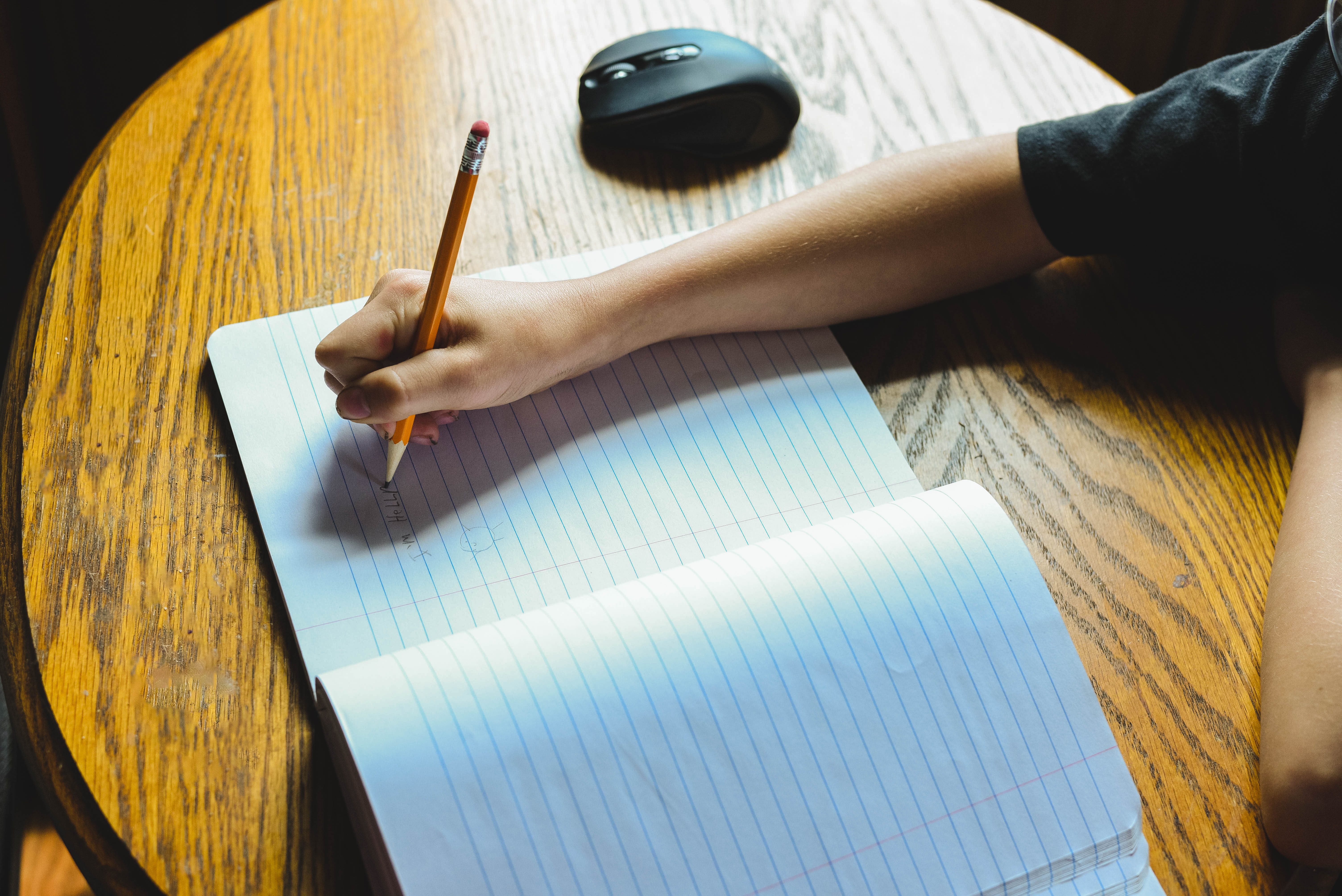
Homeschooling is under way

We started homeschool last week and so far it’s going fairly well. The whining from both has been limited, thankfully. We decided to ease into lessons by only working on three subjects a day during the first week for the oldest. I’m adding another subject this week and possibly a fifth by the third week.

So far The Boy is doing Bible, English, and History every day. He does Math Monday, Wednesday, and Friday and Science Tuesday and Thursday. We also plan to add some grammar lessons later in the year (see my rant on Sunday about grammar if you want to know what I think about grammar *wink*. Seriously, though, I think it is important but last year we had an extensive course so this year it will be less extensive.)

We plan to add economics to The Boys homeschooling experience this year, even though the course was written for high school students. I tend to think my child is pretty smart and want to rush ahead into educational territory that might be beyond him in some ways. On the other end of the spectrum, I sometimes pull back and decide not to teach him something because I think he’s not ready but he’s clearly ready and beyond that lesson, because his comprehension is so advanced for a kid his age. My mom says I underestimate him at times and I think she’s right, but then I worry, “But what if I overestimate him and he ends up feeling overwhelmed and inadequate because the subject matter was beyond his capabilities at this development stage of his life and he doesn’t say anything because he thinks I’ll be upset???”

I don’t overthink too much. I don’t. Do I? Maybe I do. I don’t know. I’ll think about it some more and get back to you.

For the youngest, I had to ease into the sit-down work by taking breaks and allowing her to go outside when she asked to (she loves going outside since we moved to a more rural setting) and turning it into a math lesson. I suggested she go outside and collect 20 autumn colored leaves and then we would count them together when she got back.

We need to develop a unit on trees this month I think. She loves collecting leaves. I need to figure out how to collect the leaves in a book. Surely there must be DIY information somewhere about how to do this? If someone reading this knows how to do it, let me know in the comments?

Last week I was reminded Little Miss loves numbers and is a whiz at them. Whose child is she? Oh. Right. My husband’s. Because she certainly didn’t get her love of numbers from me. Numbers make my stomach do weird things and then my head goes all funny and I have to reach for a book (with words) to steady myself. The Boy is good at math but hates it. Little Miss seems to love the counting, but she is only 5 (almost 6) so what does she know?

As for curriculum for The Boy this year, we are using Apologia Exploring Creation with General Science (second edition) for science; From Adam to Us by Notgrass for History/English/Writing/Vocabulary/Bible; American Literature by Apologia (which is also being used as history and writing on some days); CTC Math online for Math; and Exploring Economics by Notgrass for economics. From Adam To Us includes several fiction books to read throughout the year, which count for literature/language arts/English. We also plan to add Wordly Wise in soon for grammar and vocabulary.

(FYI: If anyone is interested in the American Literature book, the hardcover student textbook and the student notebook, where the student answers questions, is currently 76 percent off on Christianbook.com.)

So how about all of you parents out there? Are you homeschooling this year? Virtual school through your district? Or are your kids back in the physical classroom? Let me know in the comments. I’d love to know what curriculum you are using if you are homeschooling.

No. Seriously. We homeschooled before it was the thing to do. And yes, you can do it too.

To say watching parents clamor to homeschool in the United States is a surreal experience for me is an understatement.

When I started homeschooling my son three years ago I was looked down at by former friends and his former teachers. I remember hearing a former friend disparge another friend who had chosen to homeschool her children. I had a feeling similar things were said about me when I chose to do the same. I was ostracized as soon as I chose homeschooling over the small private school he has attended before.

Now here we are starting another year (in a couple of weeks), watching parents rushing to enroll their children in online learning or planning to homeschool their children in other ways. Most of the parents I know who are choosing to homeschool this year will be using their school district’s online programs. They will have access to their children’s regular teachers in one way or another.

More photos like this can be found on my account at Lightstock.com.

In our state the governor changes his mind about every five minutes on policies and guidelines for the schools so I’m pleased as punch we don’t have to worry about all that mess. Before COVID, we had considered sending my son to the local public school (this county is so sparsely populated it has one school for the entire county.). Now we aren’t even mulling it over. He’s staying home and I’ll be using curriculum I chose that hopefully he will enjoy. Let’s be honest, though: it’s school so he probably won’t enjoy some of it no matter how hard I worked to find curriculum I felt would provide him a proper education while also being slightly interesting.

I’m sure there are plenty of parents out there who are terrified about homeschooling their children or having their children be educated online. No matter how you’re handling your child’s school year this year I am confident you can handle it, Mom and/or Dad. If you are worried about your child’s education then that already shows what a good parent you are.

More photos like this can be found on my account at Lightstock.com.

If I could give you any advice at all it would be the advice I gave myself just today when my mind started racing about my need to lose weight: one step at a time. It works for homeschooling too. I don’t know if any of you are like me, but I always think I have to apply everything I’ve ever read about weight loss or homeschooling in one go. I have to do it all at once and if I don’t do it like the people I read about did it then I might as well give up. At least that’s what I hear in the back of my head on a loop and today I took the scissors to the loop.

I don’t have to start working out like a madwoman right now after years of not working out. I don’t have to eat exactly like someone online who lost 20 pounds in a month. Their body is not my body.

I don’t have to buy every single curriculum out there for my childen and fill their days so full that their head spins.

This school year will definitely have its challenges but I have a feeling parents and children alike are going to find some moments during it that they will look back on as a memory they’re glad they made. Yes, schooling at home will be hard for parents who work outside the home and sacrifices may have to be made but I have a good feeling those sacrifices are going to be worth it.

More photos like this can be found on my account at Lightstock.com.

Homeschooling my children hasn’t always been easy and I often wonder if I’m screwing them up but when I see how relaxed they are learning at home, when I see the variety of experiences they are having and when I see the struggles public schools are facing this year, I am glad we chose to homeschool and were in the position we could.

More photos like this can be found on my account at Lightstock.com.

If you have decided to homeschool this year, for whatever reason, here are links to a couple other posts I’ve shared in the last few months (and beyond) about homeschooling. Some of the links might not apply now that we are moving out of the COVID situation and into a new school year, but others will.

Suddenly Homeschooling? Here are some tips and links to help you out. Sorry I can’t send wine.

More Links For Parents Suddenly Homeschooling

How Homeschooling Has Made Life Easier and Less Stressful. Well, sometimes.

Our Homeschooling Journey So Far This Year (2019)

More links for parents suddenly homeschooling

American parents! How are you doing?! Are you surviving with all the kids home? I know, you love them, but it can be overwhelming when you’re not used to it.

Pennsylvania’s governor announced Monday that public schools will be out of session for another two weeks so parents may be further stretched and stressed about how to continue their children’s lessons. On Saturday I shared a post with some advice and ideas about how to tackle this hurdle.

I had already started writing another post to help parents in need of resources to help with educating their children during this time and planned to post it this week before I heard the news about the extended closure Of course, and luckily, many parents can either connect with their teachers online or were sent home with work for their children to do.

But, on the off chance some of you weren’t provided with these connections, I’m jumping off my previous post and adding a little more information and some additional links.

000012_DSC_8108

If you have further links or know of bloggers, etc. who have lists of resources and ideas for parents who are homeschooling against their will (so to speak) let me know in the comments so I can include it in future posts.

When I mentioned Notgrass social studies/history curriculum this past weekend, one thing I didn’t explain is that it can be used to cover English and Bible as well because the curriculum (there are a variety of different sets for different ages to choose from) offers reading, creative writing, a “Biblically Thinking” assignment, and vocabulary.

The America the Beautiful curriculum includes various books on various subjects that can be read separately or at the same time as your daily reading to support what you are studying. These are usually classic books such as Homer Price and Little House on the Prarie and somehow tie into the history lessons the child is reading about. We have been reading other books , either for our local homeschool group’s book discussion (though we never made it to one of the discussions for various reasons) or on our own, so we have only read one of the suggested books so far (Homer Price, which we are currently reading).

Notgrass offers a variety of history curriculum for a range of ages (elementary to high school). It does cost, of course, but you could find the curriculum used on eBay or other sources (including a used homeschooling curriculum group on Facebook) and then sell it when you are done.

In addition to the resources I mentioned Saturday, we have also used Easy Peasy Homeschool in the past, which is a free homeschool site that can be used as a complete course or supplemental resources.

000007__DSC0936

For math, we are currently using CTC Math. This math site can be used for children of all ages, but we are currently using it for our 13-year old.  There are some things we like about it, but one we don’t like is that when the student completes their online assignment, the program does not show them what mistakes they made and how the teacher came to the answer. There is a subscription fee for this program, but you can choose the monthly option.

In the past, we have also used Teaching Textbooks for math. We are not using Teaching Textbooks at this time because we are waiting for them to upgrade so they no longer need to use Adobe Flash, which is being phased out of web sites in the next year and which browsers are now blocking, making accessing their lessons difficult for us at this time.

Someone has started a Google Docs link with a list of live streams and other online events and what time they are being held. Many of these are for younger students.

For my youngest, we use The Good and The Beautiful’s language arts curriculum (we haven’t used their math curriculum yet), which I mentioned Saturday, but I forgot to mention that we also use ABC Mouse, which I’ve heard is offering their service for $5 a month for the first two months because of all that is going on. We pay $10 a month to use it and it provides lessons to help toddlers, preschoolers and Kindergartners learn their alphabet, numbers and a variety of other subjects. It is all online learning and utilizes characters, games, videos and ebooks to educate.

My daughter loves it, but my one issue with it is that she likes to spend more time dressing and changing the appearance of her avatar than actually doing her school work, so I have to limit her fashionista time when we log on. We don’t use ABC Mouse every day. In fact, I don’t spend a super long time on set lessons with Little Miss. I find her attention isn’t great so short lessons broken up throughout the day are best for her. We also use everyday situations as an opportunity to educate.

DSC_8904

The past couple of weeks we have used a couple of the links I had provided Saturday and so far my daughter (who is a huge animal lover) has loved the live animal cams at the San Diego Zoo (she is in love with orangutans and the siamangs) and any of the lessons about animals on the Classroom Magazine that Scholastic is offering for free for the next 30 days.

My daughter has loved PBS’s Wild Kratts for a couple of years now and has learned so much about animals she simply regurgitates it now.  When we were watching the African Safari Exhibit live cam Monday I said I thought I saw some antelope and she informed me: “Normally they live on the Serengeti.”

I said, “Oh. Wow. Okay. Well, how many 5-year olds know that let alone can say Serengeti?”

She said, “Well, other 5-year olds don’t watch Wild Kratts like I do.”

So, there you go. Check out Wild Kratts streaming on Amazon with the PBS Kids app so your younger kids will know as much about wild creatures as my 5-year old does.

My daughter and I also spent a good amount of time watching the bald eagle on the live cam in Hanover, Pa., sponsored by the Pennsylvania Game Commission. Just watching that eagle sit there on his/her egg (not sure if mom or dad was there Monday) was so relaxing and we plan to watch every day until, and after, the eggs hatch.

We have a bald eagle nest near us and people go to look at it, but some people yell and say we need to leave the eagles alone. They are afraid all the people looking (it’s off a main highway) will chase the birds from the nest, but they keep coming back every year so I don’t think they will. Plus, most people who take the walk to the area to see the nest are quiet and respectful, take a photo if they can, and then tip toe away. We may try to go see the eagles when the weather is better.

Michelle at Blessings by Me also suggested Super Charged Science for free and paid science lessons.

Here is another article listing tons of online learning options.

The Great Courses Plus is offering 30 free days of its online courses with the promo code FREEMO.

One of the only things I am loving about all of this craziness (because there is not much to love at all!) is that the tradition of reading to children is coming back by authors who are offering live readings of their books each night around bedtime.

Those you can follow include:

Andrew Peterson and his The Wingfeather Saga.

Miss Frizz Mobile Learning

Josh Gad on Twitter

Author Christina Sootornvant reading from her book Diary of an Ice Princess.

This site has list of a bunch of other authors/illustrators and celebrities doing the same thing.

For adults, or older children, who enjoy William Shakespeare and Patrick Stewart, he is reading one Shakespeare sonnet a day on his various social media sites.

There are tons of bloggers writing about their “suddenly homeschooling” or “continuing homeschooling” situation, including:

All Things Momma (who shares some ideas for entertaining your young children at home and educating them at the same time.);

and Kat at The Lily Cafe.

and, of course, Heather Dawn at Every Small Voice, who I mentioned in Saturday’s post.

If you have any other bloggers who are chatting about all this, please feel free to share their links in the comments and also share any other resources you know about.

Suddenly homeschooling? Here are some tips and links to help you out. Sorry, I can’t send wine.

If you are a parent whose children attend public or private school and now they are suddenly home you may be panicking a little. That panic may be because you know they are going to drive you crazy, or it may be because you are afraid they are going to fall behind on their lessons. Either way, you’re feeling the stress right now.

Welcome to the world of this already homeschooling mom. *wink*

Seriously, though, stay calm. It’s not as hard as you think.

Maybe your child’s teacher has already given you lessons, paperwork, etc., but maybe your child has already worked through it or would simply like some supplemental educational resources. Either way, I’ve pulled together some links and advice that might help you feel a little calmer about the situation you’ve been placed in.

Blogger Heather Dawn from Every Small Voice had some great advice about this on Friday, actually, so make sure to check out her post as well. 

One of the most important lessons I have learned from homeschooling is something Heather mentioned on her blog as well and that is that homeschooling is not going to look or act like public school and that is okay.

As I told a friend this week: The issue is that a lot of parents think homeschooling has to be exactly like public school, in that the kids have to be sitting in a class for six hours at a time. That’s not the case. Kids aren’t even in instruction time all day at school. They have recess and lunch and study hall and getting on and off buses and by the time they are done they really have only had 2-3 hours of instruction time, perhaps a little more as they get older.

Also, with younger children, everyday activities can be a chance for learning. For example, when my daughter wants to play a game or watch something on my phone she has to type in my passcode and has been learning her numbers that way. If she wants to watch one of her kid-friendly shows on YouTube, she and I search for it together, which helps her practice her letters.

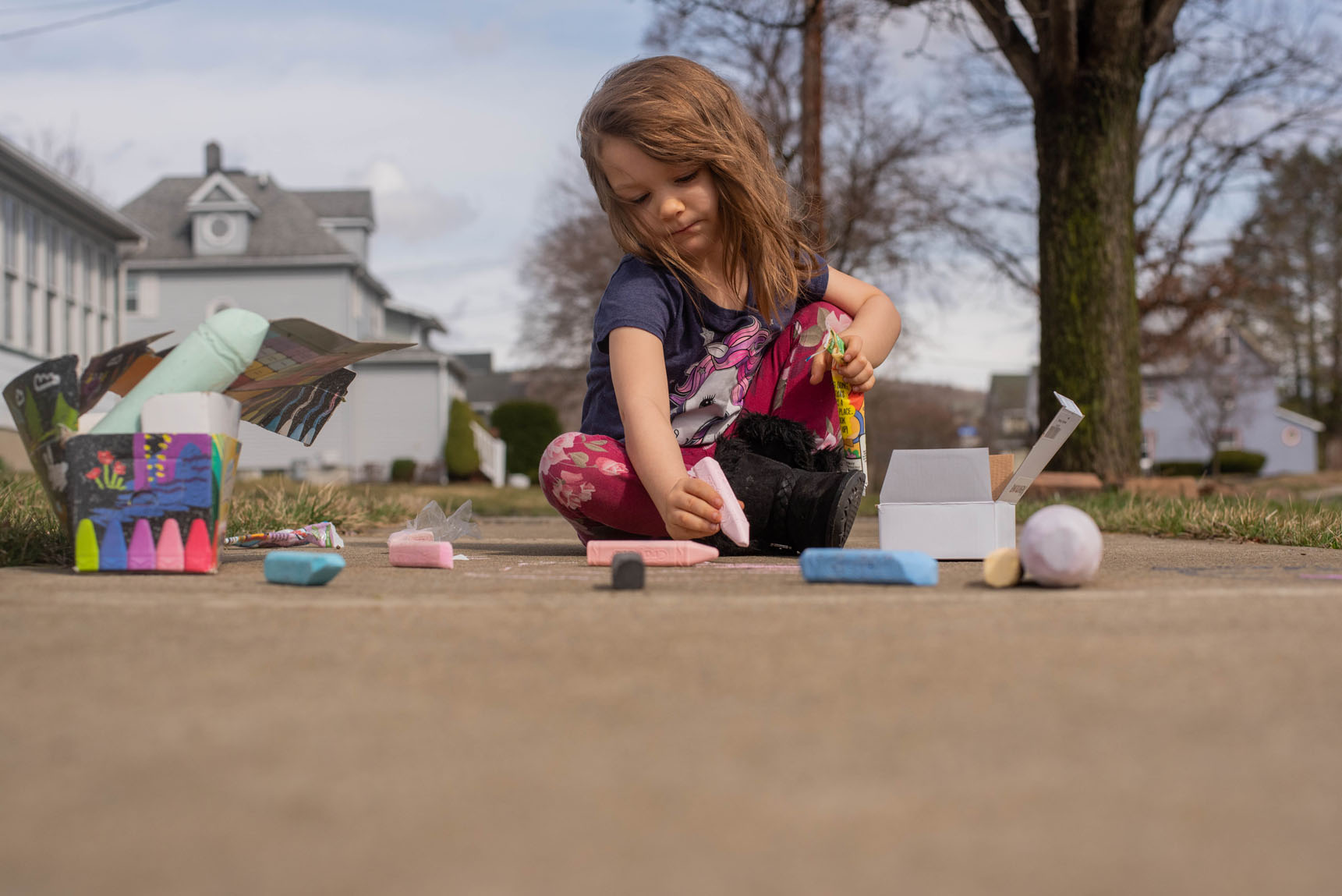
On Friday my daughter and I were outside drawing with sidewalk chalk and she was practicing writing her letters at the same time.  Homeschooling creates many hands-on situations like this for every age.

DSC_8848

DSC_8912Unlike what some may think, homeschooling families do not simply sit at home playing video games, though they probably have more time to do that than some students since they don’t have homework. They do all of their work during lessons, which means homework is completely unnecessary. 

And speaking of lessons, some students are self-sufficient when it comes to their lessons and assignments and some students require the parent to be more of a teacher to them. Every age group and student is different. Our family has set curriculum that I research prior to each school year, but we also supplement with a number of resources, both written and digital.

We currently use America the Beautiful for our social studies; Apologia for our Science; CTC Math for math; Saxon Grammar and Writing for part of English and we read books through America the Beautiful and on our own for English.

For my 5-year old we use The Good and the Beautiful.

I won’t lie that we have been pretty thrilled with the free resources popping up for parents who have been flung suddenly into a homeschooling situation so I want to share some of the links I’ve found that have popped up recently, as well as resources we use in our regular homeschooling lessons.

So far, we have enjoyed Mo Willems, who is the current Kennedy Center Artist in Residence (literally), and is offering an art demonstration and lesson for young children every weekend day at 1 p.m.

Michelle at Blessings By Me mentioned a resource in the comments and I’m adding it here. Supercharged Science will send you science experiments via your email and explanations of the experiments, according to Michelle. Thank you to her for this additional link!

Crash Course offers digital learning on their YouTube channels related to history and science and current events. Their channel is aimed toward older children maybe 12 and up. My son has already been a little more mature than his peers so it’s hard for me to gauge the age that this would be appropriate for accurately. You might just want to watch a couple videos and see if the channel would be right for your student.  We use their videos as supplemental resources for our Social Studies and Science.

Speaking of YouTube, you can find a lot of supplemental videos there for a variety of subjects, but always be sure to vet them and double-check they are from reliable sources. 

Also on YouTube are a few videos from a farmer friend of ours. It’s good for students to understand the importance of farmers, especially right now when people are panicking about a possible lack of food. Mark creates videos to educate children and others about dairy farming. I don’t know how he even has time with all the work he has on the farm! My 5-year old really enjoyed this one.

I also saw a blog post from Cornerstone Confessions that shared a huge list of online activities to support music education.

I’m barely on Facebook, but I did happen to catch a very extensive list of sites offering either virtual tours of museums and zoos or other educational opportunities. The sites range from offering ways to learn about art, history, culture, and music and other academics to simply offering ideas for child-related activities. FYI: not all these sites or activities are free.


Have any tips of your own for parents who are “suddenly homeschooling”? Or links to blog or sites that do? Let me know in the comments and feel free to leave links (I’ll check my spam in case any of them get kicked in there.)