Educationally Speaking: Looking back at our homeschool year

I am absolutely floored that this school year is over and I know I say that every year but this year really did fly by.
As I always do at the end of a school year, I sit here feeling as if I didn’t do enough, teach enough, or find enough educational opportunities. Looking back through photographs and the paperwork I’ve gathered together for our end-of-the-year portfolio, though, we did a lot more than I realized.

This was The Boy’s final year of school and he did a lot less for me than I wanted to but he was also enrolled in a building and construction class at the local technical school and gained way more experience and education there than I could have offered him.

We did work on some English reading, including Sherlock Holmes and Beowulf, but he also read or listened to several books independently throughout the year. He also researched quite a bit of history on the Byzantine empire on his own and then learned about how to paint Warhammer models.

Many afternoons were also spent helping his grandfather with various home DIY projects and property upkeep and he helped the local cemetery association clean up the cemetery, including the gravestones

While he isn’t yet sure how he wants to use the education he received there, he will always have that knowledge in his future, whether it is for an occupation or in his everyday life.

He’s taking some time off and easing into his next step, something his dad and I support.

He still has a couple of things to write up for me and then his portfolio, which I will present to our state-certified evaluator next week, will be done.

Little Miss and I had a lot more variety in our education this year with not all of it focused on worksheets or physical curriculum. We studied subjects in a more relaxed way, spending more time on subjects that interested us instead of feeling like we had to quickly move ahead.

We did use some curriculum, such as BJU for English and The Good and The Beautiful for science. We also accessed an online curriculum called CTC Math for our math course, and combined that with The Good and the Beautiful, Math with Confidence, and worksheets.

For history and literature, we read historical fiction, including The Sign of the Beaver, Johnny Tremain, The Littlest Voyageur, and Caddie Woodlawn, while watching or reading supplemental material for the subjects each of those books dealt with.

We mixed lessons about Pennsylvania history in with our regular history. We are required to teach history about our state at some point during our children’s elementary school years, but I focus on Pennsylvania and local history at some point in the year, every year.

This year we had the added information about our family fighting in the Civil War, which I researched more of as I wrote a couple of blog posts about that subject.

In the beginning of the year, we attended a two-month art class sponsored by the local library and led by a local artist. He honestly did not teach much at all (and I probably would not attend a class with him again), but having the chance to interact with other children was the main benefit of that experience.

We also attended a couple of field trips with the local homeschool group. That group only met once a month, though, so the opportunity for socializing was not as strong as I had hoped.

Next school year we hope to join a local co-op for some more hands-on learning and interaction with other homeschool students.

There was a time of adjustment for Little Miss that is continuing because one of her homeschool friends was sent to public school this year. That left her without friends to interact with, which is one reason we have signed her up for VBS events, 4-H clubs, and library events this summer.

She participated in a 4-H cooking class in the spring, which she thoroughly enjoyed.

We read books either together or separately throughout the year. Little Miss read two and a half Harry Potter books this past school year. She’s almost done with the third.

Together we listened to Caddie Woodlawn by Carol Ryrie Brink and The Magician’s Nephew by C.S. Lewis. Out loud to her, I read The Saturdays and The Four-Story Mistake by Elizabeth Enright and Miracle on Maple Hill by Virginia Sorenson, as well as Johnny Tremain by Esther Forbes (later learned this is usually read by eighth graders), The Sign of the Beaver by Elizabeth George Speare, and The Littlest Voyageur by Margi Preus. We also listened to part of Miracle on Maple Hill on Audible.

In the 2025-2026 school year we plan to use some curriculum but also leave ourselves open for more exploration and relaxed education. This doesn’t mean Little Miss will be left to do whatever she wants, when she wants, but she will have more of a say in what she learns and how.

She will be in fifth grade, and I want her to have a more relaxed educational experience that will let her feel less like education is a chore and instead make it feel like it is something fun and exciting to do.

I’m researching curriculum now and have already been given some great ideas in groups and by Erin from Still Life, With Cracker Crumbs, who homeschools her son Wyatt.

We are also starting homeschooling activities in July this year, instead of August. In Pennsylvania you can count any activities held after July 1 toward the next year’s hours/days so if we participate in anything remotely educational this summer, I will be counting that toward our final hours. This will allow Little Miss and I to take breaks throughout the school year at any time we need to, without losing educational time.

Honestly, every day offers some sort of education, but I am not the kind of parent who can do something very minor and count that toward school. I know some parents would count a walk down the street as PE and call it a day, but I feel there needs to be active learning of some kind going on for it to count as a full day of school.

What is nice about homeschooling is that there is no real wrong way to do it (unless you sit your kid in front of a gaming device all day, every day, and teach them nothing). There are a variety of avenues to reach the ultimate goal of homeschooling, which is to provide a child with a well-rounded and complex educational experience that goes beyond the four walls of a classroom.

I am excited to see what the 2025-2026 school year will bring us and I’ll try to keep my blog readers updated on it better than I did this school yar.


Lisa R. Howeler is a blogger, homeschool mom, and writes cozy mysteries.
You can find her Gladwynn Grant Mystery series HERE.

You can also find her on Instagram and YouTube.

Educationally Speaking: The end to another homeschool year

It felt so weird yesterday morning when I realized I didn’t have to plan our homeschooling week out and I also didn’t have to get ready to argue with Little Miss about lesson time.

It felt weird and also freeing. I literally did a bit of a dance in my kitchen while warming up my tea as it hit me that I can take it easy most days for another two months.

Speaking of taking it easy, I want to take it easy even during homeschooling next year, especially after talking to my evaluator and realizing homeschooling doesn’t have to be as strict as I have been making it.

“You realize you only have to teach these subjects at some point during grades kindergarten to sixth right? You don’t even have to teach every subject every year, let alone every day.”

I’m paraphrasing that by the way. That’s not an exact quote.

I will be teaching the core subjects every year, of course, but as she pointed out to me – most public schools in my state are focused on reading and math and a small amount of science or history before sixth grade. Apparently, I am an overachiever because I have been teaching math, reading, science and history every day, every year since kindergarten with Little Miss and she is going into third grade this year.

I’ve now been told that, yes, I should teach those subjects throughout the year but I can break it up however I’d like. I can take a month and only focus on English or Math or I can mix things up and teach science a couple of times a week.

The reason I would most likely offer math, especially, every day, is that is a subject where concepts need to build upon one another and be consistent to be sure it is in the brain. It’s more of a subject where practice is very important.

The Boy is another story.

I have to make sure he takes certain courses before he graduates, whether those classes are taught every day or not. I’m also the one who determines if he graduates. Both me and my evaluator, to be more specific. And, well, if we really get technical, the school district does have to sign off on what I submit to them as well, but it’s unusual for them not to approve what a state-certified evaluator signs off on.

I need credits in certain subjects for The Boy from 9th to 12th grade. It’s four credits in English and three in Math, Science, and Social Studies, as well as two years of arts and humanities.

Those credits can be met by either about 120 hours of learning and studying time on the subject (including activities and independent reading) or they can be at least 80 percent completion of a textbook.

He will be attending a trade school for high school students in the fall and part of what he learns there will most likely count toward those credits as well.

The Boy will need two more credits in English and Science. He only needs one more in math and history/social studies. I told him this means that his senior year will mainly be attending the trade school and arts and music. I’d say he liked the sound of that but he’s a teenager, so I mainly just received a grunt in response.

I am hoping to incorporate more art and music into schoolwork for both the kids next year. I really enjoyed being able to focus on artists, composers, and musical instruments throughout much of May with Little Miss.

I hope to be able to incorporate at least a semester of music lessons for The Boy in addition to planned art classes.

I have a feeling I’ll be hammering out all those details in the next two and a half months, even when I am supposed to be taking a break from it all.

In end of the year news, Little Miss and I read 34 books together with two of them being read on her own. The Boy and I read two together. It was one of those years where there were a lot of other things focused on. They were both good, deep reads, though: The Adventures of Huckleberry Finn and The Fellowship of the Ring.

When we start school up again – either in the middle of August or the beginning of September, it will be our sixth year of homeschooling. It’s insane to even think it has been that long. What a ride it has been. We’ve definitely had trials, tears, and some doubts, but in the end it has been one of the best decisions we ever made.

The Boy and Little Miss have had more time to explore their interests and also to spend time with their aging grandparents and avoid some of the more stressful situations that can develop at public school.

If we had to do it again, we definitely would.

Educationally Speaking: Homeschool update. On our way to summer break and taking a more relaxed approach to learning

We are on our last month of homeschooling before summer break and to say we all have summer brain is an understatement. Not even the teacher is focused all the way in on school right now. Because of our lack of focus, I have decided to dial down the strict workbook and textbook-heavy subjects for this month, but we will still be doing them twice a week.

I got to mid-April and realized I hadn’t focused as much on the arts as I need to in order to meet the requirements for the state we are in so I decided we would make May an art month. That means more lessons on artists (Monet, Cezanne, Picasso) and musicians (composers like Bach, Beethoven, and Mozart) throughout our week and fewer lessons on math, science, and history. We will still be doing those last three subjects, just not every day.

This is a relief for Little Miss who is so dramatic when I tell her it is time for her math lesson. You would think I would have told her it is time to clean the toilets at a frat house.

She often runs and hides, pulling a blanket over her head in a homemade fort she made by turning our couch to face the wall and hanging the veil-like curtains across it.

Once she sits down and does it, however, she really doesn’t have any major issues with doing the math.

She isn’t a fan of having to write letters either so that has also been a struggle this past year. I need this summer break as much as her.

However, I have told her she will need to do some math during the summer so that she doesn’t have to jump back into it cold in August when we start up again. I’m also considering starting school a month early this year. This will allow us to take more breaks throughout the school year at times when we feel beat down by the mundane routine of daily lessons.

I have been the most relaxed about homeschooling this year than in any previous year. I have finally started to accept that homeschooling is not simply school at home. It is not bringing the traditional idea of public school into your home.

We homeschool so we can break away from a system we do not feel is conducive with the need for children to be free to focus on their passions and to learn at their own pace. Homeschooling parents bring their children home to learn for a variety of reasons, but at the core of it is that the child is not thriving or might not thrive in the traditional environment.

For us, homeschooling has offered more opportunities for learning beyond the scope of a daily lesson. It has allowed us to take a subject my child is interested in and explore it beyond one moment in time in their education. It has also allowed us to go visit or go help my parents whenever is needed, which has been invaluable to us, especially to my son who is very close to his grandfather.

Resting on my newfound acceptance that homeschooling doesn’t have to look like a traditional public school day, we started taking a much more relaxed approach to our homeschool days sometime in March. We did math and reading lessons, but history was reading historical fiction and watching videos and then simply talking about history. Math was lessons in our book but also on ABC Mouse for the youngest. The oldest does his math online so there wasn’t much of a change for him. Reading or English has been some actual lessons about parts of speech and grammar but it has also been simply reading books out loud to each other, discussing hard words when we get to them or discussing what we read.

I read a post on Facebook recently by … that reminded homeschooling parents that homeschooling can happen at any time of the day. She wrote that you don’t have to read to your child only during the day and count that as a time of learning. Read-aloud sessions can happen at night before bed while waiting in the car, or pretty much anywhere at any time.

Life lessons and skills can be taught throughout the day.

Homeschool is a 24/7 type of education that doesn’t require a desk or a book or four walls around a child. It is a constant flow of information and knowledge that can come through the everyday journey of life.

With all that being said, yesterday Little Miss and I watched videos about Mozart while she made slime. We read Mrs. Piggle-Wiggle before bed for our English reading.

Today we have a homeschool gathering at the local library.

Tomorrow we will be painting in the style of Monet while watching videos about him and the other impressionists or while listening to Mozart. We will also probably read some from The Cabin Faced West for history and do a math lesson or simply go on ABC Mouse and have her play some games there related to what we’ve been learning in Math.

The Boy will be reading Fellowship of the Ring and working on a research project and also preparing some Minecraft creations for the art requirements under the homeschool guidelines for our state. Then he will go to work as a dishwasher at a local restaurant, which I see as another educational opportunity and an activity that fits in well with homeschooling.

Later in the week, we will be watching art history videos, and videos about famous composers, and I will be encouraging him to continue bass lessons at home since we are taking a month off from his formal bass lessons (which were 45 minutes away and a bit expensive for us this month).

This month, both The Boy and Little Miss will also be studying music from a book I ordered that is set to arrive today.

I am absolutely loving this freestyle type of learning that incorporates music and the arts into our academic lessons. It’s something I plan to do more of during our next school year.  

Suddenly homeschooling? Here are some tips and links to help you out. Sorry, I can’t send wine.

If you are a parent whose children attend public or private school and now they are suddenly home you may be panicking a little. That panic may be because you know they are going to drive you crazy, or it may be because you are afraid they are going to fall behind on their lessons. Either way, you’re feeling the stress right now.

Welcome to the world of this already homeschooling mom. *wink*

Seriously, though, stay calm. It’s not as hard as you think.

Maybe your child’s teacher has already given you lessons, paperwork, etc., but maybe your child has already worked through it or would simply like some supplemental educational resources. Either way, I’ve pulled together some links and advice that might help you feel a little calmer about the situation you’ve been placed in.

Blogger Heather Dawn from Every Small Voice had some great advice about this on Friday, actually, so make sure to check out her post as well. 

One of the most important lessons I have learned from homeschooling is something Heather mentioned on her blog as well and that is that homeschooling is not going to look or act like public school and that is okay.

As I told a friend this week: The issue is that a lot of parents think homeschooling has to be exactly like public school, in that the kids have to be sitting in a class for six hours at a time. That’s not the case. Kids aren’t even in instruction time all day at school. They have recess and lunch and study hall and getting on and off buses and by the time they are done they really have only had 2-3 hours of instruction time, perhaps a little more as they get older.

Also, with younger children, everyday activities can be a chance for learning. For example, when my daughter wants to play a game or watch something on my phone she has to type in my passcode and has been learning her numbers that way. If she wants to watch one of her kid-friendly shows on YouTube, she and I search for it together, which helps her practice her letters.

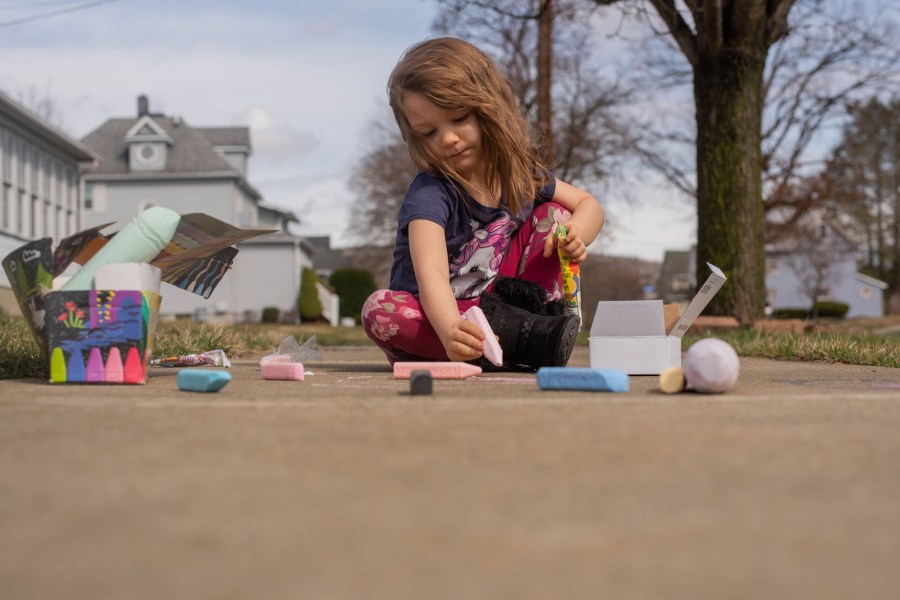
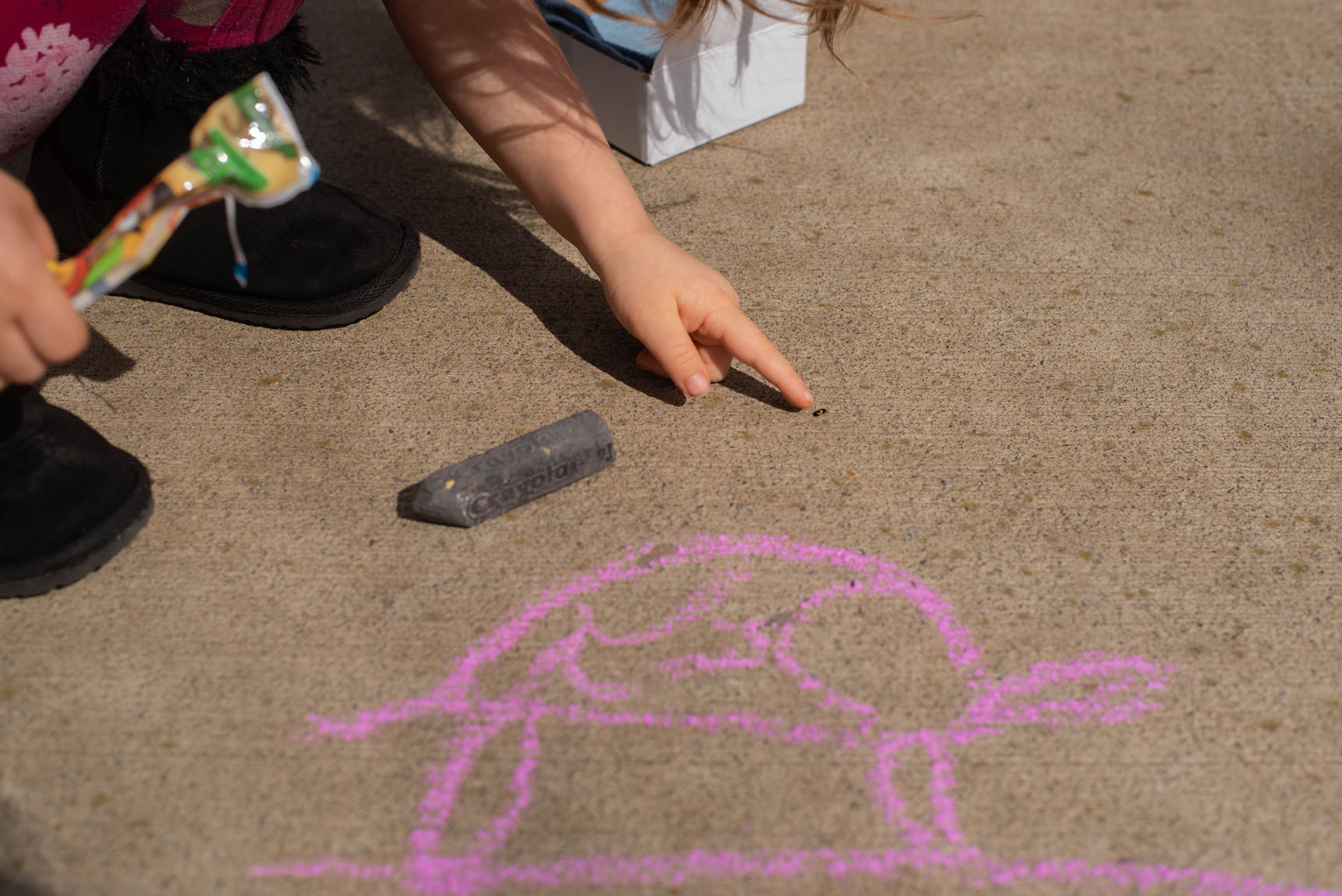
On Friday my daughter and I were outside drawing with sidewalk chalk and she was practicing writing her letters at the same time.  Homeschooling creates many hands-on situations like this for every age.

DSC_8848

DSC_8912Unlike what some may think, homeschooling families do not simply sit at home playing video games, though they probably have more time to do that than some students since they don’t have homework. They do all of their work during lessons, which means homework is completely unnecessary. 

And speaking of lessons, some students are self-sufficient when it comes to their lessons and assignments and some students require the parent to be more of a teacher to them. Every age group and student is different. Our family has set curriculum that I research prior to each school year, but we also supplement with a number of resources, both written and digital.

We currently use America the Beautiful for our social studies; Apologia for our Science; CTC Math for math; Saxon Grammar and Writing for part of English and we read books through America the Beautiful and on our own for English.

For my 5-year old we use The Good and the Beautiful.

I won’t lie that we have been pretty thrilled with the free resources popping up for parents who have been flung suddenly into a homeschooling situation so I want to share some of the links I’ve found that have popped up recently, as well as resources we use in our regular homeschooling lessons.

So far, we have enjoyed Mo Willems, who is the current Kennedy Center Artist in Residence (literally), and is offering an art demonstration and lesson for young children every weekend day at 1 p.m.

Michelle at Blessings By Me mentioned a resource in the comments and I’m adding it here. Supercharged Science will send you science experiments via your email and explanations of the experiments, according to Michelle. Thank you to her for this additional link!

Crash Course offers digital learning on their YouTube channels related to history and science and current events. Their channel is aimed toward older children maybe 12 and up. My son has already been a little more mature than his peers so it’s hard for me to gauge the age that this would be appropriate for accurately. You might just want to watch a couple videos and see if the channel would be right for your student.  We use their videos as supplemental resources for our Social Studies and Science.

Speaking of YouTube, you can find a lot of supplemental videos there for a variety of subjects, but always be sure to vet them and double-check they are from reliable sources. 

Also on YouTube are a few videos from a farmer friend of ours. It’s good for students to understand the importance of farmers, especially right now when people are panicking about a possible lack of food. Mark creates videos to educate children and others about dairy farming. I don’t know how he even has time with all the work he has on the farm! My 5-year old really enjoyed this one.

I also saw a blog post from Cornerstone Confessions that shared a huge list of online activities to support music education.

I’m barely on Facebook, but I did happen to catch a very extensive list of sites offering either virtual tours of museums and zoos or other educational opportunities. The sites range from offering ways to learn about art, history, culture, and music and other academics to simply offering ideas for child-related activities. FYI: not all these sites or activities are free.


Have any tips of your own for parents who are “suddenly homeschooling”? Or links to blog or sites that do? Let me know in the comments and feel free to leave links (I’ll check my spam in case any of them get kicked in there.)


How homeschooling has made life easier and less stressful. Well, sometimes anyhow.

Homeschooling is not something I would recommend for the faint of heart yet here we are only two more weeks away from another year of homeschooling beginning and I, one of the most anxiety-ridden people I know, is looking forward to it, though I’m sure my 12-year old son is not.

000012_DSC_9172

Photo by Lisa R. Howeler (available on Lightstock.)

Last year was a bit of a bumpy ride when it came to a routine but this year I at least have a tentative plan for a routine and for lessons. I also have a better handle on the curriculum for this school year – in some ways at least. I don’t feel as panicked about curriculum as I did last year but like last year I am concerned about how we will pay for it all. Truth be told you don’t have to spend a lot to homeschool, but I’m a stickler for getting the best curriculum I can.

Luckily I snagged our history curriculum on eBay and there are other sites where you can purchase high quality used books or sets. Last year my brother, who is a librarian (and a blogger. You can find him at Still An Unfinished Person.), had some curriculum dropped off for the library’s book sale and he snagged it up for me, not knowing that part of it was what I needed to complete my son’s science unit for this year. Actually, that particular curriculum is geared toward eighth or ninth graders and my son will be in seventh this year, but he’s very quick with subjects that interest him and science does interest him. The only subject that doesn’t interest him is math, something I hope to remedy at some point.

I also think I’ll be using a Language Arts curriculum I picked up last year but thought was too confusing and advanced for him at the time. There is one other place we don’t have to spend extra money. Yeah! I really want a grammar and spelling curriculum this year, which adds to the budget but is much needed (probably for me too! Ha!)

My daughter’s birthday is actually after the cutoff to go to Kindergarten, but she’ll be five this year so we are stepping up her education and I hope to be able to pick up a full PreK and Kindergarten curriculum for her to add on to what she already knows.

000008_DSC_9758

Photo by Lisa R. Howeler (available on Lightstock).

Despite the extra costs that homeschooling can bring when it comes to curriculum, I truly feel homeschooling has been a blessing and perfect fit for our family in this season. For one, my son, daughter and I can visit my parents whenever we want, no longer having to work around my son’s school schedule. We simply take school with us. Last year my son also spent some days and nights with his grandparents and his grandfather taught him how to build things, pour concrete, repair tombstones, weed, and flatten the ground to prepare for a pool. The lessons he learns at his grandparents are well beyond the scope traditional education would provide for him and I love that.

Another aspect I enjoy about homeschooling is that I no longer dread the end of August, knowing it will be a crazy rush of trying to buy school supplies and back to school clothes and pay for books and tuition. I also no longer have to dread my son being gone all day long. I’m one of those weird parents who actually likes having him home with me and being able to interact with him throughout the day and the school year. I know that before too long he’ll be grown and out of the house and I’ll miss those moments together.

000005_DSC_9750

Photo by Lisa R. Howeler (available on Lightstock)

Lest you think my “poor unsocialized” kid and I are attached at the hip,  however, we are involved with a local homeschooling group to encourage interaction with other children of various ages and also make sure my son spends time away from me so neither of us contemplates running away from home, screaming and arms flailing.

Just because I like having him home with me during the week, doesn’t mean I never let him have a life away from me. I don’t know why I’m desperately trying to clarify that my son isn’t unsocialized, but it’s probably because I’ve heard the weirdest ideas about the lack of socialization of homeschooled children. There are some people that seem to believe that homeschooled children don’t ever have interaction with other humans and are being held hostage by their parents in a dark room with only a tiny light to do their school work.

Actually, maybe our children are being held hostage by us in some ways since we make them actually learn during the day, often without the breaks for recess or study hall that traditional school allows for. Poor kids. Ha. But they are definitely socialized – either by joining with other homeschoolers in a type of co-op or by interacting with adults when their parents drag them to stores, the mechanics, church, or doctor’s appointments. My son has developed a bit of social anxiety, but I don’t attribute that to homeschooling, I attribute it to a bad experience he had in traditional school and also the fact he’s a preteen (for two more months anyhow) and that’s a natural stage for preteens.

DSC_0469

Look…he’s being social with other homeschoolers. Just look at them all. Ha!


Incidentally, many homeschool students are able to complete their work in about four hours and devote the rest of their day to other educational or life skills related activities, including socialization. The reduced hours my son was “in school” during our first year of homeschooling last year was actually disconcerting to my husband until I pointed out that our son doesn’t have to wait for other students to catch up before he moves to another lesson, doesn’t have to wait in homeroom, doesn’t need a 45 minute lunch break, doesn’t get recess or study hall and his extracurricular activities are simply included in everyday activities.

This isn’t to say that these activities held in a traditional school are wrong or not appropriate. Not at all. They have their place and reasons. I’m just explaining that may be why a homeschooling student doesn’t seem to be in school “as much” as a “traditional student” (for lack of a better word).

There are many other benefits to homeschooling, for our family anyhow, and among them is no longer having to buy our son an entirely new wardrobe at the beginning of each school year. At his previous school, he was required to wear polo shirts every day and on Friday he had to wear dress shirts, khakis, dress shoes, and a tie. We needed to budget for those expenses, in addition to the cost of books and tuition, every summer. Also eliminated from the budget are the various lunch items. We no longer need to pack sandwiches and snacks or provide money for a snack card. Instead, he makes himself a sandwich for lunch or I cook him leftovers.

The grocery budget may have increased in some ways since my son procrastinates from work by declaring he needs a snack every couple of hours. Last year I finally told him he could eat his snacks while working and that cut down on the procrastination at least. We will see if it helps with the grocery bill at all this year.

000015_DSC_9791

Photo by Lisa R. Howeler (available on Lightstock).

One other benefit of homeschooling I’ve discovered is that I can learn along with my son. The fact I am learning things I never learned in public school or college has made me more aware that maybe my education wasn’t what I thought it was, or maybe I was simply in a total tachycardia related fog all through high school and a sleep-deprived haze in college. I don’t know, but homeschooling my son has made me feel like I still have a lot to learn about history, especially.

In addition to me having the chance to learn more about a subject, my son also can spend more time on a particular subject or unit if it interests him. We can take the time to really focus on what he is interested in and expand on lessons, while making sure he still learns his other subjects. Often in his other school they had to end a unit or simply “never got to it” and then the next year they’d start back at the beginning of a subject, so to speak, and still never progress past certain points in the subject, especially when it came to history.

I can’t tell you how many times the beginning of the year would start learning about the pioneer days, end with the Revolutionary War and then repeat the next year. It was the same when I was in public school. I swear we never learned past the Civil War when I was in school, so by the time I graduated I knew very little about history beyond the Civil War. At least I knew all there was about Pennsylvania history, though.

000003_DSC_9490


I’m sure I’ll update my homeschooling journey on here throughout the year and hopefully, it won’t be a tearful post, asking questions like “what was I thinking???”


Tell Me More About … Debby Frisk, Mom and homeschooling parent

Debby Frisk is a homeschooling mom from Athens, Pa. She is also simply a mom who cares about her children. She encourages other parents who want to homeschool their children, for various reasons, but don’t believe they can.  I asked her if she would tell my readers a little about her journey in homeschooling and offer some advice for parents who might be considering  this style of schooling for their children.


 Photos by Lisa R. Howeler

Photos by Lisa R. Howeler

Tell us a little bit about yourself, where you are from, your family, your interests.
My name is Deb Frisk, married to Tim Frisk for 25 years, with 2 daughters, Elizabeth age 19, and Leah age 16.  I’m originally from Ellwood City, PA.  We moved to Bradford County upon finishing college.  I enjoy reading, puzzles and games of all varieties, watching musicals, going on walks, cats, and spending time with my family.

What careers have you held or do you hold now?
I was hired by Towanda Area School district in 1992 to teach math and work with the deaf and hard of hearing students in the district.  I worked there for 6 years before starting our family.  Since then I’ve mainly been raising our children and homeschooling, but have worked for short times as a sign language instructor and for Early Intervention. 

You are a homeschooling mom. How did you get involved in homeschooling?
Homeschooling was always on our radar as an educational option even before we had kids.  Because I have a teaching degree, I was asked to perform homeschool evaluations for a few homeschooling friends of ours.  I was impressed with the quality curricula that is available to homeschoolers and with the character and academic excellence I saw in the homeschooled children that I met. 

When our first child was diagnosed with autism, we were strongly encouraged to enroll her in school to help with socialization.  We listened to the experts and put her in a year of private preschool and a year of public school for K-4.  Although she had fabulous teachers and aides in both places, it was obvious to us and her teachers that school was not a suitable environment for her to learn, so the decision was made to bring her home for kindergarten. 

We first enrolled her in a cyber charter school, which is public school done in the comfort of your own home.  This worked well for us for several years, but whens he reached middle school, it became cumbersome to jump through all of the hoops that the school set before us and the decision was made to begin pure homeschooling. 

What is your advice to parents who are considering homeschooling?
I have a lot to say to people who are considering homeschooling.  The first thing is that you CAN do it.  You do not need a teaching degree to be a good teacher to your own children.  Research has shown that parents without a teaching degree are just as successful as those with one. 
The next important thing to know is that there is no one right way to homeschool.  It looks different for every family.  Sometimes it takes a year or two (or three) to figure out what works and doesn’t work for your family.  It’s good to talk to other families and see what they like and what works for them, but trying to copy others will likely make you unhappy.  Do what’s best for your family. 
Next I’d suggest that you try to connect with other homeschoolers.  Some people desire a lot of support others do it all on their own.  There’s no right or wrong amount of connection either, but initially it’s good to talk to others to get ideas and to look at curriculum.  Pennsylvania has an amazing homeschool convention in early June in Lancaster that I strongly recommend. 

It’s a good place to attend seminars on homeschooling, pickup curriculum and examine it, possibly purchase some materials, and begin to network with others who’ve been-there-done-that. 
My personal preference on curriculum is to buy used, sell used.  This keeps cost to a minimum for us.  There are several different places where you can do this — used curriculum sales in your area and online sales being the main ways. 

Do you have suggestions for resources or web sites where parents can learn more about homeschooling?
For PA residents, my favorite resource is askpauline.com
For anyone in the United States, I’d recommend hslda.org
These 2 resources are great for telling you your state’s requirements for getting started and other required record-keeping. 

Many use ebay for curriculum shopping, but my favorite is homeschoolclassifieds.com.  I also use the Facebook group Homeschool Curriculum Marketplace. 

There are probably hundreds or thousands of other quality websites to learn about homeschooling.  I just don’t have specific recommendations.

What does homeschooling look like at your house?
Homeschooling looks different for every family.  Some people do school at home, copying what they’ve experienced in the classroom.  Some people use a variety of materials including textbooks, workbooks, instructional DVDs, computer programs, field trips, hands-on projects and experiments, etc.  While still others  throw out conventional methods of learning and just follow their child(ren)’s interests and explore the world with them.
One thing that we always say about our schooling is that the only subject that’s ever done at a desk or table is handwriting.  Often you’ll find us curled up on the couch or in a bed reading together or alone.  We use clipboards a lot when writing needs to be done. 

We’re pretty eclectic meaning that we use a wide variety of resources for our learning.  I prefer literature based curriculum.  Usually whatever books the girls are reading for literature is related to the same topics they’re reading about in history.  For some subjects my girls rely pretty heavily on traditional textbooks.  In recent years we’ve moved towards instructional DVDs for some high school topics like chemistry and writing.  They’ve both used computer programs for learning foreign languages. 

I have one child who enjoys art, drama, and dance and we use a lot of outside lessons to provide instruction in those areas since that is not my area of strength.  I also should add that what works for one child often is not appropriate for another.  My girls have very different learning styles and strengths.  I’ve often used totally different curriculum to cover the same subject material for them. 

Some people have found that having a schedule is necessary for school work to be completed in their home. We’ve found that our girls work best when they can choose the order of their subjects and when they work on them.  My only rule is that the assigned work needs to get done each day (though exceptions to the rule do happen).  The girls have learned very good time management and planning skills.  For example they’ve learned that it’s not wise to save their hardest subject for late in the day.  One of my children likes to get up and get all of her work done as quickly as possible in order to be free for the rest of the day.  This works really well for her.  My other child does a subject and takes a break, does another, then takes a break.  School takes her all day, but the result is the same at the end of the day and Mom is happy. 

What do you like most and what’s the hardest part about homeschooling?

The answer to these questions is the same —  Time spent with my children.  I love the amount of time that I get to spend with my kids.  I know them inside and out because we spend so much time together.  I love being part of what they’re learning.  We tried public school for a year or two with each of my girls and I really hated not being involved in what they were learning.  I love being able to tie what they’re learning into everyday life, but if you don’t know what they’re learning in school, you’re not able to do that.  I think my absolute favorite part of homeschooling ever was teaching them to read. 
I will be honest though.  As much as I love spending time with my kids, there is never a break.  When they were younger, sometimes they would be the only people I’d see for days at a time.  It’s easier when they’re older and do activities on their own and aren’t always in the house, but the younger years were sometimes tough, but just sometimes.  Mostly the time is a gift and I try to enjoy every moment of it. 
Oh, another perk for us is taking family vacations during the off-season.  The crowds at most places are lowest in September right after all the kids go back to school.  It’s the perfect time for us to hit the road.  The same is true for any kind of activity or field trip.  My kids have never been to Chuck E Cheese on a weekend. 

What misconceptions do you think people have about homeschooling?
The most common thing I hear when I tell someone that we homeschool — “Oh, I’m not against homeschooling or anything, but I just worry about socialization.”
There are always exceptions, but I think it’s fair to say that most homeschoolers are better socialized then their public school counterparts.  Most homeschoolers joke that we don’t know why it’s called home schooling because it sometimes feels like we’re never home.  First of all, because we spend so much time with our kids, homeschool parents have lots of opportunities to train them on how to interact with people.  Homeschooled kids as a group are extremely respectful and courteous.  We attend a lot of group events (like roller skating, bowling, play practice, science fairs, and field trips) with other homeschoolers. 

This gives our kids a chance to interact with other kids, but not just their age peers; they become comfortable with kids of all ages.  Our kids spend more time in their communities than their public school peers.  They go with their parents EVERYWHERE.  They go shopping with us, to the dentist, to the post office, the gas station, you name it.  They become very proficient and comfortable interacting with adults, not just other children at a young age.  And like public school kids, you’ll find us participating in other things in our communities such as soccer, swimming, Little League, dance class, art class, piano lessons and recitals, etc.