I am absolutely floored that this school year is over and I know I say that every year but this year really did fly by.
As I always do at the end of a school year, I sit here feeling as if I didn’t do enough, teach enough, or find enough educational opportunities. Looking back through photographs and the paperwork I’ve gathered together for our end-of-the-year portfolio, though, we did a lot more than I realized.
This was The Boy’s final year of school and he did a lot less for me than I wanted to but he was also enrolled in a building and construction class at the local technical school and gained way more experience and education there than I could have offered him.
We did work on some English reading, including Sherlock Holmes and Beowulf, but he also read or listened to several books independently throughout the year. He also researched quite a bit of history on the Byzantine empire on his own and then learned about how to paint Warhammer models.
Many afternoons were also spent helping his grandfather with various home DIY projects and property upkeep and he helped the local cemetery association clean up the cemetery, including the gravestones
While he isn’t yet sure how he wants to use the education he received there, he will always have that knowledge in his future, whether it is for an occupation or in his everyday life.
He’s taking some time off and easing into his next step, something his dad and I support.
He still has a couple of things to write up for me and then his portfolio, which I will present to our state-certified evaluator next week, will be done.
Little Miss and I had a lot more variety in our education this year with not all of it focused on worksheets or physical curriculum. We studied subjects in a more relaxed way, spending more time on subjects that interested us instead of feeling like we had to quickly move ahead.
We did use some curriculum, such as BJU for English and The Good and The Beautiful for science. We also accessed an online curriculum called CTC Math for our math course, and combined that with The Good and the Beautiful, Math with Confidence, and worksheets.
For history and literature, we read historical fiction, including The Sign of the Beaver, Johnny Tremain, The Littlest Voyageur, and Caddie Woodlawn, while watching or reading supplemental material for the subjects each of those books dealt with.
We mixed lessons about Pennsylvania history in with our regular history. We are required to teach history about our state at some point during our children’s elementary school years, but I focus on Pennsylvania and local history at some point in the year, every year.
This year we had the added information about our family fighting in the Civil War, which I researched more of as I wrote a couple of blog posts about that subject.
In the beginning of the year, we attended a two-month art class sponsored by the local library and led by a local artist. He honestly did not teach much at all (and I probably would not attend a class with him again), but having the chance to interact with other children was the main benefit of that experience.
We also attended a couple of field trips with the local homeschool group. That group only met once a month, though, so the opportunity for socializing was not as strong as I had hoped.
Next school year we hope to join a local co-op for some more hands-on learning and interaction with other homeschool students.
There was a time of adjustment for Little Miss that is continuing because one of her homeschool friends was sent to public school this year. That left her without friends to interact with, which is one reason we have signed her up for VBS events, 4-H clubs, and library events this summer.
She participated in a 4-H cooking class in the spring, which she thoroughly enjoyed.
We read books either together or separately throughout the year. Little Miss read two and a half Harry Potter books this past school year. She’s almost done with the third.
Together we listened to Caddie Woodlawn by Carol Ryrie Brink and The Magician’s Nephew by C.S. Lewis. Out loud to her, I read The Saturdays and The Four-Story Mistake by Elizabeth Enright and Miracle on Maple Hill by Virginia Sorenson, as well as Johnny Tremain by Esther Forbes (later learned this is usually read by eighth graders), The Sign of the Beaver by Elizabeth George Speare, and The Littlest Voyageur by Margi Preus. We also listened to part of Miracle on Maple Hill on Audible.
In the 2025-2026 school year we plan to use some curriculum but also leave ourselves open for more exploration and relaxed education. This doesn’t mean Little Miss will be left to do whatever she wants, when she wants, but she will have more of a say in what she learns and how.
She will be in fifth grade, and I want her to have a more relaxed educational experience that will let her feel less like education is a chore and instead make it feel like it is something fun and exciting to do.
I’m researching curriculum now and have already been given some great ideas in groups and by Erin from Still Life, With Cracker Crumbs, who homeschools her son Wyatt.
We are also starting homeschooling activities in July this year, instead of August. In Pennsylvania you can count any activities held after July 1 toward the next year’s hours/days so if we participate in anything remotely educational this summer, I will be counting that toward our final hours. This will allow Little Miss and I to take breaks throughout the school year at any time we need to, without losing educational time.
Honestly, every day offers some sort of education, but I am not the kind of parent who can do something very minor and count that toward school. I know some parents would count a walk down the street as PE and call it a day, but I feel there needs to be active learning of some kind going on for it to count as a full day of school.
What is nice about homeschooling is that there is no real wrong way to do it (unless you sit your kid in front of a gaming device all day, every day, and teach them nothing). There are a variety of avenues to reach the ultimate goal of homeschooling, which is to provide a child with a well-rounded and complex educational experience that goes beyond the four walls of a classroom.
I am excited to see what the 2025-2026 school year will bring us and I’ll try to keep my blog readers updated on it better than I did this school yar.
Lisa R. Howeler is a blogger, homeschool mom, and writes cozy mysteries.
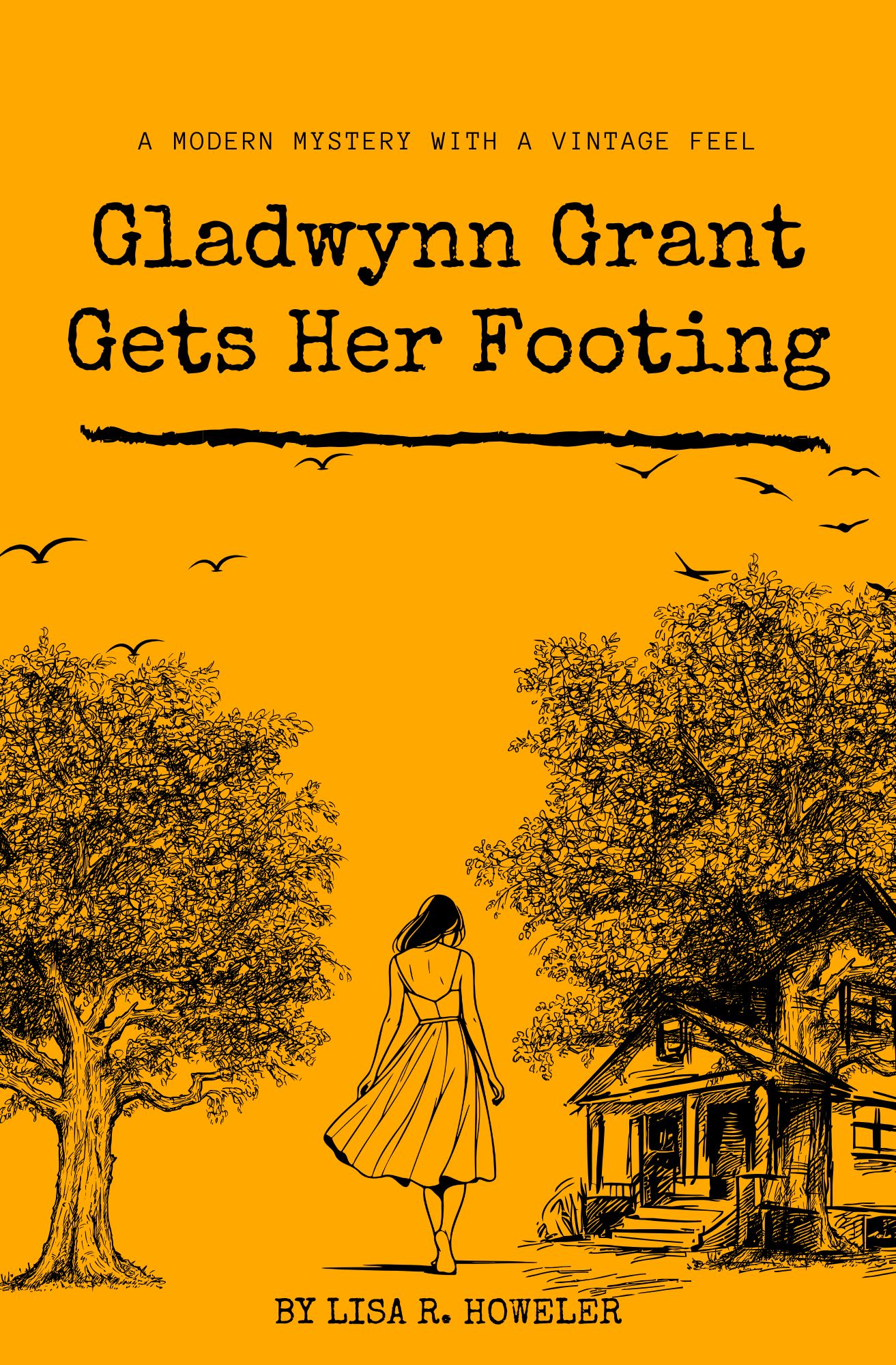


You can find her Gladwynn Grant Mystery series HERE.