A review of the movie and book versions of The Scarlet Pimpernel (yes, there are spoilers)

They seek him here, They seek him there,

Those Frenchies seek him everywhere,

Is he in Heaven? – Is he in hell?

That demmed, elusive Pimpernel?

Last week I finished the book The Scarlet Pimpernel by Baroness Orczy.

I enjoyed the book so much that I looked forward to a couple chapters each night before bed just like I used to read books before there were all these devices and social media sites and everything else to distract me. Losing myself in the story completely forgetting about everything around me going on was exactly what I needed. Yes, the book could be a bit dramatic at times, but, come on, it was written in 1905!

I loved the hardcover copy I found too. It was printed about 30 years ago by Reader’s Digest but I love how it had a vintage feel to it.

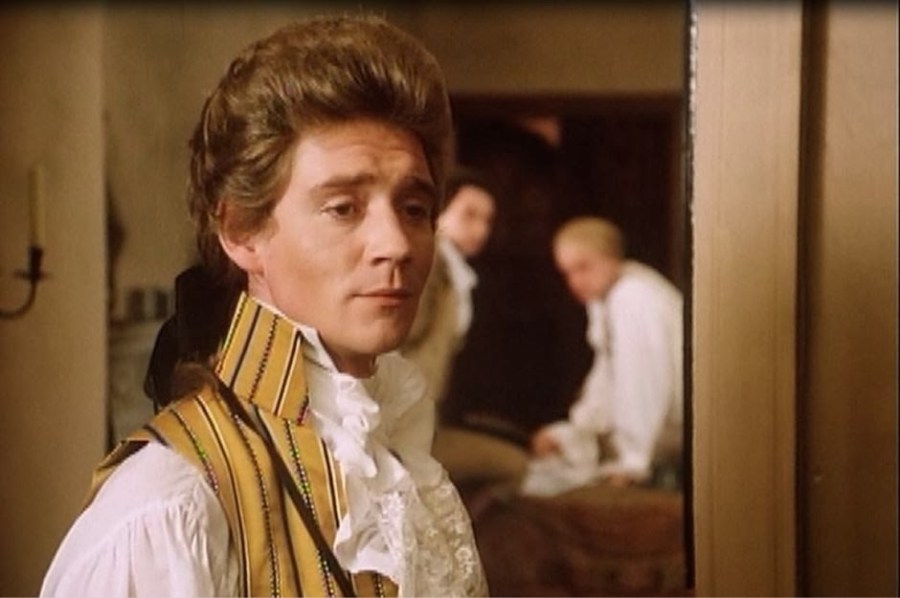
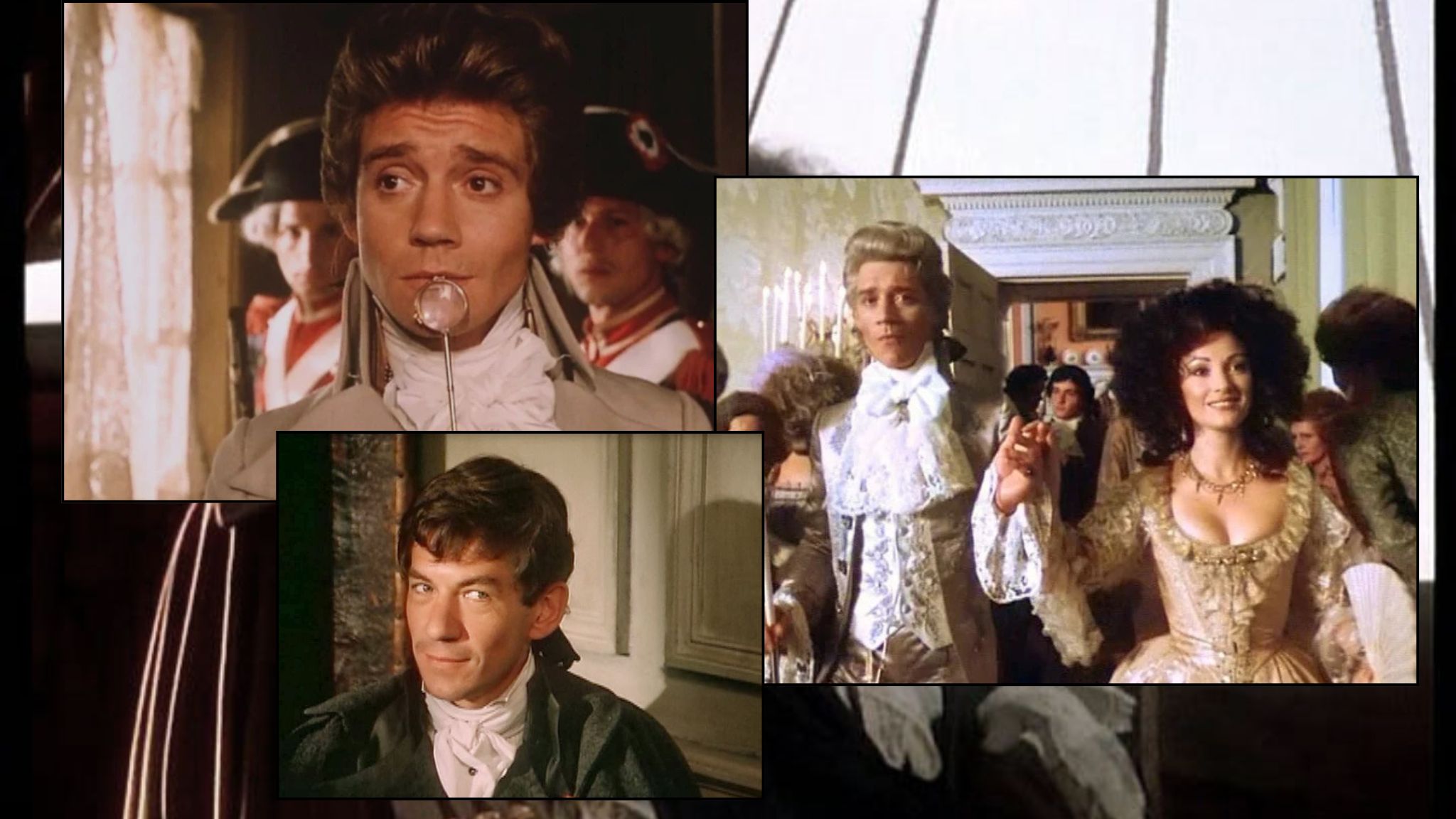
Even though I’ve seen the 1982 TV serial movie with Jane Seymour, Anthony Andrews, and Ian McKellen and therefore knew the story, I still wanted to read the book because I wanted to see if the book was different or the same.

The baroness (yes, she actually was one) wrote the play, The Scarlet Pimpernel, before she wrote the book. There are also several sequels to the book, and some don’t focus on the same characters.

First, a little description of the book and movie for those who might not be familiar with it.

Armed with only his wits and his cunning, one man recklessly defies the French revolutionaries and rescues scores of innocent men, women, and children from the deadly guillotine. His friends and foes know him only as the Scarlet Pimpernel. But the ruthless French agent Chauvelin is sworn to discover his identity and to hunt him down.

I first watched the movie version of The Scarlet Pimpernel years ago and then watched it again about a month ago. It was a CBS production with all British actors that ran three hours, maybe over a couple of nights, but I’m not sure.

After I watched the movie, I remembered I had found a hardcopy of the book by Baroness Orczy last year at a used book sale.

I couldn’t figure out how to write this without giving spoilers so … there will be spoilers. You have been warned.
First, let’s go to the book which begins with a French family being rescued from the guillotine. They’ve been brought to an inn in England by the band of men who work with The Scarlet Pimpernel. They’re exhausted but grateful. The mother in the family, referred to by the author as The Comtesse is also worried because her husband has remained in France and could be next to have his head cut off. While talking about who is who in England that she will be able to rub elbows with now that she is there, the name Lady Blakeny, formerly known as Marguerite St. Just comes up and the Comtesse balks. She doesn’t want to meet that woman because that woman turned in the Marquis de St. Cyr to the revolutionists and he and his entire family were guillotined.    

The men in the inn are taken aback by this charge but don’t seem surprised the woman says it. What they are nervous about is that Lady Blakeny is currently on her way to the inn with her husband Sir Percy Blakeny, who is known as a lazy “fop”. He’s rich and simply putters his days away by hobnobbing with the Prince of Wales and other elites. He’s also terribly obnoxious. He met his wife in France and brought her back with him to live in England.

Unfortunately, the Comtesse sees Lady Blakeny and lets the woman know she wants nothing to do with her because of how she turned in the de St. Cyr family.

Lady Blakeny is confused by the charge and laughs it off.

It isn’t long before we learn that Marguerite did turn the family in but not on purpose. She dropped a hint that the Marquis was a traitor   after the Marquis beat her brother Armand St. Just because he was in love with the Marquis’s daughter. She told her husband shortly after they were married and had returned to England what happened and it was after that he became very cold toward her and barely spoke to her in private, making their marriage more of a show than anything else.

The main plot of the book is a romantic one involving the misunderstandings between Marguerite and her husband.

Early on, Marguerite is approached by Citizen Chauvelin, an agent of the revolutionists in France, and he requests her to spy on those she associates with in England to see if she can find out who The Scarlet Pimpernel is.

The revolutionists want him stopped so he can no longer smuggle out aristocrats that the revolutionists want to murder.

Marguerite refuses but later in the book Chauvelin and his men find a letter that reveals her brother Armand is involved with The Scarlet Pimpernel and his men. In fact, Armand is on his way to France to set up arrangements to save another aristocrat family.

Chauvelin blackmails her, forcing her to help find out The Scarlet Pimpernel’s identity or he will have Armand killed.

She and Armand are very close because they lost their parents, and he helped to raise her so she reluctantly agrees to this plan.

Secretly Marguerite admires The Scarlet Pimpernel and his daring escapades to rescue aristocrats who are about to be killed. She harbors a ton of guilt for what happened to the Marquis and wants others to be rescued. Despite not wanting to stop The Scarlet Pimpernel, she agrees to spy in her husband’s circle of friends to see if she can learn anything about The Pimpernel’s identity, simply so Armand is not killed.

She does learn something at a future ball that the Prince of Wales is attending when she finds out that The Scarlet Pimpernel will be meeting with his men in the supper room at 1 a.m. that night. She tells Chauvelin this but when Chauvelin goes to wait all he finds is lazy, silly Sir Percy asleep on the couch.

Now in the book, Marguerite goes back to her home with Sir Percy and confronts  him over how he’s been treating her. Sir Percy fights his emotions because he truly loves her despite what she did in France and believes it must have been a misunderstanding.

There is one big reason Sir Percy can’t show his love to her though. He can’t trust her and he needs to trust her because SPOILER ALERT!!!! Do not read further if you don’t want to know the truth ——

.

.

.

.

.

.

Sir Percy is actually The Scarlet Pimpernel!!! WHAT?! Now, when we watch the movie, we already know this and it makes the sexual tension even more heightened between Marguerite (Seymour) and Sir Percy (Andrews), especially after the scene where Chauvelin (McKellen) thinks he’s going to find The Pimpernel but instead only finds Sir Percy.

In the movie Marguerite runs to the dining room instead of home. The room is dark and she hears someone behind her, but she doesn’t turn around. She assumes it must be The Pimpernel so she tells him that Chauvelin is after him and trying to trap him.

This warning lets Sir Percy know that Marguerite truly supports the mission of The Scarlet Pimpernel and his band and his heart begins to melt. He steps forward, almost puts his hand on her shoulder, clearly wants to kiss her neck, but he steps back again. He doesn’t tell her who he is, preferring to protect her from any interrogation from Chauvelin.

In the book, Marguerite figures out who Sir Percy is after he leaves for France and the daughter of a man who could be killed says she heard that The Scarlet Pimpernel had left that very morning to rescue her father.

I feel like the TV movie actually fleshed some things out a bit better and added another layer which would have made the book even better.

In the movie, we see more of Lady and Sir Percy’s romance and then their marriage about halfway through. The coldness comes when Sir Percy finds out her involvement in the Marquis’s murder from someone else at their wedding reception. The person tells Sir Percy that her name was on the warrant for the Marquis’s arrest, but really we viewers know that it it is the villain Chauvelin who put her name on the arrest warrant.

Another difference between the book and the movie is that in the movie there is an underlying story of the Scarlet Pimpernel and his men trying to rescue Prince Louise XVII before he is killed in the tower, which is what happened in real life. Their goal is to smuggle the prince out of France to England and keep him there until he is older and can come back to France and take over the throne again.

There is no mention of the prince in the book and that would have been a fun layer to add.

In both the book and the movie, Marguerite sets off to rescue Percy when she learns who he is. She learns who he is the same way in the book and the movie — she runs into Percy’s office and notices there are pimpernels along the molding of the room and in other places, which helps her to put the pieces together. In the movie, though, Sir Percy leaves a note for her in his office/study, which indicates he hoped she’d figure it out. I didn’t get that in the book, but maybe I just missed that part.

Marguerite can’t bear the thought of Percy being captured and killed by Chauvelin. I liked that she went off to rescue him, which she sort of did in the movie but not in the same way.

In the book she was sneaking around and risking her life much more than she did in the movie.

I liked the show own in the movie, which didn’t happen in the book. In the book Sir Percy uses the many disguises he used to help smuggle aristocrats out to disguise himself and keep him from being discovered by Chauvelin. He disguises himself as a Jew, which seems to be a popular thing for the English to do back then. Jews were always looked down on as disgusting and dirty at that time so they were easily overlooked.

Disguised as a Jew, Percy tells Chauvelin he saw the man that might be the Scarlet Pimpernel and leads him on a wild goose chase so that his men have enough time to escae to Sir Percy’s ship.

Chauvelin believes The Scarlet Pimpernel is leaving on his ship so he leaves a bruised and beat up Marguerite behind with the bruised and beat up Jew. Of course, Sir Percy reveals himself to Marguerite once Chauvelin and his men are gone and they have a romantic reunion.

In the movie, Sir Percy is captured when Armand goes back to his lover to rescue her. In the book Armand didn’t have a lover to go back to. Chauvelin says he will only release Sir Percy if he gives the prince back, so Sir Percy leads him to a castle near the ocean. By then, though, the prince has been released.

Chauvelin is pissed off and sends Sir Percy out to be shot. Unfortunately for him, Sir Percy has managed to switch Chauvelin’s men for his own and that means Sir Percy returns to the castle unscathed, has a dual  with Chauvelin and wins, and then they leave Chauvelin stranded at the castle before escaping on Sir Percy’s ship to England.

The ending to the movie was a lot more exciting to me with that added dual.  I’m sure it was easier to have a dual than having to explain why the French thought Jews were so gross that they would have ignored Sir Percy who was dressed up as one. Not to mention the stereotypical description of Sir Percy’s makeup, etc. would have been — well…insensitive to say the least.

The bottom line is that while I loved the book, I also loved that the movie flushed the book out even more for me.

I do hope to read the other books in the series, even if I don’t get my satisfaction of the full story of Sir Percy and Lady Blakeny.

A bit of trivia/facts about the movie taken from various sources around the web, including articles, interviews, and IMdB:

  • This movie was produced by London Films and directed by Clive Donner.
  • Filming took place at various eighteenth century sites in England, including Blenheim Palace, Ragley Hall, Broughton Castle, and Milton Manor; also Lindisfarne.
  • The subplot with the Dauphin was taken from another one of Orczy’s novels, Eldorado, which was what the screenplay for the 1982 TV adaptation of The Scarlet Pimpernel was based on.
  • Timothy Carlton, who played the Count De Beaulieu, is the father of actor Benedict Cumberbatch and ironically, McKellen would appear with Benedict in the Hobbit trilogy – or at least was in the same movies that Benedict did the voice of Smaug for. Seems Timothy felt he’d better change that last name while Benedict knew his first and last name would be an attention getter, I guess.
  • Jane Seymour sometimes took her infant daughter with her to the set and had never seen the original movie from 1934 starring Leslie Howard, Merle Oberon, and Raymond Massey. (I hope to watch this in the fall or winter and compare it to the TV movie since many sources online say it is still considered the best adaptation. I saw part of it years ago, but do not remember finishing it.).
  • Julian Fellowes (Prince Regent) also played the Prince Regent (the future George IV) in Sharpe’s Regiment (1996)
  • London Films hoped that Andrews would one day star in a Scarlet Pimpernel series in the US, but this never occurred.
  • In his 2006 work Stage Combat Resource Materials: A Selected And Annotated Bibliography, author J. Michael Kirkland referred to the sword fight between Percy and Chauvelin as “nicely staged, if somewhat repetitious … but still entertaining.” Kirkland also observed that the weapons used were in fact German sabres, which were not used during the Napoleonic era. (source Wikipedia).

A little about the Baroness herself summarized from the back of the book:

She was born…get ready for this one! Baroness Emmuska Magdalena Rosalia Maria Josepha Barbara Orczy on Sept. 23 1865 in Tarna-Ors, Hungary. Her father was a notable composer and a nobleman and in 1868 the family was chased from Hungary during a peasant uprising, eventually settling in London when the Baroness was 15. Before that she attended schools in Paris and Brussels. She was once quoted as saying that London was her “spiritual birthplace.”

Emmuska learned to speak English quickly, fell in love with art and writing and eventually married illustrator Montaque Barstow. They had one son.

She and her husband wrote the play about Sir Percy Blakeny in 1903 based on a short story Emmuska had written. The play ran in London. Emmuska wrote the novelization and released it in 1905. The book was a huge success and she went on to write other stories about Sir Percy Blakeny and his friends, but she also wrote more plays, mystery fiction, and adventure romances.

Have you read the book and/or seen the movie of The Scarlet Pimpernel? If so, what did you think of them?

How about the Baroness’s other books – have you read any of them?

I found this movie for free on YouTube, but it is streaming on various other services, including Amazon, Sling TV, Roku, and Apple.

Voices from the past: The Fate of a Brother. Letters written during the Civil War by my family members. Part 2

“I have not had a letter from you in a long time so I thought I would write to you and see if you were well and inquire as to how brother Charles is getting along. I have been uneasy for his welfare as our prisoners get very bad treatment at Belle Island and Richmond.”

Letter to William Grant from his brother John G. Grant, Washington DC, Dec. 22, 1863


When some people research the past, they find it interesting but are somewhat disconnected from what happened. They may read something sad and say, “Oh, well, how awful.” They feel down for a bit, and they move on.

When you research your family history, though — reading letters from them, getting to know them through those letters and photos of them — it all becomes a bit more personal. Suddenly you, or shall I say that “I” feel very close to the people I am reading about and about the world they lived in.

More than once I have teared up, choking back a sob, thinking of the suffering my family faced as I’ve read letters, journal entries, or biographies of their lives.

There was history all around me growing up. When I was a child there was a large, old trunk in the closet in my bedroom. I had no idea what it was and used to prop up my stuffed animals on it.

It wouldn’t be until years later I would learn the trunk belonged to my great-great grandfather, John G. Grant, a Civil War vet, and held American flags, and other memorabilia from my great-great grandparents and their family inside. After the war, John became a doctor and before that he was a letter carrier for the Union Army in Richmond after the war. I’m not sure where the bloodletting set and the letter carrying case of John’s was stored but I know they are with my dad now.

John mentioned his trunk in a letter from August 20, 1862, where he also foreshadows his interest in the medical field.

“I should like to have my chart of Frenology (sic). I think I put in my little trunk upstairs, or else it is about the house somewhere. I suppose you know what book I mean. I used to call it my Frenology book. Please get it and send it to me as soon as you get this letter.”

He was stationed at an Army training camp near Germantown, Pa. at the time.

In case you are curious, phrenology is: “the detailed study of the shape and size of the cranium as a supposed indication of character and mental abilities.”

When I was in college, and after my family had moved in with my paternal grandmother, she and I were looking at historical documents and pulled out some old papers from under her bed. We found a large, original poster that appeared to show all the battles John Grant had fought in. It stated that it had been presented to his family sometime after he was discharged from the Army.

Grandma was thrilled and fascinated. Either she’d forgotten or didn’t realize the poster was there. My history-loving aunt, Eleanor, drove down from her farm in Upstate New York, took the poster and had copies made for all of my grandmother’s children, grandchildren and great grandchildren. One is hanging on my wall in our house today. I believe my dad has the original.

When I read the letters written during the Civil War between my great-great-grandfather and his half-brothers I find myself thinking of the history of this time period that I’ve read in textbooks – how it wasn’t history for them but reality.

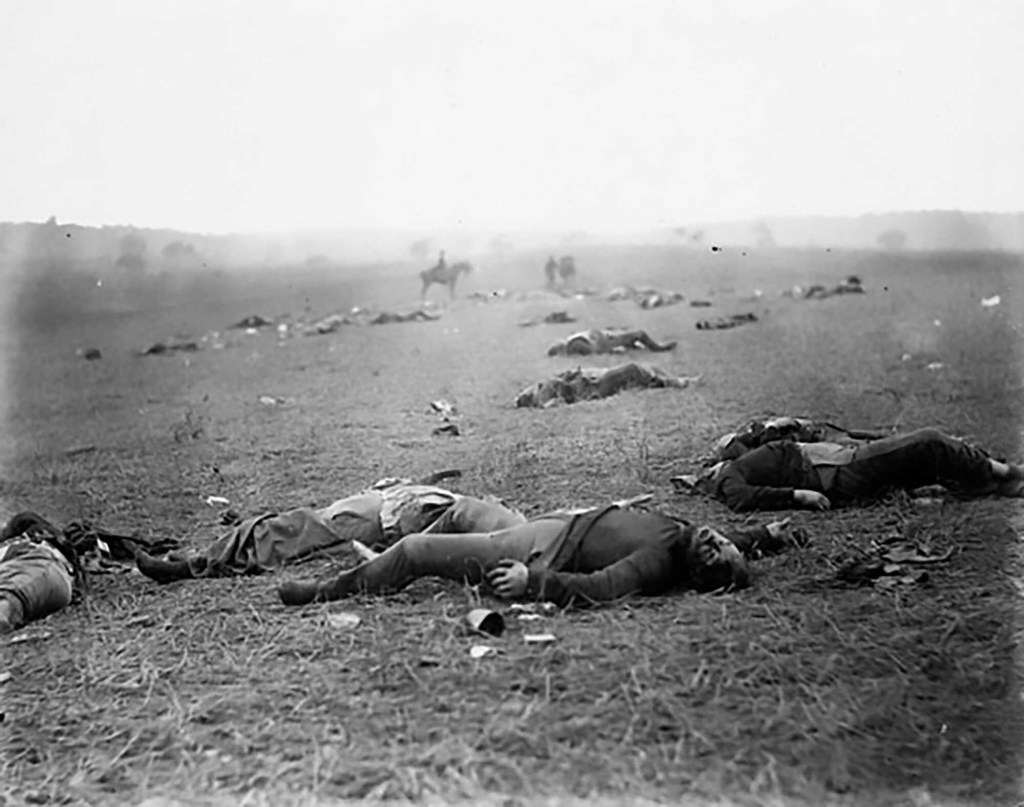
One of the hardest realities my great-great grandfather and his half-brother, William Grant, had to face would come when they learned that their  brother, Charles, had been taken prisoner by the Confederates shortly after the Battle of Gettysburg.

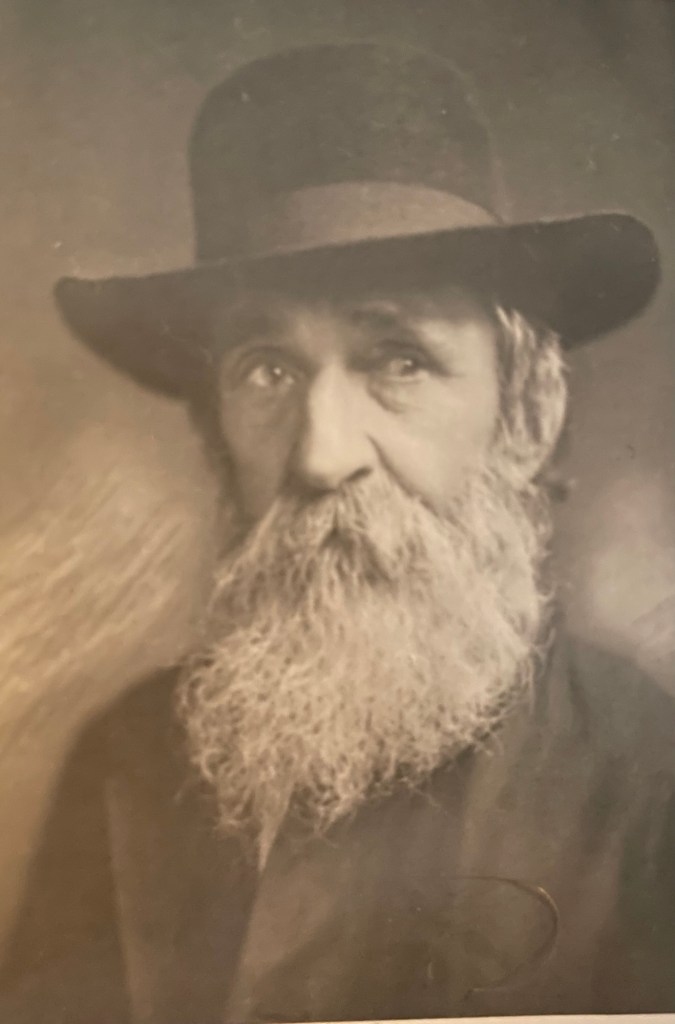
(This photo is undated and  unlabeled, but we believe it is Charles Grant. It is the only known photo of him. William Grant tried many businesses to make a livelihood, especially after the war started and the economy was suffering. One business he tried was making photo cases. This is most likely one he made).

In my first blog post about these letters I wrote about John and William visiting Charles in the hospital. This would have been 1861. I’m not sure what Charles had that left him in a weakened state, but I do know he would eventually be released from the hospital. I figured out his age to be about  31 at the time he was in the hospital.

I mentioned part of Charles’s letter to John in  an undated letter in my previous post:

If things do not get better before next winter, there will be a great amount of suffering among the working people,” he wrote in that letter. “The factory where I work is running but two and three days in a week and has been for the past two months and the hands are not making more than $10 or $12 a month and that amount will not go far down here.”

“Thousands who one year thought themselves in good circumstances are now as poor as beggars and who has caused all this but the men who are now the leaders of the Rebel forces and fighting against the best government on the face of the earth. They seem determined if they cannot rule this great nation to the interest of negro slavery to ruin it.”

He ends the letter with a little bit of family business:

“You want to know where Uncle William lives. The last I heard from him he lived in Laraneeburgh, Indiana. I sent you two papers within the last two months. I posted one last night when I got your letter. It had been lying in the office for some time as the new postmaster did not know what part of town I lived in and could not send it to me. This will account for me not answering sooner, but I must bring my letter to a close with sending my love and best respects to you and all the folks.

Farewell,

Charles Grant.”

No one in the family has been able to tell me how John, William, and their mother would find out Charles had been taken captive right before the Battle of Gettysburg, but somehow, they knew.

John wrote to William Dec. 22, 1863.

“I have not had a letter from you in a long time so I thought I would write to you and see if you were well and inquire as to how brother Charles is getting along. I have been uneasy for his welfare as our prisoners get very bad treatment at Belle Island and Richmond.”

It was not until 47 years later that William would be told the full story of what happened to his brother and that by the time John wrote that letter, Charles had been dead for at least 18 days.

I’m not sure the full story of how Meville H. Freas of Germantown, Pa. found out that William was looking for more information about Charles. I believe the family story is that it was a letter that William wrote to a newspaper near Germantown toward the end of this life, that clued Melville into the fact William didn’t know what had actually happened to Charles.

Toward the end of his life, well into his 90s, William was looking for a place to be buried and wrote letters to a couple of newspapers talking about his need for a burial plot. Meanwhile, his family in our little town, was willing to give him a place and wrote him letters to that effect. In the end, he was buried in a cemetery near the veterans home he was living at in Erie, Pennsylvania.

William Grant

William and Charles had grown up outside of Germantown and stayed in that area for most of their lives.

William would later learn that Charles had enlisted in the Army in Germantown with Melville Freas, Phillip W. Hammer, George Shingle, and Lewis Vogle.

After spending nine months in Libby Prison, Melville Freas was the only one to return home alive.

January 19, 1910

Comrade Wm. Grant

My dear esteemed friend. A few words about your brother Charles. We were in the same company A of the Bucktails. We fought in the same first days fight in Gettysburg and we were both taken prisoners when leaving Gettysburg as prisoners of war. A Reb Major put us all in line and read to us an order and wanted to parole us, but our government forbid it so we had to go to Richmond and your brother Charles said, ‘I will never live to go back.’

 And he did not.

We were put on Belle Isle on July 24, 1863 and I was with him and we both were moved from Bell Isle sick together. We went into Richmond on November 1, 1863 and put in a tobacco warehouse on the (unreadable) floor. No one came to see what ailed us so I said, “Charley, let us lay down and go to sleep and when I awoke in the morning Charley was dead by the side of me.

What he died of I cannot say. I notified the officers in charge and he was taken away and buried and I could not say where, but on the outskirts of the town. Philip W. Hammer was our drum major. He also was captured in the same fight and died at Richmond, Va. I have seen Mrs. Sallie Hammer several times since his death and talked with her concerning him.

Poor Phil — the last time I seen him he had traded his blue uniform for a Reb uniform and a little something to eat. You see we were ‘a starving to death. These men died as prisoners: Charles Grant, Lewis Vogle, George Shingle, and Philip W. Hammer. I was paroled March 21, 1864.”

He also writes about killing someone’s dog and eating it, but that’s not important to our part of the story.

It’s hard to read or understand Melville’s last sentence but further research from a newspaper article our family had and from articles I found online, shows that Melville built a monument in the Ivy Hill Cemetery in Germantown in honor of his friends, including Charles. First, it was a smaller monument and later he had a statue of himself in full Union uniform placed at his future grave. Those articles also stated that Melville was paroled from the Confederate prison in Andersonville, Ga. And that is possible because the prisoners from Libby were moved to Andersonville in February 1864.

Melville had each of the names of his friends who died inscribed on both stones and each Memorial  Day he would march in full uniform to the cemetery. One article said he even took his children and later grandchildren with him.

From an article in a Philadelphia paper from May 1917 after listing all the Memorial Day (called Decoration Day back then) events that would be going on:

“And finally, as he has done for many years at 5:00am on this Decoration Day, Melville Freas, Civil War veteran and former private of the 150th Pennsylvania Volunteers went to Ivy Hill Cemetery, loaded his rife with blank cartridges and fired a salute under the statute he had carved of himself which sits atop the grave he will one day rest in.”

As I mentioned above, John had visited Charles in 1861 and he was recovering from something doctors called The Grave (if my aunt transcribed that from the old fashioned hand writing correctly) so I believe he was most likely weakened still in 1863 when we was captured. That’s why he told Melville he would not make it back.

I’ve wondered over the years about what Libby Prison would have been like for Union prisoners of war, and I can tell you, after only a little research, it was not a good place to be held prisoner at or to be a guard at. Belle Isle was just as bad. Illnesses like typhoid and lack of food made conditions miserable for both prisoners and guards.

Libby Prison (left) was a three-story brick warehouse at Cary and Canal Street that was taken over by the Confederate government and became Richmond’s most notorious prison, next to Belle Isle (right).

By 1863, the South was losing, especially after Gettysburg, and because of that, people were starving everywhere.

You will recall that in his letter Melville said his government forbade the men from being paroled instead of being taken prisoner. I did some research on this, and it was because once President Abraham Lincoln emancipated the slaves in 1863 it meant that any African Americans, soldiers or otherwise, held by the Southern armies were now free. This infuriated the Confederacy who argued that those African Americans who fought as soldiers for the Union and were captured were runaway slaves and would be sold back into slavery instead of being taken prisoner.

This (rather long…sorry) excerpt from an article on the National Park Service web site under the  section of the Fort Pulaski National Monument explains it fully.

“When the Civil War first broke out in 1861, few expected it to last beyond a few months. As the war dragged on, however, realities had to be faced, among them the question of what to do with prisoners of war. Over the first two years of the war, the prisoner of war experience was fairly limited. Most captured soldiers were held for only a few months before being released. One option for release was for the soldier to be paroled—temporarily released on the condition they remain in a certain area and not return to the war effort. Many officers were also exchanged—traded for an opposing prisoner of equal rank and returned to the war.

Everything changed in 1863. On January 1, 1863, President Abraham Lincoln issued the Emancipation Proclamation. All enslaved peoples held by states in rebellion were now free. The United States also began the enlistment of African American men into the military. This act enraged the Confederacy who accused the United States of “inciting service insurrection.” As the new United States Colored Troops (USCT) began reaching the front lines, the Confederate Congress issued the Retaliatory Act. This act declared that USCT units would not be treated as soldiers. Instead, Black soldiers would be handed over to state authorities where many would be sold into slavery. The white officers of these units, the act declared, were to be treated as inciting a slave rebellion and “shall, if captured, be put to death.”

With this act, the Confederacy officially refused to treat Black soldiers as combatants when captured. In response, the United States called for a cease of all prisoner exchanges until all soldiers were treated equally as prisoners of war. The Confederacy refused, thus beginning a shift in the prisoner-of-war experience. Suddenly, captured soldiers were being held long-term. Both sides had to create a system of large prison camps to house the thousands of prisoners of war.”

I have a feeling that my family, among many others, felt that had it not been for the Confederacy’s refusal to return their black soldiers, Charles, and many Union and Confederate soldiers, might have come home alive.

One letter from John G. was to, I believe, his stepfather, though I’m not sure since no name is mentioned and addresses what should happen to those many in the Union saw as traitors. It is dated Sept. 6, 1864. John was in Germantown, Pa. at the time.

I see the convention at Chicago have nominated Gen. McClellan much to the chagrin of the Copperheads who wanted to nominate (unreadable because of the old handwriting) or Gov. Seamor – so you see by the Democrats split and that will proved to be like it was when Lincoln was elected. I have nothing against McClellan, but do not like the platform which the Chicago convention was formed for him to stand on. Upon that platform the Democrats are willing to shake hands with Jeff Davis (that arched traitor) over the graves of our dead comrades who have fallen by his hands and to form a peace with him on almost any terms and more than this yet to take him back to the home of our good old country and pardon him and give him equal rights with ourselves, which should never happen.

John continued, “Jeff Davis deserves to be hung rather than have our sympathy. Now you will see by this if there is any gentleman about Gen. McClellan or if he cares anything for the thousands of his fellow soldiers who have fallen on every side of him in defense of their beloved country. He certainly will not accept the nomination on such a platform as this, and if he does accept it, on that platform, I am  afraid he will never be elected.

As an aside here, Davis was pardoned in 1868 but McClelland had nothing to do with it because he lost to Abraham Lincoln, who, of course, was assassinated only four months into his second term.

(Abraham Lincoln and Gen. George McClellan)

While researching Melville Freas, I found an article sharing a letter Melville received from a confederate guard at Libby Prison and then Melville’s response. It was an eye-opening letter, adding to the information I’d already learned about Libby Prison and other confederate and Union prisons during that time.

Melville H. Freas, 248 East Haines street, has received a letter from a former Confederate soldier who stood guard over Mr. Freas when he was a prisoner at Richmond, Va., at the time of the Civil War. The letter was inspired by a newspaper article which Mr. Freas wrote recently protesting against the erection of a monument to Wirz, commandant of Andersonville prison. This article was copied in a Richmond newspaper where it caught the eye of H. C. Chappel, of Amelia Court House, Va., and he wrote as follows to Mr. Frees:


“Dear Old Comrade on the Other Side:

I read a short sketch of yourself in the Richmond Times and learned you had been a prisoner on Belle Isle. No doubt I have looked in your face many a time. The battalion I belonged to guarded there from August 1863 to March 1864.

We had hard times there, as well as the prisoners. We ate the same grub, and had to stand the cold without wood to make a fire, and no chance to get away. But we would go to the iron works and warm up.

I guarded at Libby prison early in 1863. There we got the best grub, and more of it, than any time during the war. The prisoners were all officers, and never gave us any trouble.”
Do you remember the guard, all well dressed in deep blue pants and gray jackets, with gray caps? They composed the Twenty-fifth Battalion. We had got acquainted with many of your boys. It was positively against orders to trade with the prisoners, but we did it all the same; and when we got back to camp those that were caught were called out and sent to the guard house and court martialed.

Don’t you remember that dark rainy night when Colonel Dahlgren reached the river above the island? I happened to be on guard that night. Several of your men asked me what that firing was about, and I told them a war lie. I told them it was over in the city of Richmond and that our battalion was sent to the front and we had to stay on guard.

There didn’t seem to be much sickness in the prison camp, as very few were buried on the island. I remember seeing fifty graves at the hospital. They had only two small tents.

I can truthfully say I never ill-treated any prisoner. No doubt some crank or a mean devil would do it but it was against orders from our officers.

Freas did write the man back, sharing a little more of his journey and he was cordial and thanked him for the letter, but I would imagine it must have been hard for there to be forgiveness after the war. Our nation was split apart — shattered beyond recognition.

It’s split apart in many ways now, but I hope that it will never be so split that it will bring fellow countrymen against fellow countrymen or brothers against brothers.

I know that for some of us, this is already happening, but I pray we learn a lesson from our ancestors about how to lick our wounds, heal our hearts, admit our wrongs, or at least recognize them on both sides of issues, and restore our relationships before it is too late.

The week in review: swearing preschoolers, more rain, and a little local history

When I got back from picking up a few groceries one day this week my 11-year old niece let me know that my daughter, who will be four in October, had been placed in time out while I was gone for taking the Lord’s name in vain. My niece didn’t call it that because my niece hasn’t been brought up in the church so she doesn’t know the Christianese my family does, but she felt that my daughter saying “Jesus!” emphatically several times in a row was not appropriate and so she made her sit in time out. My daughter didn’t mind sitting in time out, by the way, but what did send her into a crying fit was when she was told she couldn’t watch any cartoons for the duration of the time-out. Her time-outs are three minutes so it’s not like not watching a cartoon for that duration is the end of the world, but I suppose it’s a big deal when you are almost four.

Now, in my house I have said “Jesus” several times in a row but not as a swear word. I deal with some chronic health issues so I have been known to say the name Jesus when I can’t think what else to pray. And sometimes I even say it emphatically. I thought maybe this is what my daughter was imitating but I didn’t really have time to try to figure it out at that moment because she needed a nap. I thanked my niece, took Little Miss up for her nap, and didn’t think much about it again until that night at bedtime.

We read The Oscar the Grouch book two times and then she told me she’d learned something that day.

I said, “oh? What did you learn?”

“I learned that geez louise is a really bad word,” she said seriously. “It is not good to say.”

I said, “is that what you were saying today with your cousin?”

“Yes,” she said, nodding and looking a bit bewildered by it all.

Though her brother says he heard her and knows she was saying “Jesus” I have a feeling she thought she was saying “geez louise” and never thought she was somehow swearing at the heavens.

I let her know that geez louise isn’t necessarily a polite word but in our house, it isn’t considered a swear word. After that conversation, I felt relieved my daughter hadn’t picked up an offensive way to speak about Jesus and looked forward to the day her articulation is more developed.


It rained all week again, which left the little town I grew up near dealing with some flooding. I live about 40 minutes north now and we escaped any major damage but we were ready for some sunshine and a change of scenery by the weekend so we traveled to a historical site near us called French Azilum.

It’s touted as the place where Marie Antionette was going to live if she had escaped France alive, which, of course, she didn’t, instead losing her head to the guillotine. A group of her servants traveled on ahead, however, eventually settling the land in the area along the river before some of them eventually returned to France and others left the settlement and founded other villages around the county, including the village I grew up in.

One of the main highlights of the site is the Laporte House, which was built in 1836 by John Laporte, a son of one of the original French settlers. The home is original and provides a look at how life was lived in the early days of our country. Mr. Laporte was a US Senator, a state representative, his family name was carried on in the town name of the county seat of our neighboring county, Sullivan County, and apparently, he was also a very tall and large man at 6′ something and 300 some pounds. A tour of the home and where his family would have lived is something that I had never experienced before, despite living in the area my entire life and having visited the site more than once over the years. My mom has told me I did tour the house at least once, as a child, and though I don’t remember that tour, the house did seem vaguely and eerily familiar to me, which I figured was simply because I grew up in and around very old houses.

A Civil War encampment had been set up on the grounds, unrelated to the historical site, and we were being given a tour by the local historian and camp commander when he was called away to a cast iron frying pan throwing contest. Yes, you read right – a cast iron frying pan throwing contest.


DSC_7412

We decided this wasn’t something we wanted to miss so we headed to a field to watch women in long dresses toss cast iron pans toward the camp commander to see how far they could throw. I believe the longest toss was about 37 feet and it was a young girl with a wicked pitching arm. Apparently, the tossers normally have their husbands or intended stand out in the field as a “bit of motivation” for their throw. This time they had the local historian instead and luckily he came out unscathed.

DSC_7448DSC_7457

I was asked to participate and I declined, a decision I now regret, because, as I told my sister-in-law later in the day, I don’t feel you’ve fully lived until you’ve tossed a cast iron pan at a man in a field. If I’m ever asked to toss a pan again I’ll definitely take them up on the offer.

DSC_7426DSC_7436DSC_7481DSC_7365-2