
A review of the movie and book versions of The Scarlet Pimpernel (yes, there are spoilers)

They seek him here, They seek him there,

Those Frenchies seek him everywhere,

Is he in Heaven? – Is he in hell?

That demmed, elusive Pimpernel?

Last week I finished the book The Scarlet Pimpernel by Baroness Orczy.

I enjoyed the book so much that I looked forward to a couple chapters each night before bed just like I used to read books before there were all these devices and social media sites and everything else to distract me. Losing myself in the story completely forgetting about everything around me going on was exactly what I needed. Yes, the book could be a bit dramatic at times, but, come on, it was written in 1905!

I loved the hardcover copy I found too. It was printed about 30 years ago by Reader’s Digest but I love how it had a vintage feel to it.

Even though I’ve seen the 1982 TV serial movie with Jane Seymour, Anthony Andrews, and Ian McKellen and therefore knew the story, I still wanted to read the book because I wanted to see if the book was different or the same.

The baroness (yes, she actually was one) wrote the play, The Scarlet Pimpernel, before she wrote the book. There are also several sequels to the book, and some don’t focus on the same characters.

First, a little description of the book and movie for those who might not be familiar with it.

Armed with only his wits and his cunning, one man recklessly defies the French revolutionaries and rescues scores of innocent men, women, and children from the deadly guillotine. His friends and foes know him only as the Scarlet Pimpernel. But the ruthless French agent Chauvelin is sworn to discover his identity and to hunt him down.

I first watched the movie version of The Scarlet Pimpernel years ago and then watched it again about a month ago. It was a CBS production with all British actors that ran three hours, maybe over a couple of nights, but I’m not sure.

After I watched the movie, I remembered I had found a hardcopy of the book by Baroness Orczy last year at a used book sale.

I couldn’t figure out how to write this without giving spoilers so … there will be spoilers. You have been warned.

First, let’s go to the book which begins with a French family being rescued from the guillotine. They’ve been brought to an inn in England by the band of men who work with The Scarlet Pimpernel. They’re exhausted but grateful. The mother in the family, referred to by the author as The Comtesse is also worried because her husband has remained in France and could be next to have his head cut off. While talking about who is who in England that she will be able to rub elbows with now that she is there, the name Lady Blakeny, formerly known as Marguerite St. Just comes up and the Comtesse balks. She doesn’t want to meet that woman because that woman turned in the Marquis de St. Cyr to the revolutionists and he and his entire family were guillotined.    

The men in the inn are taken aback by this charge but don’t seem surprised the woman says it. What they are nervous about is that Lady Blakeny is currently on her way to the inn with her husband Sir Percy Blakeny, who is known as a lazy “fop”. He’s rich and simply putters his days away by hobnobbing with the Prince of Wales and other elites. He’s also terribly obnoxious. He met his wife in France and brought her back with him to live in England.

Unfortunately, the Comtesse sees Lady Blakeny and lets the woman know she wants nothing to do with her because of how she turned in the de St. Cyr family.

Lady Blakeny is confused by the charge and laughs it off.

It isn’t long before we learn that Marguerite did turn the family in but not on purpose. She dropped a hint that the Marquis was a traitor   after the Marquis beat her brother Armand St. Just because he was in love with the Marquis’s daughter. She told her husband shortly after they were married and had returned to England what happened and it was after that he became very cold toward her and barely spoke to her in private, making their marriage more of a show than anything else.

The main plot of the book is a romantic one involving the misunderstandings between Marguerite and her husband.

Early on, Marguerite is approached by Citizen Chauvelin, an agent of the revolutionists in France, and he requests her to spy on those she associates with in England to see if she can find out who The Scarlet Pimpernel is.

The revolutionists want him stopped so he can no longer smuggle out aristocrats that the revolutionists want to murder.

Marguerite refuses but later in the book Chauvelin and his men find a letter that reveals her brother Armand is involved with The Scarlet Pimpernel and his men. In fact, Armand is on his way to France to set up arrangements to save another aristocrat family.

Chauvelin blackmails her, forcing her to help find out The Scarlet Pimpernel’s identity or he will have Armand killed.

She and Armand are very close because they lost their parents, and he helped to raise her so she reluctantly agrees to this plan.

Secretly Marguerite admires The Scarlet Pimpernel and his daring escapades to rescue aristocrats who are about to be killed. She harbors a ton of guilt for what happened to the Marquis and wants others to be rescued. Despite not wanting to stop The Scarlet Pimpernel, she agrees to spy in her husband’s circle of friends to see if she can learn anything about The Pimpernel’s identity, simply so Armand is not killed.

She does learn something at a future ball that the Prince of Wales is attending when she finds out that The Scarlet Pimpernel will be meeting with his men in the supper room at 1 a.m. that night. She tells Chauvelin this but when Chauvelin goes to wait all he finds is lazy, silly Sir Percy asleep on the couch.

Now in the book, Marguerite goes back to her home with Sir Percy and confronts  him over how he’s been treating her. Sir Percy fights his emotions because he truly loves her despite what she did in France and believes it must have been a misunderstanding.

There is one big reason Sir Percy can’t show his love to her though. He can’t trust her and he needs to trust her because SPOILER ALERT!!!! Do not read further if you don’t want to know the truth ——

.

.

.

.

.

.

Sir Percy is actually The Scarlet Pimpernel!!! WHAT?! Now, when we watch the movie, we already know this and it makes the sexual tension even more heightened between Marguerite (Seymour) and Sir Percy (Andrews), especially after the scene where Chauvelin (McKellen) thinks he’s going to find The Pimpernel but instead only finds Sir Percy.

In the movie Marguerite runs to the dining room instead of home. The room is dark and she hears someone behind her, but she doesn’t turn around. She assumes it must be The Pimpernel so she tells him that Chauvelin is after him and trying to trap him.

This warning lets Sir Percy know that Marguerite truly supports the mission of The Scarlet Pimpernel and his band and his heart begins to melt. He steps forward, almost puts his hand on her shoulder, clearly wants to kiss her neck, but he steps back again. He doesn’t tell her who he is, preferring to protect her from any interrogation from Chauvelin.

In the book, Marguerite figures out who Sir Percy is after he leaves for France and the daughter of a man who could be killed says she heard that The Scarlet Pimpernel had left that very morning to rescue her father.

I feel like the TV movie actually fleshed some things out a bit better and added another layer which would have made the book even better.

In the movie, we see more of Lady and Sir Percy’s romance and then their marriage about halfway through. The coldness comes when Sir Percy finds out her involvement in the Marquis’s murder from someone else at their wedding reception. The person tells Sir Percy that her name was on the warrant for the Marquis’s arrest, but really we viewers know that it it is the villain Chauvelin who put her name on the arrest warrant.

Another difference between the book and the movie is that in the movie there is an underlying story of the Scarlet Pimpernel and his men trying to rescue Prince Louise XVII before he is killed in the tower, which is what happened in real life. Their goal is to smuggle the prince out of France to England and keep him there until he is older and can come back to France and take over the throne again.

There is no mention of the prince in the book and that would have been a fun layer to add.

In both the book and the movie, Marguerite sets off to rescue Percy when she learns who he is. She learns who he is the same way in the book and the movie — she runs into Percy’s office and notices there are pimpernels along the molding of the room and in other places, which helps her to put the pieces together. In the movie, though, Sir Percy leaves a note for her in his office/study, which indicates he hoped she’d figure it out. I didn’t get that in the book, but maybe I just missed that part.

Marguerite can’t bear the thought of Percy being captured and killed by Chauvelin. I liked that she went off to rescue him, which she sort of did in the movie but not in the same way.

In the book she was sneaking around and risking her life much more than she did in the movie.

I liked the show own in the movie, which didn’t happen in the book. In the book Sir Percy uses the many disguises he used to help smuggle aristocrats out to disguise himself and keep him from being discovered by Chauvelin. He disguises himself as a Jew, which seems to be a popular thing for the English to do back then. Jews were always looked down on as disgusting and dirty at that time so they were easily overlooked.

Disguised as a Jew, Percy tells Chauvelin he saw the man that might be the Scarlet Pimpernel and leads him on a wild goose chase so that his men have enough time to escae to Sir Percy’s ship.

Chauvelin believes The Scarlet Pimpernel is leaving on his ship so he leaves a bruised and beat up Marguerite behind with the bruised and beat up Jew. Of course, Sir Percy reveals himself to Marguerite once Chauvelin and his men are gone and they have a romantic reunion.

In the movie, Sir Percy is captured when Armand goes back to his lover to rescue her. In the book Armand didn’t have a lover to go back to. Chauvelin says he will only release Sir Percy if he gives the prince back, so Sir Percy leads him to a castle near the ocean. By then, though, the prince has been released.

Chauvelin is pissed off and sends Sir Percy out to be shot. Unfortunately for him, Sir Percy has managed to switch Chauvelin’s men for his own and that means Sir Percy returns to the castle unscathed, has a dual  with Chauvelin and wins, and then they leave Chauvelin stranded at the castle before escaping on Sir Percy’s ship to England.

The ending to the movie was a lot more exciting to me with that added dual.  I’m sure it was easier to have a dual than having to explain why the French thought Jews were so gross that they would have ignored Sir Percy who was dressed up as one. Not to mention the stereotypical description of Sir Percy’s makeup, etc. would have been — well…insensitive to say the least.

The bottom line is that while I loved the book, I also loved that the movie flushed the book out even more for me.

I do hope to read the other books in the series, even if I don’t get my satisfaction of the full story of Sir Percy and Lady Blakeny.

A bit of trivia/facts about the movie taken from various sources around the web, including articles, interviews, and IMdB:

  • This movie was produced by London Films and directed by Clive Donner.
  • Filming took place at various eighteenth century sites in England, including Blenheim Palace, Ragley Hall, Broughton Castle, and Milton Manor; also Lindisfarne.
  • The subplot with the Dauphin was taken from another one of Orczy’s novels, Eldorado, which was what the screenplay for the 1982 TV adaptation of The Scarlet Pimpernel was based on.
  • Timothy Carlton, who played the Count De Beaulieu, is the father of actor Benedict Cumberbatch and ironically, McKellen would appear with Benedict in the Hobbit trilogy – or at least was in the same movies that Benedict did the voice of Smaug for. Seems Timothy felt he’d better change that last name while Benedict knew his first and last name would be an attention getter, I guess.
  • Jane Seymour sometimes took her infant daughter with her to the set and had never seen the original movie from 1934 starring Leslie Howard, Merle Oberon, and Raymond Massey. (I hope to watch this in the fall or winter and compare it to the TV movie since many sources online say it is still considered the best adaptation. I saw part of it years ago, but do not remember finishing it.).
  • Julian Fellowes (Prince Regent) also played the Prince Regent (the future George IV) in Sharpe’s Regiment (1996)
  • London Films hoped that Andrews would one day star in a Scarlet Pimpernel series in the US, but this never occurred.
  • In his 2006 work Stage Combat Resource Materials: A Selected And Annotated Bibliography, author J. Michael Kirkland referred to the sword fight between Percy and Chauvelin as “nicely staged, if somewhat repetitious … but still entertaining.” Kirkland also observed that the weapons used were in fact German sabres, which were not used during the Napoleonic era. (source Wikipedia).

A little about the Baroness herself summarized from the back of the book:

She was born…get ready for this one! Baroness Emmuska Magdalena Rosalia Maria Josepha Barbara Orczy on Sept. 23 1865 in Tarna-Ors, Hungary. Her father was a notable composer and a nobleman and in 1868 the family was chased from Hungary during a peasant uprising, eventually settling in London when the Baroness was 15. Before that she attended schools in Paris and Brussels. She was once quoted as saying that London was her “spiritual birthplace.”

Emmuska learned to speak English quickly, fell in love with art and writing and eventually married illustrator Montaque Barstow. They had one son.

She and her husband wrote the play about Sir Percy Blakeny in 1903 based on a short story Emmuska had written. The play ran in London. Emmuska wrote the novelization and released it in 1905. The book was a huge success and she went on to write other stories about Sir Percy Blakeny and his friends, but she also wrote more plays, mystery fiction, and adventure romances.

Have you read the book and/or seen the movie of The Scarlet Pimpernel? If so, what did you think of them?

How about the Baroness’s other books – have you read any of them?

I found this movie for free on YouTube, but it is streaming on various other services, including Amazon, Sling TV, Roku, and Apple.

Educationally Speaking: Looking back at our school year as we near the end of it

Sometimes I don’t want to share about my family’s homeschooling journey on my blog because it opens me up to criticism by those who don’t understand homeschooling but then I reminded myself these posts aren’t for them. They are for the other parents who also homeschool and might need ideas or encouragement or just another homeschooler to relate to.

I would say that this year for school is the closest year we’ve come to doing a more natural flow of learning instead of focusing solely on the use of a set curriculum. I wouldn’t go so far as to say we are doing what some  homeschoolers call “unschooling” but fairly close.

The Boy is a senior this year and attending a local technical school, so the majority of his education this year has been the building and construction class he is taking. We have also been doing some English, which is the only other credit he needs to complete his high school experience.

Our state-certified homeschool evaluator will sign a diploma for him at the end of the school year.

Little Miss is a fourth grader this year and we are tackling all of the subjects throughout the week, but not every day.

Math is one subject we do almost every day, if not every day, so I can make sure she remembers the concepts. We will be doing math during the summer this year as well.

We use the CTC Math site for our math lessons and really enjoy it. A short instructional video is provided and then the student is asked to complete some questions on the subject that was presented. If several of the questions are missed or if the parent or student  feels they need to do more questions, that option is available.

What I like about CTC Math is how we can access any lesson from any grade level from Kindergarten to twelfth.  So, if we need to go back to review something from an earlier grade, no matter how far back, we can do that.

No, I was not paid for this endorsement. Ha! But I wish it was!

For English we have a hodge podge curriculum this year. We are using a workbook from BJU and also reading quality middle grade historical fiction.

That historical fiction also works for our history lessons. Those books are a jumping off point for history lessons through videos, worksheets etc. Those books are also a jumping off point for science, language arts, art, writing, and many other topics that stem from them.

So many ideas can stem from subjects or topics raised within a fictional story.

For science we are utilizing curriculum from The Good and The Beautiful and branching off from there for other topics.

A lot of our schoolwork this year has involved various discussions which have turned us into looking up topics to explore them further.

For example, this week Little Miss and I were watching a video about giraffes from The Good and the Beautiful curriculum which focused on the two classes of ungulates.

The video quality was very professional but Little Miss felt that the color was off in some scenes. I argued it was the lighting but she said to me, “I just wonder how they got so much footage of so many rare giraffes. So many of them look axanthic.”

“I’m sorry? Excuse me?” I responded.

“They look axanthic,” she said, emphasis on the word axanthic.

“I – I don’t even know what that means.”

She sighed heavily, as if I should really know this already at my age.

She said, “It’s the removal of the yellow and red pigmentations in an animal’s coloring.”

I didn’t even know how to spell the word, but knew I needed to look this up. I kept finding xanthic, which is the yellow coloring in an animals coat or skin.

She, however, did her own search somehow and showed me this on her phone (which is for use only on WiFi and doesn’t have a line connected to it, in case you are curious):

Little Miss loves videos on animals, especially reptiles. She watches a show called Snake Discovery and retains tons of information about reptiles from it and this is where she learned the term.

One thing I am learning more and more through this homeschooling journey is that children will retain information related to subjects they are interested in.

This is why my son retains information about architecture and art, video game lore, model painting, and history related to the Byzantine and Roman Empires.

He has been studying the Byzantine and Roman Empires on his own this year.

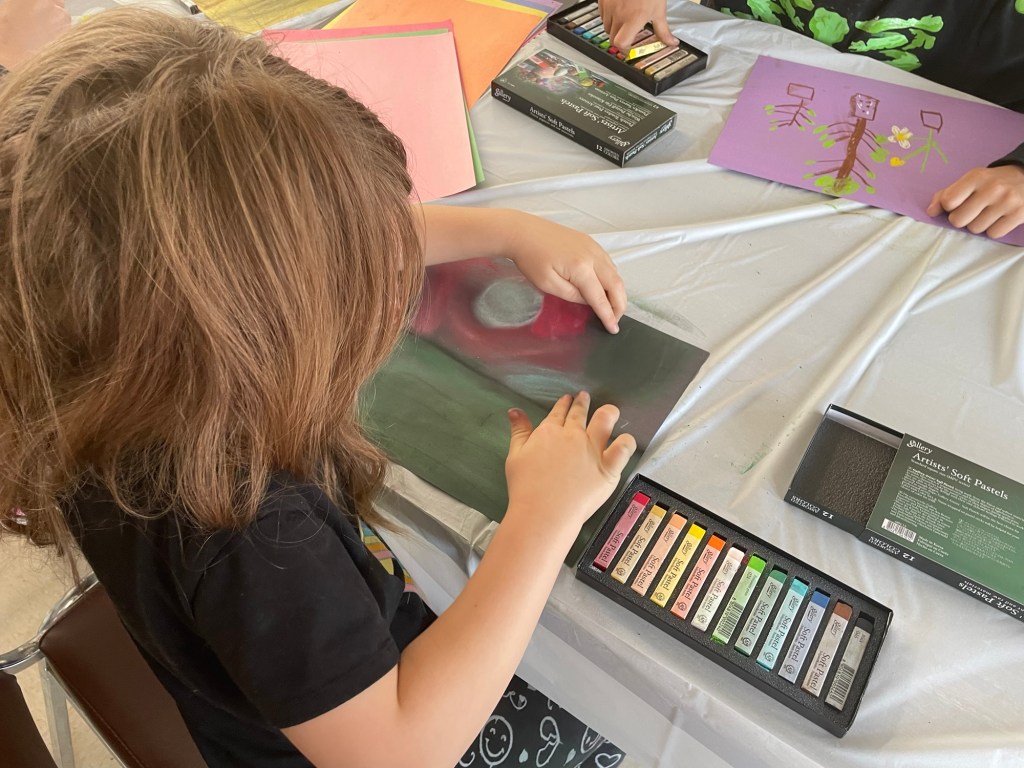
In addition to the curriculum or “organized” lessons we do, Little Miss has also taken part in a two month art class sponsored by our library, a cooking class sponsored by our local 4-H, and various other activities sponsored by the local library.

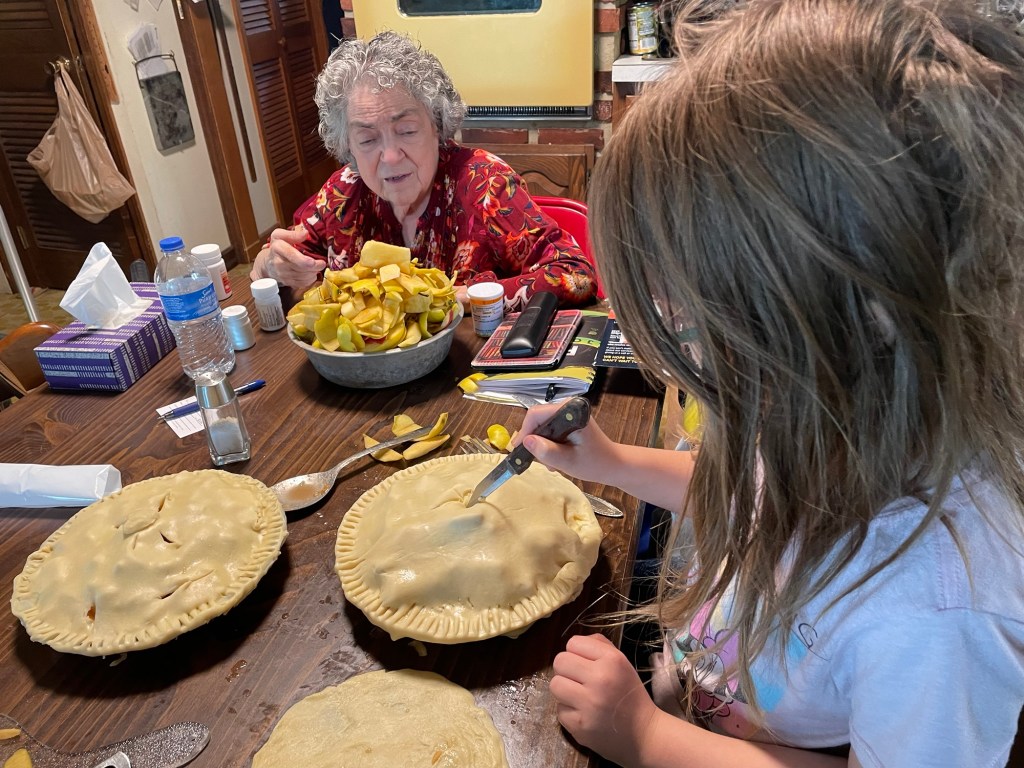
She also learns a lot from her grandparents (my parents) through visits and helping them around the house. Earlier in the school year we interviewed my mom about life when she was growing up and we hope to do that a bit more before the school year ends and also add my dad into the mix. We also cooked apple pies for The Boy and The Husband for their birthdays and Mom helped with tips for the process.

Art is something we do anywhere from one to three times a week because Little Miss loves to paint — mainly with acrylics.

Last week I took advantage of a nice weather day and suggested we take some canvases we had picked up and practice “splatter painting” on the back porch. I had a technique I had watched an artist use on YouTube that I wanted to show Little Miss but she has her own technique that she wanted to show me. We traded techniques and just did our own thing for an hour or more and it was the most relaxed I’d been all week.

It felt great to simply let loose and create art without strict rules or my usual perfectionism in having to make a picture look just right.

I have also been dabbling in water colors so Little Miss and I tried some water color paintings the week before.

We discovered we are going to need some higher quality paper if we are going to continue our experiments in that medium.

Little Miss had found an online game that helps with her learning music. We focused on music more in the beginning of the school year and last year.

In our state the homeschool law states that we must teach art and music at some point in a child’s elementary school years, but does not stipulate we have to do it every year.

Last year Little Miss and I focused almost entirely on literature and art for our final month and we will most likely do that again this year, but I will continue math lessons to make sure we don’t have to review as much at the beginning of next school year.

I think that wraps up our homeschool update for now. I am working on another post about my thoughts on education in general and will most likely share a wrap up post at the beginning of summer when our school year is complete.

Six Historical Fiction Chapter Books for Children 8 to 12. Books you can read for fun or education

As we all know, history is something important for children to know because, as the saying goes, we are doomed to repeat it if we don’t learn about the negatives of our past. History doesn’t only remind us of negative events, of course, though. We can also learn about how our ancestors lived and about the good things that happened in the past.

As a homeschooling mom, I am grateful to be able to expose my children to a variety of historical fiction that ties in with the historical events we are discussing in our lessons.

My youngest prefers hearing a story versus a list of facts. She learns about history better this way. We have been either introduced to or have found on our own, a selection of fiction books that have enriched our historical knowledge.

What I love about historical fiction is that while the book educates, it also entertains.

Here are six of my family’s favorite historical fiction books for children ages 8 to 12.

(Some links in this article may be affiliate links. This does not affect the cost to you, but may provide commission for items purchased.)

  1. Freedom Crossing by Margaret Goff Clark

|| Freedom Crossing ||

This story about a brother and sister who hide a slave in the mid-1800s is a nail-biter with a great message but also realistic portrayals of life for black people in the United States when slavery was legal. My daughter and I read it when she was 7, going on 8, and enjoyed it very much, even though it presented us with a difficult topic to discuss. We became wrapped up in the story of Martin, a young male slave, and Laura and her brother who work to help him escape to Canada.

Laura is not completely on board with this mission in the beginning and struggles with overcoming her preconceived ideas about slavery, which makes the story even more realistic and believable.

Description:

Laura Eastman returns to New York after living in the South with relatives for four years to discover that her brother and father are part of the Underground Railroad, helping fugitive slaves to escape to Canada. When a friend brings a runaway slave, Martin, to the house while her father and stepmother are away, Laura must decide what she believes — and whether she should help Martin escape.

2. Children of The Long House by Joseph Bruchac

|| Children of the Longhouse ||

This book is my 9-year-old daughter’s favorite book, besides Fortunately the Milk by Neil Gaiman and the Paddington books. It is a book that tells the story of the Native Americans of our country and kicked off a fascination of Native Americans for my daughter. She now has asked that we read and learn about Native Americans every Friday for our lessons.

The book tells the story of Ohkwa’ri and his sister Otsi:stia. Ohkwa’ri overhears the plans of some boys in the tribe who plan to attack another tribe and tells on them. This makes the boys angry at him and they threaten to hurt him. Between their threats and his being ready to grow into a man, Ohkwa’ri struggles with his emotions while his sister worries about him. Woven into the story is the lead-up to a showdown with the boys and Ohkwa’ri through the game  Tekwaarathon (lacrosse).

My daughter was 8 when I read this to her and when we were done she asked me to read it to her again.

I can see this as a book she will read on her own as she grows up as well.

Description:  When Ohkwa’ri overhears a group of older boys planning a raid on a neighboring village, he immediately tells his Mohawk elders. He has done the right thing—but he has also made enemies. Grabber and his friends will do anything they can to hurt him, especially during the village-wide game of Tekwaarathon (lacrosse). Ohkwa’ri believes in the path of peace, but can peaceful ways work against Grabber’s wrath?

We have several other books by this author on our book wish list.

3. The Year of Miss Agnes

|| The Year of Miss Agnes ||

This book was very charming and also very informative about Native Americans from Alaska.

It is the story of children from the point of view of Frederika (Fred for short), a Native American girl living in a fishing village in remote Alaska. Miss Agnes comes to their small school to teach, but the children think she’ll leave because all their teachers do – the smell of fish and living in the middle of nowhere gets to them too much.

This book had me laughing and a few chapters later I was crying from a touching scene. It was a gentle roller coaster of emotions and at the end, I had such a peaceful and warm feeling.

Description:

A year they’ll never forget
Ten-year-old Frederika (Fred for short) doesn’t have much faith that the new teacher in town will last very long. After all, they never do. Most teachers who come to their one-room schoolhouse in remote, Alaska leave at the first smell of fish, claiming that life there is just too hard.

But Miss Agnes is different — she doesn’t get frustrated with her students, and she throws away old textbooks and reads Robin Hood instead! For the first time, Fred and her classmates begin to enjoy their lessons and learn to read and write — but will Miss Agnes be like all the rest and leave as quickly as she came?

4. Toliver’s Secret by Esther Wood Brady

|| Toliver’s Secret ||

Like The Year of Mrs. Agnes, this book features a girl main character who is brave, strong and overcomes her fear to help not only her family but our country.

This one was an action-packed one and we both looked forward to when it was time to read another chapter of it. This one takes place before the Revolutionary War so it is perfect when you want to teach your child about the start of our nation.

Description:

When her grandfather is injured, 10-year-old Ellen Toliver replaces him on a top-secret patriotic mission. Disguised as a boy, she manages to smuggle a message to General George Washington.

5. Farmer Boy by Laura Ingalls Wilder

|| Farmer Boy ||

This book is part of the Little House on the Prairie series by Laura Ingalls Wilder but it does not focus on Laura and her family’s life. Instead, it is a book completely about Laura’s husband, Almonzo, and his childhood.

This book is rich in description of life in New York State in the mid to late 1800s. It is not about a pioneering family, like Laura’s other books are. This book is about Almonzo and his siblings growing up on a farm

Description:

While Laura Ingalls grows up in a little house on the Western prairie, Almanzo Wilder is living on a big farm in New York State. Here Almanzo and his brother and sisters help with the summer planting and fall harvest. In winter there is wood to be chopped and great slabs of ice to be cut from the river and stored. Time for fun comes when the jolly tin peddler visits or, best of all, when the fair comes to town.

This is Laura Ingalls Wilder’s beloved story of how her husband, Almanzo, grew up as a farmer boy far from the little house where Laura lived.

6. When Hitler Stole Pink Rabbit by Judith Kerr

|| When Hitler Stole Pink Rabbit||

I finished this book a couple of weeks ago and really enjoyed it. I have not read it with my daughter yet because she is extremely sensitive and I don’t really want to have to tell her about what happened during the Holocaust until she is a little bit older. The book is aimed at 5th grade and older so this one is a little bit out of the lower end of the age range of for this post.

It is very historically based since it is based on the true story of the author’s family and a great leap-off point to discuss the situations surrounding World War II.

Description:

Anna is not sure who Hitler is, but she sees his face on posters all over Berlin. Then one morning, Anna and her brother awake to find her father gone! Her mother explains that their father has had to leave and soon they will secretly join him. Anna just doesn’t understand. Why do their parents keep insisting that Germany is no longer safe for Jews like them?

Because of Hitler, Anna must leave everything behind as her family embarks on a journey that extends over several years and over the borders of many countries.

Have you read any of these books to or with your children?

Fully Alive Part 3

For the first part of this work in progress click HERE. For the second part, click HERE.

This is a work in process and there will most likely be typos and changes to it in the future.


The busy sounds of people rushing by to complete their daily chores quieted as Jairus pushed the door to the synagogue closed. He leaned against the door and closed his eyes for a moment as he tried to quiet his racing thoughts.

Jairus focused on the words he had said to Josefa the night after the teacher had healed her.

Healed her? Brought her back to life?

Is that really what had happened?

Even now it was all too unbelievable to him.
He wondered, did he really believe this man, this Jesus was the true Messiah as he had told Josefa?

Maybe he had been wrong to say so. He’d spent his whole life studying the scrolls, learning of Moses and Elijah, about the prophecies of the Messiah. Now here he was almost completely convinced the man he had followed in the street, begging for him to come and heal his only daughter was indeed the Messiah. He knew he was being ridiculed behind his back by the other leaders of the synagogue for asking for Jesus’ help but he couldn’t deny what he had witnessed that day.

He remembered Josefa’s fever and how she’d no longer been able to stand. Miriam, his wife, had soaked cloth and laid it across Josefa’s forehead, hoping the cool water from the stream would revive her. For days they sat by her cot, holding her hand, Miriam weeping as Josefa moaned and faded in and out of consciousness.


“You know I told you about this teacher, this man they call Jesus? Miriam, are you listening? He’s been healing people. I saw him heal a man’s hand in the synagogue last week. The leaders were upset because it was the sabbath, but I saw the man’s hand. It was diseased, scarred, withered but Jesus held it, touched it and the hand was whole again.”


Miriam dabbed her eyes with her shawl as her husband spoke, barely listening as she watched her daughter’s breathing become more and more shallow. Dark circles were now under Josefa’s eyes.


“I will go to him, ask him to come,” Jairus was speaking again. He was pacing the floor, rubbing and pulling at the hairs of his beard as he always did when thoughts overwhelmed him.


“Do we now believe in such men who call themselves healers?” Miriam asked, weary from worry.


Josefa’s body shuddered with a convulsion. Miriam rushed to her, held the girl’s small frame against her chest. Josefa’s breathing became labored, shallow. Jairus saw the panic in his wife’s eyes and felt it rising in himself as well.

“We are losing her! Go! Go to this teacher and ask him to come!” Miriam’s voice was filled with fear. “He’s our only hope now!”

Jairus’ heart pounded as he ran from the house, out onto the crowded paths, pushing his way through travelers and locals and animals being led to market. He could see a crowd around a man in front of him. They were all moving one direction, calling out “Jesus!” Questions were being asked, some voices mocked, some sounded hopeful.

An image of Josefa’s pale frame flashed in Jairus’ mind and he tried to move faster, pushing more people aside. His chest felt tight, his breath more labored. Was this man he was trying to reach a heretic as the synagogue leaders and other rabbis said? What if he was crazy like the man who was called John the Baptist, who was covered in dirt and smelled and had spoke of a healer and prophet who would come to save the Jews?

Jairus’ foot caught a stone and he felt himself falling. The sand flew into his face and pebbles cut at his palms. As he pushed himself up he felt tears hot and stinging his eyes. He would never reach Jesus now.

He saw sandal clad feet before him and looked up.

“Let me help you,” a man with kind eyes and a smile held a hand out to him.

Jairus took it and stood slowly.

“Thank you,” he barely looked at the man, instead searching the crowd to see where Jesus had gone.

“Do you seek Jesus?” The man asked.

“Yes,” Jairus said, breathless.

“Come. I’m one of his followers. I will help you to him.”

Jairus looked at the man, noticed his unkempt beard and slightly frayed clothes. He nodded at him, seeing kindness and concern in his gaze.

The man gently touched the shoulders of those around them and people began to move aside. Ahead of them Jairus saw Jesus had paused and turned to the crowd. His eyes focused on Jairus who suddenly felt unsure, uneasy. Jairus dropped his gaze to the ground, overwhelmed with worry for his daughter and overwhelmed with the presence of a man who had performed so many miracles. His body felt weak from running, from being awake for so many days watching over his daughter.

He felt his knees give way and he fell to the ground before Jesus.

Sobs wracked his body as he lost control of control his emotions.

“Jesus,” he gasped out the name.

A sob choked his words and he thought he wouldn’t be able to finish.

“Jesus, my little girl is dying. Please. Come and put your hands on her so that she will be healed and live.”

He felt tears rush down his face and he was startled by emotions he usually tried to keep locked inside.

He felt a hand on his head, on the covering he wore there.

“Come, rise and let us go to her,” Jesus voice was calm, gentle.


His followers helped Jairus to his feet and Jesus motioned for him to lead the way to his home. The crowd surged around Jesus and they all began to move with him, as if one combined force, following Jairus. Several moments of chaos followed and Jairus felt a rush of frustration as the crowd pushed between him and Jesus.

“Jesus! What does God ask of us?”

“Jesus, what happens when we die?”

“Jesus, will I find wealth?”

People cried out as they walked. They pushed against each other, each person wanting to get closer to the man so many were talking about.

“Who touched me?”

Jairus faintly heard Jesus’ voice over the noise of the crowd but he could barely hear what he was saying. He tried to push forward in the crowd, looking over his shoulder every few steps to see if Jesus was following.

“I felt power go from me,” Jesus spoke louder to one of his followers. He stopped and turned to look behind him. “Who has touched me?”

The people in the crowd murmured and grew quiet.  Jairus stopped to see why Jesus wasn’t following.

“Master, there are people all around you and you are asking ‘who touched me?’” one of Jesus’ disciples laughed slightly as he spoke. His tone was incredulous, tinged with annoyance.

Jairus knew this was the man called Peter – a local fisherman who now followed Jesus. Many whispered surprise Peter, known as brash and abrupt, was following a teacher of God.

“Somebody touched me, for I perceived power going out from me,” Jesus said.

His eyes scanned the crowd around him but no one answered. They looked at each other confused and unsure why Jesus was concerned.

A woman’s voice could be heard softly, barely above a whisper.

“It was me.”

“Who is speaking?” One of Jesus’ disciples asked. “Please, come forward. Answer the teacher.”

The crowd moved aside and a woman, head down, moved toward the front. She dropped to her knees, her head bowed low, her clothes tattered and stained. She clutched her hands before her and tears dripped off her face and into the dirt.

Jairus felt anxious. He wanted to grab Jesus by the arm and drag him forward, back to his house and his daughter, but at the same time he was entranced by the scene unfolding before him.

The woman glanced upwards at Jesus.

“It was me,” she said softly.

“I knew if I could just touch the hem of your robe…”

Her gaze fell again on the ground.

“I’ve been to every doctor. I’ve been bleeding for 12 years. No one will come near me, teacher. I am unclean.”

Some in the audience winced and a few stepped away from her, covering their mouths.

Tears continued to stream down her face.

“I have tried everything. I heard of your miracles and I knew – if I just touched the hem..”

Her fingertips grazed the edge of his robe again. She could barely speak as she sobbed.

“Master, the bleeding. I can feel- it’s stopped. Something is … something is …..different.”

Jairus felt his heart pounding heart and fast. If this woman was sure she had been healed, if she was saying simply touching the hem of his garment was enough to heal her then he was indeed a powerful man, a messenger of God. If healing flowed from him so easily then there was hope for Josefa.

Jesus kneeled before the woman, reached out and took her hands in his. He touched her chin and lifted her face toward his.

“Daughter, your faith has made you well.”

Jesus kissed her forehead gently and wiped the tears from her face. He stood and helped her to stand with him.

“Go in peace.”

A sob escaped her lips and she kissed Jesus’ hand as she held it. She backed slowly away.

“Thank you. Thank you.”

A hush had settled over the crowd. Some of the women dabbed their eyes and men talked quietly to each other, shaking their heads with furrowed eyebrows.

Jairus felt a sense of urgency rushing through him, tensing his muscles. He needed Jesus to hurry. He felt at hope at what he had seen and he wanted the same for his Josefa and his family.

“Jesus, my daughter… please …”

Jesus turned toward him and nodded.

“Of course, let us go…”

Jairus felt a hand on his shoulder and turned to see Josiah, his servant from home, standing next to him, his face stained with tears and dirt.

“Master, there is no need to hurry now. Josefa-“ his voice trailed off and Jairus began to shake his head.

“There is no need to bother the master now,” Josiah said. “She’s – “

“No! No!” Jairus wouldn’t let him finish.

He felt bile rushing up into his throat and his hands began to shake. He pressed his hands to his head, as if trying to wake himself from a dream.

“Josefa…” he felt the tears hot on his face and he clutched his robe against him as pain seared through his chest. “Oh God. God help me.”

He looked up as Jesus touched his arm.

“Do not be afraid. Believe.”

Jesus’ eyes were kind but Jairus’ mind was reeling. If only Jesus had moved faster. If only that woman hadn’t stopped them. Josefa would still be alive and her laughter would still fill their home.

“She’s gone,” he told Jesus. “We cannot save her now. You can not heal her. If only – ”

Jesus looked over Jairus’ shoulder, his gaze moving above the crowd.

“Come, lead me to your home.”

Jairus did as Jesus told him but his legs felt as if they were weighted down. Before they even reached the corridor where his home was he could hear the wailing and knew mourning had already begun.


Mourners were outside the home, trying to comfort Miriam, who was clearly in shock as she pulled at her clothes and repeated “no. no. no.”
Jairus rushed toward his wife, grasped her by the shoulders and pulled her against him. She clutched at his clothes and shoved her face into his chest.

“She’s gone. She’s gone. Oh, Jairus. Our little girl is gone.”

Jesus pushed forward in the crowd. He laid his hand against Miriam’s back to comfort her.

“There is no need for tears,” he said with a gentle firmness. “The girl is not dead. She is merely sleeping.”

An angry voice shouted over the noise of the crowd.

“She’s dead! You give these people false hope!” a man shouted.  “You are a liar and a fool! Like all who have come before you!”

Other voices joined in agreement.

“You say you can heal but you only bring hallow promises to these people,” a man sneered.

Jesus stood with his back to the crowd, kneeling down beside Miriam and Jairus.

“Send these people away and come inside with me,” he instructed. “Peter, James, John, come with me.”

Jairus opened his eyes to the sound of someone moving inside the temple, interrupting his thoughts and memories of that day.

“Jairus? Is that you?”

He recognized the voice of Ezra, another leader in the synagogue.

“Yes, Ezra. Good morning.”

Ezra walked toward him holding scrolls.

“Have you come to help me organize these for the scribes?” his mouth lifted in a wry smile.

“I did not but I am glad to help,” Jairus said returning the smile.

The men laid the scrolls on the table next to a bottle of ink.

“I do not know how so much has become in disarray in here – and outside,” Ezra said.

He looked at is friend and noticed Jairus was pulling at his beard, as he often did when deep in thought.

“Tell me, Jairus. How is Josefa recovering?”

Jairus smiled. “Well. She is well. It is – dare I say it? A miracle indeed.”

Ezra nodded but his expression grew serious.

“Jairus, I must ask you – I’ve heard many talk of what happened with Josefa. Is it true, what they say? Was she dead before Jesus arrived?”

Jairus felt his muscles tense. He was unsure what Ezra hoped to learn with his questions. He pondered how to answer, but knew telling the truth might encourage Ezra to help him understand more what had happened.

“Miriam and her hand maiden said there was no breath. She was cold when I entered the home and I felt no heartbeat beneath my hand. Her skin –“ he felt his breath catch in his throat and he paused to choke back emotion. He shook his head as if to shake the image from his mind. “Her skin was pale, tinged with blue. And… so cold.”

Ezra put his hand on his friend’s arm and squeezed it slightly.

“You’ve been through much, my friend,” Ezra said.

He opened a scroll to read it’s contents, rolled it again and stuck it back in a space in the temple wall.

“What do you believe happened that day?” Ezra asked.

“I don’t know, friend. I truly don’t. All I know is she was gone and when Jesus came she arose at his bidding. He took her hand and instructed her to rise and live and she did.”

“After all you have seen .. .” Ezra paused in stacking the scrolls and turned to look to Jairus “After meeting this man who calls himself the Son of God – who do you say he is?”

Jairus realized he didn’t know how to answer. He had seen Jesus do miraculous things and heard of even more. He believed his daughter was still living because Jesus touched her, but was he truly the son of Jehovah or was he simply a great teacher, so holy Jehovah used him to heal.

He looked Ezra in the eyes, opened his mouth to answer and then closed it again.

“Ezra – I wish I could say, but truly, I do not know what to believe about this man.”