Classic Movie Impressions: The Prisoner of Zenda

The Prisoner of Zenda (1937) is a cinematic spectacle. Grand halls, sweeping ballrooms, wildly decorated courtyards, and captivating costumes.

I absolutely loved it and am so glad I stumbled on to Douglas Fairbanks Jr. and decided to do a marathon of his movies to learn more about him so that I could discover this movie.

Douglas Fairbanks Jr.  is not the leading man in this one but he steals the show in every scene he is in. He is deliciously evil.

The leading man, Ronald Colman, is absolutely amazing as well, especially since he is playing two parts in this one. He is so amazing I feel another marathon coming on but of his movies.

An article on TCM.com agrees with me about this version (Okay, I agree with the article).

“ . . . of all the dramatized versions of Anthony Hope’s 1894 tale of adventure, love and honor, the 1937 black-and-white movie version, produced by David O. Selznick for his Selznick International Pictures stands as the definitive adaptation.”

It is easy to see why this movie is called by critics one of the best “Swashbuckler” movies of all time. I say that since this is one of the original Swashbuckler movies without it we wouldn’t have Pirates of the Caribbean, The Princess Bride, and other more modern adventure movies.

 And without the 1894 novel — The Prisoner of Zenda: Being the History of Three Months in the Life of an English Gentleman by Anthony Hope — we wouldn’t have had the movie at all.  Anthony Hope Hawkins was a part-time lawyer who wrote the book in one month from what I read.  

The novel sold more than 30,000 copies in Britain and the U.S. and helped to establish the adventure genre that would later be explored even more by authors such as Sir Arthur Conan Doyle and H. Rider Haggard. The book, according to an article to TCM, has never gone out of print and has continued to sell thousands of copies each year.

The movie is the most referenced Swashbuckler film, TCM further states, which is probably why it was remade at least seven (!!) more times over the years, including one only about 15 years after the 1937 version, which was not the first. There were actually two silent movies of the book made before this version.

The 1952 version was shot frame for frame, according to articles I read online. I think I might watch the one released in 1952 later on and then compare the two, but I highly doubt that the 1952 movie or any of the others (including two made-for-TV movies and three television shows) will top the 1937 one, especially when it comes to Douglas’s performance. Yes, Doug and I are on a first-name basis now. I feel that we are getting to know each other enough now that we can dispatch with the formalities.

When I first saw Douglas in The Rage of Paris, I immediately thought how much he reminded me of Cary Elwes in The Princess Bride – his smile, his delivery, his expressions.

In this movie that similarity came even more into focus and especially during an amazingly well-choreographed and filmed fencing scene between him and Colman.

The two enjoyed a sparring of words while sparring with their swords, reminding me of the scene between Elwes and Mandy Patinkin on the Cliffs of Insanity in The Princess Bride. Perhaps Golding was influenced by the movie? I don’t know but if I research any more for this post, I’ll never publish it.

Let’s finally get to the plot of the movie. Finally…I know!

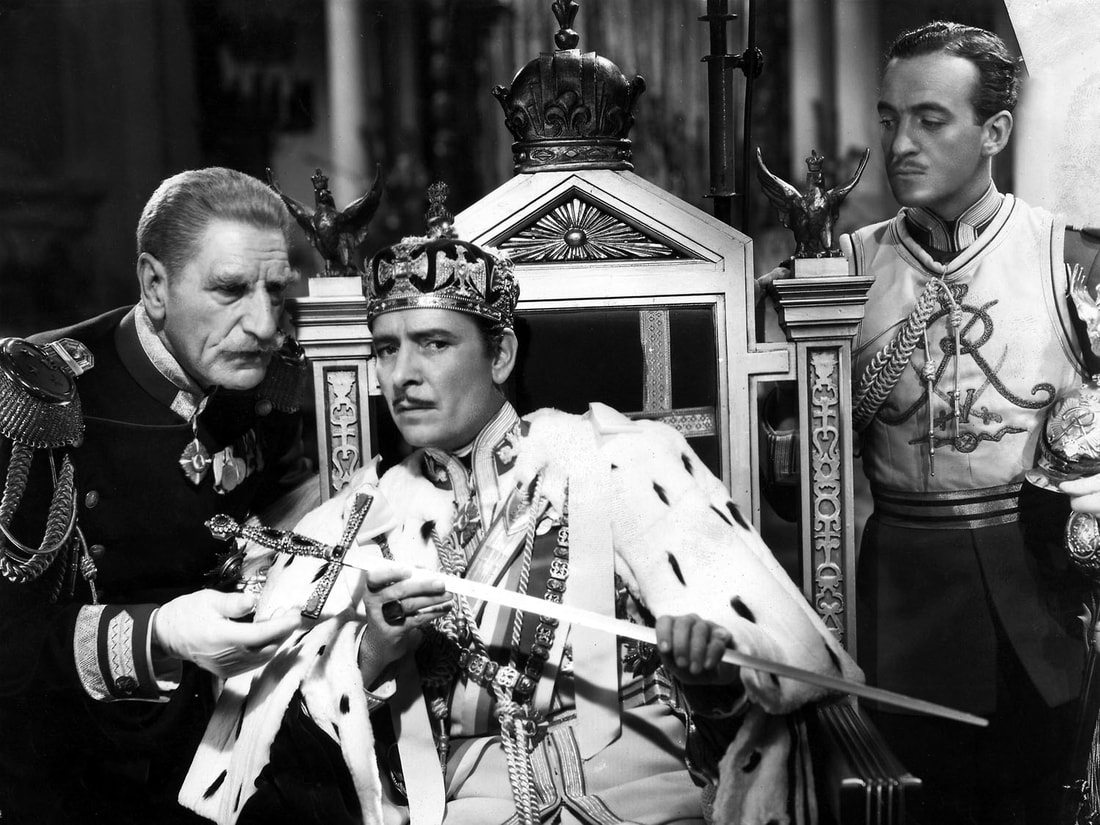
We have an Englishman named Rudolf Rassendyll (Colman) who has gone to a small country located somewhere between Vienna and Bucharest (not named in the film, but in the book it was called Ruritania). He has gone there for a fishing expedition at the same time the king of the country is being coronated. Zenda is a small area in this unnamed country where there is good fishing and boar hunting and where the king, Rudolph V (also portrayed by Colman), has a hunting preserve and cabin. RudolfV and his advisors Col. Zapt (C. Aubrey Smith) and Captain Fritz von Tarlenheim (David Niven, who I recognized immediately from other movies I’ve seen him in) run into Rassendyll in the woods and realize how much the two look alike.

I’m a little confused by the scene where Rassendyll tells the king they look alike because of their ancestors  — the king’s great-great-great grandfather and Rassendyll’s great-great-great grandmother — most likely had an illicit affair. In the beginning of the film, he acts like he’s coming to the country to hunt and knows nothing about the king or how much he looks like him but five minutes later in the film he’s telling the king he knows he looks like him and why. This is probably something that is explained better in the book.

All I can say is thankfully they both have the same British accent even though the King is from a kingdom in Eastern Europe, or they wouldn’t be able to understand each other.  Har. Har.

Minor complaint. Let us move on.

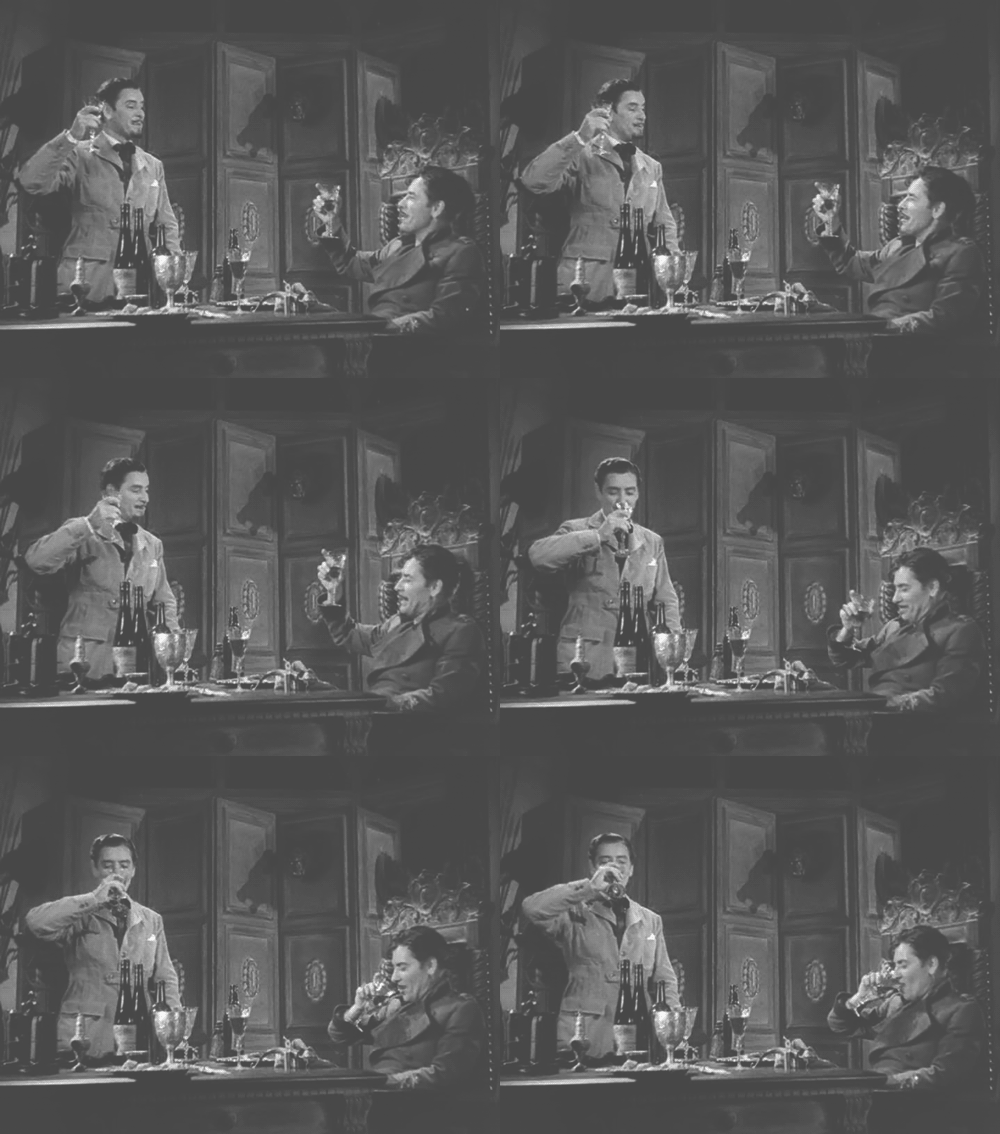
This news from Rassendyll about their probable relationship cracks the king up and he invites Rassendyll back to his hunting cabin where they get completely roaring drunk and Rudolftalks about his coronation scheduled for the next day and his half-brother Duke Michael, who hates him. He also speaks of his cousin Princess Flavia (Madeleine Carroll) who he will wed shortly after the coronation. After everyone else is unconscious from drinking too much, Rudolfdecides to drink a bottle of wine gifted to him by Michael.

 Uh-oh. Bad idea.

When Rassendyll wakes up the King is unconscious on the floor, drugged. The king’s advisor says the king isn’t dead, but he won’t be in any shape to be coronated that which means that Michael could be crowned instead. A plan is hatched to have Rassendyll pose as the king only for the coronation and then to be smuggled out of the country and sent back home.

Of course, we have foreshadowing here that tells us that all will not go as planned and, indeed, it does not.

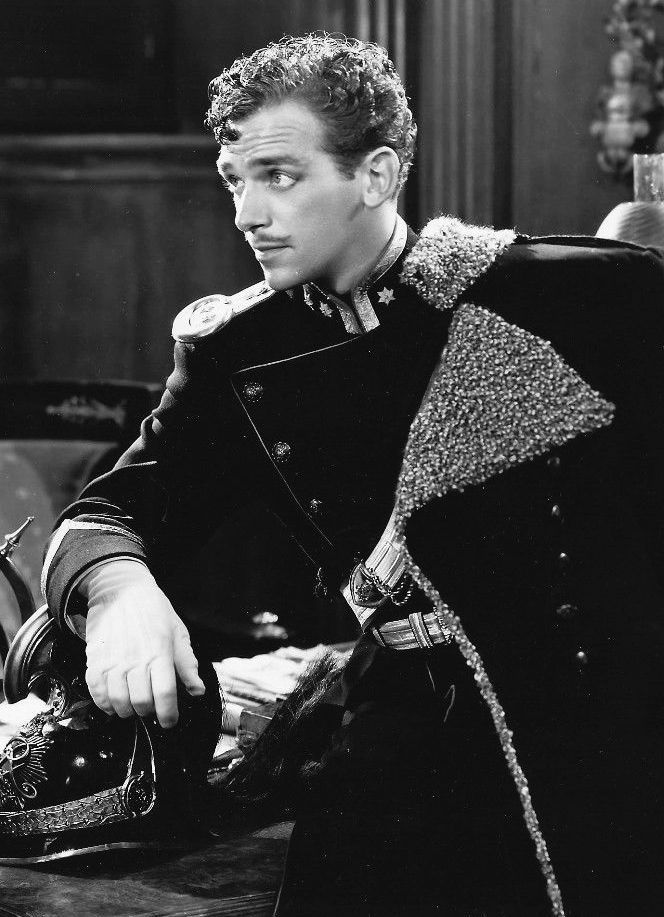
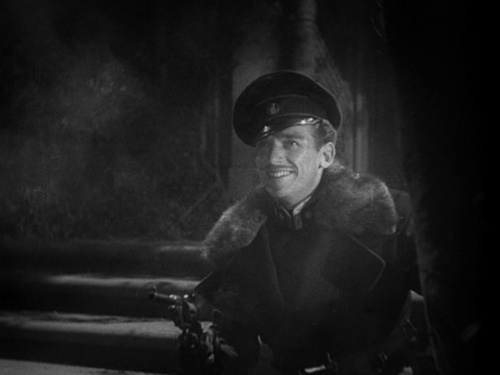
Douglas portrays Robert of Hentzau, the henchman (for lack of a better word) of Duke Michael, the king’s brother who wants to take over the throne.

He shows up for the first time with a crooked, mischievous smile, like in many of his movies, and lets us know immediately he is the comic relief and a completely swarmy cad. A very attractive cad, though, I must say.

Let’s put it this way —Hentzau is all frat boy, and I could not stop watching him when he was on screen.

There was a lot about this movie I could not stop watching — the acting, the scenery, and the exquisitely detailed and breathtaking costumes designed by Ernest Dryden.

The Prisoner of Zenda was originally going to be released by MGM, but was bought by Selznick for his own studio, right around the same time he was working on Gone With The Wind (1939).

If MGM had produced it, they were going to use it as a vessel for more money makers from power team William Powel and Myrna Loy of the Thin Man movies. A musical was also a possibility. That all went out the window when Selznick bought it.

“Zenda was already a proven commodity in print, on the stage and in previous film versions,” writes Roger Fristoe for TCM.com. “And the recent abdication of England’s Edward VIII led Selznick to think that a story of kings and coronations would be timely.”

John Cromwell, a former actor who had previously only directed romantic dramas, was chosen to direct, which some questioned.

Selznick explained the decision had to do with Cromwell’s experience with European audiences.

“In doing a picture like The Prisoner of Zenda, which is aimed at least fifty percent toward a foreign market,” he wrote in a memo. “It becomes important to get a director who at least has the judgment and taste to respect the sensibilities of audiences which are sensitive, particularly in England, about the behavior of royalty.”

Cromwell had a lot of complaints about the cast, though, including Niven and Douglas, who he called lazy and overindulged. He even dismissed Niven at one point because he didn’t find his humor humorous. Ha. But Selznick overruled him and brought Niven back, saying he was bringing life to an otherwise dull role.

 James Wong Howe was the cinematographer for the movie and his work was amazing, in my humble opinion. The various angles, the lighting, all of it.

Look at this fencing scene..the shadows on the walls..

The cinematography, great acting, and astounding costume and set design made this movie overwhelmingly enchanting.

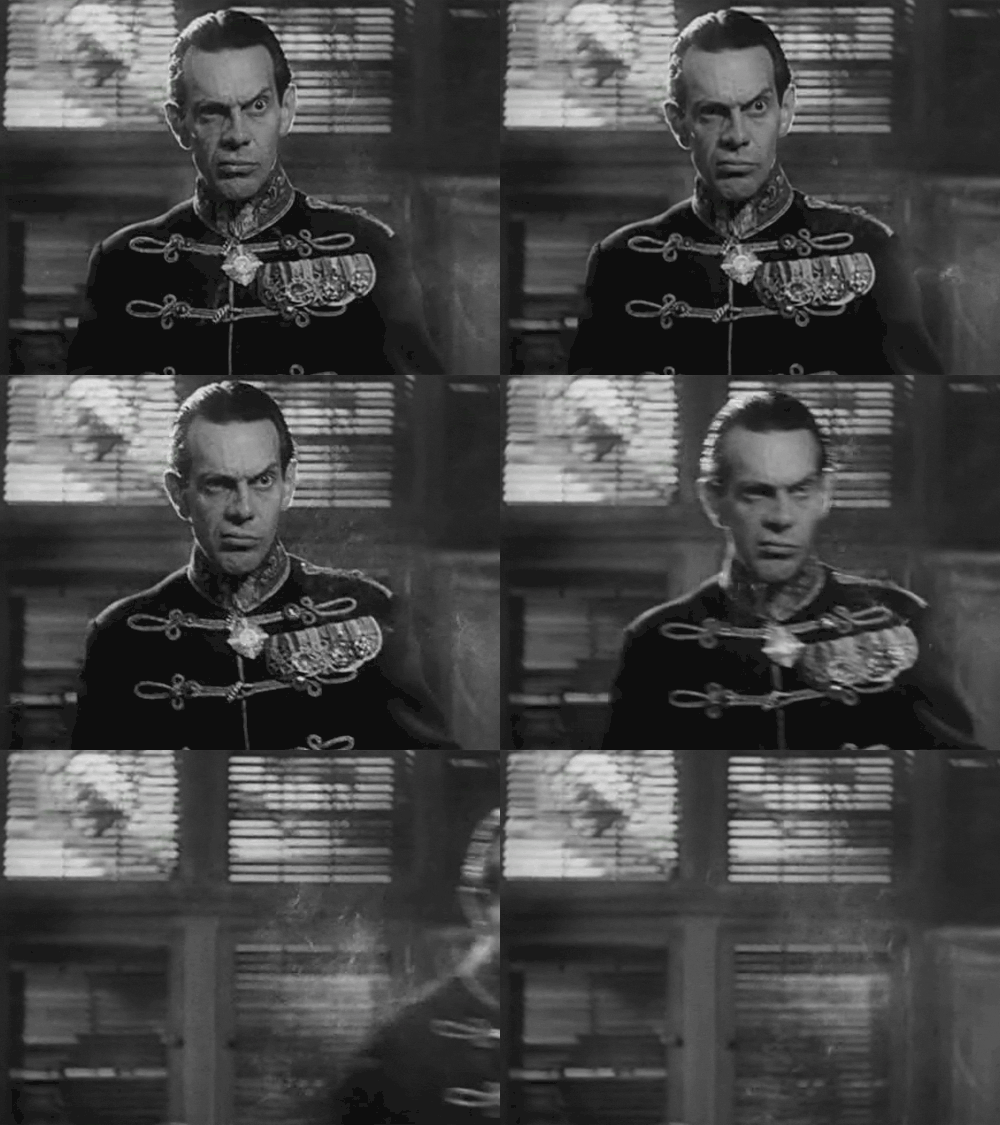
There are a couple of scenes where Colman is filmed talking to himself and I was really interested to know how that was done before the days of digital special effects. Luckily the TCM article explained that for me.

“The special effects created by Howe included a subtle and convincing scene where Colman appears to shake hands with himself. A 3 X 4′ optical glass was placed in front of the camera, and Colman exchanged the handshake with a double, whose head and shoulders were subsequently matted out with masking tape on the glass. The scene was re-photographed with Colman in a different costume and everything matted out except his head and shoulders. When the images were combined, the effect was complete and quite realistic.”

Because I loved Douglas as Hentzau so much, I thought I’d close this post by sharing some quotes that show how delightfully jerky he is in the movie:

“I don’t like women who lie to me. They don’t usually do it, as a matter of fact. I usually do them to them.”

“Someone once called fidelity a fading woman’s greatest defense and a charming woman’s greatest hypocrisy. And you’re very charming. And Michael’s very busy and likely to be more so.”

[during his sword fight with Rupert, Rudolf Rassendyll “retreats” towards the drawbridge’s controls]: “You’d be a sensation in a circus. I can’t understand it. Where did you learn such roller skating?”

To Rassendyll: “Why don’t you let me kill you quietly?”

Rassendyll: Oh, a little noise adds a touch of cheer. You notice I’m getting closer to the drawbridge rope?

Henztau: You’re so fond of rope, it’s a pity to finish you off with steel. What did they teach you on the playing fields of Eton? Puss in the corner?

Rassendyll: Oh, chiefly not throwing knives at other people’s backs. (A reference to a previous scene).

Have you ever seen this version or any version of The Prisoner of Zenda?

What was your impression of it?

Up next in my series will be Gunga Din, one of his more famous movies, from what I’ve read.

The rest of the movies I will be watching include:

The Young At Heart (January 30)

Having Wonderful Time (February 6)

Chase a Crooked Shadow (February 13)

Sinbad The Sailor (February 20)

The Rise of Catherine the Great (February 27)

The Sun Never Sets (March 6)

You can also find my impressions of previous movies in the series, as well as other classic movies here: https://lisahoweler.com/movie-reviews-impressions/

Comfy, Cozy Cinema: Kiki’s Delivery Service and a Comfy, Cozy Giveaway

Erin from Still Life, With Cracker Crumbs and I are watching Comfy, Cozy movies this September and October and this week we watched Kiki’s Delivery Service, a Studio Ghibli animated movie.

We are also announcing a very fun and exciting giveaway for a comfy, cozy gift basket which you can enter to win at the giveaway link at the bottom of this post!

Kiki’s Delivery Service was released in 1989 in Japan by  Hayao Miyazaki, a Japanese animator and filmmaker, and was based on a book called Witches Express Delivery Service.

The movie was animated by Studio Ghibli (which Miyazaki was a founder of) for Tokuma Shoten, Yamato Transport, and the Nippon Television Network.

According to information online, “The English dub was produced by Streamline Pictures for Japan Airlines international flights in 1989. Walt Disney Pictures produced an English dub in 1997, which became the first film under a deal between Tokuma and Disney to be released in English. It was released to home media in 1998.”

This was a very sweet movie with little action but a lot of heart.

First the background – Kiki is a witch and the tradition is that witches leave home at the age of 13 and travel away from their family for a year to learn what their skill in life is.

Kiki’s mother insists she take her old, reliable broomstick so Kiki flies off into the night with her all black cat JiJi and finds a small town to settle in. She ends up living with a baker and starts a delivery service – delivering packages with the use of her broom.

The bakery is owned by Osono and her husband, Fukuo, who are expecting a child.

Kiki also meets a friend – a boy named Tombo who wants to be her friend more than she wants to be his for most of the movie. Tombo likes to invent things – especially things with the potential to fly. At one point he invites Kiki to his aviation club but Kiki gets wrapped up in deliveries and gets caught in a rainstorm. This causes her to become very sick but Osono nurses her back to health and then pretends to have a delivery sent to Tombo so Kiki can see him and apologize.

During her first delivery, Kiki loses the toy she’s supposed to deliver and then she and her cat – who talks by the way – work to find a way to get it back to the child it belongs to.

Much of the movie is like this – just little stories or adventures that aren’t very exciting in some ways, but are calming and sweet.

It isn’t until more than halfway through the movie that more conflict arises because Kiki seems to be losing her powers, which she first notices when she can no longer understand JiJi.

Studio Ghibli is the design studio for many Japanese animated movies. Later many of these movies are dubbed into English and sometimes feature well-known American actors. In the one I watched (which was the Disney dubbed one from 1997) Kiki was voiced by Kiersten Dunst and the cat was voiced by Phil Hartman.

Kiki’s Delivery Service focuses on themes of independence and finding your place in this world.

It was the first Studio Ghibli film to find commercial success soon after being released – earning $31 million.

I wasn’t as swept up in this one as in previous Studio Ghibli films but as it continued it grew on me. It was a very quiet film and some of the Studio Ghibli films have a little more action so I wasn’t ready for it to be so toned down. Once I got into the story, though, I enjoyed it. The scenery and art, as in all Studio Ghibli films, was really beautiful.

I was rooting for Kiki – especially once she lost her powers and seemed confused about her next step.

While the makers of the movie and critics said the movie focuses on themes of maturity and independence, I also saw a strong theme of friendship, family, and trust.

Have you ever seen this one? What did you think?

Read Erin’s impressions of the movie here: https://crackercrumblife.com/2024/10/03/comfy-cozy-cinema-kikis-delivery-service/

Coming up next week will be the 1945 version of Blithe Spirit.

Feel free to link up your own impressions of the movies at our link-ups. The links close at the end of the week but feel free to leave your blog post on future link-ups, even if it is for another movie.

Also, Erin and I are announcing our Comfy, Cozy Gift Basket Giveaway today.

I’m just going to copy what Erin wrote to share here because I am lazy *wink*: “We have some fun little goodies to be sent off to one winner, with more surprises to be added as well! We want to celebrate the season and this is just one way we would like to do that this year.

You can enter anytime between today and October 15th, and the winner will be announced on our blogs on Thursday, October 17th. Please enter via Rafflecopter and it is only open to those 18 or older living in the US.” You can enter here: https://www.rafflecopter.com/rafl/display/3614a4fa2/?

You are invited to the Inlinkz link party!

Click here to enter
https://fresh.inlinkz.com/js/widget/load.js?id=c0efdbe6b4add43dd7ef

.

February Favorites: movie impression of Amelie

Erin from Still Life, With Cracker Crumbs and I had planned to write about our favorite movies this month and then she took a blogging break and it was a break that I realized I needed to because I’ve been spreading myself way too thin lately.

Erin has mentioned the movie Amelie a few times in the last year or so as being one of her favorite movies so this past weekend I suggested that I watch it since she was already watching it with her hubby and that we write about it today.

She, of course, readily agreed.

Amelie, for those not familiar, is a French film – so yes, I had to read subtitles because I am not fluent in French. It is about a young waitress who was raised by introverted parents who thought she was sick as a child and kept her inside most of her life. It was released in 2001 and the full name of the movie in France is The Fabulous Destiny of Amélie Poulain. Audrey Tautuo plays Amelie. It is directed by Jean Pierre Jeunet.

When she grows up she is very imaginative and begins to work behind the scenes to improve the lives of others. In the process, she might even improve her own. She begins to help others to combat her own loneliness.

This is a very quirky film with quirky camera angles and quirky writing and acting. Quirky is not a bad term in my book, in case you are wondering. I am a fan of quirky.

What is quirky about the film?

The writing, the camera angles, as I mentioned above and in how the narrator talks in present tense for part of the movie and then Amelie breaks the third wall to talk to us about her life in just one scene and then it is back to the narrator. I love when movies break “the rules” so to speak and breaking the third wall is one of those ways. If you don’t know what breaking the third wall means, it is when a character looks directly at the camera and speaks to the audience.

The movie features beautiful, vintage scenery throughout. The backgrounds are picturesque in an urban art style and the entire movie has a slight yellow tone like vintage film to give it a warm feeling. The main colors in the film (green, yellow, and red) are inspired by the paintings of the Brazilian artist Juarez Machado, according to IMDb.

Stories weave in and out of the main narrative of Amelie’s life, starting with her search to find the owner of a small box of mementos she finds in the wall in her bathroom and continuing when she works to return a book of photos from photo booths around the city so she can meet the man who collects the photos.

Each story is a life that Amelie touches and improves and each time she feels more alive and less isolated. Each character she interacts with is also strange and a bit eccentric, and the camera angles exaggerate these facts and the intricacies of Amelie’s imagination. She works to improve the lives of everyone around her, including her father who she encourages to travel the world by sending him photographs of his gnome in different locations around the world.

Eventually, helping others will inspire her to bring happiness to her own life.

There is only one person whose life she sort of messes with as revenge, but he deserves it. Trust me. And harassing him helps to improve the life of another person so it sort of evens out.


According to a couple of sources online, Jeunet said he originally wrote the role of Amélie for the English actress Emily Watson.  Watson didn’t speak strong French, however, and then she started shooting Gosford Park instead. Jeunet then rewrote the screenplay for a French actress. The film was shot in Paris for the most part with some studio shots filmed in Germany.

Tautou was nominated for a BAFTA for Best Actress for her role. She was 24 when the film was released.

Trivia on IMbD states that graffiti and trash had to be cleared from shots in Paris to keep the film’s fantastical feeling. This was sometimes a difficult task for staff.

Amelie has a 90 percent rating on Rotten Tomatoes, which is a good thing if you don’t know. People love it, in other words. The movie was made into a musical on Broadway in 2015 and it was rereleased this year in theaters for Valentine’s Day. I have no idea if the musical was any good or not.

The movie is definitely fantastical – and a bit bizarre in places, to me, but not so bizarre that it’s creepy. More like whimsical bizarre. Not sure if that makes sense to some but it does in my brain.

One review I read of this on Rotten Tomatoes summed up some of my feelings about the movie: “I feel like it’s a beautiful love letter to the introverts out there with wonderfully magical imaginations who find it hard to connect to people in real life.”

This was a unique film that I don’t think I would have watched on my own, or discovered at all if it wasn’t for Erin’s suggestion. I will warn anyone offended by some sex and language, that this is a rated R movie. Neither is extreme but it still resulted in a R rating.

 I know Erin will have a lot more to share about it in her post, which you can find here: https://crackercrumblife.com/2024/02/15/february-favorites-movie-thoughts-amelie/

Have you ever seen Amelie? What was your impression of it?

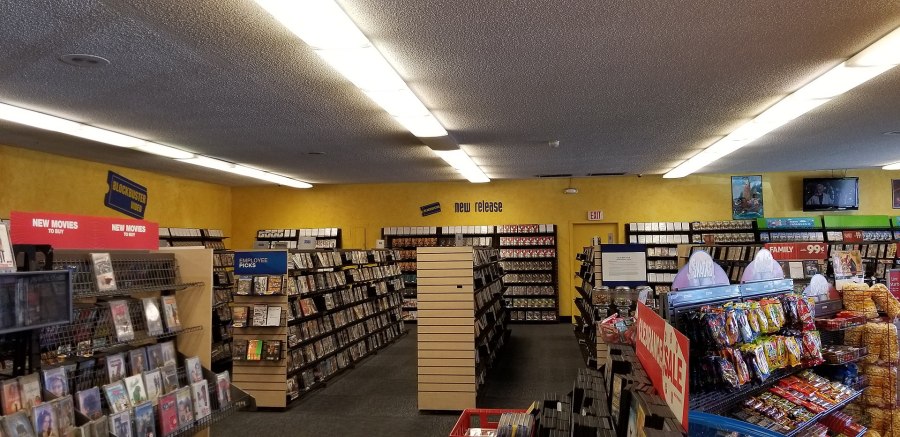
Remembering Blockbuster

The year was probably 1994 (I don’t know. I’m a bit old. I can’t remember.) when my brother took me to the Mecca of video rental stores – Blockbuster. It was actually amazing we had one near us since we grew up in a very tiny town in Pennsylvania. It was about half an hour from us, but not such a bad drive really. It was located in a strip mall that now has seen better days with most of the stores gone and the parking lot a pothole haven.

(Not me in the photo *wink*)

If I remember right, I wanted to find a romance and he was probably looking for an action movie or maybe a foreign film. He watched a few foreign films and made me watch them at times. They were pretty good but I wasn’t a fan of reading subtitles back then. I’m better with it now.

Back then we would never have imagined we’d one day be able to download or stream our movies right from our TV. I mean, we didn’t even have cable at our house because the cable company refused to come to us since we were “in the middle of nowhere.” We had four channels brought into our TV by an old-fashioned wire hanger-style antenna on the back porch that Dad had to shift sometimes to get a better signal.

Yes, I am that old. Okay, I’m really not, but we were that poor.

Walking into Blockbuster back then was a bit overwhelming for this sheltered country girl but I loved walking up the rows and looking at all the different movies.

I’m not definite about this but I think the first time I watched the Irish movie Into The West was from a Blockbuster rental. Did you ever see that movie? It’s about two Irish boys who travel with a horse across Ireland after their dad, who is grieving their mother, hits rock bottom and tells them they have to get rid of this horse they found. That’s a very short version of what the movie is about, of course, but it is very good.

I also think it might be where my brother rented The Princess Bride for us to watch for the first time.

The movies weren’t the only thing that was tempting at Blockbuster. They had candy, sodas, and stuffed animals. I’m sure I bought some candy but never the stuffed animals because my mom always said I had enough and my brother said I was too old for such things by then. Little did they know that even as an adult I was buying stuffed animals and still cuddle many of them to this day.

Blockbuster sold all its corporate-owned stores in 2014. It no longer grants franchises to anyone but at one time there were 50 privately-owned stores. As of today, there is only one official Blockbuster store left open in the United States and it is in Bend Oregon, and is a popular tourist attraction, selling more merchandise than video rentals.

Do you remember renting videos at Blockbuster back in the day? What movies were you looking for when you visited?