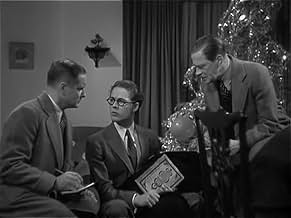
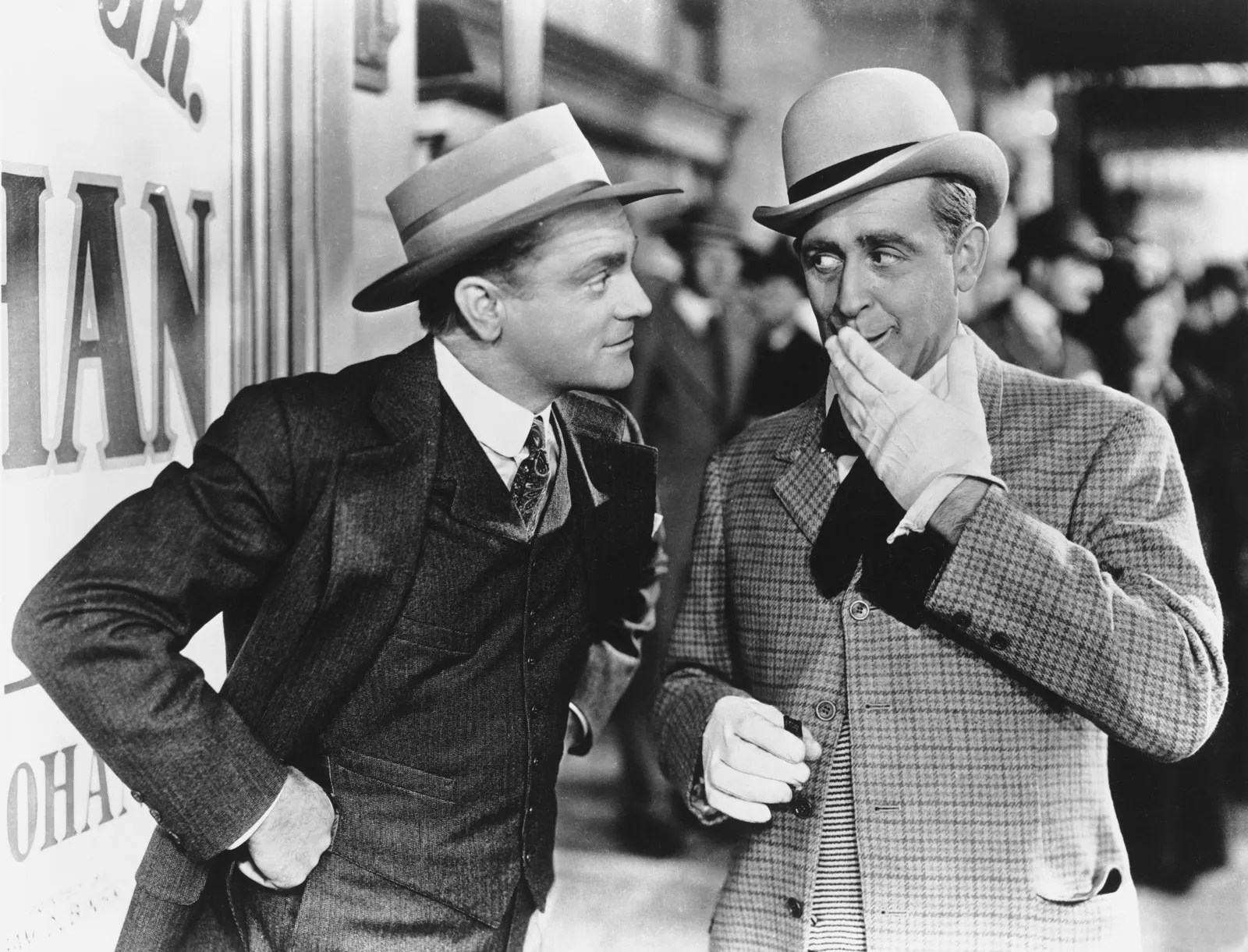
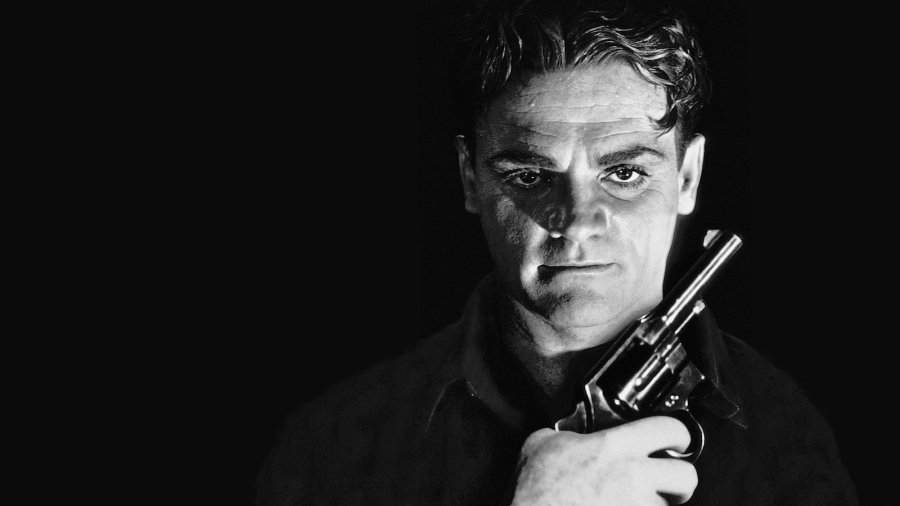
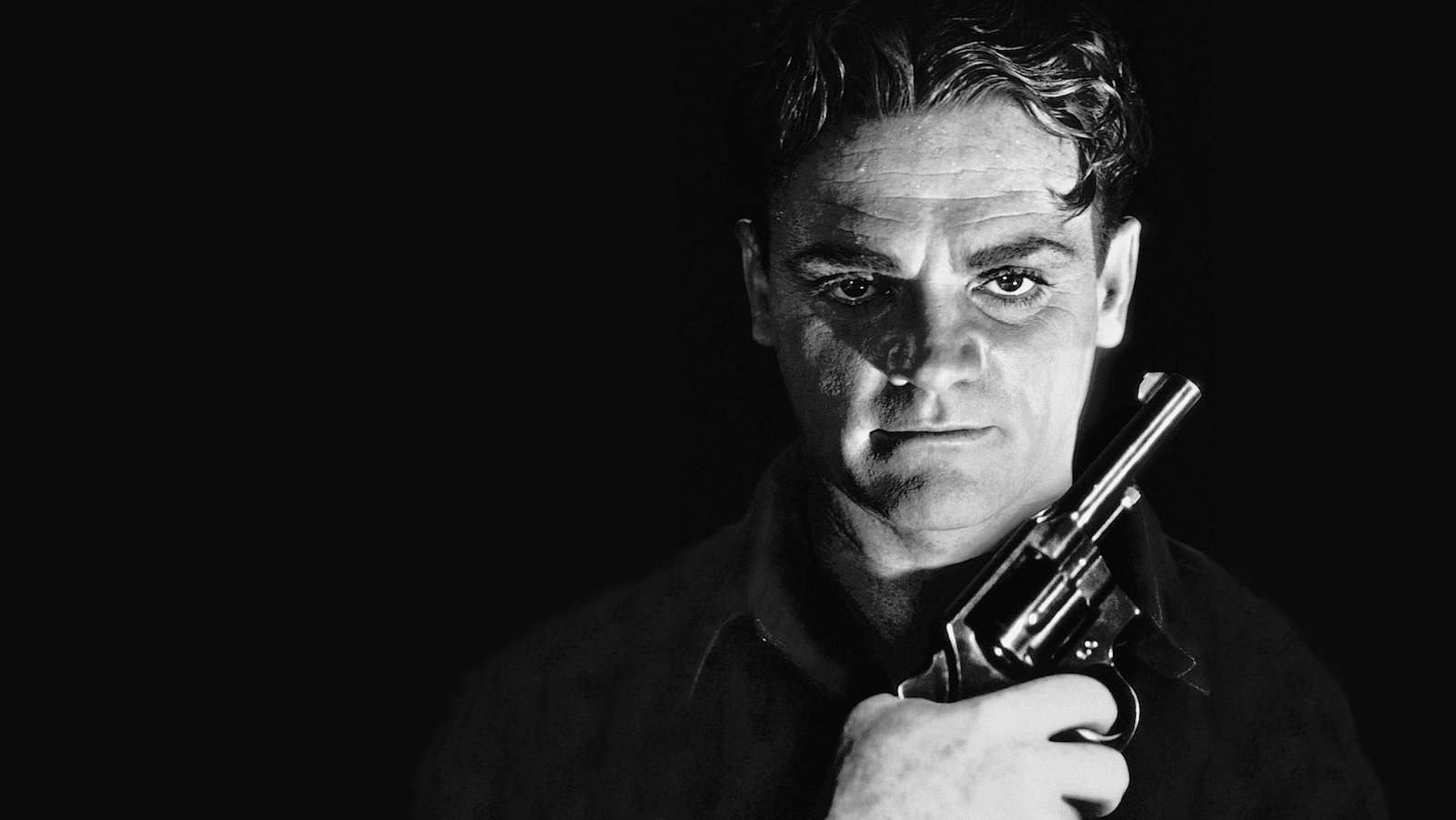
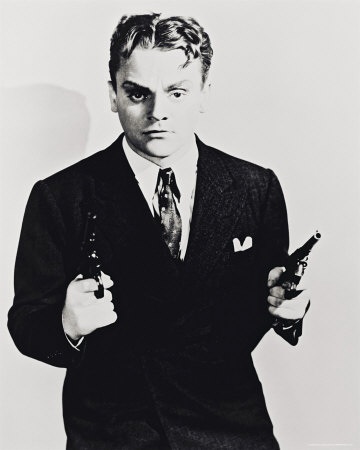
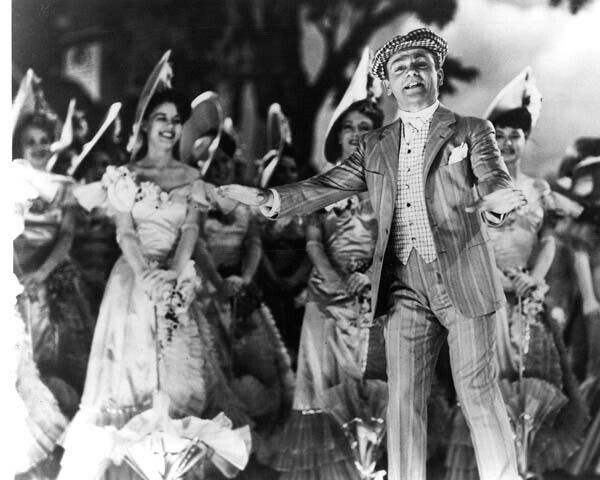
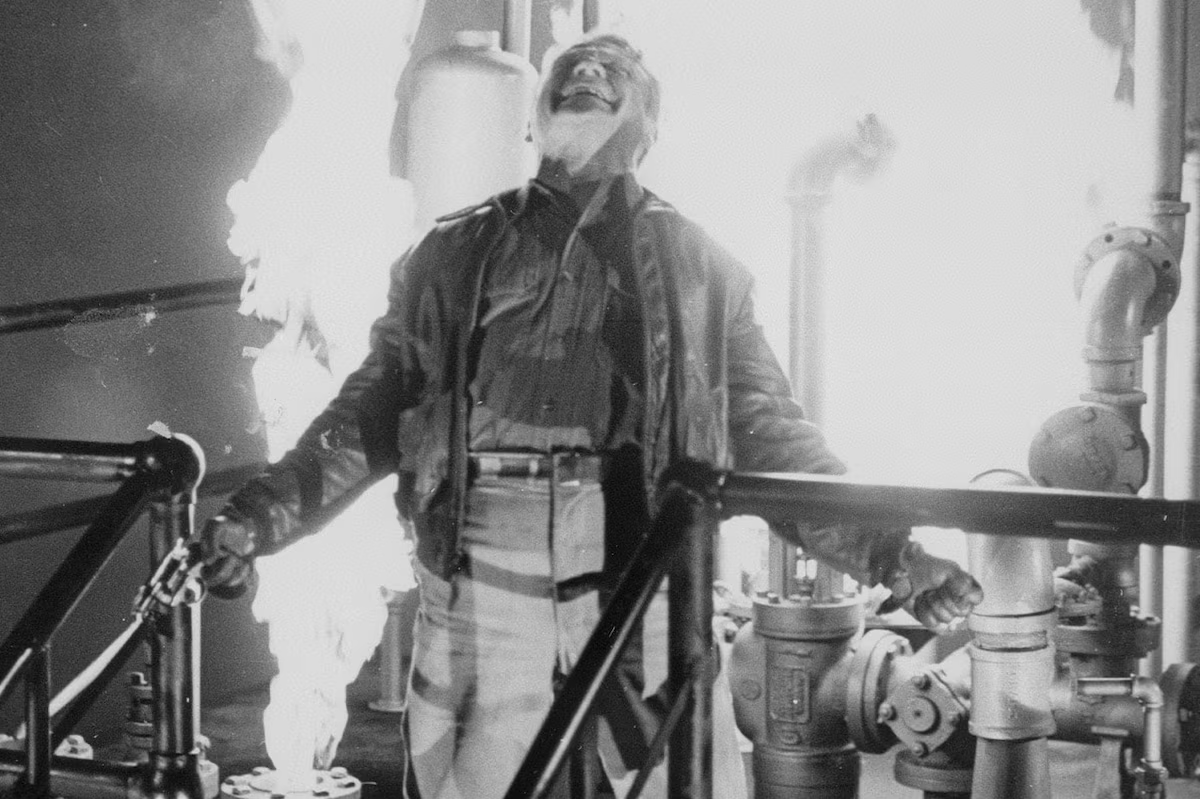
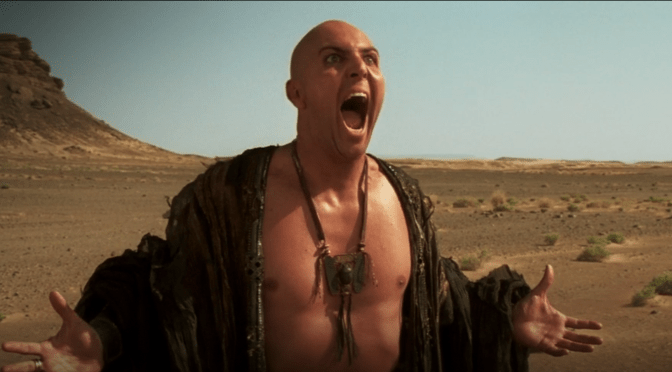
This Winter I’ve been watching James Cagney movies.
I’ve switched the movie I was going to write about last week with the one I was going to write this week because I was going to watch the DVD of Angels With Dirty Faces I picked up, but I’ve been waiting for a night to watch it with The Husband, and that hasn’t come.
In the end, I decided to wait to watch that movie with him because he would like to see it as well, and it will be fun to watch together.
Angels with Dirty Faces stars Cagney with Humphrey Bogart, and Bogie is one of my husband’s favorite actors.
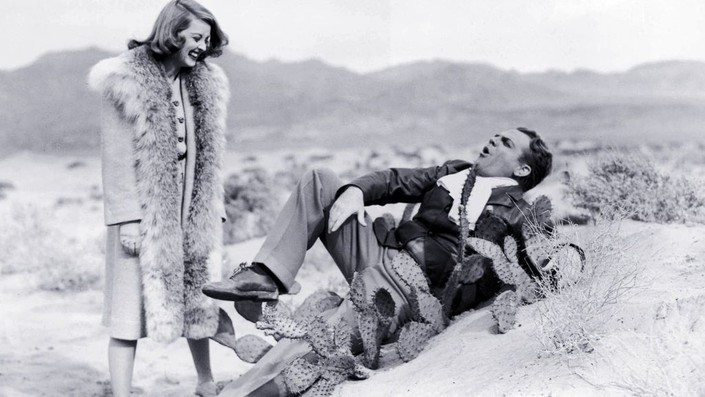
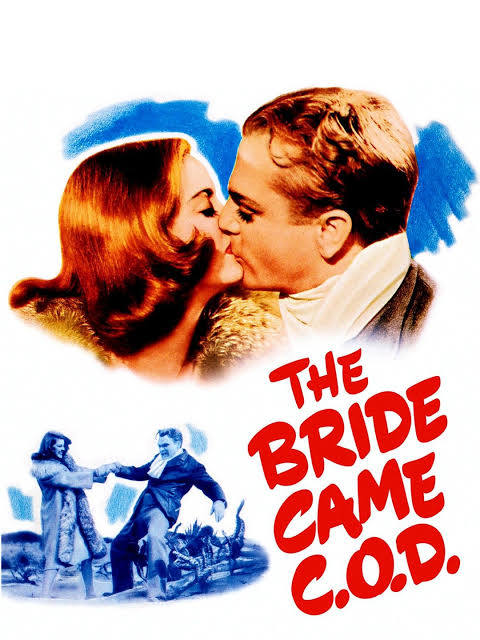
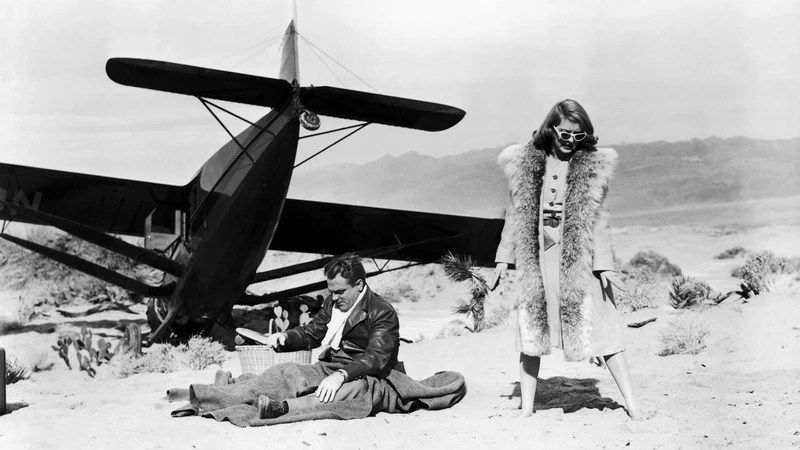
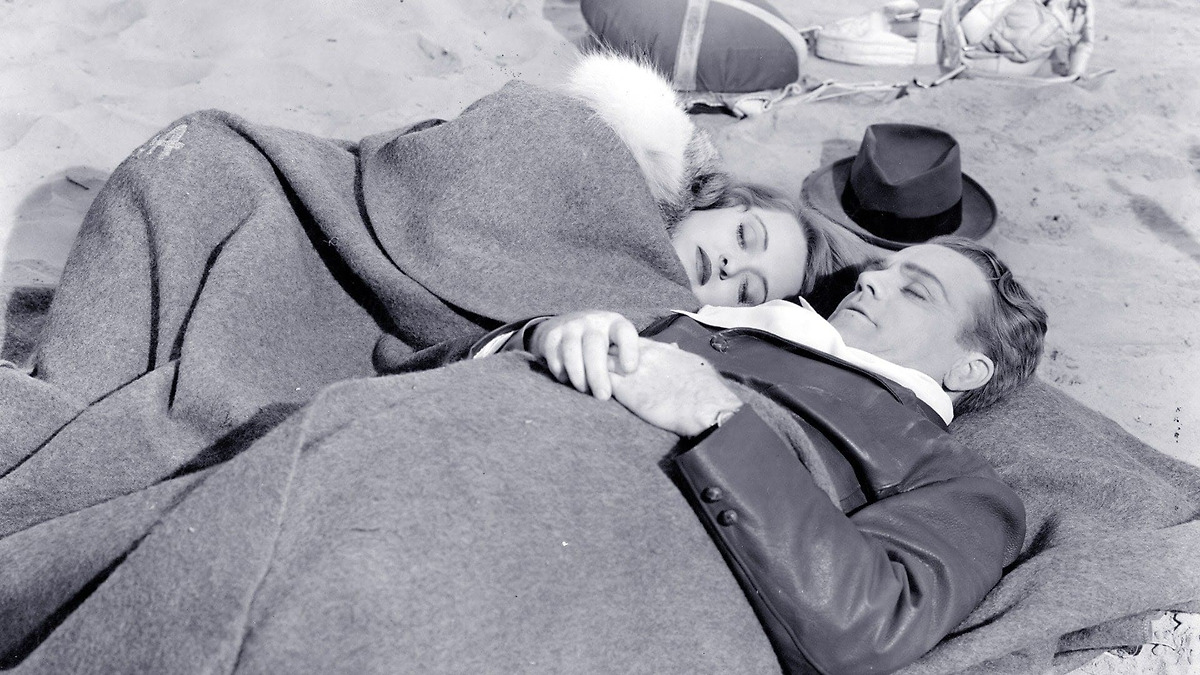
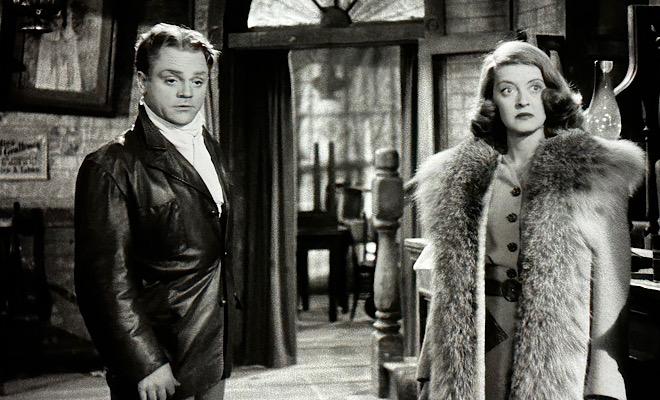
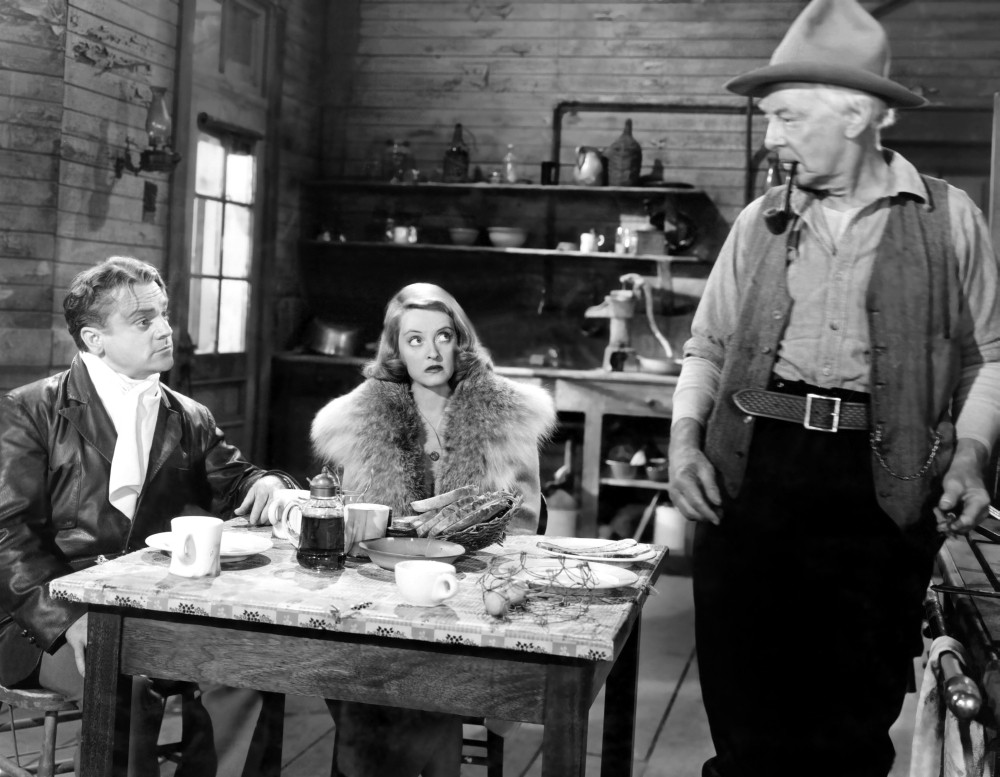
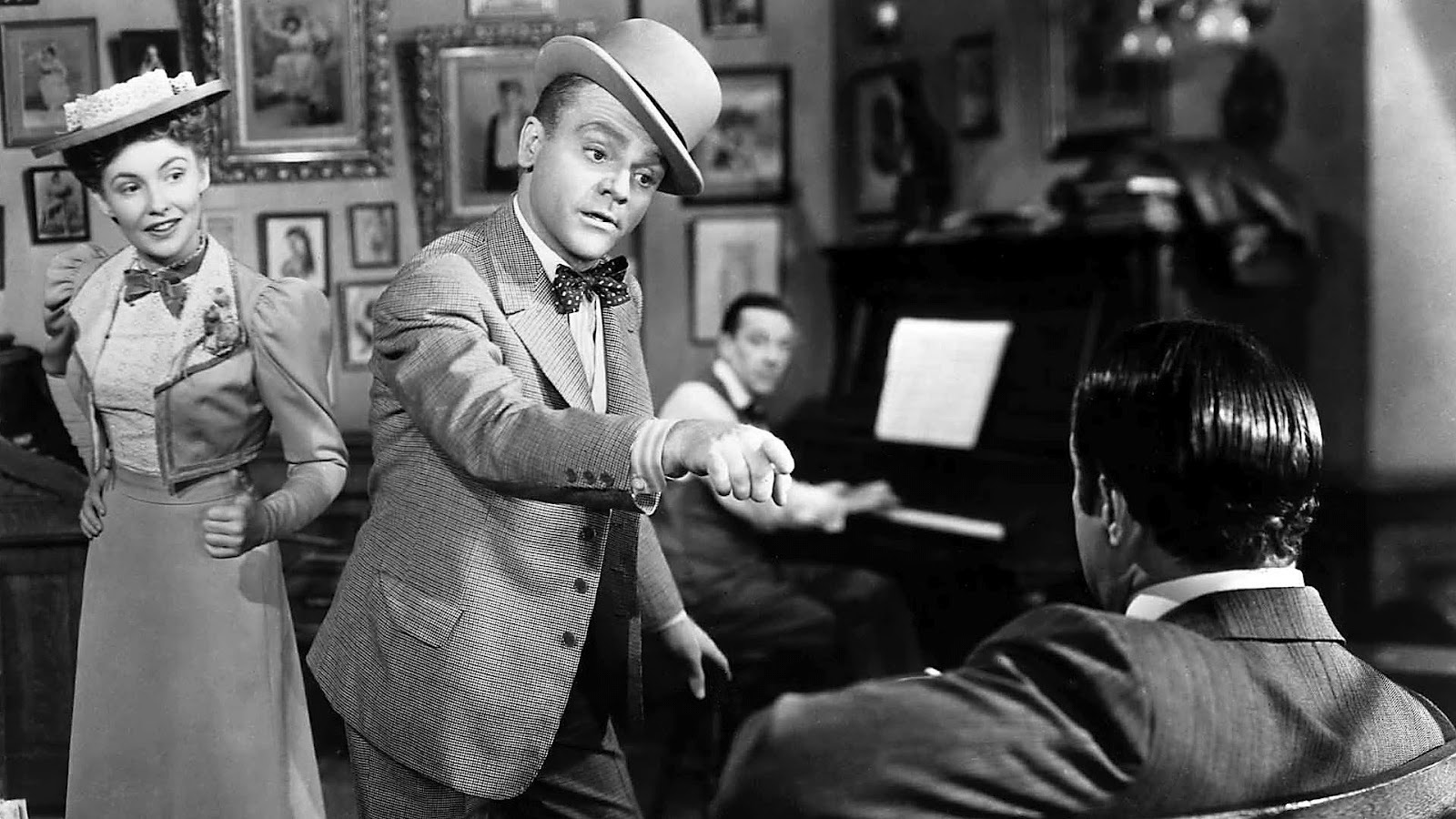
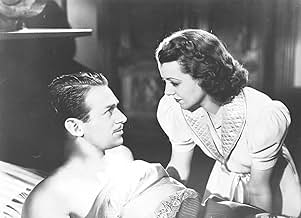
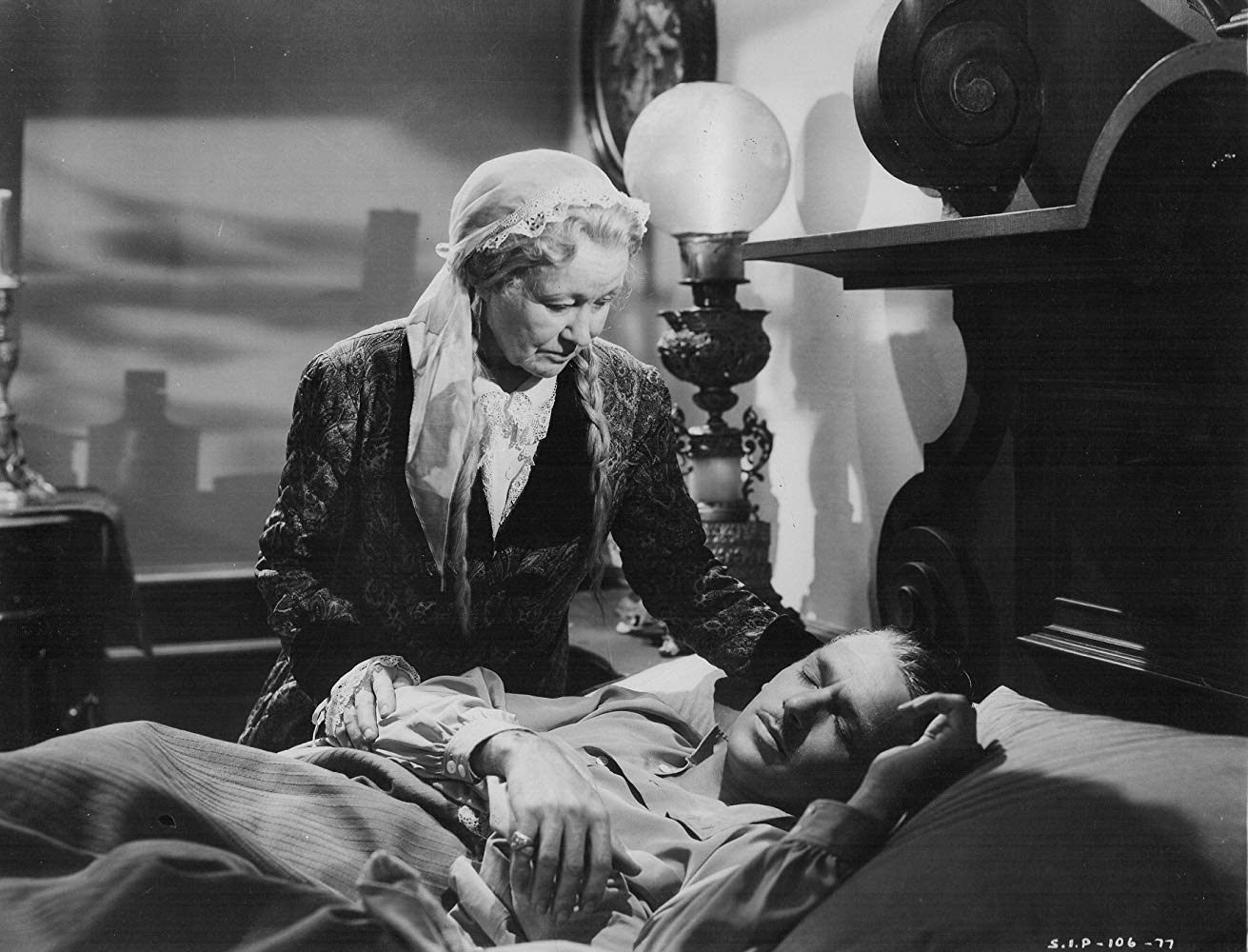
The Bride Came C.O.D. with Cagney and Bette Davis was a perfect substitute for this week, though.
It was a delightfully fun movie, and I needed it this week, so I’m glad I made the trade.
I will be watching this movie again with him soon, though, because it was just too much fun and should be watched with others.
This is a slapstick comedy where Cagney and Davis were both trying their acting talents at something a little different.
First, the premise: Davis is playing Joan Winfield, an heiress who makes impulsive decisions, and her latest impulsive decision is marrying Alan Brice (Jack Carson), a famous singer and band leader. The marriage announcement comes at just the right time for gossip and entertainment broadcaster named Hinkle who needs a big story.
He talks Brice into marrying Joan right away because it will make a great story for his broadcast.
The only issue is that Joan is on the phone with her father when Alan announces his engagement to Joan to the audience at the club and she is trying to work up the courage to tell her father she’s engaged.
Their call is cut short and she never tells him, but Hinkle arranges for her and Alan to go to a small airport to be flown by a private plane to Las Vegas where they can be married.
Steve Collins, a notorious womanizer who pretends he is married with children so he doesn’t get roped into marriage by women who like to date married men, owns the airport and the main plane. He’s never paid for the plane though and the finance company now wants it back. Steve’s handy man, Pee Wee (George Tobias) tells him that Hinkle has arranged for their plane to take a famous couple to Las Vegas and Steve wonders if they will even have a plane to take them in.
Collins tries to think of a way to get the money and has no ideas until Joan’s father, oil tycoon Lucius K. Winfield (Eugene Pallette) calls the airport to try to reach his daughter and Collins strikes up a plan with Winfield to make sure his daughter doesn’t make it to Las Vegas to marry Alan Brice.
If Collins pulls off the delay, meeting Winfield with his daughter in tow in Texas instead, Winfield will pay Collins the money he needs to pay off the plane and keep the airport in business.
The first task at hand is to get rid of Hinkle and Alan which PeeWee helps Collins with. With them out of the way, Collins jumps in the plane and takes off with Joan, his plan to fly her to Texas. Unfortunately, Joan isn’t too happy with this arrangement and tries to escape, causing the plane to crash in the desert.
Here we will be introduced to Pop Tolliver (Harry Davenport), who I just loved.
I loved a lot about this movie.
It was very witty and fun, with some great lines.
Bette Davis was supposed to be 23 in the film which I found a little unbelievable but then again, Bette always looked older to me than she was.
She was actually 33 when this movie was made.
According to Frank Miller from TCM (yes, my go-to-source), Cagney made the movie on the heels of Strawberry Blonde because he wanted to break out of gangster roles.
Ann Sheridan, Ginger Rogers, and Rosalind Russell were considered for Davis’s role but when she expressed interest in trying out, Hal Willis, the producer of the movie, went to bat for her.
“In addition, she was eager to re-team with Cagney, who like her had a history of battles with the Warner Bros. management,” Miller wrote. “They had not worked together since 1934, when they teamed for the minor comedy Jimmy the Gent. Some biographers have suggested that the studio was punishing her with the film because of her notorious temperament, while others have suggested she may have wanted to emulate Katharine Hepburn, who had been equally successful in serious and comic roles. Also possible is that she was drawn to the film’s obvious similarities to It Happened One Night (1934), another tale of a runaway heiress saved from a bad marriage by the love of a simple working guy.”
There was a lot of trouble with the movie, including the writing and the fact Cagney wasn’t a fan of the sweltering heat at the shooting location of Death Valley.
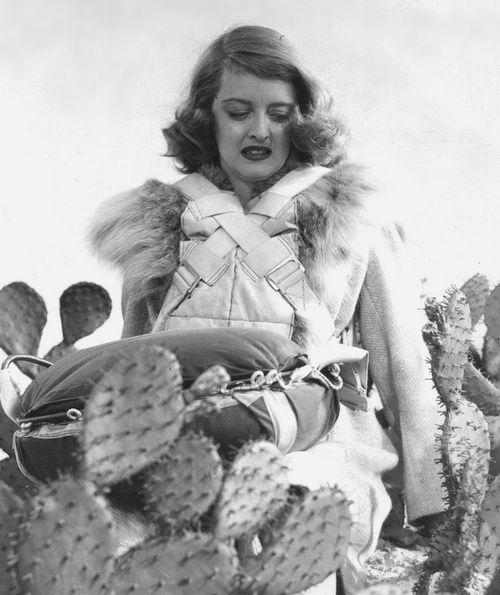
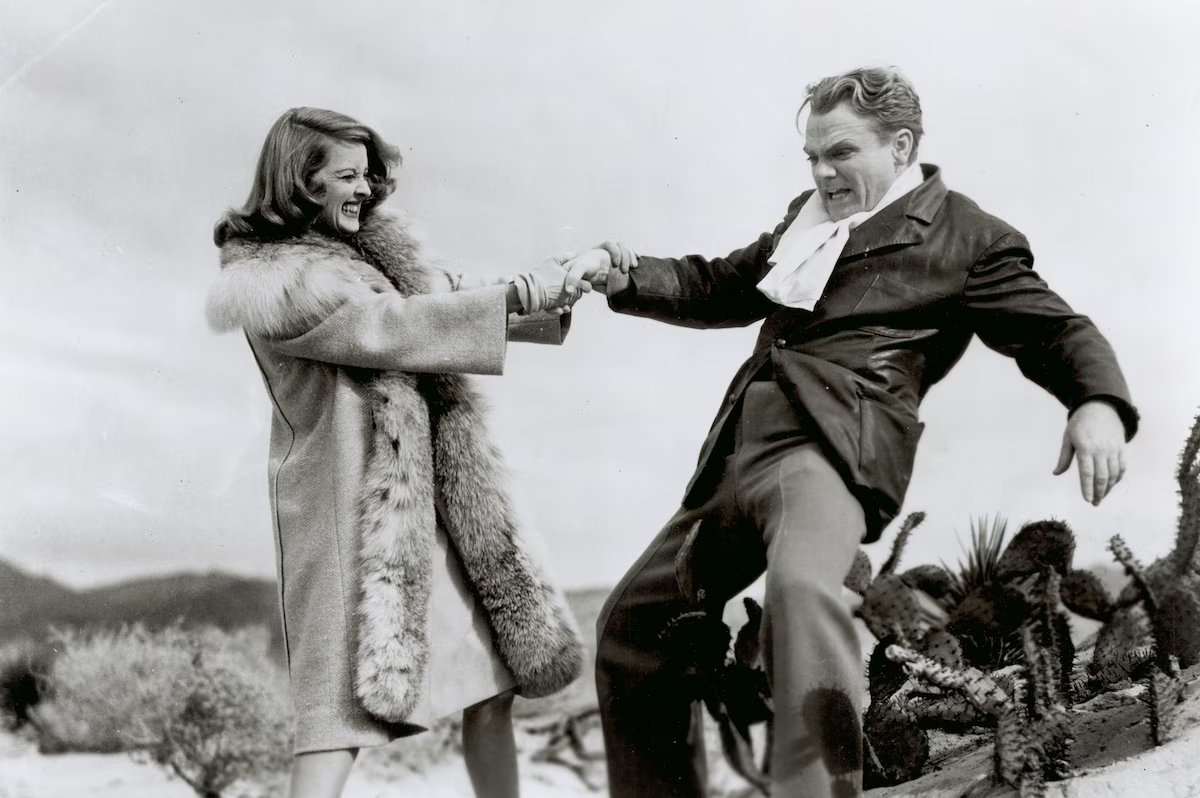
Davis also wasn’t happy because while a stunt double was supposed to take the fall into a cactus for her, she had a fall of her own and ended up with 45 cactus quills having to be removed from her behind.
Neither actor was very fond of the movie years down the road and even critics bashed it with one saying, “Okay, Jimmie and Bette. You’ve had your fling. Now go back to work.”
As for me, I found the film a lot of fun and ended up snickering at the silliness and the exchanges between our main characters.
And as I said above, Harry Davenport really added some charm to the film for me.
Have you ever seen this one?
I found it for rent on Amazon Prime but it is also available on HBO Max, Hulu, YouTube, and AppleTV.
Next week I’ll wrap up my Winter of Cagney with Angels With Dirty Faces and two weeks after that I’ll start a bi-weekly movie watch of Bette Davis films.
If you want to catch up on the other Cagney films I’ve watched this winter you can do so here:
If you enjoy the kind of content on my blog and all that goes into it, you can support my writing for $2.99 a month or a single donation. Learn more here: https://lisahoweler.com/support-my-writing/
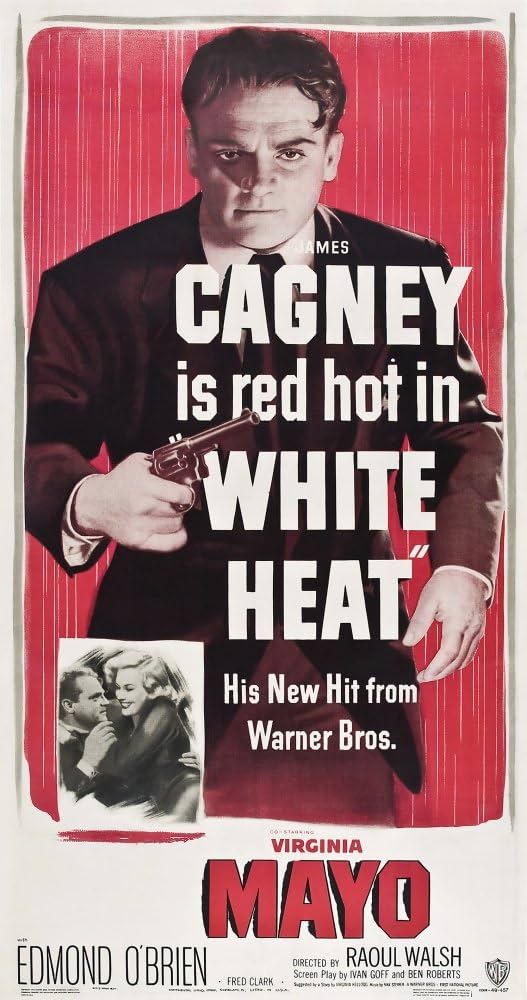
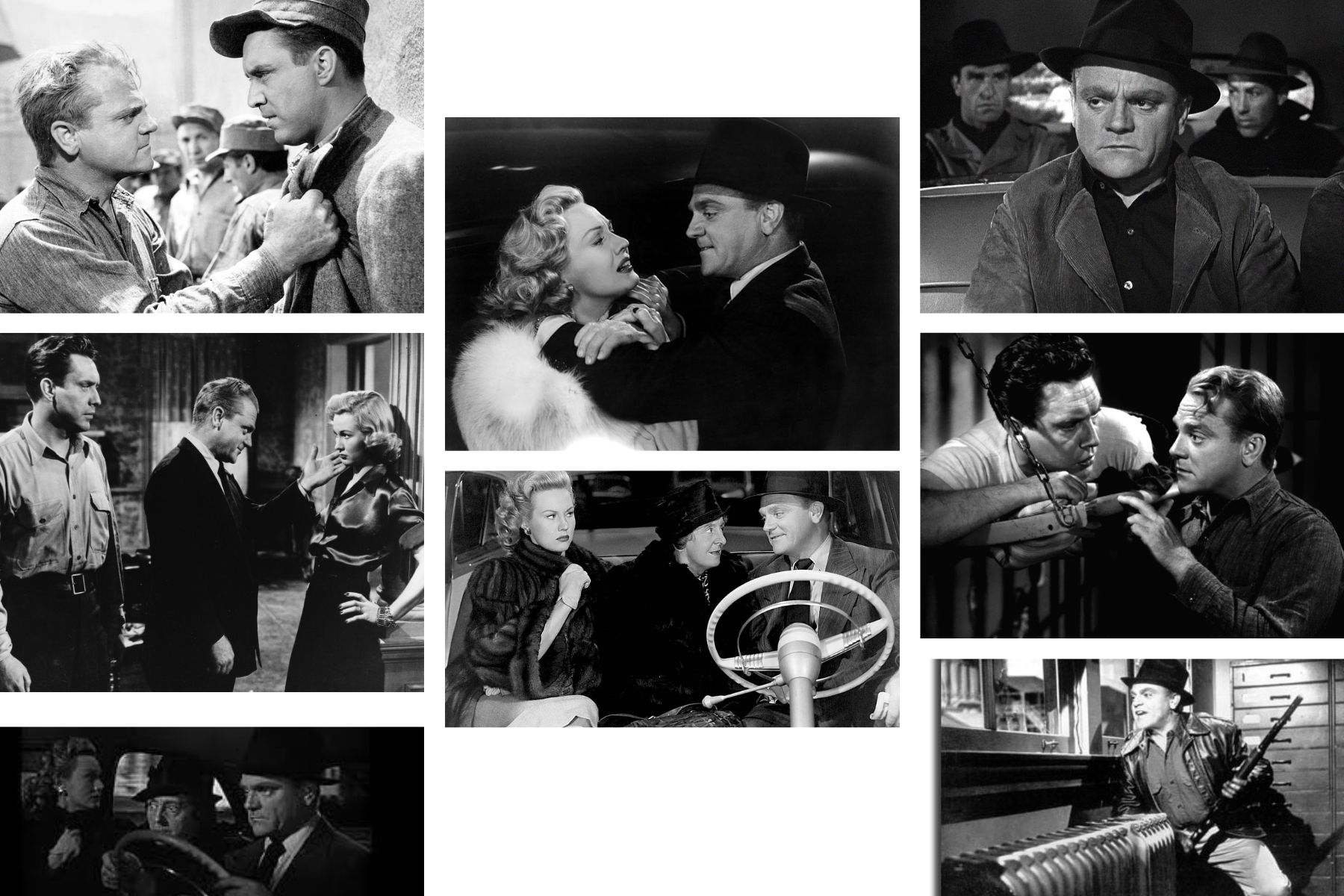
I’m watching James Cagney movies this winter and last week I watched one of his most acclaimed movies — White Heat (1949).
The movie is considered by film critics to be one of the best gangster films of all time.
As I often do, I’ll start this post with an online description of the movie:
“Gang leader Cody Jarrett (James Cagney) lives for his mother, planning heists between horrible headaches. During a train robbery that goes wrong, Cody shoots an investigator. Realizing Cody will never be stopped if he knows he’s being pursued, authorities plant undercover agent Hank (Edmond O’Brien) in Cody’s cell.”
This description is wrong, though, because the investigator is shot after the robbery. But the conductor is shot by Cody.
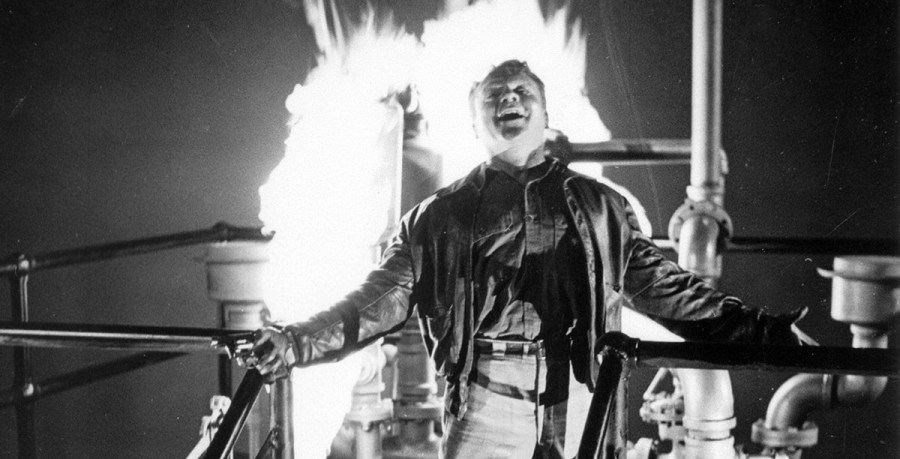
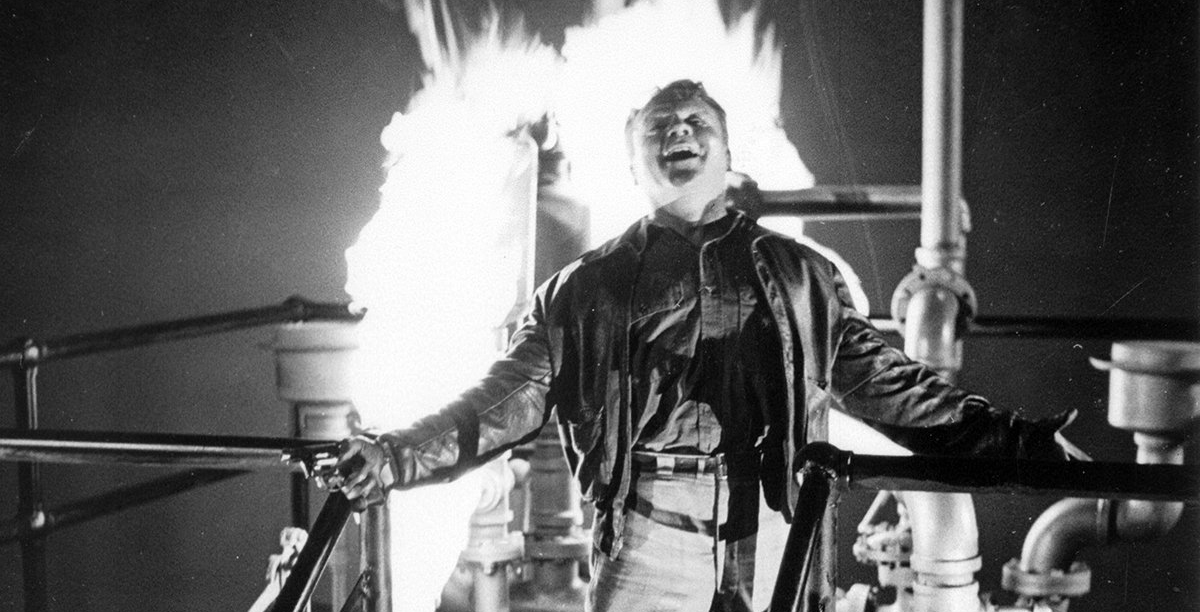
All that aside, the robbery does go wrong, partially because a member of the gang is horribly burned. The gang has to hide out and we learn that Cody is very close to his mother, who helps him plan crimes. Closer than he is to his wife who is very lazy and sleeps a lot.
This isn’t an inappropriate relationship like Hamlet or Macbeth or whichever play that was, but Cody relies on Ma for a lot — including helping him when raging headaches hit him and practically debilitate him. The gang believes his headaches are the same mental illness his father had.
His mother doesn’t want him to let the gang see him that way because he will look weak.
It doesn’t matter if he looks week because his gang is ready to turn on him and take the money they stole from the train and cut him out of the deal no matter what.
He doesn’t know this, but he does know they have to split so the police don’t find them.
They have an injured gang member whom Cody orders one of his men to shoot. The man can’t do it, though, and leaves the burned man. The man still dies, and when he is found it is reported to the police, who eventually connect him to the gang.
A police officer sees Cody’s mom out by chance and they try to follow her back to the motel Cody, his mom and wife are staying at. She loses them but the police eventually find her car and corner Cody who shoots the investigator in the arm.
Cody is able to escape with his mom and wife, but finally decides if he really wants to shake the police, he will have to give himself up. He’s not going to admit to the big crime, though. He’s going to say he committed another crime that another criminal he knows pulled. He’ll only get about two years for that crime and it will be his alibi for the other crime. He couldn’t have robbed the train if he was committing a less serious robbery in another state, he says.
His wife and mom don’t like the idea, for different reasons.
His wife likes the idea a lot more when she realizes that her husband being in jail in another state will give her time with her husband’s second hand man, who she’s been having an affair with.
Cody’s plan works — sort of. The police figure out what he is trying to do, though, and still want to pin the first crime on him so they send an undercover cop into jail with him to try to make friends with him and find out where he hid the money from the train heist.
I’ll leave it there, so I don’t spoil what happens, but I am going to have to give a big spoiler here to discuss in the paragraph following this next one so if you don’t want to know, you need to stop here.
This movie was dark, intense, and while Cody Jarrett was a horrible man and easy to hate, I also couldn’t help feeling a little sorry for him because he felt crime was the only way to make a living.
SPOILER ALERT!!
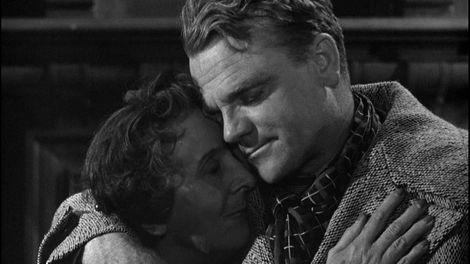
Also, the one person who loved him and he loved dies halfway through the movie. I won’t say how his mom dies but it is her death that leads to a much-talked-about scene where Cody absolutely flips out after he finds out she’s gone.
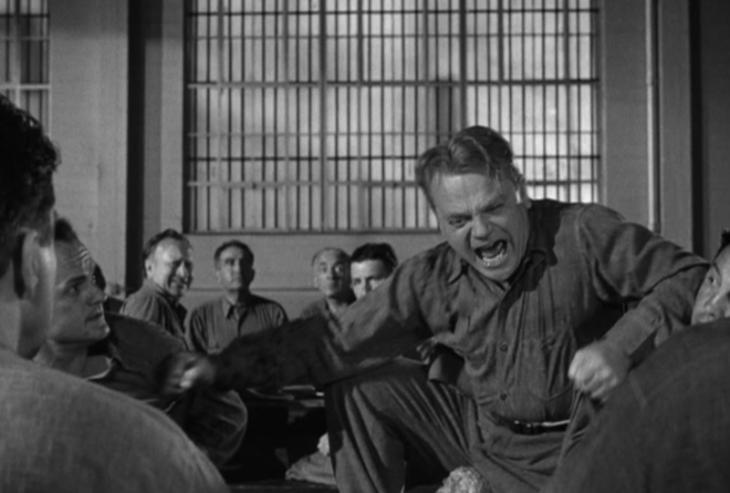
What is interesting about this scene is a couple hundred extras were used as the inmates inside the cafeteria and none of them were told what Cagney was going to do. Most of the shocked faces focused on during that scene were authentic because they were kept in the dark about Cagney’s plans. Some of them really thought Cagney had flipped out.
Another scene we need to talk about happens at the end. Throughout the movie Cody’s mom always ends their conversations by saying, “Top of the world, son! Top of the world!”
This is a line that has been used in pop culture references and parodies for years and I never knew what it was. Now I do and it’s honestly quite heartbreaking. There is so much Cody could have done with his life and not only did he choose crime but his own mother encouraged him to do so.
Cagney came back to Warner Brothers for this film after leaving for several years to start his own movie-making business with his brother. When that failed, he accepted an offer from Warner Brothers, even though Jack Warner really didn’t want him back — mainly because he needed the money.
Warner famously called Cagney, “that little b******.”
Cagney famously said of Warner in Rolling Stone Magazine, “I used to like to walk out on him, frankly, whenever my contract didn’t suit me. I’d cuss him out in Yiddish, which I had learned from Jewish friends in my days at Studyvesant High School. Drove him wild. ‘What’d he say?!’ he’d yell. ‘What’d he just call me?!’”
Their arguments mainly started over Cagney’s contracts in the 30s.
Rob Nixon wrote for TCM.com that White Heat is considered Cagney’s last good gangster film.
“An exciting, dynamic film in its own right, White Heat also stands out as the flaming finale to the era of stark, fast-paced crime films made famous by Warner Brothers and James Cagney (among other stars) from the 1930s on films in which the focus was on the often violent but charismatic gangster rather than the law enforcement officials who hunt him,” Nixon wrote. “It was also the apotheosis of Cagney’s brilliant career, a kind of summing up of the memorable outlaw characters he had created. His projects that followed in the 1950s were mostly lackluster affairs, and the cocky, pugnacious star audiences had come to love was glimpsed infrequently in such films as Love Me or Leave Me and Mister Roberts (both 1955).”
The film was directed by Raoul Walsh and in addition to Cagney it starred Virginia Mayo, Edmond O’Brien, and Margaret Wycherly as Ma.
Many scenes, such as the one mentioned above were adlibbed by Cagney or Walsh.
One of those was when he got annoyed at Mayo (his wife) and he was supposed to just glare at her but instead Walsh told Cagney to kick her off the chair she was standing on. For me, this showed how nasty and heartless Cody really was – as if the opening scenes hadn’t already shown that.
The story for the movie was written by Virginia Kellogg and she was nominated for an Oscar for it, but didn’t win and no one else was nominated. Over the years, though, the film has been praised and named as the fourth best gangster movie by the American Film Institute, has been quoted or parodied too many times to count and in 2003, the American Film Institute named Cody Jarrett in its list of the best heroes and villains of the past 100 years.
I have to be honest and say that the end of the movie annoyed me. I don’t want to give it away but it was a typical movie from the 40s and 50s with the whole idea of the bad guy suffering and the “good guys/cops” being the heroes was very cliché.
In many ways there was nothing good that was going to come for Cagney’s character, though, so things ending badly for him was probably the only way for things to go.
Next week I will be watching Angels With Dirty Faces with Cagney and Humphrey Bogart. To end the event I will be watching The Bride Came C.O.D. (which will move me into my Spring of Bette Davis).
You can read about the other movies I watched by clicking the links below:
If you enjoy the kind of content on my blog and all that goes into it, you can support my writing for $2.99 a month or a single donation. Learn more here: https://lisahoweler.com/support-my-writing/
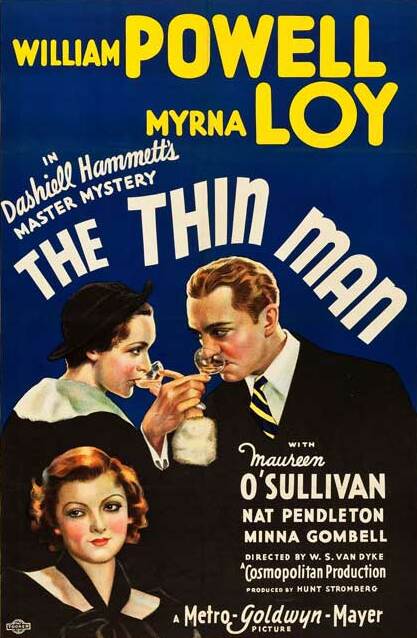
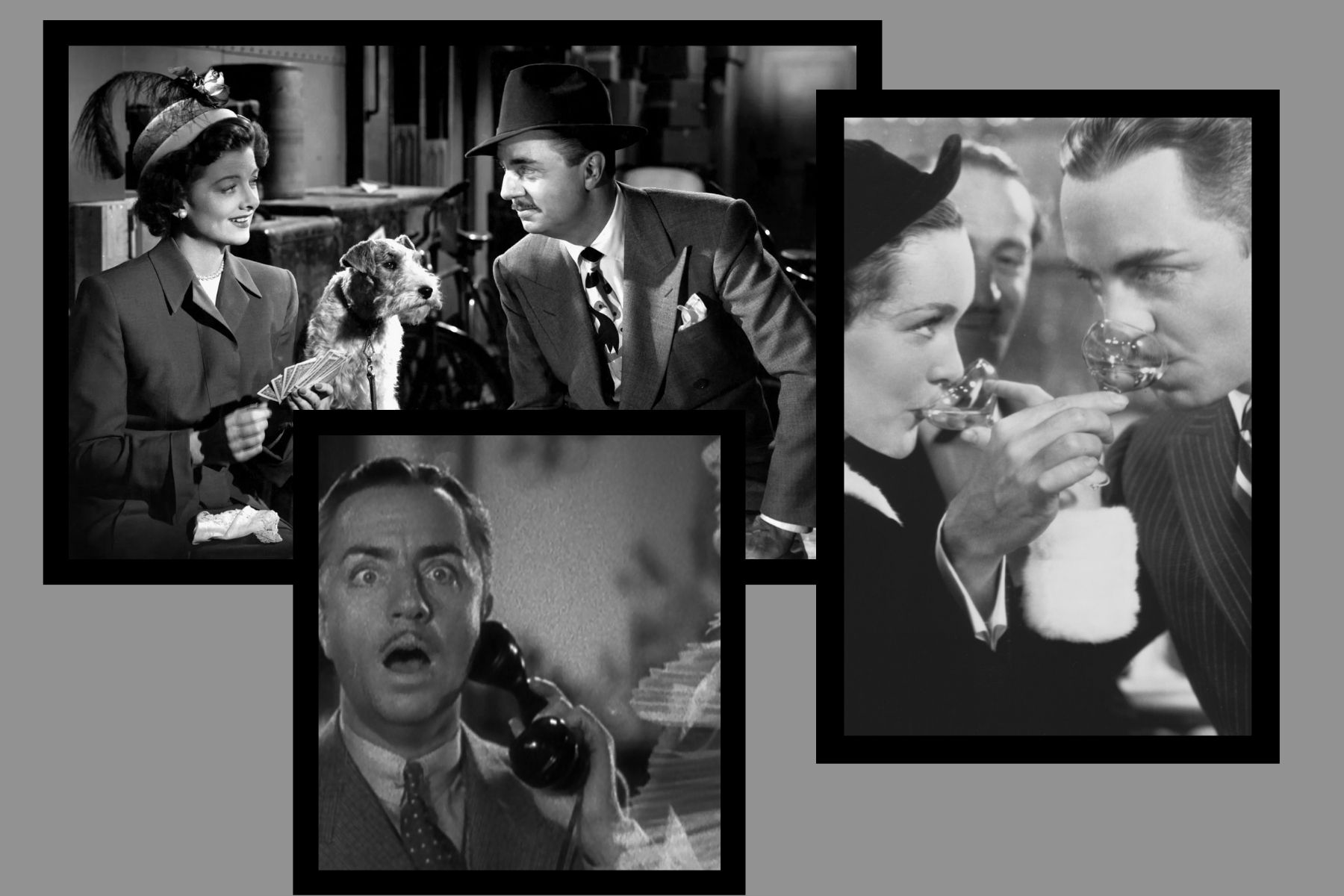
For the next month or so I will be sharing posts here and there about The Thin Man movies with William Powell and Myrna Loy.
The series is my favorite movie series of all time. The six movies kick off with The Thin Man (1934).
The Thin Man will be 91 years old this year and, to me and many others, it still holds up.
This cozy mystery masterpiece has hit the Top 100 movies list from a variety of film organizations and critics over the years and for good reason. My family owns the DVD set of all six movies so we can watch any of the movies any time we want.
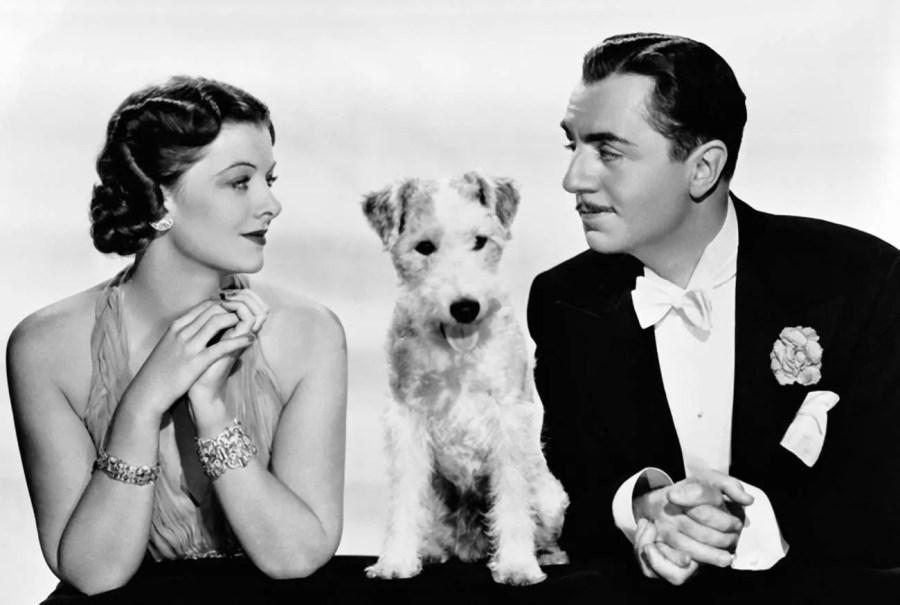
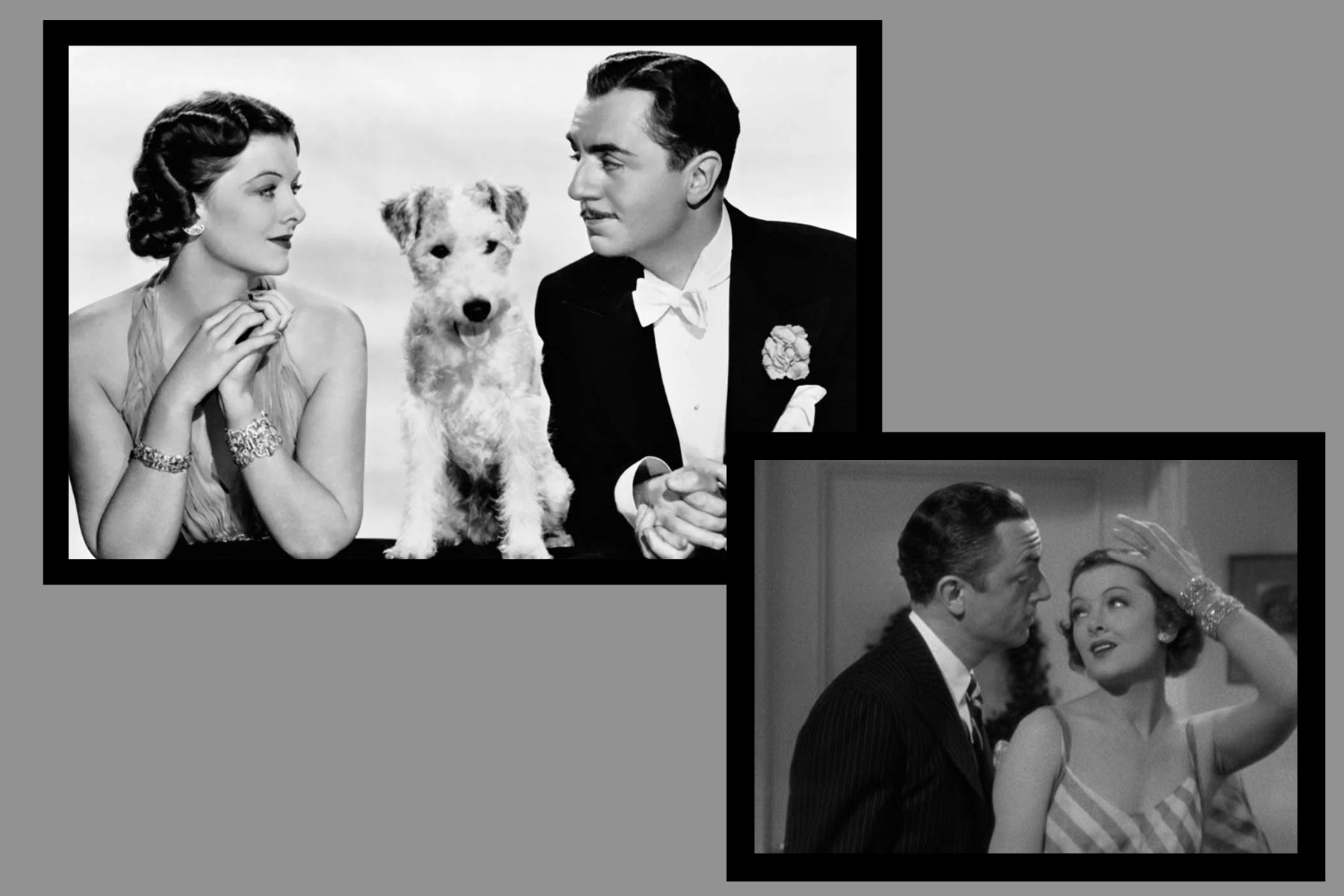
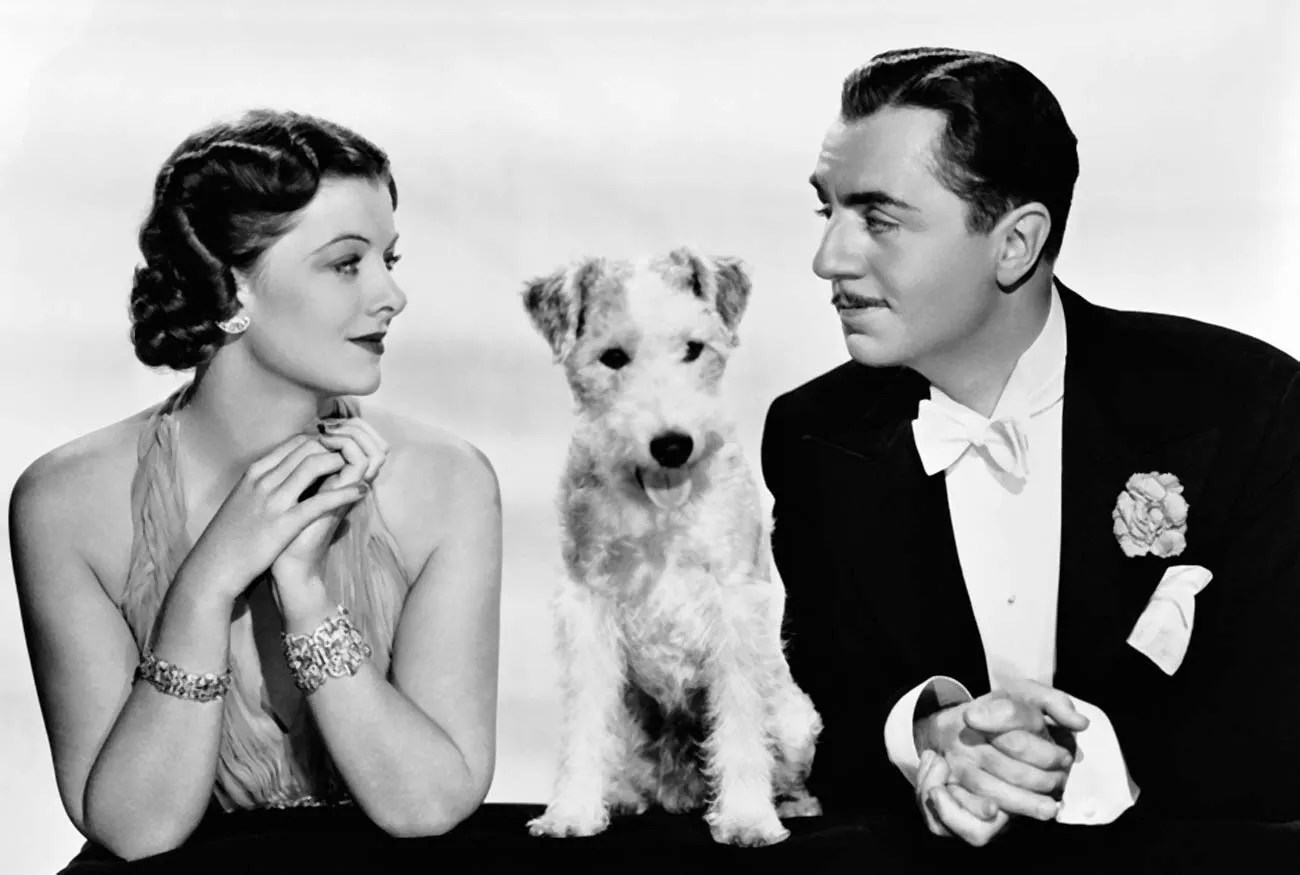
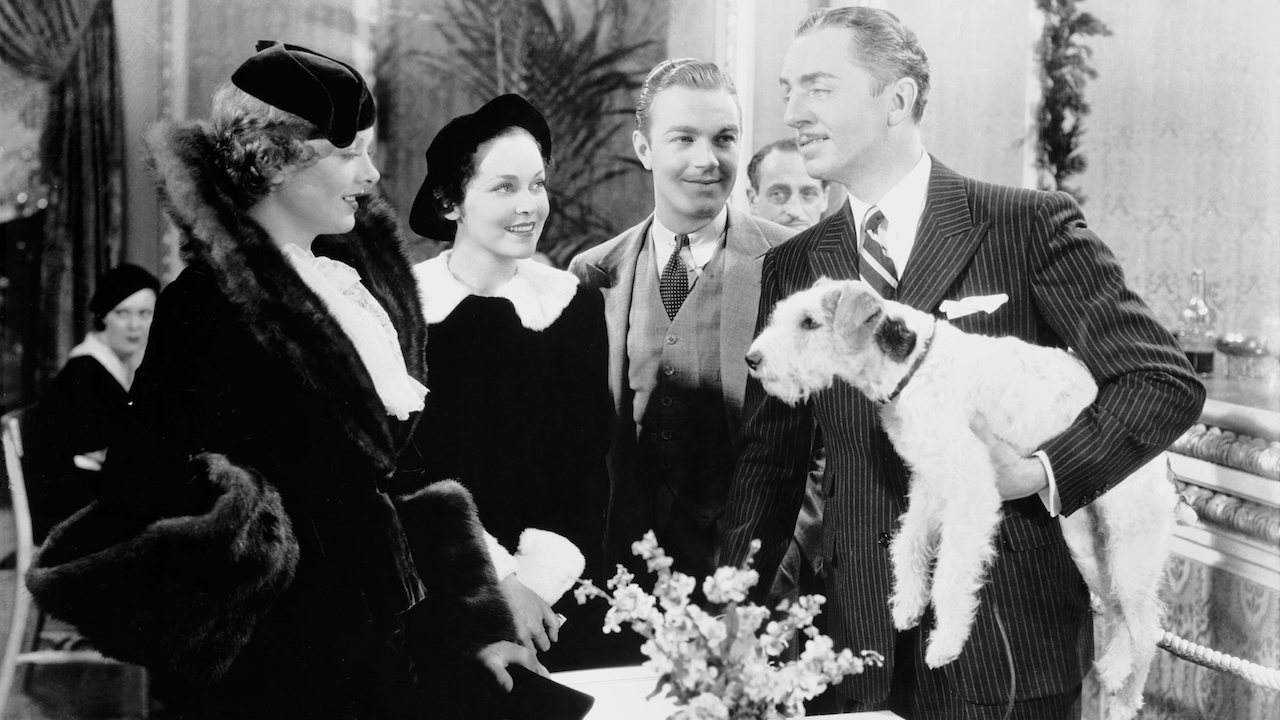
If you haven’t seen this movie or the five sequels involving witty, often intoxicated, private detective, Nick Charles (William Powell), and his equally witty and mouthy wife, Nora Charles (Myrna Loy), then you’re missing out.
Each of the six movies is full of mystery, zaniness, misunderstandings, mishaps, and hilarious interactions between Nick and Nora and everyone else. Oh and a crime or two is mixed in too.
The crimes themselves, and how they were committed, are a bit dark at times, but never graphic or gruesome and the darkness is always overshadowed by the Charles’ antics.
The pairing of Powell and Loy was the ticket for success in the 1930s as they were in a number of movies together and are still considered one of the best movie couples of all time.
Their first film was Manhattan Melodrama (1934) and directed by the same director of The Thin Man, W.S. “Woody” Van Dyke.
The Thin Man is based on a book by Dashiell Hammet and as the movie starts, we find Nick has retired from being a Private Investigator in New York City to help oversee Nora’s wealth as an heiress in San Francisco. This leaves Nick with a lot of time on his hand to go drinking, goof off and do some general carousing, though never with women because he is completely and utterly devoted to Nora.
Nora would like him to get back to work, though, so when they go back to New York for a visit and Nick’s former client, Clyde Wynant (who is later described as simply a thin man — hence the name of the book/movie), goes missing. His daughter Dorothy comes to Nick for help, Nora gently, and later not-so-gently, suggests he help.
What makes this movie such a fun one that might bring an occasional gasp from viewers is that it is a pre-Hays Code movie. That means it was filmed before a bunch of rules went into affect about what can and cannot be shown or said in movies. That’s why there were a couple comments from some of the characters in this that had me gasping and then laughing.
For example:
Nick: I’m a hero. I was shot twice in the Tribune.
Nora: I read where you were shot 5 times in the tabloids.
Nick: It’s not true. He didn’t come anywhere near my tabloids.
Before I forget, what makes these movies even more fun is the addition of Asta, the couple’s wife-fox terrier, who also acted in Bringing Up Baby with Cary Grant and Katherine Hepburn and The Awful Truth with Irene Dunn and Cary. He’s a fun addition who always adds to a scene. At one point Nick tells a criminal, (Summarizing here): Stay right there or my dog will get you. He’s vicious.”
All the while Asta is finding a place to hide under a table.
Asta’s real name was Skippy, by the way, and there are some fun stories about him, but I will share more about Asta/Skippy in future posts about the series.
So back in the beginning of the movie, before we even see Nick and Nora, Dorothy Wynant goes to her inventor father to tell him she’s getting married.
During that conversation we learn that Clyde cheated on Dorothy’s mother years ago with his secretary and they are now divorced. Later we will see that divorce really wasn’t such a bad thing because the ex-wife is absolutely batty.
Anyhow, shortly after Dorothy told her father she was getting married, we learn that Clyde Wynant’s former secretary and mistress, Julia Wolf, has stolen $50,000 worth of bonds from his safe. Those were going to go to Dorothy for her wedding gift. Clyde immediately suspects Julia, goes to her apartment, and finds her with a man named Joe Morelli.
Julia confesses she took the bonds, but she can’t give them back. She already spent $25,000 of them.
Clyde isn’t a very nice man and tells her she better get the $25,000 back or she’ll pay. He then leaves for a business trip and presumably never returns because three months later, Nick is out at a bar back in NYC for a visit when he runs into Dorothy who tells him her father is missing. She asks if Nick will help find him but Nick brushes her off by saying he’s sure her father will show up.
Things change later while Nick and Nora are throwing a party and Dorothy shows up to say Julia has been murdered and she truly feels her father is in danger. Now Nora pushes Nick to help out.
“You know, that sounds like an interesting case,” she says to Nick. “Why don’t you take it?”
Nick chuckles. “I haven’t the time. I’m much too busy seeing that you don’t lose any of the money I married you for.”
The really quirky and memorable characters show up when Dorothy goes to visit her mother, Mimi, who — like I said above — is crazy, but also is married to a loser, jobless husband named Chris. Living with her mother is her Mama’s Boy macabre-obsessed brother Gilbert.
Gilbert is a bit of a nerd who walks around with a book and shows everyone how smart he is by using very big words and even bigger theories about things. He’s also a smart mouth.
At one point, he asks one of the cops: “Could I come down and see the body? I’ve never seen a dead body.”
The cop asks why he’d want to, and he says, “Well, I’ve been studying psychopathic criminology and I have a theory. Perhaps this was the work of a sadist or a paranoiac. If I saw it, I might be able to tell.”
Dorothy’s mother, Mimi, is self-focused and selfish and though she was cheated on and might have been a victim in any other movie, she’s a total mess in this movie. Her biggest worry is losing access to her ex-husband’s money, which she has been able to hold on to through alimony. When Julia is murdered, she sees an opportunity to get even more of her ex-husband’s money.
Going back to Nick and Nora … What makes them so memorable, beyond their amazing banter, is how they show that adventure, sex, and adoration doesn’t end after the wedding bells ring. I love how affectionate and playful they are throughout the series.
The writing for them is absolutely outstanding, which is probably because the screenwriters (Frances Goodrich and Albert Hackett) were told to focus less on Hammet’s story and more on the banter between the couple.
Some of my favorite exchanges:
Nora Charles: How many drinks have you had?
Nick Charles: This will make six Martinis.
Nora Charles: [to the waiter] All right. Will you bring me five more Martinis, Leo? Line them right up here.
——————
Nick Charles: Oh, it’s all right, Joe. It’s all right. It’s my dog. And, uh, my wife.
Nora Charles: Well you might have mentioned me first on the billing.
______________
Lieutenant John Guild: You got a pistol permit?
Nick Charles: No.
Lieutenant John Guild: Ever heard of the Sullivan Act?
Nora Charles: Oh, that’s all right, we’re married.
______________
Nora Charles: Pretty girl (about Dorothy Wynant)
Nick Charles: Yes. She’s a very nice type.
Nora Charles: You got types?
Nick Charles: Only you, darling. Lanky brunettes with wicked jaws.
_______________
Nora Charles: All right! Go ahead! Go on! See if I care! But I think it’s a dirty trick to bring me all the way to New York just to make a widow of me.
Nick Charles: You wouldn’t be a widow long.
Nora Charles: You bet I wouldn’t!
Nick Charles: Not with all your money…
According to information online, Hammett based Nick and Nora’s banter upon his rocky on-again, off-again relationship with playwright Lillian Hellman and the book itself on his experience as a union-busting Pinkerton.
MGM tried to prevent Myrna Loy from being cast in The Thin Man by telling director Van Dyke that he could have her “only if she was finished in three weeks to begin shooting Stamboul Quest (1934),” according to TCM. Van Dyke not only completed Loy’s scenes but all of the production somewhere between 12 and 18 days.
“Known as “One-Take Woody,” Van Dyke often did not bother with cover shots if he felt the scene was right on the first take, reasoning that actors “lose their fire” if they have to do something over and over,” Rob Nixon wrote for TCM. “It was a lot of pressure on the actors, who often had to learn new lines and business immediately before shooting, without the luxury of retakes, but Loy credited much of the appeal of The Thin Man to Van Dyke’s pacing and spontaneity.”
It was Van Dyke, with that whole desire of his to create natural reactions, who worked out Loy’s classic entrance into the bar and restaurant at the beginning of the movie — all her packages spilling on to the floor as Asta pulls her down the hall toward Powell.
Loy was told about the scene right before they shot it.
Van Dyke took a similar approach with Powell by telling him to take the cocktail shaker, go behind the bar, and walk through one of the early scenes while the crew checked lights and sound.
Powell did so and ad-libbed some comments to the crew as he worked out the scene. Before he knew it VanDyke yelled “That’s it! Print it!”
The director had had the cameras rolling the whole time.
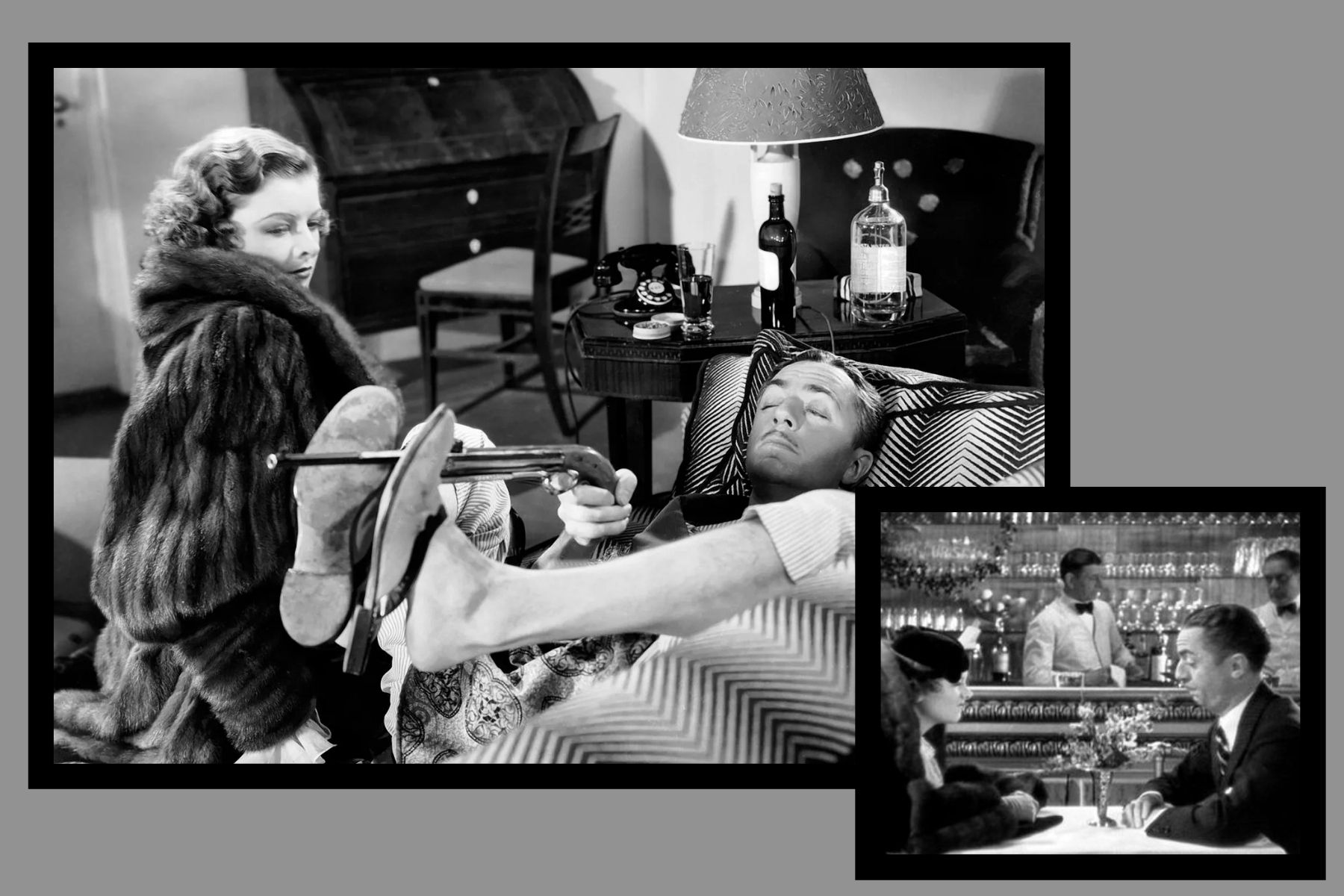
He liked his actors as relaxed and natural as possible which is why a scene of Nick shooting the ornaments off the tree was added into the movie because “Powell playfully picked up an air gun and started shooting ornaments that the art department was putting up.”
I couldn’t find quotes from Powell about working with Van Dyke but there are quotes about working with Powell because he loved working with her.
“When we did a scene together, we forgot about technique, camera angles, and microphones. We weren’t acting. We were just two people in perfect harmony,” he said. “Myrna, unlike some actresses who think only of themselves, has the happy faculty of being able to listen while the other fellow says his lines. She has the give and take of acting that brings out the best.”
You can find plenty of opinions and articles about this movie online, most of them positive.
The Blonde at the Film wrote on her blog in 2014, “The Thin Man (1934) is a truly delightful mystery-comedy chock full of snappy dialogue, fantastic stars, art deco sets, magnificent costumes, enough mystery to make it suspenseful, and enough alcohol to give you a sympathy hangover.”
Christopher Orr wrote for The Atlantic: “As Nick and Nora, Powell and Loy subverted the classic detective film with comic aplomb and presented an impressively modern vision of marriage as an association of equals. They were also cinema’s most glamorous dipsomaniacs, a reminder of a bygone era when Hollywood could still imagine that charm, taste, and good humor might go hand-in-hand with the copious consumption of distilled spirits.”
His opinion of the mysteries in this movie and the others is fairly accurate, even though not altogether positive: “The mysteries themselves tend to be somewhat disappointing–needlessly convoluted, with solutions that often hinge on a last minute revelation or “clue” of dubious import (for example, whether or not someone announced themselves before opening a door). Rather, the chief pleasure of the films is in spending time with Nick and Nora as they tease, cajole, and romance their way toward the conclusion.”
Film critic Roger Ebert wrote of The Thin Man, “William Powell is to dialogue as Fred Astaire is to dance. His delivery is so droll and insinuating, so knowing and innocent at the same time, that it hardly matters what he’s saying.”
He continued: “Powell plays the character with a lyrical alcoholic slur that waxes and wanes but never topples either way into inebriation or sobriety. The drinks are the lubricant for dialogue of elegant wit and wicked timing, used by a character who is decadent on the surface but fundamentally brave and brilliant.”
Have you seen The Thin Man? What did you think of it?
Up next (at some point) I will be writing about the next movie in the series, After The Thin Man.
For winter this year, I am watching James Cagney movies.
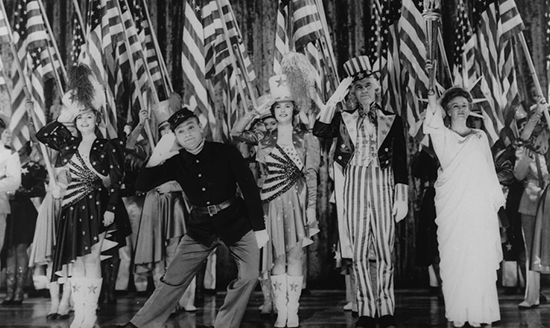
First up is Yankee Doodle Dandy (1942) which Cagney won an Oscar for.
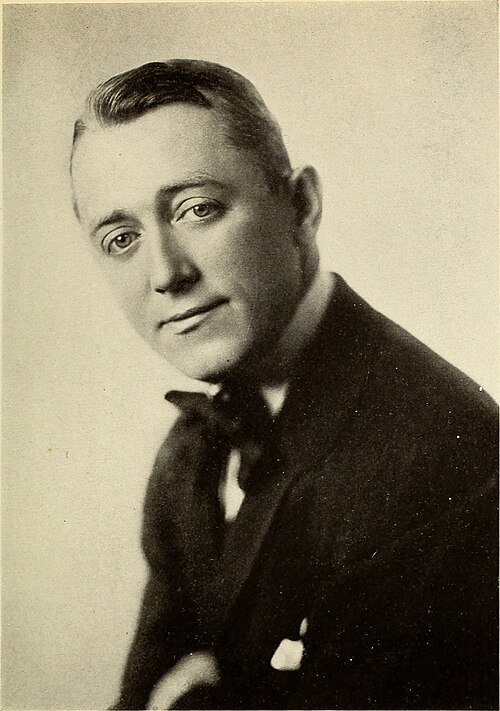
This is a biopic about the entertainer George Cohan. Actually, though, he was more than just an entertainer. Under that umbrella, he was a playwright, lyricist, actor, singer, dancer, and theatrical producer.
Don’t think you know who Cohan is?
Well, if you’ve ever heard the songs “You’re A Grand Old Flag”, “Over There”, “Yankee Doodle Dandy Boy,” or “Give My Regards to Broadway,” then you have heard some of George’s work.
Yankee Doodle Dandy is his story, but . . . with some poetic license from what I’ve been reading. Cohan comes out looking a bit better than he might have been in real life, considering his first wife divorced him for adultery and that mysteriously didn’t make the movie. The movie did portray him as a bit of an arrogant kid who pushed his way to stardom, so he wasn’t portrayed as totally perfect, however. Plus, Cohan had the final say on the movie so maybe that’s why he looked a bit better in the movie. *wink*
Cohan was born July 3, 1878 according to baptismal records but according to him and his parents, he was born on the Fourth of July. This “fact” would be used throughout his career as he asserted his bold patriotism for the United States of America.
“I’m a Yankee Doodle Dandy A Yankee Doodle, do or die A real live nephew of my Uncle Sam Born on the Fourth of July I’ve got a Yankee Doodle sweetheart She’s my Yankee Doodle joy”
From the musical Little Johnny Jones
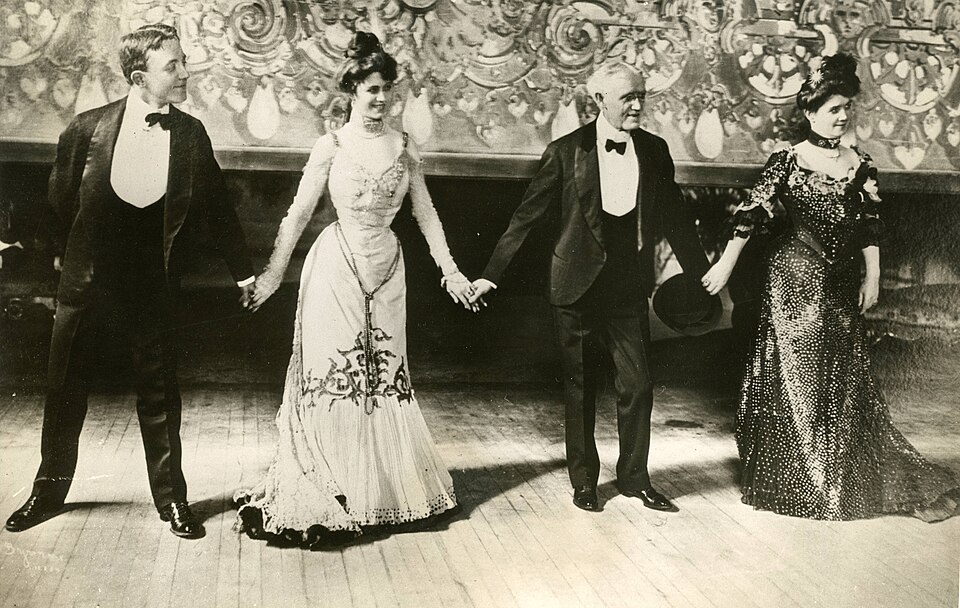
Cohan’s was an Irish immigrant named Jeremiah (Keohane) Cohan. His mother was Helen “Nellie” Costigan Cohan, and his sister was Josephine “Josie” Cohan Niblo (1876–1916). Together the four of them would form a Vaudeville act called The Four Cohans.
George began singing and playing the violin at the age of 8 and toured with his family from 1890 to 1901.
During these years, he made famous a speech at the end of their show that you might have heard over the years, or even said yourself as a joke: “My mother thanks you, my father thanks you, my sister thanks you, and I thank you.”
The Four Cohans with George on the left.
He and his sister made their Broadway debuts in 1893 in a sketch called The Lively Bootblack.
I won’t give you his entire biography here, so if you want to know even more about his life, the movie will fill you in or there is a ton of information about him online.
Many people think of James Cagney with a New York accident asking questions like, “You talking to me?” because of the many mobster-themed movies he appeared in in the 1930s. (I don’t think he actually ever said that line, though. Much like he never actually said, ‘You dirty rat! The quote was actually longer and included the words “You yellow-bellied dirty rat” in the movie Taxi, 1931.)
“There is a story that James Cagney stood on his toes while acting, believing he would project more energy that way,” Roger Ebert wrote. That sounds like a press release, but whatever he did, Cagney came across as one of the most dynamic performers in movie history–a short man with ordinary looks whose coiled tension made him the focus of every scene.”
Yankee Doodle Dandee showed there was lot more to Cagney than many moviegoers realized.
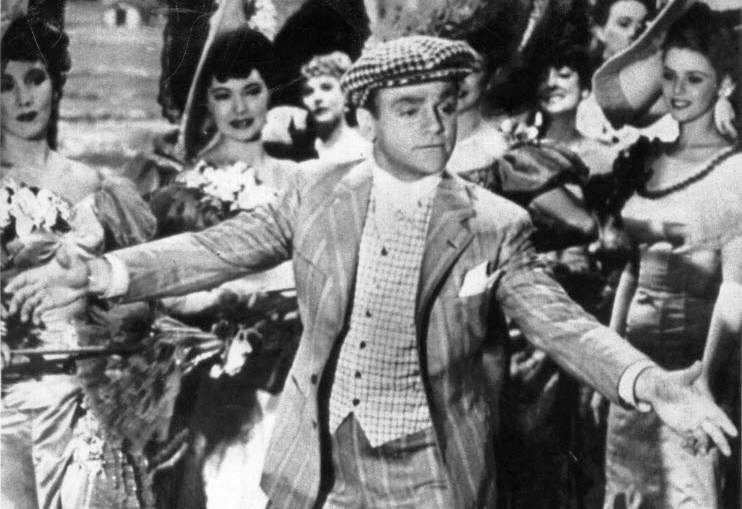
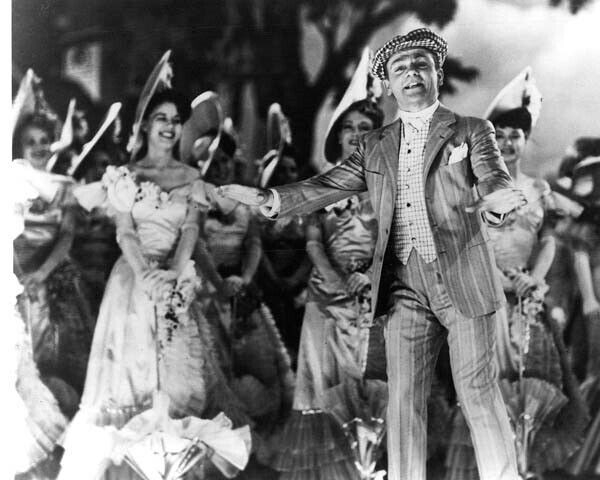
For one, Cagney could dance, which he had showcased in other movies but really was able to showcase in this movie.
Cagney could also be funny and charming — which moviegoers had seen in other movies but really saw in Yankee Doodle Dandy.
Cagney almost didn’t get the role that he would later call his favorite, according to an article on TCM.com.
Originally Cohan and MGM had combined to make a film that would cover when Cohan had toured with his family. It would have starred Mickey Rooney. The deal collapsed because the studio head, Louis B. Mayer, refused to let Cohan have the final cut on the film.
Samuel Goldwyn then expressed an interest in making a movie with Cohan and planned on giving the role of Cohan to Fred Astaire.
Astaire turned it down, and Warner Bros. picked up the rights and cast Cagney, who at the time was being suspected of being a communist sympathizer due to being president of the Screen Actors’ Guild a — gasp! — union!
“He wanted to show his patriotism on screen,” the TCM article reads. “And the George M. Cohan story was the perfect vehicle to do that.”
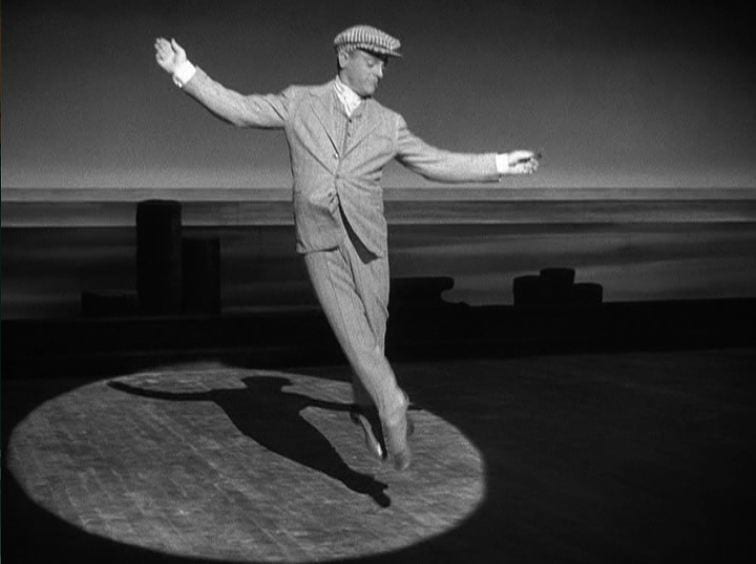
Cagney broke into infamy with this movie. I am sure many of you have seen one of his most famous scenes — when he tap dances down a long flight of stairs while leaving the white house after talking to President Franklin Roosevelt. This scene, like many others in his career, was improvised by Cagney, who called it his favorite moment in the movie.
“I didn’t think of it till five minutes before I went on,” Cagney later recalled. “And I didn’t check with the director or anything; I just did it.”
Yankee Doodle Dandy was directed by Michael Curtiz (most well-known for directing Casablanca).
According to TCM and other sources online, Curtiz letting Cagney have free rein in the role is what made it such a success and made him so enamored with Cagney as an actor.
“The ordinarily hard-boiled Curtiz was so moved by the scene in which Cohan bids farewell to his dying father (Walter Huston) that he reportedly ruined a take with his loud sobs,” reads the article on TCM.com. “According to Cagney biographer Michael Freedland, tears streamed down Curtiz’s face as he stumbled away to find a handkerchief and exclaimed to Cagney, “Gott, Jeemy, that was marvelous!’”
I can speak from the experience of seeing the movie that that scene was heartbreakingly marvelous. I wasn’t super emotionally invested in the movie as I watched it, but during that scene, I teared up and failed to hold back a small sob. Maybe it’s because my parents are older, so I could relate to that scene more than I might have been able to if I had watched this when I was younger.
Critic Brenden Gill said of Cagney’s role in the film: “George M. Cohan was by all accounts something of a scoundrel. He was an impossible human being, but he was a tremendous actor, comedian, showman, and he wrote great popular songs. He exists in our memories now not as George M. Cohan but as James Cagney in the movie.”
“Cagney managed to capture this persona that Cohan created,” another critic I heard (but couldn’t find the name of) said. “It was brash. It was pushy. It was aggressive. It was funny. Very American. Very New York. And Cohan created this character as his own persona on stage, but it really became the emblem of Broadway itself.”
Cagney, according to TCM.com writer Jeremy Arnold, wanted to portray Cohan correctly, not only because Cohan — 63 at the time the movie was made —had final approval over the film, but for accuracy.
“To perfect Cohan’s distinctive, strutting style of dance,” Arnold writes. “Cagney rehearsed with choreographer John Boyle, who had worked with Cohan extensively in the 1920s. Cagney also channeled Cohan’s singing voice, which was more like rhythmic speaking, and brought his own charismatic talent to the romantic, comedic, and dramatic scenes.”
There were liberties taken with Cohan’s life, as I mentioned above. For instance, his two wives were combined into a single character. Also, the chronology and order of his parents’ death was also switched around (probably to make that death bed scene even more emotional). Additionally, in one scene when he suffers a flop with a non-musical drama called Popularity, a newspaper seller announces the torpedoing of the Lusitania. The play flopped in 1906, but the Lusitania sunk in 1915, according to TCM.
Despite these changes, most critics agree that the movie captured Cohan’s life and music perfectly.
“Yankee Doodle Dandy, with its many flag-waving musical numbers, proved just the ticket for World War II-era audiences and became the top-grossing movie of its year, as well as Warner Bros.’ top-grossing movie to that time,” Jeremy Arnold wrote for TCM.com.
In addition to Cagney, the movie also starred Joan Leslie, Walter Huston, Richard Worf, Irene Manning, Rosemary Decamp, Jeanne Cagney (Cagney’s sister who played his sister Josie in the movie), and Eddie Foy Jr as Eddie Foy Sr.
So, a pause here. Eddie Foy Sr. was another entertainer of a similar style and also performed vaudeville with his family, The Seven Foys.
There is a movie called The Seven Little Foys (1955) starring Bob Hope as Eddie Foy Sr. and in it there is a cameo by Cagney, who portrays George M. Cohan, reprising his role from Yankee Doodle Dandy.
The two dancers face off in a very fun tap-dancing routine on a boardroom table. You can catch that here:
As for what movie watchers or critics now think of Yankee Doodle Dandy, you can find a variety of opinions online — some calling it satire to make fun of capitalism and nationalism while others say it is a disgusting display of support for capitalism and nationalism.
Some love the over-the-top patriotism and some absolutely hate it.
I guess you’ll have to make up your own mind what it promotes or represents and what it doesn’t, but what many can’t deny is the talent Cagney displays in the movie.
I definitely enjoyed seeing Cagney’s talent, but at first glance didn’t enjoy his dancing style. It was floppy and lanky instead of smooth and debonair like Gene Kelley or Fred Astaire, who I am more used to, but after seeing footage of Cohan, I now get that Cagney was imitating Cohan’s dancing style.
After hearing and seeing recordings of Cohan this week, I realized how perfectly Cagney nailed Cohan in the movie. No wonder he won the Oscar for best actor that year. It was also his only Oscar, incidentally.
Cagney pulled the role off even though “he (couldn’t) really dance or sing,” observed critic Edwin Jahiel, “but he acts so vigorously that it creates an illusion, and for dance-steps he substitutes a patented brand of robust, jerky walks, runs and other motions.”
Ebert wrote in his review of the film : “Unlike Astaire, whose entire body was involved in every movement, Cagney was a dancer who seemed to call on body parts in rotation. When he struts across the stage in the “Yankee Doodle Dandy” number, his legs are rubber but his spine is steel, and his torso is slanted forward so steeply we’re reminded of Groucho Marx.”
I’ll have to check out Cagney’s dancing in other movies to really get an idea of his actual style.
Cohan saw the picture shortly before he died in November 1942, by the way, and reportedly said afterward, “My God, what an act to follow.” The next morning, he sent Cagney a congratulatory telegram. And then he died. Ha! Kidding. I have no idea when he actually died but I do know he was only 64 so it was shortly after the movie was released.
I was amazed by the amazing sets for the incredible musical scenes in this movie. The scenes — which included moving sets and fireworks, and a floor like a conveyor belt that made the actors seem like they were continuously marching toward the audience — were way ahead of moviemaking at that time
Maybe that is why the movie cost so much to make, which was $1.5 million and well above the standard for the time.
Luckily, it grossed $6 million.
You can catch some of that movie/Broadway magic here:
As for Cagney’s acting in the movie, I thought it was great and engaging. Even parts that could have been a bit cheesy were enhanced by Cagney’s performance.
I loved the dancing and singing sequences throughout the movie. Those snippets were perfect introductions to the style of musicals and Broadway at the time, though that style became the style of Broadway in the future as well, thanks to Cohan.
Have you seen this one?
You can learn a bit more about Cohan in this clip:
If you want to see Cohan himself perform “Over There,” you can see that here:
And for a sneak peek of the movie, here is the trailer from when it was released:
When people think of the actor James Cagney, many might think of his roles as gangsters, bad guys, and double-crossers. He was much more than that, though, in his acting roles and in his life.
This month I am watching James Cagney movies as part of my Winter of Cagney movie event.
To kick it off, I thought it might be good to share a little about the actor’s life.
Cagney was born to an Irish bartender father (James Francis Cagney) in the rough lower east side of New York City. His father, who Cagney says was an alcoholic, was also an accomplished boxer and at the age of 14 Cagney followed his footsteps and became one of Yorkville’s best fighters. James’ mother was Carolyn Elizabeth Cagney (my mom’s name is ironically Carolyn Elizabeth..but not Cagney).
“My childhood was surrounded by trouble, illness, and my dad’s alcoholism,” Cagney wrote in his autobiography, Cagney on Cagney. “But as I said, we just didn’t have the time to be impressed by all those misfortunes. I have an idea that the Irish possess a built-in don’t-give-a-damn that helps them through all the stress.”
While in high school, Cagney worked wrapping packages at Wanamaker’s Department Store, for $16 a week. His introduction into entertainment came when a fellow employee at Wanamaker’s told him a vaudeville troupe paid its players $35 a week. When Cagney auditioned, he told them he could sing and dance. He couldn’t do either, but he still had a successful audition. It was while working in Vaudeville that he met Frances Willard. They married in 1922 and remained married until his death 64 years later. She lived until 1994.
Cagney’s big break on the stage came in 1929 when he acted opposite Joan Blondell in Penny Arcade.
His big screen debut came in 1930 with Sinner’s Holiday, and he made four more films that year. Public Enemy (1931) and Taxi (1931) are two movies where the world was introduced to him as a gangster.
Growing up, I heard a lot of impressions of Cagney and those always claimed he said, “You dirty rat….” Or “All right, you guys.”
For the record, according to the Encyclopedia Britannica website, Cagney never actually said the words “You dirty rat,” or “All right, you guys” in any of his movies. Wow. Talk about a disappointing revelation there. Ha!
He did, however, say, “Come out here and take it, you dirty yellow-bellied rat or I’ll give it to you through the door,” in the 1931 movieTaxi.
According to The Kennedy Center website (he was honored there in 1980), “The unforgettable ‘fruit facial’ scene, in which he rams a grapefruit into Mae Clarke’s nose is exemplary of Cagney’s spontaneity, for the script called for him to slap Clarke with an omelet.”
Eventually, though, Cagney would tire of “packing guns and beating up women,” as he said in his autobiography, and after a string of movies where he played a gangster type figure, he did try some different roles, including the one he won an Oscar for — playing George M. Cohan in Yankee Doodle Dandy.
“No matter the genre of the film he was in, James Cagney always brought unique, riveting energy to the screen,” writes Jeremy Arnold for TCM.com. “Known best for his tough-guy and gangster roles, a persona cemented by his fourth picture, The Public Enemy (1931), Cagney had actually started his showbiz career in 1920s vaudeville as a song and dance man, and to the end of his life he thought of himself primarily as a hoofer. Hollywood didn’t give him a chance to show off those talents until his fourteenth film, Footlight Parade (1933), and even after that movie’s success, Cagney went on to make surprisingly few musicals.”
In 1934 and 1940, Cagney was accused of being a communist sympathizer and many say this is why he took the part in Yankee Doodle Dandy — to attempt to clear his name and show that he really was a true patriot. His brother, in fact, urged him to take the part for that very reason.
Information online from various sources also suggests Cagney once had a hit on him by the mafia for work he did against the Chicago Outfit and the Mafia because they were extorting money from Hollywood studios by threatening to strikes by a mob-controlled labor union.
Cagney once shared that a hitman was sent and a heavy light was dropped on his head but it didn’t kill him, and the hit was eventually dropped when actor George Raft made a call to have the contract canceled. Raft was an American actor who played mobsters in movies and was (apparently) connected to the mob as well.
Some of Cagney’s most famous movies, besides the ones already mentioned, include:
White Heat (1949), Come Fill the Cup (1951), Love Me or Leave Me (1955), Mister Roberts (1955), and Man of a Thousand Faces (1957).
White Heat is one film that Cagney enthusiasts say you have to watch (and I will be). One reason is for the scene where Cagney breaks down after finding out his mother has been killed. The scene was shot with 300 extras in a prison cafeteria and none of the men knew what Cagney was going to do. Many of the men in the scene actually thought he had lost his mind which is why their reactions in the background are so real.
“I didn’t have to psych myself up for the scene in which I go berserk on learning of my mother’s death,” he wrote in his autobiography Cagney by Cagney. “You don’t psych yourself up for those things. You do them. I knew what deranged people sounded like. As a youngster I had visited Ward’s Island. A pal’s uncle was in the hospital for the insane. My God, what an education that was. The shrieks. The screams of those people under restraint. I remembered those cries. I saw that they fit the scene. I called on my memory to do as required. No need to ‘psych up.’”
White Heat is also where Cagney uttered one of his most famous lines, “On top of the world, Ma!”
After playing the manic Coca-Cola executive in Billy Wilder’s One Two Three in 1961, Cagney retired from acting and moved to an 800-acre farm in Dutchess County, NY with his wife where he relaxed, read, played tennis, raised horses, swam, and wrote some poetry.
It was on that farm where he died on Easter Sunday, 1986, of a heart attack at the age of 86.
I was saddened to read from a couple of sources that he did have adopted children, but the relationships with them fell apart, and his adopted son died of a heart attack when Cagney was 84, without them really speaking to each other for years..
Many actors and famous people have commented on Cagney, his acting, his movies, and his life in general.
One of those actors was George C. Scott who never worked with him but met him toward the end of Cagney’s life and borrowed a quote about General Robert E. Lee that Scott said fit Cagney as well: “What he seemed he was, a wholly human gentleman. The essential elements of whose positive character were two and only two — simplicity and spirituality.”
Scott said he was “perfectly himself” and “he was what he seemed to be.”
I will be watching the following movies for my Winter of Cagney:
I’ve been watching less popular Christmas-themed movies around Christmas for the last couple of years. One of those movies was It Happened on Fifth Avenue (1947).
I truly thought I’d written about this movie in previous years, but I can’t find it when I search so I am writing about it now.
The movie is about a group of people who are sort of thrown together but it starts with a man named Alyosius T. McKeever (Victor Moore) who sneaks in the mansion of businessman Michael O’Connor (Charlie Ruggles) in New York City early in November when O’Connor goes to his home in Virginia for the winter.
McKeever is a “vagabond” or homeless man.
He lives in the home, wearing O’Connor’s clothes, and eating any food left at the house in the pantry.
The movie opens with him sneaking inside through the back fence and will later learn that he’s been doing this for some twenty years.
I, of course, am surprised that no one has ever seen him or seen the lights on in the house but, it’s a movie. Let’s suspend belief.
There are police who patrol the grounds, but McKeever has a system where he hides in the icebox (or a room they call the icebox) until the police have passed by. He also has the lights hooked up so they will shut off as soon as someone opens the front door.
One day McKeever meets Jim Bullock played by Don DeFore, sleeping on a park bench. Jim, a veteran, has been evicted from his apartment building because it is being torn down. Michael O’Connor is putting up an 80-story building in its place.
When Jim gets to the mansion and is settling in, he sees an award shaped like a boat with the name Michael O’Connor on it and accuses McKeever of taking over homes of people who can’t afford to live in family homes like his.
McKeever tells Jim he’s not really O’Connor, but a friend of his. Jim accepts this explanation easily
Jim isn’t sure what to think of this arrangement, but he needs a place to stay so he accepts it.
Soon we see Michael O’Connor, who is in Virgina having a board meeting. During the board meeting he gets a call from his daughter Trudy’s school and been told that it’s possible she’s run away.
Michael looks at a photo of two women and asks his assistant if he thinks that she has run off to her mother in Florida.
The man doesn’t know so Michael orders him to hire a private investigator and find his daughter (played by … get this name…Gale Storm).
His daughter, though, is already found for us viewers. She is at her father’s mansion looking for her clothes when Jim finds her. He demands to know what she’s doing there and suggests she is stealing from the mansion. He threatens to call the police.
Trudy, apparently smitten with Jim merely based on his appearance, decides not to tell him who she really is and tells him to go ahead and call the police.
McKeever pulls Jim aside and confesses all. He is not a friend of O’Connor, but is, instead, simply someone who takes advantage of the home being empty for a few months out of the year. When O’Connor leaves, he moves in and when O’Connor leaves Virginia, McKeever hitches his way to Virginia and moves in that house until it’s time to come back to New York.
(Again…suspend belief).
Jim isn’t sure what to make of the arrangement, but is amused and impressed that McKeever hasn’t been caught yet.
Trudy listens in and overhears what McKeever has been doing and smiles in an amused way. She decides she will find a way to stay on with the men since it will be a way to hide from her father for a while. She tells the men the truth, which is that she’s going to get a job at a music store so she can get back on her feet again. She then says she only broke into the house because she was hungry and desperate and then does a lovely fake faint to add to her story.
The men agree that she can stay. From here the movie will start to get a bit more complicated as more people are invited to stay at the mansion, including a family with small children. What could make all of this even more chaotic? Add in Michael O’Connor returning to New York to try to find his daughter and planning to return to the mansion.
One little thing that bothered me about this movie was how young Gale Storm looked and was supposed to be. She was supposed to be 18 but a romance develops between her and Jim and he seems considerably older than her. That was…awkward at times. However, I’m not sure how old Jim is actually supposed to be so maybe it isn’t so awkward. Gale was 22 at the time the film was made.
The screenplay for this movie was written by Everett Freeman. The original story was created by Herbert Clyde Lewis and Frederick Stephani.
Harry Revel wrote the songs “It’s A Wonderful, Wonderful Feeling.” “That’s What Christmas Means to Me” and “Speak My Heart” for the movie, according to the opening credits, but I wouldn’t call this movie a musical. One of the main characters simply sings a bit.
Gale Storm thought she’d be singing the parts in the film, but, unfortunately, she was told her voice would be dubbed over.
She later wrote in her memoir: “I couldn’t believe it. I thought that maybe the director didn’t know I’d been singing and dancing in films, and that if I spoke to him he’d let me do my own numbers. Well, I asked him, and he said no. I asked him to look at some of my musicals, and he said no. I asked him if I could sing for him, and he said no. His theory was that if you were a dancer, you didn’t sing; if you were a singer, you didn’t dance; and if you were an actor, you didn’t sing or dance. It was humiliating.”
Another song in the movie is “You’re Everywhere” sung by The King’s Men at 1930s/1940s barbershop quartet.
According to TCM.com, Frank Capra originally acquired the rights to the movie but passed it on to Allied Artists, a new subsidiary of Monogram Pictures, which used to develop B movies. It Happened on Fifth Avenue was the companies first major motion picture and was developed by Roy Del Ruth.
Not only was Gale upset about not being able to sing in the film, but she also was disappointed Capra didn’t direct it, according to the TCM.com article. She felt the movie was decidedly “Capra-esque” — “a warmhearted human story about the little guy with underlying social and political commetary. She said that she felt Del Ruth didn’t make the most of the story’s potential, but she may have been holding a grudge since he didn’t let her do her own singing.
Gale said Del Ruth wasn’t easy on anyone.
“I wasn’t the only one Del Ruth humiliated,” continued Storm in her biography. “Victor Moore was a dear, sweet old man who was kind to everyone; we all loved him. Except Del Ruth. Whatever Victor did, the director made him redo it — again and again. And Del Ruth never told the old man what he might have been doing wrong.”
Despite these complaints from Gale, the movie did well when it was released, with the actors receiving praise by reviewers and critics. It has now become a beloved classic as well.
Is this one you’ve ever seen? What did you think about it?
This post is part of the Comfy, Cozy Christmas feature hosted by me and Erin at Still Life, With Cracker Crumbs. If you have a blog post that you would like to share as part of this annual link-up, please find out more here.
If you write book reviews or book-related blog posts, don’t forget that Erin and I host the A Good Book and A Cup of Tea Monthly Bookish Blog Party. You can learn more about it here.
Erin from Still Life, With Cracker Crumbs and I are hosting Comfy, Cozy Cinema again this year and up this week was The Mummy!
The Mummy (1999) was a perfect watch for Halloween, though maybe not super comfy or cozy? I don’t know but we slip some creepier ones in for Halloweeeen too so it all evens out! This one isn’t super creepy all the way through, though, and oneee thing you should know is that The Mummy does not take itself too seriously.
Even though it isn’t really a horror film, it deals with the dead and ancient curses, gross bugs, the undead, and bringing people back from the dead and…., etc., etc.
And we also get to see when Brendan Frasier had a career. Ha! I kid. I kid. I know his career has been resurrected like some of the characters in this movie. I just thought it was a funny line.
This movie has become a cult classic after performing well in the theaters, but even better for video/DVD sales which raked in $1 billion for Universal in 2000. The movie’s success even led to a sequel, The Mummy Returns, which was must less successful and then yet another sequel, which was not a huge success either, if I remember right..
Even though I have seen this movie a couple of times, it’s been a long time since the last rewatch, so I rewatched it with my kids to remind myself of specific scenes, plot, etc.
Etc. is the word for today, by the way. I’m going to keep using it throughout this post just to be annoying, obnoxious, belligerent, etc. etc.
(I’m kidding about that too. I can’t keep that up for an entire post…..or can I?)
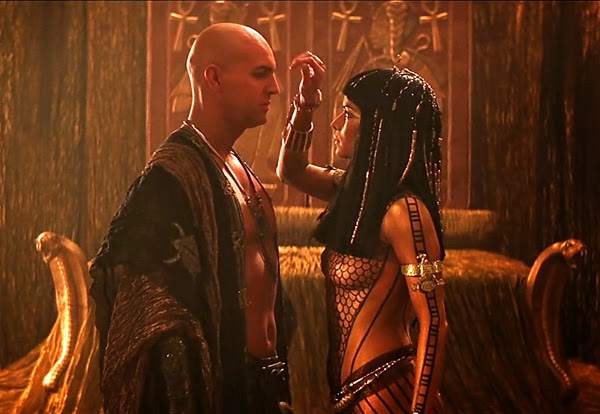
This movie starts with the affair between Imhotep and Anck-su-namun, the mistress of the Pharoah. No one was to touch Anck-su-namun other than the Pharaoh but I guess Imhotep missed that memo because he started an affair with her.
The two are caught by the Pharaoh, the Pharaoh is killed, the Pharaoh’s men come in, Imhotep escapes while Anck-su-namun reminds him that only he can resurrect her later so she kills herself before the Pharaoh’s men can.
Imhotep then steals Anck-su-namun body and tries to resurrect her but is interrupted by the pharaoh’s guard and is intombed with a bunch of creepy beetle things and buried alive “for all eternity.”
Ha. As if that line is going to stick. Of course, we know something is going to happen to disturb this dude’s resting place.
The Medjai, by the way, are sworn to prevent Imhotep’s return, as his resurrection would grant him immense power. They are guarding over him when Rick O’Connell (Brenden Frasier) is in the French Foreign Legion, fighting against an Arab Army, and finds the tomb, but runs away when the sand begins trying to attack him.
The Medjai decide not to kill him, but instead to “let the desert kill him instead.”
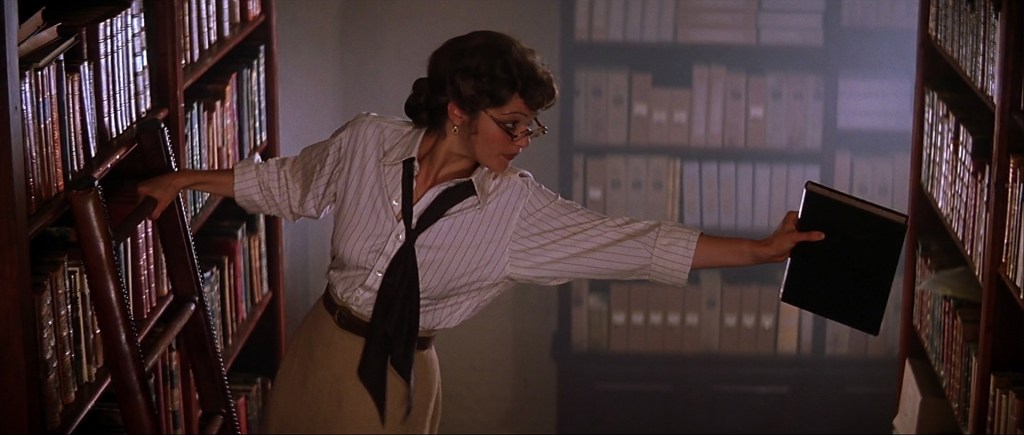
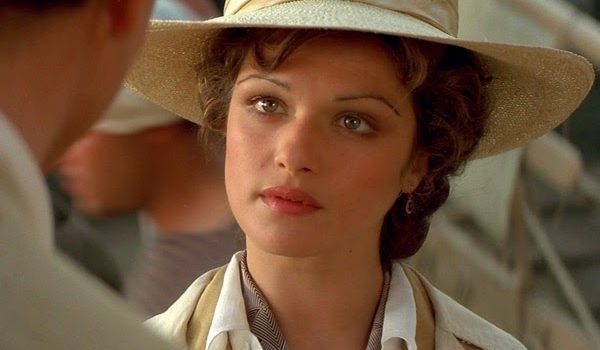
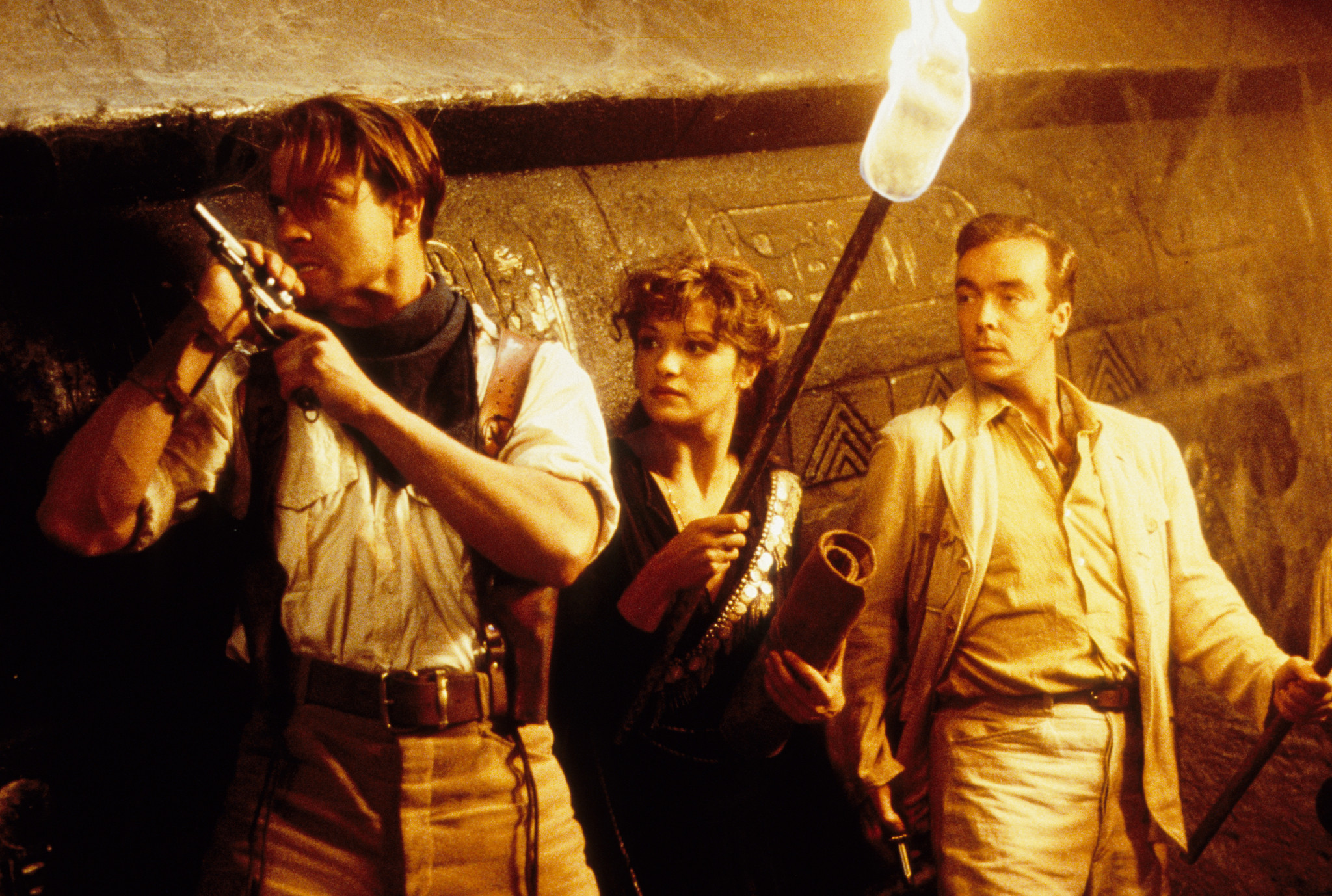
Bad idea because Rick lives and discovers an intricate box, which he takes home with him and has stolen by Jonathan Carnahan (John Hannah) who gives it to his sister, Evelyn (Rachel Weisz) a librarian and very green Egyptologist.
Evelyn finds a map inside the box that will lead them to buried Egyptian treasure but it is in the city of the dead. She takes it to her boss at the ancient library but he — oops — sets in it on fire. Was that an accident? Hmm…not so sure there.
Now Evelyn wants to know where Jonathan got it so they set off to find the man who Jonathan stole the box from.
Rick is in jail and actually looks way too clean to have been in jail and he agrees to help Evelyn get to the lost city of death if she will get him out of jail. She figures out a way, but the jailer says he is going to come along to keep an eye on his prisoner.
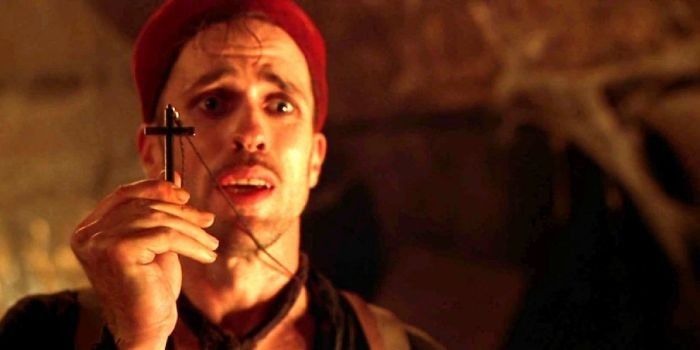
From there, hijinks ensue, especially when the group runs into a rival team also looking for the city and treasure and Rick runs into an old “friend” who always abandoned him at the most inopportune moments. That friend is Benji and he provides a lot of humor throughout the film, including an iconic scene where he uses symbols from several different religions to keep the mummy from attacking him.
This movie is a fun ride. My husband and I had seen this years ago in the theater when we were first dating — we think anyhow. Our memories are so fuzzy because we are so old.
The Boy said during this movie, “This movie is so fun. I’m really liking this.”
I could have sworn he’d seen this movie before, but he had not, and wanted to, so the timing was perfect, great, impeccable, etc. etc.
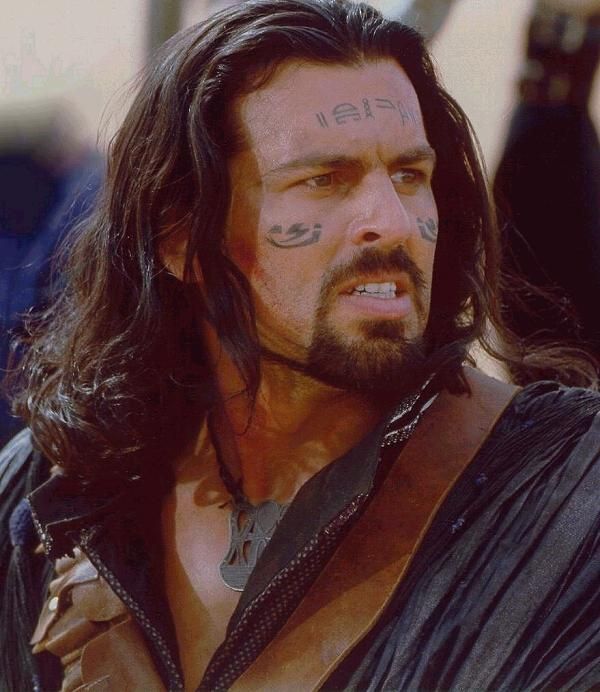
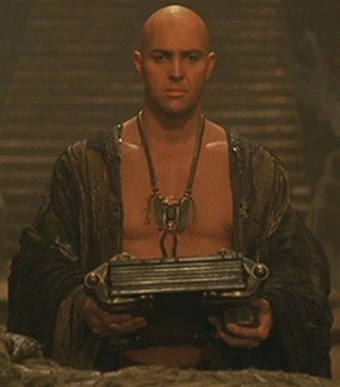
The movie is full of eye-candy for all with Rachel Weisz being pretty and Brenden and Oded Fehr and even Arnold Vosloo for those who like bald men.
As I mentioned above, The Mummy is not necessarily a “horror” film but there is a lot of grotesque scenes and moments involving — a bit of a spoiler here — the mummy trying to piece himself back together, which involves pulling other pieces off living humans.
The film was shot in Morocco and The United Kingdom. I found it interesting when I read that Universal took out kidnapping insurance on the crew and cast but didn’t tell them until filming was over. Yikes.
This is the movie where we almost lost Brendan Fraser to by the way
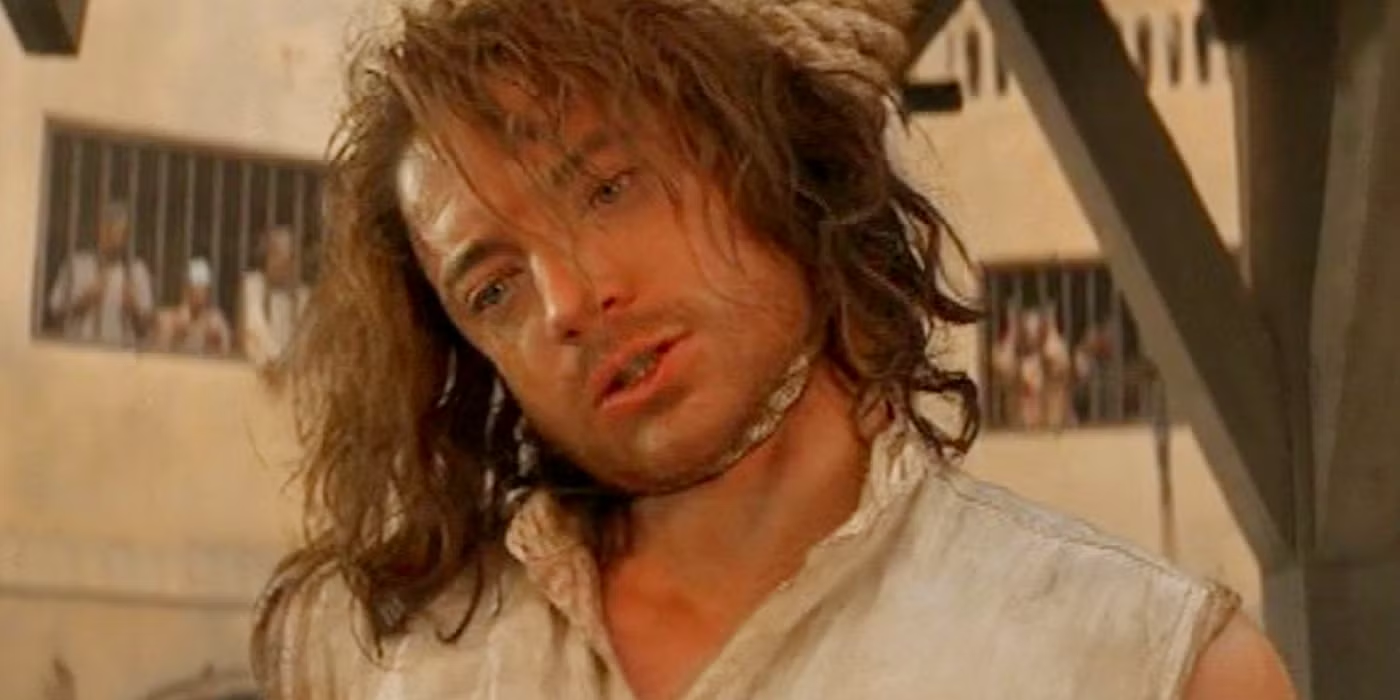
According to an interview with Brendan on The Kelly Clarkson Show, in the scene where Brendan is being hung, the director told him it wasn’t looking believable. Brendan pushed up on his tiptoes while the man who was holding the rope lifted up and Brendan had nowhere to go but try to push down.
“So he was pulling up and I was going down. And then the next thing I knew, my elbow was in my ear, the world was sideways and there was gravel in my teeth.”
He said the stunt coordinator was leaning over him clapping his hands and calling, “Brendan. Come on, Brendan.”
When he did, the coordinator told the actor, “‘Congratulations, you’re in the club — same thing happened to Mel Gibson on ‘Braveheart.’”
The Mummy became such a hit that there were two sequels and a spinoff. Yes, I saw the spinoff with Dwayne “The Rock” Johnson, The Scorpion King. No, I do not recommend it.
I never saw The Mummy: Tomb of the Dragon Emperor but I probably wouldn’t recommend it either.
This movie did get positive reviews when it came out, with most calling it lot of fun.
Roger Ebert of the Chicago Sun-Times gave the film a positive review, writing, “There is hardly a thing I can say in its favor, except that I was cheered by nearly every minute of it. I cannot argue for the script, the direction, the acting or even the mummy, but I can say that I was not bored and sometimes I was unreasonably pleased.”[
Trivia and facts:
*Disclaimer: always make sure to double check these as what I report is only as good as the sites I pull it from and they are not always accurate.
The library disaster in the beginning of the film was done in one take. It would have taken an entire day to re-shoot if a mistake had been made. (source IMdb)
The effects team was told “no gore” when designing the look of the Mummy. They actually did tests for “grossness threshold.” (source IMdb)
Erick Avari who portrayed Dr. Terence Bey now portrays Nicodemus on The Chosen. (source: me!)
With the exception of a loin cloth, a few pieces of jewelry, and pasties, Patricia Velasquez as Anck-su-namun, was nude except for body paint, which took four hours to apply. (source IMdb)
This movie is a remake of the 1932 film of the same name. (various sources, including my husband.)
The white nightgown Evelyn wore when the ship was attacked became transparent when it got wet and had to be digitally painted white during post production so the film could keep its PG-13 rating. (source IMdb)
The Medjai were originally supposed to be tattooed from head to toe, but Stephen Sommers vetoed it because he thought Oded Fehr was “too good-looking” to be covered up. (source IMdb)
The crew could not shoot in Egypt because of the unstable political conditions. (source IMdb)
To avoid dehydration in the scorching heat of the Sahara, the production’s medical team created a drink that the cast and crew had to consume every two hours. (source IMdb)
Sandstorms were daily inconveniences. Snakes, spiders and scorpions were a major problem, with many crew members having to be airlifted out after being bitten. (source IMdb)
When Evelyn reads the inscription “He who shall not be named” on Imhotep’s sarcophagus, the hieroglyphs used are accurate. The inscription actually translates literally as “the one without a name.” (source IMdb)
The film is called The Mummy everywhere except Japan where it is called Hamunaptra: The Capital City of the Lost Desert. (source, TVTrops.org)
“John Hannah claimed in interviews that he didn’t have the best time shooting the film because he felt the character of Jonathan was pretty redundant: he had been hired as a comedic actor but Beni was far more prevalent as the comedy relief and he didn’t work as a sidekick either since Evy fulfilled that role as well. Whenever Hannah tried bringing this up to Stephen Sommers, the latter would just tell him to make something up. Luckily, later films in the series would give Jonathan a more focused role as the comic relief and give him more stuff to do.” (source, TVTrops.org)
“The original script’s opening had a number of edits. Imhotep was originally supposed to narrate, and following Seti’s murder Imhotep was supposed to lead the ritual to curse Anak-su-namun’s mummified body for her crime of regicide, only for Imhotep and his priests to dug up the body as soon as all the other witnesses were either dead or had left; in a scene mirroring Imhotep’s origin story in the original film, the diggers were to be killed by the soldiers after burying Anak-su-namun, and for the Med-jai to kill the soldiers afterwards in order to keep her grave a secret. During the ritual at Hamunaptra, Imhotep explains the ritual didn’t require a human sacrifice since Anak-su-namun’s organs were still fresh. When the Med-jai arrive to stop Imhotep, one of them smashes the jar containing Anak-su-namun’s heart, explaining why it it’s intact in one shot, and broken in the shot where her soul flees back to the underworld. Lastly, Imhotep explains how part of the Hom Dai works: the sacred scarabs would be able to enter his now tongue-free mouth and he’d be forced to consume them, cursing him, while the scarabs would become cursed as well upon consuming his flesh, creating a perversion of the cycle of life, death, and rebirth. Yes, the scarab swarms that plague our heroes later are all undead insects.” (source, TVTrops.org)
If you want to read Erin’s impressions of the movie, you can find it here
So, have you ever seen this one? What did you think of it?
Up next in our Comfy, Cozy Cinema will be The Englishman Who Went Up A Hill But Came Down a Mountain.
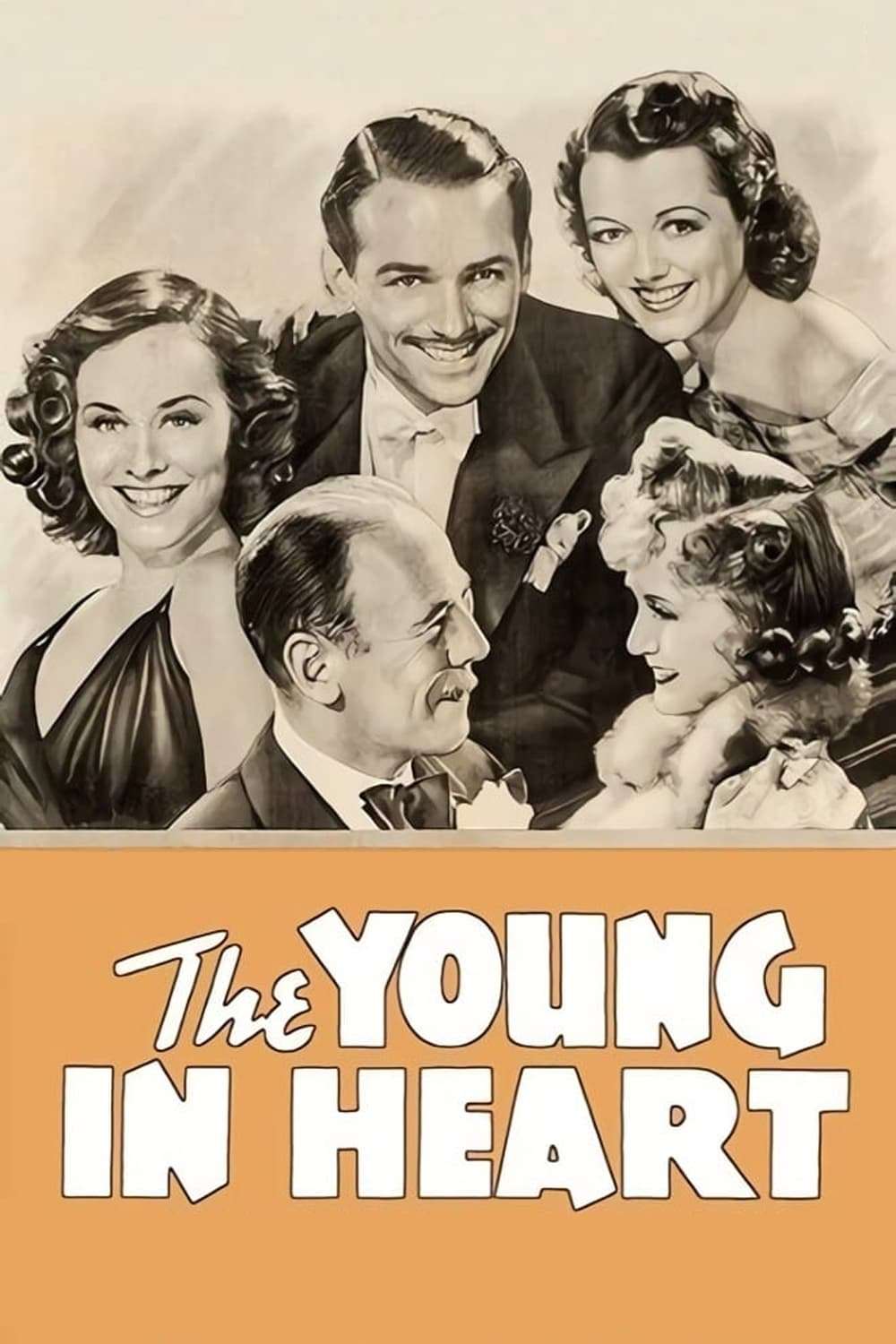
Erin from Still Life, With Cracker Crumbs and I are hosting Comfy, Cozy Cinema again this year and up this week was The Young In Heart.
And, yes, that title is the actual title: The Young IN Heart.
I feel like I cheated a little bit this week because not only have I watched this movie, but I also wrote about it when I watched it for the Winter of Douglas Fairbanks Jr. That means I had an advantage to Erin when it came to writing this week’s post because I am going to quote a lot of my original post.
This is part of what I wrote in that post: “I absolutely loved Douglas in this one. He played a more prominent role than in Gunga Din and was simply … shall I sound completely cheesy? Yes, I shall. He was completely delightful.
At one point, I texted my friend Erin that a drunk Douglas is adorable.”
Yes, I did text Erin this past January to tell her he was adorable. Yes, I am weird.
Before I forget, I found this one for free on YouTube.
So, let’s get to the movie.
The Carlton family, of which Douglas is a part of in this movie, are not a family you would want to know in real life. They are swindlers and grifters. They mooch off and manipulate people to scrape by in life.
We open the movie in the French Riviera with Douglas’s character (Rick) ready to marry a young woman whose father is rich.
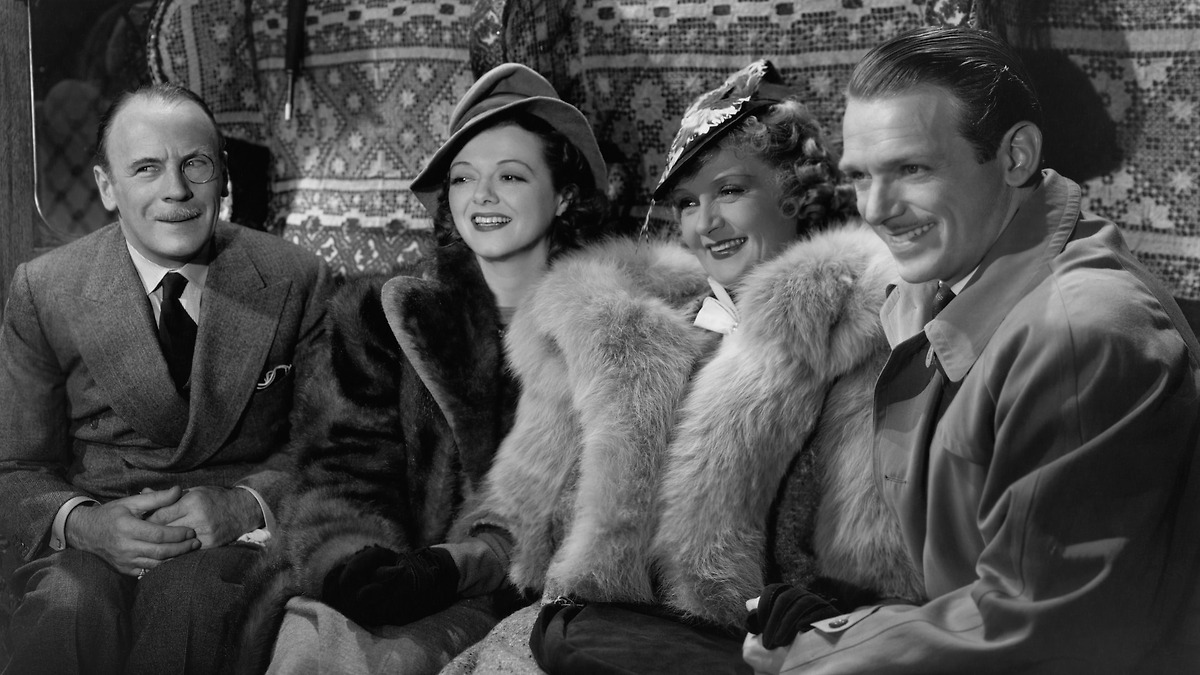
Everything falls apart, though, when the police find out about the family and reveal their conniving ways to the family of Rick’s future wife. The family is told to get out of France and end up on a train where they meet a ridiculously sweet woman (Minnie Dupree) who has only recently come into a great sum of money.
Ironically, her last name is Fortune. George-Anne sets out to swindle the woman out of paying for their lunch, but the plan expands as the woman explains she lives alone in a big mansion left to her by a former suitor. She is saying how lovely it would be if all of them came to stay with her when there is a train derailment. Their car tips and at first Rick and George-Anne believe the old woman has died. She’s still breathing so the siblings carry her from the car and George-Anne covers her with her own coat.
We begin to wonder if the family is rotten through and through and are still playing things up as the woman later recovers and invites the family to come live with her.
George-Anne suggests to the family that if Miss Fortune believes they are a respectable family she will be more willing to let them live there and maybe even leave them money when she leaves. To play up this ruse she suggests the men get actual jobs and she and her mother act like caretakers and women who don’t swindle people out of money.
This is all very baffling to the family who has always cheated and stole for a living. When the men decide George-Anne’s plan might work and go to look for jobs, the scenes that follow are some of the most hilarious tongue-in-cheek moments I’ve seen in a movie.
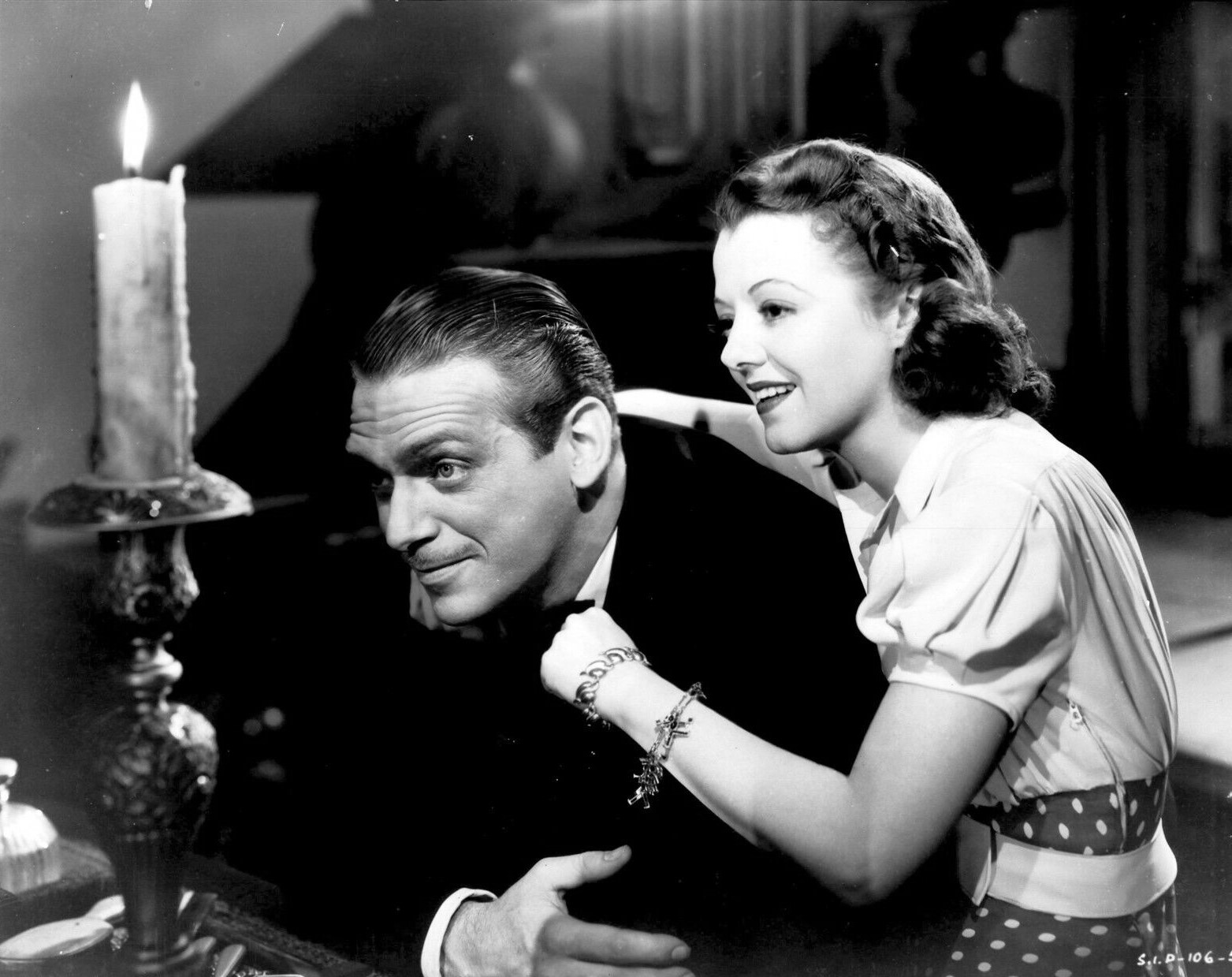
Spinning around in the background of the family’s drama is the romance between George-Anne and Duncan Macrae (Richard Carlson), who she originally considered marrying when she thought he was rich. Duncan learned she was a con-artist along with everyone else and was shattered but still ends up chasing her down on the train back to London to tell her he still loves her.
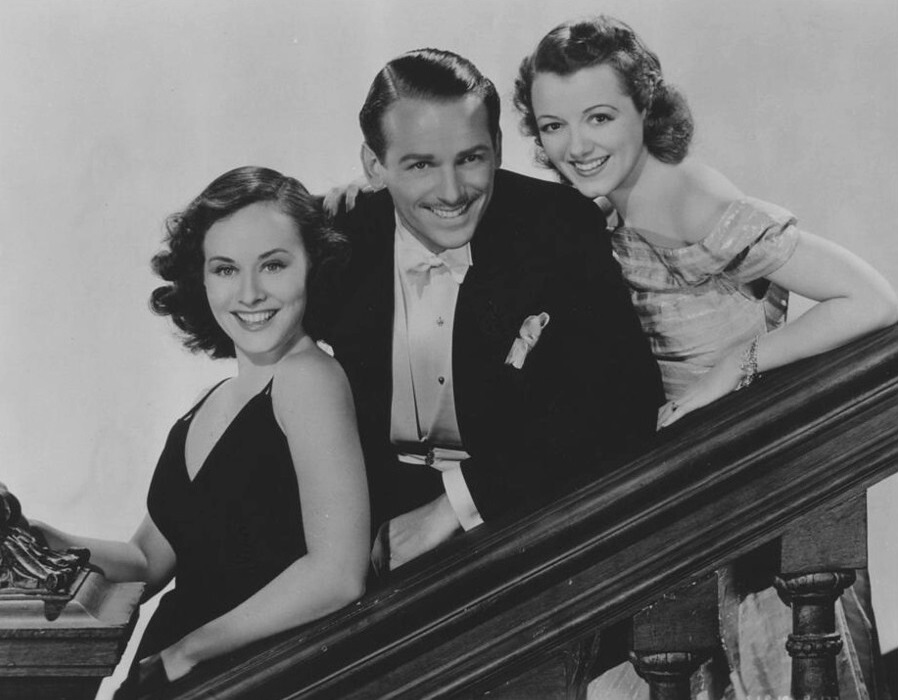
The rest of Rick’s family — father, Col. Anthony “Sahib” Carleton (Roland Young), mother Marmey Carlton (Billie Burke), and daughter George-Anne (Janet Gaynor) — are thrilled with this plan because they know it will also set them all up for a rich life. George Anne might be even more thrilled because then she can marry a poor Scottish man who she’s fallen in love with, and the rest of her family will support her financially.
She tells him to get lost, believing he’s much too good for her and . . . well, you’ll have to see where all that ends up.
Rick is also having his own romance with Leslie Saunders (Paulette Goddard), a secretary and the engineering business he applies at for a job.
This is the second – or shall I say third – movie I’ve watched in recent months with Billie Burke and there is no mistaking that voice if you have seen The Wizard of Oz.
Yes, she is Glenda the Good Witch.
The screenplay for this movie was written by Paul Osborn and adapted by Charles Bennett from the serialized novel, The Gay Banditti by I. A. R. Wylie. That title certainly would have had a different connotation in the modern day, eh?
Anyhow, the novel appeared in parts in The Saturday Evening Post from February 26 to March 26, 1938.
The movie was released in November of the same year. They certainly worked fast back then.
I found it interesting when I read that Broadway actresses Maude Adams and Laurette Taylor screen-tested for the role of Miss Fortune and that the footage is the only audio-visual samples that existed of both of them.
The movie was produced by – can you guess? Because it feels like every movie I write about lately is produced by him.
Yes. David Selznick. The man who produced what is considered one of the biggest movie triumphs in the world — Gone with the Wind.
This movie was one of many he produced leading up to Gone With The Wind. The Prisoner of Zenda, which I wrote about a couple of weeks ago, was another. Goddard was actually rumored to be being considered to play Scarlet O’Hara in Gone With The Wind, which later, of course, went to Vivien Leigh.
While I was watching the part of the movie where Mr. Carleton goes to apply for a job, I was fascinated by the fancy car they showed. It was spinning like a pig on a spit at the front of the building and it was a very modern looking car and a very modern looking set up altogether.
The six-passenger 2-door sedan Flying Wombat featured in that scene was actually the one-of-a-kind prototype Phantom Corsair. The Phantom Corsair concept car was built in 1938 and designed by Rust Heinz of the H. J. Heinz family and Maurice Schwartz of the Bohman & Schwartz coachbuilding company in Pasadena, California.”
I also found it interesting that this was Gaynor’s last movie before retiring while she was at the top of her career. She made one last movie in 1957 called Bernardine.
Like I said above, I loved this movie. It was just what I needed to watch this week with so much sadness going on in the world. There was a lot of humor from all the cast, but Douglas really had me smiling throughout. Not only because he is my latest old Hollywood star crush (watch out Paul Newman!).
Have you seen this one? What did you think of it?
You can read Erin’s impression of the movie on her blog.
Next week we will move into a bit of spooky with Coraline.
The rest of our movie list can be found on this graphic:
Erin from Still Life, With Cracker Crumbs and I are hosting Comfy, Cozy Cinema again this year and up this week was The Five-Year Engagement.
I am going to share right off the bat that this was not the movie for me. Erin enjoys it (though she had not watched in a long time and forgot some of the aspects of it) and you can find a more positive view of it on her blog.
Disclaimer: The fact I did not enjoy it is NOT an attack on anyone who did enjoy it. All views expressed here are my own opinions on the movie only. I don’t think anyone is awful for enjoying it. It simply was not my cup of tea.Everyone has different tastes.
I probably should have researched this one a little more when I agreed to watch it because it really wasn’t a movie I’d normally watch. It also was not cozy at all to me personally, but it probably has some sentimental value to others.
For my regular readers who know I usually recommend books and shows without a ton of swearing and crude “jokes” or references, you can know I don’t recommend this one because that’s the majority it.
When I did finally look up the movie this morning, I learned that it featured “more than 205 obscenities and profanities and lots of verbal sexual humor.”
Yeah. I really need to look this stuff up before I go into a movie. *wince*
I am not going to sit here and say that I do not swear. I certainly do. I wish I didn’t, but I do. I’m in a deep depression this week and have sworn about ten times already today (and asked God to forgive me).
Despite that personal flaw confessional moment, movies that throw swear words in for no reason aren’t my thing.
Here is a bit of a description of the movie from online:
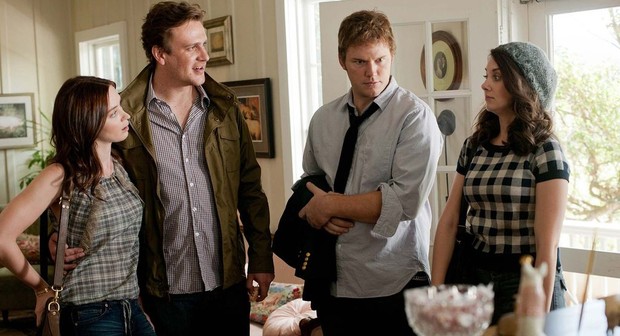
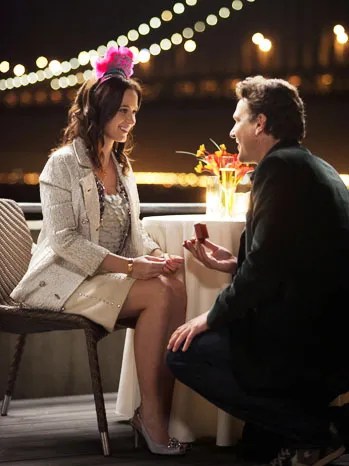
“On their one-year anniversary, sous chef Tom Solomon (Jason Segel) plans to surprise his girlfriend, Violet Barnes (Emily Blunt), with an engagement ring. The lovers do end up engaged, but the fact that the proposal does not go exactly as planned proves to be a harbinger of things to come. Each time they try to set a date, various obstacles stand in their way. As more and more time passes, Tom and Violet begin to wonder if perhaps their marriage is not meant to be.”
The movie is rated R, so a lot of it the languag and sex scenes are to be expected but I just wasn’t comfortable with the level of crudeness or how many times I had to see Jason Segel having sex. Eek.
Also, Jason Segel plays pretty much the same character in every movie or TV show he has ever been in so if you like him in other movies or TV shows you should like this – just add a few more penis jokes, f-words, and views of his naked butt.
Again, Erin has more positive reasons she enjoyed the film (and I totally get her reasons!) so you can check out her views and more information on her blog here:
Next week we are writing about The Young In Heart (1938), starring Douglas Fairbanks Jr.
The other movies we will be watching are on this list: