Faithfully Thinking: It doesn’t matter what they say about you if God already spoke over you

Have you ever had someone suggest you can’t do something you want to do?

I don’t mean you are a 4-year-old child and you want to touch the light socket and you can’t.

I don’t mean you’re 21 and you want to drink until you can’t see anymore because you are upset about a breakup and someone rightly tells you that you can’t.

I mean you wanted to be an art teacher and someone told you that you weren’t good enough or smart enough.

Or maybe you wanted to be a writer or a pastor or a church leader and someone told you – “Sorry.  Not possible. You’re a mom/too young/too old/not Christian enough/not smart enough/not experienced enough. You can’t do that.”

I’ve been there.

I was told once that I should be happy and content to be a mother and only a mother. That was all I was meant to be. The idea I could be a professional photographer and a mother was ridiculous to this person. It turned out to be ridiculous to me as well since I had (have) no business sense and the business failed. That’s another matter for another day, though.

During that same conversation, I was told another friend of ours should also be content to be a mother and stop trying to find other jobs to do. Her identity was a mother. Period. That’s where God wanted her and me to be, this person said.

Oddly, though, this person was a mother and teaching art at a private school. Somehow, she could be two things in life but we were only allowed to be one. Not sure how that worked in her brain but . . it did.

I was very confused by that conversation. It never made sense to me. Maybe she thought she was encouraging us and I misunderstood the conversation.

What I do know is that we should do what we feel God has spoken over us, not what someone else says God has spoken over us.

The other person may be well-intentioned. They may very well feel God has told them something about you and they think it is the right thing to tell you.

My advice is to always check their suggestion with what you feel God has spoken over you.

Another friend recently told me she heard the words “put it down” when she thought about me. We both knew she was talking about how hard I’d been striving to grow my social media to promote my books. I felt that advice truly was an encouragement from God and took it is such. I started picking up a book more than my phone and began to feel less stress.

In his sermon this past Sunday, Pastor Steven Furtick of Elevation Church said, “What people say about you only has the power over you that you give it. If your father spoke something over you, it doesn’t matter what they say.”

This doesn’t mean that fellow Christians won’t confirm something to you that you feel God has been telling you. It also doesn’t mean that someone really did feel like God told them something about you and your life they think you should know. They may very well be right about that specific thing.

Double check it, though. Don’t just go with it because they said God told them.

Pastor Steven urged those listening to him to remember that it doesn’t matter what someone told you that you couldn’t be. It matters what God has always known you to be.

Furtick says he has to say often to himself, “Christ is in me. I am enough.”

That’s a hard one for me to say, but I’m going to try.

I don’t ever feel enough.

Even writing this blog post I have these constant thoughts running through my head:

“This is stupid.”

“This is going to offend someone.”

“I probably shouldn’t have brought up that story about the former friend. It makes her sound worse than she probably meant it even though it is something that still puzzles me.”

“I’m not good enough to write stuff like this.”

“Someone will probably read Steven Furtick’s name and tune me right out.”

We are never going to be perfect.

We are never going to get it all right all the time.

We are never going to please every person all of the time or even some of the time.

What we can do despite all of that is step into who God says we are – not who we or others say we are.

If we are taking a step that is wrong, God will correct us and turn us on the right path again.

In Jeremiah 1:5, God spoke to Jeremiah: “Before I formed you in the womb I knew you, before you were born I set you apart; I appointed you as a prophet to the nations.”

This was a message for Jeremiah but it can also be a message for us. He knew before we were born what the purpose of our life was and what we are capable of.

Who are we to question what God has spoken over us?

Faithfully Thinking: When it feels unnatural to not worry and ruminate but you stop doing it anyhow

I didn’t feel like writing a post about trusting God this week but I did it anyway.

There are times it feels unnatural to let go of a situation and walking in the knowledge that you cannot fix that situation.

Sometimes it feels impossible to let God take care of something, even though we know he is the only one who can.

I’m going through that now.

I have gone through it before.

I will also go through it again.

I believe there are times we have to do what feels unnatural in our walk with Christ.

Natural for me is to lay awake and worry.

Natural for me is to try to fix it – whatever it is.

Natural for me is to manipulate a situation so I can fix it in my own power.

More times than not, trying to fix a situation on my own has resulted in disaster.

This week I am in a battle of the mind.

When I start to ruminate on an issue we are having as a family this week, I have been trying to tell myself to stop and that God will handle this situation. Sometimes it has worked and sometimes (like part of today) it has not.

Instead of lying awake in bed or walking around the house writing my hands, I have picked up a book, taught a kid a school lesson, watched a funny old show, cooked, or made myself a cup of tea and taken ten minutes to slowly sip it.

Am I succeeding in letting God take control of my situation this week?.

Sometimes I am. Sometimes I am not.

The last three days I have been anxious and paced, rolled over at night a few times, stared at the ceiling, and overthought a bunch – but I have done all of those things less than I usually have when life is stressful and I call that progress. Slow progress but still progress.

I’m not going to lie — It has felt like I’m doing something wrong by not worrying or ruminating or trying to figure it all out.

It has felt like I am not my normal self.

Sometimes, though, in certain situations, being our normal self is exactly what God doesn’t want us to do.

He doesn’t want us to be our normal anxiety-ridden self.

He doesn’t want us to have a God-complex and think that we can do what only he can do.

He wants us to know that he is in control, even when we don’t understand what he is doing.

All this could change tomorrow, but, hopefully, I will remember that even if it feels unnatural to trust and place my worries in his hands, I need to do that because God is God and I am not.

Faithfully Thinking: Making Pockets of Jesus’ Peace this Christmas season

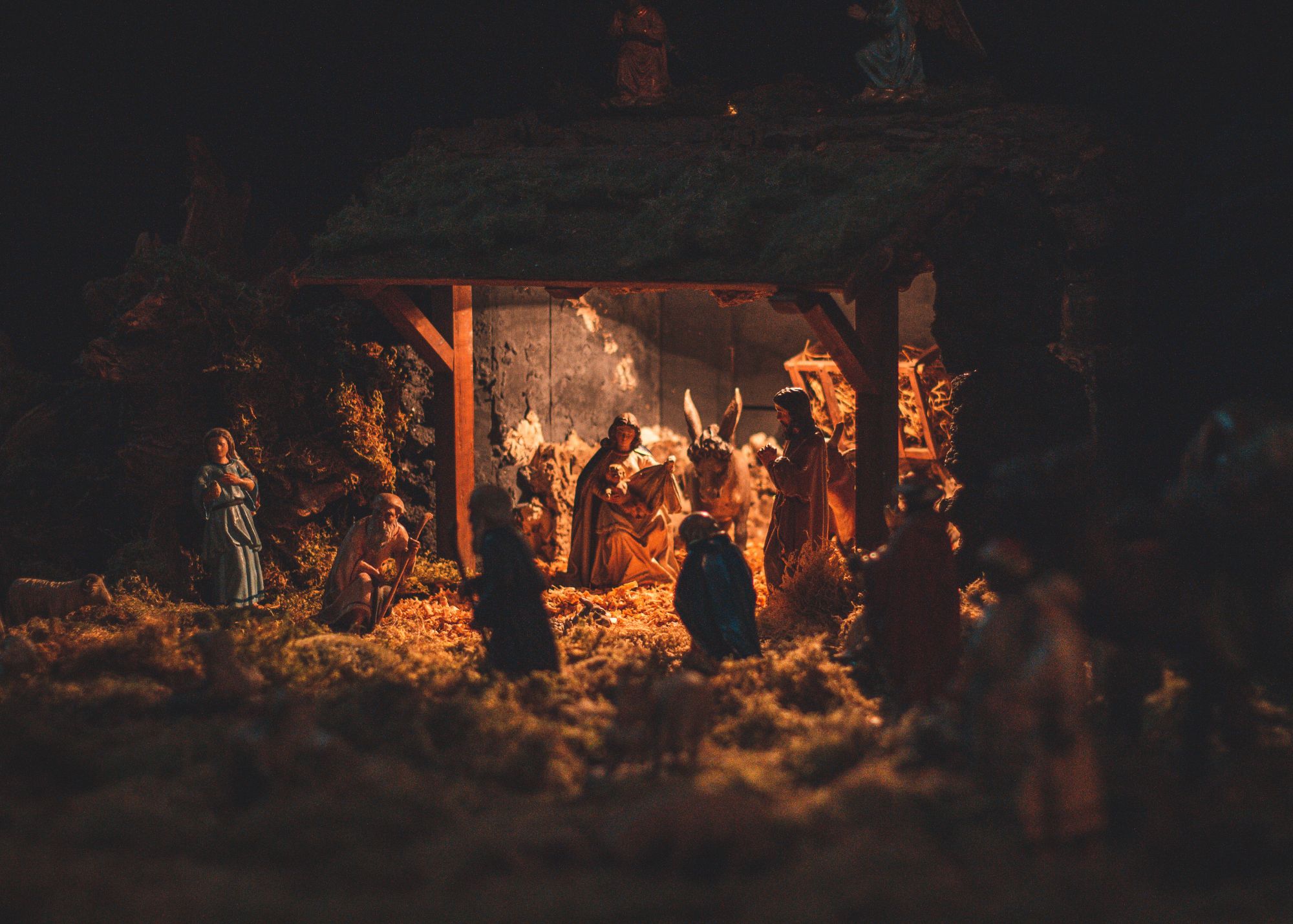
As many of us know, Jesus may not have actually been born on December 25, but instead, he was most likely born a couple months earlier. No matter the exact date, this is the time of year when we as Christians unite to celebrate his birth, to remember he came as God’s ambassador to us – as a way to bridge that gap between the divine and humanity.

Finding peace in the midst of the Christmas season can be a challenge to those who are planning parties, cooking for family gatherings, or trying to figure out what to buy for gifts.

We may not all be as busy during this time of year but almost all of us find our attention being pulled away from the focus of the real reason for the season.

The gift of Jesus is more important than any gift that can be left under our trees or in our stockings. Through him, we were given salvation – eternal life with God in heaven despite the sins we have committed. We have been shown grace, divine love, and supernatural forgiveness and restoration.

No piece of jewelry, new clothing, good food, or even good company can compare to that gift.

That doesn’t mean we shouldn’t enjoy the celebratory nature of the holidays, but while we enjoy our family time or holiday parties we can pause and reflect on the peace of Christ, which can help bring us our own peace. Jesus gives us peace beyond our understanding.

If we want to have peace during the holiday season, we may need to create moments that will facilitate it. Waiting for small spaces of calm won’t work when the world itself doesn’t wait.

We have to make those pockets of calm for ourselves or they might not happen.

I first wrote about pockets of peace and our need for them in a blog post earlier this year.

In that post, I mentioned that to create small spaces of peace for myself I had to do things like putting my phone down and getting off social media, shutting off the TV, keeping myself away from any news or information from the outside world, and not ruminating on all the tasks I need to be doing.

“They were little pockets of time in my day where I could regulate my thoughts and my soul, even if only slightly,” I wrote in the post. “It helped give my nerves and mind time to calm down, instead of continuing to race and raise my cortisol to dangerous levels. I even made a point to pull a blanket over my lap and make a cup of tea during those times, mentally envisioning myself in a type of comfort zone.”

The idea for Christmas pockets of peace is the same. If you do play music make it sacred Christmas music that will remind you of Jesus’ place in the season. If you read, make it something that will remind you of the birth of our savior. If you watch something, watch something that will also bring you back to the reason we celebrate in the first place.

One way to do this might be to find a devotional you can read during the weeks leading up to Christmas. I didn’t do that this year and I regret that but I hope to look for one on my You Vision app this week.

You could also watch a dramatic representation of the nativity story, such as the ones presented by the creators of The Chosen over the years. I’ll link to those at the end of the post.

However you choose to decompress from the busyness of the season, I encourage you to remember that your pockets of peace don’t have to be long to be impactful. Even five to ten minutes of listening to a calming song or reading an inspirational devotional can be enough to remind you what is really important this time of year.

Faithfully Thinking: You have to water the plants every day

In May my dad picked me up this huge, beautiful hanging basket and I couldn’t figure out why.

I kill plants. He knows this. The only thing I could think was that he felt guilty because the only plant I ever kept alive was one I had when I rented out our old house from my parents and right before my wedding my dad put it outside and it got burned in the sun and died. It was a plant I grew from a cut-off from one of my mom’s plants.

After that incident, and many other moments of plant death, I sort of swore off plants. A friend sent me a prayer plant in the mail last winter when I said my house was gloomy and amazingly it’s still living, a couple years later.

Other than that low-maintenance plant, though, I try to stay away from plants. Another downside to indoor plants, besides my killer instinct, is that my one cat always tries to eat them and then inevitably throws up whatever she ate somewhere in the house.

See, here is the thing — I forget to water plants. I forget I even have them half the time until I walk by and see it dead.

I remember to feed my children and my pets and sometimes I remember to feed me, but I don’t remember to feed my plants.

So there sat this plant from my dad on my front with big purple blooms and I freaked out. I just knew I was going to kill it by forgetting about it, forgetting to water it, or move it out of the sun.

The Husband helped water it at first, because it was hanging up too high for me and because he remembers to take care of plants. Then I took the plant down and tried to remember myself.

I did well for a while and then during a hot week, when my husband was super busy with work, I did it. I forgot to water it.

I looked out the front door and the plant was a dried-up, brown husk of its former self. All the purple blooms were gone, the green was shriveling to brown. I had done it. I had killed another plant.

I lamented my murderous ways, or my neglectful manslaughter ways, to The Husband.

“Just start watering again,” he said with a casual wave of his hand because he is much more laid back about such things than I am. “It will come back.”

His words were encouraging and reassuring but I didn’t have much faith.

The plant was dead.

There was some green, yes, but for the most part –— death had set in.

Our spiritual life is like that plant.

If we don’t water our spirit with God’s word, his truth, during the week, our spiritual leaves fall off. We start to dry up and shrivel inside. We begin to feel withered and worn.

Like my pastor said this week, if we sing three songs, listen to a sermon, and walk out the door but don’t plug ourselves in to God throughout the rest of the week, we aren’t going to do very well – just like my poor plant.

Last summer I planted green beans and as I pulled some beans off, I accidentally ripped part of the vine off the main stalk. (See, I even kill vegetable plants! You don’t want me near your garden. I’m the angel of death for plants.) The part of the plant that got pulled off died, while the rest that was still connected to the nurturing soil and the main vine, kept growing and blooming.

As soon as I saw the disconnect of the plants and the brown setting in, I thought about how we become weak if we don’t stay connected to the vine — to Christ and to his followers, to a nurturing church that can help us stay connected to God’s word, to encouraging written or spoken words.

Back to that plant my dad gave me. I began to water it again, each day and then moved it into the rain if we had any. One day I walked out and it was not only green again, but the blooms had also returned. All the plant needed was to be nurtured and have its thirst quenched, similar to how our souls need the taste of the living water that will never leave us thirsty.

Jesus answered her, “If you knew the gift of God and who it is that asks you for a drink, you would have asked him and he would have given you living water.” 

 “Sir,” the woman said, “you have nothing to draw with and the well is deep. Where can you get this living water?  Are you greater than our father Jacob, who gave us the well and drank from it himself, as did also his sons and his livestock?” 

 Jesus answered, “Everyone who drinks this water will be thirsty again,  but whoever drinks the water I give them will never thirst. Indeed, the water I give them will become in them a spring of water welling up to eternal life.” John 4: 10-14

Ways I stay connected to the truth of God throughout the week:

  • Reading the Bible
  • Devotionals
  • Worship or Christian Music
  • Christian podcasts
  • Praying for and with other Christians
  • A weekly egroup (online Bible study)
  • Church on Sunday (in person or online)

How do you stay connected with God or in tune with his direction for your life throughout the week? How do you keep your spirit watered?

Faithfully Thinking: Jesus said it had to go

Little Miss and I were watching The Chosen (a show that follows the life of Jesus) on Sunday and there is a scene where a demon-possessed man is attacking Simon. In the middle of the attack, Jesus arrives and shouts, “Out! Out of him!”

The man immediately spasms, then falls to the ground and is still. A few seconds later the man begins to cry as everyone looks on in horror mixed with relief.

“What happened?” Little Miss asked.

“The demon left because Jesus said it had to go,” I told her.

My own words stopped me.

Wow.

It left because Jesus said, “Out! Out of him!” or essentially, “Leave him!”

How many times every day should we be saying the same thing in our life? How many times should we be saying to our thoughts, our emotions, or worries: “No. You can’t be here. You have to leave.”

In TV, movies, and books, Satan is a caricature, a joking evil character who humans with common sense aren’t supposed to believe is real.

But if you’ve been around long enough, you know that there is evil in the world and that evil fits in well with the Bible’s description of Satan and his influence. You may deny in your mind that there is a real devil but deep down your spirit knows there is.  All day, every day, voices whisper around you and you may not hear them or see who are speaking them, but they see you and they want to hurt you for their cheap thrills.

That’s when we need to be like Jesus and tell those thoughts, those residents of the spiritual realm, which torture us, or try to, that they have no place here.

That spirit who speaks to you has no power, and it needs to leave.

Fear?

Jesus says it has to go.

Anxiety?

Jesus says it has to go.

Jealousy?

Jesus says it has to go.

Infirmity?

Jesus says it has to go.

Anger?

Jesus says it has to go.

Hurt?
Jesus says it has to go.

Doubt, depression, pride, arrogance.

All of it.

When Jesus says it has to go, then it has to go and it can go with one word from him.

One word.

But also one word from us because when Jesus rose to heaven he told us that the Holy Spirit would be with us to help us do as he had done here on earth. It is Jesus’ power through us, and we can demand that spirits, that demons, that all evil that goes against us leave.

Now.

“Out!” Jesus said.

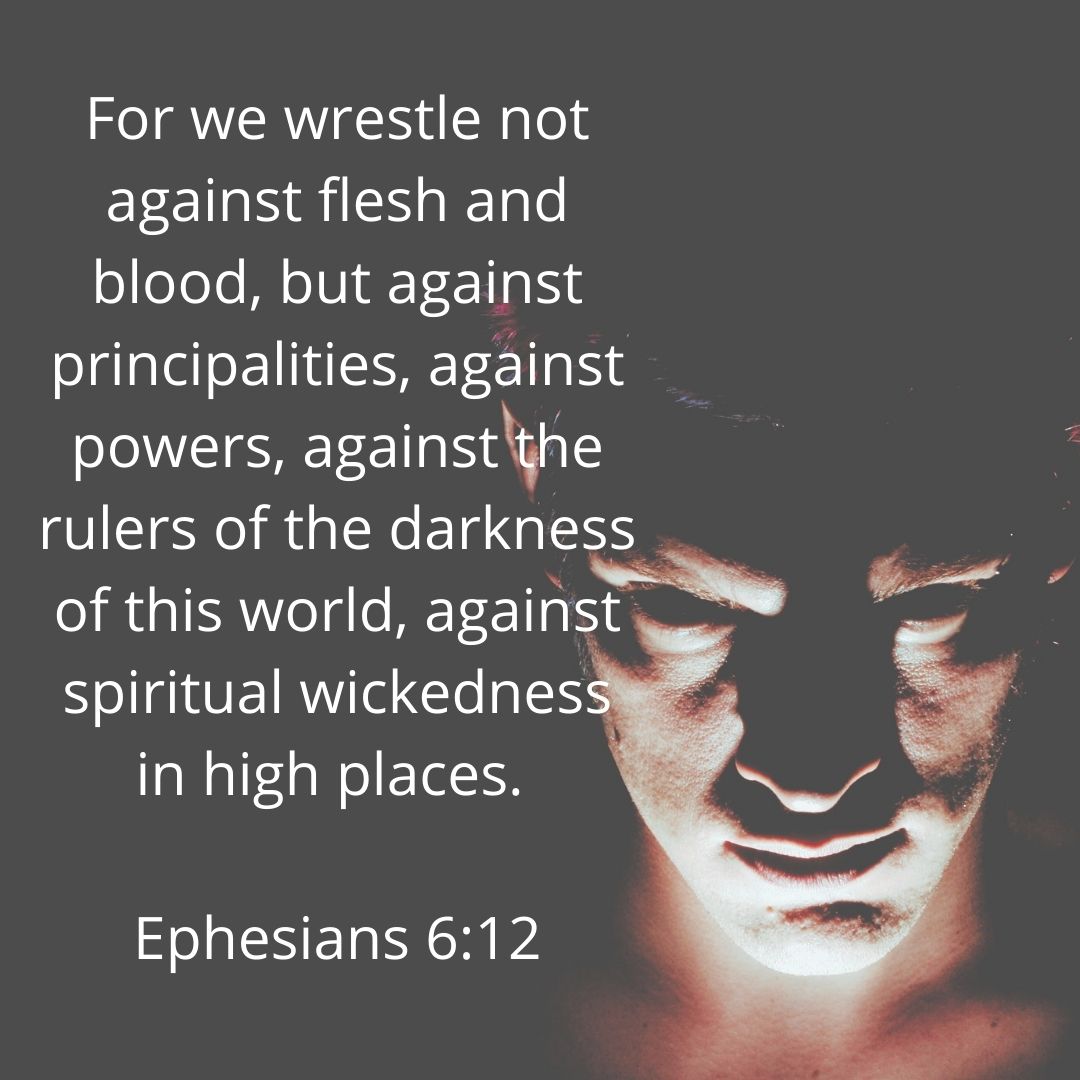
We can do the same with the thoughts that come after us, with the spirits that come against us because don’t be fooled — there is spiritual warfare, there are battles going on around us in spiritual realms and we are fighting against more than flesh and blood.

Finally, my brethren, be strong in the Lord, and in the power of his might. Put on the whole armour of God, that ye may be able to stand against the wiles of the devil. For we wrestle not against flesh and blood, but against principalities, against powers, against the rulers of the darkness of this world, against spiritual wickedness in high places. Wherefore take unto you the whole armour of God, that ye may be able to withstand in the evil day, and having done all, to stand.

Stand therefore, having your loins girt about with truth, and having on the breastplate of righteousness; And your feet shod with the preparation of the gospel of peace; Above all, taking the shield of faith, wherewith ye shall be able to quench all the fiery darts of the wicked. And take the helmet of salvation, and the sword of the Spirit, which is the word of God: Praying always with all prayer and supplication in the Spirit, and watching thereunto with all perseverance and supplication for all saints. Ephesians 6:10-18

Faithfully Thinking: Why aren’t some people healed?

Before I start this post, I want to explain that it is not a woe-is-me-post. It is not a “my life is worse than others” post. This is a “you’re not alone” post if you also face chronic health issues, big or small. This is also a post pondering why some receive God’s healing and others do not.

My issues are nothing compared to those who have struggled with chronic pain for much of their life. I’m also not claiming an illness. This is simply what’s happening in my life now. And what is happening now is I am dealing with a bladder issue off and on that often keeps me up at night, as well as pain in my sciatica nerve and lower back. Both of these issues have recently been improving and seem to go through spurts of being there and not being there.

This issue, along with several others involving muscle aches and extreme fatigue, has been happening off and on for over a decade now. In the midst of all of this, I have seen some other health issues I’ve dealt with for years improve some. So, it’s not all doom and gloom in my world, thankfully. 

I was diagnosed with reoccurring Urinary Tract Infections as a child. I was placed on antibiotics even if the test showed I didn’t have an infection. I had two exploratory procedures to see what was happening and why I had so many infections and discomfort. No official diagnosis was ever made, other than one doctor saying my bladder was small and had never fully developed. 

In my mid-20s I was also diagnosed with hypothyroidism, which means my thyroid does not produce enough thyroid hormone, which leads to all kinds of “fun” medical symptoms. The thyroid issue was not addressed until I was in my early 30s because I was told by an endocrinologist I wasn’t really hypothyroid. Instead, I was a woman, newly married, and had anxiety. The thyroid condition was then masked for a few years by antidepressants. Once I took myself off the antidepressants, after gaining more than 50 pounds, and all my energy, I began to have massive panic attacks and was finally told (again, by a new GP) that my thyroid was off and I should be on medication. My original GP was correct all along. Some of this may explain why I have a healthy distrust of doctors and the medical profession as a whole.

All of this rambling is to explain that I have prayed for healing from various symptoms stemming from these medical issues for years. My mom has prayed for healing for me as well. My mom also suffers from some near debilitating health issues, and I may have inherited some of that, though my issues are nowhere as severe as hers. We have also prayed for complete healing for her as we did for my grandmother, whose issues were even worse than ours.

It can be hard when we pray for healing from issues and that healing doesn’t come.

It can be hard to watch other people receive healing when we don’t. We may be happy for the other person, but we wonder where our healing is. Or maybe it isn’t our healing we are praying for but the healing of a loved one. 

I can’t say I’ve ever felt jealous of someone who has received healing when I haven’t. I suppose I have figured that this chronic health stuff of mine is simply normal for me. It’s what I was born with and it’s what I just have to deal with. 

Still, there are days I ask God, “Why me?” 

Why do I have to be the one who looks like I’m afraid of life when really a health symptom is holding me back from some things?

Why am I the one Christians scold for not having enough faith, for not simply “picking up my mat and walking in healing (John 5:1-18 ), for not rebuking Satan enough, for claiming sickness when I should be rejecting it?

Why am I the person who was told by a well-liked Christian in our community that I like being sick, that being sick means I get out of responsibilities so I hold on to the symptoms and talk about them to bring attention to myself. Apparently, she didn’t understand that I don’t want attention, especially when that attention comes from people shaking their heads at me in pity or looking at me like I am a sad, lonely, pathetic person whose whole life revolves around my “made-up” chronic illness. 

I should mention this same Christian also said my mother and grandmother wanted to be sick and enjoyed the attention. Trust me, my mother and grandmother do not and did not enjoy being in excruciating pain from fibromyalgia and if they could have simply said, “I don’t want this, thank you very much” and it would have been gone, they would have.

I have heard about and known many people who have been healed of their afflictions — mental, spiritual, and physical afflictions. Then I have seen others who were prayed over by people all around the world who were never healed and passed away, crushing the faith of many in the process.

What was the difference between those who were healed and those who were not? I have no idea.

All I know is that it happens for some, and it doesn’t for others.

In my own journey, full healing has not come, but there have been small moments of triumph and victory. There have been days, after nights where bladder spasms or back pain has caused me to wake up every hour or 90 minutes, that I have still felt good and been able to accomplish what I needed to accomplish, and then some. 

While I once spent most of my days shaking and feeling weak all over, I’ve had more and more days where I don’t have that weak feeling and go all day without feeling light-headed or without fighting brain fog. If you don’t know what brain fog is, it’s when your whole head feels like it’s stuffed with cotton (literally) and your thoughts are battling to push their way through that cotton.

When I do have some of those symptoms, I know how to manage them better than I once did. I have a litany of natural supplements or solutions that get me through the days when the symptoms flare. 

There are days, even with the victories, I still cry out to God and ask Him, “Where is my healing? Where is it? Where is my miracle like the man by the pool in Bethesda? Why can’t I have it? What am I doing wrong? Which sin is blocking me?” More than wondering about my own healing, though, I often want to know why the healing hasn’t come for my mom. She’s suffered for more than 25 years, maybe even longer. And why didn’t it come for her mother who I clearly remember leaning over a couch in her 70s sobbing and crying out in pain and asking God what he had abandoned her?

If I am asking this question, I can just imagine the anger and frustration someone like Joni Tada Erickson has felt over the years. For those who don’t know who Joni is, she is a Christian speaker who was paralyzed at the age of 17 when she jumped into a shallow lake. She has spent almost 50 years without the use of her arms or legs and also battled cancer twice, but she has also spent 50 years preaching, painting, writing, and encouraging people to focus on the small things of life when the big things seem too much to bear. 

I read a blog post from her recently where she pondered the conundrum of why some are not healed by God and others are. She was writing to Christian doctors and dentists, encouraging them so they could encourage patients who don’t find healing.

After asking for healing for years, and even attending a service specifically for healing, Joni cried out to God for answers.

“Finally, one night in desperation, I cried out to the Lord, “Oh, God, I can’t live this way! Please, if I’m not going to die, show me how to live!” It was a simple plea, but at least my heart was turning God-ward, rather than inward. I felt a glimmer of hope.”

She says she began reading her Bible more, seeking a closeness with God she might have before the accident.

“With time, my perspective on healing began to change. I came to understand that God had a higher priority for my life than an instantaneous physical cure. When we look at healing in the Bible, we find that while it is true that Jesus took time to physically heal many people, He was most interested in their spiritual healing. In sending the 10 men with leprosy to the priests to be declared “clean,” He was also restoring them to fellowship with their community (Luke 17:11-14). Only after offering forgiveness of sins to the paralytic lowered through the roof did Jesus then offer physical healing (Mark 2:1-11). And most importantly, Jesus didn’t physically heal everyone. When it was time to move on, He did so, leaving behind multitudes unhealed (Mark 1:38).

His larger mission took priority—“to seek and to save the lost” and to bring spiritual healing to a broken humanity (Luke 19:10, ESV). It wasn’t that Jesus did not care about the problems among those He didn’t heal physically; it’s just He was more concerned about their spiritual welfare than their physical hardships. As Jesus famously pointed out, it would be better for a person to be maimed than to live in a state of sin and rebellion (Matthew 5:29-30).”

I believe God wants us to have healing, but maybe, as Joni suggests, that healing won’t always come as physical healing.

This post doesn’t mean I feel I have this issue wrapped up in my mind. It doesn’t mean that I think, “Welp, there’s that issue solved. There’s the answer to why I still suffer, and so-and-so doesn’t.” I don’t know if I will ever figure this question out until I am on the other side of heaven. What I hope this post does offer is the comfort that we all have questions like this and that there are times we will see the good even in the midst of the bad. 

Fiction Thursday: Fully Alive Chapter 2

Here we are at Holy Week! I know it seems odd that we will be celebrating Easter this weekend without full church services, but we can worship together at our computers and celebrate that Christ is Risen. I didn’t even think about that I was sharing this Biblical fiction story in the Easter season, but I suppose it is fitting.

If you missed the first chapter of Fully Alive, you can find it HERE.


The busy sounds of people rushing by to complete their daily chores quieted as Jairus pushed the door to the synagogue closed. He leaned against the door and closed his eyes for a moment as he tried to quiet his racing thoughts.

He focused on the words he had said to Josefa the night after the teacher had healed her. Healed her? Brought her back to life?

Is that really what had happened?

Even now it was all too unbelievable to him. He wondered, did he really believe what he had told Josefa? That this man, this Yeshua was the true Messiah that the prophets had spoken of?

Maybe he had been wrong to say so; to tell his daughter this man must be the true savior of his people. He’d spent his whole life studying the scrolls, learning of Moses and Elijah, about the prophesies of the Messiah. Now here he was almost completely convinced the man he had followed in the street, begging for him to come and heal his only daughter was indeed the Messiah. He knew he was being ridiculed behind his back by the other leaders of the synagogue for asking for Yeshua’s help but he couldn’t deny what he had witnessed that day.

He remembered Josefa’s fever and how she’d no longer been able to stand. Myriam, his wife, had soaked a cloth and laid it across Josefa’s forehead, hoping the cool water from the stream would revive her. For days they sat by her cot, holding her hand, Myriam weeping as Josefa moaned and faded in and out of consciousness.

Jairus had paced the room, rubbing his beard. He stopped and looked at his wife kneeled over their daughter. “You know I told you about this teacher, this man they call Yeshua?” Myriam was looking at Josefa, not responding, merely crying. “Myriam, are you listening? He’s been healing people. I saw him heal a man’s hand in the synagogue last week. The leaders were upset because it was the sabbath, but I saw the man’s hand. It was diseased, scarred, withered but Yeshua held it, touched it and the hand was whole again.”

Myriam dabbed her eyes with her shawl as her husband spoke, barely listening as she watched her daughter’s breathing become more and more shallow. Dark circles were now under Josefa’s eyes.

“I will go to him, ask him to come,” Jairus was speaking again. He paced again, rubbing and pulling at the hairs of his beard as he always did when thoughts overwhelmed him.

“Do we now believe in such men who call themselves healers?” Myriam asked softly, her shoulders slumped forward, her body weary from worry.

Josefa’s body shuddered with a convulsion. Myriam gasped and lifted her daughter, holding the girl’s small frame against her chest. Josefa’s breathing was now labored. Jairus saw the panic in his wife’s eyes and felt it rising in himself as well.

“We are losing her! Go! Go to this teacher and ask him to come!” Myriam’s voice filled with fear. “He’s our only hope now!”

Jairus’ heart pounded as he ran from the house, out onto the crowded paths, pushing his way through travelers and locals and animals being led to market. He could see a crowd around a man in front of him. They were all moving one direction, calling out “Yeshua!” Questions were being asked, some voices mocked, some sounded hopeful.

An image of Josefa’s pale frame flashed in Jairus’ mind and he tried to move faster, pushing more people aside. His chest felt tight, his breathing more labored, reminding him of how old he was getting now. Was this man he was trying to reach a heretic as the synagogue leaders and other rabbis said? What if he was crazy like the man who people called John the Baptist, the man who was covered in dirt and smelled? This John the Baptist, Yochanan the Immerser, had spoken of a healer and prophet who would come to save the Jews. Was this Yeshua that man?

Jairus’ foot caught a stone and he felt himself falling. Dirt flew into his face and pebbles cut at his palms. As he pushed himself up he felt tears hot stinging his eyes. He would never reach Yeshua now.

His head still down he saw a pair of sandal clad feet against the dirt.

“Let me help you.”

Jairus looked up as a man with kind eyes and a smile held a hand out to him. He took it and stood slowly.

“Thank you.”

Jairus barely looked at the man, instead searching the crowd to see where Yeshua had gone.

“Do you seek Yeshua?”

“Yes.”

“Come. I’m one of his followers. I will bring you to him.”

Jairus looked at the man, noticed his unkempt beard and slightly frayed clothes. He nodded at him, seeing kindness and concern in his gaze.

The man gently touched the shoulders of those around them and people began to move aside. Ahead of them Jairus saw that Yeshua had paused and turned to the crowd. His eyes focused on Jairus who suddenly felt unsure, uneasy. Jairus dropped his gaze, overwhelmed with worry for his daughter and overwhelmed with the presence of this man who had performed so many miracles. His body felt weak from running, from being awake for so many days watching over his daughter.

His knees give way suddenly and he fell to the ground before Yeshua. Sobs wracked his body as he bowed low, losing control of his emotions.

“Yeshua.”

He gasped out the name.

“Yeshua.”

 A sob choked his words and he thought he wouldn’t be able to finish speaking.

“Yeshua, my little girl is dying. She is my only daughter. Please. Please, come and lay hands on her so that she will be healed and live.”

Tears streamed warm on his face and he shook his head as if to shake them away. He was startled by emotions he usually kept locked inside. A hand touched his head, on the covering he wore there. He sat back on his knees, lifted his face upwards and stared into the eyes of the man he had once seen heal a man’s shriveled hand, an act that had enraged other leaders in the synagogue.  

“Come.” Yeshua’ voice was gentle, yet firm. “Rise and let us go to her.”

Two followers of Yeshua helped Jairus to his feet and Yeshua motioned for Jairus to lead the way to his home. The crowd surged around them as they tried to move forward, moving with them, as if one combined force, following Yeshua. Several moments of chaos followed and Jairus felt a rush of frustration as the crowd pushed between him and Yeshua.

“Yeshua! What does God ask of us?”

“Yeshua, what happens when we die?”

“Yeshua, will I find wealth?”

People pushed against each other; each person wanting to get closer to the man being called a healer and a prophet, each wanting answers to benefit their own life.

Jairus faintly heard Yeshua’ voice over the noise of the crowd.

“Who touched me?”

Jairus tried to push forward in the crowd, looking over his shoulder every few steps to be sure Yeshua was following.

“I felt power go from me,” Yeshua spoke louder to one of his followers. He stopped and turned to look behind him. “Who has touched me?”

The people in the crowd murmured and grew quiet.  Jairus stopped to see why Yeshua wasn’t following him, panic growing in the pit of his stomach.

“Master, there are people all around you and you are asking ‘who touched me?’” one of Yeshua’ disciples scoffed. His tone was incredulous, tinged with annoyance.

Jairus knew this was the man called Kefa, or Peter – a fisherman from Gailee who now followed Yeshua. Many whispered in surprise that Peter, known as brash and abrupt, was following a teacher of God.

 “Somebody touched me,” Yeshua said. “For I perceived power going out from me.”

 His eyes scanned the crowd around him, but no one answered. People looked at each other confused and unsure why Yeshua was concerned. Why did it matter who touched him? Many people had probably touched him, without even meaning to.

 Suddenly a woman’s voice could be heard barely above a whisper.

“It was me.”

Then louder, over the murmurs of the crowd. “It was me.”

“Who is speaking?” another of Yeshua’ disciples asked. “Please, come forward. Answer the teacher.”

The crowd moved aside and a woman, head down, moved toward the front. She dropped to her knees trembling, her head bowed low and covered with a shawl, her clothes tattered and stained. Tears dripped off her face and into the dirt as she clutched her hands before her.

Jairus swallowed hard, shifting in place, anxious. He wanted to grab Yeshua by the arm and drag him forward, back to his house and his daughter, but at the same time he was entranced by the scene unfolding before him. He couldn’t look away.

The woman glanced upwards at Yeshua.

“It was me,” she said softly. “I knew if I could just touch the hem of your garment…”

Her gaze fell again to the ground. She let out a shaky breath. “I heard all that was said about you. About who you are. About what you can do. . . Rabbi, I’ve been bleeding for 12 years. No one will come near me. I am unclean. I’ve been to every doctor, but no one can help me. No one has ever healed me.”

Some in the crowd winced and a few stepped away from her, covering their mouths.

Tears continued to stream down her face.

“I have tried everything. I heard of your miracles and I knew – if I just touched the fringes of your robe – the fringes – that healing would come.

Her fingertips grazed the edge of his robe again. She could barely speak as she sobbed.

“And it did. It did. The healing came the moment my fingertips grazed the tzitziyot of your robe. I felt it. I felt it stop. The pain stopped. It all stopped.” Soft murmurs of awe rippled through the crowd, mingling with her sobs.

Jairus’ heart pounded hard and fast. If this woman was saying that simply touching the hem of the rabbi’s garment was enough to heal her, then he was indeed a powerful man, a messenger of God. If healing flowed from him so easily then there was hope for Josefa.

Yeshua kneeled before the woman, reached out and took her hands in his. He touched her chin and lifted her face up to look at him.

“Daughter, your faith has made you well.”

Yeshua kissed her forehead gently and wiped the tears from her face. He stood and helped her to stand with him.

“Go in peace.”

A sob escaped her lips again and then she smiled and laughed loudly with joy. She kissed Yeshua’ hand as she held it, still laughing. Then she backed slowly away.

“Thank you,” she said, tears of joy now spilling down her face. “Thank you.”

A hush had settled over the crowd. Women dabbed their eyes and men talked quietly to each other, shaking their heads with furrowed eyebrows, trying to make sense of what they had witnessed. Jairus felt a sense of urgency rushing through him, tensing his muscles. He needed Yeshua to hurry. New hope surged within him at what he had seen and he wanted the same for Josefa and his family.  

“Yeshua, my daughter… please …”

Yeshua turned toward him again.

“Of course. Let us go…Lead me to her.”

Jairus felt a hand on his shoulder and turned to see Josiah, standing next to him, his face stained with tears and dirt.

“Master, there is no need to hurry now. Josefa . . .” his voice trailed off and Jairus began to shake his head. “There is no need to bother the teacher now. She’s —”

“No! No!” Jairus wouldn’t let him finish.

He felt bile rushing up into his throat and his hands began to shake. He pressed his hands to his head, as if trying to wake himself from a dream, rocking slightly where he stood.

“Josefa…” he felt the tears hot on his face and he clutched his robe against him as pain seared through his chest. “Oh Adonai. Adonai help me.”

He looked up as Yeshua touched his arm.

“Do not be afraid.” Yeshua’s voice was soft, comforting. “Just keep trusting.”

Yeshua’s eyes were kind but Jairus’ mind was reeling. If only Yeshua had moved faster. If only that woman hadn’t stopped them. Josefa would still be alive and her laughter would still fill their home.

“She’s gone,” he told Yeshua. “We cannot save her now. You can not heal her. If only . . .”

Yeshua looked over Jairus’ shoulder, his gaze moving above the crowd.

“Come. Lead me to your home.”

Jairus did as Yeshua told him but his legs felt as if they were weighted down. Before they even reached the corridor near his home he could hear the wailing and knew the mourning had already begun.

Mourners were outside the home, trying to comfort Myriam, who was clearly in shock as she pulled at her clothes and repeated “No. No. No.”  
Jairus rushed toward his wife, grasped her by the shoulders and pulled her against him. She clutched at his clothes and shoved her face into his chest.

“She’s gone. She’s gone. Oh, Jairus. Our little girl is gone.”

Yeshua pushed forward in the crowd. He laid his hand against Myriam’s back to comfort her.

“There is no need for tears,” he said with a gentle firmness. “The girl is not dead. She is merely sleeping.”

An angry voice shouted over the noise of the crowd.

“She’s dead! You give these people false hope! You are a liar and a fool! Like all who have come before you!”

Other voices joined in agreement.

“You say you can heal but you only bring hallow promises to these people,” a man sneered.

Yeshua stood with his back to the crowd, kneeling down beside Myriam and Jairus who had collapsed together into the dirt by their front door.

“Send these people away and come inside with me,” he instructed. “Peter, James, John, come with me.”

Jairus opened his eyes to the sound of someone moving inside the temple, interrupting his thoughts and memories of that day.

“Jairus? Is that you?”

He recognized the voice of Ezra, another leader in the synagogue.

“Yes, Ezra. Good morning.”

Ezra walked toward him holding scrolls.

“Have you come to help me organize these for the scribes?” his mouth lifted in a wry smile.

“I did not but I am glad to help,” Jairus said returning the smile.

The men laid the scrolls on the table next to a bottle of ink.

“I do not know how so much has become in disarray in here – and outside,” Ezra said.

He looked at is friend and noticed Jairus was pulling at his beard, as he often did when deep in thought.

“Tell me, Jairus. How is Josefa recovering?”

Jairus smiled. “Well. She is well. It is – dare I say it?”

Ezra nodded but his expression grew serious.

“Jairus, I must ask you – I’ve heard many talk of what happened with Josefa. Is it true, what they say? Was she dead before Yeshua arrived?”

Jairus felt his muscles tense. He was unsure what Ezra hoped to learn with his questions. He pondered how to answer, but knew telling the truth might encourage Ezra to help him understand more what had happened.

“Myriam and her hand maiden said there was no breath. She was cold when I entered the home and I felt no heartbeat beneath my hand. Her skin . . .” he felt his breath catch in his throat and he paused to choke back emotion. He shook his head as if to shake the image from his mind. “Her skin was pale, tinged with blue. And… so cold.”

Ezra laid his hand on Jairus arm and squeezed it gently.

“You’ve been through much, my friend,” Ezra said.

He opened a scroll to read its contents, rolled it again and stuck it back in a space in the temple wall.

“What do you believe happened that day?” Ezra asked.

“I don’t know, friend. I truly don’t. All I know is she was gone and when Yeshua came she arose at his bidding. He took her hand and instructed her to rise and live and she did.”

“After all you have seen .. .” Ezra paused in stacking the scrolls and turned to look to Jairus “After meeting this man who calls himself the Son of God – who do you say he is?”

Jairus realized he didn’t know how to answer. He had seen Yeshua do miraculous things and heard of even more. He believed his daughter was still living because Yeshua touched her, but was he truly the son of Jehovah or was he simply a great teacher, so holy Jehovah used him to heal?

He looked Ezra in the eyes, opened his mouth to answer and then closed it again. “Ezra – I wish I could say, but truly, I do not know what to believe about this man.”

Faithfully Thinking: Honestly, I don’t have it in me

I had thought about writing a post about trusting God, accepting God’s peace over the chaos of the world, but honestly, I don’t have it in me.

I was going to write about how when people abandon you, it’s okay because God is still there. Honestly? I don’t have it in me.

I was going to write how people are actually really good at heart and actually would care if you died, but . . . honestly. My heart is not in it.

That’s reality.

Sometimes we don’t even believe our own words.

Maybe we have to keep saying it until we do?

Faithfully Thinking: The Blessing

So many times we dismiss a pastor or a movement or a singing group because of one thing they did we didn’t like. Maybe we listened to critics who said this pastor or that person presented something against God’s word, but we really don’t know if that’s true or not. Maybe we feel their theology is off in one or two sermons so we completely dismiss every word that comes from their mouth or every song they help to pen.

I hope you can put aside any preconceived ideas you might have about anyone in this following video and just listen to the words behind it and know God can work through people we do not think he can work through. I don’t have any preconceived ideas, any negative views of those here, but maybe someone else does.

God can work through people who we don’t see as blessed by God.

God can work through people who seem to be against us with everything within them.

God can use those who stand on the opposite of our morals, or values, everything we stand for.

He can use world leaders who don’t hold our beliefs.

He can use pastors we don’t think are on point with their theology.

Don’t limit God.

Don’t label God.

Don’t try to put him in a box.

He won’t stay there.

He wants to bless you and that blessing could come from somewhere you never thought it would.

Lyrics:
The Lord bless you
And keep you
Make His face shine upon you
And be gracious to you
The Lord turn His
Face toward you
And give you peace

Amen

May His favor be upon you
And a thousand generations
And your family
And your children
And their children
And their children

May His presence go before you
And behind you
And beside you
All around you
And within you
He is with you
He is with you

In the morning
In the evening
In your coming
And your going
In your weeping
And rejoicing
He is for you
He is for you

He is for you

Written by Steven Furtick, Chris Brown, Kari Jobe, Cody Carnes
©2020 Music by Elevation Worship Publishing, Capitol CMG Paragon / Writers Roof Publishing, Worship Together Music / Kari Jobe Carnes Music
CCLI #: 7147007