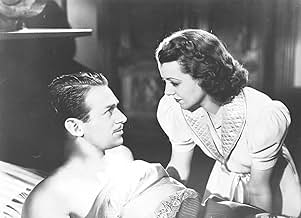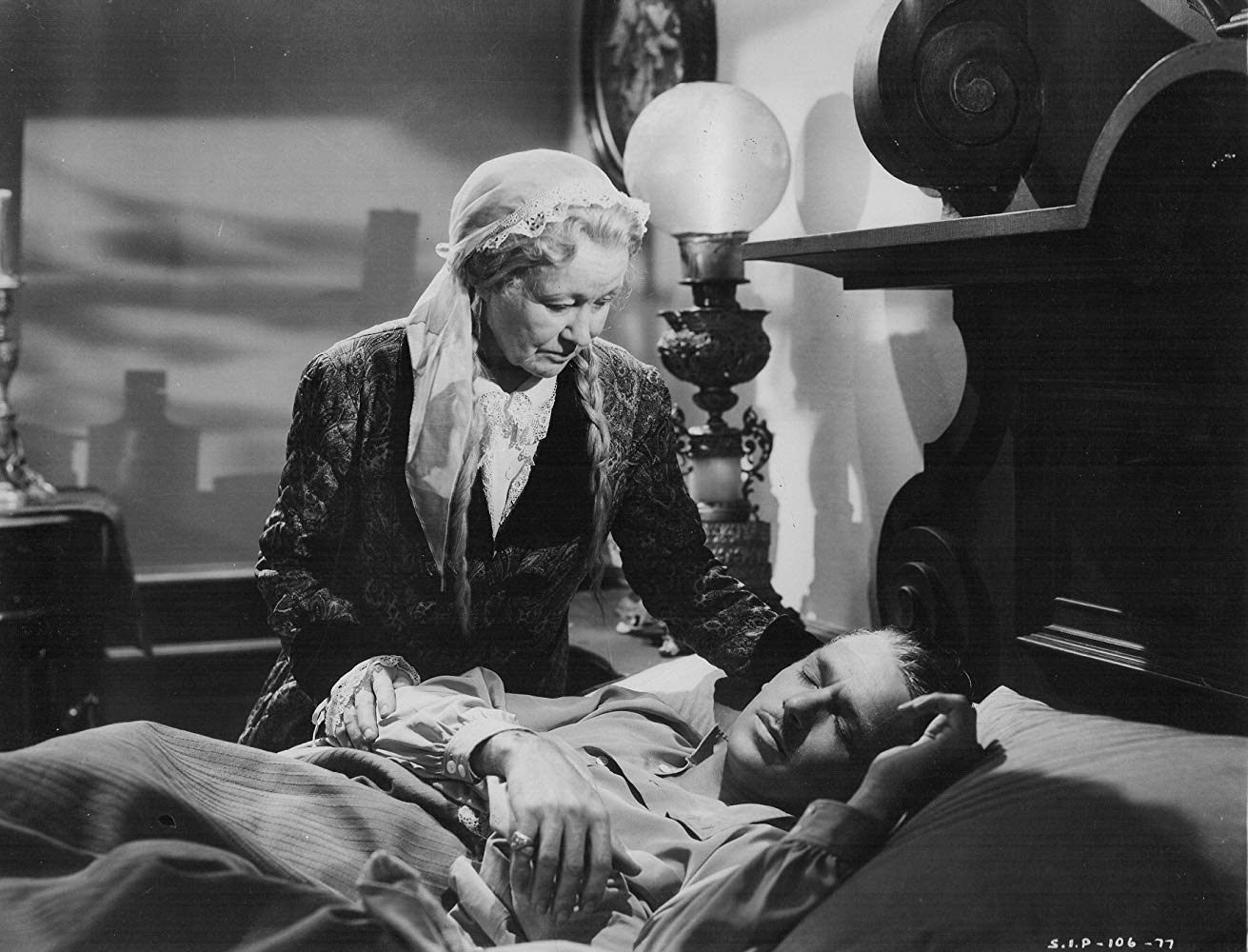
Comfy, Cozy Cinema: The Young In Heart

Erin from Still Life, With Cracker Crumbs and I are hosting Comfy, Cozy Cinema again this year and up this week was The Young In Heart.
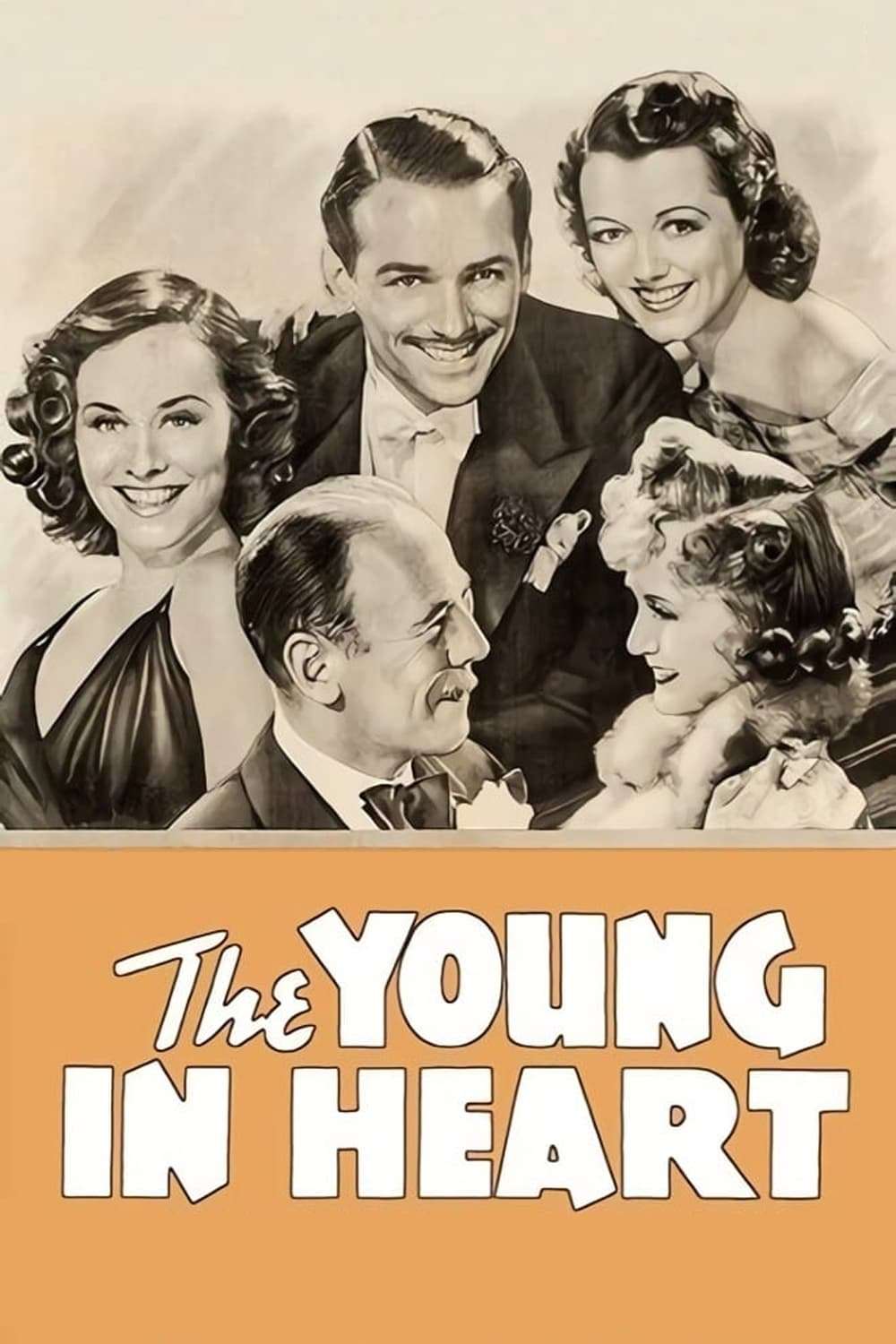
And, yes, that title is the actual title: The Young IN Heart.

I feel like I cheated a little bit this week because not only have I watched this movie, but I also wrote about it when I watched it for the Winter of Douglas Fairbanks Jr. That means   I had an advantage to Erin when it came to writing this week’s post because I am going to quote a lot of my original post.

 This is part of what I wrote in that post: “I absolutely loved Douglas in this one. He played a more prominent role than in Gunga Din and was simply … shall I sound completely cheesy? Yes, I shall. He was completely delightful.

At one point, I texted my friend Erin that a drunk Douglas is adorable.”

Yes, I did text Erin this past January to tell her he was adorable. Yes, I am weird.

Before I forget, I found this one for free on YouTube.

So, let’s get to the movie.

The Carlton family, of which Douglas is a part of in this movie, are not a family you would want to know in real life. They are swindlers and grifters. They mooch off and manipulate people to scrape by in life.

We open the movie in the French Riviera with Douglas’s character (Rick) ready to marry a young woman whose father is rich.

Everything falls apart, though, when the police find out about the family and reveal their conniving ways to the family of Rick’s future wife. The family is told to get out of France and end up on a train where they meet a ridiculously sweet woman (Minnie Dupree) who has only recently come into a great sum of money.

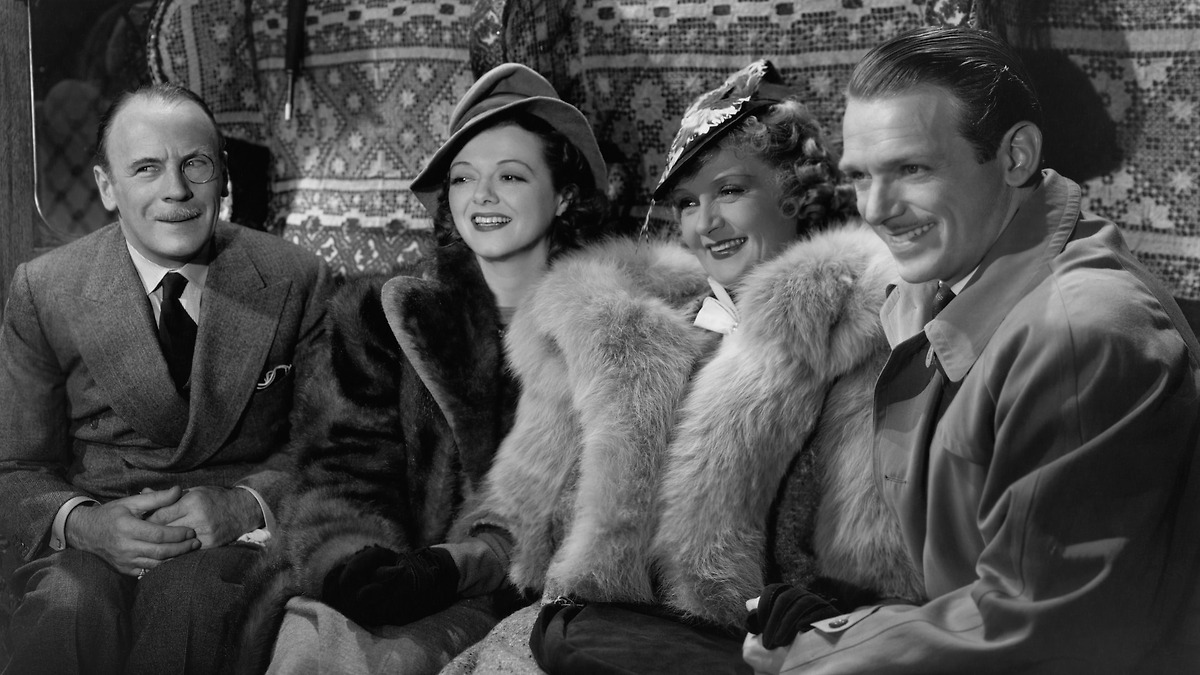
Ironically, her last name is Fortune. George-Anne sets out to swindle the woman out of paying for their lunch, but the plan expands as the woman explains she lives alone in a big mansion left to her by a former suitor. She is saying how lovely it would be if all of them came to stay with her when there is a train derailment. Their car tips and at first Rick and George-Anne believe the old woman has died. She’s still breathing so the siblings carry her from the car and George-Anne covers her with her own coat.

We begin to wonder if the family is rotten through and through and are still playing things up as the woman later recovers and invites the family to come live with her.

George-Anne suggests to the family that if Miss Fortune believes they are a respectable family she will be more willing to let them live there and maybe even leave them money when she leaves. To play up this ruse she suggests the men get actual jobs and she and her mother act like caretakers and women who don’t swindle people out of money.

This is all very baffling to the family who has always cheated and stole for a living. When the men decide George-Anne’s plan might work and go to look for jobs, the scenes that follow are some of the most hilarious tongue-in-cheek moments I’ve seen in a movie.
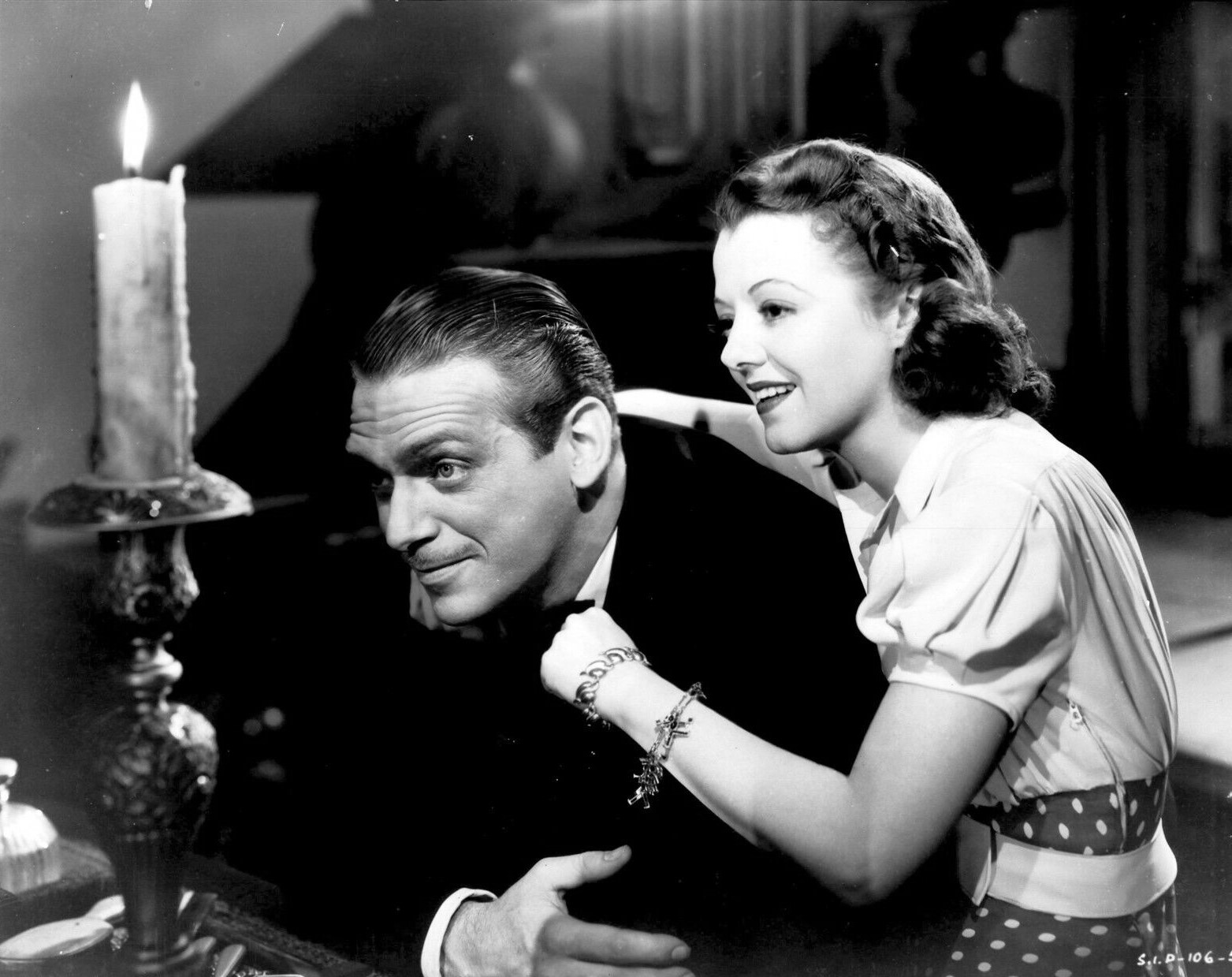
Spinning around in the background of the family’s drama is the romance between George-Anne and Duncan Macrae (Richard Carlson), who she originally considered marrying when she thought he was rich. Duncan learned she was a con-artist along with everyone else and was shattered but still ends up chasing her down on the train back to London to tell her he still loves her.

The rest of Rick’s family — father, Col. Anthony “Sahib” Carleton (Roland Young), mother Marmey Carlton (Billie Burke), and daughter George-Anne (Janet Gaynor) — are thrilled with this plan because they know it will also set them all up for a rich life. George Anne might be even more thrilled because then she can marry a poor Scottish man who she’s fallen in love with, and the rest of her family will support her financially.

She tells him to get lost, believing he’s much too good for her and . . . well, you’ll have to see where all that ends up.

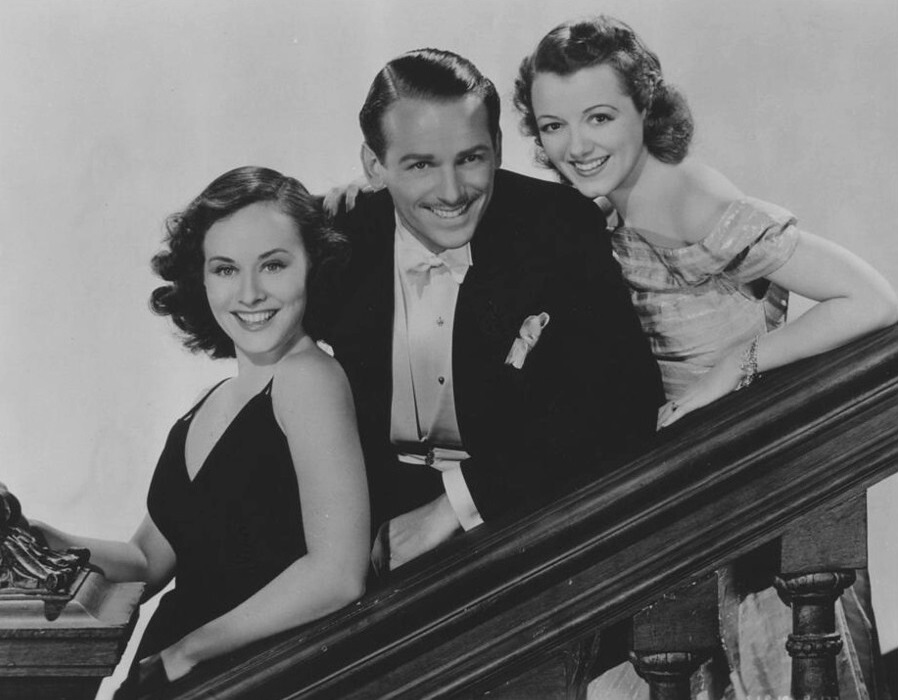
Rick is also having his own romance with Leslie Saunders (Paulette Goddard), a secretary and the engineering business he applies at for a job.

This is the second – or shall I say third – movie I’ve watched in recent months with Billie Burke and there is no mistaking that voice if you have seen The Wizard of Oz.

Yes, she is Glenda the Good Witch.
The screenplay for this movie was written by Paul Osborn and adapted by Charles Bennett from the serialized novel, The Gay Banditti by I. A. R. Wylie. That title certainly would have had a different connotation in the modern day, eh?

Anyhow, the novel appeared in parts in The Saturday Evening Post from February 26 to March 26, 1938.

The movie was released in November of the same year. They certainly worked fast back then.

I found it interesting when I read that Broadway actresses Maude Adams and Laurette Taylor screen-tested for the role of Miss Fortune and that the footage is the only audio-visual samples that existed of both of them.

The movie was produced by – can you guess? Because it feels like every movie I write about lately is produced by him.

Yes. David Selznick. The man who produced what is considered one of the biggest movie triumphs in the world — Gone with the Wind.

This movie was one of many he produced leading up to Gone With The Wind. The Prisoner of Zenda, which I wrote about a couple of weeks ago, was another. Goddard was actually rumored to be being considered to play Scarlet O’Hara in Gone With The Wind, which later, of course, went to Vivien Leigh.

While I was watching the part of the movie where Mr. Carleton goes to apply for a job, I was fascinated by the fancy car they showed. It was spinning like a pig on a spit at the front of the building and it was a very modern looking car and a very modern looking set up altogether.

According to Ultimate Car Page and Wikipedia,  https://www.ultimatecarpage.com/car/1905/Phantom-Corsair.html

The six-passenger 2-door sedan Flying Wombat featured in that scene was actually the one-of-a-kind prototype Phantom Corsair. The Phantom Corsair concept car was built in 1938 and designed by Rust Heinz of the H. J. Heinz family and Maurice Schwartz of the Bohman & Schwartz coachbuilding company in Pasadena, California.”

I also found it interesting that this was Gaynor’s last movie before retiring while she was at the top of her career. She made one last movie in 1957 called Bernardine.

Like I said above, I loved this movie. It was just what I needed to watch this week with so much sadness going on in the world. There was a lot of humor from all the cast, but Douglas really had me smiling throughout. Not only because he is my latest old Hollywood star crush (watch out Paul Newman!).

Have you seen this one? What did you think of it?

You can read Erin’s impression of the movie on her blog.

Next week we will move into a bit of spooky with Coraline.

The rest of our movie list can be found on this graphic:

Classic Movie Impressions: The Talk of the Town (1942)

This past weekend I watched the movie The Talk of the Town with Cary Grant, Jean Arthur, and Ronald Colman. I found this movie, among many other good ones, free on Tubi. It is also currently free on YouTube.

I had seen it before as a suggested move but ignored it, thinking it was a drama. After watching it, I asked myself, “What took me so long to watch this one?!”

I loved this movie and while I always love Cary Grant, I once again loved Ronald Colman who I first saw in The Prisoner of Zenda earlier this year.

This movie starts with a fire at a factory where a man dies. Cary, portraying Leopold Dilg, is arrested for arson and murder.

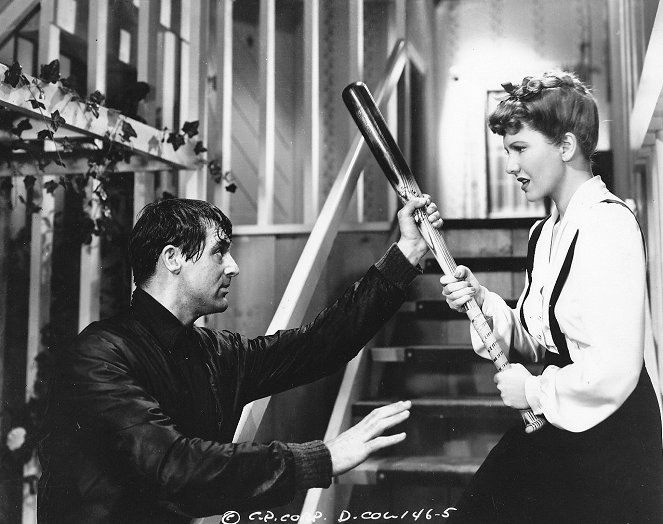
Soon he’s breaking out of jail and escaping through the woods on a rainy night. He makes his way in the dark toward a small house while dogs hunt him down. The name of the house is Sweetbrook and there is a woman inside getting it ready — maybe for a guest.

Leopold breaks in the door, startling the woman.

“Miss Shelley,” he says. “Please…let me…” And then he faints and falls down the stairs.

Miss Shelley wakes him up with a bucket full of water and he asks if she can stay at the house, which he knows is a rental. She tells him he can’t stay because she knows he has escaped jail. There is a knock on the door before she can finish explaining and she tells him to run upstairs and hide.

There is a Professor Michael Lightcap at the door and he’s standing in the rain. He reminds her that he’s rented the house out and he’s here to stay. Miss Shelley, whose first name is Nora, panics because Leopold is hiding upstairs and she doesn’t want the professor to find him.

Things will get more complicated as she makes up an excuse to stay in the house overnight to make sure the professor doesn’t find Leopold.

Complications just keep arising as Nora offers to become the professor’s secretary and housekeeper during his stay, a senator arrives to tell Professor Lightcap he’s up for nomination to the United States Supreme Court, and Leopold walks down one morning to argue about the role of the law in society and Nora has to introduce him as the gardener.

This is a non-stop movie full of hilarious mix-ups, near misses, and a love-triangle that won’t be resolved until the very last minute, literally, of the movie.

As I said above, I loved this movie.

It was engaging, funny, witty, and captivating. Mixed in all the lighthearted moments were a few philosophical moments about law and justice.

Jean Arthur was delightful as Nora Shelley, always quickly rescuing the day just at the last moment, taking care of both Leopold and the professor.

Ronald Colman pulled off the staunch, uptight professor well and it was fun to see him “let down  his hair” a bit later in the film. He didn’t let down his hair. It’s just a saying, of course.

Cary walked the line between an aggressive rebel and a falsely accused victim, putting his usual romantic charm on the backburner for most of the film and bringing it out in more subtle moments. This was a movie where he wasn’t a pursuing a woman as much as he was his own freedom and justice.

I spent much of the last half of the movie wondering which one of the men Nora was actually falling for and I think she was doing the same thing. She’d gathered affection for both of them but wasn’t sure if either of them had for her.

This movie was nominated for seven Oscars but it was about the same time that America started the war so more “patriotic” movies got the nod that year. Ironically the best picture went to Mrs. Minier, which was set in England, however.

According to TCM, even without the wins, The Talk of the Town “still marked an important moment in the careers of its stars Cary Grant and Ronald Colman.”

For Cary, it was a new movie after not working for a year and he was nominated for an Oscar as well. He didn’t win the Oscar but he did have his name legally changed  his name from Archibald Alexander Leach, became an American citizen and married heiress Barbara Hutton.

Colman was 51 at the time and needed a spark to reinvent his career. The Talk of the Town worked and he went on to star in Random Harvest, which earned him another Oscar nomination. He lost that to James Cagney in Yankee Doodle Dandy, but still kept him at a high point in his career. Films such as Kismet (1944) and Champagne for Caesar (1950).  He also finally earned his Oscar for portraying the delusional Shakespearean actor in A Double Life (1947).

I found it interesting to read that there was tension between Grant and Colman since both were used to being the lead actor and that tension was written into the script as they aggressively bantered back and forth with each other.

I also was fascinated to learn that two endings were filmed — one with Jean Arthur choosing Cary and the other with Colman. The director allowed the preview audiences to choose who she ended up with.

Trivia:

  • filming was to begin on January 17, 1942, the day Hollywood learned the sad news of Carole Lombard’s death in a plane crash. Stevens halted work on the set and sent both cast and crew home.
  •  
  • Screenwriter Sidney Buchman (who co-wrote the script with Irwin Shaw) was blacklisted in the 1950s. Consequently, Buchman, one of the men who penned Mr. Smith Goes to Washington (1939), left the U.S. and began working in Fox’s European division. Buchman would remain in France until his death in 1975.

When the professor is unconscious on the floor, Tilney (Rex Ingram) asks Sam if he is a doctor. Ironically, Rex Ingram was himself a trained physician in real life.

Cary Grant and Ronald Colman were both paid at least $100,000 for their work in the film. Jean Arthur, who was in Harry Cohn’s doghouse and just coming off suspension, was only paid $50,000.


Whilst many characters find Leopold Dilg’s penchant for adding an egg to his borscht unique (so much so that it becomes a means of determining his whereabouts), it was not an uncommon practice to add an egg to borscht in Poland and in Mennonite communities in Eastern Europe.

A radio theatre presentation of The Talk of the Town (1942) was broadcast on CBS radio on the Lux Radio Theatre on 5/17/1943 with Cary GrantRonald Colman, and Jean Arthur recreating their roles from the movie. It’s a 60-minute adaptation of the movie.

Nora tells the professor that he is, “as whiskered as the Smith Brothers.” This refers to a brand of cough drops with an illustration of the Smith Brothers on the front, both of whom have a beard. First introduced in 1852, they remained the most popular brand for a century.


Memorable quotes:

Well, it’s a form of self-expression. Some people write books. Some people write music. I make speeches on street corners.

– Leopold Dilg

What is the law? It’s a gun pointed at somebody’s head. All depends upon which end of the gun you stand, whether the law is just or not.

– Leopold Dilg

Stop saying “Leopold” like that, tenderly. It sounds funny. You can’t do it with a name like Leopold.

– Leopold Dilg

This is your law and your finest possession – it makes you free men in a free country. Why have you come here to destroy it? If you know what’s good for you, take those weapons home and burn them! And then think… think of this country and of the law that makes it what it is. Think of a world crying for this very law! And maybe you’ll understand why you ought to guard it.  – Michael Lightcap

He’s the only honest man I’ve come across in this town in 20 years. Naturally, they want to hang him. – Sam Yates


Sources:

TCM.com https://www.tcm.com/tcmdb/title/92288/the-talk-of-the-town#articles-reviews?articleId=187407