
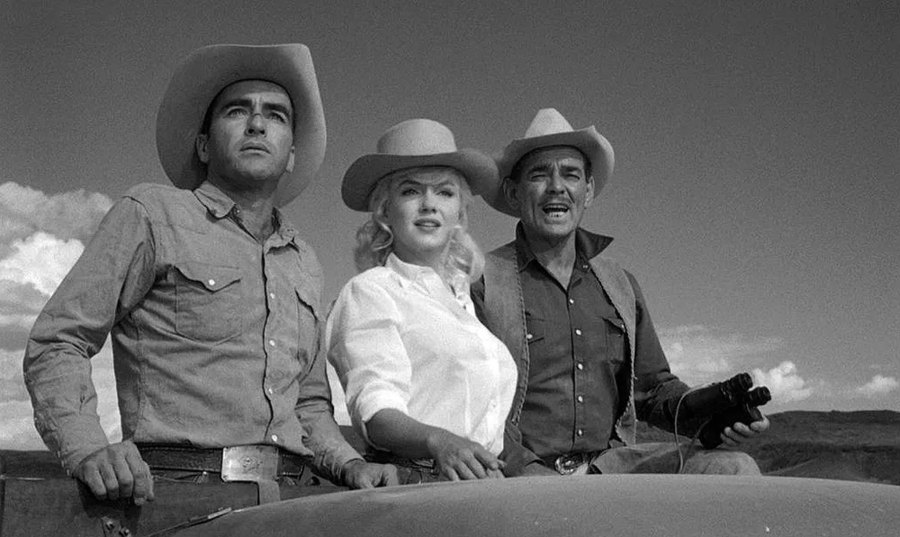

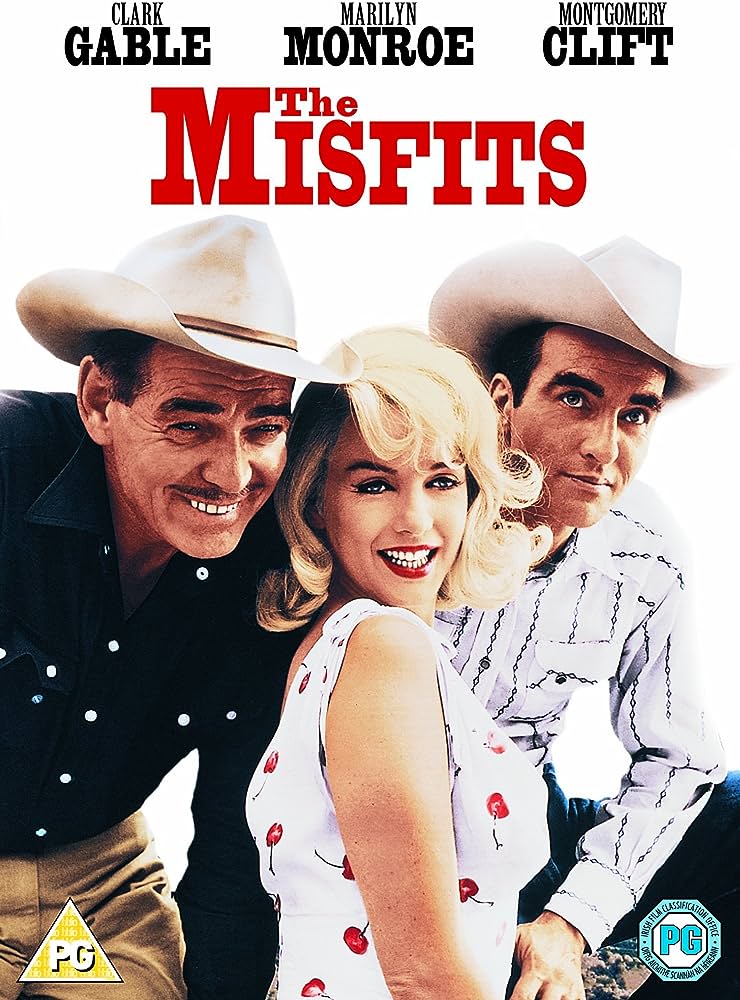
This week is my final week of Summer of Marilyn, where I watched Marilyn Monroe movies. My final movie was The Misfits with Marilyn, Clark Gable, Montgomery Clift, and Eli Wallach.
I’m going to be honest and admit right off the bat that I hated this movie in many ways. Part of me was confused why my husband recommended I add it to my list for my Summer with Marilyn feature. Once I watched the movie all the way through, I got why he suggested it but I still know I won’t watch this one again. It was too raw for me at this season in my life.
In other words, it isn’t that movie is bad – it’s that it is depressing with a capital D. Or most of it is. There are some moments toward the end where things start to look up.

I am so glad to be done with Marilyn movies – even if they were good. This capped off a depressing stagger through Marilyn movies that made me sad about her life.
My son says the same thing about Marilyn – watching her movies is sort of depressing when you think about how her life ended up and how used she was through her whole life.
I barely made it through this movie and found myself mentally tuning out through a few scenes to emotionally protect myself from the darkness and depression.
This movie was shot documentary style and I liked that about it.
I read another review of this movie and agree with the writer that this is not a movie you can really figure out. You just have to take it as it is.
“Haunting. That’s the word that best describes “The Misfits”.” Jay’s Classic Movies Blog writes. “It sums up this film’s atmosphere, performances, story, visuals, and even its legacy. Filled with symbolic overtones, it is one of the very few films that is better to think about and feel than figure out.
Marilyn’s character is Roslyn Tabor.
Guido is the tow truck driver who drivers Roslyn and her friend Isabelle to town so Rosalyn can get a divorce to a man she’s only been married to a couple of years.
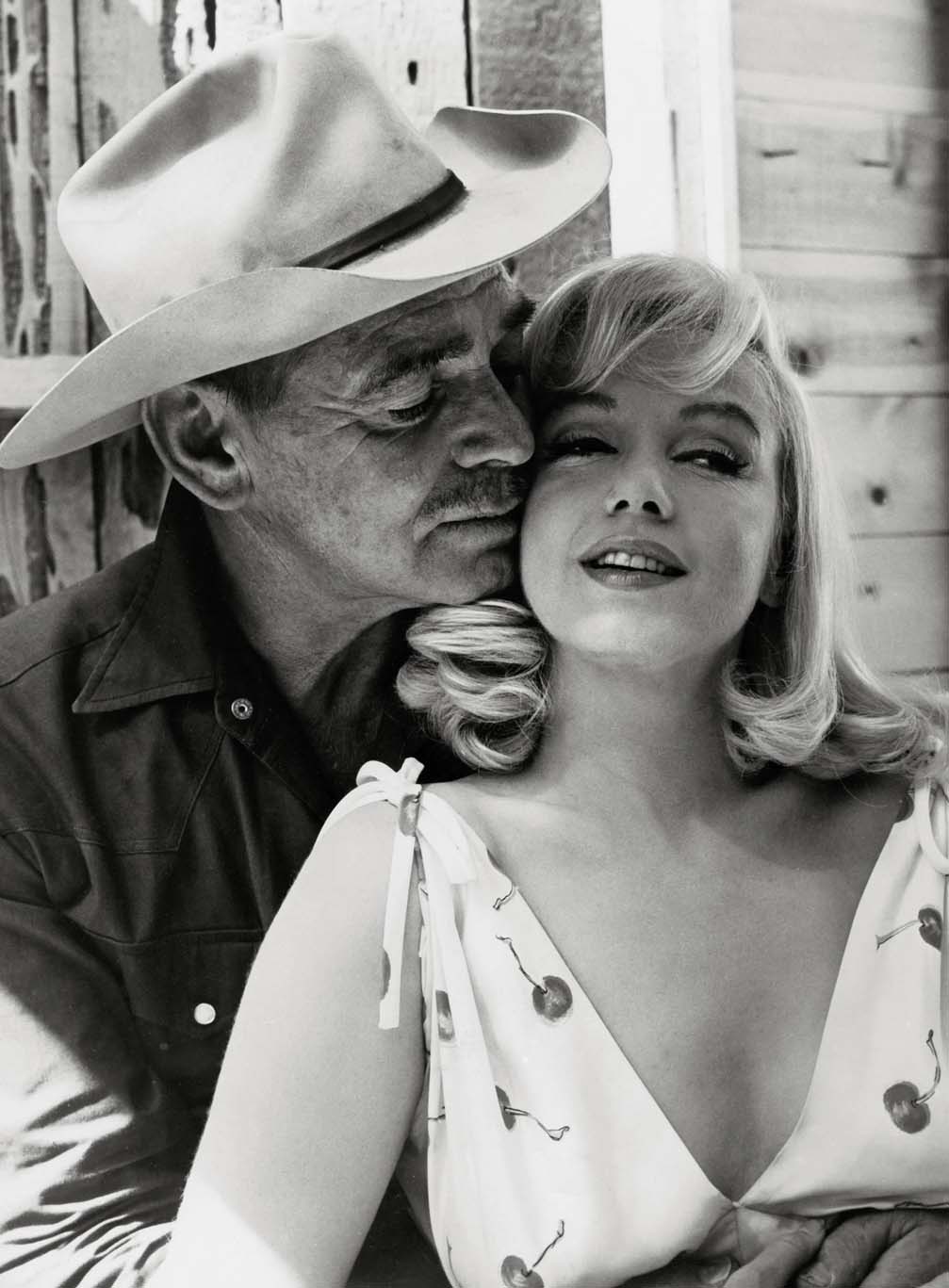
After the divorce hearing, Isabelle and Rosalyn go to get a drink and run into Guido and his womanizing cowboy friend played by Clark Gable. Clark’s character is Gay. No, I mean his name is Gay or Gaylord Langland actually.
I have no idea why but Isabelle and Rosalyn accept Guido’s invitation to go see the home Guido built for his late wife.
The movie is already a bit dark and depressing but gets worse when Guido shows Rosalyn his wife’s room where she died. She was pregnant at the time and both she and the baby died. Guido never finished the house but offers Gaylord and Rosalyn the place if they want to fix it up.
Again, all very weird because Rosalyn agrees and becomes connected to Gaylord who is like 20 years older than her in real life and in the movie.
There is a series of sad moments that finally lead to running into Montgomery Clift who is riding broncos and bulls to earn money but agrees to go up in the mountains with Gaylord to round up Mustangs which they will sell for dog and cat food.
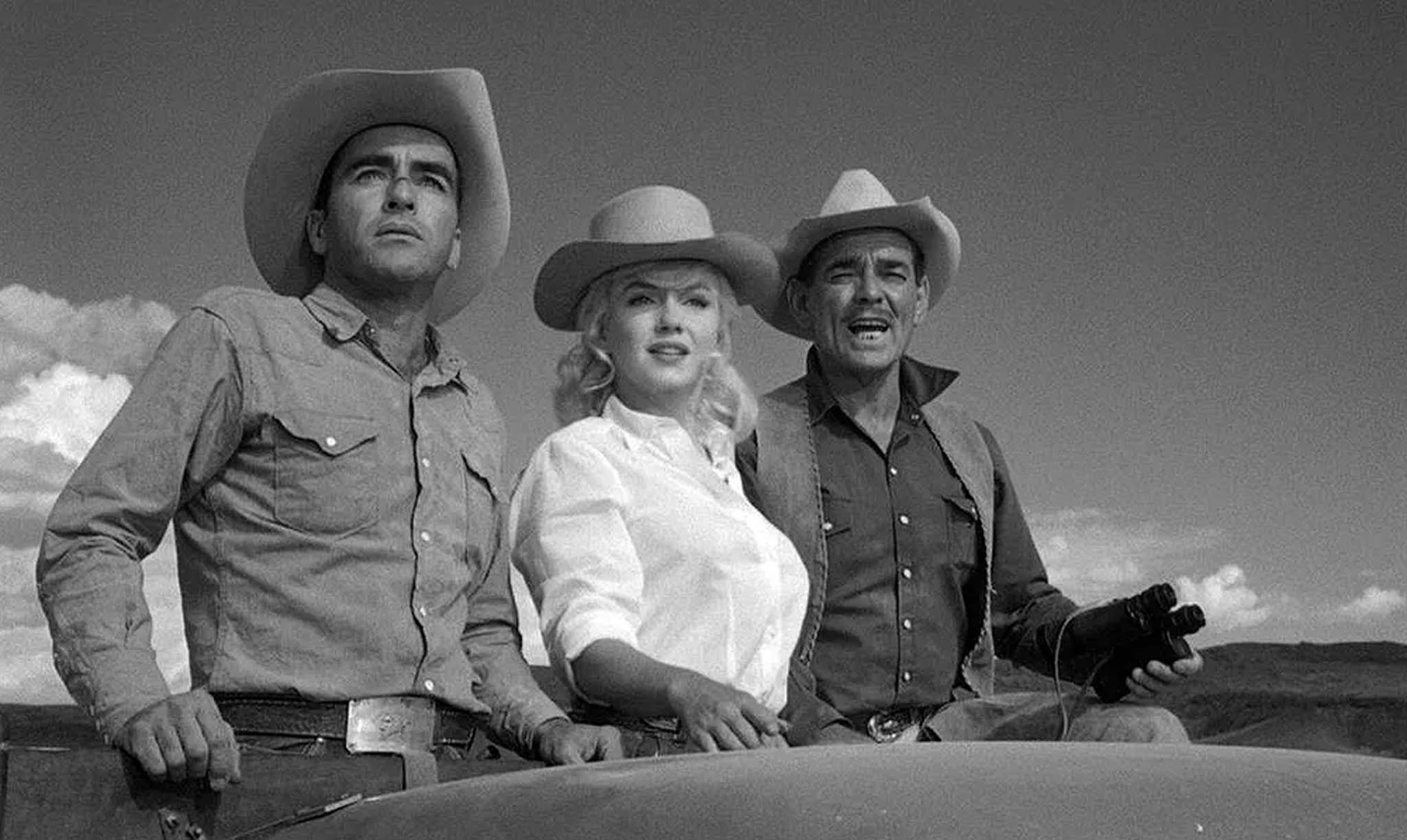
Rosalyn is completely devastated when she finds out they will be selling the horses to be made into dog food. It is just another reminder for her how cruel and awful life can be.
One thing I find super creepy about this movie is how all the men are attracted to Rosalyn and want to get in bed with her pretty much. They just leer at her most of the time and say things like, “Your eyes are so innocent. It’s like you were just born.”
It’s clear by some of the things she says that she’s been through a lot. She’s weird and deep and yet not deep all at the same time.
At one point she asks Guido if he danced with his wife. He says he didn’t because she wasn’t graceful.
“Why didn’t you teach her to be graceful?” Rosalyn asks.
“You can’t learn that,” Guido retorts.
“She died, she didn’t know you could dance,” Rosalyn says sadly. “To a certain extent you two were strangers. We’re all dying aren’t we? All the husbands and all the wives and we’re not teaching each other what we really know.”
And the sad thoughts and melancholy commentary continues from there.
The movie is based on a play by Arthur Miller, who Marilyn was married to at the time. She divorced him the same year and died a year later from a drug overdose.
Gable died before the movie came out. This movie was both of their final completed movies.
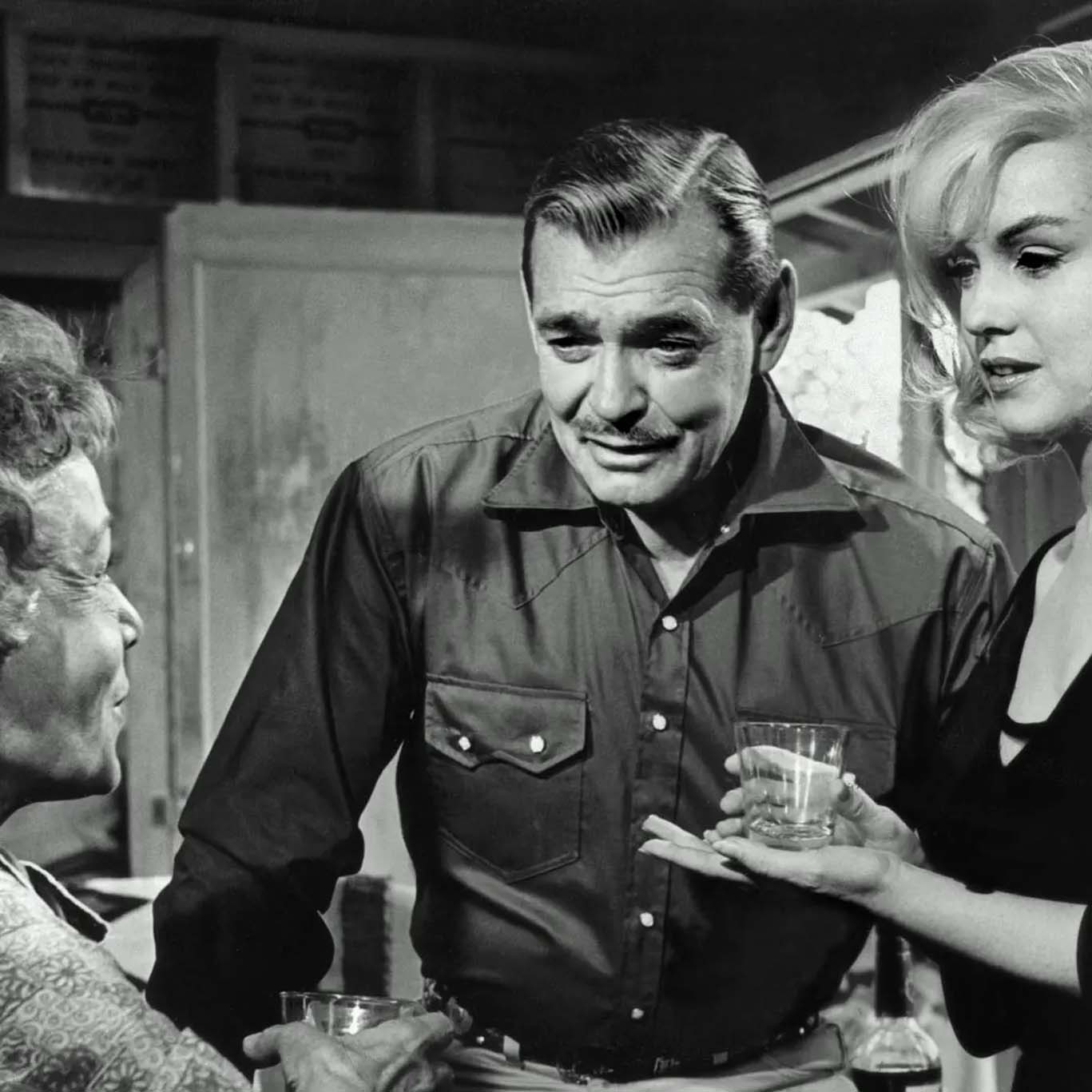
Everyone is very sad and broken in this movie. Like everyone. It’s very depressing. Clark Gable’s character is especially cruddy with no real feelings except for money.
Rounding up the wild horses in the end is like stomping down everything wild and free in life and Gaylord is all for that. He just can’t admit that it is the wrong thing to do. And Guido – well he just wants something in return for doing the right thing.
The best lines and the most intense acting Marilyn does starts when she turns to Guido in shock after he says he’ll stop the horses from being killed if she will consider getting together with him.
“You have to get something to be human? To do what’s right? You’ve never felt anything for anybody in your whole life. You could blow up the whole world and all you’d feel sorry for is yourself.”
Five minutes later she’s in the desert screaming “Murders! Liars! You’re only happy when you can see something die!”
It was like she was screaming at all of Hollywood in that moment and it was a kick in the gut for me.
There was way too much that was too close to Marilyn’s real life in this movie.
A woman used for her looks and her uncertainty and her lack of self-esteem to stand up for herself and decide what she wanted for her own life.
She seems so young in this film in some ways.
Young and hopeful and full of life, but inside she was truly dying – not just her physical body but her soul.
During the filming of this movie her co-stars felt she was on the way to doom and she was.
According to articles online, filming of the movie was hard because the weather was 100 degrees in Nevada, her marriage to Arthur Miller was failing, Miller was rewriting the film as it progressed, and at the end of the day she was drinking and taking pills to get through it all.
This movie might be the most honest movie I’ve seen her in – the way she doesn’t know what to do with her life, her confusion about life, her sadness, her melancholy chats about the meaning of life and the loss of life.

Like I said in the beginning, this whole marathon has made me hurt.
It’s made me hurt for Marilyn but also for all the people in the world who are beautiful on the outside and hurting on the inside. The people who search for their worth in the eyes of other people without realizing they were created for a bigger and better purpose – that life is worth living because there is a lot of good to be experienced, not simply because other people might see them as worthy.
I think sometimes it is better to watch movies and not know the personal lives of the actors in them.
Otherwise I find myself focusing too much on their personal lives and how they intersected with their movie roles.
If you want to see what I said about the other movies I watched, you can find the posts by visiting the search bar to the right and typing in “Summer of Marilyn.”
My next movie impressions will be with Erin from Still Life, With Cracker Crumb when we take on a variety of movies including noir, cozy, fun, and mysterious for autumn.


