The main character of the iconic Christmas movie It’s A Wonderful Life, could have been named George Pratt instead of George Bailey.
That’s if scriptwriters had kept the original name of the main character in the novella that was used as the inspiration for the 1946 classic.
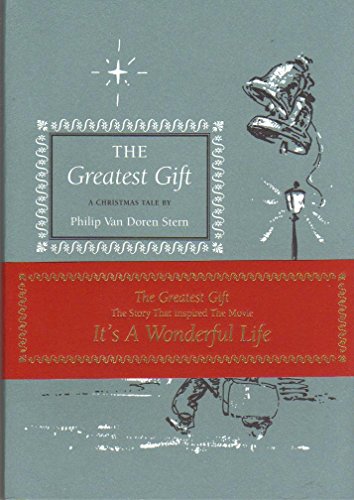
Most people in the United States know It’s A Wonderful Life only as a movie that airs at least once every December on NBC. Less known is that the movie is based on a novella that author Philip Van Dorne Stern couldn’t get a publisher to pick up, so he finally sent it out as Christmas cards to family and friends.
The novella (a novella is shorter than a novel but longer than a short story) was called The Greatest Gift and was first discovered by RKO Pictures, but later made its way to director Frank Capra. Capra bought the rights from RKO and expanded it to create the movie, which was once ranked the 20th most popular American movie of all time by the American Film Institute.
Stern published more than that novella, though. A graduate of Rutgers University, Stern was a writer and editor of more than 60 fiction and nonfiction books, including The Life and Writings of Abraham Lincoln, published in 1939.


According to Rutgers, The New York Times described his 1942 novel, Drums of Morning, as ”the long overdue fictional answer to Gone with the Wind.”
It was his small novella, though, that would become the basis for stage plays, radio plays, and the movie.
A few weekends ago, my husband participated in a radio play version of It’s A Wonderful Life.
A radio play is a play within a play, in case you are wondering. More about that in a minute.
At the end of the play, the director let everyone in attendance know that Stern was actually born in the little town the play was being held in — Wyalusing, Pa. (population 670).
As far as anyone knows, Stern didn’t live very long in Wyalusing, but he was born there, as evidenced by most information you can find about him online, including the Rutgers website, which states: “Stern was born in Wyalusing, Pennsylvania, but grew up in New Jersey and lived in Newark while studying at Rutgers. After living most of his adult life in New York, he retired to Florida in the 1970s. He died in 1984 in Sarasota, Florida, shortly before his 84th birthday.”
According to another article on Rutgers, Stern, who graduated from the college in 1924, was shaving one morning in the winter of 1938, when he couldn’t shake the idea of a story about a man who rejects suicide and embraces life after a mysterious stranger allows him to see how the world would have been if he had never been born.
At that time, Stern was an author and publishing executive who had also worked as a typographer. He struggled to get the idea down on paper and it took another five years before he felt comfortable sharing the first draft with his agent.
He and his agent shopped it around to magazines to no avail, so Stern sent it to 200 people as a Christmas card.
“One evening [several months later], just as I arrived home, I heard the telephone ringing,” Stern said in a 1946 New York Herald Tribune article. “It was Western Union calling to read me a telegram from Hollywood, announcing that the story had been sold for $10,000.”
Now back to that radio play for a bit.
The radio play is sort of a story within a story because the actors (there are only about six of them) are playing radio personalities from the 1940s who are putting on a play.

This means that we are seeing them as if they are in the radio station building lone, performing the play with large microphones in front of them, with the tools for sound effects around them and all of them holding scripts to read from.
Imagine that scene in Annie when Oliver Warbucks takes her to the radio station to share about how she’s looking for her parents.
That’s what the play was like. Because the cast is small, some have to play more than one part, sometimes as many as three.
My husband played four roles with his main three being Freddie Filmore (the actor on the radio show), Mr. Potter and Uncle Billy.
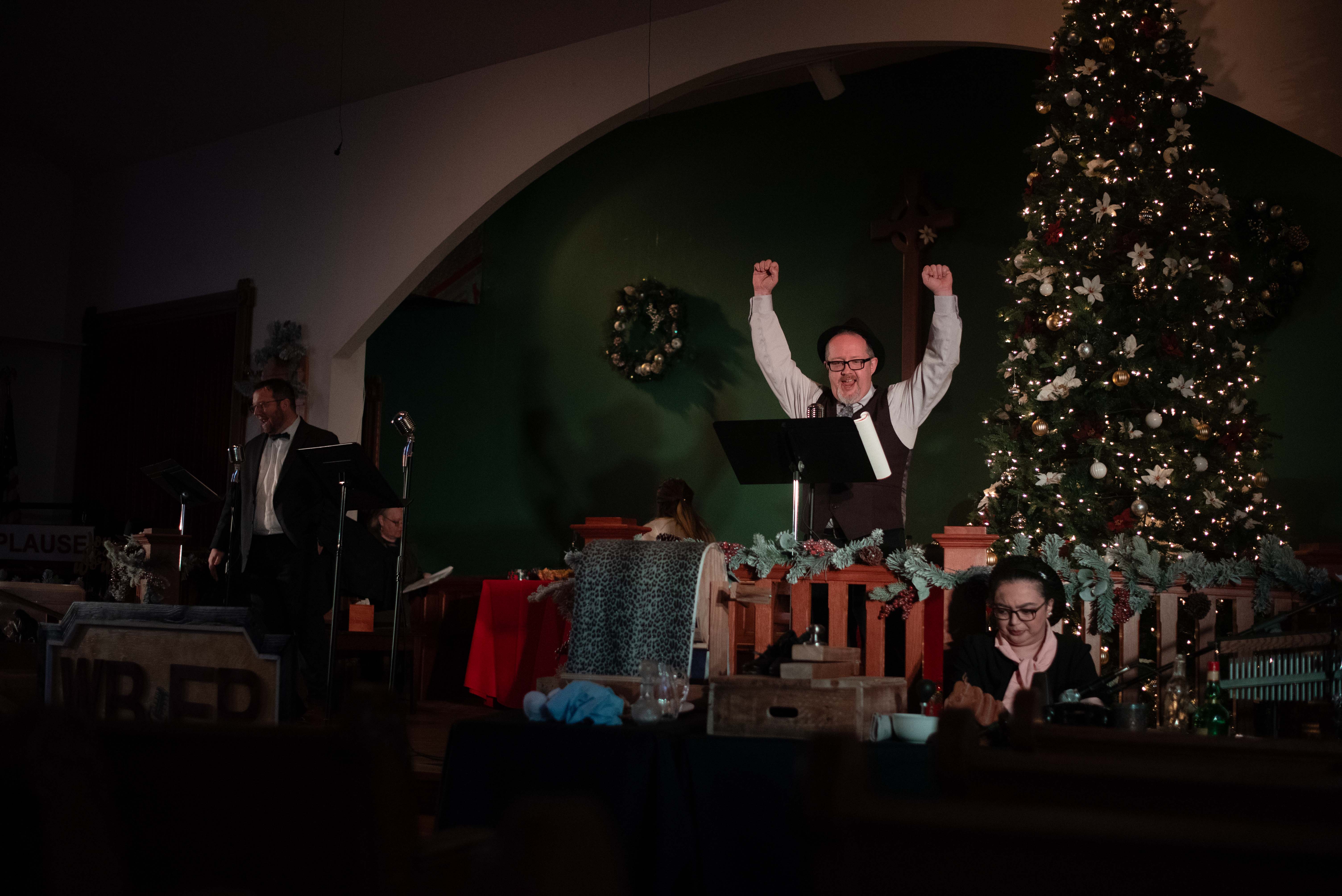
There is also a woman in charge of the sound effects and she did an amazing job.
The idea with a radio show is that you can close your eyes while watching the play and still be able to know what is going on.
At the end of the first showing, my husband had a blind man tell him that the show came alive for him because he didn’t have to see what was going on, he could hear it all. He felt like he was apart of it all, which he probably doesn’t usually feel when he attends other plays.
Something interesting I read in the Rutger’s article was that Stern’s story was first sold to RKO pictures who was planning to have Cary Grant as the lead. I’m so glad Capra later got the rights and chose Jimmy Stewart as George. It was Jimmy’s first movie after returning from war and serving in the military. It was a stepping stone back into the acting world for a man who hadn’t been sure he could pull off acting again after all he’d gone through in the war.
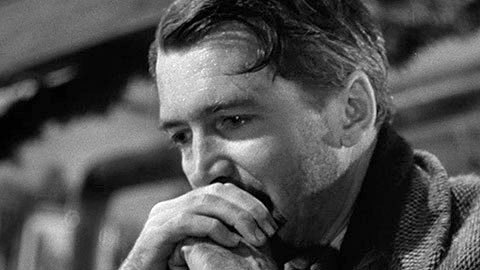
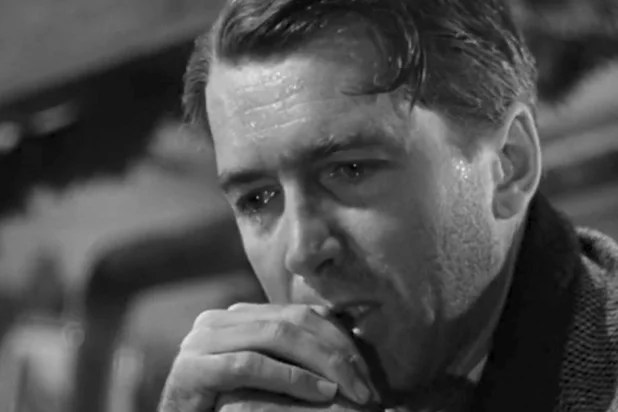
The war affected him so immensely that when he sat to film the scene in the bar where George asks God to help him, he broke down, thoughts of the hopeless in the world forefront on his mind. Capra had planned a wide shot for that scene so when Jimmy broke down he had the camera man kept rolling and had to “zoom in” on the negative of the film during editing, which is why, if you look closely, that part of the movie is slightly out of focus.
Jimmy actually wrote about this unscripted moment in Guidepost Magazine in 1987.
“In this scene, at the lowest point in George Bailey’s life, Frank Capra was shooting a long shot of me slumped in despair.
In agony I raise my eyes and, following the script, plead, “God… God…dear Father in heaven, I’m not a praying man, but if you’re up there and you can hear me, show me the way. I’m at the end of my rope. Show me the way, God…”
As I said those words, I felt the loneliness, the hopelessness of people who had nowhere to turn, and my eyes filled with tears. I broke down sobbing. This was not planned at all, but the power of that prayer, the realization that our Father in heaven is there to help the hopeless, had reduced me to tears.

Frank, who loved spontaneity in his films, was ecstatic. He wanted a close-up of me saying that prayer, but was sensitive enough to know that my breaking down was real and that repeating it in another take was unlikely. But Frank got his close-up.
The following week, he worked long hours in the film laboratory, repeatedly enlarging the frames so that eventually it would appear as a close-up on the screen. I believe nothing like this had ever been done before. It involved thousands of enlargements with extra time and money. But he felt it was worth it.”
In his 1971 autobiography, The Name above the Title, Capra wrote of Stern’s novella, “It was the story I had been looking for all my life! Small town. A man, a good man, ambitious. But so busy helping others, life seems to pass him by … Through the eyes of a guardian angel he sees the world as it would have been had he never been born. Wow! What an idea. The kind of an idea that when I get old and sick and scared and ready to die—they’ll still say, ‘He made The Greatest Gift.’ ”
The title was later changed to It’s A Wonderful Life, of course.
“Using Stern’s story as a starting point,” The Library of Congress blog reads. “Three teams of scriptwriters hired by RKO wrote three different film scripts, but none quite worked for the studio. In 1945, RKO sold the film rights to the story, along with the three scripts, for $10,000 to Frank Capra’s newly-formed film production company, Liberty Films. Capra hired husband-and-wife screenwriters Albert Hackett and Frances Goodrich to create a completely new script, which used some bits from the existing scripts, but also created a back-story with extra characters, filled in details, and made some minor story changes.”
After Stern had a contract for film rights, by the way, the magazines Reader’s Scope and Good Housekeeping both agreed to publish the story and then book publisher David McKay agreed as well.
According to the Library of Congress blog, “Good Housekeeping published a slightly longer and darker version with the title “The Man Who Was Never Born” using the pseudonym Peter Storme. The text of the story as it appeared in the original pamphlet was reproduced exactly in the McKay book and in magazines and anthologies that published the story in the following decades.”
It’s A Wonderful Life was not a big hit in 1946. So how did it become such a Christmas classic? It slipped into the public domain when the owner of it National Telefilm Associates, failed to renew the film’s copyright. This was great news for TV stations and home-video companies because they didn’t have to pay royalties, so they began to show the movie on television and make copies available on video for rental and sale.
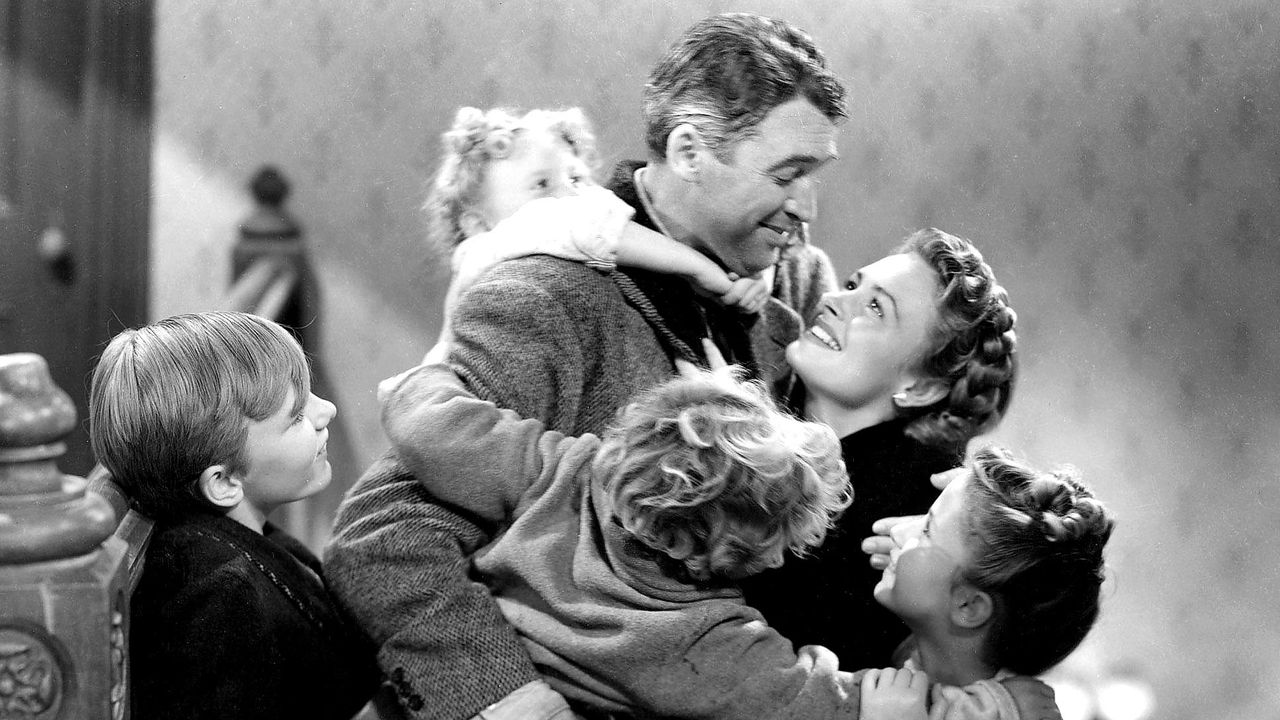
In 1993, though, Republic Pictures bought out National Telefilm Association through a court action and had the copyright restored. The next year, they signed a long-term agreement with NBC to air It’s A Wonderful Life a few times a year, especially in December.
One of the things I like most about the story behind the making of It’s A Wonderful Life is how it started as something so small and innocent, a story idea that wouldn’t let Philip Van Doren Stern go and one he didn’t let go.
I don’t think he could have ever imagined what an impact that little idea, that short novella, would have on so many people. How it would inspire people to recognize how precious and important each individual life is.
More info and sources:
It’s A Wonderful Life: Rare Photos from the Set of a Holiday Classic
Richest Man in Town
https://rutgersfoundation.org/news/alumni-profiles/richest-man-town-0
Inspiring A Holiday Classic
https://newbrunswick.rutgers.edu/inspiring-holiday-classic
James Stewart writes about It’s A Wonderful Life
This post is part of the Comfy, Cozy Christmas feature hosted by me and Erin at Still Life, With Cracker Crumbs. If you have a blog post that you would like to share as part of this annual link-up, please find out more here.

If you write book reviews or book-related blog posts, don’t forget that Erin and I host the A Good Book and A Cup of Tea Monthly Bookish Blog Party. You can learn more about it here.