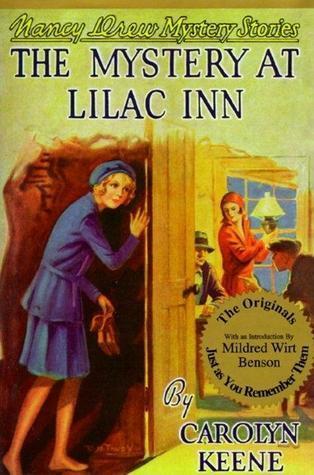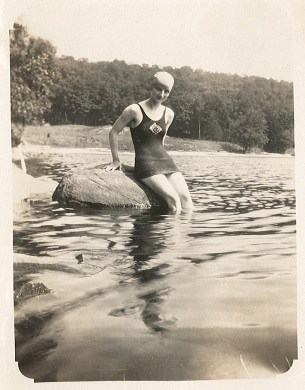
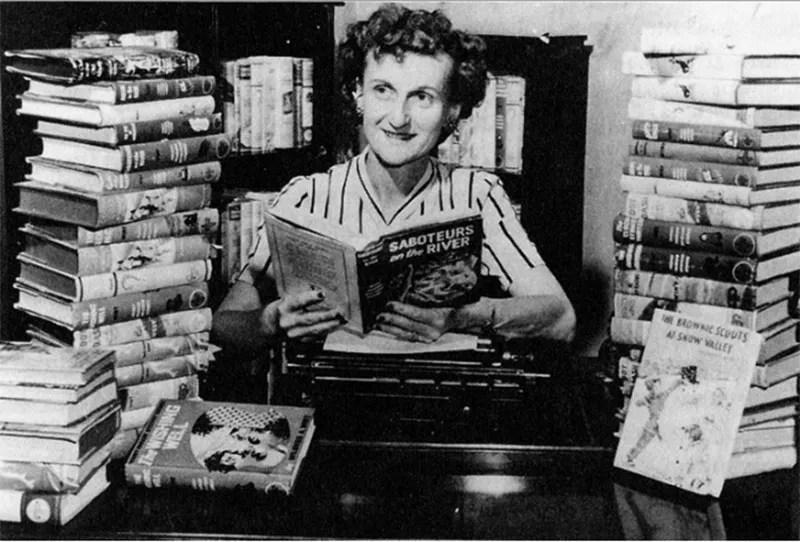
Tell Me More About: Mildred “Millie” Wirt Benson (The original Carolyn Keene)

Who was Mildred “Millie” Wirt Benson?

Mildred, or as many called her, Millie, wasn’t an amateur detective, but she was the co-creator of one of the most famous teen amateur sleuths in the United States — Nancy Drew.

For 50 years very few people knew that Millie helped create Nancy Drew.

Until 1980, many readers of Nancy Drew didn’t know that Carolyn Keene, the woman listed as the author of the Nancy Drew books, wasn’t actually a real person. She was a pseudonym for some 28 authors, men and women, who create and wrote the stories for the series.

It was a lawsuit between Grosset & Dunlap, the original publisher of the Nancy Drew books and the Stratemeyer Syndicate, the owner/creators of the stories, that brought Millie into the spotlight.

Really, though, Millie had been somewhat in the spotlight before that. She’d written some 130 books in children’s series under her own name from the 30s to the 50s and was an accomplished journalist and world traveler.
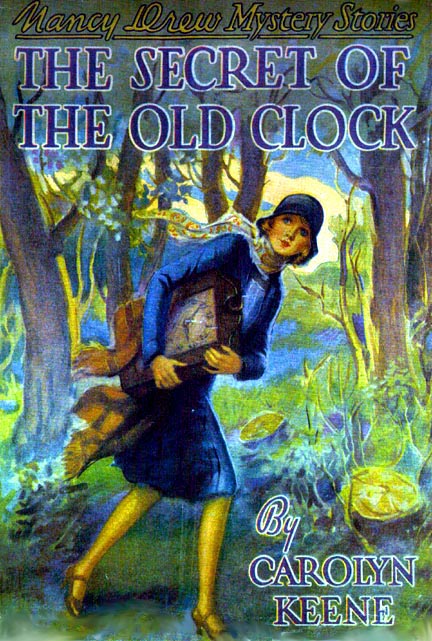
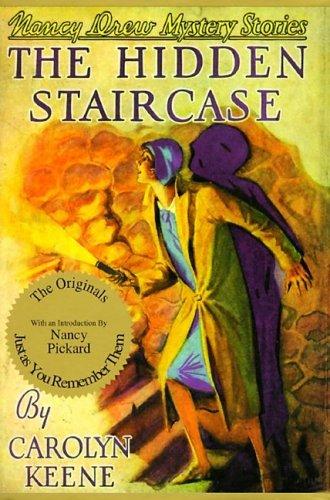
What she hadn’t really talked about a lot was her involvement with the Nancy Drew Mystery series.

She’d signed agreements saying she wouldn’t talk about how she’d written 23 of the first 30 Nancy Drew books. She’d written the books with the direction and input of Edward Stratemeyer, founder of the Stratemeyer Syndicate and the brains behind many juvenile series, including multi-million selling series like Nancy Drew, The Hardy Boys, The Bobbsey Twins, Tom Swift, and Rover Boys.

Millie was born Mildred Augustine in 1905 in Iowa, the daughter of a well-known doctor. She wasn’t treated like other girls at the time who were expected to learn how to sew and keep the house.

Instead, Millie was given freedom to explore her own interests and passions. One of those passions was sports. She felt women should have the same opportunities as men to participate and compete in sports she said in an interview with WTGE Public Media in the mid-1990s
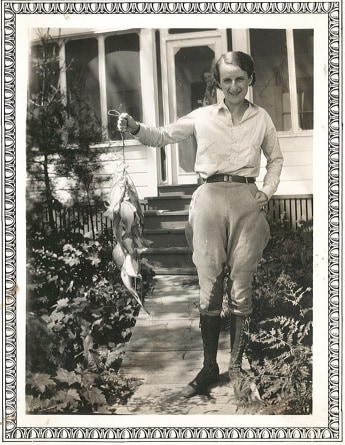
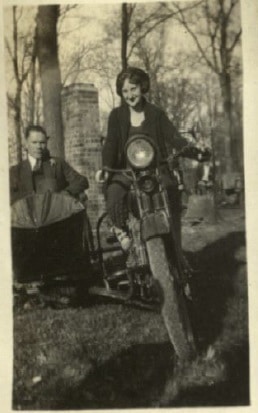
“Girls were discouraged from all sorts of athletics,” Millie said. “And I fought that tooth and nail right from the start because I felt that girls should be able to do the same things that boys did.”

While Millie enjoyed sports, such as swimming and diving, she also loved to write, something her mother encouraged her to continue.

Her father, however, said if she wanted to make money, she should do something else and she admits that he was probably right.

She began selling her stories to church papers, but they only paid a few dollars.

She finally sold a story for a whole $2.50.

“That made me a writer,” Millie said in the interview, while laughing. “So, from then on, I was hooked.”

She attended the University of Iowa after school, majoring in journalism and working on the school newspaper. She also worked with George Gallup, the creator of the Gallup Poll.

After graduating, she landed a job at a newspaper, but at the age of 22, she wanted to see what else she could do and traveled to New York City to look for work.
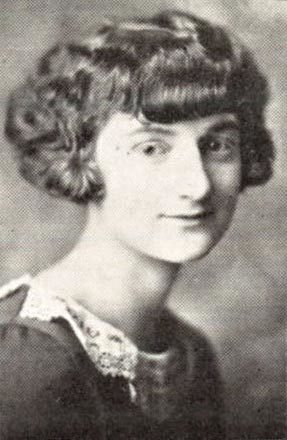
It was there she wrote to Edward Stratemeyer looking for work. Stratemeyer was releasing a book series for juveniles. They were assembly-line type books where he wrote a paragraph detailing what he wanted in the book, including character names and plots. He would send the information he wanted out to writers he knew, and those writers would write the books under the pen name that Stratemeyer controlled and retained the rights to. The writers signed away their rights to credit for the books to Stratemeyer.

While Stratemeyer didn’t have anything for Millie at the time she contacted him, he reached out to her later and asked if she would write a book for the floundering Ruth Fielding series. She did and from there she began to write books for other series for the company. In the midst of all this she also married Asa Wirt in 1928 while attending graduate school.

Millie was reliable, dependable, and a good writer.  When Stratemeyer thought about his Hardy Boys series and how young boys liked the boy detectives and then began to wonder if girls would like a girl detective, he turned to Millie.

Stratemeyer had the basic idea of Nancy Drew, but many literary historians and Nancy Drew fans say it is Millie who flushed her out and made her who she became. Millie created a version of Nancy that Stratemeyer’s daughter, Harriet Stratemeyer Adams, later toned down and changed.

Millie’s version of Nancy was a lot like Millie. She was athletic, adventurous, bold and brash, and never backed down from a challenge. Harriet’s version made her a bit more “perfect” — a rule follower who was polite but still adventurous and who little girls could look up to.

Nancy was what so many girls in the 1930s weren’t allowed to be.

Young girls could live vicariously through her.

Stratemeyer passed away 12 days after the first Nancy Drew book was released. His daughters took over the business after they couldn’t sell it in the difficult economy. Eventually Harriet began taking more control of the Nancy Drew series. Other ghostwriters were working on the series in addition to Millie, who wrote 23 of the first 30 books in the series. In the 1950s Harriet began to rewrite Millie’s original books, changing Nancy’s character, updating some of the material, and, in many ways, stripping away the personality of Nancy that Millie had created.

Millie was working on her own books at that time and had dealt with the illness and death of her first husband and then being a single mother. It was disappointing to see the changes being made but she had other irons in the fire.

In the early 1950s, she was working for the Toledo Times, remarried to the editor of the paper, and being a mother to Margaret Wirt.

She was also writing a character she felt was even more Nancy Drew than Nancy Drew — Penny Parker in the Penny Parker Mysteries.

Penny didn’t see as much success as Nancy, but she didn’t have the mammoth marketing effort that Nancy had, says Millie.

In 1959 Millie was widowed again and afterward she began to live a life a bit more like Nancy Drew — international travel, adventures, independence, learning more about archaeology and even taking flying lessons and eventually earning several flying lessons.

It wasn’t until 1980 when Harriet decided to move the printing of Stratemeyer books from Grosset & Dunlap to Simon and Schuster that more of the public learned about Millie’s role in creating Nancy.
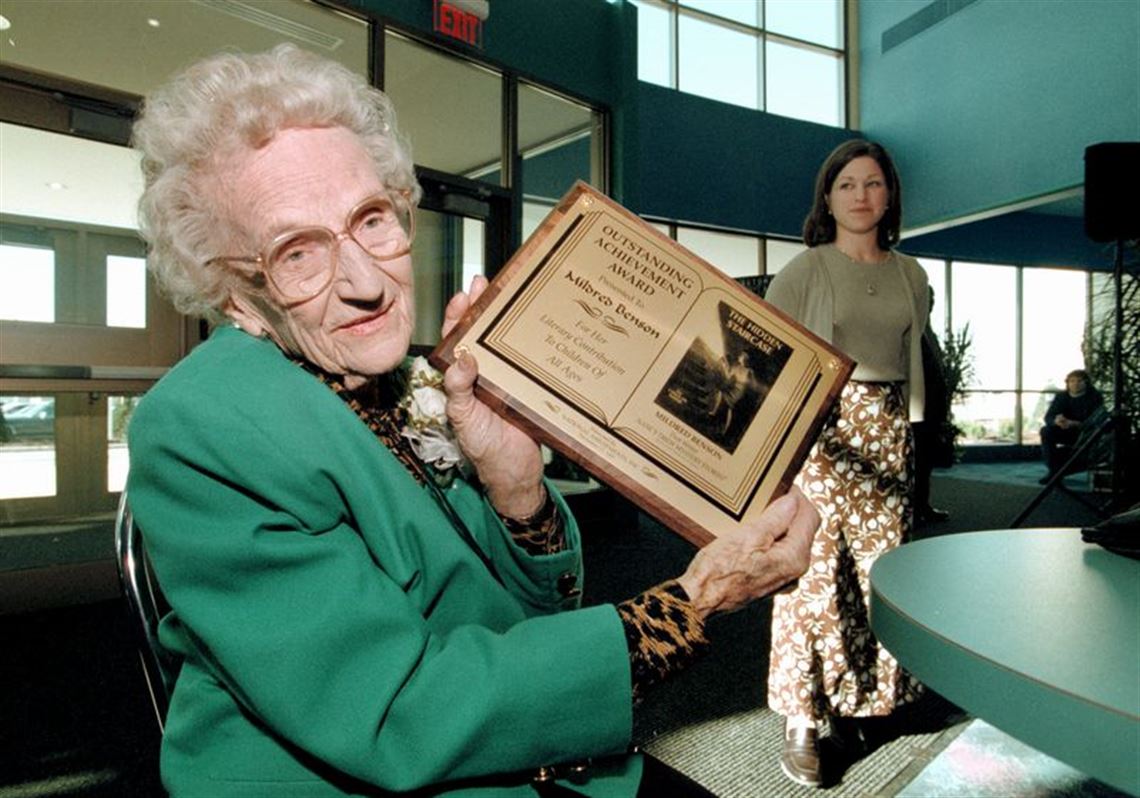
She told WTGE that she could have pushed for her to get credit for the books she’d written. She could have gotten a lawyer and demanded more of the royalties.

She simply didn’t have the desire to put up a fight, though, she said.

“I wrote because I liked to write and I wanted to produce books that girls would enjoy,” Millie said. “And so I didn’t care too much but it got to be … my friends knew I wrote the books and that was sufficient for me. Eventually though it got to be that Mrs. Adams put out publicity to the fact that she was the author and people were reading that.”

One person who was reading all those stories was Millie’s daughter, who asked her own mother if she’d been lying all those years about writing the Nancy Drew books.

Millie hadn’t shared her role in the books with many but when her own daughter started to doubt her, she began to be more open about sharing her role in the creation of the character.

“I thought if my own daughter doubts my integrity, then it’s time I let the truth be known so when people asked me, I stuck my neck out and I told them the truth, which was that I wrote the books.”

Millie was subpoenaed by Grosset & Dunlap during the 1980 when the publisher sued the Stratemeyer Syndicate to keep them from publishing Nancy Drew with anyone else.

They wanted to prove that Harriet Adams didn’t have the right to say who could and could not publish past Nancy Drew books because she had not actually written them. As part of the case, the records that showed Millie had helped developed the series were also subpoenaed.

The truth was finally out there. Millie was the original Carolyn Keene.

Harriet, however, continued to claim she’d written the books right up until her death in 1982 and because the court records were sealed for years, it wasn’t until 1993 when the University of Iowa held a Nancy Drew conference, that Millie really became known as Carolyn Keene.

The conference at the university attracted the attention of literary scholars, collectors, and fans who wanted to know more about the original author and Millie was the main speaker.

Millie, incidentally, was the first woman to earn a master’s degree in journalism from the University of Iowa in 1927.

More fame than Millie imagined hit her after the conference. In some ways, life continued as normal despite the extra attention. She continued to write news and feature stories and her column for the Toledo newspaper.  Nancy fans began to contact her, though, asking about her role and for autographs. She was also inducted into the Ohio and then the Iowa Women’s Hall of Fame and her typewriter was enshrined at the Smithsonian.

Millie worked first at the Toledo Times, now defunct, and then at the Toledo Blade right up until the day she died, literally. She was writing her column for the paper, at the age of 96, in the Blade office, when she became ill and was taken to the hospital, where she later passed away.

In the article about her death, the Blade wrote about how her writing impacted young girls and women.

“Her books, Nancy Drew buffs have said, allowed teenage girls and young women to imagine that all things might be possible at a time when females struggled mightily for any sense of equality.”

“Millie’s innovation was to write a teenage character who insisted upon being taken seriously and who by asserting her dignity and autonomy made her the equal of any adult. That allowed little girls to dream what they could be like if they had that much power,” said Ilana Nash, a Nancy Drew authority and doctoral student at Bowling Green State University.

The article continues: “Going to work was a way of life for me and I had no other,” she wrote in a December column upon her pending retirement.

In the column, she explained that her legendary work ethic related to being hired by The Times in her third try during World War II.

“I was told after [the war] ended there would be layoffs, and I would be the first one to go. I took the warning seriously and for years I worked with a shadow over my head, never knowing when the last week would come,” she wrote.

Millie’s column was called, “On the Go With Millie Benson.”

Millie was described in the article about her death as fiercely independent and “always willing to go after a story she was assigned or had set her sights on.”

She almost never took a day off. In fact, the day after she was diagnosed with lung cancer in June, 1997, she was back at her desk working on her next column saying her desk was where she needed to be.
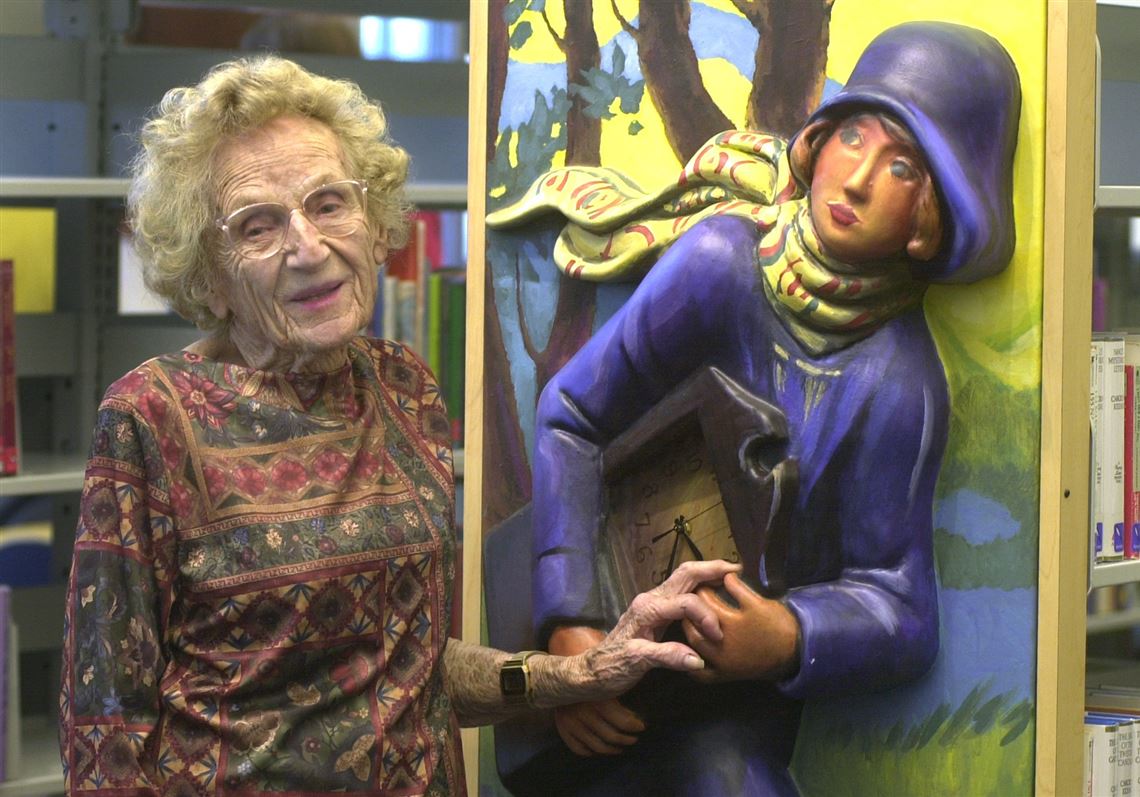
Millie once said in an interview that she never looked back on the books she’d written, “Because the minute I do I’m going into the past, and I never dwell on the past. I think about what I’m doing today and what I’m going to do tomorrow.”

I have had the opportunity to read a couple of books written by Millie, before Harriet got to them, and I have to say I did enjoy them. I didn’t know at the time that other books had been revised, and I had an original copy of Millie’s work, but when I found out, I could see the difference between Millie’s writing and other ghost writers/Harriet.

I am going to be purchasing a couple of books from Millie’s Penny Parker series to see what that series was like as well.

As president of the Nancy Drew Fan Club, Jennifer Fisher is considered a Nancy Drew and Mildred Benson expert. She operates the website nancydrewsleuth.com and donated her Nancy Drew collection several years ago to the Toledo library and now curates items to be added to the collection.

She is currently looking for information on Millie, from letters to manuscripts, to any memorabilia of hers that someone might have.

 On her site Jennifer details the life of Millie and talks about the impact her books (130 of them all together, including the Nancy Drew books) made for young women.

She also has a list of all of Millie’s books by series: https://www.nancydrewsleuth.com/mwbworks.html

Jennifer wrote about Millie in a special section on the site, including detailing the trial where Millie spoke about the conflict that eventually arose between her and Harriet Adams.

“On the stand when shown letters between herself and Harriet regarding criticisms and difficulties, she recalled that this was “a beginning conflict in what is Nancy. My Nancy would not be Mrs. Adams’ Nancy. Mrs. Adams was an entirely different person; she was more cultured and more refined. I was probably a rough and tumble newspaper person who had to earn a living, and I was out in the world. That was my type of Nancy.”

And it is that type of Nancy, and that type of woman, who so many women over the years have been drawn to despite the changes. Even with the changes later made to the books, the heart of Nancy, created by Millie, always remained.


Additional resources:

Mildred Wirt Benson works: https://www.nancydrewsleuth.com/mwbworks.html

Mildred Wirt Benson biography on Nancy Drew Sleuth: https://www.nancydrewsleuth.com/mildredwirtbenson.html

Nancy Drew Ghostwriter and Journalist Mildred Wirt Benson Flew Airplanes, Explored Jungles, and Wrote Hundreds of Children Books: https://slate.com/culture/2015/07/nancy-drew-ghostwriter-and-journalist-mildred-wirt-benson-flew-airplanes-explored-jungles-and-wrote-hundreds-of-children-s-books.html

Millie Benson’s Fascinating Story, Author of the Nancy Drew Mysteries | Toledo Stories | Full Film    https://www.youtube.com/watch?v=kIs5sRWzEV8

Information on Millie from the University of Iowa: https://www.lib.uiowa.edu/iwa/Millie/

Six Historical Fiction Chapter Books for Children 8 to 12. Books you can read for fun or education

As we all know, history is something important for children to know because, as the saying goes, we are doomed to repeat it if we don’t learn about the negatives of our past. History doesn’t only remind us of negative events, of course, though. We can also learn about how our ancestors lived and about the good things that happened in the past.

As a homeschooling mom, I am grateful to be able to expose my children to a variety of historical fiction that ties in with the historical events we are discussing in our lessons.

My youngest prefers hearing a story versus a list of facts. She learns about history better this way. We have been either introduced to or have found on our own, a selection of fiction books that have enriched our historical knowledge.

What I love about historical fiction is that while the book educates, it also entertains.

Here are six of my family’s favorite historical fiction books for children ages 8 to 12.

(Some links in this article may be affiliate links. This does not affect the cost to you, but may provide commission for items purchased.)

  1. Freedom Crossing by Margaret Goff Clark

|| Freedom Crossing ||

This story about a brother and sister who hide a slave in the mid-1800s is a nail-biter with a great message but also realistic portrayals of life for black people in the United States when slavery was legal. My daughter and I read it when she was 7, going on 8, and enjoyed it very much, even though it presented us with a difficult topic to discuss. We became wrapped up in the story of Martin, a young male slave, and Laura and her brother who work to help him escape to Canada.

Laura is not completely on board with this mission in the beginning and struggles with overcoming her preconceived ideas about slavery, which makes the story even more realistic and believable.

Description:

Laura Eastman returns to New York after living in the South with relatives for four years to discover that her brother and father are part of the Underground Railroad, helping fugitive slaves to escape to Canada. When a friend brings a runaway slave, Martin, to the house while her father and stepmother are away, Laura must decide what she believes — and whether she should help Martin escape.

2. Children of The Long House by Joseph Bruchac

|| Children of the Longhouse ||

This book is my 9-year-old daughter’s favorite book, besides Fortunately the Milk by Neil Gaiman and the Paddington books. It is a book that tells the story of the Native Americans of our country and kicked off a fascination of Native Americans for my daughter. She now has asked that we read and learn about Native Americans every Friday for our lessons.

The book tells the story of Ohkwa’ri and his sister Otsi:stia. Ohkwa’ri overhears the plans of some boys in the tribe who plan to attack another tribe and tells on them. This makes the boys angry at him and they threaten to hurt him. Between their threats and his being ready to grow into a man, Ohkwa’ri struggles with his emotions while his sister worries about him. Woven into the story is the lead-up to a showdown with the boys and Ohkwa’ri through the game  Tekwaarathon (lacrosse).

My daughter was 8 when I read this to her and when we were done she asked me to read it to her again.

I can see this as a book she will read on her own as she grows up as well.

Description:  When Ohkwa’ri overhears a group of older boys planning a raid on a neighboring village, he immediately tells his Mohawk elders. He has done the right thing—but he has also made enemies. Grabber and his friends will do anything they can to hurt him, especially during the village-wide game of Tekwaarathon (lacrosse). Ohkwa’ri believes in the path of peace, but can peaceful ways work against Grabber’s wrath?

We have several other books by this author on our book wish list.

3. The Year of Miss Agnes

|| The Year of Miss Agnes ||

This book was very charming and also very informative about Native Americans from Alaska.

It is the story of children from the point of view of Frederika (Fred for short), a Native American girl living in a fishing village in remote Alaska. Miss Agnes comes to their small school to teach, but the children think she’ll leave because all their teachers do – the smell of fish and living in the middle of nowhere gets to them too much.

This book had me laughing and a few chapters later I was crying from a touching scene. It was a gentle roller coaster of emotions and at the end, I had such a peaceful and warm feeling.

Description:

A year they’ll never forget
Ten-year-old Frederika (Fred for short) doesn’t have much faith that the new teacher in town will last very long. After all, they never do. Most teachers who come to their one-room schoolhouse in remote, Alaska leave at the first smell of fish, claiming that life there is just too hard.

But Miss Agnes is different — she doesn’t get frustrated with her students, and she throws away old textbooks and reads Robin Hood instead! For the first time, Fred and her classmates begin to enjoy their lessons and learn to read and write — but will Miss Agnes be like all the rest and leave as quickly as she came?

4. Toliver’s Secret by Esther Wood Brady

|| Toliver’s Secret ||

Like The Year of Mrs. Agnes, this book features a girl main character who is brave, strong and overcomes her fear to help not only her family but our country.

This one was an action-packed one and we both looked forward to when it was time to read another chapter of it. This one takes place before the Revolutionary War so it is perfect when you want to teach your child about the start of our nation.

Description:

When her grandfather is injured, 10-year-old Ellen Toliver replaces him on a top-secret patriotic mission. Disguised as a boy, she manages to smuggle a message to General George Washington.

5. Farmer Boy by Laura Ingalls Wilder

|| Farmer Boy ||

This book is part of the Little House on the Prairie series by Laura Ingalls Wilder but it does not focus on Laura and her family’s life. Instead, it is a book completely about Laura’s husband, Almonzo, and his childhood.

This book is rich in description of life in New York State in the mid to late 1800s. It is not about a pioneering family, like Laura’s other books are. This book is about Almonzo and his siblings growing up on a farm

Description:

While Laura Ingalls grows up in a little house on the Western prairie, Almanzo Wilder is living on a big farm in New York State. Here Almanzo and his brother and sisters help with the summer planting and fall harvest. In winter there is wood to be chopped and great slabs of ice to be cut from the river and stored. Time for fun comes when the jolly tin peddler visits or, best of all, when the fair comes to town.

This is Laura Ingalls Wilder’s beloved story of how her husband, Almanzo, grew up as a farmer boy far from the little house where Laura lived.

6. When Hitler Stole Pink Rabbit by Judith Kerr

|| When Hitler Stole Pink Rabbit||

I finished this book a couple of weeks ago and really enjoyed it. I have not read it with my daughter yet because she is extremely sensitive and I don’t really want to have to tell her about what happened during the Holocaust until she is a little bit older. The book is aimed at 5th grade and older so this one is a little bit out of the lower end of the age range of for this post.

It is very historically based since it is based on the true story of the author’s family and a great leap-off point to discuss the situations surrounding World War II.

Description:

Anna is not sure who Hitler is, but she sees his face on posters all over Berlin. Then one morning, Anna and her brother awake to find her father gone! Her mother explains that their father has had to leave and soon they will secretly join him. Anna just doesn’t understand. Why do their parents keep insisting that Germany is no longer safe for Jews like them?

Because of Hitler, Anna must leave everything behind as her family embarks on a journey that extends over several years and over the borders of many countries.

Have you read any of these books to or with your children?

Little Miss’s Reading Corner: Charlie the Ranch Dog, Monet’s Cat and others

(Disclaimer: This post contains affiliate links that could benefit the poster.)

Little Miss and I had some fun with some books this past month but did get a bit overwhelmed with how many we had to read so some went back to the library before we even opened them!

Apparently, my and The Husband’s love of books has rubbed off on her because she told me last week she can’t go to the library without bringing home at least one book.

I had suggested to her we merely go to our homeschool event and not sign out books.

“Oh no!” she declared. “No! I can’t go to the library without getting a book now! You’ve rubbed off on me. I must have books! I must become one with the books! I’m obsessed!

I am looking forward to another library trip soon, but here are three of our favorites from the last library pick-up and an extra one we had at home.

Monet’s Cat

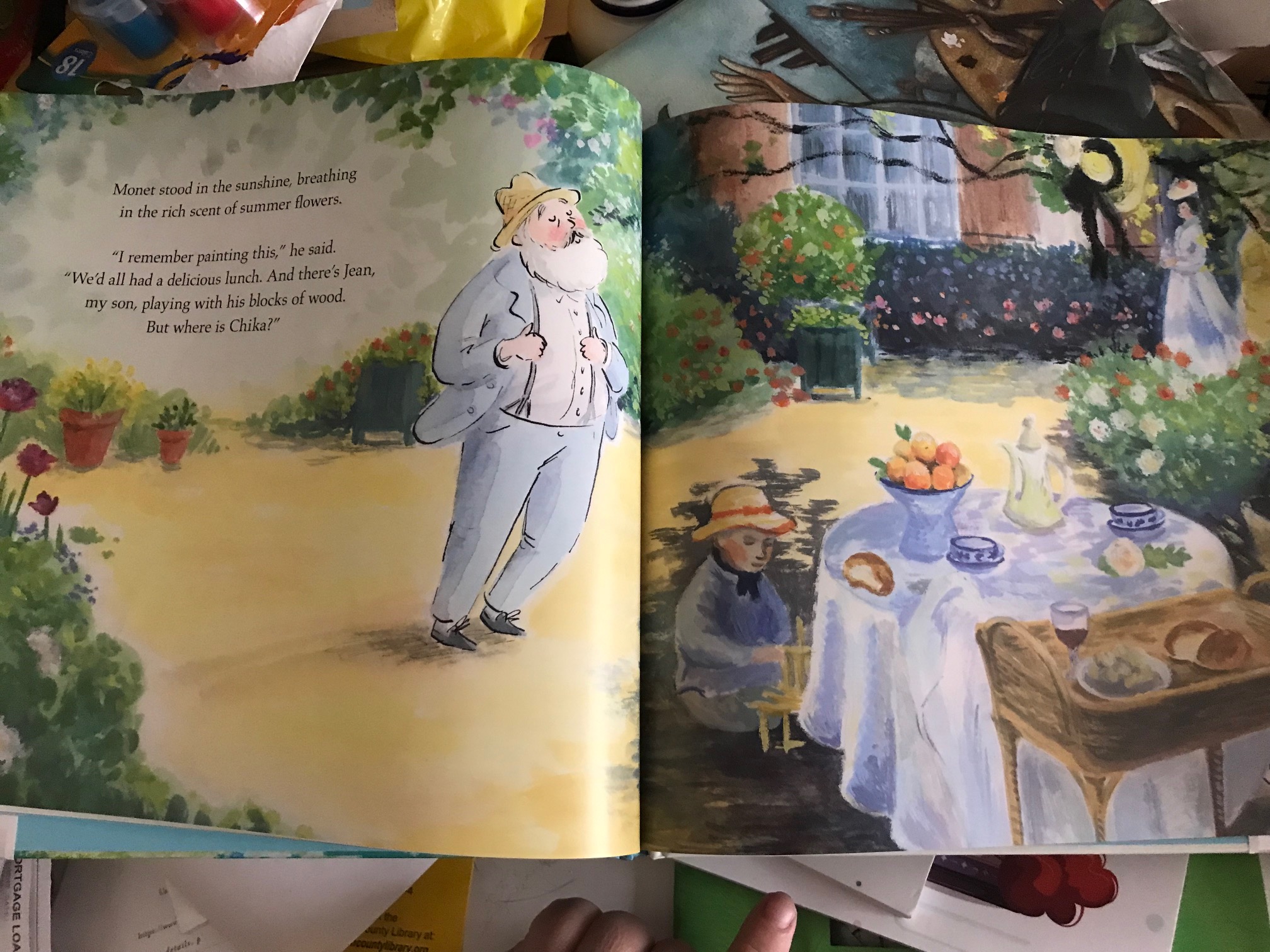
I signed this book out as part of our art unit after I looked online for books that were for children and focused on impressionist artists. I was thrilled that our small library actually had it. It’s the cutest book that leads children through the paintings of Claude Monet. Little Miss and I had already watched a special on him and after reading this book we also attempted to paint like him. It wasn’t a success, but we tried anyhow.

I loved the cute artwork and story in the book.

It was also interesting to note that there was an actual ceramic cat in Monet’s house that was later passed down to Monet’s son and that is what the book was based on.

This is a book I am going to buy for us to read later.

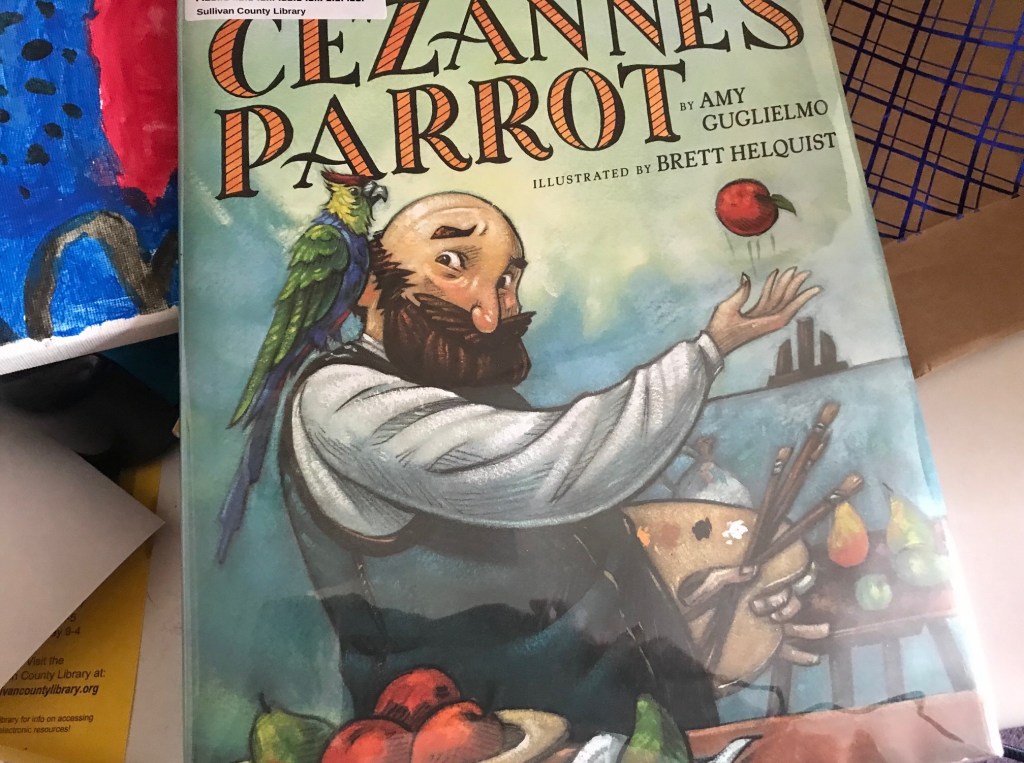
Cezanne’s Parrot.

Sticking with the artist theme, I signed this one out as well to go with our unit on the Impressionist movement.

We actually haven’t finished this one because it didn’t catch Little Miss’s attention as quickly as Monet’s Cat. She got tired in the middle of reading it so I hope we can finish it today actually. It is due back to the library soon.

I’m not sure if these books are part of a series or not but they are, obviously, similar in that they deal with animals that insert themselves in the lives of artists who actually knew each other when they were alive. They also showcase the art of each artist within the pages.

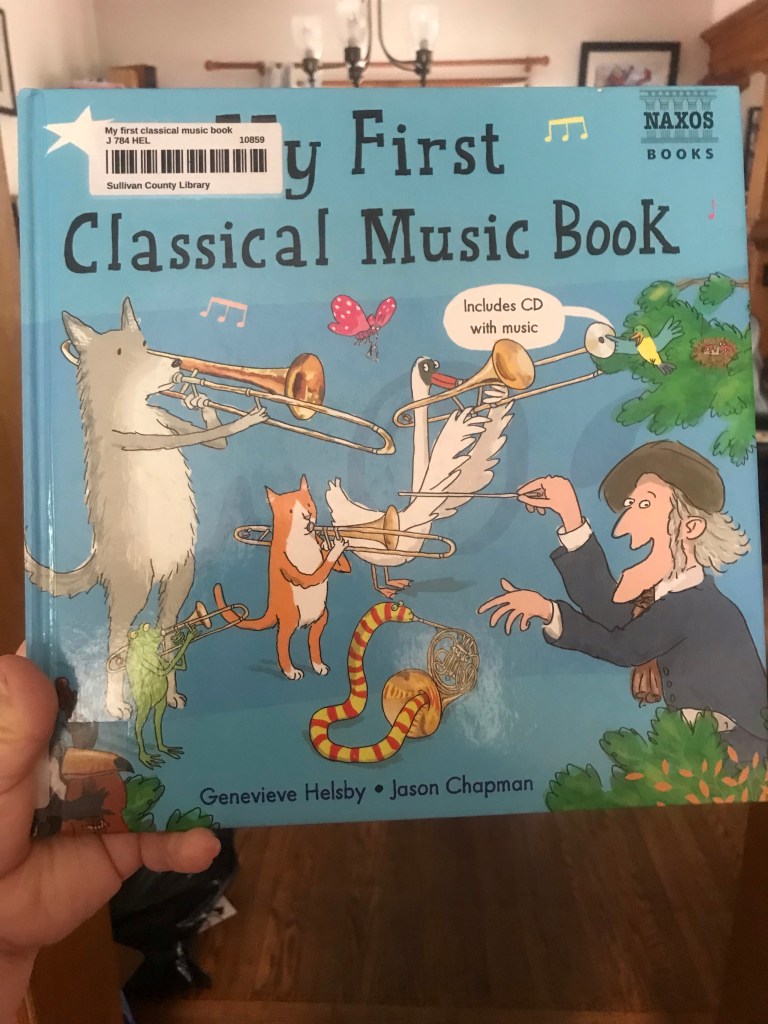
My First Classical Music Book

Since we are focusing on the arts for homeschool for the month of May, I also picked up a book about music from the library. This is another book I will probably purchase for us.

It is full of information about composers but also about music and instruments in general and comes with a CD to give examples of the music talked about in the book.

Charlie The Ranch Dog

This book was not exactly a library pick but I did find it at a library sale. There are six mini books collected in this one hardcover collection.

Little Miss loved reading all the books to me before bed for a week. They are cute, simple stories. Little Miss loved finding the chipmunk hidden in the drawings almost on every page of the book.

She also loved sticking all the stickers to the wall in her room.

Mother Goose Bruce

This is a book I picked up from an online used sale.

It is so cute and funny. I might have giggled at parts of it more than Little Miss did.

She did like it, though and I am glad that we own it so we can read it again. There are two other books in the series and now I am going to look for them too. This book was in such good shape that it still looks new, even though I picked it up for more than half it’s original price.

The story is about a bear that is essentially adopted by four goslings who imprint on him when he tried to cook them for dinner

Little House in the Big Woods

We are also re-reading Little House in the Big Woods. The difference this time is that Little Miss is reading to me until she almost falls asleep and then I take over for her. It’s so much fun to see her getting into reading this way and to see her reading to me like I have been to her for years now.

For history, we are reading The Cabin Faced West by Jean Fritz and she’s not as big of a fan of it as she is the Little House series, but it focuses on Pennsylvania history and we needed a unit of that before the school year ended so it is working out well.

Little Miss’s Reading Corner: Silly, spooky, and grasshopper books

Little Miss and I took a trip to the library a couple of weeks ago and she picked out some books for us to read together. I thought I’d share a few from our stack today for her Reading Corner. I took photos of the fronts of the books, but our library puts the barcode right over the titles, which I find terribly annoying as someone who likes to photograph what I’m reading. Silly, I know. I suppose I’ll get over it. Sigh.

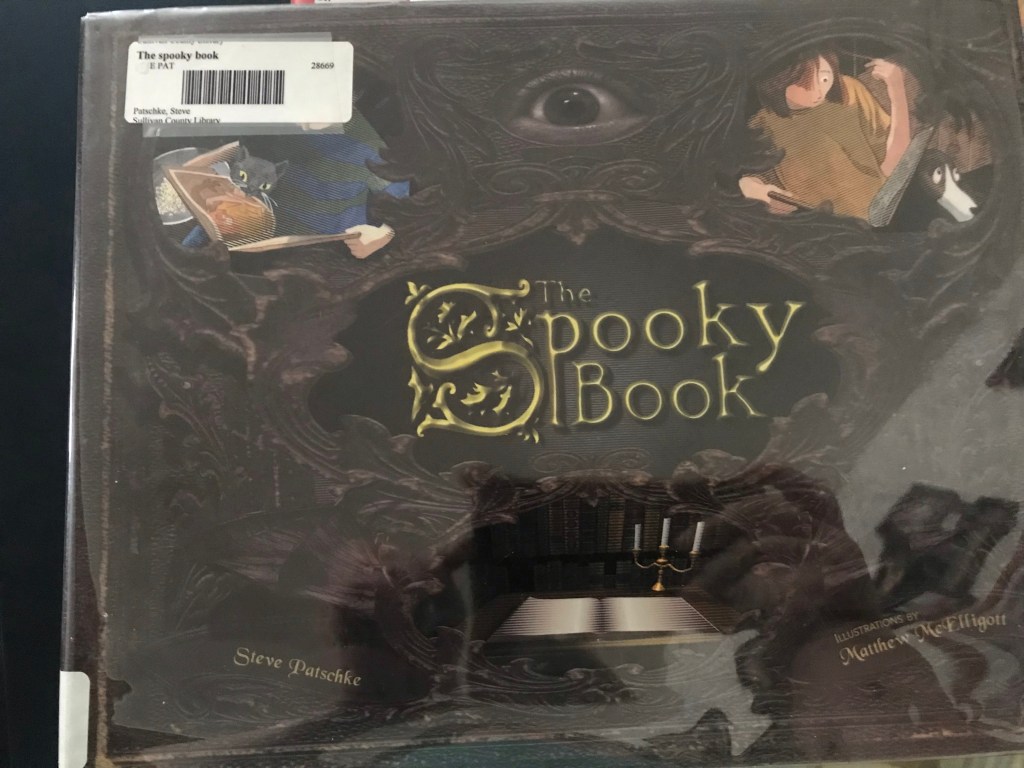
Little Miss wanted something “spooky” even though she doesn’t usually like spooky stuff. She said she would read it during the day. So we grabbed a book called simply The Spooky Book by Steve Patschke and illustrated by Matthew McElligott.

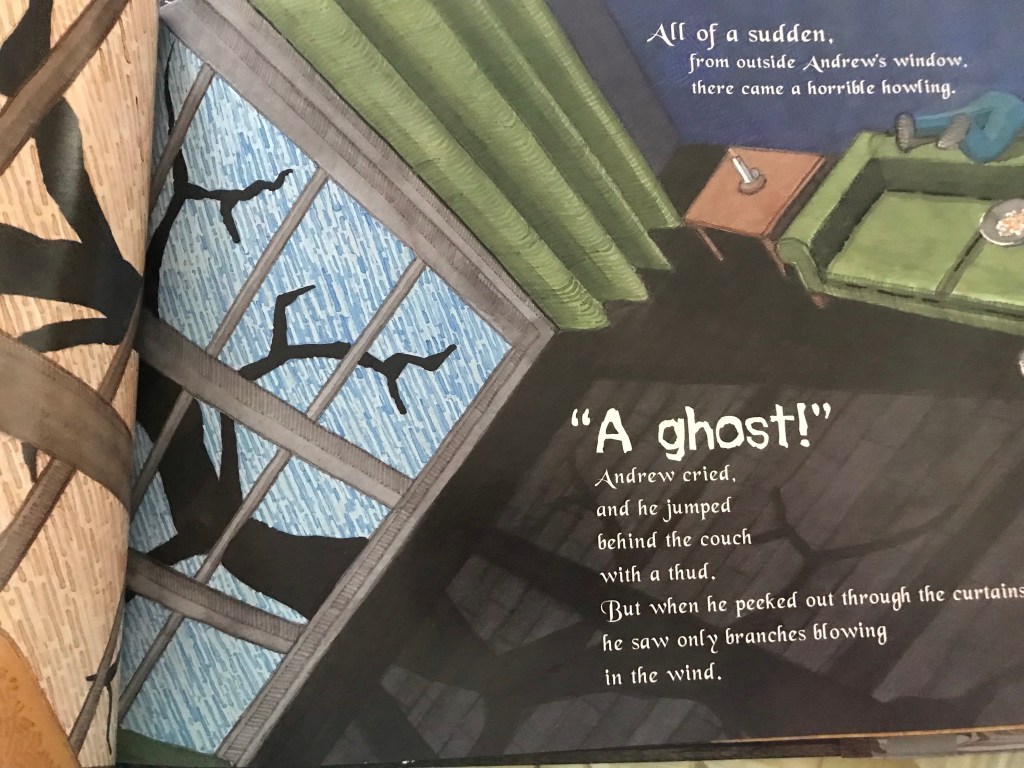
It was a very cute book about a boy reading a spooky book that is about a girl reading a spooky book at the same time. When something happens in the book, it happens to the boy too.

It’s a fun book that insists a book can’t scare you while it scares the people reading it. We thought it was very cute.

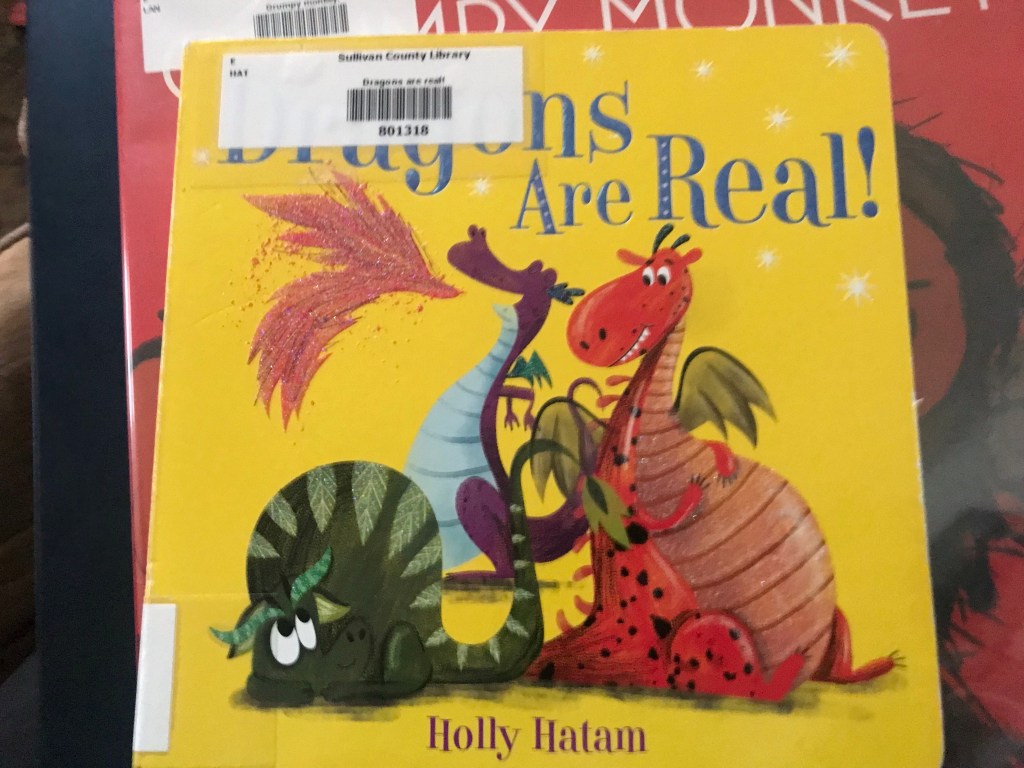
Next Little Miss picked a book about dragons because she loves dragon stories.

Dragons Are Real by Holly Hatam is a board book probably meant for younger readers and those less discerning about dragons because Little Miss kept correcting the lore within its pages saying “that’s not true,” or “dragons don’t do that” when she disagreed with the declarations made inside it.

Overall we enjoyed the book, however, because the illustrations were very colorful.


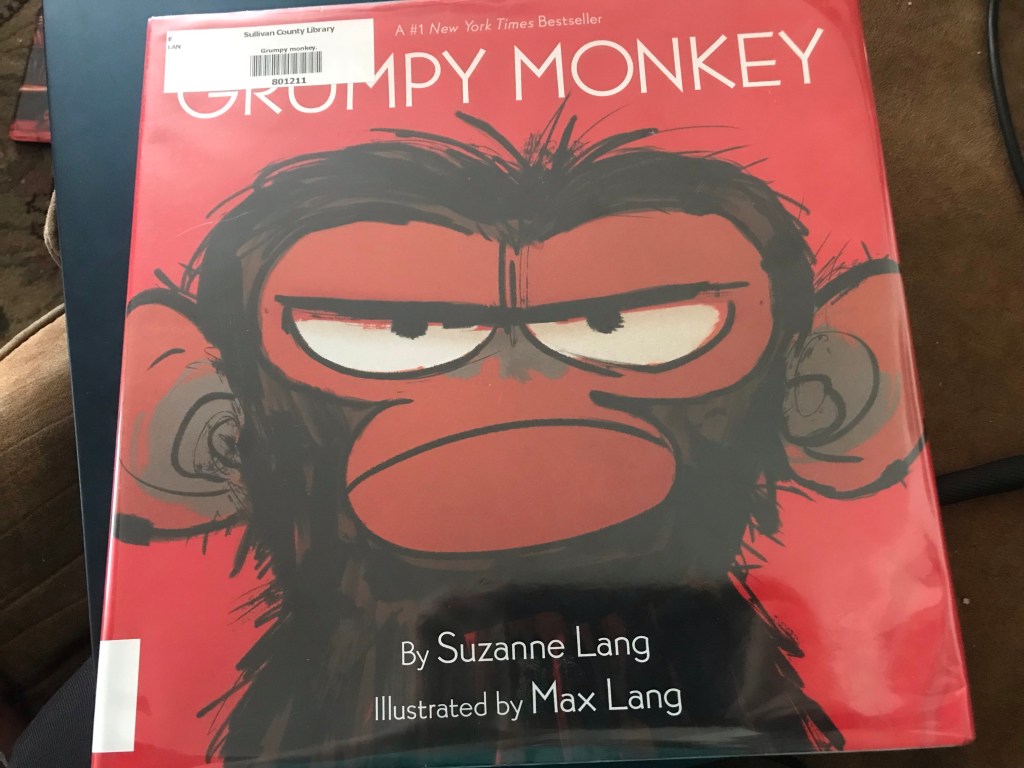
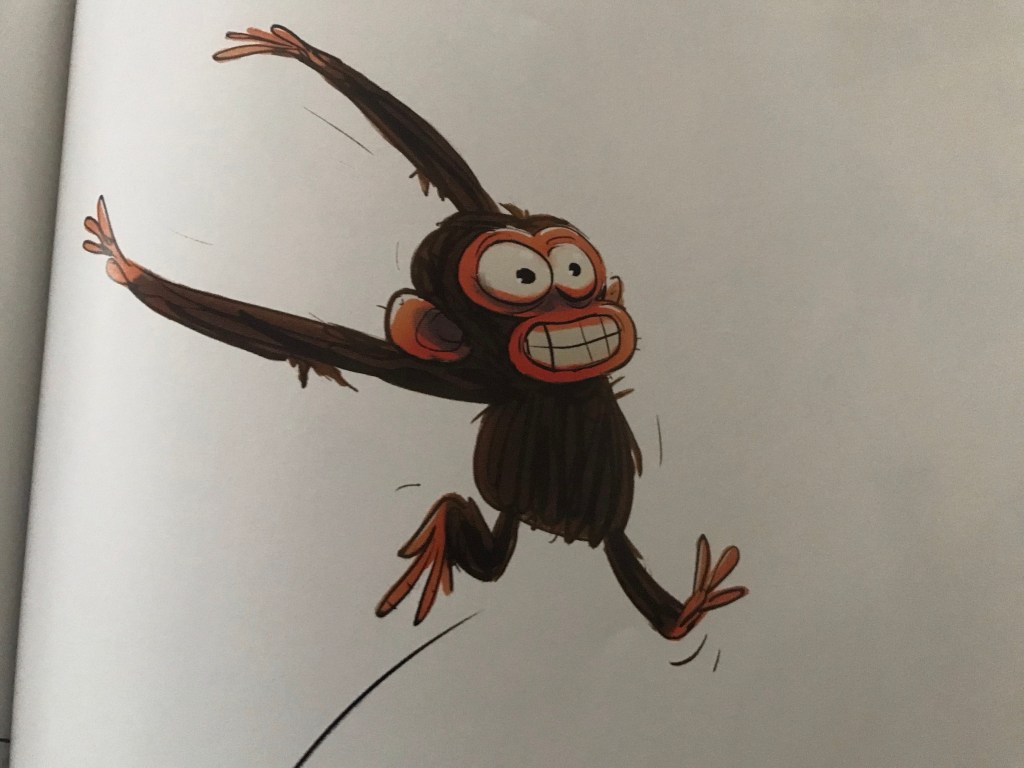
I picked out Grumpy Monkey by Suzanne Lang and illustrated by Max Long (brother and sister) and we both ended up really liking it, partly because the illustrations featured extra creatures in the images, hanging out on trees and in leaves, etc.

The story is about a monkey who is grumpy but doesn’t know why and tries his best to be happy for everyone who keeps telling him he needs to be happy.

The message is that sometimes we are grumpy and it’s okay and we don’t have to figure out why we are grumpy. As long as we aren’t mean to others while we are grumpy. That’s not okay.

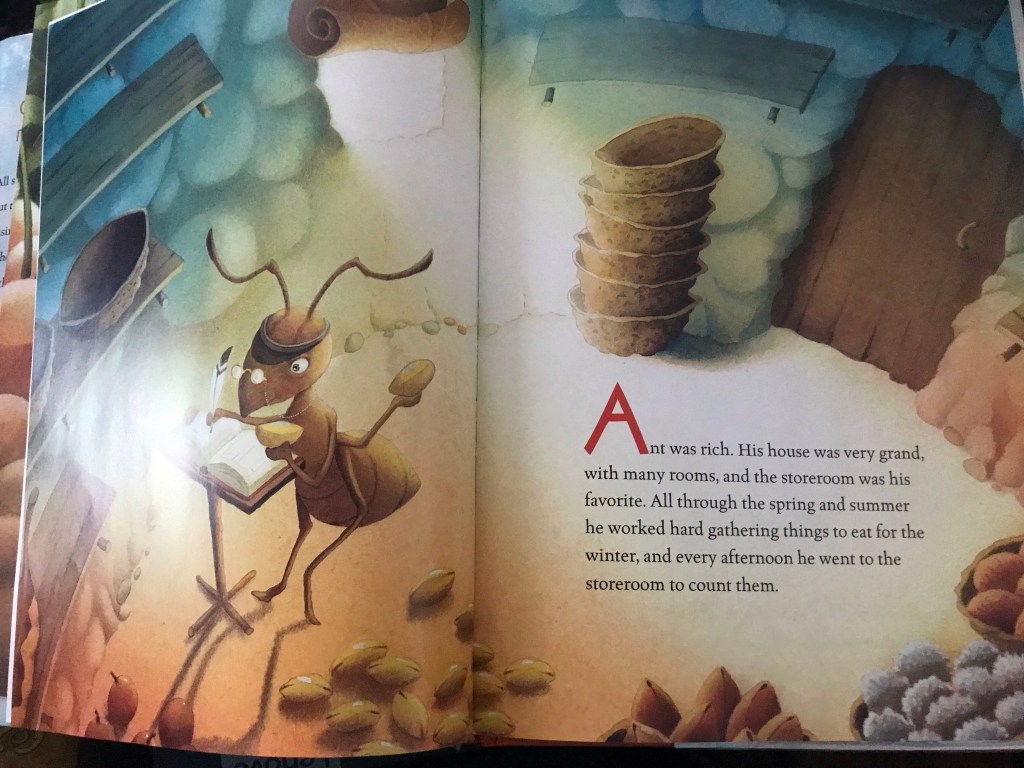
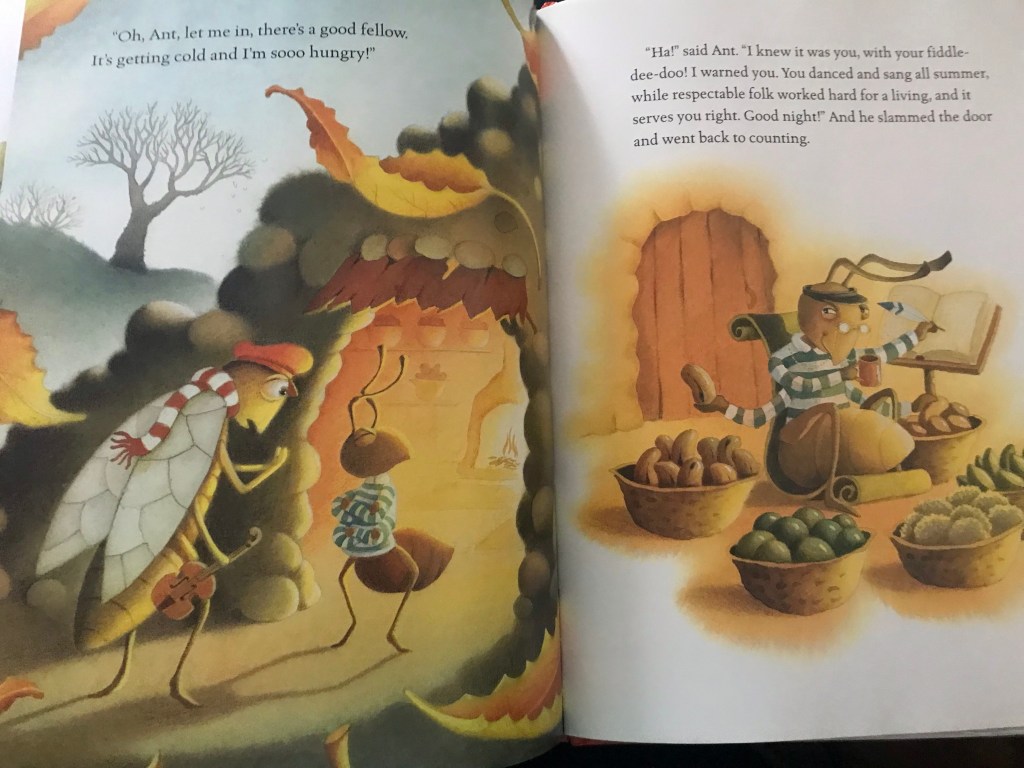
I placed The Ant and The Grasshopper by Luli Gray and illustrated by Giuliano Ferri on hold as part of our grasshopper unit.

This was a very cute book about an ant who prepared for the winter and a grasshopper who didn’t and how the ant helped the grasshopper and they became friends.

Little Miss has been fascinated with grasshoppers lately, including catching them in the backyard and running to me to show me what she’s caught.

We also signed out a book about dinosaurs and another one about grasshoppers, but haven’t had a chance to read them yet.

Hopefully we will get to them this week before they are due.

So that’s what Little Miss has been reading. How about you?