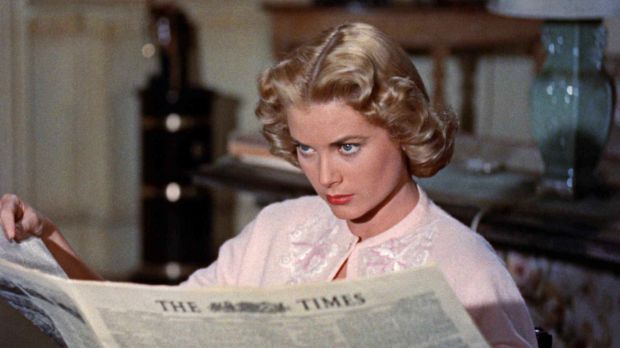
Comfy, Cozy Cinema: Dial M for Murder

Erin from Still Life, With Cracker Crumbs and I are watching Comfy, Cozy movies from September through November.

This week we watched Dial M for Murder (1954), directed by Alfred Hitchcock.

This was a great follow up to Rear Window and I’m so glad Erin suggested both of these. I’ve been wanting to watch Dial M for Murder for years but just never got around to it with all the other great movies out there to watch.

Now that I’ve watched it, I wouldn’t say it’s my favorite Hitchcock movie of all time but I really did enjoy it. In some ways I thought things fell together a little too easily at points in this movie but the way they fell into place made me enjoy it – if that makes any sense. It might not make sense if you haven’t watched the movie but if you have then you probably know what I mean.

xr:d:DAEexVzeeIc:4716,j:6082518224336963441,t:23102317

Here we have another Hitchcock movie with one of his favorite actresses, Grace Kelly. The movie also stars Ray Milland and Robert Cummings.

Dial M for Murder, based on a very popular play and screenplay by Frederick Knott, was made before Rear Window but both movies released at the same time. It was this movie that made Hitchcock decide he wanted Kelly for Rear Window.

First a little bit about the plot of the film. Tony Wendice is a retired professional British tennis player who is married to his socialite wife, Margot, who has had an affair in the past with American crime-fiction writer Mark Halliday.

Margot doesn’t think Tony knows about the affair. She burned all the letters she received from Mark when she broke it off with him. All the letters except one. She kept that one in her handbag and though we are never definitely sure what was in the letter, we know it was something that meant a lot to her.

Mark has now come to London for a visit and wants to see both Margot and Tony. They are set to go out to a performance together that night but Tony bails at the last minute and tells  them to go on without him and have some fun.

Tony’s eagerness to stay home is what first clued me in that something a bit criminal was about to go down and go down it does.

Tony blackmails a former college classmate to kill Margot. Tony jokes with Mark later when he and Margot come home about how he, Mark, would know more about how to murder a person since he’s a crime writer.

Margo suggests that he and Tony write a book together after Mark is looking through all their clippings of all they did while Tony was a tennis pro and suggests Mark write a book.

“Yes, Mark, will you provide me with the perfect murder?” Tony asks.

Mark quips back, that his books focus less on the detecting and more on the crime itself. “I usually put myself in the criminal’s shoes and then ask what do I do next.”

Mark laughs and says he thinks he can plan a murder on his own but knows that in real life mistakes can be made. It’s not the same as it is in the book, he reminds Tony.

Tony is cocky though. He seems to think he’s a murder-planning master.

Foreshadow much?

My husband says that Hitchcock loved Grace Kelly for his movies and when I looked online that was indeed true. While I thought I had once read that Hitchcock had a strange obsession with Kelly, The Husband says it is more like he felt she was like his muse. That weird obsession thing was with another actress – Tippi Hedren.

To Hitchcock, Kelly was simply extremely beautiful and talented and he felt like there was no actress like her.

According to Offscreen.com, Hitchcock told Donald Spoto, who wrote his biography, that “The subtlety of Grace’s sexuality —her elegant sexiness— appealed to me. That may sound strange, but I think that Grace conveyed so much more sex than the average movie sexpot. With Grace, you had to find out – you had to discover it.”

Before concluding production on Dial M for Murder Hitchcock was already planning his next film – with Kelly in the lead. That next film was Rear Window.

Like Rear Window, Kelly wears some amazing outfits in this movie, by the way. The one that stands out for me is the red dress in the beginning. What a stunner.
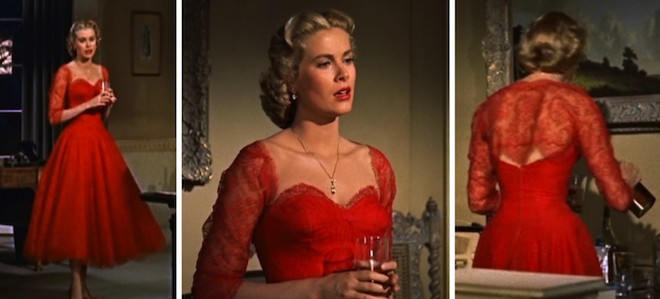
I like what the writer on Offscreen said about the dress and the relationship of her outfits to scenes in the movie:

“Hitchcock starts the opening sequence at a breakfast table where Kelly is dressed demurely in a beige dressing gown; she reads a notice about the arrival of her lover on the Queen Mary; the ship arrives in dock; in seconds she is costumed in a red dress, embracing him in the flat where hours earlier she breakfasted with her supposedly unsuspecting husband. They are in the classic London flat but the picture presented is quite different as a result of clever writing, editing and colour coding. It also played on Hitchcock’s private perception of Kelly: he nicknamed her “the snow princess.”

I thought it was interesting that it was Cary Grant who told Hitchcock about the play version of Dial M for Murder, which debuted in 1952. Grant saw himself as the potential wife-killer, something Offscreen.com says Hitchcock always wanted Grant to play. Unfortunately Grant’s agents asked for way too much money so Hitchcock turned to Milland.

As a huge fan of Cary Grant I can honestly say I could see him playing the part Milland played, but Milland pulled it off in more dramatic fashion than I think Cary might have. Sometimes I have trouble seeing Cary in a dramatic role because even when I know he’s trying to be serious I think of his more playful movies and struggle to focus on him being the “bad guy.”

Milland, by the way, had won an Academy Award in 1945 for The Lost Weekend, so Hitchcock felt he was a good second pick.

Hitchcock chose not to change the play when he made the film and was quoted as saying this: “You buy a play for its construction. It’s the construction that makes it a hit. If you change that you’re ruining the very thing you bought. Just shoot the play.”

I thought this was ironic since he did change the endings of films that were based on novels he bought the rights to.

Have you ever seen this one? What did you think of it? Is it among your favorite Alfred Hitchcock films?

I was looking through a list of Alfred Hitchcock films the other day and I realized there are a ton I have never seen. I hope to make a marathon of his movies sometime soon.

I found Dial M For Murder on Tubi, by the way.

You can read Erin’s impression of the movie here:https://crackercrumblife.com/2024/10/24/comfy-cozy-cinema-dial-m-for-murder/

Up next in our Comfy, Cozy Cinema is a Halloween wildcard but Erin and I are both watching Practical Magic if you want to join us.

Here is our complete list of movies that we’ve watched and will be watching.

You can find links to my impressions of the ones we’ve watched so far here.

If you want to link up your own post about this movie, or even other ones, you can do so at this link:

You are invited to the Inlinkz link party!

Click here to enter
https://fresh.inlinkz.com/js/widget/load.js?id=c0efdbe6b4add43dd7ef

Comfy, Cozy Cinema: Rear Window

“Nothing has caused the human race so much trouble as intelligence .” – Stella from Rear Window


Erin from Still Life, With Cracker Crumbs and I are watching Comfy, Cozy movies this September and October and this week we watched Alfred Hitchcock’s Rear Window – or rewatched for me.

Rear Window is one of Hitchcock’s more well-known and praised movies because of the intricacy of the story, the attention to detail, and the masterful storytelling that makes the viewer as desperate as the main character to find out what happens.

Laid up with a broken leg, our main character, photojournalist Jeff Jefferies (Jimmy Stewart) is stuck in a two-room apartment looking out on all his neighbors on the other side of his apartment complex.

It’s like he has a bunch of TV channels in each window to watch. There’s always something on. He uses a pair of binoculars to watch what they’re doing part of the time and part of the time he can see them with the naked eye.

There is a newlywed couple who are – ahem – getting to know each other; a couple who appear to be arguing; a woman who lowers her dog down to do his business in the little yard below each day; an athletic dancer who likes to stretch in front of her window; a lonely woman who eats her dinners alone; and many other characters for Jeff to watch.

One night he wakes up in his wheelchair, where he has been sitting for the whole movie, because he hears a scream and breaking class. He can’t figure out where the sounds came from and drifts back to sleep but later, when he wakes up again, he notices the one neighbor – the jewelry salesman who argued with his wife — acting very mysterious.

The neighbor in question, Lars Thorwald, (Raymond Burr) starts going in and out of his apartment with a suitcase. It’s around 2 a.m. when this starts at it’s pouring out. Jeff can’t figure out what that’s all about and struggles to stay awake to watch the man but finally succumbs to exhaustion.

I should mention that Jeff has a girlfriend, Lisa, (Grace Kelly) who is absolutely perfect, but he is making all kinds of excuses not to marry her and one of those excuses is that she won’t enjoy traveling with a journalist.

He tells his nurse (Thelma Ritter) and Lisa about it on their separate visits, but both seem to think he just has a bad case of cabin fever.

As he continues to ponder it all and notices that the man’s wife is no longer in the apartment, Jeff pulls out the zoom lens of his camera and watches the man cutting something up, putting it in bags, and carrying it out. Now he’s starting to really get antsy about what he’s witnessed.  It isn’t until Lisa is over one night and he’s telling her what he thinks that she begins to get a little interest as well. What piques both their interest is how the man is tying up a trunk and removing the mattress from the room.

Soon the nurse, Stella, is also pulled in, and all three of them begin to speculate what really happened.

Before long Jeff has Stella and Lisa acting as willing spies for him to find out what really happened.

If you want suspense then this the right movie for you. It is one of Hitchcock’s most suspenseful and nail biting movies.

The movie is based on a short story by Cornell Woolrich. I read an essay online (the author of which I couldn’t find, but it did say it wasn’t AI) that said this movie didn’t attempt to copy the story but instead recreated the plot based on the idea of it.

I did find a summary of the story and the ending is different in some ways to the movie, but with the final outcome being the same.

This writer, as other critics, point out that one aspect of this film that makes it so brilliant is that the viewer knows as much as Jeff does during the movie. We, the viewer, are watching it all unfold as he is and are seeing it from his same vantage point. We aren’t taken into apartments where he isn’t or into scenes that he isn’t looking at from his window. We are a participant in the film, so to speak.

Rear Window was filmed on a budget of $1 million but pulled in $36 million and became the top grossing film of 1954.

According to the site, All The Right Movies, the original story was based on a high-profile murder case in 1924 in Sussex England where a man named Patrick Mahon — committed a crime – well, I won’t tell you what happened in case you haven’t seen Rear Window.

Stewart had already been in one Hitchcock movie before this one (Rope) and would film two others afterward – Vertigo and The Man Who Knew Too Much.

For this film he was anxious to work with Hitchcock and said he wouldn’t take a salary but would take part of the film’s profits, which I think worked out very well for him. While the two got along, there were also times they spoke very little to each other, according to other actors who worked with them.

Wendell Corey, who played Detective Doyle in the movie, said, “Jimmy and Hitch would communicate in unspoken glances, and Jimmy would give him a steely look if Hitch said something he didn’t like. The only direction I ever saw Jimmy take was ‘the scene feels tired’ – there was steel under all that mushiness.”

Corey wasn’t a fan of Stewart in some ways. He was a nice guy, he said, but claimed he was also very arrogant on the set of Rear Window.

Others didn’t apparently didn’t hold this assessment and to me I think it was Corey who had the arrogance issue.

I thought it was interesting that Stewart’s wife asked to be on set during the filming of this movie because of Grace Kelly. According to trivia on All The Right Movies, “Grace Kelly may have been a little too friendly for some people, though – especially James Stewart’s wife. In 1954, Kelly had a reputation for having affairs with her leading men and, after she told a magazine she thought Stewart was one of the most attractive men she’d ever met, Stewart’s wife, Gloria, insisted on being on the set every day to keep an eye on things.”

Rear Window was Stewart’s favorite film of those he worked on Hitchcock with.

“The wonderful thing about Rear Window is that so much of it is visual,” he said in an interview. “You really have to keep your eyes open in the film, because it’s a complicated thing. This was my favorite film to make with Hitch.”

One more piece of trivia that had me snickering was that Hitchcock made the bad guy in this film (Again, I’ll keep it quiet on who the real bad guy is) look and act like David Selznick who produced Rebecca with Hitchcock. Hitchcock said Selznick interfered so much on that film he disowned it. In Rear Window he got his revenge by making the guilty party look like the producer he couldn’t stand.

I love the trivia behind the making of movies, as you know if you’ve read any of my previous posts, so I could go on and on about it. I won’t though. Instead, I’ll point you over to Erin’s blog for her views on it:

Keeping with the Hitchcock and Grace Kelly movies, we will be switching up our movie lineup next week and watching Dial M For Murder. To explain why we are choosing to watch this instead of Murder by Death, I’ll refer to Erin’s well-written explanation, which she also shares on her blog today: https://crackercrumblife.com/2024/10/17/comfy-cozy-cinema-rear-window/

“We were originally going to watch a movie I chose, Murder by Death. I chose it because I read that it was funny and because it has Maggie Smith in it but I didn’t do much research on it other than that.

 However, after doing some reading it looks like it could be considered problematic so we are going to scrap that one and trade it for Dial M for Murder instead. It is probably not a bad movie, but a movie that didn’t meet the goal of what was trying to be achieved – it was actually trying to shine a light on racism and homophobia, and no one mentions the ableism but I think I read that is in there too, that was prevalent in Hollywood and the world, but instead just looks like it is in fact all of those things itself.

Anyway, we decided to watch Dial M for Murder for Comfy Cozy Cinema, since we are trying to be cozy and snug with this fun movie watching challenge.  I think both of us plan on watching Murder by Death at some point though, whether it is together or just on our own.”

Here is the rest of the full list of movies we are watching or have watched.

I’m also including a link to my blog posts up from this year’s Comfy, Cozy Cinema, at the top of the page under the heading Movie Impressions.

Before I close out for today, I wanted to mention that we did pick a winner for our Comfy, Cozy Giveaway – Yvonne – and she has been notified! Thank you to all of you who entered the giveaway, followed our blogs, Etsy and Substack and I hope you will stick around and have some fun with us as we write about books, movies, and our lives.

If you end up writing about Rear Window or any of the other movies we are watching, please feel free to link up with our linky. You can add a link to the link if it is open, even if it is for a different movie.

Lisa H. 7:59 PM (1 hour ago) to me

You are invited to the Inlinkz link party!

Click here to enter
https://fresh.inlinkz.com/js/widget/load.js?id=c0efdbe6b4add43dd7ef

Comfy, Cozy Cinema: Strangers on a Train

For the rest of October and all of November, Erin from Still Life, With Cracker Crumbs and I will be watching cozy or comfy movies and some of them will have a little mystery or adventure added in.

This week we watched Strangers on a Train directed by Alfred Hitchcock and starring Robert Walker, Farley Granger, Ruth Roman, Kasey Rogers, and Pat Hitchcock (Aflred’s daughter). This was yet another movie based on a book. This one was based on Patricia Highsmith’s first book. She also wrote The Talented Mr. Ripley.

This movie kicks right off. No leading into things slowly.

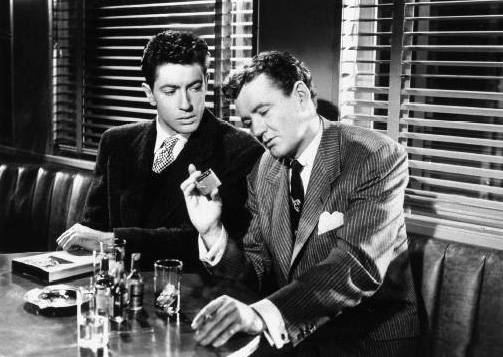
The main characters immediately meet on a train (hence the title) aaaaand immediately I felt uncomfortable with both of them.

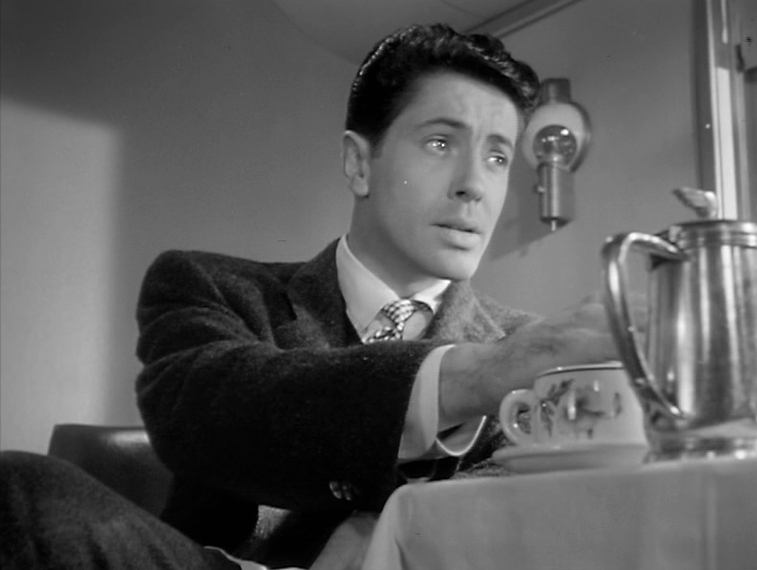
The younger one, Guy Haines, a tennis player just seemed quite monotone and bored in his delivery and also anxious to get a divorce from his wife so he could run off with the senator’s daughter. Later, though, I learned the wife was not so nice so I felt better about him. My first impression was not good.

My first impression of Bruno Antony was definitely not good.

Dude gave off serial killer vibes from second one.

For good reason, I might add.

He wants to know, pretty quick into the movie, what way Guy would like to kill his wife. Then he talks about how he’d like to kill his own father.

Then there is this convo:

Bruno: That reminds me of a *wonderful* idea I had once. I used to put myself to sleep at night – figuring it out. Now, let’s say that – that you’d like to get rid of your wife.

Guy: That’s a morbid thought.

Bruno: Oh, no, no, no, no. Just suppose. Let’s say you had a very good reason.

Guy: No, let’s – let’s not say…

Bruno: No, no! Let’s say. Now, you’d be afraid to kill her. You’d get caught. And what would trip you up? The motive. Ah. Now here’s my idea.

Guy: I’m afraid I haven’t time to listen, Bruno.

Bruno: Listen, it’s so simple, too. Two fellows meet accidentally, like you and me. No connection between them at all. Never seen each other before. Each one has somebody he’d like to get rid of. So they swap murders.

Guy: Swap murders?

Bruno: Each fellow does the other fellow’s murder. Then there’s nothing to connect them. Each one has murdered a total stranger. Like you do my murder and I do yours. Criss Cross.

Guy humors Bruno enough to get off the train at his stop and when Bruno says, “So, you liked my plan,” Guy is like, “Sure, sure. Gotta go, dude.”

When we see Bruno later at home with his mother, we see how serious he was about this whole murder thing. That and he may be pretty far out there mentally. Like lunatic level.

His mother is filing his fingernails and wants to know if he’s given up that crazy notion he’d had about blowing up the White House.

Mrs. Anthony: Well, I do hope you’ve forgotten about that silly little plan of yours.

Bruno: Which one?

Mrs. Anthony: About blowing up the White House.

Bruno: Oh, Ma, I was only fooling. Besides, what would the President say?

Mrs. Anthony: You’re a naughty boy, Bruno.

Only, we, the viewers, are pretty sure Bruno wasn’t kidding at all. Not like even a little bit.

Meanwhile, Guy has confronted his ex-wife who is a real “winner”. She says she wants a divorce but then she says maybe she doesn’t, now that Guy wants to marry the senator’s daughter. It’s in all the papers that they are going to get married and Miriam, the estranged wife, doesn’t like that at all. She threatens Guy by telling everyone that he wants to divorce her even though she’s pregnant. She’s pregnant, by the way, with another man’s baby.

Or…is she?

This is all called into question later when she’s running around with two guys at a carnival. That’s where Bruno catches up to her and proves to the viewers that he really is a psychopath who thinks if he kills Guy’s wife then Guy will kill his father.

As in all of Hitchcock’s movies, the angles and cinematography are insanely captivating.

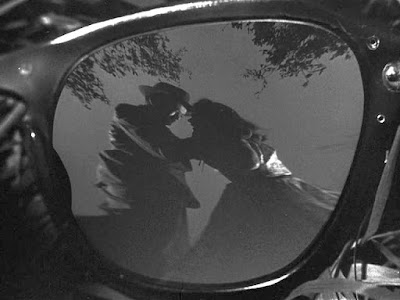
It isn’t a spoiler to say Bruno takes Miriam out and when he does so we watch the killing through the reflection of Miriam’s glasses, which she knocked off in the struggle.

After the deed is done, Bruno can’t wait to tell Guy.

Guy is horrified, not thrilled, and tells Bruno he’ll call the police.

Bruno, however,  says, “You can’t call the police. We were both in on it, remember? You’re the one who benefits, Guy. You’re a free man now. I didn’t even know the girl.”

Yikes. Now Guy is trapped and the way the bars of the fence he is standing outside of fall across his face they look like prison bars.

If you want to know if he gets out of trouble, you will have to watch the rest of the movie, which involves a heart-pounding climax where Guy tries to make sure Bruno can’t pin the murder on him by planting Guy’s lighter at the scene.

Almost every scene with Bruno freaks me out but when he starts showing up everywhere Guy is, asking people weird questions like if they’ve ever thought about how to murder people, I really got freaked out.

Especially the scene where he asks a woman at a fancy party at the senator’s house how she would kill her husband. Then he starts to talk about how to strangle a person and offers to show her and – again. Creepy.

He says to her, as he puts his hands around her neck, “You don’t mind if I borrow your neck, do you?”

Shudder.

You’ll have to watch the movie but it’s pretty messed up.

It’s also very messed up to me that Bruno seems to get a thrill from talking about and committing murder. Like a sexual thrill. Yuck. He also seems to have a crush on Guy and when he tells Guy, “I like you,” Guy punches him so I am pretty sure Guy has the same impression.

 You can find plenty of critiques of this movie online, including one by Adrian Martin on filmcritic.com.au that states: “The film is ingeniously structured like an obsessive, inescapable nightmare – with uncanny repetitions of events, ghostly echoes of small details, and an ambiguous, implicitly homoerotic emotional transference between the central characters.”

See? I wasn’t the only one that got the vibe that Bruno was “after” Guy.

My husband read that the man who played Bruno (Robert Walker) actually died shortly after production. He accidentally died after he had a psychological breakdown and his housekeeper called a doctor. The doctor gave him amobarbital but Walker had drank alcohol earlier and the two interacted and he died at the age of 32. Ahem. He does not look 32. I thought for sure the dude was in his 50s. Either way, his death was very sad, especially because there is some mystery surrounding it. A friend claims he was there at the time and Walker was acting normally but that the doctor showed up and said he needed an injection and the friend actually held the man down when Walker refused. Walker died not long after. The friend is not mentioned as having been there in the official inquiry, however. Very strange.

A little aside here about Hitchcock: in case you don’t know, he was a sexist. He didn’t like certain women and really liked other women. So if he didn’t like a woman he harassed them nonstop on set. If he really liked them he stalked them. Not a great guy in real life even if he was a brilliant movie maker.

His issues with women showed up in this movie as well as shown in this paragraph on Wikipedia, which is also backed up by other articles about the making of the movie: “Warner Bros. wanted their own stars, already under contract, cast wherever possible. In the casting of Anne Morton (the senator’s daughter), Jack L. Warner got what he wanted when he assigned Ruth Roman to the project, over Hitchcock’s objections. The director found her “bristling” and “lacking in sex appeal” and said that she had been “foisted upon him.” Perhaps it was the circumstances of her forced casting, but Roman became the target of Hitchcock’s scorn throughout the production. Granger described Hitchcock’s attitude toward Roman as “disinterest” in the actress, and said he saw Hitchcock treat Edith Evanson the same way on the set of Rope (1948). “He had to have one person in each film he could harass,” Granger said.”

Hitchcock also didn’t get along with author Raymond Chandler who he hired to write the screenplay for the movie. Chandler didn’t like Hitchcock’s changes to the original novel, for one, and he also hated working with Hitchcock who liked to ramble and analyze what they should do in the movie instead of just getting to the point and letting Chandler write the screenplay. Chandler apparently became so annoyed at Hitchcock that at one point, while watching Hitchcock get out of his car, Chandler said loudly, where Hitchcock could hear him, “Look at that fat b****** trying to get out of that car.” He quit not long after and the screenplay was written by Czenzi Ormond, a beautiful woman, which Hitchcock liked. There is a bunch of information online about his relationship with her as well, but you can look that up if you are curious. Ormond finished the screenplay with associate producer Barbara Keon and Hitchcock’s wife Alma Reville.

The production section of the Wikipedia article is very interesting, but I only have so much space for a blog post so I’ll leave the link here if you want to check it out: https://en.wikipedia.org/wiki/Strangers_on_a_Train_(film)

If you want to read Erin’s impression of the movie you can see it here: https://crackercrumblife.com/2023/10/19/comfy-cozy-cinema-strangers-on-a-train/

If you want to follow along with us for our next movies, here is the list:

Rebecca (Oct. 26)

Little Women (November 2)

Tea with The Dames (November 9)

A break for Thanksgiving

And

Sense and Sensibility (November 30th)

You can also link up today below if you watched Strangers on a Train as well.

You are invited to the Inlinkz link party!

Click here to enter
https://fresh.inlinkz.com/js/widget/load.js?id=c0efdbe6b4add43dd7ef

Comfy, Cozy Cinema: The Lady Vanishes

For the rest of October and all of November, Erin from Still Life, With Cracker Crumbs and I will be watching cozy or comfy movies and some of them will have a little mystery or adventure added in.

This week we watched the 1938 Alfred Hitchcock Film The Lady Vanishes. This was my second time watching it but I honestly had forgotten half of it so I was glad Erin suggested it.

I needed the distraction watching it provided this week. I know. I say this every time I write about the movie we are watching, but I need a lot of distractions these days and this week especially.

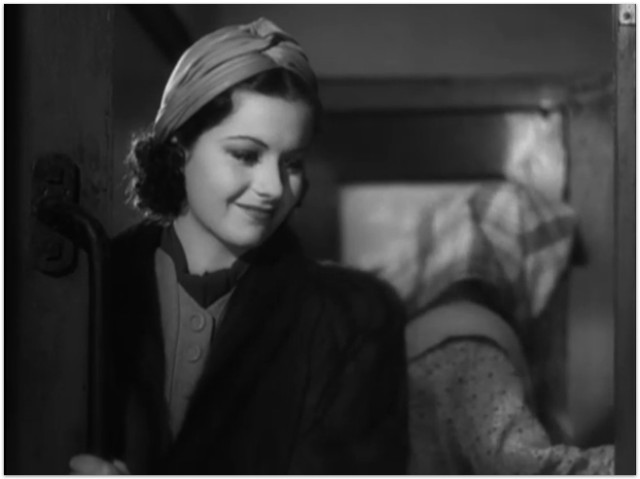
The movie begins in the fictional country of Bandrika where Iris Henderson (Margaret Lockwood) is vacationing with friends before she goes home to the United States to get married.

She is staying at a hotel with her friends and others, most of whom got stranded when an avalanche wiped out the train tracks. She interacts with the musician — Gilbert Redman (Michael Redgrave) — after he wakes her up with his loud music when she’s trying to get enough sleep for her trip the next day. Because she complains, the manager of the hotel kicks Gilbert out of his room. He makes a very nervy move and walks into her room uninvited and tells her he is going to stay and tell everyone she invited him in unless she calls the manager and tells him to put him back in his room.

There are so very funny quips in this movie and one of them is after Iris calls the manager back to get Gilbert out of her room.

“For the record, I think you are the most contemptible man I have ever met!” she yells at the door as he leaves.

He looks around the door and says in a soft voice. “Confidentially, I think you’re a bit of a stinker too.”

Earlier in the movie the manager tells two British men who are trying to return to Britain for a test match of Cricket in Manchester that he doesn’t have a room for them but they can stay in the maid’s room. There are a couple of funny scenes with the maid trying to change in front of them and them trying to tell her she can’t but her not understanding because her English isn’t very good.

There is actually a lot of humor in this movie, which isn’t always the case in an Alfred Hitchcock movie.

The two British men need some food so they head to the dining room, but are told by the waiter that there is no more food because there have been so many unexpected people staying there due to the avalanche. They can’t understand him because he doesn’t speak English so a woman named Miss Froy translates for them.

They chat with her for a while and she tells them how much she loves looking at the mountains in this country and how she’s been a nanny there for six years and is going home to England the next day.

Miss Froy also speaks to Iris when they both try to figure out where the music is coming from. That’s right before Iris has Gilbert removed from his room.

The movie seems to be all fun and games until someone strangles the musician Miss Froy enjoys listening to. She doesn’t know the man has been murdered, of course. She just thinks the music has stopped.

She also seems clueless the next day at the train station when someone tries to kill her by pushing a large concrete flower box out of the window. Instead of hitting her, though, it hits Iris in the head, which leaves Iris dazed – a perfect setup for a train ride that gets really weird when Miss Froy eventually disappears.  

Iris clearly has a concussion but Miss Froy seems to think putting perfume on a hankie and handing it to Iris to put on her head will help. Was that ever a thing for head injuries? I have no idea but it seemed weird. Anyhow, Iris falls asleep and when she wakes up Miss Froy is there and they walk to the dining car and have tea.

After they have tea, Miss Froy tells Iris to rest again. She does and when she wakes up Miss Froy is gone and when she asks the other couple in the car where she went, they tell her they never saw an older British woman and imply Iris is insane.

Implying Iris is insane is the plot for the next 20 minutes of the movie as everyone begins to say they never saw Miss Froy. We learn everyone has a various reason for saying they never saw the woman.

The British Cricket enthusiasts don’t want to be delayed any longer. They have a cricket match to get to. Another couple doesn’t want any attention brought to them because they are cheating on their spouses.

This movie is a master class in gaslighting.

If you don’t know what gaslighting is, it is saying something that happened isn’t what really happened or that the reason you think it happened isn’t the reason it happened. It’s also when a person tries to distract them from what they are concerned about by saying there is another issue altogether. Like if a woman catches her husband cheating and she confronts him, he might say, “You’re so bitter and mean all of the time. I don’t even know what is wrong with you,” to try to convince the woman she imagined it all and the real issue is that she’s mean and bitter. The goal is to make the person feel like they are crazy for being concerned or accusing someone of something.

When everyone starts lying, Iris is about to lose her mind and the only one who will listen to her is Gilbert – the musician she clashed with at the hotel.

Eventually, after seeing a wrapper for a certain tea (you’ll have to watch the movie to see what this means), Gilbert starts to believe Iris that the woman really was there and they begin to look for her together. They both feel something criminal is going on and eventually, it is implied that this crime is related to spying on another country.

Though the plot and issue is a serious one, there is humor involved. For example, humor is employed often in a fight scene between Gilbert and a man who is determined to take evidence of Miss Froy’s existence away from Gilbert and Iris.  Not only do animals in the freight car of the train watch the fight going on, but the fight also continues into a magic box placed there by the cheating man, who they learn is a musician.

There seemed to be quite a few subtle slams in this movie against the British who just can’t imagine anything bad is happening on the train and gets upset when anything interrupts their tea time, but I think Hitchcock did that a lot.

The movie is based on a book called The Wheel Spins by Ethel Lina White, but apparently deviated heavily from the plot of the novel. Actually, after reading the plot of the novel, I really want to read it because it sounds very good.

The British cricket enthusiasts were not in the book at all and were added to the movie.

The book was written in 1936 and the movie was released in 1938. The novel and movie’s plot clearly references the events leading up to the start of World War II.

Michael Redgrave was known for his work on the stage and almost didn’t agree to take part in the movie but in the end, his decision to take the park when Hitchcock offered it paid off for him because it made him an international star.

He and Hitchcock never worked together again, however, because Redgrave wanted more rehearsals and Hitchcock wanted more spontaneity.

The movie was a hit in the UK and the U.S. when it was released according to information online.

Geoffrey O’Brien from The Criterion (a movie review site) states: The Lady Vanishes (1938) is the film that best exemplifies Alfred Htchcock’s often-asserted desire to offer audiences not a slice of life but a slice of cake. Even Claude Chabrol and Eric Rohmer, in their pioneering study of Hitchcock, for once abandoned the search for hidden meanings and—though rating it “an excellent English film, an excellent Hitchcock film”—decided it was one that “requires little commentary,” while François Truffaut declared that every time he tried to study the film’s trick shots and camera movements, he became too absorbed in the plot to notice them. Perhaps they were disarmed by pleasure . .”

O’Brien points out that the screenwriters of the film, Sidney Gilliat and Frank Launder, were the ones who really added the rich wit that made the film a joy rather than an ominous mystery.

This film was filmed in England and at that time they didn’t have a large budget, which is why much of the movie was filmed in only two places – the hotel and a 90-foot-long train car or two. This constraint would have limited most movie makers, but not Hitchcock, who was still able to line up amazing, eye-catching shots, including one that I noticed with the camera focused squarely on two glasses where a drug has been placed all while a tense conversation is going on in the background.

The whole time there is this tension for the viewer, who knows that those glasses have a drug in them and leaves the viewer with a desperate desire to cry out for the characters not to drink the tainted wine.

I really liked what O’Brien said about the performance of Dame May Whitty and agreed: Since in a moment she is going to vanish, Miss Froy must for a moment dominate everything, and Whitty achieves just that, and even more: she makes us feel an affection for Miss Froy deep enough that her disappearance will seem an unspeakable affront, an assault on Englishness itself in its least threatening form.

If you want to read more of O’Brien’s view of the film you can find it HERE.

If you want to catch up with Erin’s thoughts on the movie, click here: https://crackercrumblife.com/2023/10/12/comfy-cozy-cinema-the-lady-vanishes/

If you want to join in on the review yourself feel free to add your link below.

Next week we are watching Strangers on a Train and will write about it on October 19.

After that we are watching:

Rebecca (Oct. 26)

Little Women (November 2)

Tea with The Dames (November 9)

A break for Thanksgiving

And

Sense and Sensibility (November 30th)

You are invited to the Inlinkz link party!

Click here to enter
https://fresh.inlinkz.com/js/widget/load.js?id=c0efdbe6b4add43dd7ef

Spring of Cary: Suspicion


Erin from Still Life, With Cracker Crumbs and Katja from Breath of Hallelujah and I have been watching Cary Grant movies this spring.

Up this week was Suspicion.

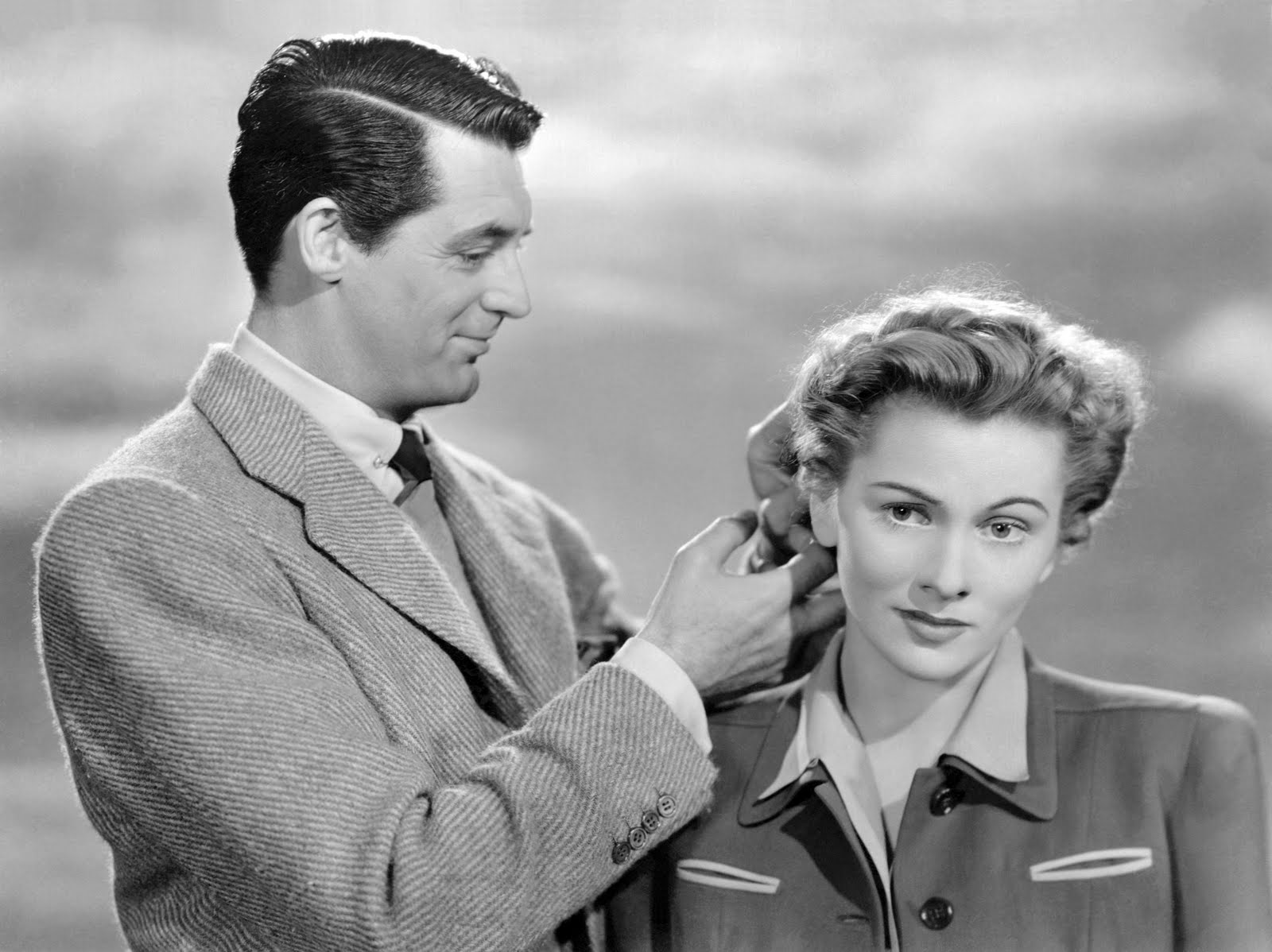
This one starred Cary and Joan Fontaine.

It was released in 1941 but takes place in 1938 and is based on a 1932 novel called Before the Fact by Frances Iles.

As soon as you see who directed the film – Alfred Hitchcock – you know this isn’t going to be your regular, happy-go-lucky Cary Grant film.

Here we are again with Cary playing a playboy named Johnnie , which I guess was the popular bad boy name back in the day. Or potential bad boy. This time he is Johnnie Aysgarth.

He meets Lina McLaidlaw (Fontaine) on a train by chance. Or is it by chance?


He sees her again at the horse track, where he is well known.

When he asks the women crowded around him who she is they tell him that she’s not really up his alley.

His response? “I’m a little bored with people up my alley.”

He’s clearly looking for a new conquest.

He’s very excited to meet her and she’s, of course, taken by him because, well, hello. It’s Cary Grant and he’s very delicious in this movie. He even knows she’s taken with him by the fact he finds a newspaper clipping featuring a photograph of him that she’s saved and placed inside the book she is reading.

(An aside: as a glasses wearer, I do think it is unnecessary that she keeps taking off her glasses to look more attractive. That is a minor issue, of course.)

At first it appears that Cary is really pursuing Joan in this film.

The question is why? He seems to have some underlying reasons for his apparent affection,

The movie seems very light hearted and he seems very charming and even full of humor.

But here seems to be something more sinister going on. You can feel it rumbling under the surface.

That rumble starts when Johnnie circumvents a trip to church by demanding she go on a walk with him instead. We immediately cut to a scene of them struggling.

“Now what did you think I was trying to do, kill you?” he asks. “Nothing less than murder could justify such a violent reaction.”

Whoa. Say what?

He claims he just wanted to touch and fix her hair. “Your hair has such exciting possibilities that I became passionate.”

Oh. Okay. Creepy.

He’s very handsy and touchy, even showing her first hand where her occipital maxillary bone is by reaching inside the top of her shirt to touch it. Like um…dude. Back off.

He even tries to kiss her on the hill outside the church and they barely know each other. Very forward and if I were her I would have slapped him but it’s clear the woman hasn’t had a lot of male attention in her life so she is wary, but is clearly eating up his pushy behavior. This is the first time he calls her “monkey face” which becomes his affectionate term for her throughout the movie. One I find irritating and degrading.

When he walks her back to her parents house he tells her he’ll see her at three that afternoon. She says she’s busy but then she hears her father saying she’ll never get married because she’s just not marrying material, she turns around and kisses him hard on the mouth.

From there her obsession begins and she starts pursuing him more than him pursuing her.

Now we, the viewers, are thrown onto a path of constantly wondering what this guy is really all about.


Her father suggests that he is wild and this seems to intrigue her even more. Now she wants him even more and begins calling him and sending letters. All of them go unanswered.

It’s actually a bit sad how desperate she becomes.

She finally meets up with him at a dance and all the girls rush to him but he has eyes only for her. He swings her out onto the dance floor and then out the door where they escape in his car.

“Have you ever been kissed in a car?” he asks.

“Never,” she says.

“Would you like to be?” he asks.

This all seems romantic for the most part, but, yet . . . something is just off.

He seems to be choosing someone who isn’t used to dating or attention from men for a purpose.

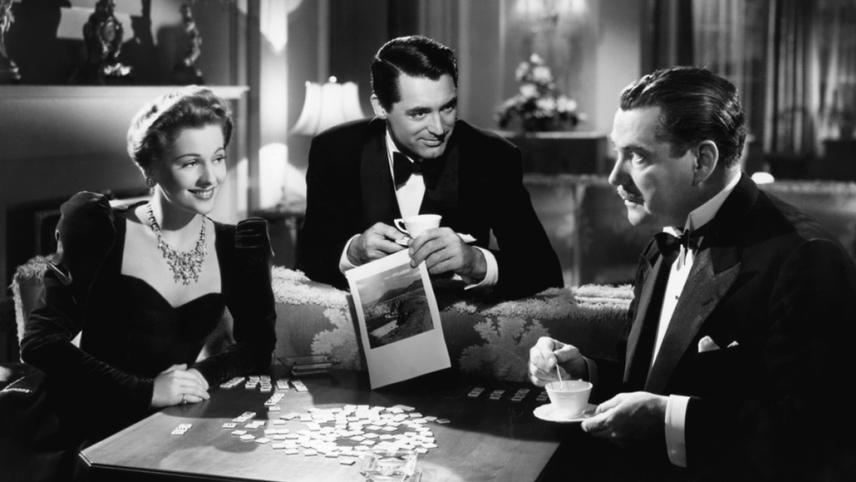
The camera angles in this movie are so well done – like all Alfred Hitchcock movies. Spinning cameras while they are kissing and panning out and in at the most interesting times. Then there is the play with light and shadows. They create such foreshadowing and a feeling of foreboding, especially toward the end of the movie when Lina really starts to question the motives of this man, who she incidentally marries.

After they marry, she’s whisked off to Europe for tours and excursions that blows the mind of her usually timid self.

Johnnie must have money, she thinks. He spent all this money and rented a beautiful home for them. But then Johnny asks for her help in paying a friend back $1,000 that he borrowed for the honeymoon and the red flags start flying everywhere. She ignores all those red flags and steps all over them.

I’m not going to give away too much about the movie in case you have never seen it but there is a lot of dark behavior by Cary in this movie and even though he is handsome and charming he is also inconsiderate of others and emotionally manipulative when it comes to his wife. Eventually he’s also outright abusive.

There is also way too much denial from this woman for most of the movie. I feel for her and how she was completely swept up by Cary’s charm, but I have to admit I might have done the same. I mean, that smile. Come on. So captivating.

One of the many odd things about this movie is apparently everyone is supposed to be British and it’s supposed to be in England but almost no one has a British accent.

I found it interesting that Fontaine won an Oscar for this movie and that it was the only Oscar won by any actor in a Hitchcock film. I was shocked that Cary didn’t win and wasn’t even nominated for his role because I really thought he did a phenomenal job of being both charming and creepy.

I also thought it was interesting to see a woman dressed as a man at one of the dinners with a local crime novelist (whose books Johnnie loves to read and that’s all I’m going to say about that. Ahem.), which was not common in movies back then. A blog says that the woman dressed as a man is the female novelist’s wife or partner, but I have no idea. I suppose that’s what is implied but it wasn’t the main focus of that scene.

The film, according to an article on Wikipedia, shows what happens when Hollywood transfers a novel to film because this film changed the intent of the book. The book’s message was about how a person feels knowing they might be murdered. Again, not to give away the end of the movie, this was changed in the film under pressure from the studio and it’s something that Hitchcock was not happy about and apparently complained about for years.

It was his own fault, though. He caved under the pressure and let the screenplay writers write the ending the studio wanted. It is not the same ending as the book and now I want to read the book and see how it differs.

This was definitely my favorite of the movies we watched other than Holiday.

Next week is Notorious, which is another Hitchcock film and that will round out our Spring of Cary features.

I don’t know if we will do a Summer of … whomever or not yet. I am considering doing one on my own but…I haven’t really committed yet.

So, if you want to read Erin’s impressions of Suspicion you can do so HERE and you can read about Katja’s views HERE.