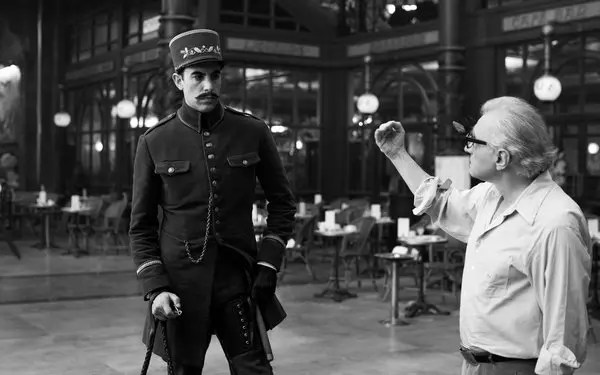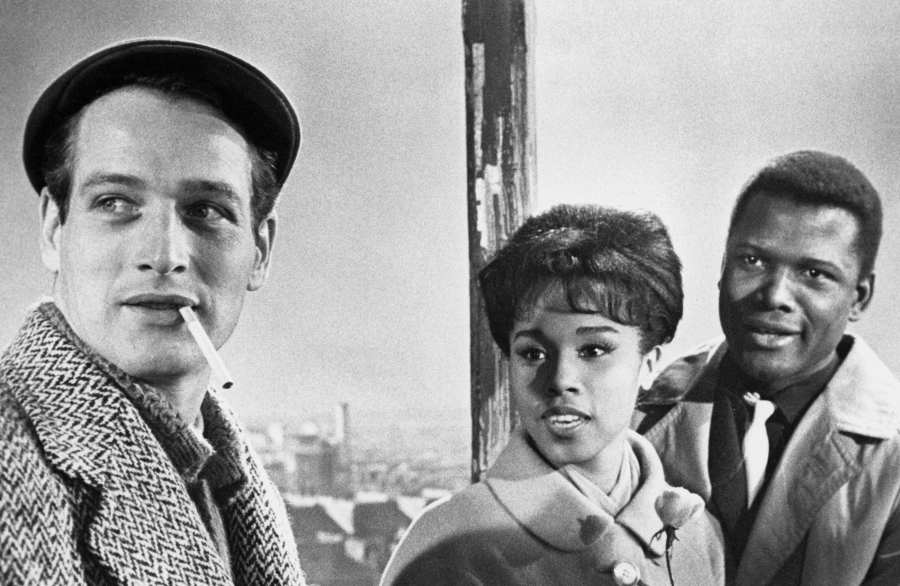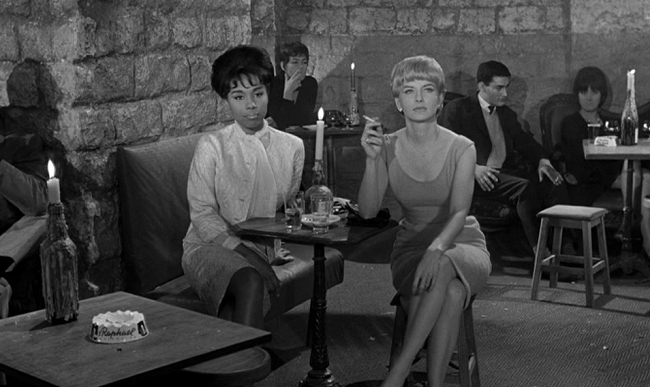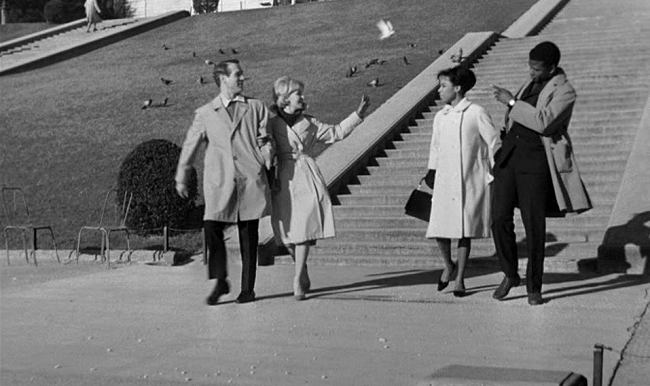
Up this week for the Winter of Douglas Fairbanks Jr. is Gunga Din (1939), said to be one of his most famous movies.
I am going to let you know right up front that I rarely hate classic movies that I watch, but I pretty much hated this movie. This movie was a train wreck for me from beginning to end. Possibly a bit of a racist train wreck at that. It had a severe identity crisis — it wasn’t sure if it was a comedy or a drama.
For me this movie was Gunga Do..n’t.
When I first started it I thought, “Two of my favorite actors. Cary Grant and Douglas Fairbanks, Jr! Be still my heart!!!”
As I continued it, I thought things like:
“Are these guys supposed to be British?”
“What accent is that? Is he trying to do an accent? Why is he trying to do an accent?”
“Why didn’t they let the Irish actor just have an Irish accent? His British accent is horrible.”
“Douglas looks bored out of his mind and like he wishes he could get out of his contract.”
“Is that a white man painted brown to look Indian? And that one too? And that one? And…
First a snippet of the synopsis of the movie from TCM.com:
In an encampment of Her Majesty’s Lancers in Colonial India, the commanding officer (Montagu Love) is distressed by the cutoff of communications from an outpost ten miles distant. He wants three of his most dependable sergeants to embark on an investigative mission; however, the trio must first be pulled away from a bar brawl to receive their orders. The comrades in arms include the calculating Cutter (Cary Grant), ever dreaming of finding a cache of riches; the grizzled veteran MacChesney (Victor McLaglen); and the gentlemanly Ballantine (Douglas Fairbanks, Jr.), whose sole focus is his imminent discharge and marriage to his fiancée (Joan Fontaine), much to the chagrin of his comrades.
Among the troops taken on the mission is the humble bhisti Gunga Din (Sam Jaffe), for whom life would hold no greater honor than to serve as regular Army. They arrive at the outpost to find the streets empty; the soldiers’ rousting of the homes turns up one small cluster of ostensible survivors.
Cutter’s drunken fixation with a legendary golden temple leads to a one-sided slugfest with MacChesney, a stint in the brig, and an audacious escape courtesy of Din and MacChesney’s beloved pet elephant. In their flight, Cutter and Din discover the mythical temple which, as they unfortunately learn too late, is also the gathering place of a criminal sect devoted to the Hindustani goddess of destruction Kali. Cutter offers himself to the cult to buy Din time to escape, and the quest for his rescue drives Gunga Din to its rousing conclusion.”
I don’t know what to say about this movie. I really don’t. It was a mix between a comedy and drama with a lot of racist undertones against the Indian people who Great Britain took over for no reason other than greed and power.
Then at the end they acted like these three idiots were heroes, when half of the people who died wouldn’t have if Cary’s character hadn’t been looking for gold.
To me it was a great big statement on imperialism and while the movie was trying o portray British patriotism I found it fairy sickening to watch them gun down Indians whose land it was in the first place.
And the music playing throughout this movie tried to make it seem like it was a goofy romp, even while the footage before our eyes tried to play it off as a serious epic. I was so thoroughly confused.
Also, Douglas Fairbanks Jr. looked so bored in much of this movie. It was like he was trying to figure out what was going on with the rest of us.
The movie was overbudget and took longer to film than promised, according to an article on TCM.com.
“Filming began in June of 1938 and was set to last for 64 days. Due to the working methods of director Stevens and to a studio anxious to produce its most prestigious picture to date, Gunga Din would ultimately go over budget, miss its release date of Christmas, 1938, and the shooting schedule would stretch well beyond the allotted 64 days to a total of 104 days.”
The movie was shot in the deserts of Lone Pine, California, and temperatures of up to 115 degrees took a toll on the cast and crew.
A number of scenes that involved journalist and poet Rudyard Kipling — who wrote the poem and short stories that the movie was based on — were cut at the request of his widow who knew that at that time audiences would have been shocked and laughed at the idea of a journalist being embedded with the army. This is something modern audiences wouldn’t even blink an eye at today.
I found it interesting that author William Faulkner worked on the original screenplay for $750 a week. I guess I always thought of him as more highbrow than writing screenplays for movies. In the end it wasn’t his screenplay that was used, but instead one by Charles MacArthur and Ben Hecht.
The expenses paid out for the movie was one reason the movie ended up costing the most of any movie that the RKO Studio had made so far at $1.9 million. Of course it wasn’t the most expensive movie released that year. That went to Gone With The Wind produced by David Selznick’s Selznick International Pictures and Metro-Goldwyn-Mayer with $3.8 million.
Gunga Din only brought in $2.8 million but was re-released in 1941 and again in the 50s and gained back even more of it’s production costs over the years.
While I thought Douglas looked bored in this movie, he looked back on it with fondness, even though a biography on Cary reports that the veteran actor stole a scene from Douglas so Cary would look better.
From TCM.com: “In his biography Cary Grant: A Touch of Elegance, Warren G. Harris relates a story from the set in which “…Grant deliberately cheated Douglas Fairbanks, Jr., out of one of the most memorable moments in the picture. In a rooftop scene, Fairbanks had to wrestle with a native, pick him up and hurl him into the street below. Grant coveted the bit himself, so he told his co-star, ‘Doug, you really shouldn’t do this. It looks like you’ve killed the guy. It wouldn’t help your image. And you know your father would never have done such a thing on the screen.'” The ruse worked, and when Stevens asked for a volunteer for the shot, Grant jumped at the chance.”
This didn’t stop Douglas from still admiring Cary though because he later told another biographer writing about Cary: “ . . . .the most generous player I’ve ever worked with. He wasn’t just taking his salary. He was concerned that the picture be a good picture. He thought that what was good for the picture was good for him, and he was right. He was very shrewd that way. He was a master technician, which many people don’t realize, meticulous and conscious of every move. It might have looked impetuous or impulsive, but it wasn’t. It was all carefully planned. Cary was a very sharp and intelligent actor who worked out everything ahead. I called him Sarge or Sergeant Cutter, and he called me Ballantine right to the end of his life.”
There are other reviews online bothered by the racist undertones of the movie and just the confusing antics of the three main characters.
“I can see how the film would be epic at the time,” writes the author of Opus.ing.com. “But in this day and age, where epics are tossed off every six months or so, it’s hard to look past the film’s dated-ness and timely flaws. Not an unenjoyable film, but if you’re looking for a “classic” epic, you may wish to look elsewhere — and if you’re looking for an honest, unromantic view of British imperialism, you’ll definitely want to look elsewhere.”
This author also noticed Cary’s accent issues: “Far too much time is spent on the hijinks of the three officers, played by Victor McLaglen, Douglas Fairbanks Jr., and Cary Grant (whose accent seems to change with every scene), such that the titular character, an Indian bugler who wants more than anything to prove himself a soldier, easily becomes overshadowed.”
When I describe Cary’s accent issue, think Kevin Costner in Robin Hood: Prince of Thieves.
Yeah.
That bad.
TCM admits that there have always been issues with the movie regarding it’s political correctness (for lack of a better term). The film was even banned in India.
“But as a pure adventurous lark,” writes TCM’s Jay Steinberg. “Gunga Din holds up as well now as then, and retains its place amongst the top films of 1939, Hollywood’s greatest year.”
If he thinks so….I will just agree to disagree.
Have you ever seen this one? What did you think of it?
Up next for my Winter of Fairbanks Jr. is: The Young At Heart
The rest of the movies I will be watching include:
Welcome to the Weekend Traffic Jam Reboot where we offer a place for bloggers to link up and get a fresh set of eyes on their posts. We also feature one blog a week, letting our readers know about the blog and providing a link so readers can learn more about them.
I hope that you will look through the links and click on some and find a new blogger or two to follow.
First, I’ll introduce you to our hosts:
Marsha from Marsha in the Middle started blogging in 2021 as an exercise in increasing her neuroplasticity. Oh, who are we kidding? Marsha started blogging because she loves clothes, and she loves to talk or, in this case, write!
Melynda from Scratch Made Food! & DIY Homemade Household – The name says it all, we homestead in East Texas, with three generations sharing this land. I cook and bake from scratch, between gardening and running after the chickens, and knitting!
Lisa from Boondock Ramblingsshares about the fiction she writes and reads, her faith, homeschooling, photography and more.
Sue from Women Living Well After 50 started blogging in 2015 and writes about living an active and healthy lifestyle, fashion, book reviews and her podcast and enjoying life as a woman over 50. She invites you to join her living life in full bloom.
We would love to have additional Co-Hosts to share in the creativity and fun! If you think this would be a good fit for you and you like having fun (come on, who doesn’t!) while still being creative, drop one of us an email and someone will get back with you!
WTJR will be highlighting a different blogger each week! We invite you to stop by their blog, take a look around and say hello! This week we spotlight …
Thank you so much for joining us for our link-up! Please remember that this is a link-up where you can share posts from the previous week or posts from weeks, months, or years ago. All we ask is that they be “family-friendly”.
“I have not had a letter from you in a long time so I thought I would write to you and see if you were well and inquire as to how brother Charles is getting along. I have been uneasy for his welfare as our prisoners get very bad treatment at Belle Island and Richmond.”
Letter to William Grant from his brother John G. Grant, Washington DC, Dec. 22, 1863
When some people research the past, they find it interesting but are somewhat disconnected from what happened. They may read something sad and say, “Oh, well, how awful.” They feel down for a bit, and they move on.
When you research your family history, though — reading letters from them, getting to know them through those letters and photos of them — it all becomes a bit more personal. Suddenly you, or shall I say that “I” feel very close to the people I am reading about and about the world they lived in.
More than once I have teared up, choking back a sob, thinking of the suffering my family faced as I’ve read letters, journal entries, or biographies of their lives.
There was history all around me growing up. When I was a child there was a large, old trunk in the closet in my bedroom. I had no idea what it was and used to prop up my stuffed animals on it.
It wouldn’t be until years later I would learn the trunk belonged to my great-great grandfather, John G. Grant, a Civil War vet, and held American flags, and other memorabilia from my great-great grandparents and their family inside. After the war, John became a doctor and before that he was a letter carrier for the Union Army in Richmond after the war. I’m not sure where the bloodletting set and the letter carrying case of John’s was stored but I know they are with my dad now.
John mentioned his trunk in a letter from August 20, 1862, where he also foreshadows his interest in the medical field.
“I should like to have my chart of Frenology (sic). I think I put in my little trunk upstairs, or else it is about the house somewhere. I suppose you know what book I mean. I used to call it my Frenology book. Please get it and send it to me as soon as you get this letter.”
He was stationed at an Army training camp near Germantown, Pa. at the time.
In case you are curious, phrenology is: “the detailed study of the shape and size of the cranium as a supposed indication of character and mental abilities.”
When I was in college, and after my family had moved in with my paternal grandmother, she and I were looking at historical documents and pulled out some old papers from under her bed. We found a large, original poster that appeared to show all the battles John Grant had fought in. It stated that it had been presented to his family sometime after he was discharged from the Army.
Grandma was thrilled and fascinated. Either she’d forgotten or didn’t realize the poster was there. My history-loving aunt, Eleanor, drove down from her farm in Upstate New York, took the poster and had copies made for all of my grandmother’s children, grandchildren and great grandchildren. One is hanging on my wall in our house today. I believe my dad has the original.
When I read the letters written during the Civil War between my great-great-grandfather and his half-brothers I find myself thinking of the history of this time period that I’ve read in textbooks – how it wasn’t history for them but reality.
One of the hardest realities my great-great grandfather and his half-brother, William Grant, had to face would come when they learned that their brother, Charles, had been taken prisoner by the Confederates shortly after the Battle of Gettysburg.
(This photo is undated and unlabeled, but we believe it is Charles Grant. It is the only known photo of him. William Grant tried many businesses to make a livelihood, especially after the war started and the economy was suffering. One business he tried was making photo cases. This is most likely one he made).
In my first blog post about these letters I wrote about John and William visiting Charles in the hospital. This would have been 1861. I’m not sure what Charles had that left him in a weakened state, but I do know he would eventually be released from the hospital. I figured out his age to be about 31 at the time he was in the hospital.
I mentioned part of Charles’s letter to John in an undated letter in my previous post:
“If things do not get better before next winter, there will be a great amount of suffering among the working people,” he wrote in that letter. “The factory where I work is running but two and three days in a week and has been for the past two months and the hands are not making more than $10 or $12 a month and that amount will not go far down here.”
“Thousands who one year thought themselves in good circumstances are now as poor as beggars and who has caused all this but the men who are now the leaders of the Rebel forces and fighting against the best government on the face of the earth. They seem determined if they cannot rule this great nation to the interest of negro slavery to ruin it.”
He ends the letter with a little bit of family business:
“You want to know where Uncle William lives. The last I heard from him he lived in Laraneeburgh, Indiana. I sent you two papers within the last two months. I posted one last night when I got your letter. It had been lying in the office for some time as the new postmaster did not know what part of town I lived in and could not send it to me. This will account for me not answering sooner, but I must bring my letter to a close with sending my love and best respects to you and all the folks.
Farewell,
Charles Grant.”
No one in the family has been able to tell me how John, William, and their mother would find out Charles had been taken captive right before the Battle of Gettysburg, but somehow, they knew.
John wrote to William Dec. 22, 1863.
“I have not had a letter from you in a long time so I thought I would write to you and see if you were well and inquire as to how brother Charles is getting along. I have been uneasy for his welfare as our prisoners get very bad treatment at Belle Island and Richmond.”
It was not until 47 years later that William would be told the full story of what happened to his brother and that by the time John wrote that letter, Charles had been dead for at least 18 days.
I’m not sure the full story of how Meville H. Freas of Germantown, Pa. found out that William was looking for more information about Charles. I believe the family story is that it was a letter that William wrote to a newspaper near Germantown toward the end of this life, that clued Melville into the fact William didn’t know what had actually happened to Charles.
Toward the end of his life, well into his 90s, William was looking for a place to be buried and wrote letters to a couple of newspapers talking about his need for a burial plot. Meanwhile, his family in our little town, was willing to give him a place and wrote him letters to that effect. In the end, he was buried in a cemetery near the veterans home he was living at in Erie, Pennsylvania.
William Grant
William and Charles had grown up outside of Germantown and stayed in that area for most of their lives.
William would later learn that Charles had enlisted in the Army in Germantown with Melville Freas, Phillip W. Hammer, George Shingle, and Lewis Vogle.
After spending nine months in Libby Prison, Melville Freas was the only one to return home alive.
“January 19, 1910
Comrade Wm. Grant
My dear esteemed friend. A few words about your brother Charles. We were in the same company A of the Bucktails. We fought in the same first days fight in Gettysburg and we were both taken prisoners when leaving Gettysburg as prisoners of war. A Reb Major put us all in line and read to us an order and wanted to parole us, but our government forbid it so we had to go to Richmond and your brother Charles said, ‘I will never live to go back.’
And he did not.
We were put on Belle Isle on July 24, 1863 and I was with him and we both were moved from Bell Isle sick together. We went into Richmond on November 1, 1863 and put in a tobacco warehouse on the (unreadable) floor. No one came to see what ailed us so I said, “Charley, let us lay down and go to sleep and when I awoke in the morning Charley was dead by the side of me.
What he died of I cannot say. I notified the officers in charge and he was taken away and buried and I could not say where, but on the outskirts of the town. Philip W. Hammer was our drum major. He also was captured in the same fight and died at Richmond, Va. I have seen Mrs. Sallie Hammer several times since his death and talked with her concerning him.
Poor Phil — the last time I seen him he had traded his blue uniform for a Reb uniform and a little something to eat. You see we were ‘a starving to death. These men died as prisoners: Charles Grant, Lewis Vogle, George Shingle, and Philip W. Hammer. I was paroled March 21, 1864.”
He also writes about killing someone’s dog and eating it, but that’s not important to our part of the story.
It’s hard to read or understand Melville’s last sentence but further research from a newspaper article our family had and from articles I found online, shows that Melville built a monument in the Ivy Hill Cemetery in Germantown in honor of his friends, including Charles. First, it was a smaller monument and later he had a statue of himself in full Union uniform placed at his future grave. Those articles also stated that Melville was paroled from the Confederate prison in Andersonville, Ga. And that is possible because the prisoners from Libby were moved to Andersonville in February 1864.
Melville had each of the names of his friends who died inscribed on both stones and each Memorial Day he would march in full uniform to the cemetery. One article said he even took his children and later grandchildren with him.
From an article in a Philadelphia paper from May 1917 after listing all the Memorial Day (called Decoration Day back then) events that would be going on:
“And finally, as he has done for many years at 5:00am on this Decoration Day, Melville Freas, Civil War veteran and former private of the 150th Pennsylvania Volunteers went to Ivy Hill Cemetery, loaded his rife with blank cartridges and fired a salute under the statute he had carved of himself which sits atop the grave he will one day rest in.”
As I mentioned above, John had visited Charles in 1861 and he was recovering from something doctors called The Grave (if my aunt transcribed that from the old fashioned hand writing correctly) so I believe he was most likely weakened still in 1863 when we was captured. That’s why he told Melville he would not make it back.
I’ve wondered over the years about what Libby Prison would have been like for Union prisoners of war, and I can tell you, after only a little research, it was not a good place to be held prisoner at or to be a guard at. Belle Isle was just as bad. Illnesses like typhoid and lack of food made conditions miserable for both prisoners and guards.
Libby Prison (left) was a three-story brick warehouse at Cary and Canal Street that was taken over by the Confederate government and became Richmond’s most notorious prison, next to Belle Isle (right).
By 1863, the South was losing, especially after Gettysburg, and because of that, people were starving everywhere.
You will recall that in his letter Melville said his government forbade the men from being paroled instead of being taken prisoner. I did some research on this, and it was because once President Abraham Lincoln emancipated the slaves in 1863 it meant that any African Americans, soldiers or otherwise, held by the Southern armies were now free. This infuriated the Confederacy who argued that those African Americans who fought as soldiers for the Union and were captured were runaway slaves and would be sold back into slavery instead of being taken prisoner.
This (rather long…sorry) excerpt from an article on the National Park Service web site under the section of the Fort Pulaski National Monument explains it fully.
“When the Civil War first broke out in 1861, few expected it to last beyond a few months. As the war dragged on, however, realities had to be faced, among them the question of what to do with prisoners of war. Over the first two years of the war, the prisoner of war experience was fairly limited. Most captured soldiers were held for only a few months before being released. One option for release was for the soldier to be paroled—temporarily released on the condition they remain in a certain area and not return to the war effort. Many officers were also exchanged—traded for an opposing prisoner of equal rank and returned to the war.
Everything changed in 1863. On January 1, 1863, President Abraham Lincoln issued the Emancipation Proclamation. All enslaved peoples held by states in rebellion were now free. The United States also began the enlistment of African American men into the military. This act enraged the Confederacy who accused the United States of “inciting service insurrection.” As the new United States Colored Troops (USCT) began reaching the front lines, the Confederate Congress issued the Retaliatory Act. This act declared that USCT units would not be treated as soldiers. Instead, Black soldiers would be handed over to state authorities where many would be sold into slavery. The white officers of these units, the act declared, were to be treated as inciting a slave rebellion and “shall, if captured, be put to death.”
With this act, the Confederacy officially refused to treat Black soldiers as combatants when captured. In response, the United States called for a cease of all prisoner exchanges until all soldiers were treated equally as prisoners of war. The Confederacy refused, thus beginning a shift in the prisoner-of-war experience. Suddenly, captured soldiers were being held long-term. Both sides had to create a system of large prison camps to house the thousands of prisoners of war.”
I have a feeling that my family, among many others, felt that had it not been for the Confederacy’s refusal to return their black soldiers, Charles, and many Union and Confederate soldiers, might have come home alive.
One letter from John G. was to, I believe, his stepfather, though I’m not sure since no name is mentioned and addresses what should happen to those many in the Union saw as traitors. It is dated Sept. 6, 1864. John was in Germantown, Pa. at the time.
“I see the convention at Chicago have nominated Gen. McClellan much to the chagrin of the Copperheads who wanted to nominate (unreadable because of the old handwriting) or Gov. Seamor – so you see by the Democrats split and that will proved to be like it was when Lincoln was elected. I have nothing against McClellan, but do not like the platform which the Chicago convention was formed for him to stand on. Upon that platform the Democrats are willing to shake hands with Jeff Davis (that arched traitor) over the graves of our dead comrades who have fallen by his hands and to form a peace with him on almost any terms and more than this yet to take him back to the home of our good old country and pardon him and give him equal rights with ourselves, which should never happen.”
John continued, “Jeff Davis deserves to be hung rather than have our sympathy. Now you will see by this if there is any gentleman about Gen. McClellan or if he cares anything for the thousands of his fellow soldiers who have fallen on every side of him in defense of their beloved country. He certainly will not accept the nomination on such a platform as this, and if he does accept it, on that platform, I am afraid he will never be elected.”
As an aside here, Davis was pardoned in 1868 but McClelland had nothing to do with it because he lost to Abraham Lincoln, who, of course, was assassinated only four months into his second term.
(Abraham Lincoln and Gen. George McClellan)
While researching Melville Freas, I found an article sharing a letter Melville received from a confederate guard at Libby Prison and then Melville’s response. It was an eye-opening letter, adding to the information I’d already learned about Libby Prison and other confederate and Union prisons during that time.
“Melville H. Freas, 248 East Haines street, has received a letter from a former Confederate soldier who stood guard over Mr. Freas when he was a prisoner at Richmond, Va., at the time of the Civil War. The letter was inspired by a newspaper article which Mr. Freas wrote recently protesting against the erection of a monument to Wirz, commandant of Andersonville prison. This article was copied in a Richmond newspaper where it caught the eye of H. C. Chappel, of Amelia Court House, Va., and he wrote as follows to Mr. Frees:
“Dear Old Comrade on the Other Side:
I read a short sketch of yourself in the Richmond Times and learned you had been a prisoner on Belle Isle. No doubt I have looked in your face many a time. The battalion I belonged to guarded there from August 1863 to March 1864.
We had hard times there, as well as the prisoners. We ate the same grub, and had to stand the cold without wood to make a fire, and no chance to get away. But we would go to the iron works and warm up.
I guarded at Libby prison early in 1863. There we got the best grub, and more of it, than any time during the war. The prisoners were all officers, and never gave us any trouble.” Do you remember the guard, all well dressed in deep blue pants and gray jackets, with gray caps? They composed the Twenty-fifth Battalion. We had got acquainted with many of your boys. It was positively against orders to trade with the prisoners, but we did it all the same; and when we got back to camp those that were caught were called out and sent to the guard house and court martialed.
Don’t you remember that dark rainy night when Colonel Dahlgren reached the river above the island? I happened to be on guard that night. Several of your men asked me what that firing was about, and I told them a war lie. I told them it was over in the city of Richmond and that our battalion was sent to the front and we had to stay on guard.
There didn’t seem to be much sickness in the prison camp, as very few were buried on the island. I remember seeing fifty graves at the hospital. They had only two small tents.
I can truthfully say I never ill-treated any prisoner. No doubt some crank or a mean devil would do it but it was against orders from our officers.
Freas did write the man back, sharing a little more of his journey and he was cordial and thanked him for the letter, but I would imagine it must have been hard for there to be forgiveness after the war. Our nation was split apart — shattered beyond recognition.
It’s split apart in many ways now, but I hope that it will never be so split that it will bring fellow countrymen against fellow countrymen or brothers against brothers.
I know that for some of us, this is already happening, but I pray we learn a lesson from our ancestors about how to lick our wounds, heal our hearts, admit our wrongs, or at least recognize them on both sides of issues, and restore our relationships before it is too late.
Today’s prompt is to share The Ten Most Recent Additions to My Book Collection (or to your to-read list!)
This one wasn’t too hard for me to do because I had ordered five from Thriftbooks right after Christmas and before that there was a used book sale at our library and I picked up a few (I promise it was actually just a few this time).
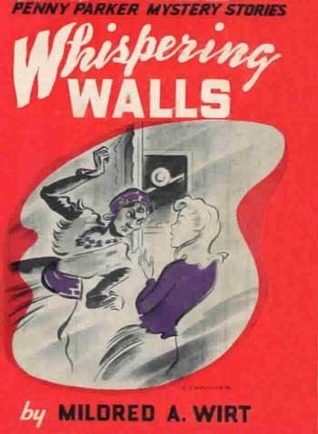
1. The Clue in the Diary (Nancy Drew, Book 7) by Carolyn Keene
2. The Sign of the Twisted Candles (Nancy Drew, Book 9) by Carolyn Keene
3. The Password to Larkspur Lane (Nancy Drew, Book 10) by Carolyn Keene
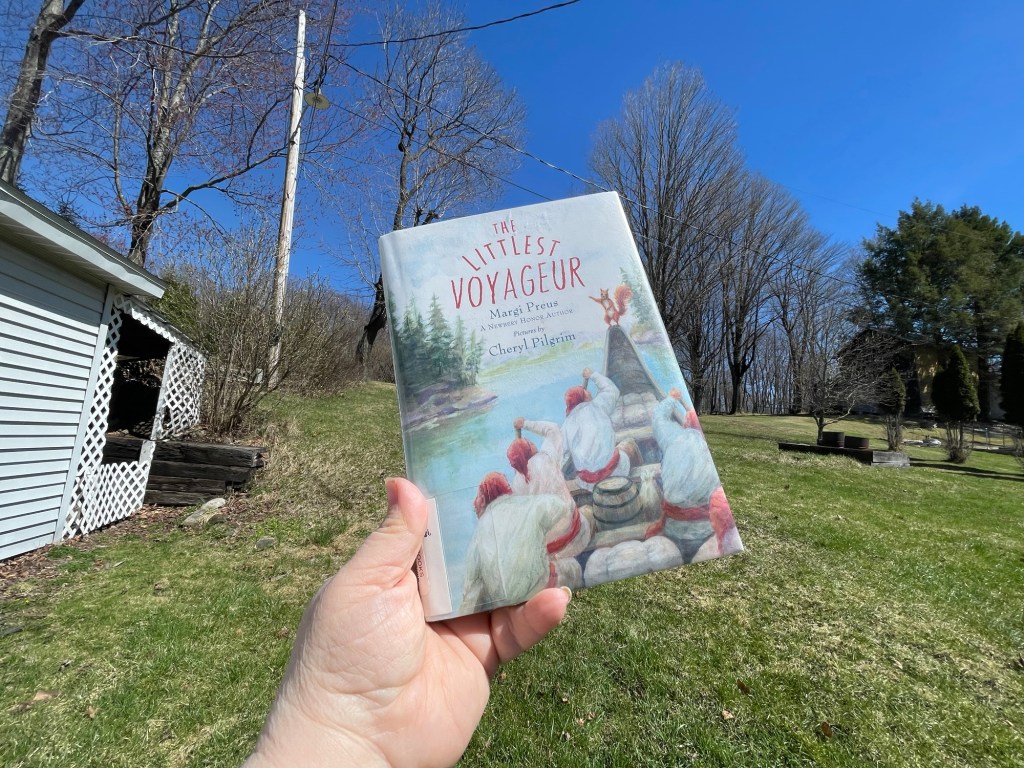
4. The Littlest Voyageur by Margi Pereus
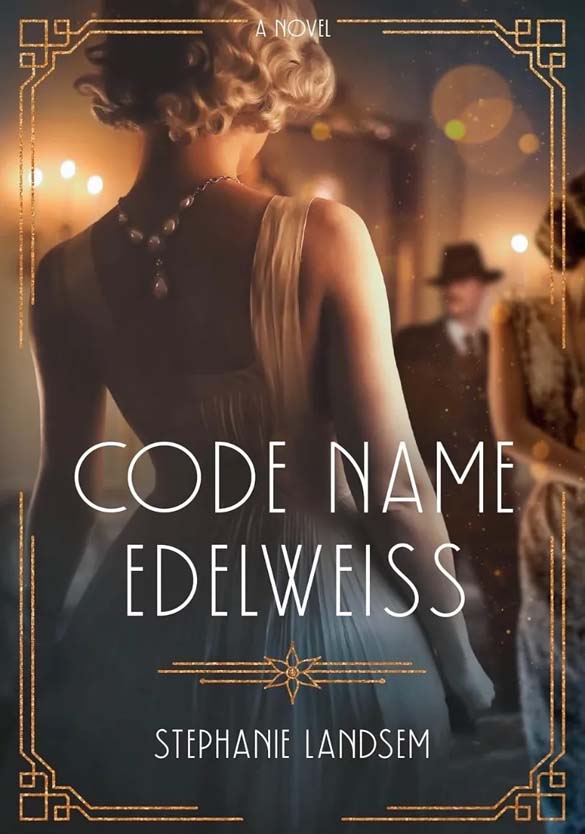
5. The Thursday Murder Club by Richard Osmond
6. Christy by Catherine Marshall
7. The Scarlet Pimpernel by Baroness Orczy
8. The Mystery of The Flying Express by Franklin W. Dixon (this was an original copy by husband picked up for me at a used bookstore)
9. Summer of Yes by Courtney Walsh
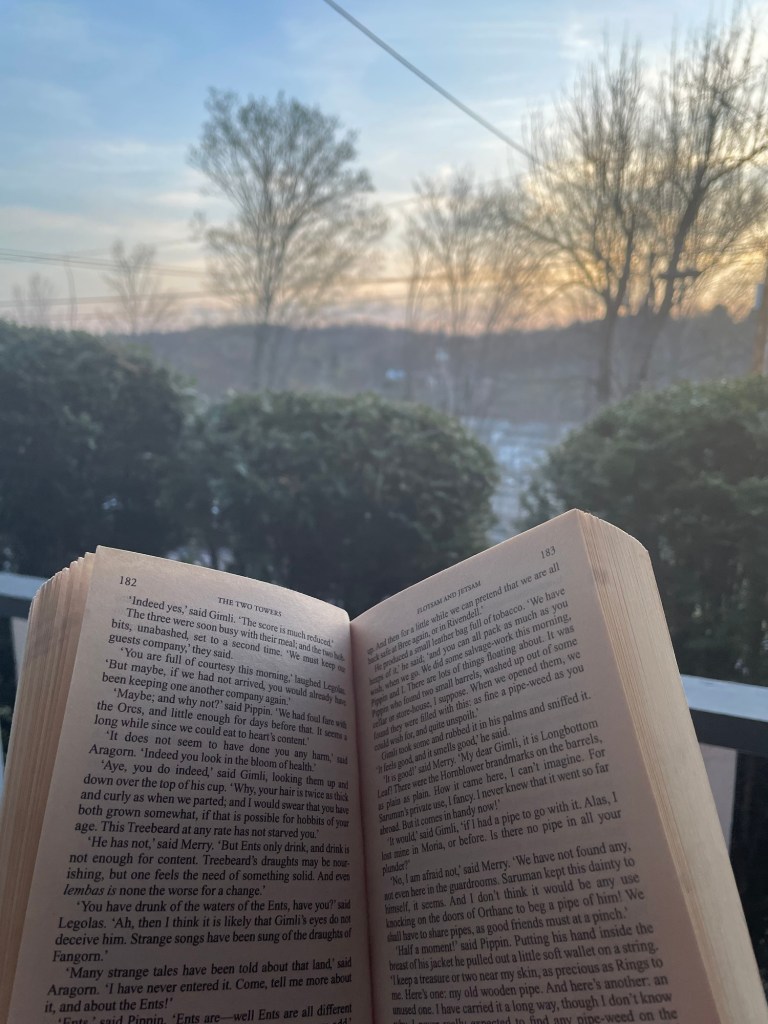
10. The Lord of the Rings: The Two Towers by JRR Tolkien
Have you read any of these? What are your last ten additions to your TBR?
Due to the illness of children or the cold of the northeast I have not left my house in two weeks and though I am a homebody, I must admit it is becoming a little depressing.
And based on the fact I feel like I am starting to get sick and dangerously cold temps are set to hit the area Monday through Wednesday this week, I have a feeling I will be in my house at least another week. At this point I’ve told my parents, who only live seven minutes from us, that I might not see them until after the spring thaw.
Our house is located on a hill, has a steep driveway, and we are down to one car, so that also makes winter travel difficult.
Yesterday I was alone for much of the day because Little Miss was at a friend’s house and The Boy was sick upstairs, while The Husband was at work. This was a strange situation for me because I’m rarely alone. I didn’t know what to do with myself. I eventually decided to work on a blog post (the second part to my Civil War letters posts), start watching Gunga Din, and read a chapter in my Agatha Christie book. I also was very brave and went out into the cold darkness of our backyard to retrieve a couple pieces of wood for our woodstove.
Then it was back inside where I realized I should cook some dinner for me and The Boy.
He’s had a horrible headache and watery eyes and no appetite, but he was finally able to eat a little bit around the time the mom of Little Miss’s friend brought her back home.
Today we are seeing how the weather is since we were supposed to get a snow storm but now it looks like it’s moved further east (I see you Poconos and NJ…good luck!) and I might visit my parents or … again…tell them I’ll see them in the spring thaw.
Monday, Tuesday, and Wednesday are bringing temps where we are expected only to reach about 11 as a high. Lows will be below zero due to windchill and other factors. I asked The Husband to bring some wood from our pile behind the garage into our laundry room so we don’t have to go out into the bitter cold to replenish the supply we have in our living room by the stove.
We do have some heating oil but do our best to use as little of that as we can because of how expensive it has been the last couple of years.
A quick reminder that we are having another Crafternoon Zoom Call next Sunday (the 26th) at 1 p.m. If you are interested in being a part of it, you can email me at lisahoweler@gmail.com or Erin (from Still Life, With Cracker Crumbs) at crackercrumbs@gmail.com.
If you don’t know what that is – it is where we all get together and chat together while doing crafts or other projects. We’d love to have you join us and stave off the gloom that can come with winter sometimes.
With all this cold and being trapped inside a lot you would think I would have plenty of time for reading and I do, but I also have other projects I am working on, so alas, this will not be an exciting section, because I am still reading the same books.
Christy by Catherine Marshall is a super long book and so I am taking breaks and reading A Body in the Library by Agatha Christie (do I really need to type her last name?) for something “lighter”.
I also hope to get back to Bourdain: The Definitive Oral Biography by Laurie Woolever this week.
If you are not aware of what Christy is here is a description:
The train taking nineteen-year-old teacher Christy Huddleston from her home in Asheville, North Carolina, might as well be transporting her to another world. The Smoky Mountain community of Cutter Gap feels suspended in time, trapped by poverty, superstitions, and century-old traditions. But as Christy struggles to find acceptance in her new home, some see her — and her one-room school — as a threat to their way of life. Her faith is challenged and her heart is torn between two strong men with conflicting views about how to care for the families of the Cove. Yearning to make a difference, will Christy’s determination and devotion be enough?
After these books I have a couple of books I want to get to including Frankenstein by Mary Shelly (for English with The Boy) and Miss Morgan’s Book Brigade by Janet Skieslen Charles, but I also want to read a Nancy Drew. Oh my gosh! Why does there have to be so many good books out there to read?!
Little Miss and I are reading The Sign of The Beaver by Elizabeth George Speare for school and listening to Peter Pan by J.M. Barie at night.
The Boy will be starting Frankenstein this week.
The Husband is reading The Rum Diary by Hunter S. Thompson.
(For anyone new, The Husband is just a joke nickname for my husband since he jokingly calls our son “The Boy”.)
This week I’ve watched three old movies I had never seen before — The Prisoner of Zenda, which I wrote about on the blog, The Stranger, and Gunga Din. I’ll be writing blog posts The Stranger and Gunga Din soon.
I also watched the first episode of season five of All Creatures Great and Small and am so excited that it is back for another season. I can’t wait to see Tristan again.
I watched a few episodes of my favorite YouTuber farmer, Just A Few Acres Farm, while I waited for him to release a new episode.
The Advanced Readers Copies of Gladwynn Grant Shakes the Family Tree have been sent out to my advanced readers. I pushed back the release date to give them some time to read the book and me some time to tie up some loose ends.
It is available for pre-order here:
I am working on a monthly writing update and some movie impression posts for my Substack, which people can subscribe to for free or pay about $3 a month to receive exclusive posts I plan to offer in 2025.
The Prisoner of Zenda (1937) is a cinematic spectacle. Grand halls, sweeping ballrooms, wildly decorated courtyards, and captivating costumes.
I absolutely loved it and am so glad I stumbled on to Douglas Fairbanks Jr. and decided to do a marathon of his movies to learn more about him so that I could discover this movie.
Douglas Fairbanks Jr. is not the leading man in this one but he steals the show in every scene he is in. He is deliciously evil.
The leading man, Ronald Colman, is absolutely amazing as well, especially since he is playing two parts in this one. He is so amazing I feel another marathon coming on but of his movies.
An article on TCM.com agrees with me about this version (Okay, I agree with the article).
“ . . . of all the dramatized versions of Anthony Hope’s 1894 tale of adventure, love and honor, the 1937 black-and-white movie version, produced by David O. Selznick for his Selznick International Pictures stands as the definitive adaptation.”
It is easy to see why this movie is called by critics one of the best “Swashbuckler” movies of all time. I say that since this is one of the original Swashbuckler movies without it we wouldn’t have Pirates of the Caribbean, The Princess Bride, and other more modern adventure movies.
And without the 1894 novel — ThePrisoner of Zenda: Being the History of Three Months in the Life of an English Gentleman by Anthony Hope — we wouldn’t have had the movie at all. Anthony Hope Hawkins was a part-time lawyer who wrote the book in one month from what I read.
The novel sold more than 30,000 copies in Britain and the U.S. and helped to establish the adventure genre that would later be explored even more by authors such as Sir Arthur Conan Doyle and H. Rider Haggard. The book, according to an article to TCM, has never gone out of print and has continued to sell thousands of copies each year.
The movie is the most referenced Swashbuckler film, TCM further states, which is probably why it was remade at least seven (!!) more times over the years, including one only about 15 years after the 1937 version, which was not the first. There were actually two silent movies of the book made before this version.
The 1952 version was shot frame for frame, according to articles I read online. I think I might watch the one released in 1952 later on and then compare the two, but I highly doubt that the 1952 movie or any of the others (including two made-for-TV movies and three television shows) will top the 1937 one, especially when it comes to Douglas’s performance. Yes, Doug and I are on a first-name basis now. I feel that we are getting to know each other enough now that we can dispatch with the formalities.
When I first saw Douglas in The Rage of Paris, I immediately thought how much he reminded me of Cary Elwes in The Princess Bride – his smile, his delivery, his expressions.
In this movie that similarity came even more into focus and especially during an amazingly well-choreographed and filmed fencing scene between him and Colman.
The two enjoyed a sparring of words while sparring with their swords, reminding me of the scene between Elwes and Mandy Patinkin on the Cliffs of Insanity in The Princess Bride. Perhaps Golding was influenced by the movie? I don’t know but if I research any more for this post, I’ll never publish it.
Let’s finally get to the plot of the movie. Finally…I know!
We have an Englishman named Rudolf Rassendyll (Colman) who has gone to a small country located somewhere between Vienna and Bucharest (not named in the film, but in the book it was called Ruritania). He has gone there for a fishing expedition at the same time the king of the country is being coronated. Zenda is a small area in this unnamed country where there is good fishing and boar hunting and where the king, Rudolph V (also portrayed by Colman), has a hunting preserve and cabin. RudolfV and his advisors Col. Zapt (C. Aubrey Smith) and Captain Fritz von Tarlenheim (David Niven, who I recognized immediately from other movies I’ve seen him in) run into Rassendyll in the woods and realize how much the two look alike.
I’m a little confused by the scene where Rassendyll tells the king they look alike because of their ancestors — the king’s great-great-great grandfather and Rassendyll’s great-great-great grandmother — most likely had an illicit affair. In the beginning of the film, he acts like he’s coming to the country to hunt and knows nothing about the king or how much he looks like him but five minutes later in the film he’s telling the king he knows he looks like him and why. This is probably something that is explained better in the book.
All I can say is thankfully they both have the same British accent even though the King is from a kingdom in Eastern Europe, or they wouldn’t be able to understand each other. Har. Har.
Minor complaint. Let us move on.
This news from Rassendyll about their probable relationship cracks the king up and he invites Rassendyll back to his hunting cabin where they get completely roaring drunk and Rudolftalks about his coronation scheduled for the next day and his half-brother Duke Michael, who hates him. He also speaks of his cousin Princess Flavia (Madeleine Carroll) who he will wed shortly after the coronation. After everyone else is unconscious from drinking too much, Rudolfdecides to drink a bottle of wine gifted to him by Michael.
Uh-oh. Bad idea.
When Rassendyll wakes up the King is unconscious on the floor, drugged. The king’s advisor says the king isn’t dead, but he won’t be in any shape to be coronated that which means that Michael could be crowned instead. A plan is hatched to have Rassendyll pose as the king only for the coronation and then to be smuggled out of the country and sent back home.
Of course, we have foreshadowing here that tells us that all will not go as planned and, indeed, it does not.
Douglas portrays Robert of Hentzau, the henchman (for lack of a better word) of Duke Michael, the king’s brother who wants to take over the throne.
He shows up for the first time with a crooked, mischievous smile, like in many of his movies, and lets us know immediately he is the comic relief and a completely swarmy cad. A very attractive cad, though, I must say.
Let’s put it this way —Hentzau is all frat boy, and I could not stop watching him when he was on screen.
There was a lot about this movie I could not stop watching — the acting, the scenery, and the exquisitely detailed and breathtaking costumes designed by Ernest Dryden.
The Prisoner of Zenda was originally going to be released by MGM, but was bought by Selznick for his own studio, right around the same time he was working on Gone With The Wind (1939).
If MGM had produced it, they were going to use it as a vessel for more money makers from power team William Powel and Myrna Loy of the Thin Man movies. A musical was also a possibility. That all went out the window when Selznick bought it.
“Zenda was already a proven commodity in print, on the stage and in previous film versions,” writes Roger Fristoe for TCM.com. “And the recent abdication of England’s Edward VIII led Selznick to think that a story of kings and coronations would be timely.”
John Cromwell, a former actor who had previously only directed romantic dramas, was chosen to direct, which some questioned.
Selznick explained the decision had to do with Cromwell’s experience with European audiences.
“In doing a picture like The Prisoner of Zenda, which is aimed at least fifty percent toward a foreign market,” he wrote in a memo. “It becomes important to get a director who at least has the judgment and taste to respect the sensibilities of audiences which are sensitive, particularly in England, about the behavior of royalty.”
Cromwell had a lot of complaints about the cast, though, including Niven and Douglas, who he called lazy and overindulged. He even dismissed Niven at one point because he didn’t find his humor humorous. Ha. But Selznick overruled him and brought Niven back, saying he was bringing life to an otherwise dull role.
James Wong Howe was the cinematographer for the movie and his work was amazing, in my humble opinion. The various angles, the lighting, all of it.
Look at this fencing scene..the shadows on the walls..
The cinematography, great acting, and astounding costume and set design made this movie overwhelmingly enchanting.
There are a couple of scenes where Colman is filmed talking to himself and I was really interested to know how that was done before the days of digital special effects. Luckily the TCM article explained that for me.
“The special effects created by Howe included a subtle and convincing scene where Colman appears to shake hands with himself. A 3 X 4′ optical glass was placed in front of the camera, and Colman exchanged the handshake with a double, whose head and shoulders were subsequently matted out with masking tape on the glass. The scene was re-photographed with Colman in a different costume and everything matted out except his head and shoulders. When the images were combined, the effect was complete and quite realistic.”
Because I loved Douglas as Hentzau so much, I thought I’d close this post by sharing some quotes that show how delightfully jerky he is in the movie:
“I don’t like women who lie to me. They don’t usually do it, as a matter of fact. I usually do them to them.”
“Someone once called fidelity a fading woman’s greatest defense and a charming woman’s greatest hypocrisy. And you’re very charming. And Michael’s very busy and likely to be more so.”
[during his sword fight with Rupert, Rudolf Rassendyll “retreats” towards the drawbridge’s controls]: “You’d be a sensation in a circus. I can’t understand it. Where did you learn such roller skating?”
To Rassendyll: “Why don’t you let me kill you quietly?”
Rassendyll: Oh, a little noise adds a touch of cheer. You notice I’m getting closer to the drawbridge rope?
Henztau: You’re so fond of rope, it’s a pity to finish you off with steel. What did they teach you on the playing fields of Eton? Puss in the corner?
Rassendyll: Oh, chiefly not throwing knives at other people’s backs. (A reference to a previous scene).
Have you ever seen this version or any version of The Prisoner of Zenda?
What was your impression of it?
Up next in my series will be Gunga Din, one of his more famous movies, from what I’ve read.
The rest of the movies I will be watching include:
Welcome to the Weekend Traffic Jam Reboot where we offer a place for bloggers to link up and get a fresh set of eyes on their posts. We also feature one blog a week, letting our readers know about the blog and providing a link so readers can learn more about them.
I hope that you will look through the links and click on some and find a new blogger or two to follow.
First, I’ll introduce you to our hosts:
Marsha from Marsha in the Middle started blogging in 2021 as an exercise in increasing her neuroplasticity. Oh, who are we kidding? Marsha started blogging because she loves clothes, and she loves to talk or, in this case, write!
Melynda from Scratch Made Food! & DIY Homemade Household – The name says it all, we homestead in East Texas, with three generations sharing this land. I cook and bake from scratch, between gardening and running after the chickens, and knitting!
Lisa from Boondock Ramblingsshares about the fiction she writes and reads, her faith, homeschooling, photography and more.
Sue from Women Living Well After 50 started blogging in 2015 and writes about living an active and healthy lifestyle, fashion, book reviews and her podcast and enjoying life as a woman over 50. She invites you to join her living life in full bloom.
We would love to have additional Co-Hosts to share in the creativity and fun! If you think this would be a good fit for you and you like having fun (come on, who doesn’t!) while still being creative, drop one of us an email and someone will get back with you!
WTJR will be highlighting a different blogger each week! We invite you to stop by their blog, take a look around and say hello! This week we spotlight …
Hi, my name is Angie. I started this blog because I began to see the infinite possibilities of creating artful clothing combinations out of my own closet. I’d love to share these endless ideas with you!
A healthy lifestyle brings lifelong health, beauty and youthful energy. So I strive for that in my choices everyday. It’s so important that I include it throughout my blog.
I am now over 60 and want to show you how age doesn’t matter when it comes to expressing your free spirit: the you that always was, is and will be.
My highlighted posts this week out of the links from last week (I threw in a bonus this week):
Thank you so much for joining us for our link-up! Please remember that this is a link-up where you can share posts from the previous week or posts from weeks, months, or years ago. All we ask is that they be “family-friendly”.
Today’s prompt: Bookish Goals for 2025 (How many books do you want to read this year? Are you hoping to read outside your comfort zone? Are there books you meant to read last year but never got to? Are there new-to-you authors you’re hoping to read?)
I haven’t set bookish goals in the past, but I do have some bookish goals this year, including reading whatever I want to read – not what I feel like I should read. Here are some of my other book or reading related goals this year.
I hope to read at least 30 books. I originally planned to write down 50 since last year I had a goal of 30 and read 68 but I decided to keep the number in the conservative range and then be excited if I read more.
2. I hope to try out some new authors this year, but also some “old” authors — as in classic authors. I want to try books by Terry Pratchett and other fantasy writers, for one, and I really want to try to get through one Jane Austen book all the way through and not only on Audible. Other authors I want to try are Alan Bradley, Matt Haig, Beth Bower, T.I. Low, John Connell, Maya Angelou, and Wendell Berry
3. Reading outside my comfort zone will be on the list year too because I want to try more fantasy. I won’t be trying erotica or horror, however. Just fantasy and maybe a couple more thrillers. I read mysteries but not always “thrillers”.
4. I hope to read more Christian fiction and non-fiction this year. I have a physical stack of C.S. Lewis books I want to read, non-fiction and fiction. I also want to read Charles Martin, Coleen Coble, Joel C. Rosenberg, Sarah Loudin Thomas, Tessa Ashfar, and Francine Rivers.
5. I mentioned above I want to read more classic authors and I do. Some of the books I want to read this year include The Count of Monte Cristo, The Scarlet Pimpernel, Middlemarch, A Tale of Two Cities (because I bailed on it before), and Wuthering Heights. Will I get to them? Probably not but … I can try.
6. Plan to read more Nancy Drews. I’ve already read a handful of the early Nancy Drews and hope to read more of them and some of the later ones this year.
7. I want to read more of whatever I want to read and not what I think I need to read for book tours or book reviews or to return favors to other authors. I know that sounds horrible but last year I ended up reading books I would not have normally read and it turned out not to be a great idea. There were other times I read books I wouldn’t have normally read and it was a good idea so I don’t want to say I won’t try books that I would normally not read, but I will say that I won’t feel guilty anymore if I turn a book down because there is another book I want to read more. Reading should be fun, not a chore.
8. I hope to read more overall. Sometimes I get so distracted with writing my own books, or blog posts or making social media posts or just goofing off on social media that I don’t read. Reading is such a nice escape and I want to choose it over watching TV or doom scrolling much more this year.
9. I really hope I can read more books that are already on my TBR/bookshelf instead of adding new ones, but I know that I’ll still be buying some to add to that list because buying books is better than buying drugs.
10. I want to read a couple biographies this year because that is a genre I rarely read. I am reading one about Anthony Bourdain right now. If you have any suggestions of other biographies I can read, let me know. I tend to steer clear of political figures on any “side” so I don’t really need those kind of suggestions.
So what are your bookish goals this year, if you have any? Let me know in the comments.
I haven’t had much time to sit and write up full book reviews lately so I thought I’d share five mini-book reviews today.
Death Comes to Marlow by Robert Thorogood
Description:
Judith (our favorite skinny-dipping, whiskey-sipping, crossword puzzle author), along with Becks the vicar’s wife, and Susie the dogwalker find themselves in a head-scratching, utterly clever country house, locked-room murder mystery.
Holiday festivities are now January doldrums when Judith gets a call―Sir Peter Bailey, a prominent Marlovian is inviting notable citizens to his house the day before his wedding to celebrate.
Judith decides to go―after all, it’s a few houses up the Thames and free champagne, for sure. During the party, a loud crash inside stops the festivities. The groom-to-be has been crushed to death in his study. The door was locked from the inside so the police say suicide, obviously.
My Review:
This was the second book in the Marlow Murder Club series. I did not enjoy it as much as the first book. This one was all over the place and very repetitive. I rolled my eyes way too often. I still love the characters but why the suspects were suspects was repeated and twisted around so many times it simply became obnoxious. We really needed another story to sort of break up the monotony of them running around in circles in this one. There was one side story related to the vicar’s wife Becks, but it came in way too late in the book and didn’t break up the way he kept saying, “We don’t know who killed him! Here is all our evidence….again.”
The Hound of the Baskervilles by Sir Arthur Conan Doyle
Description:
The Hound of the Baskervilles is the third of the four crime novels by British writer Arthur Conan Doyle featuring the detective Sherlock Holmes. Originally serialised in The Strand Magazine from August 1901 to April 1902, it is set in 1889 largely on Dartmoor in Devon in England’s West Country and tells the story of an attempted murder inspired by the legend of a fearsome, diabolical hound of supernatural origin. Holmes and Watson investigate the case. This was the first appearance of Holmes since his apparent death in “The Final Problem”, and the success of The Hound of the Baskervilles led to the character’s eventual revival.
One of the most famous stories ever written, in 2003, the book was listed as number 128 of 200 on the BBC’s The Big Read poll of the UK’s “best-loved novel”. In 1999, a poll of “Sherlockians” ranked it as the best of the four Holmes novels.
My review:
I really expected to like this a lot more than I did. Conan Doyle is a classic crime writer – the father of the detective/crime novel so it has to be great, right?
Sadly, this book really dragged for me and my son who read it with me for his British Literature class. Maybe it was because Sherlock wasn’t even in half of it. During that half it was Watson writing letters to Sherlock to tell him what had happened. There were way too many conversations about what might have happened and very little action for me. I also couldn’t stand the “lord of the manor”, Henry Baskerville. I would guess Conan Doyle was making him obnoxious because he was an American and the British like to make sure Americans know what they think about us. So maybe I wasn’t supposed to like him, which worked well because I didn’t.
I didn’t hate the book, but it was not one I would necessarily rush to read again anytime soon. I’d really like to read the short stories and the other three novels instead and then go back to this one later on to see if I like it any better.
Johnny Tremain by Esther Forbes
Description:
Fourteen-year-old Johnny Tremain, an apprentice silversmith with a bright future ahead of him, injures his hand in a tragic accident, forcing him to look for other work. In his new job as a horse-boy, riding for the patriotic newspaper, the Boston Observer, and as a messenger for the Sons of Liberty, he encounters John Hancock, Samuel Adams, and Dr. Joseph Warren. Soon Johnny is involved in the pivotal events shaping the American Revolution from the Boston Tea Party to the first shots fired at Lexington. Powerful illustrations by American artist Michael McCurdy, bring to life Esther Forbes’ quintessential novel of the American Revolution.
My review:
I read this one with Little Miss for English/History. The book is broken into sections with six chapters in each section, so we read a couple of the chapters each day for a few months.
I ended up really like this one even though the older writing style and the subject was a little difficult at times. There were some chapters where I skipped some of the more descriptive paragraphs to get to the point and move forward, but overall, this book was very well done, very educational, and had me crying more than once with the real life lessons within its pages.
Tooth and Claw by Craig Johnson
Description:
Tooth and Claw follows Walt and Henry up to Alaska as they look for work after they both returned from serving in Vietnam. While working for an oil company in the bitter cold of winter, they soon encounter a ferocious polar bear who seems hell-bent on their destruction. But it’s not too long until they realize the danger does not lurk outside in the frozen Alaskan tundra, but with their co-workers who are after priceless treasure and will stop at nothing to get it.
Fans of Longmire will thrill to this pulse-pounding and bone-chilling novel of extreme adventure that adds another indelible chapter to the great story of Walt Longmire.
My review:
I really enjoyed this novella. I’m a fan of the Walt Longmire Mystery books, with the exception of Hell is Empty, which I hated. I haven’t read one of the books since that one, which was early in 2024. I love Johnson’s writing, though, so I knew I couldn’t stay away for long. When I needed a short book to finish out the year, I remembered my husband had just won this one in a Goodreads giveaway. It is a story separate from the other books so I knew there wouldn’t be any spoilers.
I read it around Christmas, which is usually reserved for cozy books, not books where a man-eating, monster Polar Bear is terrorizing scientists in the arctic, but I could not put this book down. It was constant action, and I enjoyed it. I might even read another one of the full-length novels soon.
The Christmas Swap by Melody Carlson
Description:
All Emma Daley wants this holiday season is a white Christmas. But the young teacher and struggling musician sure can’t find that in sunny Arizona. Luckily, there’s someone living in a perfect mountain home in the Colorado Rockies looking to make a vacation trade this year.
West Prescott is an in-demand songwriter and talented musician who put his own singing career on hold to write songs for celebrity acts to perform. When his mother convinces him to do a vacation trade for Christmas, he never imagined one of the houseguests would be so sweet–or so strikingly pretty. Naturally, he decides to stick around, and, to get better acquainted, he poses as the house’s caretaker. But when Emma’s friend Gillian discovers his true identity and sets her sights on him, things get . . . messy.
My review:
I really liked Carlson’s book, A Quilt for Christmas, and thought this would be similarly heartwarming and well-written. It was not. This book was a very cheesy romance that would not end. I feel so bad saying this but it was such a short book I had no time to connect to the characters and in the end I really didn’t care if I did or didn’t. These ridiculous romances where people meet and three days later are in love and changing their lives around for each other drive me nuts. I had no idea that was what was going to happen in this book. It’s like the two books were written by two different people. Every author has hit or miss books, though, and every reader is different in their likes and dislikes so while this book was not for me it might be the perfect light read for someone else. I won’t give up on trying Carlson’s books, but I will be a bit more careful and read the descriptions better from now on.
Have you read any of these books? What did you think of them if you did?