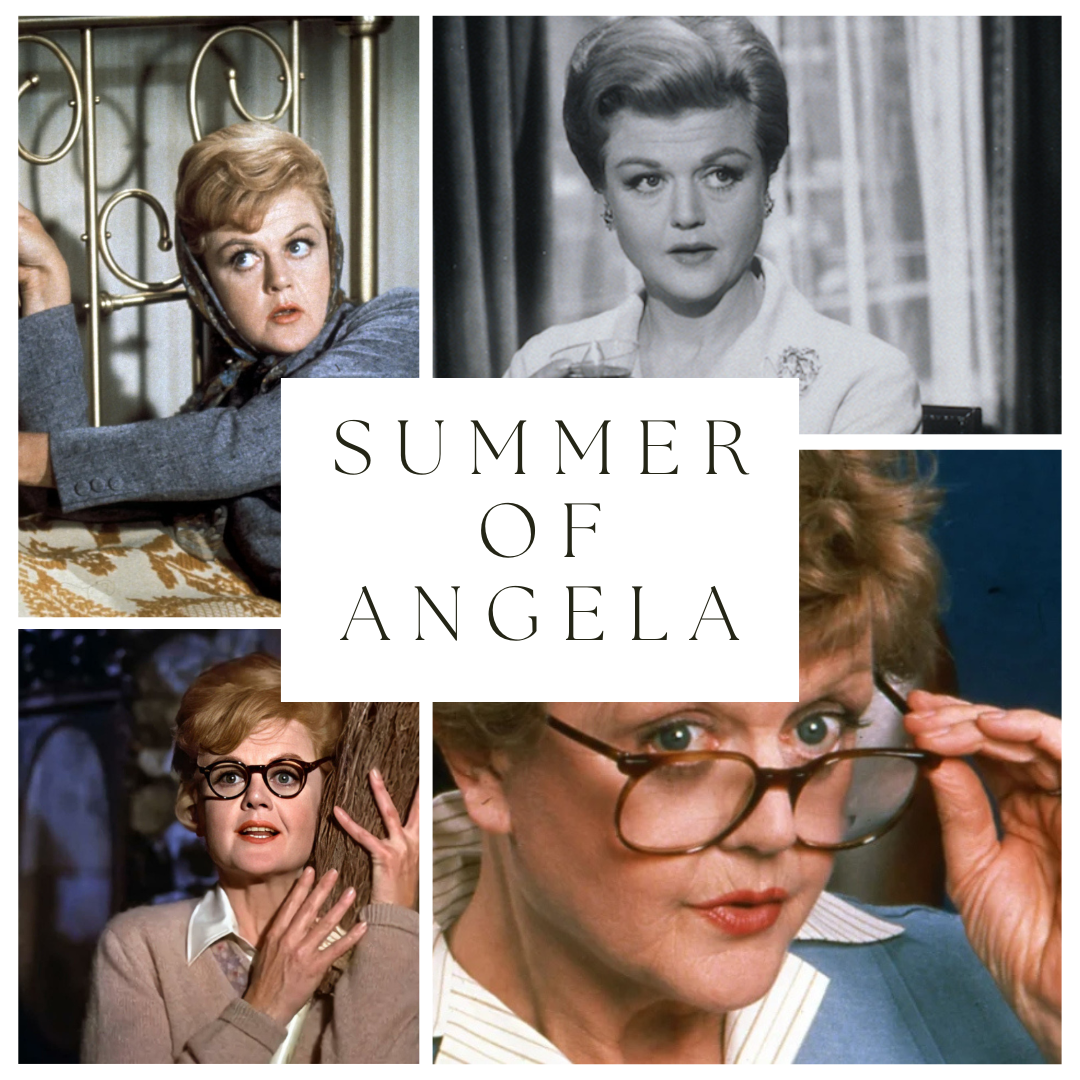
Summer of Angela: Bedknobs and Broomsticks (1971)

This summer I am watching Angela Lansbury movies. This week — well, last week — I watched Bedknobs and Broomsticks.

First, a movie description:

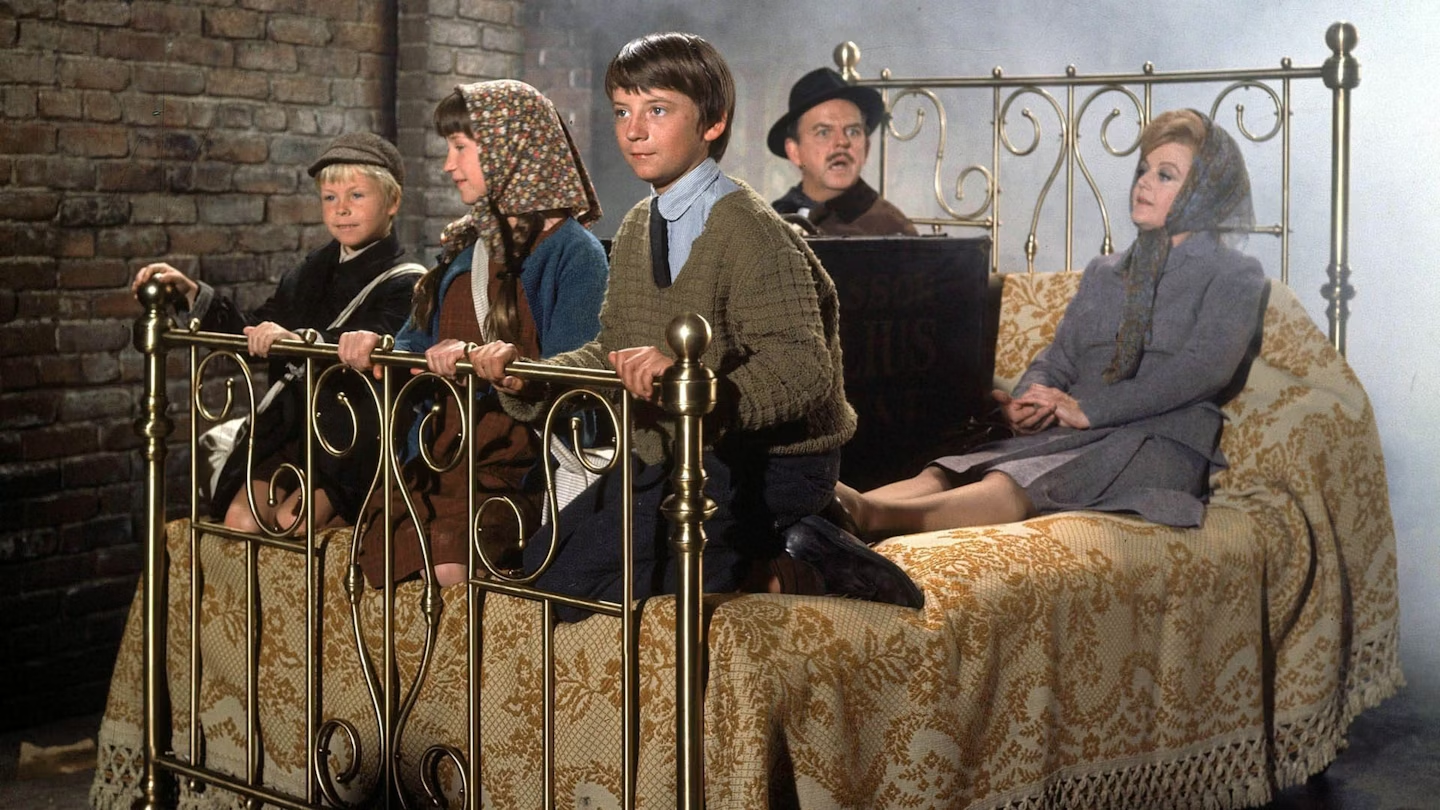
During the Battle of Britain, Miss Eglantine Price (Angela Lansbury), a cunning witch-in-training, decides to use her supernatural powers to defeat the Nazi menace. She sets out to accomplish this task with the aid of three inventive children who have been evacuated from the London Blitz. Joined by Emelius Brown (David Tomlinson), the head of Miss Price’s witchcraft training correspondence school, the crew uses an enchanted bed to travel into a fantasy land and foil encroaching German troops.

The children come to live with Eglantine Price not because she wants them to, mind you. She is sort of cohersed into it by a lady from the community who ran out of room for the other children who came from London.

Once there the children decide they are going back to London. Miss Price doesn’t eat normal food (she doesn’t eat any sausages at all!). Miss Price can’t let them go back to London because the city is being bombed but..oddly enough…later in the movie she takes them all back to London via a magical bed. Yes, you read that right. A magical, flying bed.

The movie is based on two novels by Mary Norton, The Magic Bed-Knob (1945) and Bonfires and Broomsticks (1957), about the adventures of an apprentice witch and the three children who come to stay with her to escape the bombing of London during World War II.

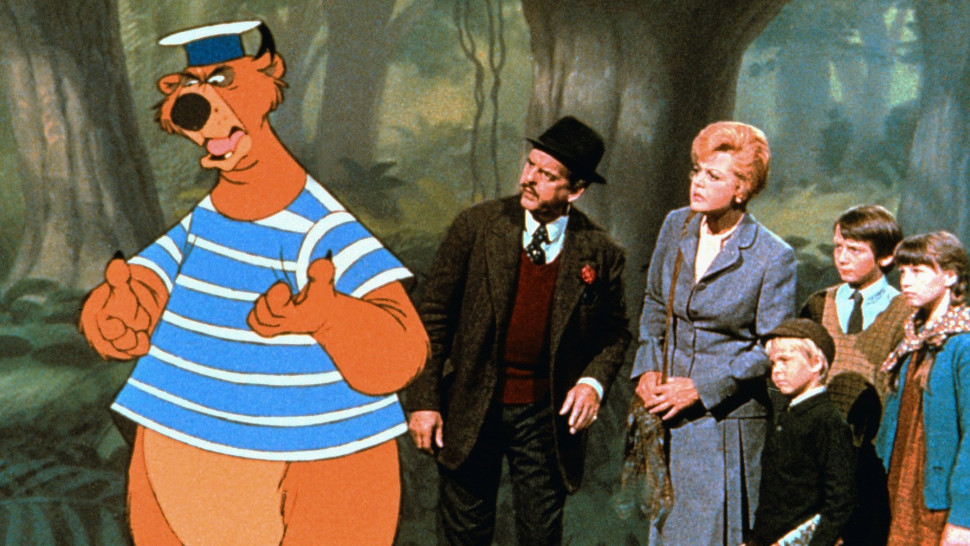
In some parts, the movie mixes live action and animation, similar to Mary Poppins.

Walt Disney (the man, not the company) purchased the rights to the first book the year it was published, but the movie wouldn’t be made until five years after his death, partially because of  Mary Poppins. It took Disney years and years to convince P.L. Travers to give the rights to Mary Poppins. Walt wanted to make a movie based on Bedknobs and Broomsticks but decided he’d hold on to that one if he couldn’t get Mary Poppins. Of course, he did get Mary Poppins so Bedknobs was pushed aside for a bit.

Walt said the stories were very similar, so he wanted to wait to make Bedknobs and Broomsticks, a title that combined both book titles, when the frenzy from Mary Poppins had died down a bit. In the end, Walt died before Bedknobs and Broomsticks was developed and released.

Observer.com says this about the movie: “Bedknobs and Broomsticks is just as unhinged as it sounds. The 1960s through the 1980s was a period of decline for Disney, and the internal drama at the studio plus the Mary Poppins-related delays are evident in Bedknobs and Broomsticks, a film that’s all over the place (ironic, as Lansbury called her performance “acting by the numbers;” each scene was storyboarded ahead of time). At first, it strikes the same chord as Chitty Chitty Chitty Bang Bang (1968), but then it veers into West Side Story (1961) territory with extended dance numbers (including dancers in brownface). The scenes where the group travels using Miss Price’s magical bed are bizarrely psychedelic à la the tunnel scene in Willie Wonka and the Chocolate Factory, which premiered the same year. And the arcs featuring a mix of live action and animation, particularly the soccer scene on the cartoon island of Naboombu, feel like precursors to future hits like Space Jam (1996).”


Who is in it:

The movie stars Angela Lansbury and David Tomlinson (the father in Mary Poppins, incidentally) and three wonderful child actors Ian Weighill, Roy Snart, and Cindy O’Callaghan.
Highlights for me:

The children in this movie were absolutely amazing. They were hilarious, quick-witted and delivered their lines perfectly.

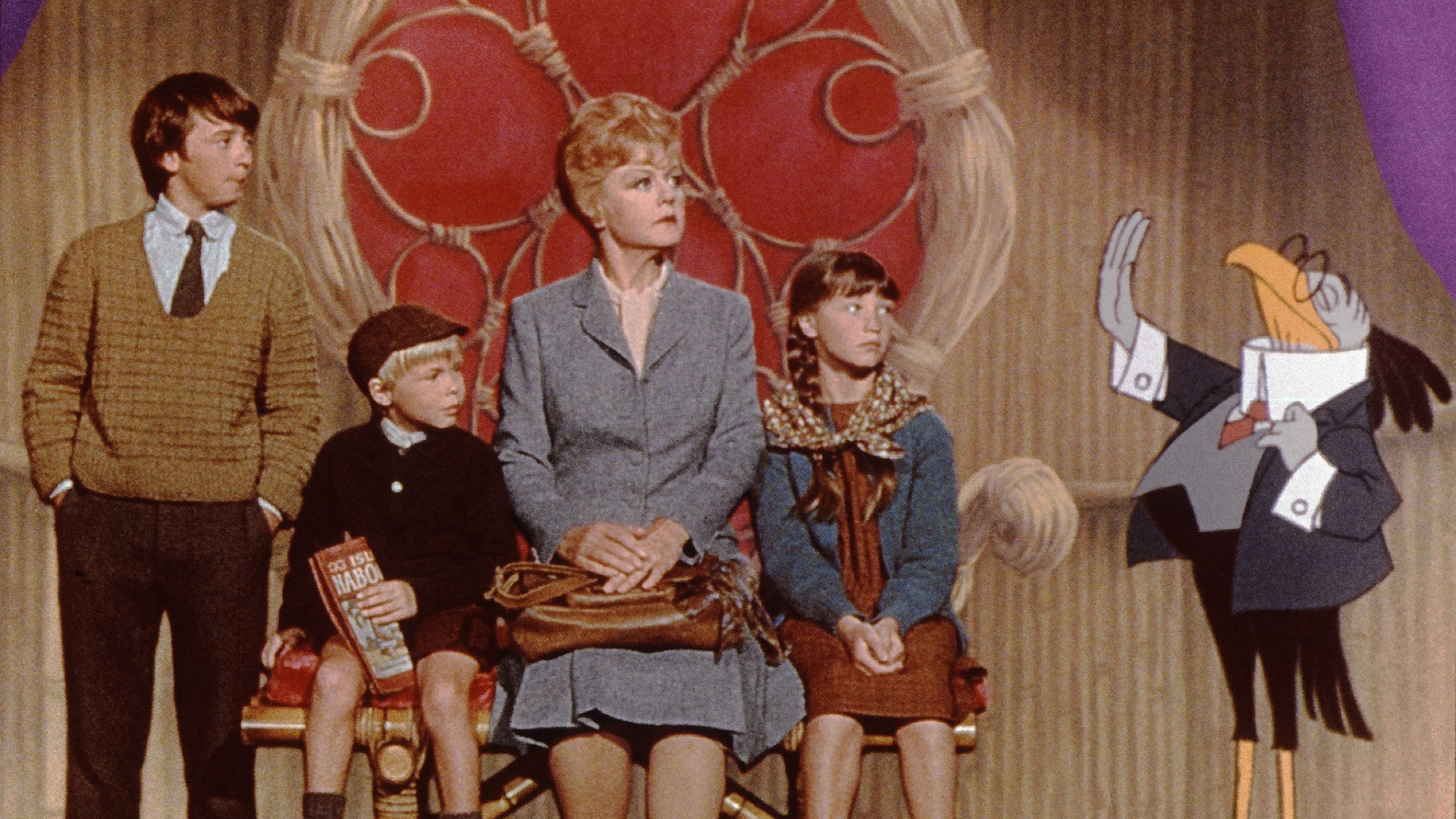
In one scene, the oldest boy decides he’s going to blackmail Miss Price into giving them better food (not vegetarian food that she eats) by telling her that the kids know she’s a witch. They know this because when they were trying to sneak out of the house to go back to London, they saw her trying to ride a broom for the first time and falling off into a bush.

“What we have here is an opportunity,” he says when he sees her fall off her broom. “She don’t want us to tell anyone she’s a witch so….”

Oh gosh, the kid is so funny in his delivery. His sister isn’t very pleased with him trying to manipulate Miss Price, by the way, and Miss Price isn’t easily manipulated so it doesn’t really work.

Angela, of course, was very good in this movie. I have to agree with some reviews that said she wasn’t as animated in the movie as she could have been. However, later in life she talked about how technical these types of movies have to be, adding that it is hard to improvise or do anything that breaks too much from the script when the movie is storyboarded so exact for the technical aspects.

There was one song that sort of made my eyebrows raise: Portobello Road. Mainly because of the women who come up to the professor on Portobello Road and seem to be flirting with him. They are dressed in brightly colored dresses that have a certain “look” to them. These same women are in the background of the song flirting with the soldiers and even get their own break out dance moment. As my mom would say, “Oh. Oh my!”
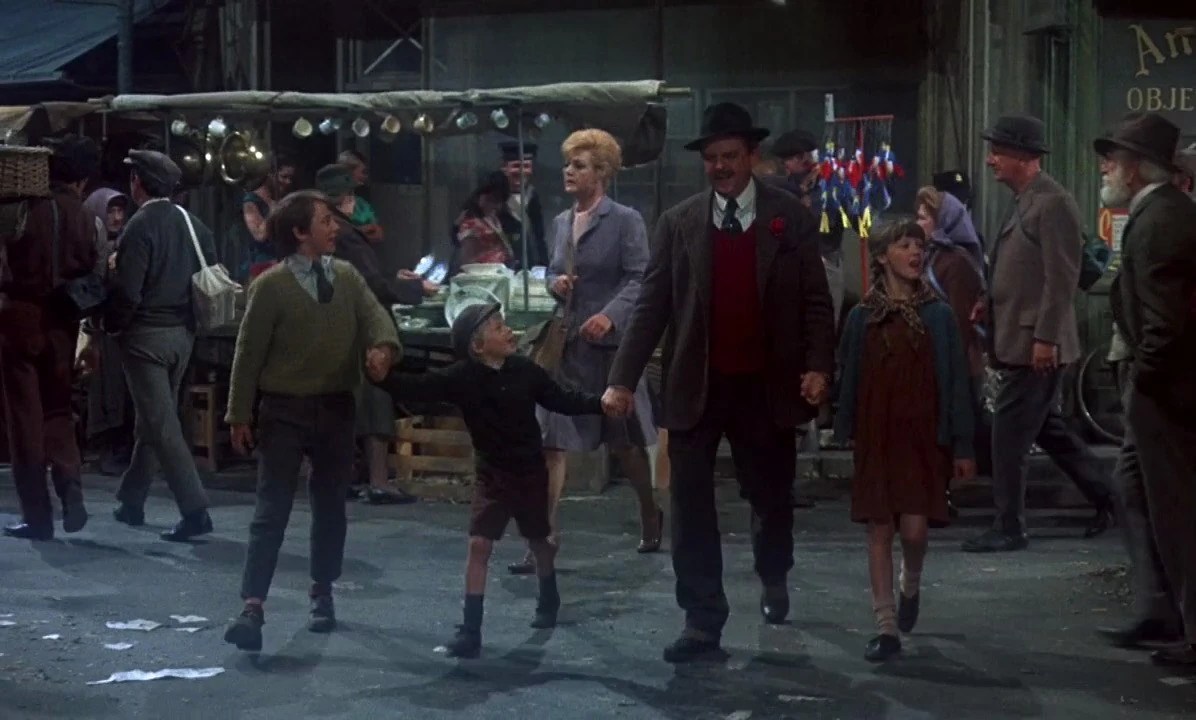
I’m really surprised they put “those type of women” in the movie, which was, clearly, meant for children. I kept looking for any commentary online about this and did find some, but mainly from bloggers.

“I mean, it wasn’t until this viewing that I worked out that, yes, those are prostitutes attempting to pick up Professor Browne and not just friendly women,” Gillianred on The Solute.com wrote. “Which is . . . not something I expected from a Disney movie. But if you look at what they’re wearing and exactly how they size him up, it seems to me that, yup, they’re wondering if he’s got a few bob in his pocket to spare for a little bit of fun.”

I also enjoyed all the different cultures represented during the Portobello Road song. Soldiers who fought for the British during World War II were shown dancing in their own moments during the song, including Scottish, Indian, and  Jamaica.  Online there was at least one site that called this scene racist but I guess I didn’t see it that way. I just thought it was nice they were representing the other countries who fought with England.
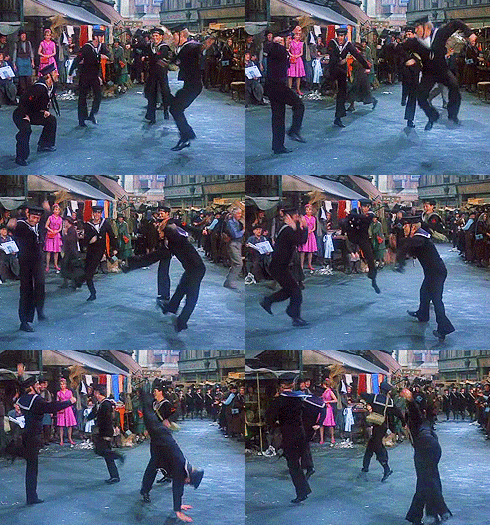
 I also felt that the Jamaican section in particular was very respectful because they were dancing to traditional music, the Jamaican women had the best dresses of anyone else in the dance sequence and everyone around them was clapping and enjoying themselves.

The children were even enjoying watching the dances and weren’t making fun of them, but trying to mimic them and try to dance like the people. To me the sequence is a chance to talk to children about the differences between culture. While the depictions are not completely accurate, to me, they are an attempt to bring awareness to all of those different countries that fought with the British during that time.

Eglantine’s cat looked like it had died – so that was funny to see. It looked like the cat we had, who we loved dearly, but was 19 when she died and looked awful. She looked like an animatronic cat that had gone through a garbage disposal at that point.

What I thought overall:

I liked this movie a lot but I don’t know that I would watch it again and again. Maybe if I had watched it as a child and had a sentimental connection, I would have loved it. Instead, I only liked it.

I almost loved it, maybe that’s a better way to say it. This was a comfy, cozy movie for me, even if it wasn’t my favorite Disney film. Yes, I know comfy and cozy are essentially the same word. Just go with it.
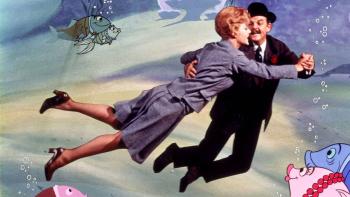
I loved the humor of the children and how they made the movie. I loved the silliness and the absolute detachment from reality it had , something people in the 40s would have really needed. Since the movie was released in 1971 it would have provided some people a happier way to frame that period, which was so dark for the world, but especially British people.

I’m actually glad children back then couldn’t see movies like this or read books like the Narnia Chronicles. They might have thought they were all going to mansion with professors or witches where they would disappear into a magical land via a wardrobe or fly away to adventure on a bed.

Nazis showing up at the end of the film was awkward and I imagine would have been very scary for children who watched it when really young.

Mr. Brown dreaming of Angela in a revealing acrobat outfit was also…er…interesting.  Not inappropriate but a bit strange. In a funny way.

And, of course, the ending when — well, have you seen the film? I hate to give it away but I will say that a spell is cast and very exciting things happen to help make sure there is a happy ending.

If I were to boil down my overall opinion of the movie into one sentence I would say that it was a magical adventure for me that allowed me to escape life stresses and that is exactly what I think the makers of this movie wanted to do.

What Angela said about the movie:

I could not find the source for this again, but at some point, I was watching an interview with Angela and she said that what really made the movie was the children. Their acting was so good and, of course, children love to watch movies with other children in them.

In 1998 Disney released an extended version of the movie, adding in deleted scenes and musical numbers. Interviewed by Disney for the project, Angela said only those who acted in the movie knew what was missing all these years, but they were so glad to add those parts back.

“It was my passport to an entire generation of youngsters,” Angela said in the interview for Disney. “Now those children are all grown up and they are showing Bedknobs and Broomsticks to their kids.”

“To fly is everybody’s dream,” she continued in the interview. “And to have that experience of being suspended and moving freely through the air is a lovely feeling.”

Pullies and wires were used to help Angela and the other actors seem to fly but special effects also came into play.

“It has to do with make believe,” Angela said. “We had to understand that we were interacting with an animated creature, so your hand had to be in a certain position for  him to put his hand on yours in the final print.”

A bit of trivia or facts:

  • Julie Andrews was offered the role of Miss Price in the movie but declined. When she made up her mind she did want to do it, it was too late. Angela had been offered the role and had accepted.
  • The Beautiful Briny was actually written for Mary Poppins, but saved out and filmed for Bedknobs and Broomsticks instead.
  • The song A Step in the Right Direction was cut from the movie and the footage could never be found to restore it to the restored version of the movie. Disney did, however, clip together some images and present it on the Disney Channel before airing the movie with all the deleted scenes added back in. (https://youtu.be/J-VwRkQGkAw?si=QpQ0jjsfKoP5H9wa
  • In the establishing shot of the animated soccer game, a bear wearing a Mickey Mouse T-shirt can be spotted in the crowd on the right side of the picture.
  • There were differences between the books and the movie. For example, in the first book of the series, the warm is not explicitly mentioned and the children are not orphans but are instead sent to spend the summer with their aunt in the country. It’s heard they meet Eglantine Price, who gives them the magic bedknob in exchange for not revealing she is a witch. In the second book, set two years after the first, the children travel back in time to 1666 before the Great Fire of London and that’s where they meet Emelius Jones (not Brown) and bring him back with them to the future.
  • Another difference between the movie and book is that Eglantine ends up traveling back with him to his time and takes the bed with her, which means the children will not have any more adventures or trips.
  • From TCM.com: “In an interview filmed for the thirtieth anniversary of the film that was included as added content on the DVD release, Richard M. Sherman and Robert B. Sherman, the brothers who were the film’s composer-lyricists, stated that they were given the task to write songs for Bedknobs and Broomsticks while the studio awaited permission from author P. L. Travers to film Mary Poppins. In an interview reprinted in a modern source, the brothers reported that Disney assured them that he owned another story about magic for which their songs could be used if Mary Poppins was not produced. According to the Shermans, the song “The Beautiful Briny” actually was written for, but never used in, Mary Poppins.”
  • According to 1971 studio production notes, three blocks of Portobello Road as it looked in 1940 were reproduced on Disney Studio soundstages. Among the props used for this sequence were carts rented from A. Keehn, a company that had a monopoly on them, according to set decorator Emile Kuri, who stated that for over a hundred years the company had collected a shilling a day for each barrow rented by vendors on Portobello Road. (Source TCM.com).
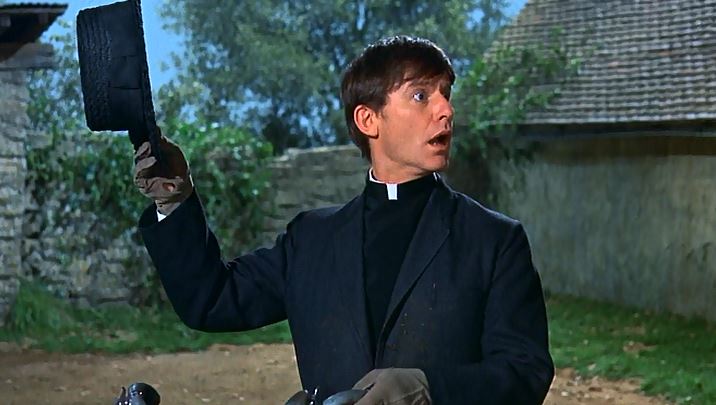
  • All longer scenes with Roddy McDowall as the local pastor “Mr. Jelk,” were cut from the film and he ended up in only a three-minute clip in the original film.
  • The New York Times stated in their review that Angela projected a “healthy sensuality” in the movie. (*giggle*)
  • This was the last Disney movie released while Roy O. Disney was still alive. He died a week after its U.S. premiere.
  • The armor in the climactic battle with the Nazis was authentic medieval armor, previously used in Camelot (1967) and El Cid (1961). When any item of armor was to be destroyed, exact fiberglass replicas were created and used.
  • In this movie, the King of Naboombu’s name is Leo. In official merchandise guidebooks, his full name is King Leonidas, after the Spartan King who died at the Battle of Thermopylae in 480 B.C.
  • This was the last Disney-branded movie to receive an Academy Award until The Little Mermaid (1989). Others received nominations, and two Touchstone Pictures movies, The Color of Money (1986) and Who Framed Roger Rabbit (1988), received awards before that.

If you want to read a very fun review of this film, I enjoyed this one by Mutant Reviewers Movies: https://mutantreviewersmovies.com/2013/03/25/deneb-does-bedknobs-and-broomsticks/

Cat from Cat’s Wire also watched this one this week and you can find her thoughts here:

Up next in my Summer of Angela is Gaslight.

Here is my full schedule of movies I am watching:

July 4 – Gaslight

July 11 –  The Shell Seekers

July 18 – Murder She Wrote: The Celtic Riddle

July 25 – The Mirror Cracked

August 1 – The Court Jester

August 8 The Picture of Dorian Gray

August 15 – A Life At Stake

August 22 – All Fall Down

August 29 – Something for Everyone


Additional resources:

https://www.tcm.com/tcmdb/title/68329/bedknobs-and-broomsticks#notes

https://www.tcm.com/tcmdb/title/68329/bedknobs-and-broomsticks#articles-reviews?articleId=188901

https://www.tcm.com/tcmdb/title/68329/bedknobs-and-broomsticks#photos-videos

https://www.the-solute.com/disney-byways-bedknobs-and-broomsticks/#:~:text=I%20mean%2C%20it%20wasn’t,a%20little%20bit%20of%20fun.

https://www.imdb.com/title/tt0066817/trivia/


Lisa R. Howeler is a blogger, homeschool mom, and writes cozy mysteries.
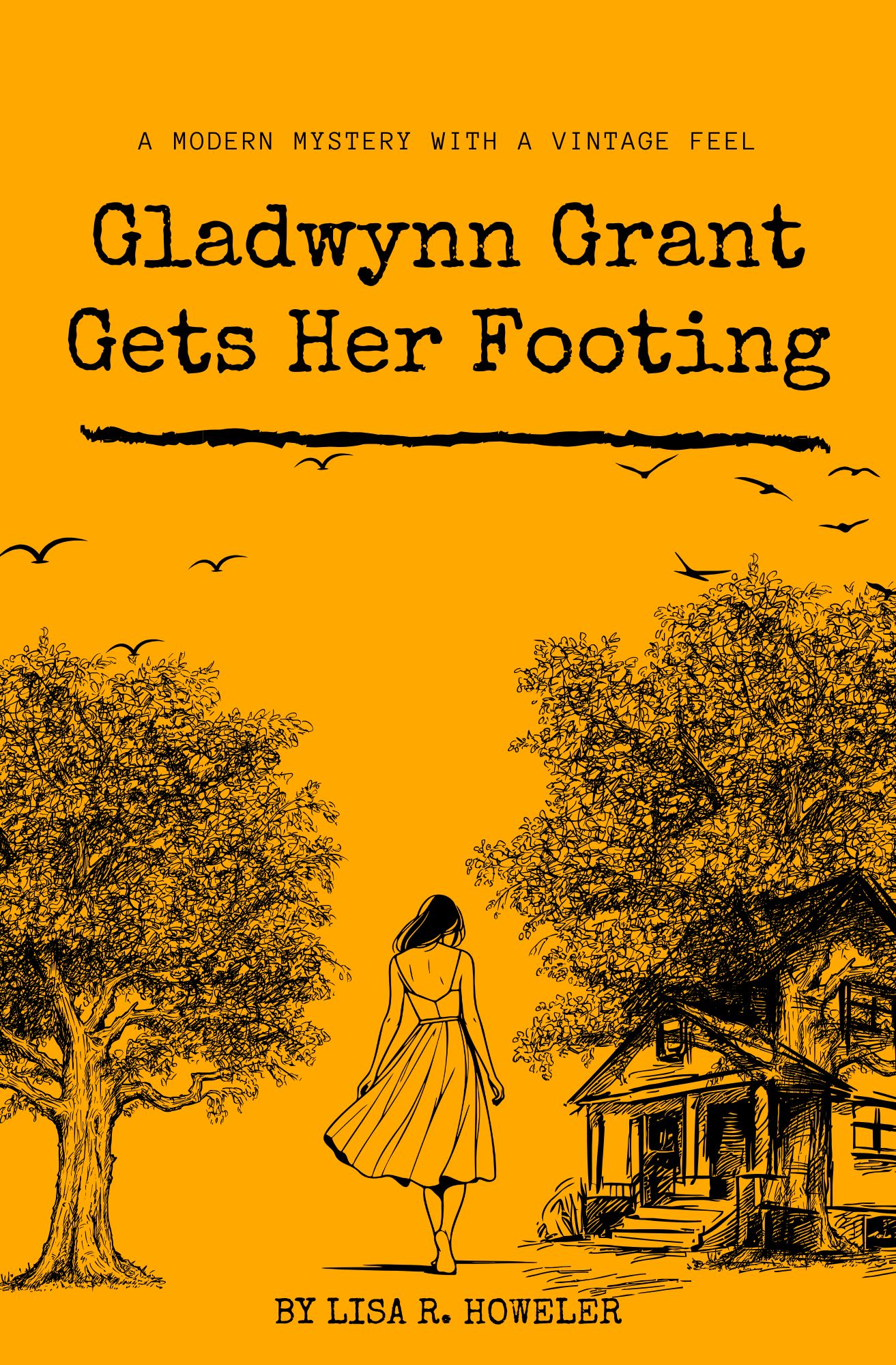
You can find her Gladwynn Grant Mystery series HERE.

You can also find her on Instagram and YouTube.

Summer of Angela: National Velvet (1944)

This summer I am watching movies starring or co-starring Angela Lansbury.

Up this week I watched National Velvet, which Angela only has a very small part in. It was  her third movie and she was 19-years old.

This was after she had won an Oscar in her first movie, Gaslight. This was certainly not a film I would expect an Oscar-winning actress in, but it was a sweet, cozy, and wholesome film.

I find it funny that Angela was playing a character who was supposed to be younger than she actually was in real life.

Her character, Edwina Brown, was supposed to be 14 in the movie. She was the most mature 14-year-old I ever saw.

But let’s get back to what National Velvet is about.

Movie description:

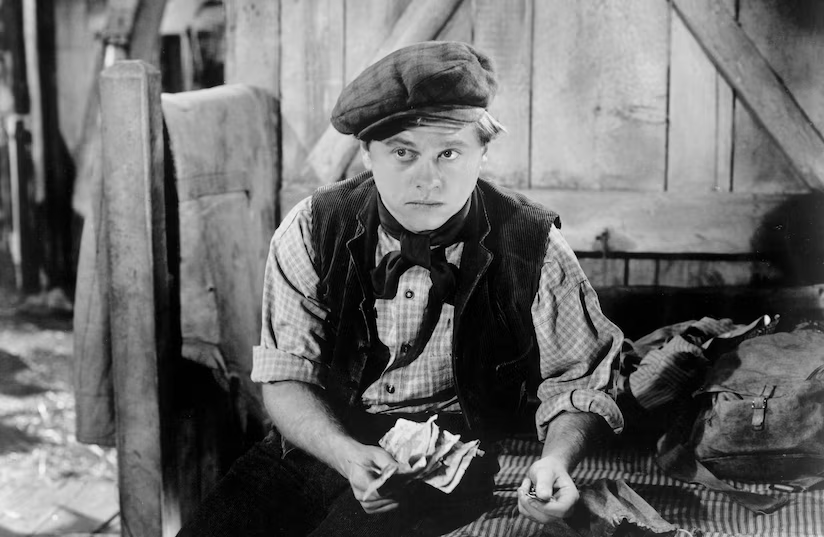
When Velvet Brown (Elizabeth Taylor), an equine-loving 12-year-old living in rural Sussex, becomes the owner of a rambunctious horse, she decides to train it for England’s Grand National race. Aided by former jockey Mi Taylor (Mickey Rooney) and encouraged by her family, the determined Velvet gets her steed, affectionately called “The Pie,” ready for the big day. However, a last-minute problem arises with the jockey and an unexpected rider must step in as a replacement.


The movie, released in 1945 was based on the 1935 book, National Velvet, by Enid Bagnold. It was directed by Clarence Leon Brown.

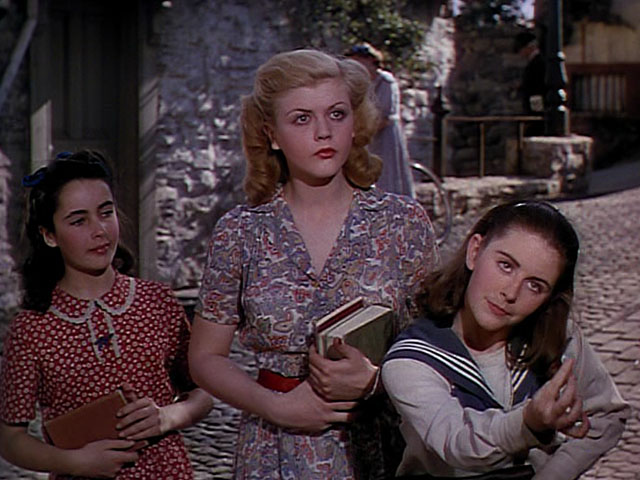
It begins with Velvet Brown and her sisters at school. Her older sister is daydreaming about boys while Velvet is daydreaming about horses.

She wants to ride horses all of the time and on her way home from school she sees a horse after meeting wandering jockey Mi Taylor, who is actually on his way to see her mother. She doesn’t know Mi is a former jockey, but she thinks he is fascinating anyhow. The horse Velvet sees is called The Pie, or at least that is what she calls him. He’s wild and crazy and escapes the paddock where he is kept, leading an absolutely huge stone wall.

Mi is excited when he sees the jump but it isn’t until later that we will learn why.

Velvet stops The Pie from running and the owner says she should be more careful because he is wild. Velvet takes Mi home to her parents and he presents an autograph book to her mother. The book has her name in it and he wants to know how she knew his father.

She doesn’t tell him that night but we learn later in the movie how they knew each other. After some humorous moments, Mi is invited to stay with the family and later in the movie The Pie, a troublemaker horse, is auctioned off and the Brown family buys a ticket, hoping to win him for Velvet.

Highlights for me:

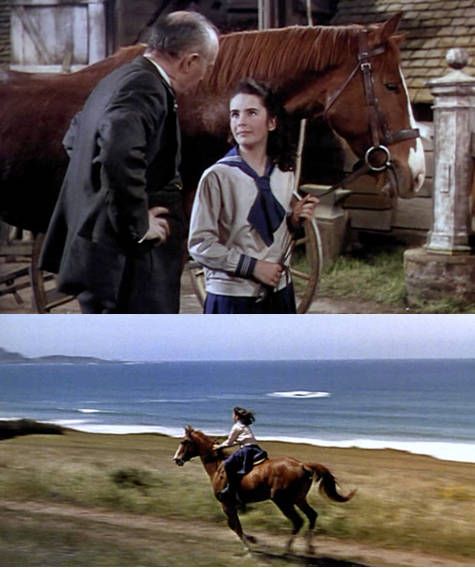
This movie had beautiful scenery.

It was supposed to take place in England but was actually filmed primarily in California and very few of the actors used British accents, other than a couple of actual English actors, including Angela.

I love watching The Pie race across the gorgeous hills with the backdrop of the ocean.

Angela wasn’t in the movie very long at all but when she was, she had some fun moments, and it was really fun to see her so young. I’m really looking forward to watching her in Gaslight, when she was even younger.

I loved Velvet’s mother. The actress (Anne Revere, who won an Oscar for her performance) pulled her off perfectly. She seemed stern at first, but she was truly the glue that held the family together and the motivation for Velvet to reach for her dreams.

Velvet’s mother crossed the channel when she was young, something no other woman had done before. When Velvet wants to race her horse in England’s Grand National, her mother wanted her daughter to have the same excitement she had with her accomplishment.

“We’re alike,” Mrs. Brown tells her. “I, too, believe that everyone should have a chance at a breathtaking piece of folly once in his life. I was twenty when they said a woman couldn’t swim the Channel. You’re twelve; you think a horse of yours can win the Grand National. Your dream has come early; but remember, Velvet, it will have to last you all the rest of your life.”

Mrs. Brown had quite a few good quotes in the movie actually. Here is another one:

“What’s the meaning of goodness if there isn’t a little badness to overcome?”

She was my favorite character.

What I thought of Angela in the movie

As I’ve mentioned above, Angela was in this movie very little. In the parts she was in she was very good and provided humor or sweet moments.

Here character, Edwina, was starting to get interested in boys and Velvet was excited to tell their teacher about Edwina meeting a boy later that night after the last day of school. Of course, when Edwina walks past the boy she intends to meet later she ignores him.

Velvet says she doesn’t understand why she did that and Edwina responds with, “Velvet, you’re too young to understand some things.”

The sisters, their arms around each other as they walk, talk about growing up.

“Haven’t you really felt keen about anything?” Edwina asks.

“Oh yes!” Velvet says looking at a horse as they pass.

“Horses!” Edwina says with an eyeroll. “What’s it feel like to be in love with a horse?”

“I lose my lunch,” Velvet says.

“Oh no,” Edwina says with a dramatic flourish, touching her hand to her throat and upper chest. “It’s here where you feel it. It skips a beat.”

And off she wanders to follow Teddy who has just ridden by on his bike.

Later, when Mr. Brown is tucking the three girls in at night, Edwina has just come in from seeing Teddy a bit earlier and is now in bed with the covers up to her chin. She’s “fast asleep” and her father is amazed she can sleep through all the noise.

Before he leaves the room he tells Edwina she’d better change into her nightclothes and Edwina is furious he found her out.

I’m guessing that she intended to sneak out that night.

Later in the movie she shows her true teenage self when she yells that she’s sick of hearing about Velvet’s horse and hopes he dies.

She apologizes for this outburst before Velvet leaves to go the Grand National, hugging her sister and telling her she should have never said it.

What I thought overall:

I didn’t expect to like this movie. Elizabeth Taylor’s little child voice was a bit annoying to me at first because it was almost as if it was overdone.

I just decided that was her voice and got used to it finally. Then I really enjoyed the movie, especially the humorous moments among the family members, including Velvet’s little brother Donald. He was hilarious and reminded me of kids I’ve met before.

This exchange was so cute:

Donald Brown: I was sick all night!

Mr. Herbert Brown: Donald, you told a story, didn’t you?

Donald Brown: Yes, sir, it was a story.

Mr. Herbert Brown: Well, you know what to do.

Donald Brown: What?

Mr. Herbert Brown: You say you’re sorry.

[Donald puts his head on his hand]

Mr. Herbert Brown: Well?

Mrs. Brown: He’s thinking.

Mr. Herbert Brown: [to Donald] Well, make up your mind.

Donald Brown: Alright, I’m sorry.

[continues eating his dinner]

Mr. Herbert Brown: Well, go on. Sorry for what?

Donald Brown: For being sick all night!

Mr. Herbert Brown: That boy will make a lawyer.

What Angela said about the movie:

At a Lifetime Achievement award ceremony for Elizabeth Taylor, Angela talked about meeting Elizabeth and how she (Angela) felt like she was superior to Elizabeth who was seven years younger.

“I had already done Gaslight and I was playing a 14-year-old, your sister and I thought I was really beyond that, you know, I was all of 18 and smoked cigarettes with Charles Boyer and worked with Ingred Bergman,” she said with a laugh.

In an interview with Studio 10 shortly before she died, Angela said she and Elizabeth remained friends from the time they met on National Velvet until Elizabeth died in 2011. Angela presented Elizabeth with the Jean Hersholt Humanitarian Award in 1993 and talked about Elizabeth’s impact on the industry and said when she first met her on the set of National Velvet she knew there was something special about her.

I couldn’t find many other interviews where Angela talked about National Velvet, but I am sure they are out there.

A bit of trivia or facts:


  • Elizabeth, 11 when filming started, did most of her own riding and stunts, bonding with the horse for months leading up to the film.
  • The Pie, real name King Charles, was gifted to Elizabeth Taylor for her birthday when filming was over.
  • Andy Rooney’s scenes had to be filmed first and in one month because he had been drafted by the Army and was expected to show up for duty June of 1944.
  • The movie was released during World War II, during a time when a wholesome story was really needed.
  • The equine star, The Pie, was played by a 7-year-old Thoroughbred called King Charles. A grandson of the legendary Man o’ War, King Charles was reportedly purchased by MGM for $800. 
  • Elizabeth was originally told she couldn’t have the role because she didn’t yet have boobs. Over the next few months Elizabeth, who loved the National Velvet book, started a special diet full of high protein, trained heavily, exercised and grew three inches from October to December. She returned to tell the producer who said she needed boobs that she had come back with boobs!
  • National Velvet won a total of five Academy Award nominations, including one for Brown as Best Director; and two Oscars — for Anne Revere as Best Supporting Actress as Velvet’s understanding mother and Robert Kern for Film Editing.
  • After the winners of the Oscars had been announced, an Academy spokesman said that Taylor had narrowly missed winning a special Oscar for best juvenile performance — an award that went instead to Peggy Ann Garner for A Tree Grows in Brooklyn (1944).
  • Anne Revere’s performance as Mrs. Brown was so entrancing that neither audiences nor critics pointed out that it was rendered with a pronounced New York accent.
  • King Charles, playing The Pie, was first-cousin of champion thoroughbred Seabiscuit, subject of two biopics. Both had Man o’ War as grand-sire.
  • From IMDb: “The story that Mi Taylor (Mickey Rooney) tells Donald Brown (Jackie ‘Butch’ Jenkins) about a shipwrecked horse is a legend based on fact. In 1904, a New Zealand-bred thoroughbred named “Moiffa” won the Grand National race. It was reported at the time that Moiffa had survived being shipwrecked on a deserted island. However, according to the Grand National’s web site, another horse named “Kiora,” who also ran in the Grand National that same year, was the shipwreck survivor. In January, 1901, a steamship bearing Kiora had gone down in a storm in the Cape of Good Hope. Kiora escaped the shipwreck, and swam to Mouille Point, a beach in Cape Town, South Africa, where he was rescued by local fishermen. In 1904, the newspaper reporters simply assumed that Moiffa, the Grand National winner, was also the shipwrecked horse. In 1979, Mickey Rooney starred in The Black Stallion (1979), which was about a shipwrecked horse that goes on to win a major race.”

Next week I will be writing Bedknobs & Broomsticks.

Other movies I will be watching (the dates are the day I will be writing about them):

July 4 – Gaslight

July 11 –  The Shell Seekers

July 18 – Murder She Wrote: The Celtic Riddle

July 25 – The Mirror Cracked

August 1 – The Court Jester


Additional Resources:

National Velvet Movie Facts: https://www.willowbrookridingcentre.co.uk/national-velvet-movie-facts/

National Velvet Trivia IMDb: https://www.imdb.com/title/tt0037120/trivia/

National Velvet article on TCM.com: https://www.tcm.com/tcmdb/title/84601/national-velvet#articles-reviews?articleId=12668


Lisa R. Howeler is a blogger, homeschool mom, and writes cozy mysteries.

You can find her Gladwynn Grant Mystery series HERE.

You can also find her on Instagram and YouTube.

Summer of Angela: The Manchurian Candidate

This summer I am watching movies starring or co-starring Angela Lansbury.

This week I watched The Manchurian Candidate (1962)

 Angela was nominated for an Oscar for best supporting actress for her performance as Eleanor Shaw and, wow, did she deserve that nomination.

First, a description of the movie from Google:

Near the end of the Korean War, a platoon of U.S. soldiers is captured by communists and brainwashed. Following the war, the platoon is returned home, and Sergeant Raymond Shaw (Laurence Harvey) is lauded as a hero by the rest of his platoon. However, the platoon commander, Captain Bennett Marco (Frank Sinatra), finds himself plagued by strange nightmares and, together with fellow soldier Allen Melvin (James Edwards), races to uncover a terrible plot.

Highlights for me:

The opening scenes are completely mental and crazy. Scary too. I don’t want to give too much away in case you’ve never seen this. So I won’t. All I can say is seeing one of the Baldwin sisters from the Waltons ask a man in her sing-song voice if he’s ever killed anyone messed me up just a bit.

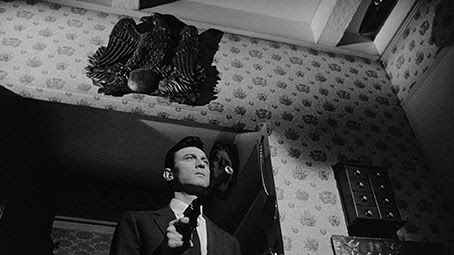
An interesting cinematography tactic used a few times in this movie is to make the character closest to the camera blurred out and the person in back in focus. This is something photographers sometimes do, commonly by using the rule of thirds, but it is more common to have the forward subject in focus and the person in back blurred out. I find this director’s decision to film scenes this way very interesting and visually interesting.

Frank Sinatra’s acting is superb in this. I have never seen him in a serious role, so it threw me a bit, but he was so good.

I can’t recall if I have ever seen Laurence Harvey in a movie before, but he was very compelling as Raymond Shaw.

What I thought of Angela:

Angela was nominated for an Oscar for best supporting actress for her performance as Eleanor Shaw, the mother of Raymond Shaw.

Nothing about the character in this movie reminds me of the Angela who is in Murder She Wrote. Now, of course the woman played many roles, but I am most familiar with her on Murder She Wrote so I had to prepare myself for seeing someone completely different and that is exactly what I got. Eleanor Shaw is absolutely not Jessica Fletcher.

Eleanor Shaw is vindictive, mean, and hungry for money and power.

“It’s a horrible thing to hate your mother,” Raymond tells Bennett at one point. “I didn’t always hate her. As a child I just sort of disliked her.”

That was before she did something he could not forgive.

Eleanor is completely domineering with her second husband, Raymond’s stepfather, and a senator.

She tells him what to do, when to do it, and how to do it.

“I keep telling you not to think.” She tells him at one point in the movie. “You are very, very great at a great number of things, but thinking isn’t one of them, hon’.”

Eeek.

She gave me chills.

(photo)

Here is a clip of Angela as Eleanor.

What I thought overall:

I was so nervous during this movie. I was nervous they wouldn’t believe Frank’s character about the dreams he was having and that the movie would just keep going on this nightmare path of him trying to prove he wasn’t crazy.

It was just a total mind trip all the way through, and I kept wondering who was a spy or sleeper agent and who wasn’t.

I figured out the ending before it happened and I was certain what one of the final scenes would be but I was still biting my nails.

I was actually very excited when part of the ending I thought would happen did happen. I was a little sad at the part of the ending that I didn’t expect.

The acting in the movie was outstanding across the board. Of course the messaging was a bit too timely for today and that was unnerving.

A bit of trivia:

There was a rumor that this movie was pulled from ever being shown on TV because of how it featured similarities to the assassination of Kennedy and speculation by some that the idea for his assassination came from the movie. Some say that Frank Sinatra locked the movie up in his vault because he controlled the rights to it. Another movie he starred in that involved assassination, Suddenly (1954) also disappeared for years after the Kennedy assassination.

According to an article on TCM.com, “. . . Sinatra’s control only extended to the film’s rights after seven years. There is, however, apparently some truth to the story that after JFK was murdered a year after the picture was released, some exhibitors requested it be given another run to capitalize on the event but that United Artists refused.”

Another disputed theory involved  a financial and legal disagreement between United Artists and Sinatra but that was later said to not be true. Some even said Sinatra simply neglected to keep the movie in distribution. (Guess he was too busy with the mob, etc. *wink*). To this day there isn’t really a definitive answer on why the movie fell out of existence for so many years but I lean toward all of the fall out from Kennedy’s assassination.

“What is certain is that during its “lost years,” the film built up a great reputation,” the TCM article states. “’The movie went from failure to classic without passing through success,” noted its screenwriter, George Axelrod. When it was finally re-released in 1988, it was a big box office hit (as well as a success on its subsequent video/DVD release) and earned even more rave reviews as one of the best pictures of that year.”

I thought it was so odd that Kennedy was given a copy of the film to preview in 1962.

A few more trivia tidbits (some of these may not be totally accurate but I don’t have time to vet each one):

  • Frank Sinatra reputedly had a swimming pool designed with a large painting on the bottom of the Queen of Hearts playing cards  … I won’t say why in case you haven’t seen the movie.
  • Director John Frankenheimer once claimed The Manchurian Candidate didn’t do well financially because the studio chose to promote another Sinatra picture, The Pride and the Passion (1957), but that film had actually been released five years earlier.
  • Frank Sinatra broke the little finger of his right hand on the desk in the fight sequence with Henry Silva. Due to on-going filming commitments, he could not rest or bandage his hand properly, causing the injury to heal incorrectly. It caused him chronic discomfort for the rest of his life.
  • The movie was filmed in only 39 days (!!)
  • According to executive producer Howard W. Koch, the budget was $2.2 million. Of that amount, $1 million went for Frank Sinatra‘s salary, with another $200,000 for Laurence Harvey, leaving only $1 million for everything else.
  • The topic of this movie was considered politically so highly sensitive that it was censored and prohibited just before its theatrical release in many of the former “Iron Curtain” countries, such as Poland, Czechoslovakia, Hungary, Romania, Bulgaria – and even in neutral countries such as Finland and Sweden. The theatrical premiere for most of those countries was held after the collapse of the Soviet Union in 1993.
  • By his own admission, Frank Sinatra‘s best work always came in the first take. Writer, producer, and director John Frankenheimer always liked the idea of using the freshness of a first take – so nearly all of the key scenes featuring Sinatra are first takes, unless a technical problem prevented them from being used.
    (Sources, Imbd and TCM.com).

What Angela said about the movie:

Frank Sinatra actually wanted Lucille Ball for the roll of Eleanor Shaw.

“That would have been fascinating,” Angela said. “You wouldn’t believe that she could be this devil incarnate though.”

As for how she got the part she said, “I think Frankenheimer (the director) just put his foot down.”

“I had just finished working with John on We All Fall Down and he came into the room where we were looping some lines and he slapped this very heavy book on the table and he said to me, ‘There’s your next role.’”

He told her what the book was, who wrote it, who was going to write the screenplay and added, “You’ll be fabulous as the mother.”

Angela was actually only three years older than the man who played her son. Say what??!

To become an older woman she simply acted as she felt the character would act, without worrying about age, she said.

In an interview she said many people asked her what it was like to work with Frank Sinatra and she always tells them she doesn’t know because they didn’t have any scenes together other than a quick one where they were getting their coats on.

It wasn’t until later she learned that Frank Sinatra was an integral part of making sure the movie was made.

“I know that Frank wasn’t the easiest person for John to work with,” she said. “But they seemed to have an alliance. I think Frank understood what a tremendous opportunity it was for him to play this role. He knew that his friend (President) John Kennedy adored the book. Frank talked to JFK about the role and one of his questions oddly enough was ‘who’s playing the mother?’”

Of the suspense of the movie, Angela said, “You really didn’t know who anybody was.”

Of the movie overall she said, “I think we all knew we were in rather racy territory. We were doing something pretty unique and different. This is going to turn a few heads you know.”

“It was out of circulation for many, many years,” she said. “It came back in 1988 as a revelation to be had. The whole generation saw it, who recognized it for what it was and they absolutely took it to their hearts and it became the most important piece of work any of us had ever done. Suddenly John Frankenheimer was recognized, Frank Sinatra was recognized as an actor. I was recognized as an actress who played one of the most evil women in human history. I had a whole new acceptance from an audience who didn’t know who the devil I was. So I have great feelings of fondness for The Manchurian Candidate for that reason.”

Have you seen this movie?

I rented it on Amazon, but it is also streaming on Google Play, Pluto TV, Apple TV and Fandango. Or your local library might have it.

Later this week I will be writing about a totally different movie than The Manchurian Candidate, National Velvet.

Other movies I will be watching for this Summer of Angela are:

June 27 – Bedknobs & Broomsticks

July 4 – Gaslight

July 11 –  The Shell Seekers

July 18 – Murder She Wrote: The Celtic Riddle

July 25 – The Mirror Cracked

August 1 – The Court Jester

The Manchurian Candidate trailer:

____
Additional sources:

Trivia & Fun Facts About THE MANCHURIAN CANDIDATE (TCM) with spoilers!! :https://www.tcm.com/tcmdb/title/19293/the-manchurian-candidate#articles-reviews?articleId=136794

Angela Lansbury talks to Alec Baldwin about The Making of The Manchurian Candidate: https://youtu.be/Sjqs66SoTXQ?si=MeU5SbwFRMBnlRhP

Angela Lansbury looks back at the making of The Manchurian Candidate: https://youtu.be/kLwO-2_GIbM?si=cWQoMwa1ARwzzAX6

Join me for a Summer of Angela (Lansbury that is)

For fun I decided I am going to watch Angela Lansbury movies this summer.

This is the list I’ve come up with. It’s subject to change, of course.

You can join along and watch the movies or just read the blog posts about them. I won’t be offering spoilers for the movies. The dates are the dates I will be writing about the movie.

June 13th – Manchurian Candidate

June 20 – National Velvet

June 27 – Bedknobs & Broomsticks

July 4 – Gaslight

July 11 –  The Shell Seekers

July 18 – Murder She Wrote: The Celtic Riddle

July 25 – The Mirror Cracked

August 1 – The Court Jester

To kick off my Summer of Angela, here is a link to my impressions of Blue Hawaii, which she played Elvis’s mother in. I’ve updated it a bit with a little more information about Angela’s role in the film and what she thought of Elvis.


Lisa R. Howeler is a blogger, homeschool mom, and writes cozy mysteries.

You can find her Gladwynn Grant Mystery series HERE.

You can also find her on Instagram and YouTube.