Comfy, Cozy Cinema: Little Women (2019)

For October and November, Erin from Still Life, With Cracker Crumbs and I will be watching cozy or comfy movies, and some of them will have a little mystery, creepiness, or adventure added in.

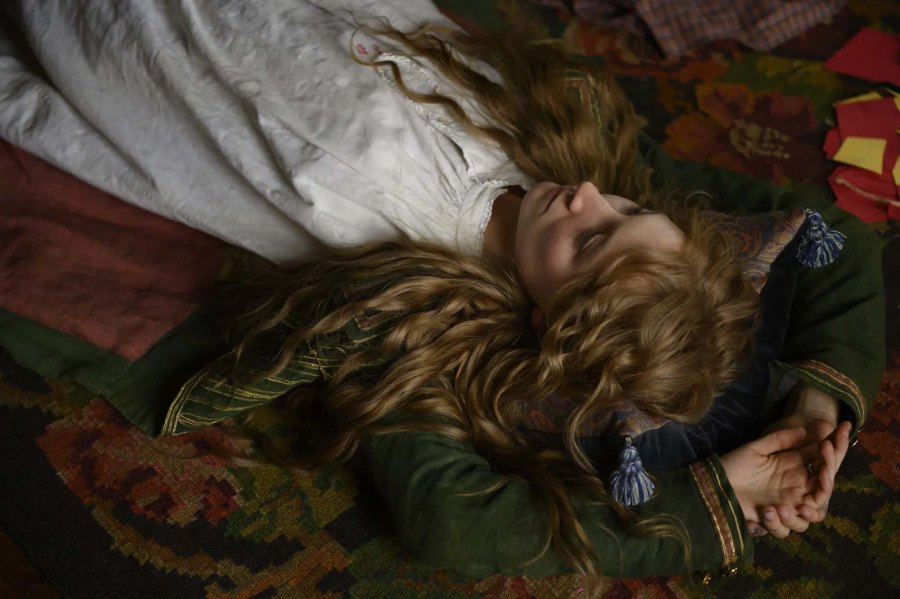
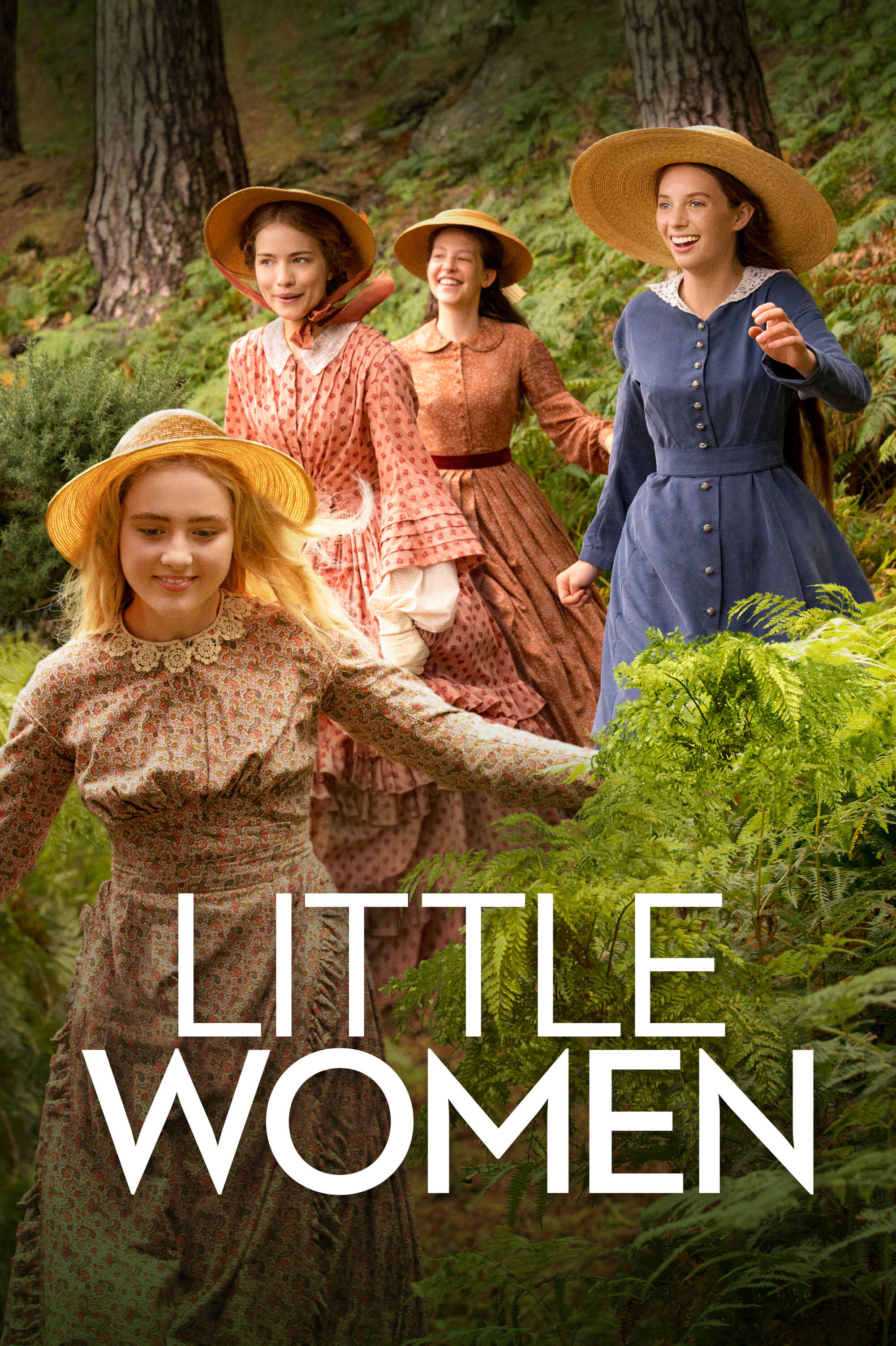
This week Erin chose the 2019 version of Little Women. This movie is full of beautiful cinematography but it really isn’t my favorite version of this story, which as most of you know is based on the book of the same name by Louisa May Alcott.

Before I get into this, I want to explain that when I say it isn’t my favorite version of the story, I don’t mean that I do not like it. I did not like it at all the first time I watched it, but I watched it again and I see what the director (Greta Gerwig) was doing. I simply did not like it as much as others I’ve watched from the standpoint of how it relates to the novel. It is a very good movie when not compared to the source. I don’t know if that makes sense at all, but just know as you read on that I believe it’s a good movie.

I mean, this is the seventh version of this story on either the small or the big screen so the director and screenplay writer had to do something different. This something different was weaving the story of Jo March and her sisters and parents in and out of the present, which is actually the end of the book and other movies.

That’s what I didn’t like about this movie, but let me explain first a bit about Little Women Most of my readers might know that Little Women is the story of Jo March and her sisters Amy, Meg and Beth, as well as their mother Marmie and the young man Theodore (Teddy) Laurence (Laurie) who lives next door with his wealthy uncle. Jo is a writer and based on Louisa May Alcott herself. The other characters are based on her family.

Jo is a bit tomboyish and doesn’t really like to be “ladylike.” Her sisters Meg and Amy are more like young women were “supposed to be” back then (which is the 1860s, during the Civil War). Meg, the oldest, is studious and responsible. Amy is a bit of a brat in most movies, but she’s young and simply learning. Jo is often dramatic and a bit serious. Beth is the meek and quiet child who also becomes the sickly child later on.

The girls’ father is in the Civil War. Their mother cares about everyone and sacrifices a lot for the poor and her family.

Jo wants to become a novelist but her family faces many struggles, which eventually leads her to selling her stories to newspapers to help them earn money. That’s where this story begins. Since I am a traditionalist in some ways, I wanted the story to be told like it is in the other movies (I’m reading the book for the first time starting this week so I can’t say for sure how the book is written) – chronologically. I wanted to build up to the big moments, slowly learning about each character.

But that isn’t how this movie does it and that’s okay. It is a totally different way to tell the story and it is an interesting way but for me, the story seems disjointed and out of order.

With the drama of the ending of the story being shown in the beginning, I felt like the viewer had no time to get to know the characters and even know why Amy was upset at Laurie or why either of them are in France. We were just left wondering, “What in the world is going on here?” I didn’t feel attached to the characters because all I knew what Amy was standing in a ballroom yelling at Laurie. Laurie was drunk. Should I care that Laurie is drunk? Is he not usually drunk? What’s the deal?

So I guess in some ways this version of the story pulls the viewer along on a journey to learn why the characters are acting that way. It is a more modern way of doing it and I didn’t like that at first. It grew on me, though.

I do, however, like the actors in the movie, other than Timothy Chalamat as Laurie. I didn’t enjoy him as Laurie.

Saoirse Ronan is very good as Jo and Florence Pugh pretty good as Amy.

Emma Watson was okay as Meg and Eliza Scanlan plays Beth. I didn’t buy Laura Dern as Marmie at all. Like at all. She’s just the least Marmie actor in my mind and didn’t change my mind during her performance. She’s a great actress but I just couldn’t get her in my mind as Marmie.

I also could not get Meryl Streep in my mind as Aunt March. It was just like watching Meryl be Meryl. Of course, this is only because my brain is tainted with the other versions. Neither actress is bad in their roles, just not the characters from the book to me – and that isn’t necessarily a bad thing. They made the roles their own.

This version is the third version of this story I have watched. I have watched the 1994 version with Kirsten Dunst, Winona Ryder, Christian Bale, Susan Sarandon (who I also didn’t see as a good Marmie), Claire Daines, and Trina Alverado.

If you’ve seen that version, then you remember the most beautiful scene with Claire Daines when Beth is (spoiler alert!) sick and passes away. It’s such a beautiful scene that I get weepy even thinking about it, let alone watching it. I will post it below, along with trailers or clips of all the movies I am mentioning here.

Earlier this year I also watched the 2018 PBS Masterpiece miniseries starring Anne Elwy, Willa Fitzgerald, Katherine Newton, Emily Watson, Angela Lansbury, and Michael Gabon.

The PBS version is very close to the book, I’d imagine, and the way the story is told is like watching the book come to life. The actors perfectly play each part as if the parts were written for them instead of them being shoved into the part to make it fit, which I felt happened with casting in some cases for the other two versions I’m mentioning here.

We are talking about the 2019 version, though, so let us get back to that version. The 2019 version feels like it has more activism about the role of women – like it was saying out loud what Alcott implied in the pages of the book. I don’t like when movies are preachy but this felt fairly natural instead of preachy.

From what I read, Gerwig wanted to direct the film when she heard it was being remade (yet again) because she said it had inspired her in her life and her career. She specifically wanted the film to be about, “the ambitions and dreams you have as a little girl and how they get stomped out of you as you grow up.”

The movie is produced and directed by women. The producer was Amy Pascal.

Gerwig wrote the screenplay using Little Women but also personal letters and writings by Alcott and other stories of hers.

One other good thing about the 2019 version is that it has James Norton portraying John Brooks. He is the actor from Grantchester and several other shows and Erin is in love with him. *wink* He is quite dishy and I didn’t mind looking at him for a while.

The 2019 version, like the others, still has a very sweet and downhome quality to it and I really like that as well.

A review in The New York offers a good overview of how this movie was written, produced and directed: “ . . . Gerwig’s “Little Women” is the tale of the birth of an artist—a female artist at a time that’s hostile to women and the telling of stories of women’s lives from women’s point of view.  . . .  her version of “Little Women” is about a free-spirited young woman whose ambitions threaten to detach her from her financially struggling family, and who discovers that her intellectual self-fulfillment and emotional development are inseparable from her devotion to her family.”

This reviewer, Richard Brody, also wasn’t impressed with Ronan’s performance as Jo.

“Ronan becomes a vessel for characters endowed with Gerwig’s creative fire, but not for the fire itself. (It’s unclear whether this is due to the nature of her own art or to its interface with Gerwig’s direction.) As a result, Ronan is not a powerful presence as Jo March: the character, famous for her anger, for her “temper,” comes off as unduly moderate, both inwardly and outwardly—not in conflict with herself, not repressing that rage, but merely claiming one that’s hardly in danger of bursting forth.”

Brody does see her performance as professional and good, though, and I do as well.

Now, which version would I recommend that someone who has never read the book to see? I would recommend the 2018 version if they want one closer to the book itself, but I would recommend all of them if you want a good movie. Just sit down and watch all of them one weekend and have fun doing it. It will be one of the most relaxing weekends you’ve ever had since they all check off the comfy, cozy, and homey boxes.

Erin has some great views on this movie that she shared with me earlier this week so check out her post on her blog here: https://crackercrumblife.com/

If you are interested in watching the rest of our movies with us, here is our remaining schedule:

Tea with The Dames (November 9)

A break for Thanksgiving

And

Sense and Sensibility (November 30th)

1994:

2018, PBS:

Comfy, Cozy Cinema: Rebecca (1940)

For the rest of October and all of November, Erin from Still Life, With Cracker Crumbs and I will be watching cozy or comfy movies and some of them will have a little mystery, creepiness, or adventure added in.

This week we watched Alfred Hitchcock’s Rebecca from 1940 and, no, the movie isn’t comfy or cozy so we should have called this feature Comfy, Cozy, and Creepy. Regardless of what the feature is called, Rebecca is a bit of a creepy movie. Technically it is called a gothic psychodrama.

Whatever it is called — it has an eerie air about it all the way through.

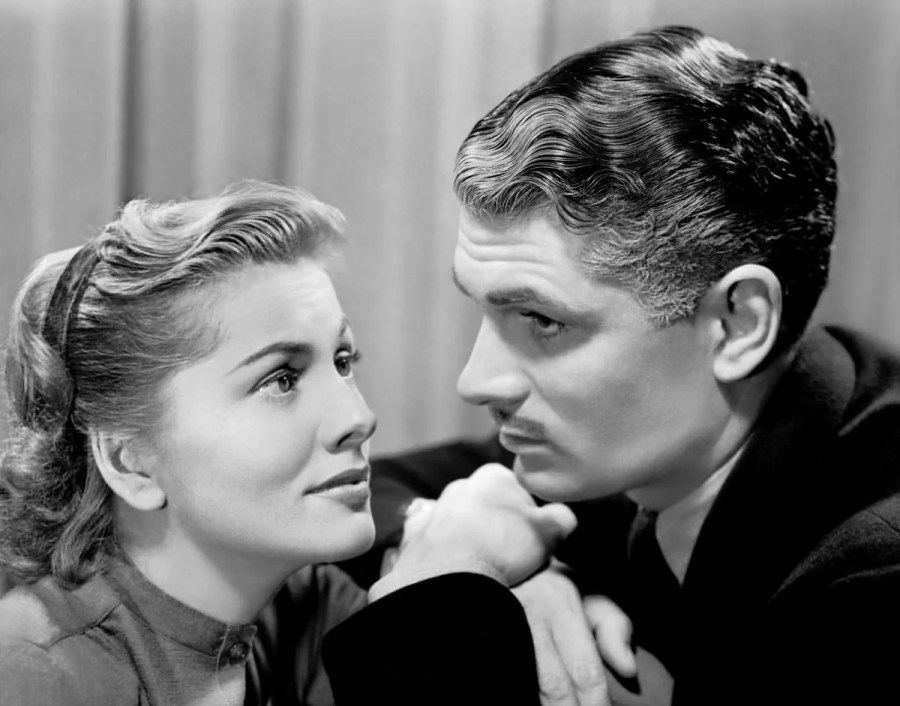
The story follows a woman (Joan Fontaine) who falls in love with Maximillian (Maxim) de Winter (Lauren Olivier), a brooding widower. Despite being told by her companion, Mrs. Van Hopper that Maxim is still obsessed with his dead wife Rebecca, this woman pursues a relationship with Maxim. The woman is also never named, apparently, that’s how unimportant she is to Maxim, I suppose. She’s simply ever called “the second Mrs. De Winter.” I find that odd, but anyhoo…

There are a lot of red flags when she is dating Maxim at first. Like his outbursts for one.

And the fact that Mrs. de Winter number two is completely obsessed with the man. Like desperately obsessed. Plus his proposal is a bit crazy. “I’m asking you to marry me, you fool.”

And that is only a short time after they meet. Insert wide-eyed face here. Can we say yikes?

Mrs. de Winter number two and Maxim get married very quickly and move to Maxim’s mansion, Manderley (because all rich people name their mansions and estates and I find that weird). Things start to get really creepy at the mansion because Maxim is even more broody there, but also because his housekeeper, Mrs. Danvers, is a real ghoul of a woman. Mrs. Danvers was a confidant of the first Mrs. de Winter, which she likes to tell the second Mrs. de Winter a lot. Mrs. Danvers has even kept Rebecca’s room like she had it before she died.

As the story continues, it is clear that the first Mrs. de Winters died under suspicious circumstances, even though Maxim told everyone she died by suicide.

Mrs. de Winter number two tries to cheer her new husband up by holding a house party but ends up wearing a dress Rebecca used to wear, which freaks Maxim all out. Of course, Mrs. Danvers told her to wear the dress.

It’s clear throughout this movie that Maxim needed some therapy after his first wife’s death but it will become even clearer that he needed that therapy for a reason other than her supposed suicide after a storm washes a boat ashore and –

Well, you will have to watch the movie to find out why.

Olivier is perfect in this movie as Maxim. He’s handsome, brooding, mysterious, and a bit jerky all at the same time. He reminds me of Cary Elwes in The Princess Bride, or Elwes reminds me of him actually since Elwes came afterward – you know what I mean.

Maxim is clearly in love with Mrs. de Winter number two (despite the fact she doesn’t have an identity apart from being his wife since her name is never used) but he can’t fully love her because of his past experience with wife number one.

This movie, by the way, is yet another adaptation of a book. Rebecca was originally written by Daphne du Maurier and producer David Selznick told Hitchcock he wanted the story of the movie to follow du Maurier’s story.

According to the American Cinematographers site, ” Kay Brown, East Coast story editor for Selznick, sent a synopsis to her boss with the highest recommendation (after reading the book). After consulting with his resident story editor, Val Lewton, the producer acquired the film rights to du Maurier’s book for a hefty $50,000.”

There was one huge difference between the book and the movie and it had to do with Hollywood codes and the ending, but I’ll leave you to figure that out on your own in case you have never seen the movie because it is a spoiler.

I did find it interesting to read during my research that du Maurier did not want Hitchcock to write the screenplay for this movie because she hated his adaption of Jamaica Inn, released in 1939. She said it reflected his cavalier attitude toward the original source material.

In the end, du Maurier didn’t have to worry because Selznick made Hitchcock keep the movie very close to the source material. It is interesting that the screenplay was written by Joan Harrison and Robert E. Sherwood and not Hitchcock.

Hitchcock told a magazine in 1938 that he planned to make the movie like he would a horror film.

Selznick and Hitchcock on the set of Rebecca,

“This is really a new departure for me,” he said in the November 5, 1938 edition of Film Weekly. “I shall treat this more or less as a horror film, building up my violent situations from incidents such as one in which the young wife innocently appears at the annual fancy-dress ball given by her husband in a frock identical to the one worn by his first wife a year previously.” (source American Cinematographer site: https://theasc.com/articles/du-maurier-selznick-hitchcock-rebecca). 

This was Hitchcock’s first time working with Selznick and it is clear that in some ways he didn’t like working with him since at the end of the movie Selznick wanted a large plume of smoke to form an “R” (having to do with the plot) but since Selznick was so busy with finishing Gone With the Wind, Hitchcock had the R on the pillow instead. Hitchcock also edited the film in-camera, which means he only shot the scenes he wanted in the final film. The idea behind this was to keep Selznick from being able to cut or rearrange things.

Selznick did, however, find a way to re-edit the film and add his own touches to it, including adding some of the music. As always in Hitchcock’s films, this movie included many incredible cinematography moments, including a reflection in a pool of water of couples dancing in one scene.

The film was nominated for nine Oscars and won for best picture and (no surprise) cinematography in 1940, but surpisingly no awards were given to the actors or the director.

According to one article I read, Selznick always lived in the shadow of Gone with the Wind, never feeling like anything he did afterward measured up to it. Rebecca was the only movie he felt came close to Gone With The Wind.

I also found it sad and interesting that the filming for the movie began on September 8, which was only five days after England declared war and eight days after the German Army invaded Poland.

They budgeted the production for 36 days, but in two weeks the company was five days behind schedule, partially because the cast and staff were so worried about the safety of friends and family.

I have a lot of positives about this movie, but one thing I didn’t like was the constant score in the background. I really found the constant playing of music in the background to be irritating. The movie could have been, and was, suspenseful without it.

Have you ever seen Rebecca? What did you think of it?
If you haven’t watched it, you can currently find it for free on YouTube:

To read Erin’s impression of the movie, visit her blog here: https://crackercrumblife.com/

If you wrote a blog post about the movie you can share it in our link up.

Coming up in our Comfy, Cozy feature:

Little Women (November 2)

Tea with The Dames (November 9)

A break for Thanksgiving

And

Sense and Sensibility (November 30th)

You are invited to the Inlinkz link party!

Click here to enter
https://fresh.inlinkz.com/js/widget/load.js?id=c0efdbe6b4add43dd7ef

Comfy, Cozy Cinema: Strangers on a Train

For the rest of October and all of November, Erin from Still Life, With Cracker Crumbs and I will be watching cozy or comfy movies and some of them will have a little mystery or adventure added in.

This week we watched Strangers on a Train directed by Alfred Hitchcock and starring Robert Walker, Farley Granger, Ruth Roman, Kasey Rogers, and Pat Hitchcock (Aflred’s daughter). This was yet another movie based on a book. This one was based on Patricia Highsmith’s first book. She also wrote The Talented Mr. Ripley.

This movie kicks right off. No leading into things slowly.

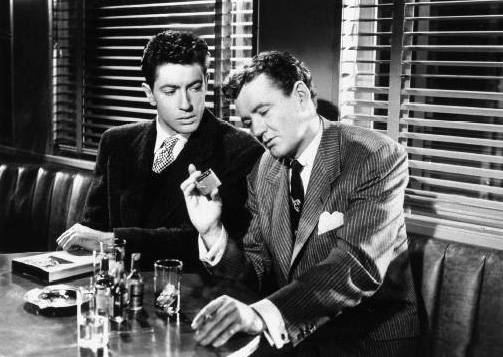
The main characters immediately meet on a train (hence the title) aaaaand immediately I felt uncomfortable with both of them.

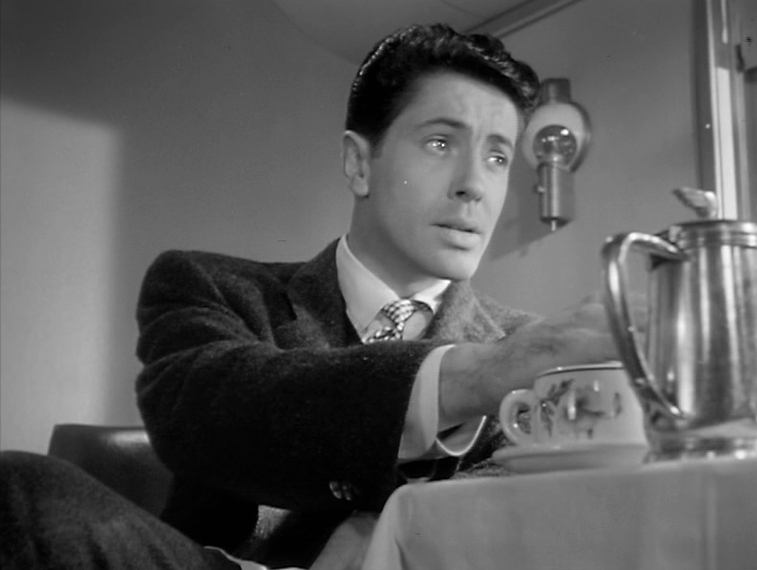
The younger one, Guy Haines, a tennis player just seemed quite monotone and bored in his delivery and also anxious to get a divorce from his wife so he could run off with the senator’s daughter. Later, though, I learned the wife was not so nice so I felt better about him. My first impression was not good.

My first impression of Bruno Antony was definitely not good.

Dude gave off serial killer vibes from second one.

For good reason, I might add.

He wants to know, pretty quick into the movie, what way Guy would like to kill his wife. Then he talks about how he’d like to kill his own father.

Then there is this convo:

Bruno: That reminds me of a *wonderful* idea I had once. I used to put myself to sleep at night – figuring it out. Now, let’s say that – that you’d like to get rid of your wife.

Guy: That’s a morbid thought.

Bruno: Oh, no, no, no, no. Just suppose. Let’s say you had a very good reason.

Guy: No, let’s – let’s not say…

Bruno: No, no! Let’s say. Now, you’d be afraid to kill her. You’d get caught. And what would trip you up? The motive. Ah. Now here’s my idea.

Guy: I’m afraid I haven’t time to listen, Bruno.

Bruno: Listen, it’s so simple, too. Two fellows meet accidentally, like you and me. No connection between them at all. Never seen each other before. Each one has somebody he’d like to get rid of. So they swap murders.

Guy: Swap murders?

Bruno: Each fellow does the other fellow’s murder. Then there’s nothing to connect them. Each one has murdered a total stranger. Like you do my murder and I do yours. Criss Cross.

Guy humors Bruno enough to get off the train at his stop and when Bruno says, “So, you liked my plan,” Guy is like, “Sure, sure. Gotta go, dude.”

When we see Bruno later at home with his mother, we see how serious he was about this whole murder thing. That and he may be pretty far out there mentally. Like lunatic level.

His mother is filing his fingernails and wants to know if he’s given up that crazy notion he’d had about blowing up the White House.

Mrs. Anthony: Well, I do hope you’ve forgotten about that silly little plan of yours.

Bruno: Which one?

Mrs. Anthony: About blowing up the White House.

Bruno: Oh, Ma, I was only fooling. Besides, what would the President say?

Mrs. Anthony: You’re a naughty boy, Bruno.

Only, we, the viewers, are pretty sure Bruno wasn’t kidding at all. Not like even a little bit.

Meanwhile, Guy has confronted his ex-wife who is a real “winner”. She says she wants a divorce but then she says maybe she doesn’t, now that Guy wants to marry the senator’s daughter. It’s in all the papers that they are going to get married and Miriam, the estranged wife, doesn’t like that at all. She threatens Guy by telling everyone that he wants to divorce her even though she’s pregnant. She’s pregnant, by the way, with another man’s baby.

Or…is she?

This is all called into question later when she’s running around with two guys at a carnival. That’s where Bruno catches up to her and proves to the viewers that he really is a psychopath who thinks if he kills Guy’s wife then Guy will kill his father.

As in all of Hitchcock’s movies, the angles and cinematography are insanely captivating.

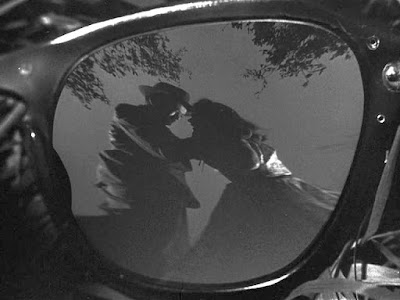
It isn’t a spoiler to say Bruno takes Miriam out and when he does so we watch the killing through the reflection of Miriam’s glasses, which she knocked off in the struggle.

After the deed is done, Bruno can’t wait to tell Guy.

Guy is horrified, not thrilled, and tells Bruno he’ll call the police.

Bruno, however,  says, “You can’t call the police. We were both in on it, remember? You’re the one who benefits, Guy. You’re a free man now. I didn’t even know the girl.”

Yikes. Now Guy is trapped and the way the bars of the fence he is standing outside of fall across his face they look like prison bars.

If you want to know if he gets out of trouble, you will have to watch the rest of the movie, which involves a heart-pounding climax where Guy tries to make sure Bruno can’t pin the murder on him by planting Guy’s lighter at the scene.

Almost every scene with Bruno freaks me out but when he starts showing up everywhere Guy is, asking people weird questions like if they’ve ever thought about how to murder people, I really got freaked out.

Especially the scene where he asks a woman at a fancy party at the senator’s house how she would kill her husband. Then he starts to talk about how to strangle a person and offers to show her and – again. Creepy.

He says to her, as he puts his hands around her neck, “You don’t mind if I borrow your neck, do you?”

Shudder.

You’ll have to watch the movie but it’s pretty messed up.

It’s also very messed up to me that Bruno seems to get a thrill from talking about and committing murder. Like a sexual thrill. Yuck. He also seems to have a crush on Guy and when he tells Guy, “I like you,” Guy punches him so I am pretty sure Guy has the same impression.

 You can find plenty of critiques of this movie online, including one by Adrian Martin on filmcritic.com.au that states: “The film is ingeniously structured like an obsessive, inescapable nightmare – with uncanny repetitions of events, ghostly echoes of small details, and an ambiguous, implicitly homoerotic emotional transference between the central characters.”

See? I wasn’t the only one that got the vibe that Bruno was “after” Guy.

My husband read that the man who played Bruno (Robert Walker) actually died shortly after production. He accidentally died after he had a psychological breakdown and his housekeeper called a doctor. The doctor gave him amobarbital but Walker had drank alcohol earlier and the two interacted and he died at the age of 32. Ahem. He does not look 32. I thought for sure the dude was in his 50s. Either way, his death was very sad, especially because there is some mystery surrounding it. A friend claims he was there at the time and Walker was acting normally but that the doctor showed up and said he needed an injection and the friend actually held the man down when Walker refused. Walker died not long after. The friend is not mentioned as having been there in the official inquiry, however. Very strange.

A little aside here about Hitchcock: in case you don’t know, he was a sexist. He didn’t like certain women and really liked other women. So if he didn’t like a woman he harassed them nonstop on set. If he really liked them he stalked them. Not a great guy in real life even if he was a brilliant movie maker.

His issues with women showed up in this movie as well as shown in this paragraph on Wikipedia, which is also backed up by other articles about the making of the movie: “Warner Bros. wanted their own stars, already under contract, cast wherever possible. In the casting of Anne Morton (the senator’s daughter), Jack L. Warner got what he wanted when he assigned Ruth Roman to the project, over Hitchcock’s objections. The director found her “bristling” and “lacking in sex appeal” and said that she had been “foisted upon him.” Perhaps it was the circumstances of her forced casting, but Roman became the target of Hitchcock’s scorn throughout the production. Granger described Hitchcock’s attitude toward Roman as “disinterest” in the actress, and said he saw Hitchcock treat Edith Evanson the same way on the set of Rope (1948). “He had to have one person in each film he could harass,” Granger said.”

Hitchcock also didn’t get along with author Raymond Chandler who he hired to write the screenplay for the movie. Chandler didn’t like Hitchcock’s changes to the original novel, for one, and he also hated working with Hitchcock who liked to ramble and analyze what they should do in the movie instead of just getting to the point and letting Chandler write the screenplay. Chandler apparently became so annoyed at Hitchcock that at one point, while watching Hitchcock get out of his car, Chandler said loudly, where Hitchcock could hear him, “Look at that fat b****** trying to get out of that car.” He quit not long after and the screenplay was written by Czenzi Ormond, a beautiful woman, which Hitchcock liked. There is a bunch of information online about his relationship with her as well, but you can look that up if you are curious. Ormond finished the screenplay with associate producer Barbara Keon and Hitchcock’s wife Alma Reville.

The production section of the Wikipedia article is very interesting, but I only have so much space for a blog post so I’ll leave the link here if you want to check it out: https://en.wikipedia.org/wiki/Strangers_on_a_Train_(film)

If you want to read Erin’s impression of the movie you can see it here: https://crackercrumblife.com/2023/10/19/comfy-cozy-cinema-strangers-on-a-train/

If you want to follow along with us for our next movies, here is the list:

Rebecca (Oct. 26)

Little Women (November 2)

Tea with The Dames (November 9)

A break for Thanksgiving

And

Sense and Sensibility (November 30th)

You can also link up today below if you watched Strangers on a Train as well.

You are invited to the Inlinkz link party!

Click here to enter
https://fresh.inlinkz.com/js/widget/load.js?id=c0efdbe6b4add43dd7ef

Comfy, Cozy Cinema: The Lady Vanishes

For the rest of October and all of November, Erin from Still Life, With Cracker Crumbs and I will be watching cozy or comfy movies and some of them will have a little mystery or adventure added in.

This week we watched the 1938 Alfred Hitchcock Film The Lady Vanishes. This was my second time watching it but I honestly had forgotten half of it so I was glad Erin suggested it.

I needed the distraction watching it provided this week. I know. I say this every time I write about the movie we are watching, but I need a lot of distractions these days and this week especially.

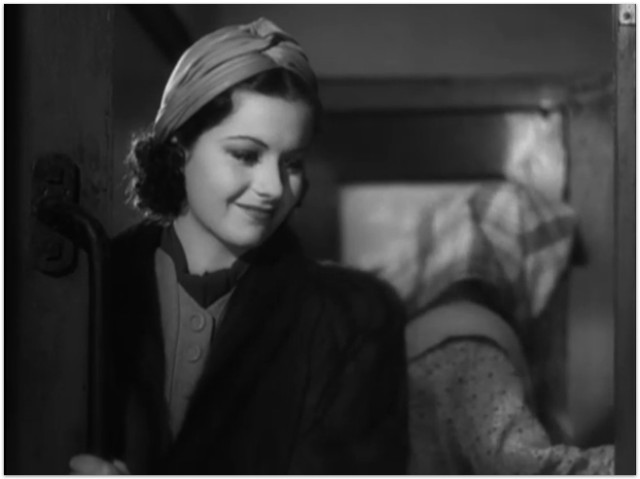
The movie begins in the fictional country of Bandrika where Iris Henderson (Margaret Lockwood) is vacationing with friends before she goes home to the United States to get married.

She is staying at a hotel with her friends and others, most of whom got stranded when an avalanche wiped out the train tracks. She interacts with the musician — Gilbert Redman (Michael Redgrave) — after he wakes her up with his loud music when she’s trying to get enough sleep for her trip the next day. Because she complains, the manager of the hotel kicks Gilbert out of his room. He makes a very nervy move and walks into her room uninvited and tells her he is going to stay and tell everyone she invited him in unless she calls the manager and tells him to put him back in his room.

There are so very funny quips in this movie and one of them is after Iris calls the manager back to get Gilbert out of her room.

“For the record, I think you are the most contemptible man I have ever met!” she yells at the door as he leaves.

He looks around the door and says in a soft voice. “Confidentially, I think you’re a bit of a stinker too.”

Earlier in the movie the manager tells two British men who are trying to return to Britain for a test match of Cricket in Manchester that he doesn’t have a room for them but they can stay in the maid’s room. There are a couple of funny scenes with the maid trying to change in front of them and them trying to tell her she can’t but her not understanding because her English isn’t very good.

There is actually a lot of humor in this movie, which isn’t always the case in an Alfred Hitchcock movie.

The two British men need some food so they head to the dining room, but are told by the waiter that there is no more food because there have been so many unexpected people staying there due to the avalanche. They can’t understand him because he doesn’t speak English so a woman named Miss Froy translates for them.

They chat with her for a while and she tells them how much she loves looking at the mountains in this country and how she’s been a nanny there for six years and is going home to England the next day.

Miss Froy also speaks to Iris when they both try to figure out where the music is coming from. That’s right before Iris has Gilbert removed from his room.

The movie seems to be all fun and games until someone strangles the musician Miss Froy enjoys listening to. She doesn’t know the man has been murdered, of course. She just thinks the music has stopped.

She also seems clueless the next day at the train station when someone tries to kill her by pushing a large concrete flower box out of the window. Instead of hitting her, though, it hits Iris in the head, which leaves Iris dazed – a perfect setup for a train ride that gets really weird when Miss Froy eventually disappears.  

Iris clearly has a concussion but Miss Froy seems to think putting perfume on a hankie and handing it to Iris to put on her head will help. Was that ever a thing for head injuries? I have no idea but it seemed weird. Anyhow, Iris falls asleep and when she wakes up Miss Froy is there and they walk to the dining car and have tea.

After they have tea, Miss Froy tells Iris to rest again. She does and when she wakes up Miss Froy is gone and when she asks the other couple in the car where she went, they tell her they never saw an older British woman and imply Iris is insane.

Implying Iris is insane is the plot for the next 20 minutes of the movie as everyone begins to say they never saw Miss Froy. We learn everyone has a various reason for saying they never saw the woman.

The British Cricket enthusiasts don’t want to be delayed any longer. They have a cricket match to get to. Another couple doesn’t want any attention brought to them because they are cheating on their spouses.

This movie is a master class in gaslighting.

If you don’t know what gaslighting is, it is saying something that happened isn’t what really happened or that the reason you think it happened isn’t the reason it happened. It’s also when a person tries to distract them from what they are concerned about by saying there is another issue altogether. Like if a woman catches her husband cheating and she confronts him, he might say, “You’re so bitter and mean all of the time. I don’t even know what is wrong with you,” to try to convince the woman she imagined it all and the real issue is that she’s mean and bitter. The goal is to make the person feel like they are crazy for being concerned or accusing someone of something.

When everyone starts lying, Iris is about to lose her mind and the only one who will listen to her is Gilbert – the musician she clashed with at the hotel.

Eventually, after seeing a wrapper for a certain tea (you’ll have to watch the movie to see what this means), Gilbert starts to believe Iris that the woman really was there and they begin to look for her together. They both feel something criminal is going on and eventually, it is implied that this crime is related to spying on another country.

Though the plot and issue is a serious one, there is humor involved. For example, humor is employed often in a fight scene between Gilbert and a man who is determined to take evidence of Miss Froy’s existence away from Gilbert and Iris.  Not only do animals in the freight car of the train watch the fight going on, but the fight also continues into a magic box placed there by the cheating man, who they learn is a musician.

There seemed to be quite a few subtle slams in this movie against the British who just can’t imagine anything bad is happening on the train and gets upset when anything interrupts their tea time, but I think Hitchcock did that a lot.

The movie is based on a book called The Wheel Spins by Ethel Lina White, but apparently deviated heavily from the plot of the novel. Actually, after reading the plot of the novel, I really want to read it because it sounds very good.

The British cricket enthusiasts were not in the book at all and were added to the movie.

The book was written in 1936 and the movie was released in 1938. The novel and movie’s plot clearly references the events leading up to the start of World War II.

Michael Redgrave was known for his work on the stage and almost didn’t agree to take part in the movie but in the end, his decision to take the park when Hitchcock offered it paid off for him because it made him an international star.

He and Hitchcock never worked together again, however, because Redgrave wanted more rehearsals and Hitchcock wanted more spontaneity.

The movie was a hit in the UK and the U.S. when it was released according to information online.

Geoffrey O’Brien from The Criterion (a movie review site) states: The Lady Vanishes (1938) is the film that best exemplifies Alfred Htchcock’s often-asserted desire to offer audiences not a slice of life but a slice of cake. Even Claude Chabrol and Eric Rohmer, in their pioneering study of Hitchcock, for once abandoned the search for hidden meanings and—though rating it “an excellent English film, an excellent Hitchcock film”—decided it was one that “requires little commentary,” while François Truffaut declared that every time he tried to study the film’s trick shots and camera movements, he became too absorbed in the plot to notice them. Perhaps they were disarmed by pleasure . .”

O’Brien points out that the screenwriters of the film, Sidney Gilliat and Frank Launder, were the ones who really added the rich wit that made the film a joy rather than an ominous mystery.

This film was filmed in England and at that time they didn’t have a large budget, which is why much of the movie was filmed in only two places – the hotel and a 90-foot-long train car or two. This constraint would have limited most movie makers, but not Hitchcock, who was still able to line up amazing, eye-catching shots, including one that I noticed with the camera focused squarely on two glasses where a drug has been placed all while a tense conversation is going on in the background.

The whole time there is this tension for the viewer, who knows that those glasses have a drug in them and leaves the viewer with a desperate desire to cry out for the characters not to drink the tainted wine.

I really liked what O’Brien said about the performance of Dame May Whitty and agreed: Since in a moment she is going to vanish, Miss Froy must for a moment dominate everything, and Whitty achieves just that, and even more: she makes us feel an affection for Miss Froy deep enough that her disappearance will seem an unspeakable affront, an assault on Englishness itself in its least threatening form.

If you want to read more of O’Brien’s view of the film you can find it HERE.

If you want to catch up with Erin’s thoughts on the movie, click here: https://crackercrumblife.com/2023/10/12/comfy-cozy-cinema-the-lady-vanishes/

If you want to join in on the review yourself feel free to add your link below.

Next week we are watching Strangers on a Train and will write about it on October 19.

After that we are watching:

Rebecca (Oct. 26)

Little Women (November 2)

Tea with The Dames (November 9)

A break for Thanksgiving

And

Sense and Sensibility (November 30th)

You are invited to the Inlinkz link party!

Click here to enter
https://fresh.inlinkz.com/js/widget/load.js?id=c0efdbe6b4add43dd7ef

Comfy, Cozy Cinema: Wildcard movie. The Lightkeepers

Erin from Still Life, With Cracker Crumbs and I are taking a break from our joint Comfy, Cozy Cinema this week, instead both choosing our own movies to watch and write about. We will be back next week with …. Which I hope you will all join us in watching and blogging about. We will have a way for you to link up if you are joining in.

This week I decided to write about a cute movie I started a few weeks ago and forgot to finish – The Lightkeepers.

This was a film that was released in 2009 and starred Richard Dreyfus, Blythe Danner, Bruce Dern, Tom Wisdom, Mamie Gummer, and Julie Harris.

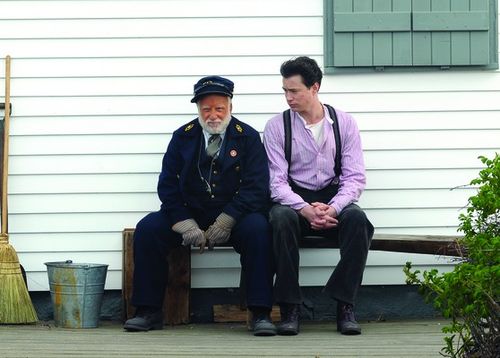
The film is set in Cape Cod, 1912 and tells the story of a lightkeeper and a young man who washes ashore and becomes the lightkeeper’s assistant.

Seth Atkins, the lightkeeper, is a very abrasive and cantankerous character and while I kept expecting him to soften up during the movie he really didn’t for most of it. That irked me a bit only because I wanted to slap him more than once for his behavior. At the same time I liked that he stayed the same and didn’t change simply to make the movie more comfortable to watch. Seth’s character did make me uncomfortable because of his bluntness, but that’s what made him – well, him.

The story was fairly simple with a fairly weak plotline, but it was still sweet. I fell in love with the subdued nature of Tom Wisdom who played Mr. Brown/Russell Brooks and couldn’t help but root for him to find some happiness.

I needed Seth to find some happiness as well since he seemed like such a grump. I knew that deep down he really wasn’t though.

Both Mr. Brown and Mr. Atkins are self-proclaimed women-haters and the movie starts out with Mr. Atkins telling his former assistant how much he hates women. In fact, he tells anyone who will listen that he hates women.

This becomes an issue when two women come from Boston to stay at the cottage down the hill from the lighthouse. He wants nothing to do with them and warns Mr. Brown away from them as well.

Staying away isn’t easy when they call for help on their first day there because there are bees inside the cottage. It also isn’t easy when the young woman, Ruth, decides to go swimming and invites a brooding Mr. Brown to go in with her. He reluctantly does and a friendship develops. It’s a friendship he does his best to keep a secret from Mr. Atkins since he agreed to stay away from women while working for him.

Incidentally, Mr. Brown arrived at the lighthouse when Mr. Atkins found him washed up on shore. Mr. Brown/Russell has a very distinct and proper British accent and it’s clear right away he doesn’t have a clue how to work with his hands or really work at all. He does his best, however, to become a real workman and as the movie progresses, we find out why he was in the ocean, why he wants to work hard, and why he “hates” women.

This was a very light watch and a nice escape for a couple of hours. I rented it through Amazon but I am sure it is available other places as well – maybe even your local library. (Update: Elizabeth let me know in the comments it is currently free on Tubi, with ads but still free).

Have you ever seen The Lightkeepers?

Next week Erin and I will return with The Lady Vanishes.

If you want to watch it as well and then blog your impressions, please do.

Here is the rest of our schedule for October and November:

Strangers on a Train (Oct. 19)

Rebecca (Oct. 26)

Little Women (November 2)

Tea with The Dames (November 9)

A break for Thanksgiving

And

Sense and Sensibility (November 30th)

Comfy Cozy Cinema: Arsenic and Old Lace

For the next two months, Erin from Still Life, With Cracker Crumbs and I will be watching cozy or comfy movies and some of them will have a little mystery or adventure added in.

This week we watched Arsenic and Old Lace which was based on a 1941 play by Joseph Kesselring. The play, in fact, was still on Broadway when the movie was filmed in 1942. The play’s producers stipulated in the contract for the rights to the play that the movie would not be released until after the play finished its Broadway run. The play was so popular, though, that it ran for three years so the film didn’t hit theaters until 1944.

The movie was directed by Frank Capra.

This movie is completely crazy and off the wall in the start and then gets a bit dark and creepy in the middle and then it goes back to goofy again.

I prefer the goofy and eccentric portions of the movie to the creepy parts because the one actor in the creepy parts – Raymond Massey — well, he’s good at his job, that’s all I’ll say about that.

I am a huge Cary Grant fan, which you might know if you’ve been following this blog for very long. Erin and I even did a Spring of Cary feature this past spring.

My husband commented while we were watching this movie that he thinks he likes Cary in comedies more than his dramas and I have to agree. Cary makes the best faces when he’s acting in a comedy and pulls off the comedic element so flawlessly that I’m often left laughing so hard during his comedies that my sides hurt.

There are several hilarious parts of this movie but one of the most hilarious aspects is how everyone acts like death and murder and attempted murder are everyday things. Everyone except Cary’s character, except when it comes to the attempted murder of his new wife, which he seems to shrug off because he has a one-track mind and wants to get his uncle committed to an insane asylum and protect his murderous aunts from being arrested.

Let me back up a bit here to explain some things.

Cary’s aunts are brutal killers but they are also sweet and wholesome and no one would know they are murderers until Cary (who portrays Mortimer Brewster in this movie) finds a dead man in their window seat.

Cary’s uncle thinks he’s President Theodore Roosevelt, which has worked well for the aunts who are having him pretend he’s digging the Panama Canal in their basement.

While Mortimer is trying to figure out what to do with his murderous aunts and his crazy uncle, his new wife – who he just married at the beginning of the movie — keeps trying to get his attention so they can run off together for their honeymoon to Niagara Falls.

Mortimer is way too distracted with shock and horror over his new discovery about his aunts to pay attention to his wife, who, by the way, is the daughter of the pastor who lives across the street. Then, as if things couldn’t get any crazier, Mortimer’s brother Jonathan returns home from his travels around the world where he’s been killing people. He returns with his partner in crime, a doctor played by Peter Lorre, who has botched Jonathan’s facelift, making him look like Boris Karloff, which is ironic because Karloff played Jonathan Brewster on Broadway. Karloff stayed on as the character in the play to appease the producers because they were concerned that losing all of the main actors for the movie would kill ticket sales.

According to Wikipedia: “Josephine Hull and Jean Adair portray the Brewster sisters, Abby and Martha, respectively. Hull and Adair, as well as John Alexander (who played Teddy Brewster), reprised their roles from the 1941 stage production.[4]Hull and Adair both received an eight-week leave of absence from the stage production, which was still running, but Karloff did not, as he was an investor in the stage production and its main draw. The entire film was shot within those eight weeks. The film cost just over $1.2 million of a $2 million budget to produce.”

The movie is absolutely hilarious and eccentric and I’m glad I stuck it out this time because the first time I watched it, my husband and I bailed in the middle when the creepy brother came back. The entire tone of the film switched from goofy to dark and creepy, but now that I’ve watched it all the way through, I understand the reason for the creepiness. It is to lay the groundwork for the silliness and off the wall behavior to return. At one point the brother is terribly creepy and then a bit later his reactions to discovering secrets about his aunts are so funny because he’s supposed to be the tough, scary guy.

You just have to see the film to understand.

Incidentally, Raymond Massey was nominated for an Oscar in 1940 for playing Abraham Lincoln in Abraham Lincoln in Illinois.

Massey played Lincoln several times in film, television and on stage. Someone, though articles online don’t say who, once said that Massey would keep perfecting his role as Abraham Lincoln until someone assassinated him too.

One thing I want to make sure I mention about this film is the cinematography. There are some really amazingly lit and positioned scenes from the film, including one where Jonathan’s shadow is towering over the doctor who is sitting on the stairs.

As I was preparing this blog post and sharing about the movie on Instagram this week, a very interesting story popped up about how the play was possibly based on a true story about a woman in Connecticut who ran a nursing home and was charged in 1917 with the murder of five people between the years of 1907 to 1917.

Amy Duggan “Sister” Archer-Gilligan poisoned five people, including her second husband Michael Gilligan. The others were residents in the nursing home. Some reports say up to 60 people died in the nursing home that was called The Archer Home for the Elderly and Infirm but Gilligan was only charged in five deaths. She may have killed her first husband, John Archer, in 1910 but the official cause of death was listed as Bright’s disease. Oddly, though, Gilligan had taken an insurance policy out on her husband a few weeks before his death. The payment from it allowed her to keep the home open.

She married Michael Gillian in 1913 and he mysteriously died of “indigestion” three months later. He was a wealthy man and despite the short length of their marriage, Michael had left his estate to her, not his four adult sons. It was later determined that Amy had forged Michael’s signature and that the will was a fake.

To make a long story short, the family member of a deceased resident tried to get the district attorney in the county to investigate Gilligan but he blew her off. Finally, the woman contacted a journalist who ran a story about the home and from there everything unraveled. The bodies of five people were exhumed and all had been poisoned with either arsenic or strychnine.

Kesselring never said if Gilligan’s story inspired the play, but it is interesting to note the similarities.

If you want to read more about her case you can see it here, but remember Wikipedia might not always be totally accurate.

In one article I read that Capra had considered both Jack Benny and Bob Hope for the role of Mortimer. No offense to either of those men (I love listening to old Jack Benny radio shows as I fall asleep at night), but I can’t see the film with anyone other than Cary.

One site – Movies! Reel Variety – said that Cary doubted his performance later. He felt he overplayed the character and that Jimmy Stewart would have played the part better.

This was the only film he made with Capra, whom he called “a dear man.”

Criterion.com (https://www.criterion.com/current/posts/7952-arsenic-and-old-lace-madness-in-the-family) states that while Capra worried that delaying the film would cause it to miss out on the box office war boom or make the subject, or actors stale, but instead Cary was just coming into his own and was one of the hottest actors in Hollywood by 1944.

Cary said he wanted to do the film because he “just wanted to have fun” after being in so many films in the 1930s that were social commentaries.

After playing the part, though, he complained about it, but, according to the Criterion article, he complained about many of his performances and worried over them even when the audience loved them.

Arsenic and Old Lace is one of these films.

I enjoyed this paragraph in the Criterion article: “In his book on Grant, Richard Schickel defends Grant’s and Capra’s bold choices, asking, “What’s a man supposed to do when he finds bodies buried all over his maiden aunts’ house? Arch an ironic eyebrow?” The playing is entirely appropriate to a character in such circumstances in a farce, even if, as Schickel concedes, it is “not Grant’s most urbane performance.”

Shooting of the film was finished five days after Pearl Harbor was bombed. Frank Capra joined the Signal Corps, but luckily was given some time to first finish what proved to be his only black comedy, or the world might have had to wait even longer to see it.

To read Erin’s impressions of the film, you can visit her blog here: https://crackercrumblife.com/2023/09/28/comfy-cozy-cinema-arsenic-and-old-lace/

Next week we are taking a break from watching movies to give time for any of you to catch up on the films yourself and write about them, if you want to.

If you’ve watched any of the movies and would like to take part in our Comfy, Cozy Cinema, you can sign up on the link below.

When we return to the feature on Oct. 13 we will be writing about The Lady Vanishes.

After that, we will be watching the following movies:

Strangers on a Train (Oct. 19)

Rebecca (Oct. 26)

Little Women (November 2)

Tea with The Dames (November 9)

A break for Thanksgiving

And

Sense and Sensibility (November 30th)

You are invited to the Inlinkz link party!

Click here to enter
https://fresh.inlinkz.com/js/widget/load.js?id=c0efdbe6b4add43dd7ef

Comfy, Cozy Cinema: The African Queen

For the next three months, Erin from Still Life, With Cracker Crumbs and I will be watching cozy, mysterious, or comfy movies. Erin made these awesome graphics detailing what we are doing and what movies we will be watching.

This week we watched The African Queen, which I am not sure was really a comfy, cozy movie but I forgot some of the details when I suggested it. I’m not sure why I picked it for this feature, but it’s still a good movie and we did find some cozy(ish) moments in it as a romance began to blossom in the middle of a very stressful situation.

The movie, released in 1951, stars Katherine Hepburn and Humphrey Bogart. It was directed by John Huston.

It is both an adventure movie and a romance.

Katherine plays Rose Sayer, a missionary in Africa, and Humphrey portrays Charlie Allnut (which Katherine pronounces as Ulna throughout the movie).

Rose had stationed been in African villages with her brother for a decade and meets Charlie when he travels up the river in his small, rickety steamboat to deliver mail and other supplies. The steamboat was dubbed The African Queen by Charlie.

On one visit Charlie tells Rose and her brother Sam that he probably won’t be there for two months because war has broken out. The movie starts in 1914 so this is the beginning of World War I.

He leaves and within a matter of hours or days, or I’m not sure which, the Germans march through with an army made up of Africans and begin to burn down the village. This leaves Rose’s brother in a state of shock and also affects his physical health and he passes away a couple months or so later.

Rose is now alone in the village but luckily not for long as Charlie finds her and she asks him to take her with him up the river.

Rose and Charlie are very different. She is very prim and proper and British and he is very “uncouth” one might say. My husband said that the movie is based on a 1935 novel and that the main characters in the novel are both British. Charlie has a cockney accent.  Humphrey refused to try to pull that accent off so he was made Canadian for the sake of this movie.

The chemistry between the two is great with them bouncing quips off each other throughout the film.

When Rose finds out they are upriver from a German ship that will be used to launch an offensive against the British, and that Charlie has potential weapons on The African Queen, she decides they will travel this very dangerous river with rapids, crocodiles, and a German fort, and blow up the German ship.

Charlie, for his part, thinks she’s nuts but agrees to help her – that is until things get more and more dangerous and he’s certain they are going to die in the rapids.

When he tells her in the beginning that it isn’t possible to take the steamboat down the river she says, “How would you know? You’ve never tried.”
He scoffs. “I’ve never tried shooting myself in the head either.”

In another scene, Charlie gets drunk on the gin that’s on the boat and Rose is not happy about it.

“Oh come on,” Charlie says. “It was just human nature.”

Rose raises her chin and says, “Human nature, Mr. Allnut, is what we are put on this world to rise above.”

There are several comments or lines like that throughout the film which turns romantic somewhat by accident when Charlie celebrates one of their accomplishments and kisses Rose on impulse.

Kissing and being romantic was most likely a huge challenge for Katherine because she, like most of the cast and staff, caught dysentery and malaria and was very sick for the time in Africa.

Huston wanted the film to be as realistic as possible so he shot on location in Uganda and the Congo for part of the film with the rest being shot in London, outside and on a sound stage. Scenes where the actors were in the water were deemed to be too dangerous in Africa.

It was so realistic that Katherine and others got sick, as I mentioned, and during one scene when she’s playing the piano, she actually had a puke bucket off-scene just in case and I guess there were a few “cases.” Poor woman.

Boggie later joked that he and Huston didn’t get sick because they drank whiskey instead of the local water.

As a bit of trivia, the only Oscar Boggie ever won was for this film. Katherine was nominated for best actress but did not win. Huston was also nominated for best director but didn’t win.

Katherine won four Oscars and was nominated 12 times over the years. She also won an Emmy and two Tony Awards.

This comment came from my husband who always has a cheery note about when or how one of the actors died as we watch a movie: “To think he (Boggie) would only have five more years after this.”

At one point, when Charlie apologizes for getting drunk Rose says that is not upset about that.

“You think it was your nasty drunkenness I minded? You promised me you’d go down the river.”

“Well, I’m taking my promise back,” Charlie says.

Little Miss looked at me and said, “Fun fact. You can’t take back a promise.”

So there you go. Some wisdom for your day.

When this movie came out, both Boggie and Hepburn were older and some critics said moviegoers wouldn’t want to see two old actors fall in love.

According to movie critic Roger Ebert, though, that wasn’t true. Many people wanted to see the movie and loved it despite it being released at the same time as A Streetcar Named Desire with Marlon Brando and Vivien Leigh.

The novel was much darker but Huston credited Boggie and Hepburn with making the movie have some humor in it.

“They were just naturally funny when they worked together.” Miss Hepburn, on the other hand, gives the credit to Huston. “The humor didn’t just grow, it was planted. The picture wasn’t going well until Huston came up with the inspiration that Rosie, my role, should be played as Eleanor Roosevelt.”

Ebert said of Bogart’s role: “Whatever the case, the many scenes Bogie and Kate play together are superb. Bogart, as the gin-swilling proprietor of a banged-up riverboat, created a strange little laugh for his role. He was shy, amused and intimidated by this Bible-reading missionary lady who washed out her unmentionables each and every night. And the laugh, meant to conceal his unease, also serves to display the thoughts of a taciturn man. He does not often laugh at the things Rosie finds funny.”

There was one scene with leeches and I wanted to know if they were really on Boggie. A quick search online brought me to a site full of trivia which let me know that: “While filming the scene where Charlie finds his body covered with leeches, Humphrey Bogart insisted on using rubber leeches. John Huston refused, and brought a leech-breeder to the London studio with a tank full of them. It made Bogart queasy and nervous, qualities Huston wanted for his close-ups. Ultimately, rubber leeches were placed on Bogart, and a close-up of a real leech was shot on the breeder’s chest.”

It is an interesting site and I was going to leave a link here to it but it says the site is not secure so I won’t do that – just in case.

The bottom line was that I did like this film but it wasn’t necessarily comfy, cozy or creepy. I guess it was a mix of comfy and adventure.

To read about Erin’s take on the movie, hop on over to her blog: https://crackercrumblife.com/

If you would like to join in on our Comfy, Cozy Cinema you can print out our watch/post schedule here:


Arsenic and Old Lace (Sept. 28)

Oct. 5 (break for us or you to catch up!)

The Lady Vanishes (October 13)

Strangers on a Train (Oct. 19)

Rebecca (Oct. 26)

Little Women (November 2)

Tea with The Dames (November 9)

Comfy, Cozy Cinema: The Secret World of Arrietty

For the next three months, Erin from Still Life, With Cracker Crumbs and I will be watching cozy, mysterious, or comfy movies. Erin made these awesome graphics detailing what we are doing and what movies we will be watching.

This week we had a double-feature. Erin chose Fantastic Mr. Fox and The Secret World of Arrietty. I had never watched either of them. I love how Erin pulls me out of my comfort zone and introduces me to knew things.

The Secret World of Arrietty is a Studio Ghibli film.

Studio Ghibli is a Japanese animation studio for those of you who are like me and have no idea.

I honestly didn’t understand what Studio Ghibli was until Erin talked about it and then my son wanted me to watch Howel’s Castle with him a couple of months ago. These are animated films made in Japan and later dubbed into English to watch in the United States. Or you can watch the Japanese version and read the subtitles. The movies have become very popular and big-name actors are now being used to voice the American versions.

The movies from Studio Ghibli are often quirky and fantastical, strange but also poignant. They aren’t everyone’s cup of tea and I honestly had no interest in watching one until The Boy suggested it and then Erin said she wanted to watch this one.

I ended up liking Arrietty more than I expected.

As my son said, “I can see why she likes this movie so much. It’s just really creative and cool.”

And it was.

Arrietty and her family members are very tiny people – like two inches high, not like the cast of TLCs Little People, Big World (who are actually called little people and who I am almost as short as).

It is similar to The Borrowers, the book and movie, and is actually the inspiration for the movie.

The movie has a very, cozy feel to it . . . until you realize the stinking ants are bigger than the people and can eat them. Ack!

This isn’t essential to the movie, but I love Arrietty’s outfits…she’s so cute. I want to be cute.

The Boy commented on how he likes how the studio pays such attention to details, including using the wood staples as the ladder.

The movie starts with a human family coming to a new house. We are clued in very quickly that the young boy is sick for some reason – something with his heart.

The young boy sees Arrietty in the bushes when he first arrives but she runs away.

Later that day her father agrees to let her come with him when he goes into the house of the beans (which is what they call humans) to borrow items, such as a sugar cube and a pin, that they can use. This is Arrietty’s first time helping her father borrow and she’s nervous but excited. She’s even more nervous when the boy spots her again and this time, he speaks to her and tells her not to be afraid.

She isn’t afraid but she and her dad quickly leave without speaking to the boy.

The next day the boy leaves the sugar cube Arrietty accidentally dropped in his room to try to get to know her.

Her parents, however, tell her to stay away from the boy, afraid traps will be set for them and that they will be killed.

Of course, Arrietty doesn’t listen to her parents because if she did then there wouldn’t be a movie.

She does go to meet the boy – whose name is Shawn – and is almost killed by a crow. Luckily, Shawn rescues her.

They don’t talk much but later Shawn’s aunt shows him a dollhouse that his mother made with her father for the Borrowers to use. The Borrowers never came, though, and this made the mom sad.  Shawn knows that the little family would love the kitchen so he takes it from the dollhouse, rips up the floor and practically gives them a heart attack by giving them the kitchen.

This traumatizes the family and Arrietty’s father says they have to leave so they won’t be chased out, trapped or killed.

Shawn likes to say uncomfortable and awkward things like the antagonist in any anime film, The Boy says.

He says things like, “There’s less and less of you every year, isn’t there?” and “We can’t all live forever.”

The Boy said, “Bro’s got that unsocial riz, doesn’t he?”

So while Shawn is not a threat to the Borrowers, the housekeeper, voiced by Carol Burnett, totally is. For some reason, she wants to find and destroy The Borrowers. I don’t get what her behavior is about at all but she’s creepy as anything.

This, yet again, isn’t related to the overall plot of the movie but the beds these characters have look so comfortable. There is a lot of cozy feelings to this movie overall.

I won’t give away what happens to the family or the boy but I was so nervous for them throughout the movie.

I will comment on one thing about these movies though – the voice actors don’t emote very well sometimes so the characters end up giving very weird and monotone effects to the line delivery. For example, there are times when they should be alarmed but instead, they respond in a very monotone way and it makes the kids and I giggle. Little Miss does an amazing imitation of those moments when the characters deliver bored sounding responses to otherwise alarming situations.

I am not complaining about the sometimes monotone delivery, but just commenting on how it is just a little odd quirk of the movies when they are dubbed. An odd quirk that makes us giggle.

You can read Erin’s impression here: https://crackercrumblife.com/2023/09/14/comfy-cozy-cinema-the-secret-world-of-arrietty/

Next up for our movie-watching feature is The African Queen.

Our schedule for the rest of the series (the dates are when we are writing about them):

Arsenic and Old Lace (Sept. 28)

Oct. 5 (break for us or you to catch up!)

The Lady Vanishes (October 13)

Strangers on a Train (Oct. 19)

Rebecca (Oct. 26)

Little Women (November 2)

Tea with The Dames (November 9)

The Fishermen’s Friends (November 16)

November 23 off for Thanksgiving

November 30th? Wildcard at this point because we shifted things around and are short a movie! Oops! We will update

Comfy, Cozy Cinema: Fantastic Mr. Fox

For the next three months, Erin from Still Life, With Cracker Crumbs and I will be watching cozy, mysterious, or comfy movies. Erin made these awesome graphics detailing what we are doing and what movies we will be watching.

This week we had a double-feature.

Today we are writing about Fantastic Mr. Fox and Thursday we are writing about The Secret World of Arrietty.

The Fantastic Mr. Fox, released in 2009, is a stop-motion animation movie directed by Wes Anderson.

I don’t know much about Wes Anderson but I’ve heard his movies are always a bit weird. This one is no exception, but it isn’t the weirdest movie I’ve ever seen. It’s weird but the animation and direction are amazing.

The movie is based on the Roald Dahl book of the same name. Anderson signed on for the project because he said Dahl was a hero of his. He even made the scenery look like Dahl’s hometown of Great Missenden.

The kids and I cuddled up in cool fall weather (even though today is supposed to be close to 80. Grrr) to watch it last night.

Mr. Fox is voiced by George Clooney.

He is a former bird thief whose wife has asked him to turn his life around so now he writes a column for a newspaper, which I know firsthand is not a lucrative job.

Despite that, he purchases a house above the ground in a tree. This tree is close to three very mean farmers – Boggis, Bunce, and Bean.  One farms chickens, the other geese, and the third turkeys.

Mr. Fox is feeling a bit antsy in his newspaper job (again – firsthand experience with this right here) and decides he needs some excitement. He concocts a plan to pull off a bird heist at each of the farms, despite being warned about how dangerous the farmers are.

He enlists the help of a new clueless opossum friend named Kylie, who isn’t the best sidekick for a dangerous heist, but was one of our favorite characters (“Apple juice. A flood of apple juice.”)

There are a ton of big name voices characters in this one: Clooney, Meryl Streep as Mrs. Fox, Owen Wilson, Willem Defoe, Bill Murray, Michael Gabon, Jason Schwartzman, and Anderson himself.

In between Mr. Fox’s story of wanting to experience the thrill of the steal, if you will, is an underlying story of how his son feels left out and inferior to his cousin Kristoffersen.

Then it all comes to a heart-pounding climax when the farmers join together to take Mr. Fox and his family – and subsequently other animals underground – out.

According to Wikipedia: “Fantastic Mr. Fox premiered as the opening film of the 53rd edition of the London Film Festival on October 14, 2009, and was released in the United States on November 13, to critical acclaim, with praise for Anderson’s direction, humor, and stop-motion animation. However, it underperformed at the box office, grossing just $46.5 million against a $40 million budget. The film received Academy Award nominations for Best Animated Feature and Best Original Score.”

Anderson did add some to the movie that was different from the book, with the second act being mainly from the book.

The movie for the music, which is fun and quirky, was composed by Alexandre Desplat.

The kids and I really liked the film, even if I was so nervous about what was going to happen in the end. It was quirky, funny, and very creative.

I’m glad Erin suggested this one.

If you want to read Erin’s take on the film you can visit her blog here:https://crackercrumblife.com/2023/09/12/comfy-cozy-cinema-fantastic-mr-fox/

Coming up next is the Studio Ghibli film The Secret World of Arrietty which we will write about Thursday.

The rest of our schedule:

The African Queen (Sept. 21)

Arsenic and Old Lace (Sept. 28)

Oct. 5 (break for us or you to catch up!)

The Lady Vanishes (October 13)

Strangers on a Train (Oct. 19)

Rebecca (Oct. 26)

Little Women (November 2)

Tea with The Dames (November 9)

The Fishermen’s Friends (November 16)

November 23 off for Thanksgiving

November 30th? Wildcard at this point because we shifted things around and are short a movie! Oops! We will update