Winter of Fairbanks Jr.: The Power of the Press

For the last couple of years, I’ve been taking a season or time period and watching movies with one actor or actress. I kicked it off in 2022 with a Summer of Paul by watching the movies of one of my favorite actors, Paul Newman.

Last spring it was Spring With Cary (Grant that is) and in 2023 it was the Summer of Marilyn.

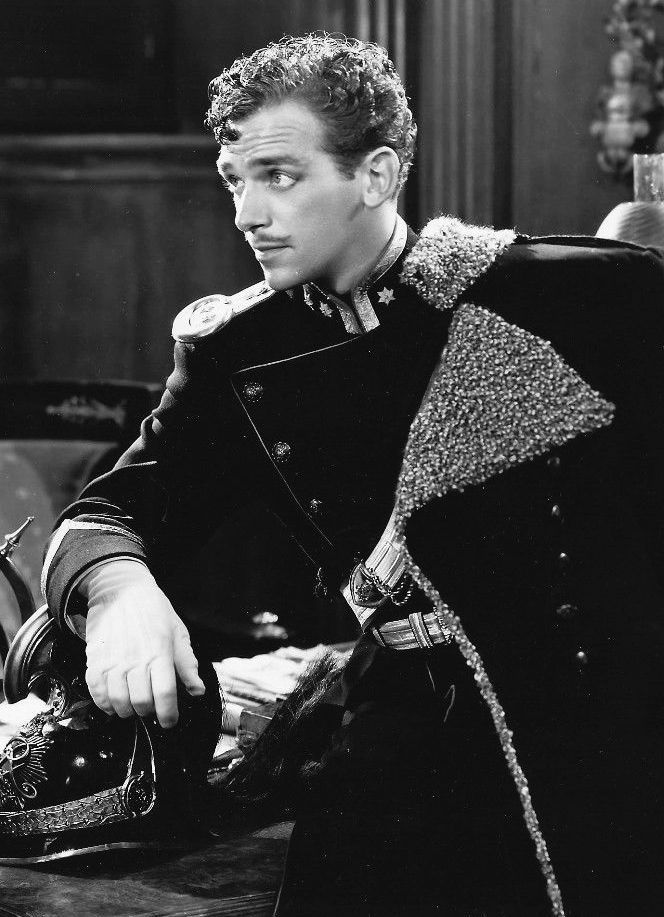
This winter I’ve chosen Winter with Fairbanks Jr. (Douglas Fairbanks Jr.) because I just watched my first movie with him  — The Rage of Paris — a couple of months ago and thought it would be fun to explore his other movies, which I know I’ve never seen before because before The Rage of Paris I had never even heard of the guy.

I’ve already written about The Rage of Paris, so I kicked off my marathon with the first movie Douglas Fairbanks Jr. had a lead in The Power of The Press (1928). It is a silent movie directed by Frank Capra. This movie is one of the shortest I’ve watched in my life at about 59 minutes long.

I can’t say I’ve ever watched a silent movie all the way through before this one, so this was a new experience for me. I ended up getting very caught up in the story, especially the crazy car chase scene, which had me captivated.

Right before the scene there was an odd clip where one minute Clem is being held at gunpoint and the film glitches and then the man with the gun is tied up, but I was willing to overlook that because of the age of the movie and how challenging editing could be.

I was surprised how much of the story I could follow even without having constant dialogue. The acting by the actors really was well done and I can imagine they would have been very good in a talkie too. Their expressions told me all I needed to know in each scene.

The movie is about a rookie reporter named Clem Rogers (Fairbanks Jr.) who is frustrated with being relegated to the weather desk. He wants a chance to cover a big story but the editor deflects his requests.

This rejection amuses some of the more seasoned reporters who like to mock Clem, trip him, and, quite frankly, bully him. Having been in newspapers for about 15 years, I can confirm that cub or rookie reporters do go through a bit of initiation session from the more experienced reporters. Usually, it is very affectionate and non-violent, luckily.

Clem finally gets his chance to cover a big story when everyone else is out of the office and he’s the only one available to run to the sight of a murder. The murder victim turns out to be the city’s district attorney.

Once on the scene, Clem shows what a rookie he is by losing his press pass and being denied entrance to the scene. Instead, one of the other reporters from the paper shows up and tells Clem to get back to the office because he’ll take it from there.

Clem is depressed and leaves the scene around the back of the building where he sees a woman climbing out of a window from the crime scene.

He tries to chase her down but she’s able to get away. Luckily a man sees Clem chasing her and asks what’s going on. Clem tells him she’s running from the scene of a murder and the man says he’d be shocked if the woman was involved because she’s the daughter of the city mayor.

This leads Clem to run back to the newspaper and tell his editor he has a breaking story — the daughter of the mayor killed the district attorney.

Clearly Clem was never taught to check his sources or even find sources for a story and neither did the editor because the editor runs with it and splashes it all over the front page that the woman is a murderer.

She’s crushed by this and confronts Clem after the paper comes out. For his part, Clem is strutting around the office like a proud peacock because of his big scoop.

The mayor’s daughter — Jane Atwill (Jobyna Ralston) — comes to Clem, though, and is like (summary ahead), “Excuse me?! Why would you tell the world I killed a man! You don’t know anything about me.”

I’ll give Clem some credit because he’s like (more summation), “Oh. Wow. I screwed up. I’m so sorry. I’ll ask my editor to print a retraction.”

Ha. Good luck, buddy. If there is anything an editor hates more than missing a big scoop it is printing retractions. You have to have a very, very good reason to retract a story that big and Clem is going to need to prove somehow that Jane is not guilty.

This launches the pair of them on an investigation to find out who the true killer is.

A total aside here, but I loved how Fairbanks Jr.’s hair looked like Leonardo DiCaprio’s, or many other young men, from the 1990s. In some ways the movie looked modern for that reason – or it looked like they’d cut a modern actor into an old silent film.

I watched this one on Amazon but while researching for this post, I found it for free on YouTube. As far as I know it is the full movie, but you might want to double check.

The information online is a bit conflicting, but a couple different sources say that The Power of the Press was Fairbanks Jr.’s first outright leading role. While he played bigger roles in other movies (including his first movie at the age of 13 in 1923) he had not yet had a lead.

His career really picked up in 1929 after he married actress Joan Crawford. That marriage ended in 1933 and he later married Mary Lee Epling, who he remained married to until she passed away in 1988.

I’ve been enjoying reading about Fairbanks Jr. on Prince of Hollywood (link here), a blog dedicated to him, in case you are interested in learning more about him as well: https://douglasfairbanksjr.wordpress.com/filmography/

Up next in my Winter of Fairbanks Jr. Movie Marathon is:

Morning Glory – staring Fairbanks Jr. and Katherine Hepburn (1933)

Here is my complete list of planned watches if you want to join in:

The Power The Press (January 2)

Morning Glory (January 9)

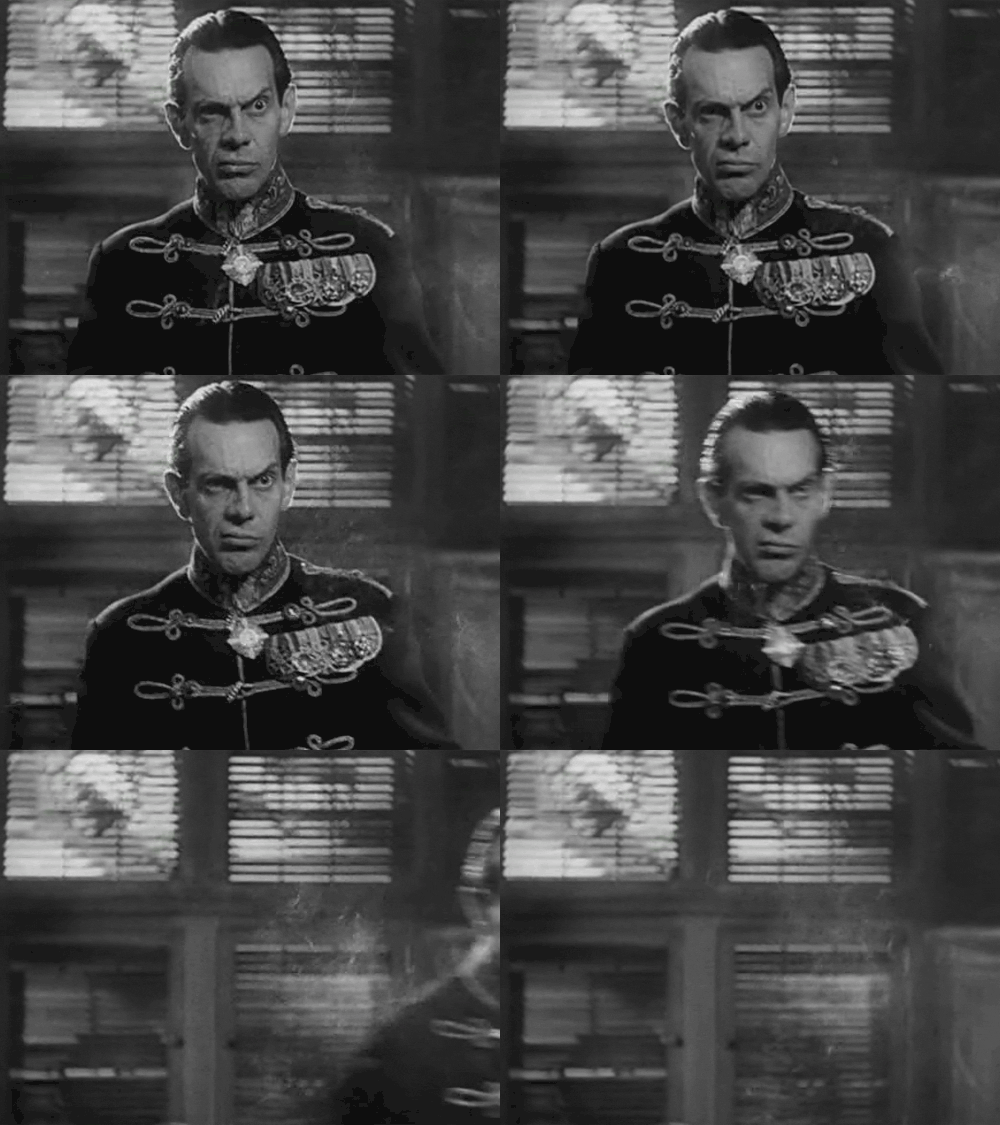
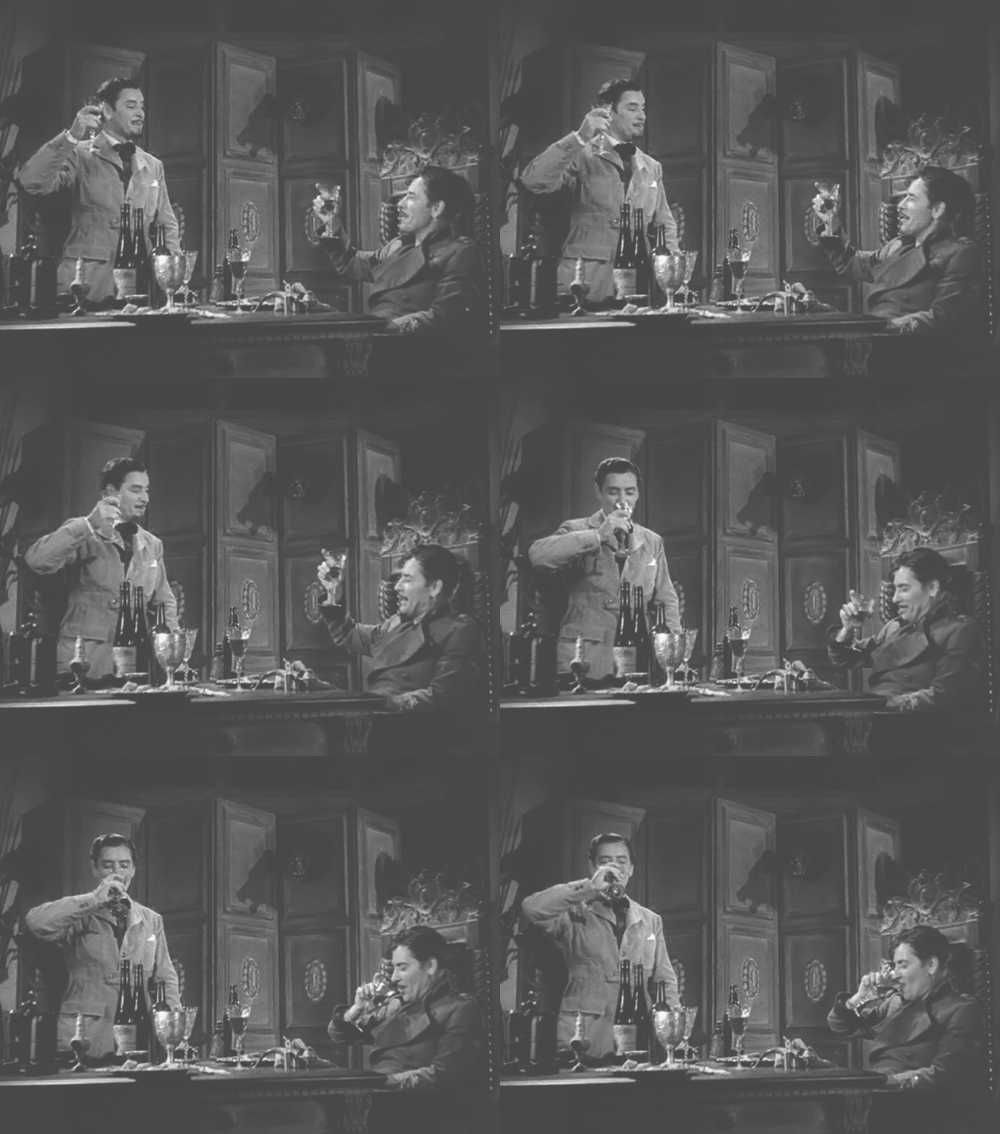
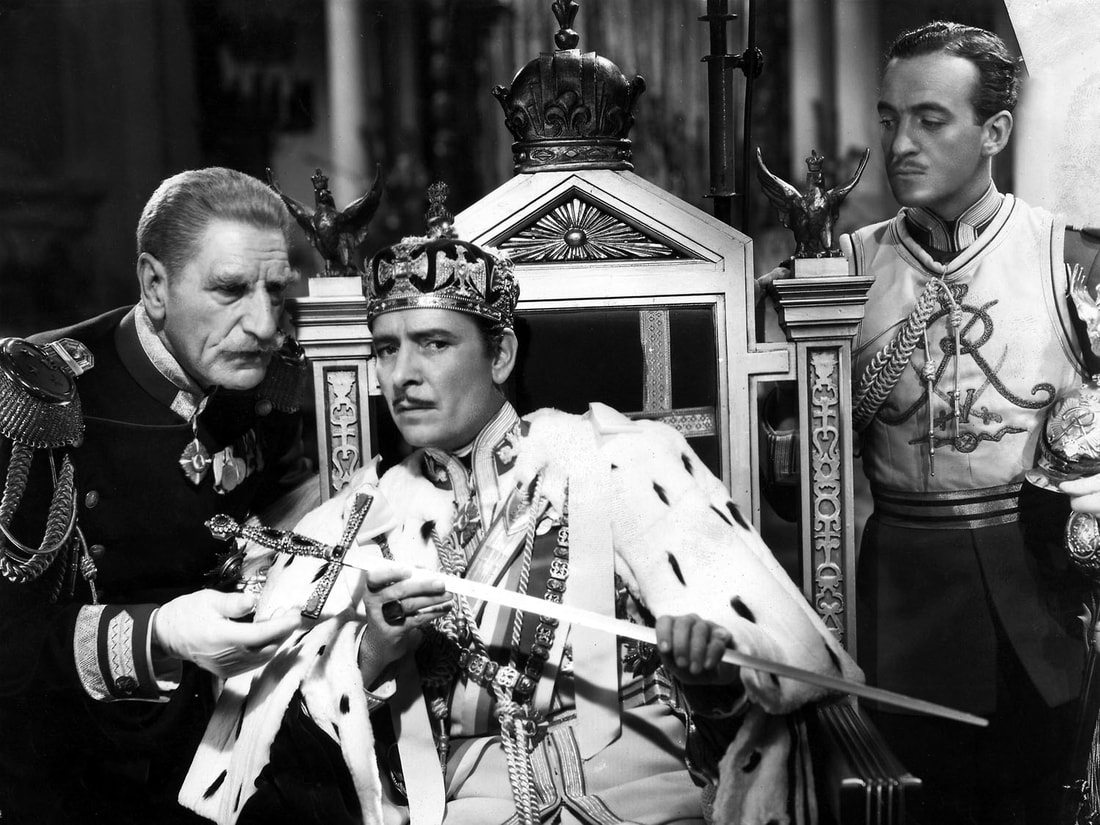
The Prisoner of Zenda (January 16)

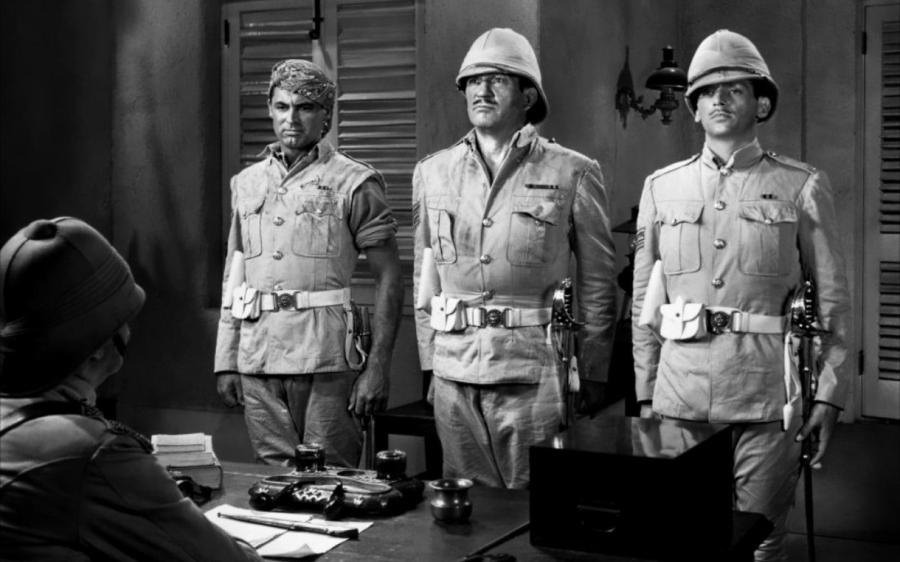
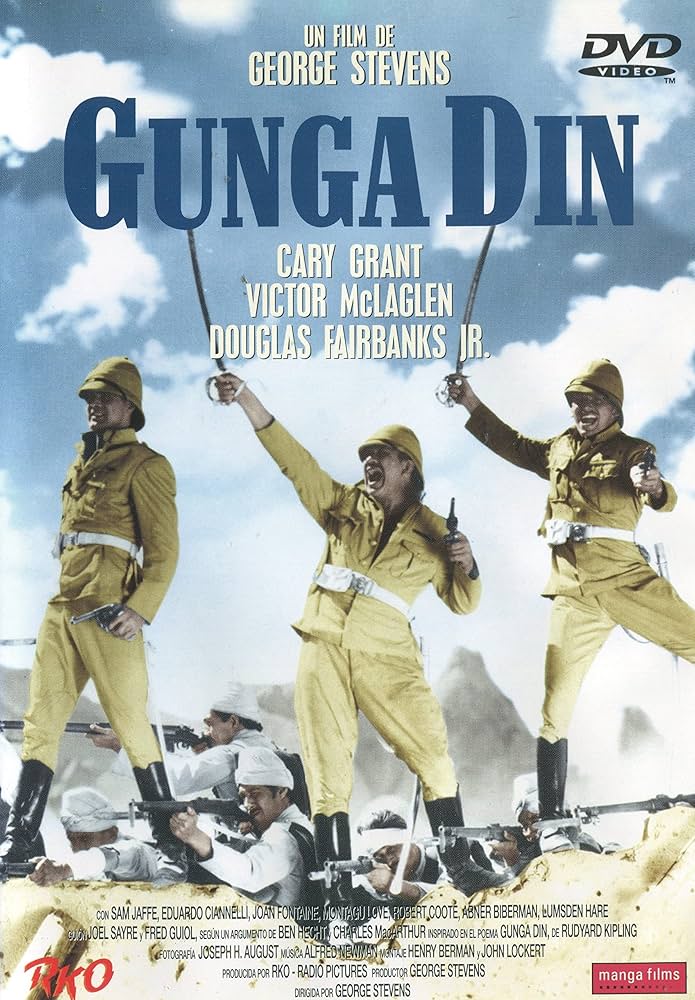
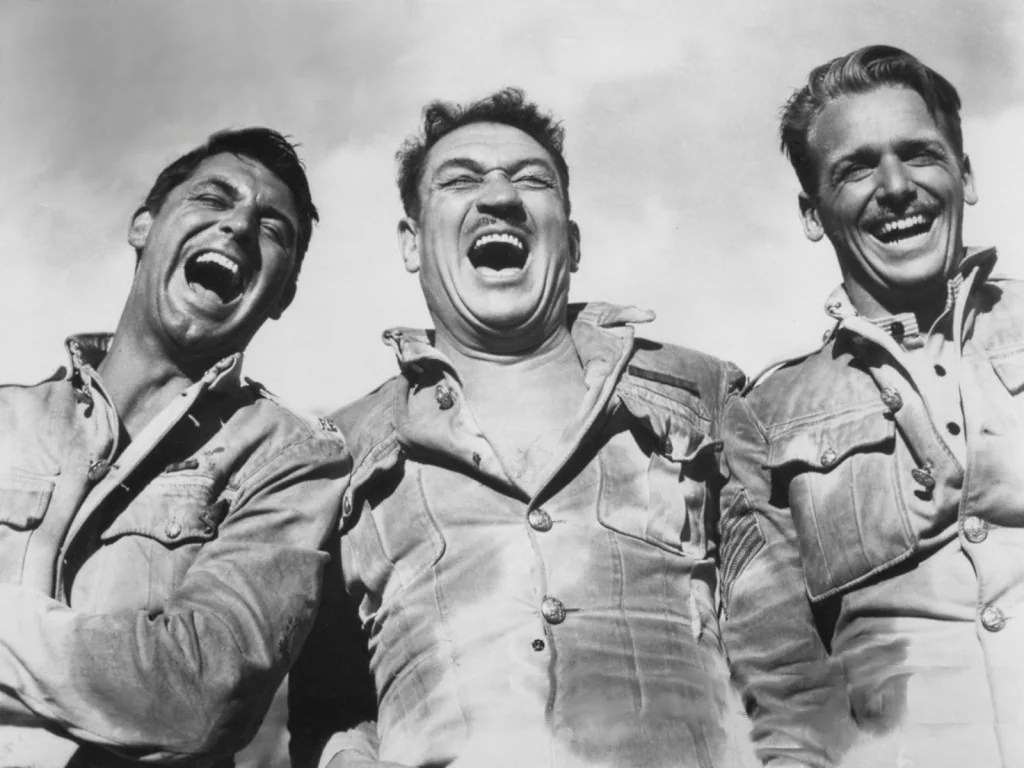
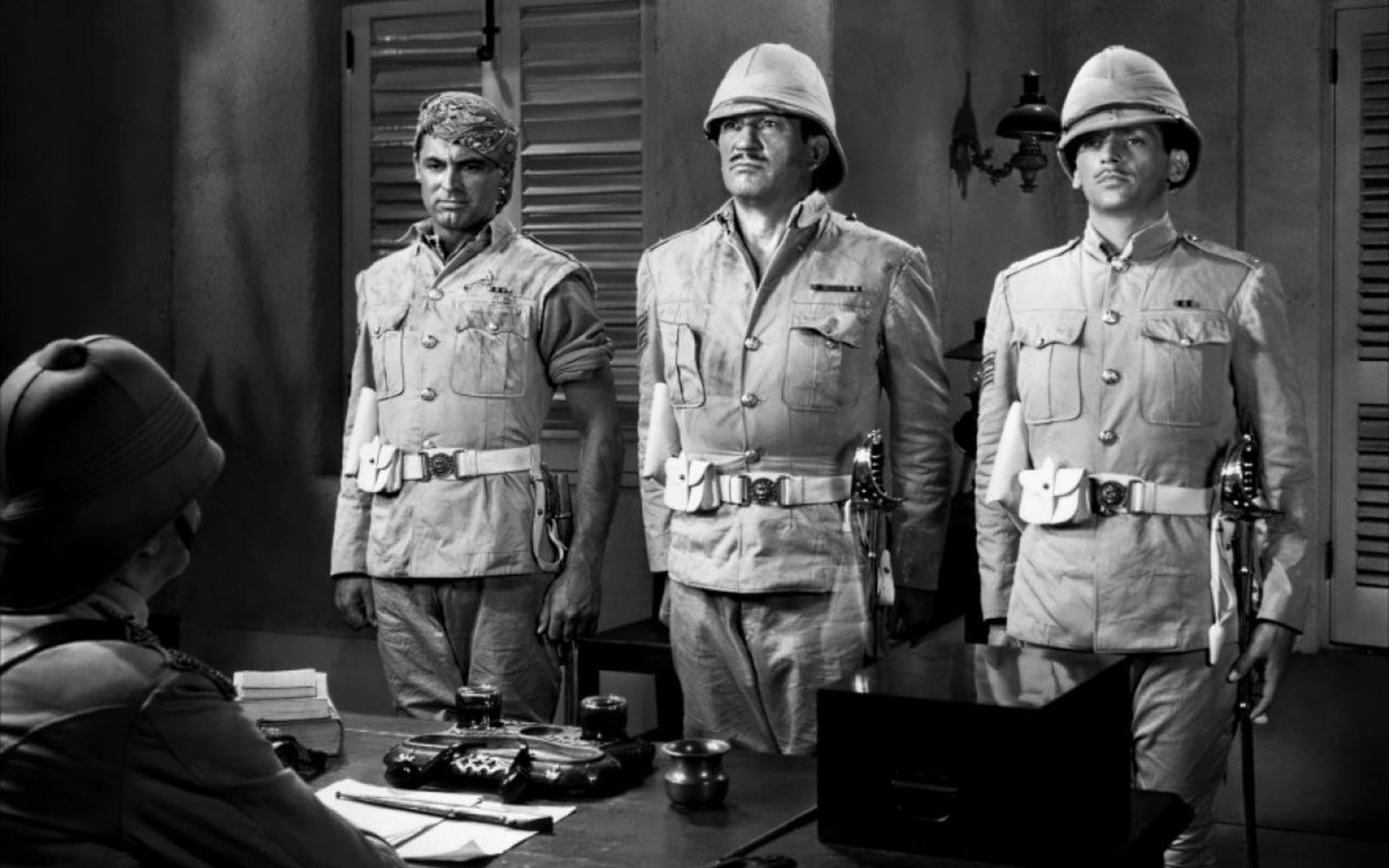
Gunga Din (January 23)

The Young At Heart (January 30)

Having Wonderful Time (February 6)

Chase a Crooked Shadow (February 13)

Sinbad The Sailor (February 20)

The Rise of Catherine the Great (February 27)

The Sun Never Sets (March 6)

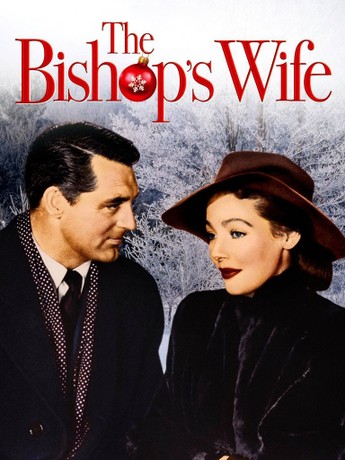
Classic Movie Impression: The Bishop’s Wife

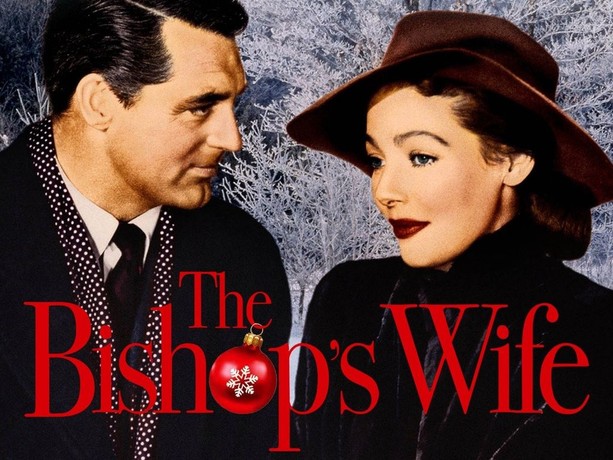
This weekend I watched The Bishop’s Wife (1947), which I have watched before but couldn’t remember the end of, so I watched it again.

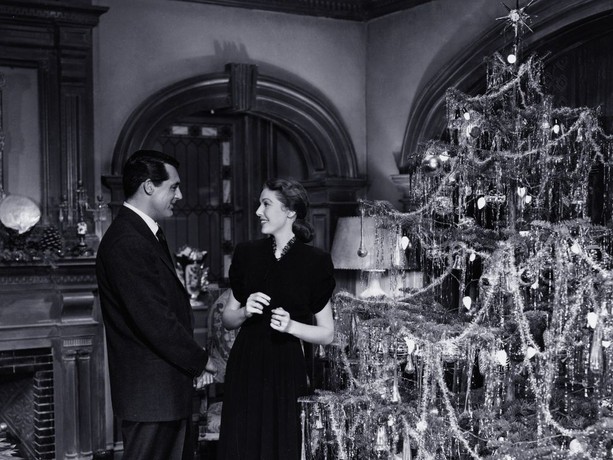
The movie stars Cary Grant as an angel named Dudley who comes to earth to help Bishop Henry Brougham, (David Niven). Henry is so wrapped up in securing funding for a cathedral he begins to neglect his wife and daughter.

Dudley arrives at the Bishop’s house after the Bishop prays for God to help him with funding for the cathedral. Dudley tells him right up front that he’s an angel and he’s there to help him but introduces himself to others as Henry’s new assistant. He pretty much forces himself into Henry’s life and ends up charming the pants off all the women he meets and creating miracles for men, women, and children alike. At least one man, Henry’s retired professor friend (Monty Woolley), is very suspicious of him.

Henry isn’t really sure if he believes that Dudley is an angel, especially when the guy starts taking Henry’s wife, Julia, (Loretta Young) out on the town, having dinner with her, taking her skating, and buying her hats.

Still, Henry isn’t about to get distracted from his goal of building the cathedral and he ignores Dudley’s efforts to open his eyes to how much Julia needs him, plowing forward with fundraising instead.

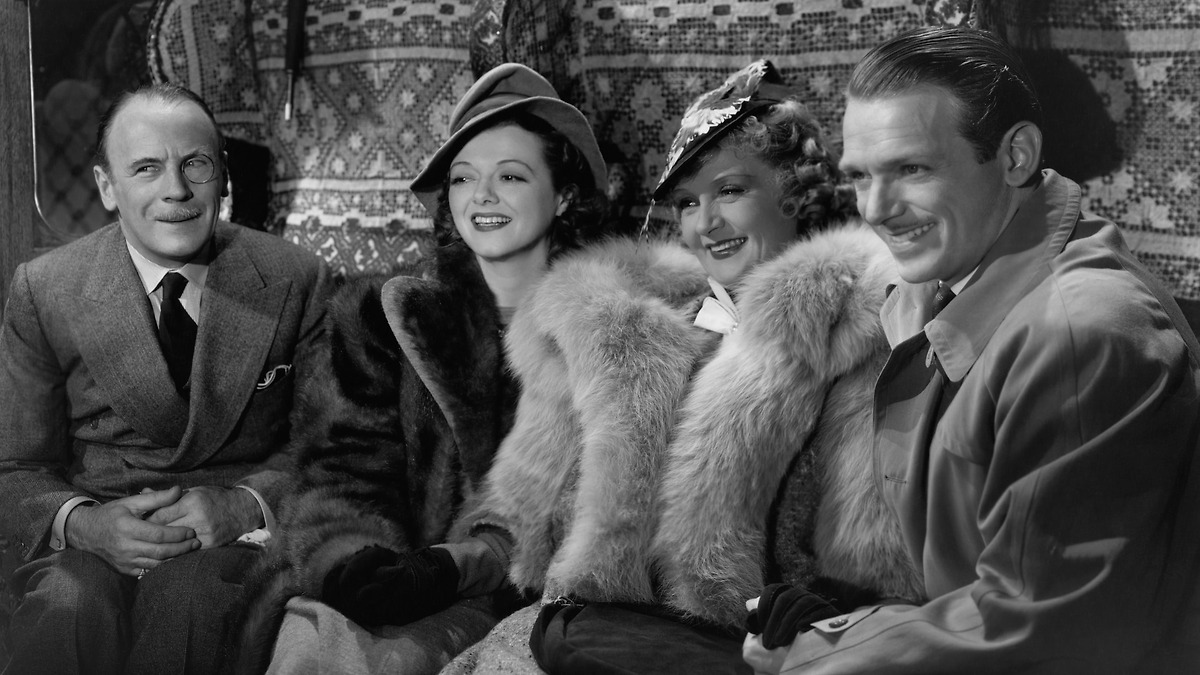
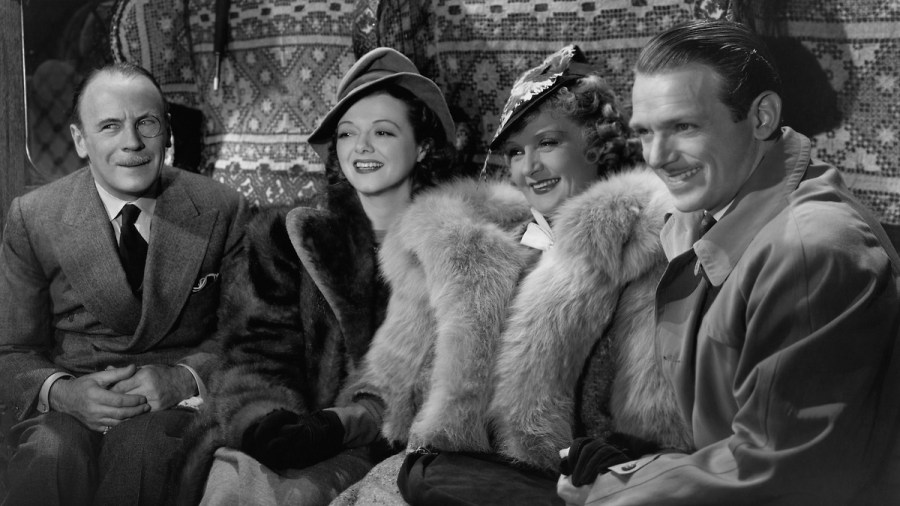
L-R: Actors Cary Grant, David Niven and Loretta Young sit in the back of a car in a still from the film, ‘The Bishop’s Wife,’ directed by Henry Koster, 1947. (Photo by RKO Pictures/Courtesy of Getty Images)

I think Cary is supposed to be charming in this movie but instead I find him a bit devious. Maybe the goal of the movie is to leave the viewer trying to figure out if he is sweet or evil.

The site, The Viewer’s Commentary, had a similar feeling about Cary’s role and explains it better than I can.

“But, while I’m not certain “perfect” is necessarily the right word for Dudley as a character, I’m still not entirely convinced that the movie wasn’t actually trying to play him up as being in his right to step in on Henry’s marriage, either. This is based on the film’s affectionate depiction of his chemistry with Julia, the amount of sympathy the film has for her, and the apparent distaste it has for the stiff Henry beyond his admirable loyalty and good intentions.”

“That ice skating thing I mentioned before wasn’t some kind of non sequitur,” the post continues. “There’s a painfully long scene in which Dudley and Julia and their cab driver have a whimsical impromptu ice skating session where he romances her in front of everyone by secretly granting her expert skill while Henry toils away elsewhere, callously inattentive to Julia’s wifely needs. It would be one thing if it was intended to teach Henry a lesson about what could potentially happen, but it actually kinda left me with a gross feeling, given how wonderful it’s all supposed to be while knowing about Dudley’s infatuation – not to mention his manipulation of the situation and nonchalant demeanor when confronted about it.”

This is the scene in question:

At one point even Henry begins to wonder if Dudley is from heaven or hell and if he truly is trying to steal his wife from him.

It’s what I was wondering too and by the end of the movie  . . . well if you’ve never seen it you will have to watch it and let me know what you think.

The movie is based on a book by Robert Nathan whose other fantasy romance, Portrait of Jennie, would later overtake The Bishop’s Wife on a literary level and later became a 1948 David Selznick movie.

According to an article on TCM.com, producer Samuel Goldwyn decided to take on this movie right after winning an Oscar for The Best Year of Our Lives in 1946.

Cary was originally set to play the Bishop, but as he read the script he began to suggest edits and finally decided he didn’t have the right part. He should be playing Dudley.

Later on, though, after the final casting decisions were made, Grant wanted to switch back.

Then there was the fact that Goldwyn didn’t like the set.

Niven wrote in his future autobiography, “The day before shooting was to start, Goldwyn decided that the interiors of the Bishop’s house were not ecclesiastical enough and ordered several sets to be torn down, redesigned and rebuilt. For three weeks, while this was going on, production was halted, then, two days after the cameras finally had a chance to turn, Goldwyn decided that Seiter’s hand was a little too heavy on the tiller: he was removed, paid his full salary and after a week, Goldwyn hired Henry Koster to start again from scratch – with another two weeks of rehearsal. All this must have cost Goldwyn several hundred thousand dollars….”

Niven was already struggling through the production because his wife tragically died during filming.  Her fatal head injury occurred during a party game of “sardines” at Tyrone Power’s house. Her name was Primmie and she fell down a flight of cellar stairs after thinking she was running into a closet.

Problems further continued to plague the film when Cary and Loretta Young couldn’t get along part of the time.

Despite all of the hardships, the movie was well-received and remains a favorite Christmas film of many classic movie buffs today.

It was nominated for five Oscars but did not win any.

I’m not sure I found this movie as heartwarming as some of the Christmas movies I’ve watched, probably because I found it so difficult to read Cary in this one and was quite suspicious of him. I did, however, still enjoy the movie overall.

A few pieces of trivia about the movie for you:

I recognized the young actor who played the young George Bailey from It’s A Wonderful Life — Bobby Anderson —— in a snowball throwing scene in this film. I looked up his name and found out that Karolyn Grimes, who played Zuzu in It’s a Wonderful Life also played The Bishop and his wife’s daughter, Debby.

According to IMBd (I did not double check these to clarify they are true):

“At about 1:20, Henry and Julia are ready to make some Parish calls. Henry says to Julia, “We go first to the Trubshawes.” This is an example of David Niven’s attempt to mention the name of his friend (Michael Trubshawe) in every movie he made.”

“Over Cary Grant’s protests, a skating double wearing a mask with Grant’s features was used in the long shots of the complex skating routine. A skating double was also used for Loretta Young on all long shots.”

Market research showed that moviegoers avoided the film because they thought it was religious. So, Samuel Goldwyn decided to re-title it Cary and the Bishop’s Wife for some US markets, while adding a black text box with the question “Have you heard about CARY AND THE BISHOP’S WIFE?” on posters in markets where the film kept the original title. By adding Cary Grant’s first name to the title the film’s business increased by as much as 25 per cent.

“In Britain the film was selected for that year’s Royal Command Film Performance screening. Princess Margaret and her sister, the future Queen Elizabeth, both attended the screening of “The Bishop’s Wife” on November 25, 1947, at the Odeon Theatre in Leicester Square. According to David Niven, “The audience loved every second of it, and the Queen and Princess Margaret told me afterwards and at great length how much they had enjoyed it.”

Have you ever seen The Bishop’s Wife? What did you think of it?


*This post is part of the Comfy, Cozy Christmas Link Up for 2024. If you have a Christmas/holiday post you would like to share you can find the link HERE or at the top of the page here on my blog.

Classic Movie Impression: The Rage of Paris (1938)

I stumbled on The Rage of Paris, a movie from 1938, by accident when one movie I was watching on Amazon Prime ended and this one started. I ended up loving it and also fell in love with Douglas Fairbanks Jr. who I had never heard of before this movie.

Where had I been? He was so handsome and charming in this movie, which made me want to look up more information about him. I also now want to find more movies starring him. I feel a Winter or Spring of Douglas Fairbanks Jr. coming up

“Douglas Fairbanks Jr. must have been famous back in the day because his name is even in the title of the movie on Amazon,” I said to myself.

I later asked my mom and dad about him and they assured me he was very famous, but, Mom said, “That was way before my time, just so we are clear here.”

Mom and Dad were, incidentally, born in 1944. Fairbanks Jr. started his career much earlier.

Before we learn about him, though, I’ll share about the movie, which starts with the main character, Nicole de Cortillion, (Danielle Darrieux) a French woman in New York City, who is desperately looking for a job. There is a hilarious mixup where she asks the head of a modeling agency for work and he suggests a job with a photographer who wants female models who will model with drapes on – and nothing else. The photographer is impatient and wants the job done fast, she’s told.

Nicole is horrified and says she won’t do it, but when another model comes in and says she will, Nicole doesn’t want to lose the job and while the model and the head of the agency are chatting, she snatches the address from the top of the desk.

The only problem is that she’s grabbed the wrong address. The address she has is for a man simply looking for some proof photographs for an advertising campaign that doesn’t involve scantily clad women.

The man is Jim Trevor (Fairbanks) who is beyond confused when he walks into his office after a meeting and finds Nicole stripping to prepare for the photos.

It is one of the funniest scenes I’ve ever seen in a movie because it’s clear he doesn’t have any idea what she’s doing and both wants to stop her and not stop her. He tries to ask what she’s doing and she asks where his camera is. A very funny exchange occurs during which Jim starts to think this woman is looking for a quick buck in a very solicitous way.

I found a clip for you of the witty exchange:

Back at her apartment, her landlady says she’s kicking her out for not paying rent. Her neighbor, Gloria, (Helen Broderick) having it though and tells the landlady that she will cover her rent. She then brings Nicole into her apartment and tells her she wishes they could marry rich men and not have to worry about bills anymore. That’s when an idea strikes Gloria. She has a friend who is employed as a maitre’d at a famous hotel. Maybe he would give Nicole a job. They head to the hotel, but the man – Mike (Mischa Auer) – says he can’t give her a job because soon he’s going to open his own restaurant. All he needs is $3,000 to get the restaurant.

Another idea strikes Gloria when she sees all the women dancing with the wealthy men in the dining room. What if they have Nicole seduce a millionaire and marry him? Then she won’t have to find a job and she can also give money to Gloria and Mike. Gloria talks Mike into the scheme. They’ll rent a room at the hotel with his help. Gloria will pretend to be Nicole’s aunt and together they will set their eyes on millionaire Bill Duncan. If Nicole can convince him to marry her they’ve got it made.

All is going well until Nicole, Gloria, and Bill attend an opera and run into Bill’s friend – none other than Jim Trevor.

The scene where they recognize each other across two balconies is comedy gold.

I absolutely could not stop laughing.

I’ve left a clip of it that I found on YouTube here for you:

Nicole does her best to hide from Jim Trevors but it doesn’t work and when he gets her alone later in the evening he tells her she needs to tell Bill Duncan the truth – which is that she isn’t a rich baroness from Paris – but instead a poor girl trying to swindle him into marrying her.

She promises she’ll tell Bill Duncan but she double crosses Jim in a very funny scene that leaves Jim steaming and more determined than ever to make her tell the truth. The rest of the movie is him doing just this.

The Rage of Paris did well at the box office in 1938 and was nominated for two Venice Film Festival Awards, winning in the category of Special Recommendation.

I had never heard of either of these actors when I started the movie.

For some background on Douglas Fairbanks Jr. – his father, Douglas Fairbanks Sr., was one of cinema’s first icons, noted for swashbuckling adventure films as The Mark of Zorro, Robin Hood, and The Thief of Bagdad. Fairbanks had small roles in his father’s films American Aristocracy (1916) and The Three Musketeers (1921). Fairbanks Jr.’s mother was Anna Beth Sully, the daughter of wealthy industrialist Daniel J. Sully.

His parents divorced when he was nine and he lived part-time with his mother in France, New York, London, and California.

Fairbanks started acting at the age of 13 when he was given a contract simply because he was the son of a famous actor. The film he first starred in flopped, though, and he returned to Paris to continue his studies. He returned to Hollywood at the age of 14 and became a camera assistant at what he called “starvation wages.”

His father didn’t want him to get into acting at such a young age, but instead wanted him to continue his education.

He worked steadily from 1921 to 1956 but he took a break during World War II to become a highly decorated officer by serving in the U.S. Navy as a reserve officer. He was a part of many, many missions including one where he was part of a recruitment of 180 officers and 300 enlisted men for the “Beach Jumpers” program. This program was aimed at simulating amphibious landings with a limited force, operating miles from the actual landing but using deception to make the enemy believe it was the actual landing place.

I don’t like using Wikipedia as a source anymore for a variety of reasons, but according to their page on Fairbanks,  “For his planning the diversion-deception operations and his part in the amphibious assault on Southern France, Lieutenant Commander Fairbanks was awarded the United States Navy’s Legion of Merit with bronze V (for valor), the Italian War Cross for Military Valor, the French Légion d’honneur and the Croix de Guerre with Palm, and the British Distinguished Service Cross.

Fairbanks was also awarded the Silver Star for valor displayed while serving on PT boats and in 1942, made an Officer of the National Order of the Southern Cross, conferred by the Brazilian government.  . . . Fairbanks stayed in the US Naval Reserve after the war, and ultimately retired as a captain in 1954. In 1982, Fairbanks was awarded the German Federal Cross of Merit for his contribution to the relief of the needy in occupied Germany.”

He returned to acting after the war and starred in many “swashbuckling movies” as well as British films and television since he moved back to the UK after the war and stayed there for many years before moving to Florida (is it just me or do a lot of Brits move to Florida?).

As for his co-star, Darrieux, this was her first American film. She was a star in France before World War II. She started acting at the age of 14.

She continued acting during World War II and the German occupation of France, which was something she was frowned upon for. Later, though, it was believed she’d been threatened by the head of the only studio in operation at the time – owned by a German who threatened to have her brother deported if she didn’t perform.

Darrieux had a lengthy film career in France, the United States, and Britain, and starred in  Lady Chatterley’s Lover (1955), whose theme of uninhibited sexuality led to its being proscribed by Catholic censors in the United States. She then played a supporting role in her last American film, United Artists’ epic Alexander the Great (1956) starring Richard Burton and Claire Bloom.

She acted from 1931 to 2002.

Later in her career she became involved in musical theater and even performed concerts in the 1960s. She passed away at the age of 100 in 2017. What a full life!

According to a blog dedicated to Douglas Fairbanks Jr., Darrieux’s life was tough at times, even if it was full, especially while filming The Rage of Paris.

Fairbanks remembers working with Darrieux fondly,” Elizabeth from the blog Douglasfairbanksjr.wordpress.com. “Unfortunately at the time, she was a victim of physical abuse at the hands of her husband. Filming had to be postponed for a short while as she recovered from a black eye given to her by her husband.”

The blogger goes on to say that Darrieux’s overbearing husband kept her from socializing too much with others on set. Thankfully, not long after the premiere of The Rage of Paris, Darrieux left her husband.

Fairbanks wrote in his memoir, “I’ve always hoped she was consoled by the fact that the picture turned out well and proved very popular.”

I also agree with the author of the blog who said she felt The Rage of Paris “contains one of the best on-screen chemistries and one of the best romantic build-ups on film.”

The chemistry between Darrieux and Fairbanks Jr. was incredible and I was sad to read that they only made one film together. If they were only going to make one film together, though, I’m glad it was this one.

So, tell me, have you seen this film or any of Douglas Fairbanks Jr.’s other films? How about Darrieux? Have you seen any other films by her? And should I have a Douglas Fairbanks Jr. marathon for myself this winter?

Comfy, Cozy Cinema: What We Did On Our Holiday

Last year Erin from Still Life, With Cracker Crumbs and I watched comfy cozy movies during the fall and we are doing it again this year.

This week we watched What We Did On Our Holiday (2014).

I wasn’t sure what to expect of this one but chose it based on the trailer I saw of it. I thought it would be cozy and fun. I should have read the descriptions better since it is called a “black-comedy.” Oops.

So, it wasn’t exactly what I had hoped it would be, but it was a pretty okay movie, with humor mixed in with …. well…. some disturbing elements. Not like deep, deep dark disturbing – just a bit depressing disturbing. Yet also uplifting. It is hard to explain unless you see the movie. I’m handling this post with care because while I want to share one of the biggest plot twists in the movie, I don’t want to ruin it for anyone who hasn’t seen it.

So let’s keep it simple for now – David Tennant (Doug) and Rosamund Pike’s (Abi) character are getting a divorce but they are also going to visit Doug’s family and don’t want them to know about the divorce. Doug and Abi live in England. Doug’s family is Scottish (David is actually Scottish too so he got to use his normal accent this time). They instruct their young children to keep it on the down-low that Mum and Dad are living in separate houses and have lawyers.

Well, we, of course, know that this is going to go off the rails pretty fast with these precocious, bright children the couple has.

Meanwhile, in Scotland, Doug’s brother, Gavin (Ben Miller), is planning a huge party for their father. He’s inviting all kinds of bigwigs and other family members that no one but him wants there. His wife is inching toward menopause or is just stressed from dealing with him, and is having a hard time controlling her emotions so she’s crying in the kitchen some nights.

Their son seems to be a bit awkward but also might be autistic and he wants to play the music he loves on his violin but his father wants him to study classical music for college.

Oh and Gavin is rich. Very rich. Because he is a financial something or other which sounded like he’s a conman to me.

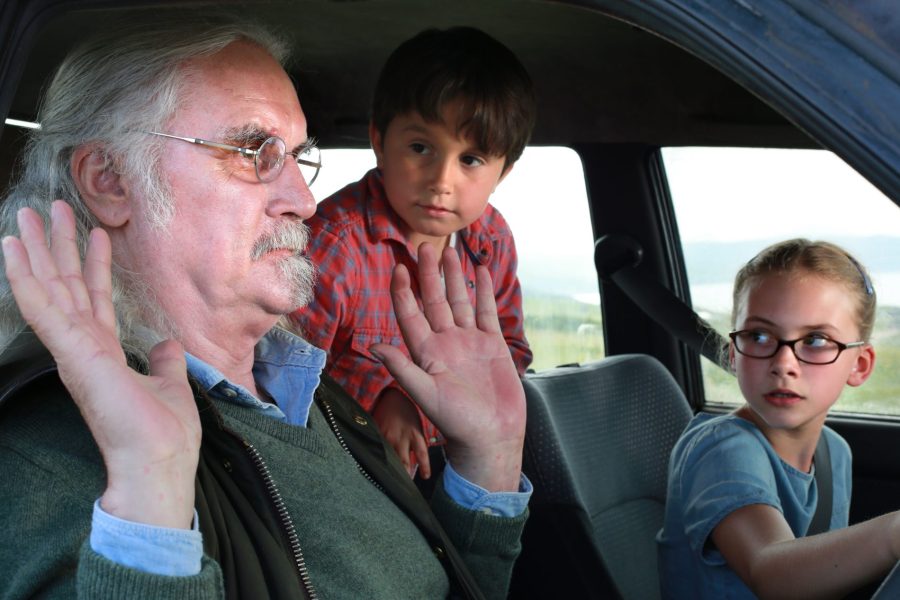
The kids in this film are – as the British might say – brilliant. They are hilarious and bright and quick witted. Great actors for being so young.

There are two girls and a boy. The youngest (between 4 and 5) reminds me of a mix of my daughter and one of my nieces – mouthy and sharp in the best way.

The oldest daughter (about 10) records all her thoughts in a little journal to try to organize them and deal with the chaos happening around her.

The boy (around 7) lives in fantasy worlds in a way, but he’s also a kid so it’s okay for him to do that.

According to an article I read, the kids were essentially let loose and the adults worked around the things they would said. You can read more about how the kids and the cast grew a bond to make the movie seem more natural here: https://weminoredinfilm.com/2015/10/13/film-review-what-we-did-on-our-holiday-aka-british-kids-say-the-darndest-things/

There is a lot of serious subject matter in this movie but the humor that is woven throughout helps to alleviate that some.

I have to admit there were times I wasn’t sure whether to laugh or cry at the scenes in this movie. I think there was a healthy mix of both, to the point the kids had to check if I was okay.

It isn’t much of a spoiler to say that Grandpa (Billy Connelly) is sick and one reason Doug and Abi don’t want anyone to know they are getting a divorce is that they don’t want to upset Gordie/Grandpa.

There is a huge plot twist in the middle of this one that had me gasping, saying, “oh no. No way,” crying, and then laughing.

I wouldn’t say this is a movie I will watch over and over again because it was tough in a lot of ways – especially since I have parents who are older and dealing with health issues themselves. I would probably watch it again with a family member (not alone like this time) while holding on to my Teddy bear and a box of tissues, though.

When I say a box of tissues, don’t jump to the conclusion that this movie doesn’t offer some hope. It does and that hope is for all of us with dysfunctional families who are trying to figure out what being a “normal” family is.

The kids really make this film – overshadowing Tennant and Pike for me. In fact, they overshadowed all the “big name” actors in the film. I found the adult actors’ performances to be pretty blah in many ways.

This movie sat with me a few days after I watched it and I found myself thinking about some of the scenes and tearing up again.

I definitely felt this film had to have been filmed in Scotland and a quick look online showed that it was actually filmed in – Detroit?!

Ha! Just kidding. It was filmed in Glasgow and the Scottish Highlands in 2013.

‘WHAT WE DID ON OUR HOLIDAYS’

According to Wikipedia, “The beach scenes were filmed at Gairloch. The family home of Gavin McLeod is in Drymen near Loch Lomond. The ostriches farmed by Gordie’s friend Doreen are actually located at Blair Drummond Safari Park.

Have you ever seen this one before? What did you think?

Read Erin’s impressions on her blog here.

Up next for our Comfy, Cozy Cinema is The Best Exotic Marigold Hotel.

If you want to watch this one with us we will be posting our impressions next week.

Here is our full list for the entire Comfy, Cozy Cinema feature this year:


You can read Erin’s impression of the movie here: https://crackercrumblife.com/2024/09/05/comfy-cozy-cinema-what-we-did-on-our-holiday/

Link up here if you’ve written about the movie this week.

You are invited to the Inlinkz link party!

Click here to enter
https://fresh.inlinkz.com/js/widget/load.js?id=c0efdbe6b4add43dd7ef


Comfy, Cozy Cinema: Tea with the Dames

For October and November, Erin from Still Life, With Cracker Crumbs and I will be watching cozy or comfy movies, and some of them will have a little mystery, creepiness, or adventure added in. You can find out about the other movies we watched by searching Comfy, Cozy Cinema in my search bar at the right.

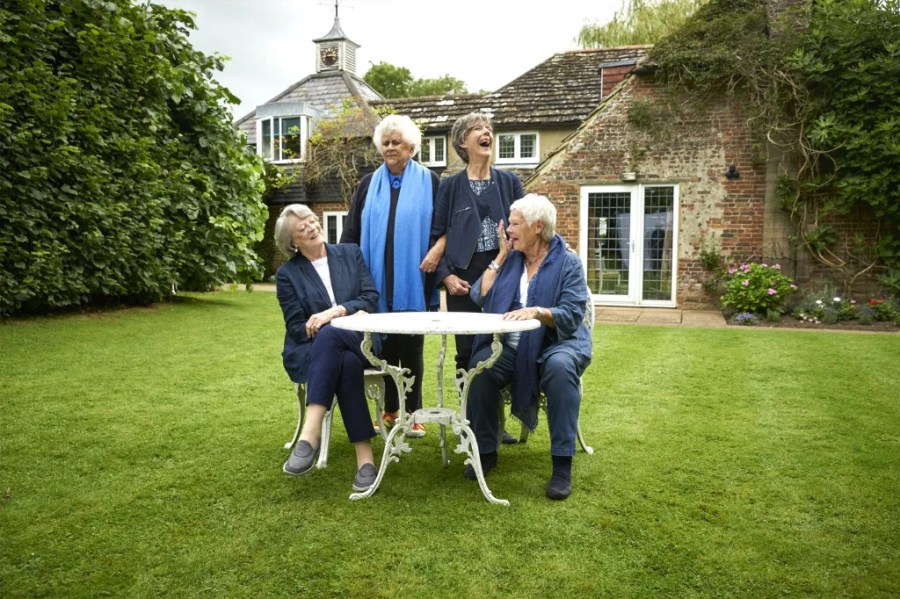
This one was a different one this week because it was a documentary about four British actresses who are legends in theater, movies, and television. All four of them have been named “dames” by the British monarchy. This is the female equivalent of being dubbed a knight.

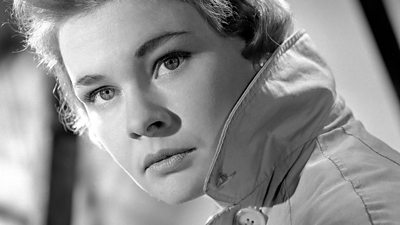
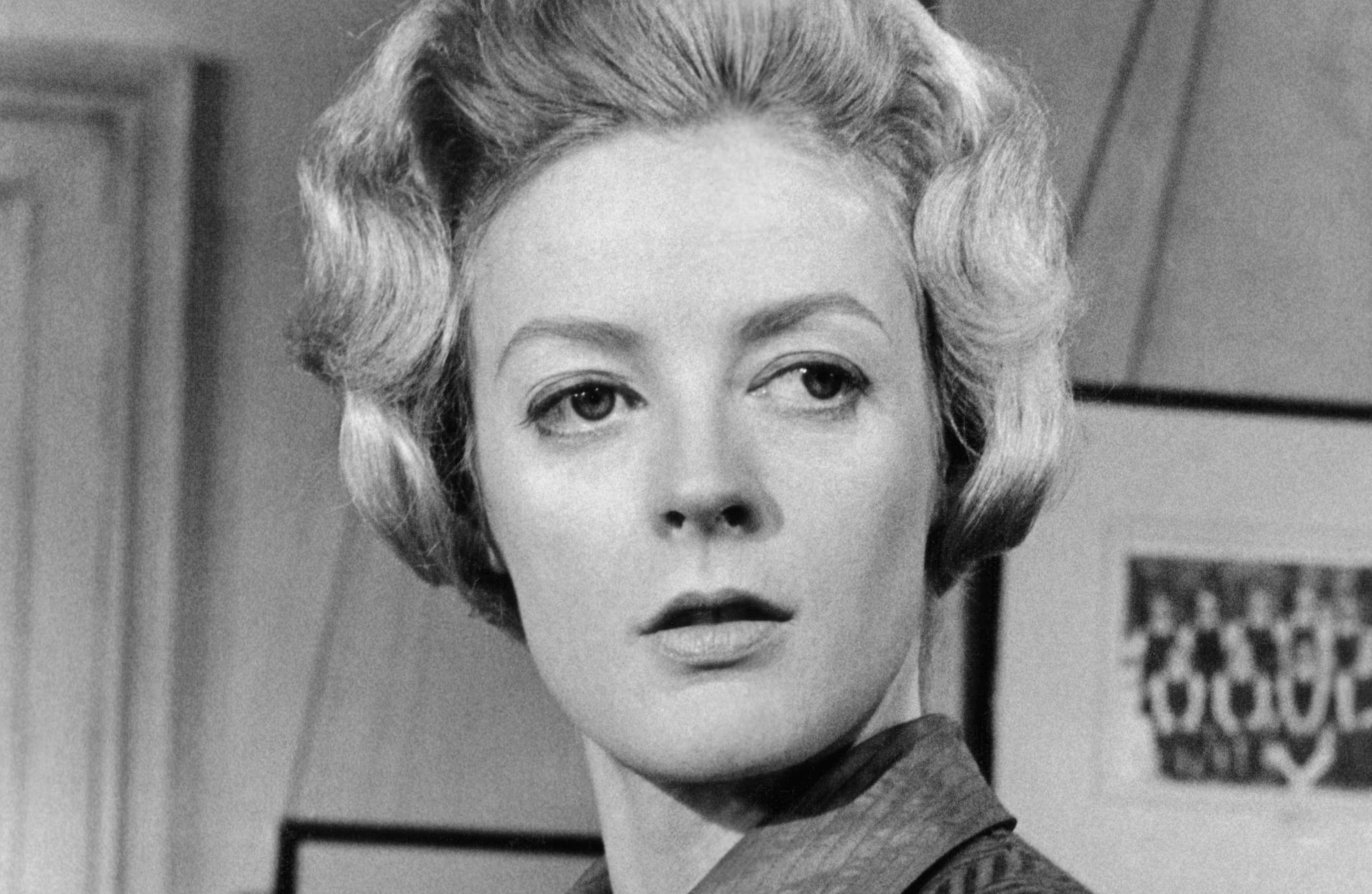
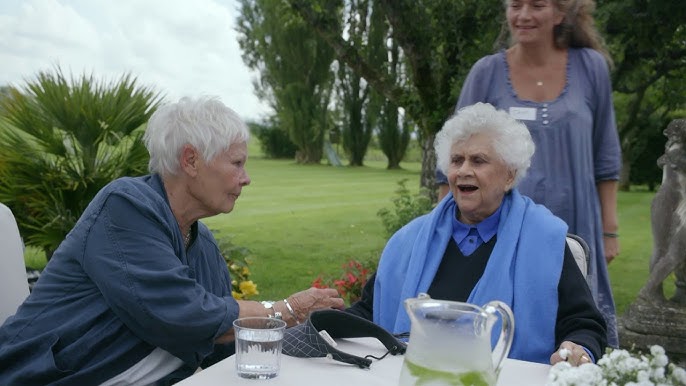
The documentary is a series of sit-down interviews with Dame Judi Dench, Dame Maggie Smith, Dame Joan Plowright, and Dame Eileen Atkins.

The documentary was made in 2018 and all the women were in their 80s. They are now in or nearing their 90s but all four are still alive.

All four women have been friends for probably 40 years or more.

If you haven’t heard of one or the other of these women, I’ll detail below some examples of what they’ve been in. Most would be familiar with Judi Dench and Maggie Smith at least.

I watched this documentary a few years ago and found it enchanting, hilarious, touching, and inspiring. I made my husband watch it with me and now I’ve made Erin watch it with me too.

The entire documentary consists of the women at Joan’s cottage where she used to live with actor Laurence Olivier, simply telling stories about their careers and families and the time they spent together as friends.

All four actresses have worked in theater, the small screen and big screen.

They all started in theater and hearing their early stories about those days was very interesting to me, even though I’ve never been interested in participating in it myself.

Judi Dench is well known for her work on British sitcoms (As Time Goes By and A Fine Romance. She stared in A Fine Romance with her future husband Michael Williams) but more prominently an entire line of movies from the Bond movies where she played M, to Shakespeare in Love where she played a queen. She also played queen in Mrs. Brown.

Her list of movies also includes Chocolat, Philomenia, The Best Exotic Marigold Hotel, and … well, there are tons of them. (A link to her work: https://www.imdb.com/name/nm0001132/)

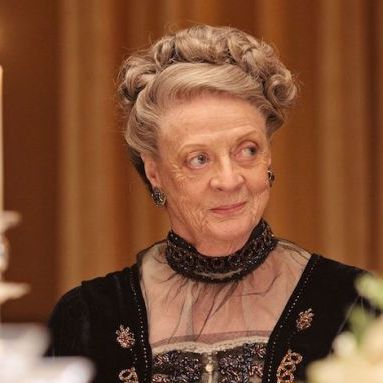
Maggie Smith is most well known recently for Downton Abbey and Harry Potter. She played the Dowager Countess Violet Crowly in Downton Abbey and Professor McGonagall in Harry Potter. (a link to her work: https://www.imdb.com/name/nm0001749/)

Eileen has been in a ton of films and television as well, Paddington 2, Wicked Little Letters, The Crown, The Archers, Beautiful Creatures, etc., etc. (A link to her work: https://www.imdb.com/name/nm0040586/)

Joan’s film list includes The Spiderwick Chronicles, Mrs. Palfrey at the Clairmont, Dennis the Menace, and 101 Dalmatians among so many others. (Here is a link to her work: https://www.imdb.com/name/nm0687506/)

The documentary is pretty laid-back and easygoing. There are some great quotes from all four women about acting and life in general. They bounce off each other in hilarious exchanges between the women and the interviewer and the crew helping with filming. There is footage from their past films and plays woven throughout.

This is not a rated G film with Judi dropping a couple of f-bombs during the filming, especially in regard to a question about growing older.

Maggie is so funny because she seems unable to use the word “child” throughout. She refers to the son of Joan and Laurence (they call him Larry)’as “a small person.” Like when she tells a story about him she says, “When Richard was a small person…”

The story she tells is hilarious too. She once overhead Laurence Olivier begging his young son to tell him if he had thrown the key to his liquor cabinet down the dumb waiter.

“Richard, tell Daddy where the key is. Daddy needs his num-nums.”

Maggie laughs and says, “The idea that a great actor was reduced to using the word num-nums.”

I also really giggled at the conversation about how they each became dames.

Judi became one first and called Maggie when she became one and said, “Don’t worry…you can still swear.

“You can swear more actually,” Judi says with a laugh.

“You just do it privately,” Maggie snickers and speaks with a very posh accent.

Joan was a lady before she was a dame because she married Sir Laurence Olivier, Maggie points out.

“Well, darling, it is quite difficult to have two titles,” Joan replies. “People don’t know which one to use.”

“You’ll have to grapple with it, Joan,” Maggie smith says while the other women laugh.

There are also some very profound quotes from the women mixed in with the laughs.

At one point Judi is asked how people face the fear associated with acting.

“Fear is petrol,” she states in a matter-of-fact tone. “Fear is the petrol. It generates such an energy. Fear. Being frightened. If you can somehow channel it, it can be a help.”

I really love this documentary because it is a wonderful reminder of what women can do when they cast aside societal expectations and just go for their dreams.

These women had a passion for acting. They wanted success and went for it and didn’t let anything stop them. In a day and age where women had to fight for every crumb, they won the whole loaf and then showed other women how to do the same thing.

As I told Erin, I just love watching these women talk about their past but also teared up when they showed all the roles they have played. I mean these women were pioneers for women who were told they couldn’t play certain roles and couldn’t be mothers and wives AND successful in their careers at the same time.

Not only did they defy expectations but they completely exceeded them. I mean Judi Dench was literally in Shakespeare in Love for eight minutes and won an Oscar for Best Supporting Actress. She is 88 years old and two weeks ago she recited a Shakespeare soliloquy from memory on the Graham Norton Show:

I found the documentary for free (with commercials) on Tubi but you can also rent it off various streaming services.

If you want to read Erin’s impressions of the documentary visit her blog: https://crackercrumblife.com/2023/11/09/comfy-cozy-cinema-tea-with-the-dames/

We are taking a break from the Comfy, Cozy Cinema for Thanksgiving but will be back next week for The Fishermen’s Friends and then on November 30 with a bit of Jane –Sense and Sensibility.

I’m not sure what we have on tap for December but stay tuned. If Erin and I don’t do a joint Cozy Christmas cinema together, I’m sure she and I with both be watching our favorites and sharing about them on our blogs.

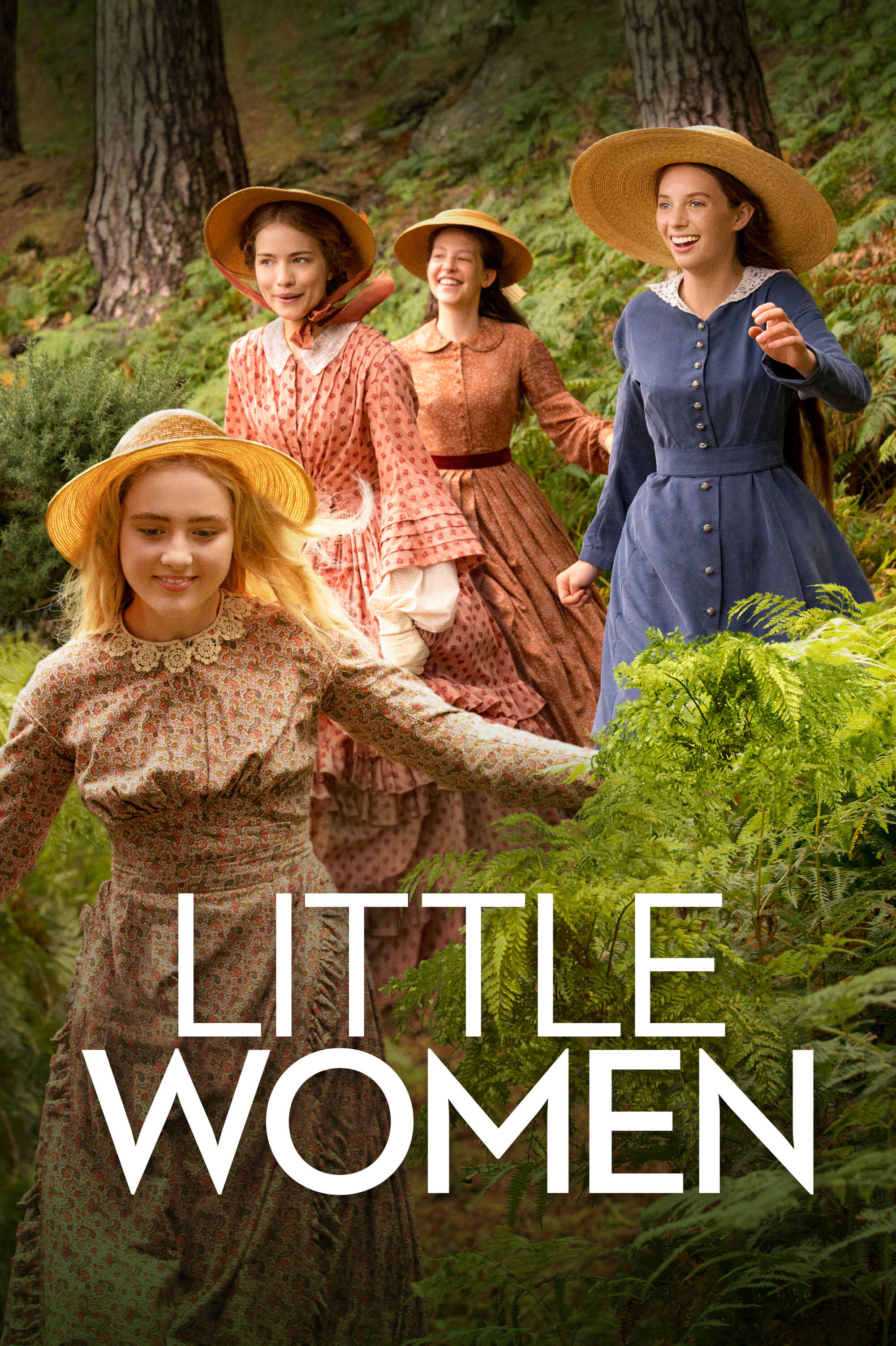
Comfy, Cozy Cinema: Little Women (2019)

For October and November, Erin from Still Life, With Cracker Crumbs and I will be watching cozy or comfy movies, and some of them will have a little mystery, creepiness, or adventure added in.

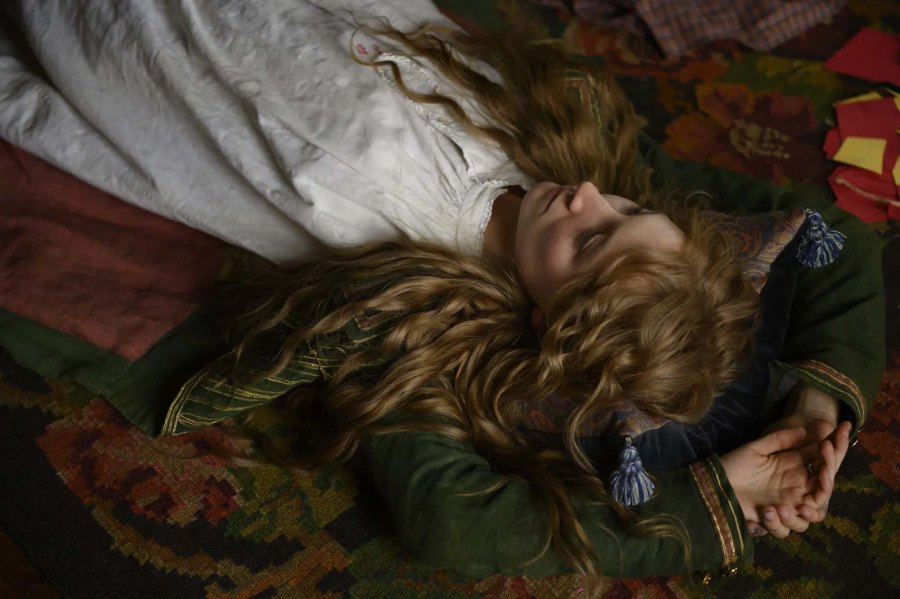
This week Erin chose the 2019 version of Little Women. This movie is full of beautiful cinematography but it really isn’t my favorite version of this story, which as most of you know is based on the book of the same name by Louisa May Alcott.

Before I get into this, I want to explain that when I say it isn’t my favorite version of the story, I don’t mean that I do not like it. I did not like it at all the first time I watched it, but I watched it again and I see what the director (Greta Gerwig) was doing. I simply did not like it as much as others I’ve watched from the standpoint of how it relates to the novel. It is a very good movie when not compared to the source. I don’t know if that makes sense at all, but just know as you read on that I believe it’s a good movie.

I mean, this is the seventh version of this story on either the small or the big screen so the director and screenplay writer had to do something different. This something different was weaving the story of Jo March and her sisters and parents in and out of the present, which is actually the end of the book and other movies.

That’s what I didn’t like about this movie, but let me explain first a bit about Little Women Most of my readers might know that Little Women is the story of Jo March and her sisters Amy, Meg and Beth, as well as their mother Marmie and the young man Theodore (Teddy) Laurence (Laurie) who lives next door with his wealthy uncle. Jo is a writer and based on Louisa May Alcott herself. The other characters are based on her family.

Jo is a bit tomboyish and doesn’t really like to be “ladylike.” Her sisters Meg and Amy are more like young women were “supposed to be” back then (which is the 1860s, during the Civil War). Meg, the oldest, is studious and responsible. Amy is a bit of a brat in most movies, but she’s young and simply learning. Jo is often dramatic and a bit serious. Beth is the meek and quiet child who also becomes the sickly child later on.

The girls’ father is in the Civil War. Their mother cares about everyone and sacrifices a lot for the poor and her family.

Jo wants to become a novelist but her family faces many struggles, which eventually leads her to selling her stories to newspapers to help them earn money. That’s where this story begins. Since I am a traditionalist in some ways, I wanted the story to be told like it is in the other movies (I’m reading the book for the first time starting this week so I can’t say for sure how the book is written) – chronologically. I wanted to build up to the big moments, slowly learning about each character.

But that isn’t how this movie does it and that’s okay. It is a totally different way to tell the story and it is an interesting way but for me, the story seems disjointed and out of order.

With the drama of the ending of the story being shown in the beginning, I felt like the viewer had no time to get to know the characters and even know why Amy was upset at Laurie or why either of them are in France. We were just left wondering, “What in the world is going on here?” I didn’t feel attached to the characters because all I knew what Amy was standing in a ballroom yelling at Laurie. Laurie was drunk. Should I care that Laurie is drunk? Is he not usually drunk? What’s the deal?

So I guess in some ways this version of the story pulls the viewer along on a journey to learn why the characters are acting that way. It is a more modern way of doing it and I didn’t like that at first. It grew on me, though.

I do, however, like the actors in the movie, other than Timothy Chalamat as Laurie. I didn’t enjoy him as Laurie.

Saoirse Ronan is very good as Jo and Florence Pugh pretty good as Amy.

Emma Watson was okay as Meg and Eliza Scanlan plays Beth. I didn’t buy Laura Dern as Marmie at all. Like at all. She’s just the least Marmie actor in my mind and didn’t change my mind during her performance. She’s a great actress but I just couldn’t get her in my mind as Marmie.

I also could not get Meryl Streep in my mind as Aunt March. It was just like watching Meryl be Meryl. Of course, this is only because my brain is tainted with the other versions. Neither actress is bad in their roles, just not the characters from the book to me – and that isn’t necessarily a bad thing. They made the roles their own.

This version is the third version of this story I have watched. I have watched the 1994 version with Kirsten Dunst, Winona Ryder, Christian Bale, Susan Sarandon (who I also didn’t see as a good Marmie), Claire Daines, and Trina Alverado.

If you’ve seen that version, then you remember the most beautiful scene with Claire Daines when Beth is (spoiler alert!) sick and passes away. It’s such a beautiful scene that I get weepy even thinking about it, let alone watching it. I will post it below, along with trailers or clips of all the movies I am mentioning here.

Earlier this year I also watched the 2018 PBS Masterpiece miniseries starring Anne Elwy, Willa Fitzgerald, Katherine Newton, Emily Watson, Angela Lansbury, and Michael Gabon.

The PBS version is very close to the book, I’d imagine, and the way the story is told is like watching the book come to life. The actors perfectly play each part as if the parts were written for them instead of them being shoved into the part to make it fit, which I felt happened with casting in some cases for the other two versions I’m mentioning here.

We are talking about the 2019 version, though, so let us get back to that version. The 2019 version feels like it has more activism about the role of women – like it was saying out loud what Alcott implied in the pages of the book. I don’t like when movies are preachy but this felt fairly natural instead of preachy.

From what I read, Gerwig wanted to direct the film when she heard it was being remade (yet again) because she said it had inspired her in her life and her career. She specifically wanted the film to be about, “the ambitions and dreams you have as a little girl and how they get stomped out of you as you grow up.”

The movie is produced and directed by women. The producer was Amy Pascal.

Gerwig wrote the screenplay using Little Women but also personal letters and writings by Alcott and other stories of hers.

One other good thing about the 2019 version is that it has James Norton portraying John Brooks. He is the actor from Grantchester and several other shows and Erin is in love with him. *wink* He is quite dishy and I didn’t mind looking at him for a while.

The 2019 version, like the others, still has a very sweet and downhome quality to it and I really like that as well.

A review in The New York offers a good overview of how this movie was written, produced and directed: “ . . . Gerwig’s “Little Women” is the tale of the birth of an artist—a female artist at a time that’s hostile to women and the telling of stories of women’s lives from women’s point of view.  . . .  her version of “Little Women” is about a free-spirited young woman whose ambitions threaten to detach her from her financially struggling family, and who discovers that her intellectual self-fulfillment and emotional development are inseparable from her devotion to her family.”

This reviewer, Richard Brody, also wasn’t impressed with Ronan’s performance as Jo.

“Ronan becomes a vessel for characters endowed with Gerwig’s creative fire, but not for the fire itself. (It’s unclear whether this is due to the nature of her own art or to its interface with Gerwig’s direction.) As a result, Ronan is not a powerful presence as Jo March: the character, famous for her anger, for her “temper,” comes off as unduly moderate, both inwardly and outwardly—not in conflict with herself, not repressing that rage, but merely claiming one that’s hardly in danger of bursting forth.”

Brody does see her performance as professional and good, though, and I do as well.

Now, which version would I recommend that someone who has never read the book to see? I would recommend the 2018 version if they want one closer to the book itself, but I would recommend all of them if you want a good movie. Just sit down and watch all of them one weekend and have fun doing it. It will be one of the most relaxing weekends you’ve ever had since they all check off the comfy, cozy, and homey boxes.

Erin has some great views on this movie that she shared with me earlier this week so check out her post on her blog here: https://crackercrumblife.com/

If you are interested in watching the rest of our movies with us, here is our remaining schedule:

Tea with The Dames (November 9)

A break for Thanksgiving

And

Sense and Sensibility (November 30th)

1994:

2018, PBS:

Comfy, Cozy Cinema: Rebecca (1940)

For the rest of October and all of November, Erin from Still Life, With Cracker Crumbs and I will be watching cozy or comfy movies and some of them will have a little mystery, creepiness, or adventure added in.

This week we watched Alfred Hitchcock’s Rebecca from 1940 and, no, the movie isn’t comfy or cozy so we should have called this feature Comfy, Cozy, and Creepy. Regardless of what the feature is called, Rebecca is a bit of a creepy movie. Technically it is called a gothic psychodrama.

Whatever it is called — it has an eerie air about it all the way through.

The story follows a woman (Joan Fontaine) who falls in love with Maximillian (Maxim) de Winter (Lauren Olivier), a brooding widower. Despite being told by her companion, Mrs. Van Hopper that Maxim is still obsessed with his dead wife Rebecca, this woman pursues a relationship with Maxim. The woman is also never named, apparently, that’s how unimportant she is to Maxim, I suppose. She’s simply ever called “the second Mrs. De Winter.” I find that odd, but anyhoo…

There are a lot of red flags when she is dating Maxim at first. Like his outbursts for one.

And the fact that Mrs. de Winter number two is completely obsessed with the man. Like desperately obsessed. Plus his proposal is a bit crazy. “I’m asking you to marry me, you fool.”

And that is only a short time after they meet. Insert wide-eyed face here. Can we say yikes?

Mrs. de Winter number two and Maxim get married very quickly and move to Maxim’s mansion, Manderley (because all rich people name their mansions and estates and I find that weird). Things start to get really creepy at the mansion because Maxim is even more broody there, but also because his housekeeper, Mrs. Danvers, is a real ghoul of a woman. Mrs. Danvers was a confidant of the first Mrs. de Winter, which she likes to tell the second Mrs. de Winter a lot. Mrs. Danvers has even kept Rebecca’s room like she had it before she died.

As the story continues, it is clear that the first Mrs. de Winters died under suspicious circumstances, even though Maxim told everyone she died by suicide.

Mrs. de Winter number two tries to cheer her new husband up by holding a house party but ends up wearing a dress Rebecca used to wear, which freaks Maxim all out. Of course, Mrs. Danvers told her to wear the dress.

It’s clear throughout this movie that Maxim needed some therapy after his first wife’s death but it will become even clearer that he needed that therapy for a reason other than her supposed suicide after a storm washes a boat ashore and –

Well, you will have to watch the movie to find out why.

Olivier is perfect in this movie as Maxim. He’s handsome, brooding, mysterious, and a bit jerky all at the same time. He reminds me of Cary Elwes in The Princess Bride, or Elwes reminds me of him actually since Elwes came afterward – you know what I mean.

Maxim is clearly in love with Mrs. de Winter number two (despite the fact she doesn’t have an identity apart from being his wife since her name is never used) but he can’t fully love her because of his past experience with wife number one.

This movie, by the way, is yet another adaptation of a book. Rebecca was originally written by Daphne du Maurier and producer David Selznick told Hitchcock he wanted the story of the movie to follow du Maurier’s story.

According to the American Cinematographers site, ” Kay Brown, East Coast story editor for Selznick, sent a synopsis to her boss with the highest recommendation (after reading the book). After consulting with his resident story editor, Val Lewton, the producer acquired the film rights to du Maurier’s book for a hefty $50,000.”

There was one huge difference between the book and the movie and it had to do with Hollywood codes and the ending, but I’ll leave you to figure that out on your own in case you have never seen the movie because it is a spoiler.

I did find it interesting to read during my research that du Maurier did not want Hitchcock to write the screenplay for this movie because she hated his adaption of Jamaica Inn, released in 1939. She said it reflected his cavalier attitude toward the original source material.

In the end, du Maurier didn’t have to worry because Selznick made Hitchcock keep the movie very close to the source material. It is interesting that the screenplay was written by Joan Harrison and Robert E. Sherwood and not Hitchcock.

Hitchcock told a magazine in 1938 that he planned to make the movie like he would a horror film.

Selznick and Hitchcock on the set of Rebecca,

“This is really a new departure for me,” he said in the November 5, 1938 edition of Film Weekly. “I shall treat this more or less as a horror film, building up my violent situations from incidents such as one in which the young wife innocently appears at the annual fancy-dress ball given by her husband in a frock identical to the one worn by his first wife a year previously.” (source American Cinematographer site: https://theasc.com/articles/du-maurier-selznick-hitchcock-rebecca). 

This was Hitchcock’s first time working with Selznick and it is clear that in some ways he didn’t like working with him since at the end of the movie Selznick wanted a large plume of smoke to form an “R” (having to do with the plot) but since Selznick was so busy with finishing Gone With the Wind, Hitchcock had the R on the pillow instead. Hitchcock also edited the film in-camera, which means he only shot the scenes he wanted in the final film. The idea behind this was to keep Selznick from being able to cut or rearrange things.

Selznick did, however, find a way to re-edit the film and add his own touches to it, including adding some of the music. As always in Hitchcock’s films, this movie included many incredible cinematography moments, including a reflection in a pool of water of couples dancing in one scene.

The film was nominated for nine Oscars and won for best picture and (no surprise) cinematography in 1940, but surpisingly no awards were given to the actors or the director.

According to one article I read, Selznick always lived in the shadow of Gone with the Wind, never feeling like anything he did afterward measured up to it. Rebecca was the only movie he felt came close to Gone With The Wind.

I also found it sad and interesting that the filming for the movie began on September 8, which was only five days after England declared war and eight days after the German Army invaded Poland.

They budgeted the production for 36 days, but in two weeks the company was five days behind schedule, partially because the cast and staff were so worried about the safety of friends and family.

I have a lot of positives about this movie, but one thing I didn’t like was the constant score in the background. I really found the constant playing of music in the background to be irritating. The movie could have been, and was, suspenseful without it.

Have you ever seen Rebecca? What did you think of it?
If you haven’t watched it, you can currently find it for free on YouTube:

To read Erin’s impression of the movie, visit her blog here: https://crackercrumblife.com/

If you wrote a blog post about the movie you can share it in our link up.

Coming up in our Comfy, Cozy feature:

Little Women (November 2)

Tea with The Dames (November 9)

A break for Thanksgiving

And

Sense and Sensibility (November 30th)

You are invited to the Inlinkz link party!

Click here to enter
https://fresh.inlinkz.com/js/widget/load.js?id=c0efdbe6b4add43dd7ef

Comfy, Cozy Cinema: Strangers on a Train

For the rest of October and all of November, Erin from Still Life, With Cracker Crumbs and I will be watching cozy or comfy movies and some of them will have a little mystery or adventure added in.

This week we watched Strangers on a Train directed by Alfred Hitchcock and starring Robert Walker, Farley Granger, Ruth Roman, Kasey Rogers, and Pat Hitchcock (Aflred’s daughter). This was yet another movie based on a book. This one was based on Patricia Highsmith’s first book. She also wrote The Talented Mr. Ripley.

This movie kicks right off. No leading into things slowly.

The main characters immediately meet on a train (hence the title) aaaaand immediately I felt uncomfortable with both of them.

The younger one, Guy Haines, a tennis player just seemed quite monotone and bored in his delivery and also anxious to get a divorce from his wife so he could run off with the senator’s daughter. Later, though, I learned the wife was not so nice so I felt better about him. My first impression was not good.

My first impression of Bruno Antony was definitely not good.

Dude gave off serial killer vibes from second one.

For good reason, I might add.

He wants to know, pretty quick into the movie, what way Guy would like to kill his wife. Then he talks about how he’d like to kill his own father.

Then there is this convo:

Bruno: That reminds me of a *wonderful* idea I had once. I used to put myself to sleep at night – figuring it out. Now, let’s say that – that you’d like to get rid of your wife.

Guy: That’s a morbid thought.

Bruno: Oh, no, no, no, no. Just suppose. Let’s say you had a very good reason.

Guy: No, let’s – let’s not say…

Bruno: No, no! Let’s say. Now, you’d be afraid to kill her. You’d get caught. And what would trip you up? The motive. Ah. Now here’s my idea.

Guy: I’m afraid I haven’t time to listen, Bruno.

Bruno: Listen, it’s so simple, too. Two fellows meet accidentally, like you and me. No connection between them at all. Never seen each other before. Each one has somebody he’d like to get rid of. So they swap murders.

Guy: Swap murders?

Bruno: Each fellow does the other fellow’s murder. Then there’s nothing to connect them. Each one has murdered a total stranger. Like you do my murder and I do yours. Criss Cross.

Guy humors Bruno enough to get off the train at his stop and when Bruno says, “So, you liked my plan,” Guy is like, “Sure, sure. Gotta go, dude.”

When we see Bruno later at home with his mother, we see how serious he was about this whole murder thing. That and he may be pretty far out there mentally. Like lunatic level.

His mother is filing his fingernails and wants to know if he’s given up that crazy notion he’d had about blowing up the White House.

Mrs. Anthony: Well, I do hope you’ve forgotten about that silly little plan of yours.

Bruno: Which one?

Mrs. Anthony: About blowing up the White House.

Bruno: Oh, Ma, I was only fooling. Besides, what would the President say?

Mrs. Anthony: You’re a naughty boy, Bruno.

Only, we, the viewers, are pretty sure Bruno wasn’t kidding at all. Not like even a little bit.

Meanwhile, Guy has confronted his ex-wife who is a real “winner”. She says she wants a divorce but then she says maybe she doesn’t, now that Guy wants to marry the senator’s daughter. It’s in all the papers that they are going to get married and Miriam, the estranged wife, doesn’t like that at all. She threatens Guy by telling everyone that he wants to divorce her even though she’s pregnant. She’s pregnant, by the way, with another man’s baby.

Or…is she?

This is all called into question later when she’s running around with two guys at a carnival. That’s where Bruno catches up to her and proves to the viewers that he really is a psychopath who thinks if he kills Guy’s wife then Guy will kill his father.

As in all of Hitchcock’s movies, the angles and cinematography are insanely captivating.

It isn’t a spoiler to say Bruno takes Miriam out and when he does so we watch the killing through the reflection of Miriam’s glasses, which she knocked off in the struggle.

After the deed is done, Bruno can’t wait to tell Guy.

Guy is horrified, not thrilled, and tells Bruno he’ll call the police.

Bruno, however,  says, “You can’t call the police. We were both in on it, remember? You’re the one who benefits, Guy. You’re a free man now. I didn’t even know the girl.”

Yikes. Now Guy is trapped and the way the bars of the fence he is standing outside of fall across his face they look like prison bars.

If you want to know if he gets out of trouble, you will have to watch the rest of the movie, which involves a heart-pounding climax where Guy tries to make sure Bruno can’t pin the murder on him by planting Guy’s lighter at the scene.

Almost every scene with Bruno freaks me out but when he starts showing up everywhere Guy is, asking people weird questions like if they’ve ever thought about how to murder people, I really got freaked out.

Especially the scene where he asks a woman at a fancy party at the senator’s house how she would kill her husband. Then he starts to talk about how to strangle a person and offers to show her and – again. Creepy.

He says to her, as he puts his hands around her neck, “You don’t mind if I borrow your neck, do you?”

Shudder.

You’ll have to watch the movie but it’s pretty messed up.

It’s also very messed up to me that Bruno seems to get a thrill from talking about and committing murder. Like a sexual thrill. Yuck. He also seems to have a crush on Guy and when he tells Guy, “I like you,” Guy punches him so I am pretty sure Guy has the same impression.

 You can find plenty of critiques of this movie online, including one by Adrian Martin on filmcritic.com.au that states: “The film is ingeniously structured like an obsessive, inescapable nightmare – with uncanny repetitions of events, ghostly echoes of small details, and an ambiguous, implicitly homoerotic emotional transference between the central characters.”

See? I wasn’t the only one that got the vibe that Bruno was “after” Guy.

My husband read that the man who played Bruno (Robert Walker) actually died shortly after production. He accidentally died after he had a psychological breakdown and his housekeeper called a doctor. The doctor gave him amobarbital but Walker had drank alcohol earlier and the two interacted and he died at the age of 32. Ahem. He does not look 32. I thought for sure the dude was in his 50s. Either way, his death was very sad, especially because there is some mystery surrounding it. A friend claims he was there at the time and Walker was acting normally but that the doctor showed up and said he needed an injection and the friend actually held the man down when Walker refused. Walker died not long after. The friend is not mentioned as having been there in the official inquiry, however. Very strange.

A little aside here about Hitchcock: in case you don’t know, he was a sexist. He didn’t like certain women and really liked other women. So if he didn’t like a woman he harassed them nonstop on set. If he really liked them he stalked them. Not a great guy in real life even if he was a brilliant movie maker.

His issues with women showed up in this movie as well as shown in this paragraph on Wikipedia, which is also backed up by other articles about the making of the movie: “Warner Bros. wanted their own stars, already under contract, cast wherever possible. In the casting of Anne Morton (the senator’s daughter), Jack L. Warner got what he wanted when he assigned Ruth Roman to the project, over Hitchcock’s objections. The director found her “bristling” and “lacking in sex appeal” and said that she had been “foisted upon him.” Perhaps it was the circumstances of her forced casting, but Roman became the target of Hitchcock’s scorn throughout the production. Granger described Hitchcock’s attitude toward Roman as “disinterest” in the actress, and said he saw Hitchcock treat Edith Evanson the same way on the set of Rope (1948). “He had to have one person in each film he could harass,” Granger said.”

Hitchcock also didn’t get along with author Raymond Chandler who he hired to write the screenplay for the movie. Chandler didn’t like Hitchcock’s changes to the original novel, for one, and he also hated working with Hitchcock who liked to ramble and analyze what they should do in the movie instead of just getting to the point and letting Chandler write the screenplay. Chandler apparently became so annoyed at Hitchcock that at one point, while watching Hitchcock get out of his car, Chandler said loudly, where Hitchcock could hear him, “Look at that fat b****** trying to get out of that car.” He quit not long after and the screenplay was written by Czenzi Ormond, a beautiful woman, which Hitchcock liked. There is a bunch of information online about his relationship with her as well, but you can look that up if you are curious. Ormond finished the screenplay with associate producer Barbara Keon and Hitchcock’s wife Alma Reville.

The production section of the Wikipedia article is very interesting, but I only have so much space for a blog post so I’ll leave the link here if you want to check it out: https://en.wikipedia.org/wiki/Strangers_on_a_Train_(film)

If you want to read Erin’s impression of the movie you can see it here: https://crackercrumblife.com/2023/10/19/comfy-cozy-cinema-strangers-on-a-train/

If you want to follow along with us for our next movies, here is the list:

Rebecca (Oct. 26)

Little Women (November 2)

Tea with The Dames (November 9)

A break for Thanksgiving

And

Sense and Sensibility (November 30th)

You can also link up today below if you watched Strangers on a Train as well.

You are invited to the Inlinkz link party!

Click here to enter
https://fresh.inlinkz.com/js/widget/load.js?id=c0efdbe6b4add43dd7ef

Comfy, Cozy Cinema: The Lady Vanishes

For the rest of October and all of November, Erin from Still Life, With Cracker Crumbs and I will be watching cozy or comfy movies and some of them will have a little mystery or adventure added in.

This week we watched the 1938 Alfred Hitchcock Film The Lady Vanishes. This was my second time watching it but I honestly had forgotten half of it so I was glad Erin suggested it.

I needed the distraction watching it provided this week. I know. I say this every time I write about the movie we are watching, but I need a lot of distractions these days and this week especially.

The movie begins in the fictional country of Bandrika where Iris Henderson (Margaret Lockwood) is vacationing with friends before she goes home to the United States to get married.

She is staying at a hotel with her friends and others, most of whom got stranded when an avalanche wiped out the train tracks. She interacts with the musician — Gilbert Redman (Michael Redgrave) — after he wakes her up with his loud music when she’s trying to get enough sleep for her trip the next day. Because she complains, the manager of the hotel kicks Gilbert out of his room. He makes a very nervy move and walks into her room uninvited and tells her he is going to stay and tell everyone she invited him in unless she calls the manager and tells him to put him back in his room.

There are so very funny quips in this movie and one of them is after Iris calls the manager back to get Gilbert out of her room.

“For the record, I think you are the most contemptible man I have ever met!” she yells at the door as he leaves.

He looks around the door and says in a soft voice. “Confidentially, I think you’re a bit of a stinker too.”

Earlier in the movie the manager tells two British men who are trying to return to Britain for a test match of Cricket in Manchester that he doesn’t have a room for them but they can stay in the maid’s room. There are a couple of funny scenes with the maid trying to change in front of them and them trying to tell her she can’t but her not understanding because her English isn’t very good.

There is actually a lot of humor in this movie, which isn’t always the case in an Alfred Hitchcock movie.

The two British men need some food so they head to the dining room, but are told by the waiter that there is no more food because there have been so many unexpected people staying there due to the avalanche. They can’t understand him because he doesn’t speak English so a woman named Miss Froy translates for them.

They chat with her for a while and she tells them how much she loves looking at the mountains in this country and how she’s been a nanny there for six years and is going home to England the next day.

Miss Froy also speaks to Iris when they both try to figure out where the music is coming from. That’s right before Iris has Gilbert removed from his room.

The movie seems to be all fun and games until someone strangles the musician Miss Froy enjoys listening to. She doesn’t know the man has been murdered, of course. She just thinks the music has stopped.

She also seems clueless the next day at the train station when someone tries to kill her by pushing a large concrete flower box out of the window. Instead of hitting her, though, it hits Iris in the head, which leaves Iris dazed – a perfect setup for a train ride that gets really weird when Miss Froy eventually disappears.  

Iris clearly has a concussion but Miss Froy seems to think putting perfume on a hankie and handing it to Iris to put on her head will help. Was that ever a thing for head injuries? I have no idea but it seemed weird. Anyhow, Iris falls asleep and when she wakes up Miss Froy is there and they walk to the dining car and have tea.

After they have tea, Miss Froy tells Iris to rest again. She does and when she wakes up Miss Froy is gone and when she asks the other couple in the car where she went, they tell her they never saw an older British woman and imply Iris is insane.

Implying Iris is insane is the plot for the next 20 minutes of the movie as everyone begins to say they never saw Miss Froy. We learn everyone has a various reason for saying they never saw the woman.

The British Cricket enthusiasts don’t want to be delayed any longer. They have a cricket match to get to. Another couple doesn’t want any attention brought to them because they are cheating on their spouses.

This movie is a master class in gaslighting.

If you don’t know what gaslighting is, it is saying something that happened isn’t what really happened or that the reason you think it happened isn’t the reason it happened. It’s also when a person tries to distract them from what they are concerned about by saying there is another issue altogether. Like if a woman catches her husband cheating and she confronts him, he might say, “You’re so bitter and mean all of the time. I don’t even know what is wrong with you,” to try to convince the woman she imagined it all and the real issue is that she’s mean and bitter. The goal is to make the person feel like they are crazy for being concerned or accusing someone of something.

When everyone starts lying, Iris is about to lose her mind and the only one who will listen to her is Gilbert – the musician she clashed with at the hotel.

Eventually, after seeing a wrapper for a certain tea (you’ll have to watch the movie to see what this means), Gilbert starts to believe Iris that the woman really was there and they begin to look for her together. They both feel something criminal is going on and eventually, it is implied that this crime is related to spying on another country.

Though the plot and issue is a serious one, there is humor involved. For example, humor is employed often in a fight scene between Gilbert and a man who is determined to take evidence of Miss Froy’s existence away from Gilbert and Iris.  Not only do animals in the freight car of the train watch the fight going on, but the fight also continues into a magic box placed there by the cheating man, who they learn is a musician.

There seemed to be quite a few subtle slams in this movie against the British who just can’t imagine anything bad is happening on the train and gets upset when anything interrupts their tea time, but I think Hitchcock did that a lot.

The movie is based on a book called The Wheel Spins by Ethel Lina White, but apparently deviated heavily from the plot of the novel. Actually, after reading the plot of the novel, I really want to read it because it sounds very good.

The British cricket enthusiasts were not in the book at all and were added to the movie.

The book was written in 1936 and the movie was released in 1938. The novel and movie’s plot clearly references the events leading up to the start of World War II.

Michael Redgrave was known for his work on the stage and almost didn’t agree to take part in the movie but in the end, his decision to take the park when Hitchcock offered it paid off for him because it made him an international star.

He and Hitchcock never worked together again, however, because Redgrave wanted more rehearsals and Hitchcock wanted more spontaneity.

The movie was a hit in the UK and the U.S. when it was released according to information online.

Geoffrey O’Brien from The Criterion (a movie review site) states: The Lady Vanishes (1938) is the film that best exemplifies Alfred Htchcock’s often-asserted desire to offer audiences not a slice of life but a slice of cake. Even Claude Chabrol and Eric Rohmer, in their pioneering study of Hitchcock, for once abandoned the search for hidden meanings and—though rating it “an excellent English film, an excellent Hitchcock film”—decided it was one that “requires little commentary,” while François Truffaut declared that every time he tried to study the film’s trick shots and camera movements, he became too absorbed in the plot to notice them. Perhaps they were disarmed by pleasure . .”

O’Brien points out that the screenwriters of the film, Sidney Gilliat and Frank Launder, were the ones who really added the rich wit that made the film a joy rather than an ominous mystery.

This film was filmed in England and at that time they didn’t have a large budget, which is why much of the movie was filmed in only two places – the hotel and a 90-foot-long train car or two. This constraint would have limited most movie makers, but not Hitchcock, who was still able to line up amazing, eye-catching shots, including one that I noticed with the camera focused squarely on two glasses where a drug has been placed all while a tense conversation is going on in the background.

The whole time there is this tension for the viewer, who knows that those glasses have a drug in them and leaves the viewer with a desperate desire to cry out for the characters not to drink the tainted wine.

I really liked what O’Brien said about the performance of Dame May Whitty and agreed: Since in a moment she is going to vanish, Miss Froy must for a moment dominate everything, and Whitty achieves just that, and even more: she makes us feel an affection for Miss Froy deep enough that her disappearance will seem an unspeakable affront, an assault on Englishness itself in its least threatening form.

If you want to read more of O’Brien’s view of the film you can find it HERE.

If you want to catch up with Erin’s thoughts on the movie, click here: https://crackercrumblife.com/2023/10/12/comfy-cozy-cinema-the-lady-vanishes/

If you want to join in on the review yourself feel free to add your link below.

Next week we are watching Strangers on a Train and will write about it on October 19.

After that we are watching:

Rebecca (Oct. 26)

Little Women (November 2)

Tea with The Dames (November 9)

A break for Thanksgiving

And

Sense and Sensibility (November 30th)

You are invited to the Inlinkz link party!

Click here to enter
https://fresh.inlinkz.com/js/widget/load.js?id=c0efdbe6b4add43dd7ef