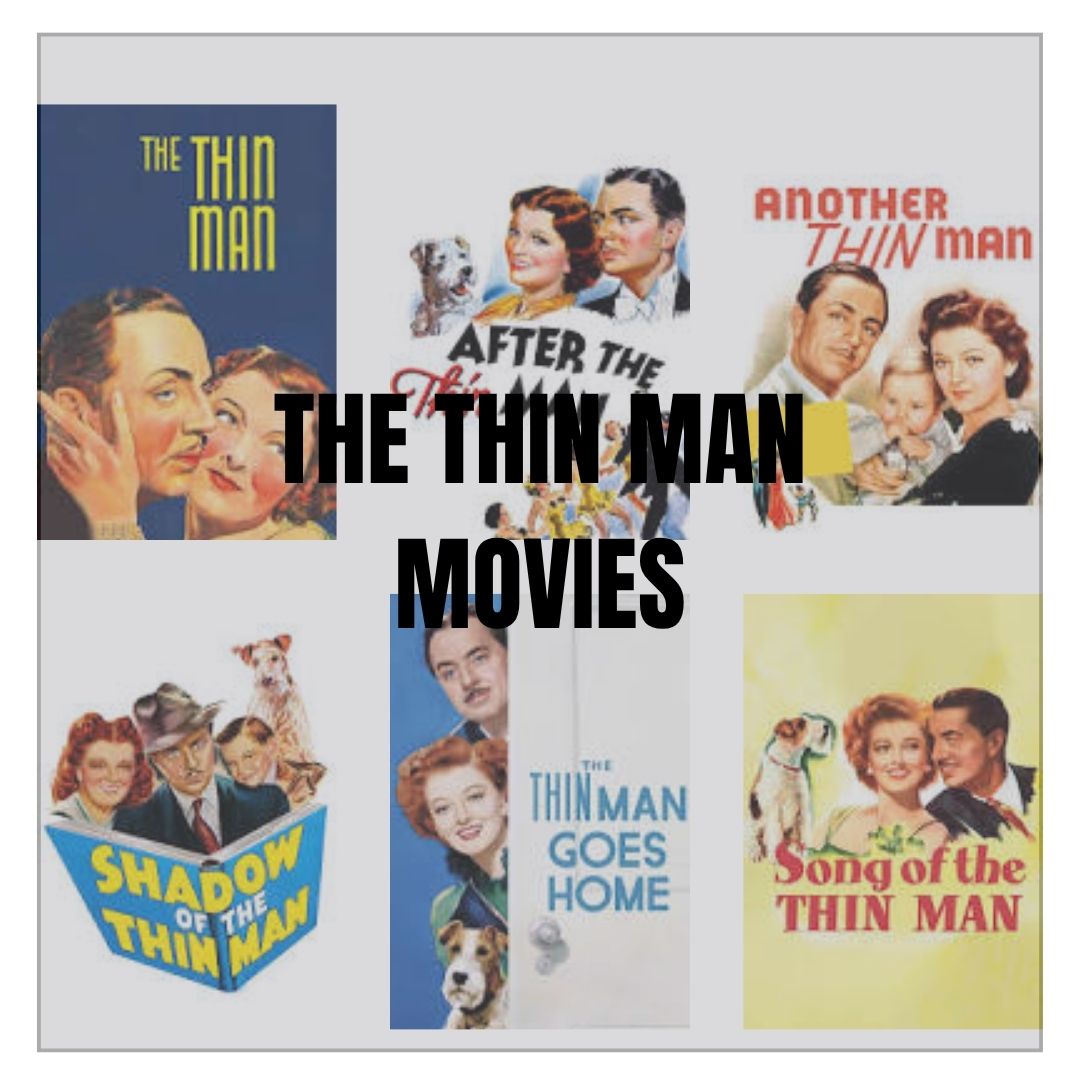
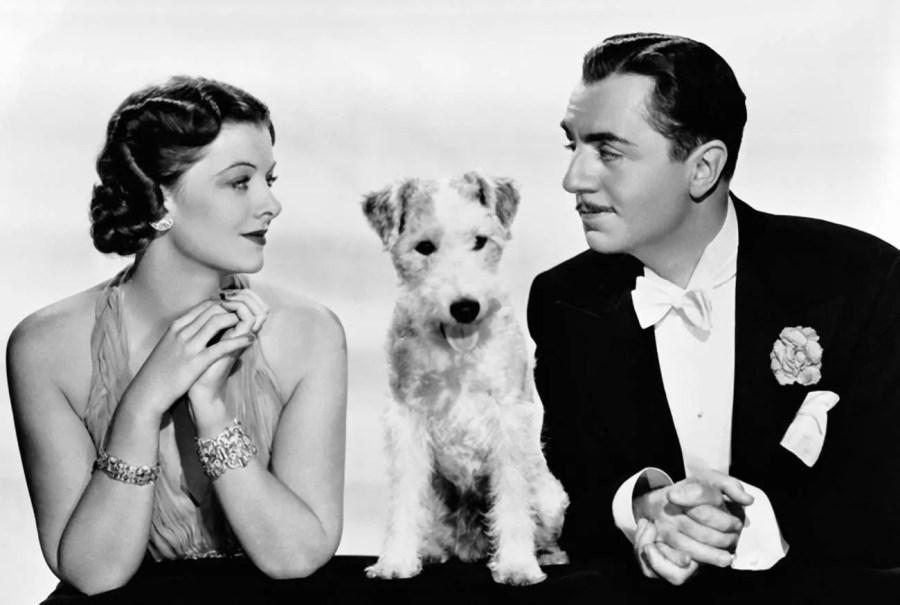
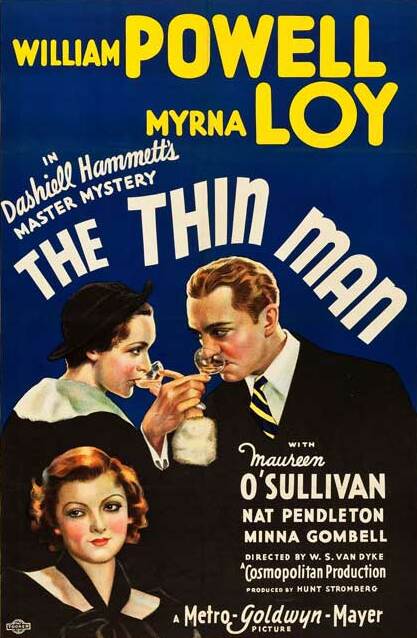
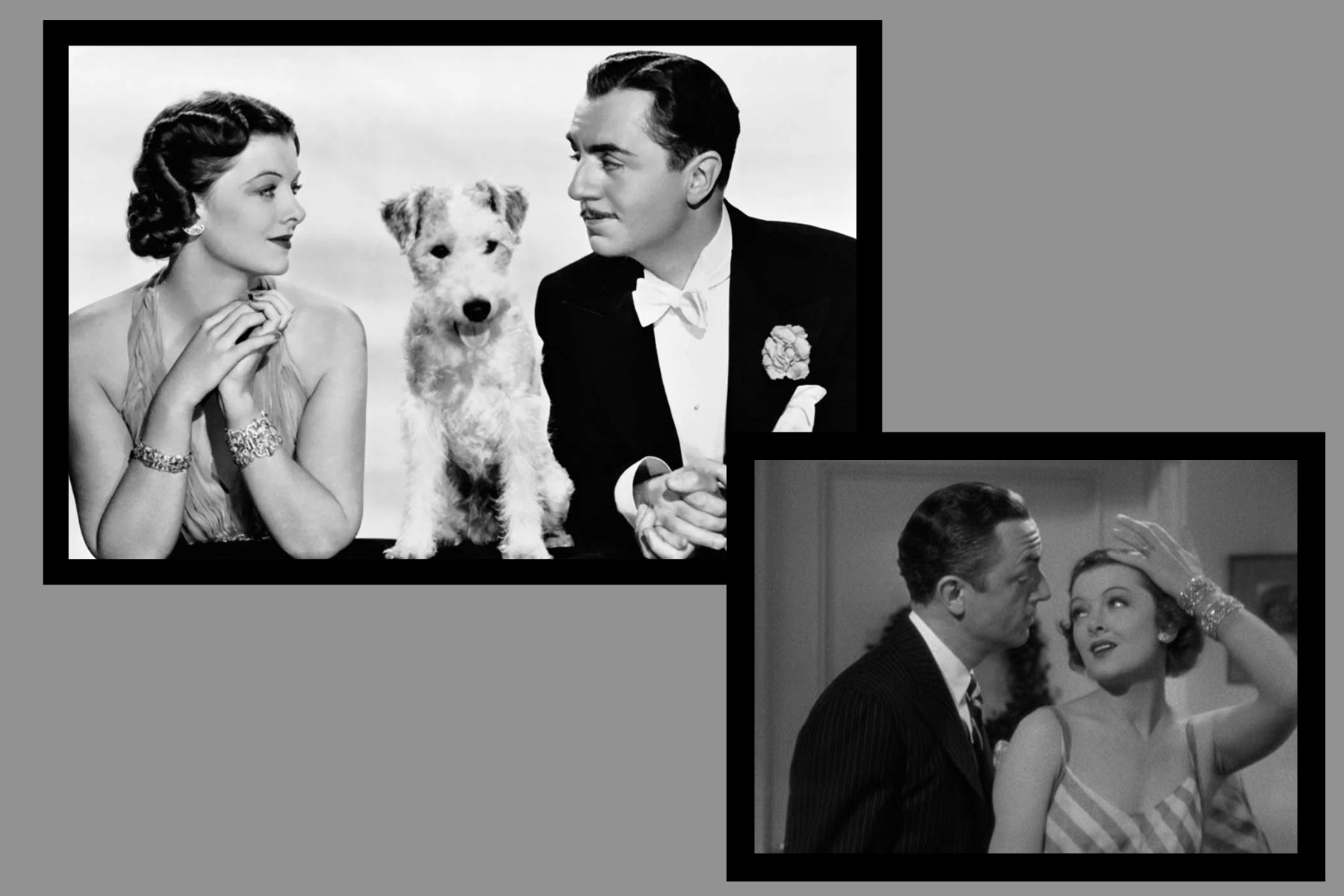
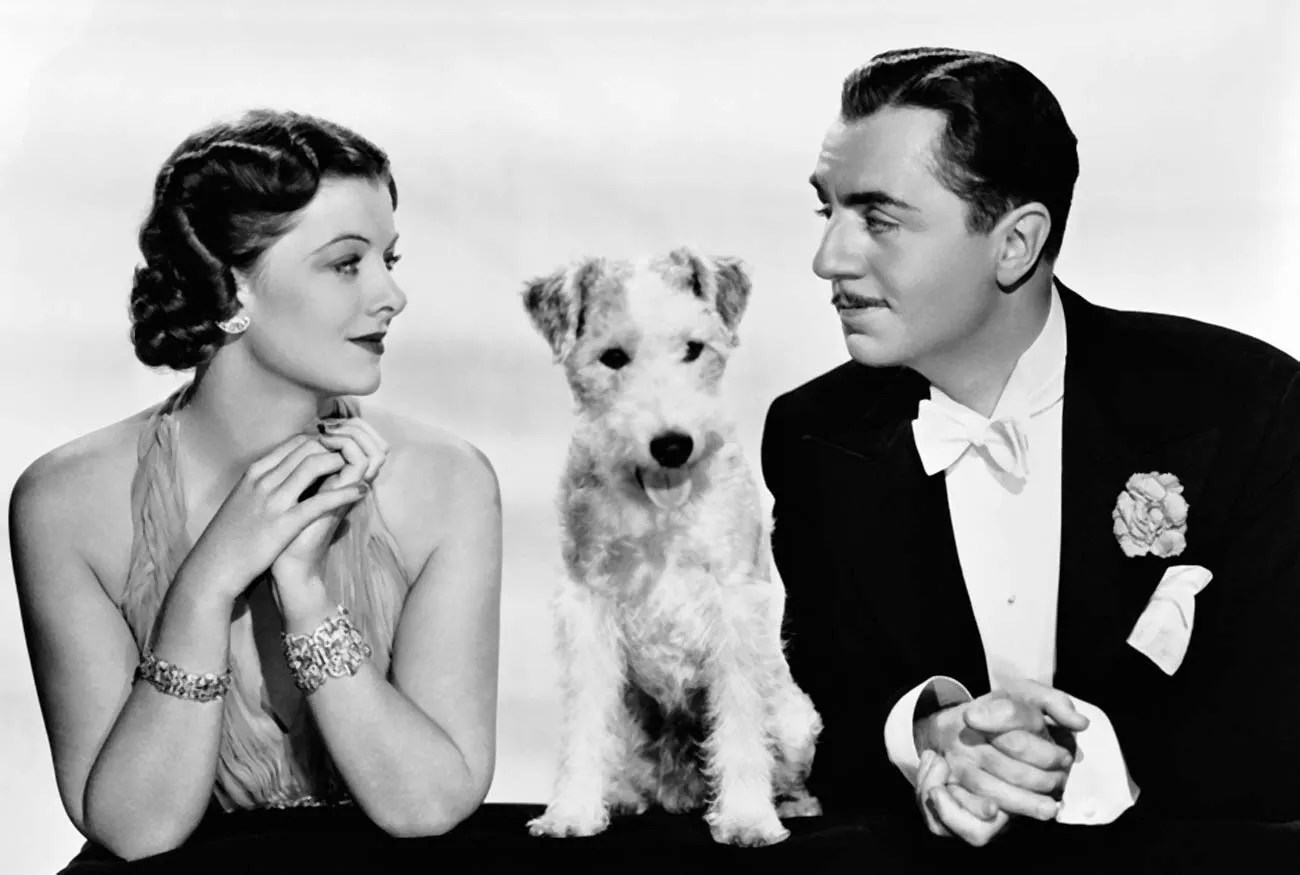
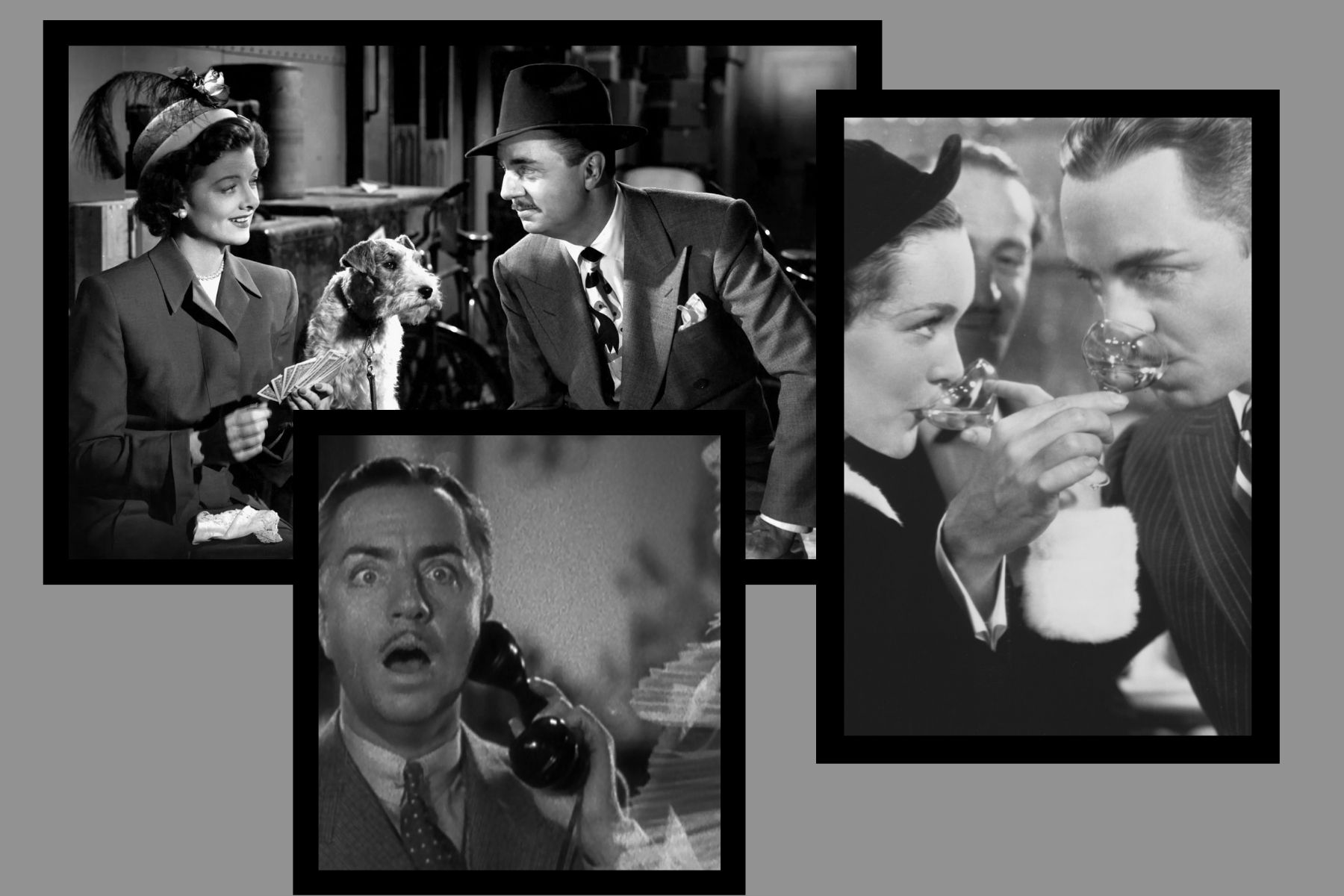
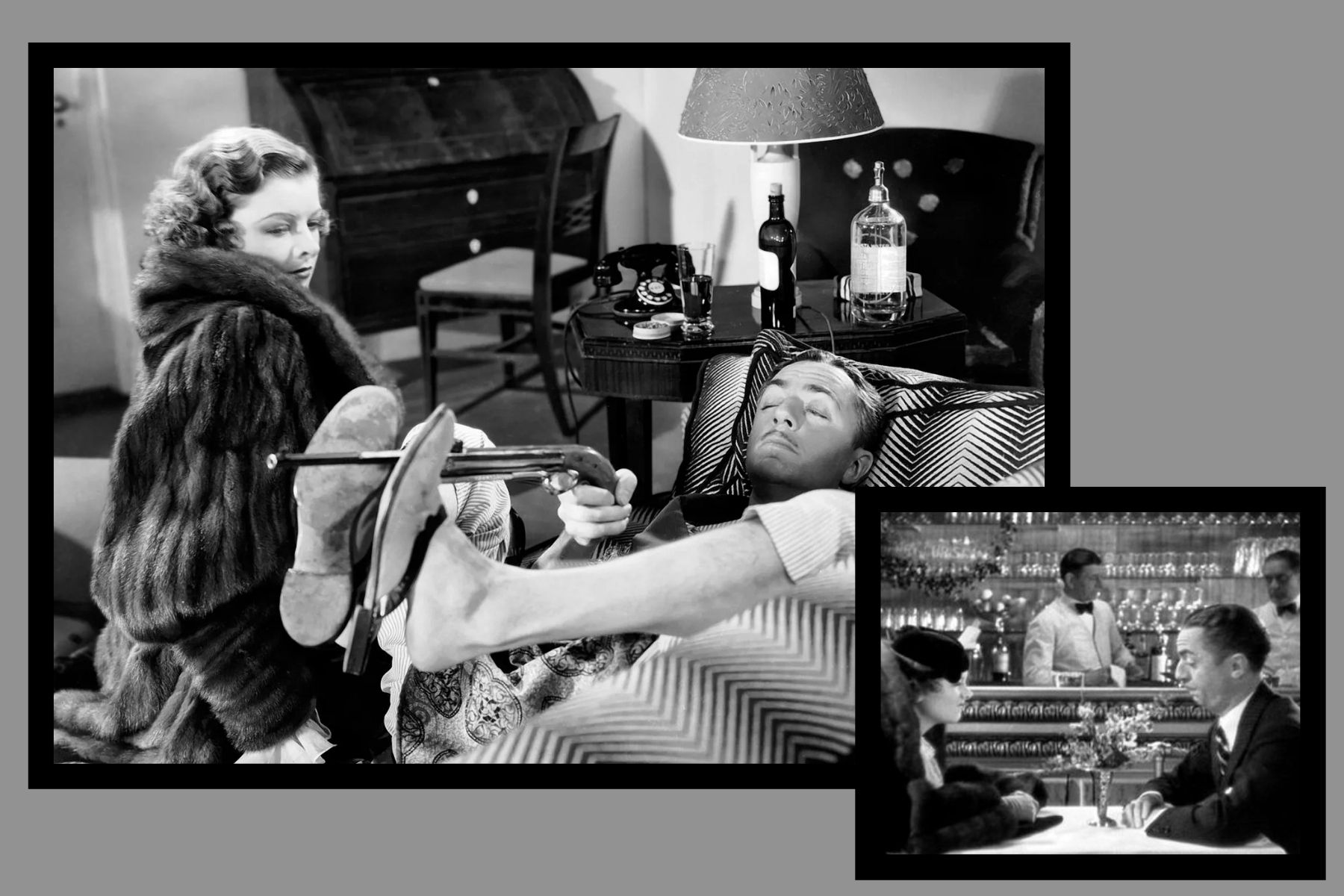
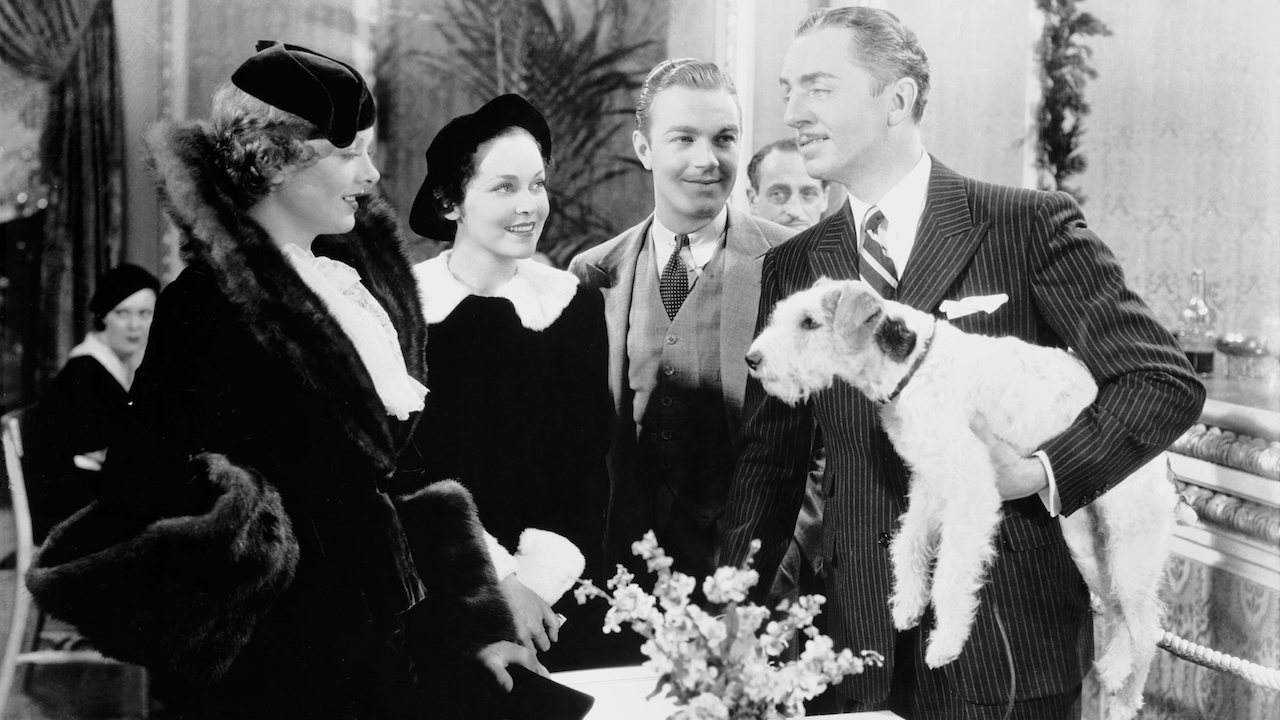
I’ve been watching and writing about what are known as The Thin Man movies with William Powell and Myrna Loy.
I’ve already written about the first two movies, and you can find those recaps/reviews/thoughts here and here.
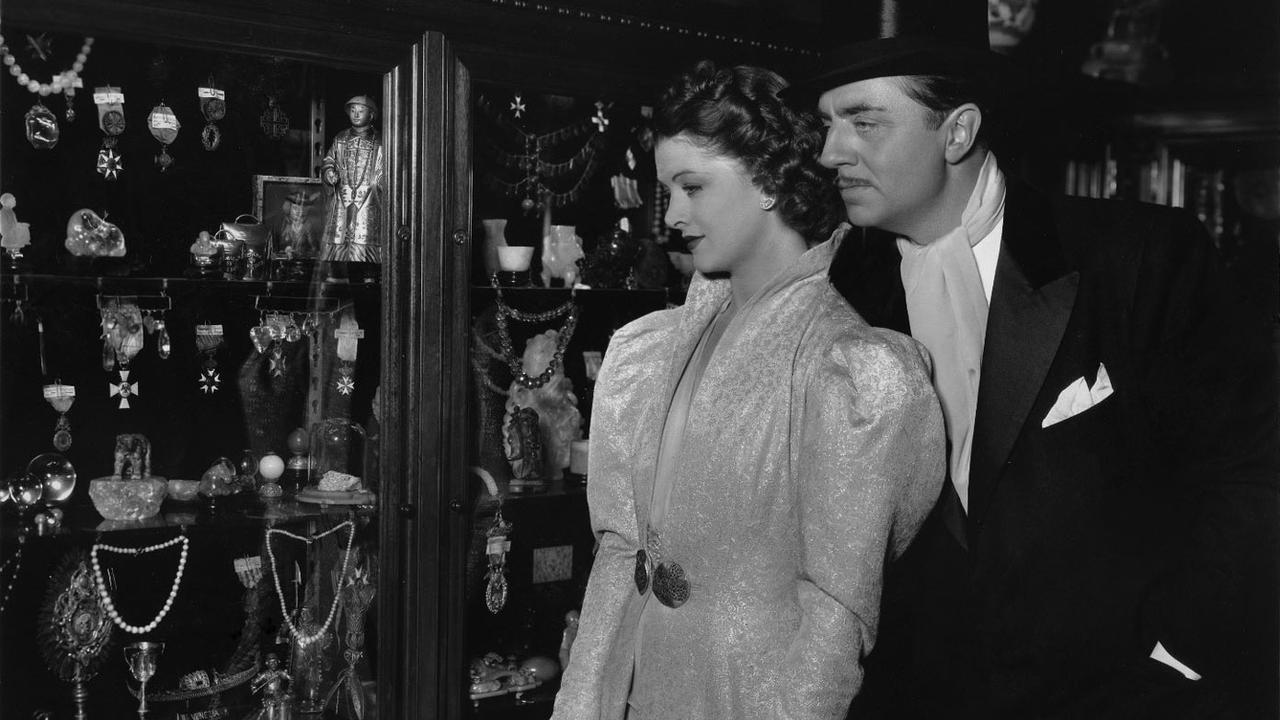
Today I am writing about the third movie in the series, Another Thin Man.
If you have not seen the first two movies, there is a spoiler in this one, just to warn you.
You’ve been warned. Are you ready?
You sure? Time to look away if you don’t want to know….
….
….
…..
Okay. You’ll have to know now if you haven’t already left.
In this movie, we have an addition to our mystery-solving team — Nick Jr.
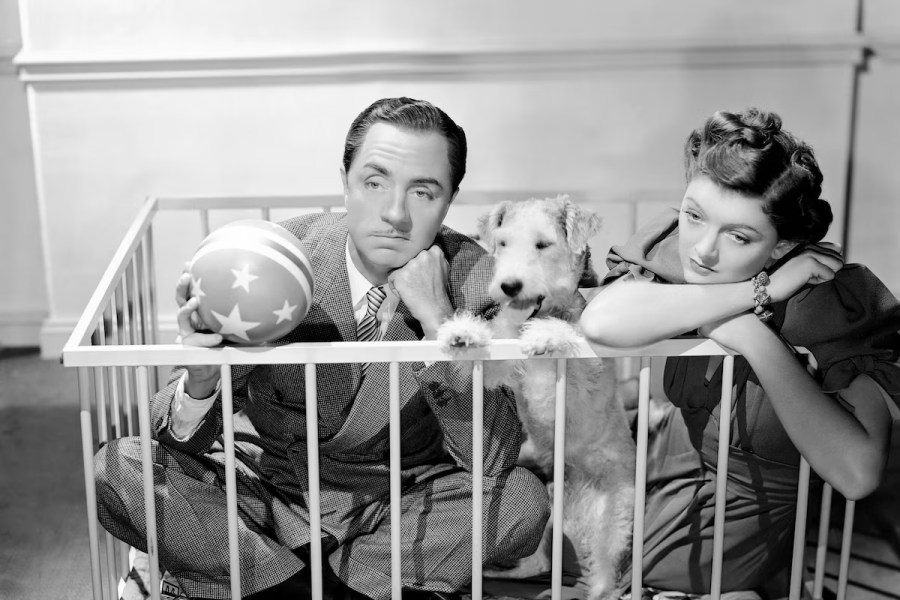
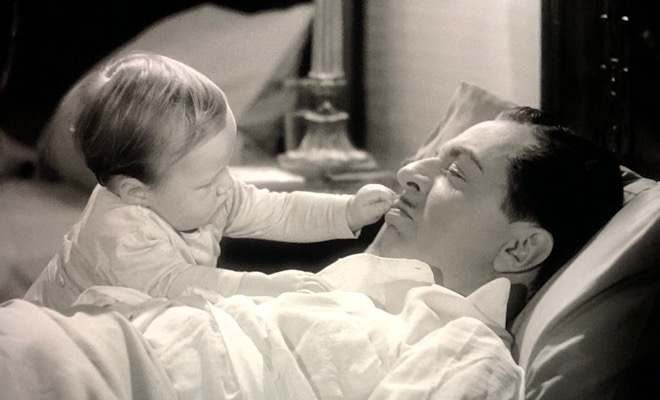
That’s right. Nick and Nora Charles have had a baby since the last movie and what a cute baby he is.
He isn’t a central part of the somewhat confusing plot of this movie, but he is an adorable addition. You would actually suspect there would be a baby in this one if you saw the end of the last movie when Nora was knitting baby booties.
Somewhat convoluted plots seem to be the norm for The Thin Man movies, but let’s be honest, we aren’t just here for the mystery — we are here for the Nick and Nora banter and one-liners.
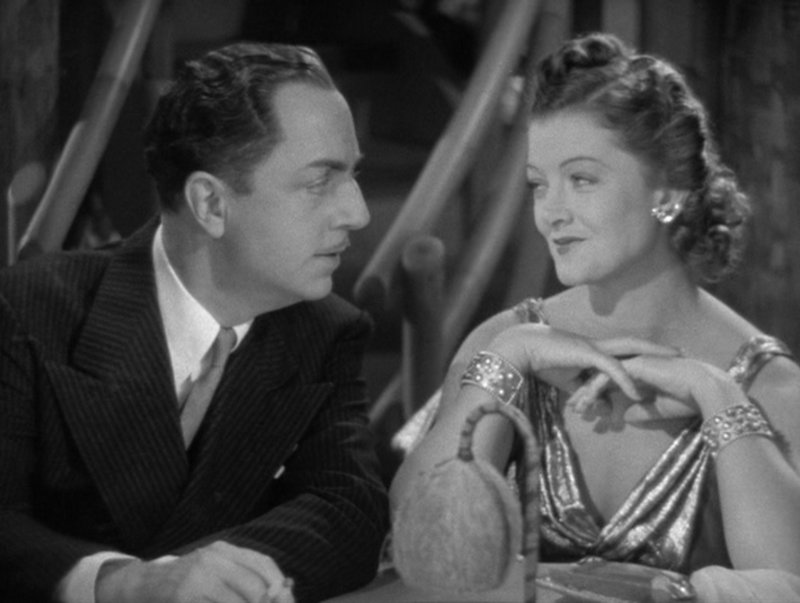
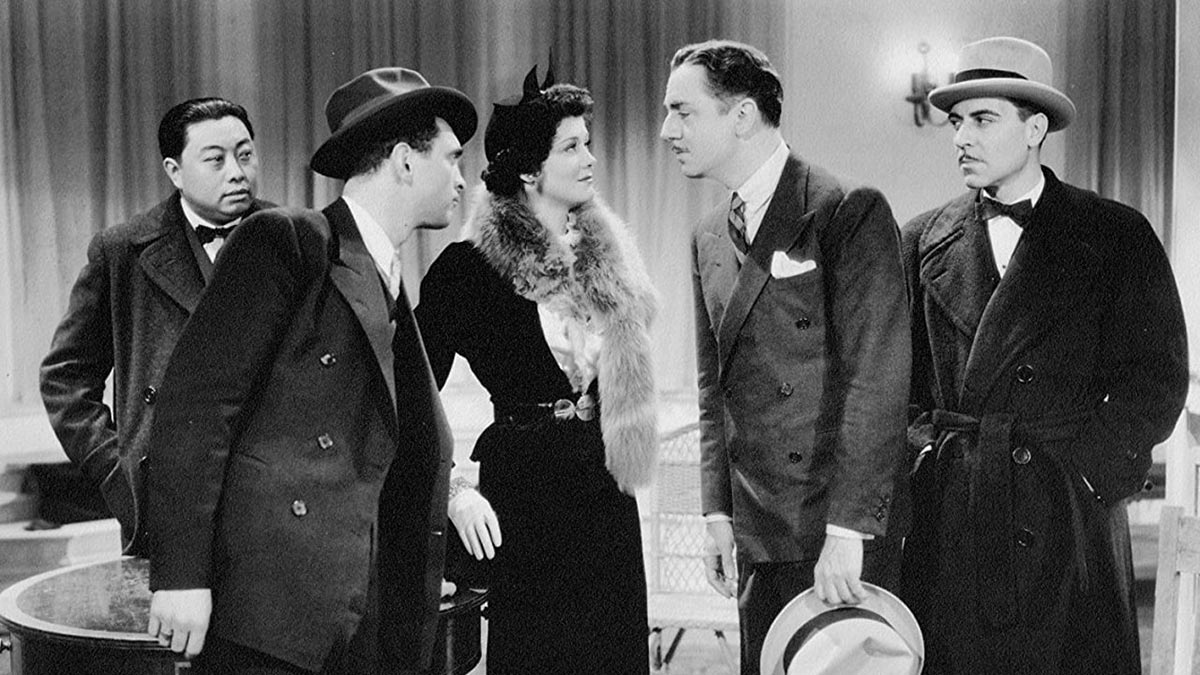
We are here for scenes like one where Nick finds Nora at a night club with men all around her, gently makes his way to her, and says, “Now, Mommy, you know you can’t be out until the doctor says it’s okay for you to leave quarantine.”
That clears the room fast, and the couple is left to compare notes with each other on their investigation.
Let’s go back a bit and give an overview of the movie.
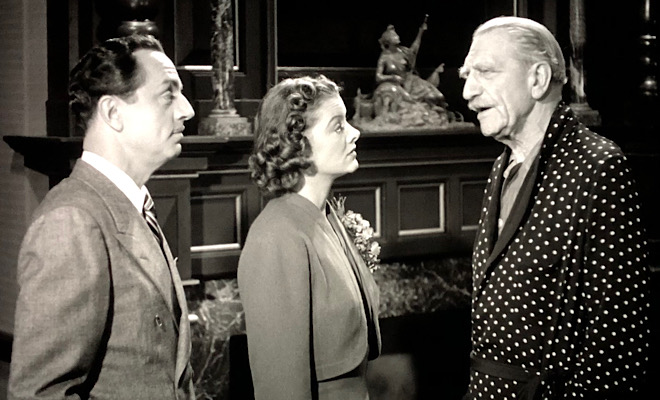
Nick (William Powell) and Nora (Myrna Loy) accept an invitation to visit a family friend who also helps with Nora’s money (she’s an heiress if you remember from the previous movies), Col. Burr MacFay (C. Aubrey Smith – who I have been seeing in a lot of old movies I’ve been watching lately). MacFay is convinced his neighbor, Phil Church, who he worked with before, and is a known criminal, is trying to kill him.
No one else in the family is sure about this but MacFay calls Nick and Nora in the middle of the night practically begging them to help him find out.
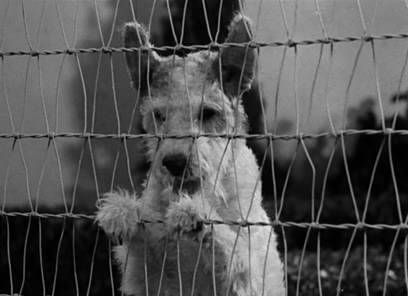
While they are there, the dog of MacFay’s daughter is murdered brutally (that was dark) and a knife is thrown at Nick when he tries to talk to Phil Church (Sheldon Leonard).
It was also quite odd that when they were driving in to the estate, Nick saw a stabbed, “dead” body along the road, but when he stopped to investigate the body was gone and the chauffer ran off into the woods.
Skipping ahead, without spoiling too much, I can tell you that MacFay is murdered and right afterward Church disappears.
This leaves Nick and Nora to help the police investigate if Church actually murdered him or if someone else did.
Everyone else involved with the first two movies returned for this one, even the creator of Nick and Nora, noir crime writer Dashiell Hammet, who helped with the screenplay again this time, but was kicked off the last movie for drinking too much.
The two married, Oscar-winning writers who tried to kill the series by writing a baby in — Albert Hackett and Frances Goodrich — even came back, but this was their last movie in the series, which Myrna Loy said negatively affected the last three movies.
“Do you know I never saw them at Metro?” she wrote in her autobiography. “It’s terrible, really, but unless they sent for the writers to get us out of a hole, we seldom saw them on the set….I didn’t meet the Hacketts until I moved to New York in the fifties. We became friends, I’m happy to say, and Albert facetiously explained one day why they didn’t write the last three Thin Man pictures: ‘Finally I just threw up on my typewriter. I couldn’t do it again; I couldn’t write another one.’ Perhaps we all should have concurred; those last three never really touched the previous ones.”
Director Woody VanDyke returned as well.
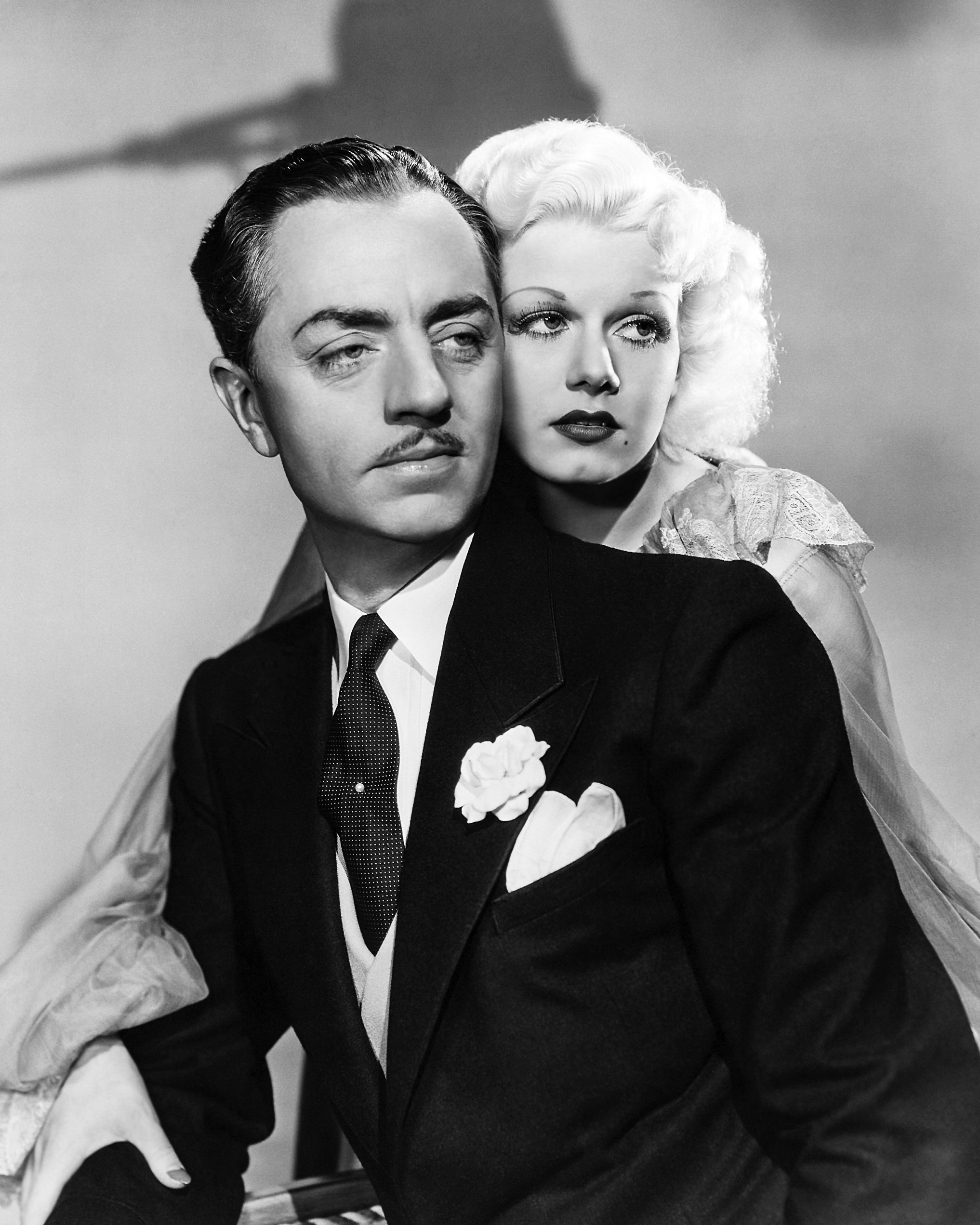
The movie almost wasn’t made, however, due to a health scare with its leading man, William Powell, as well as the sudden, unexpected death of his fiancé, Jean Harlow, right before filming.
William Powell and Jean Harlow
Powell was treated for cancer in 1938. Jean passed away in 1937. It was a more tired and depressed Powell who returned for the movie, even though his cancer treatments were successful. According to TCM.com, the cast and crew did their best to lift his spirits.
“Powell was given a standing ovation by the cast and crew on his first day on the set of Another Thin Man,” an article by Lang Thompson shares. “According to author Charles Francisco in the biography, Gentleman: The William Powell Story, “Powell, looking remarkably fit and tanned, seemed embarrassed by the attention. He held up his hands and the familiar grin began to play at the corners of his mouth as he tried to think of something funny to say. The applause stopped, and Bill found that he couldn’t speak. Myrna Loy rushed over to him and gave him a kiss and a big hug.”
To help with Powell’s recovery, VanDyke, usually known as a no-nonsense guy, cut shooting hours down to six hours a day and let Powell rest whenever he needed.
Powell’s illness kept him from being able to take the role of Maxim de Winter in Hitchock’s Rebecca. The role went to Laurence Olivier instead. Personally, I believe Olivier was a better fit.
Another Thin Man ended up being one of the highest-grossing films of 1939.
Up next in our series will be Shadow of the Thin Man from 1941. We will see if Myrna was right about the last three not being as good as the first three, with Hackett and Goodrich not on board.
You can read my impressions of the other movies I have watched here.
If you enjoy the kind of content on my blog and all that goes into it, you can support my writing for $2.99 a month or a single donation. Learn more here: https://lisahoweler.com/support-my-writing/
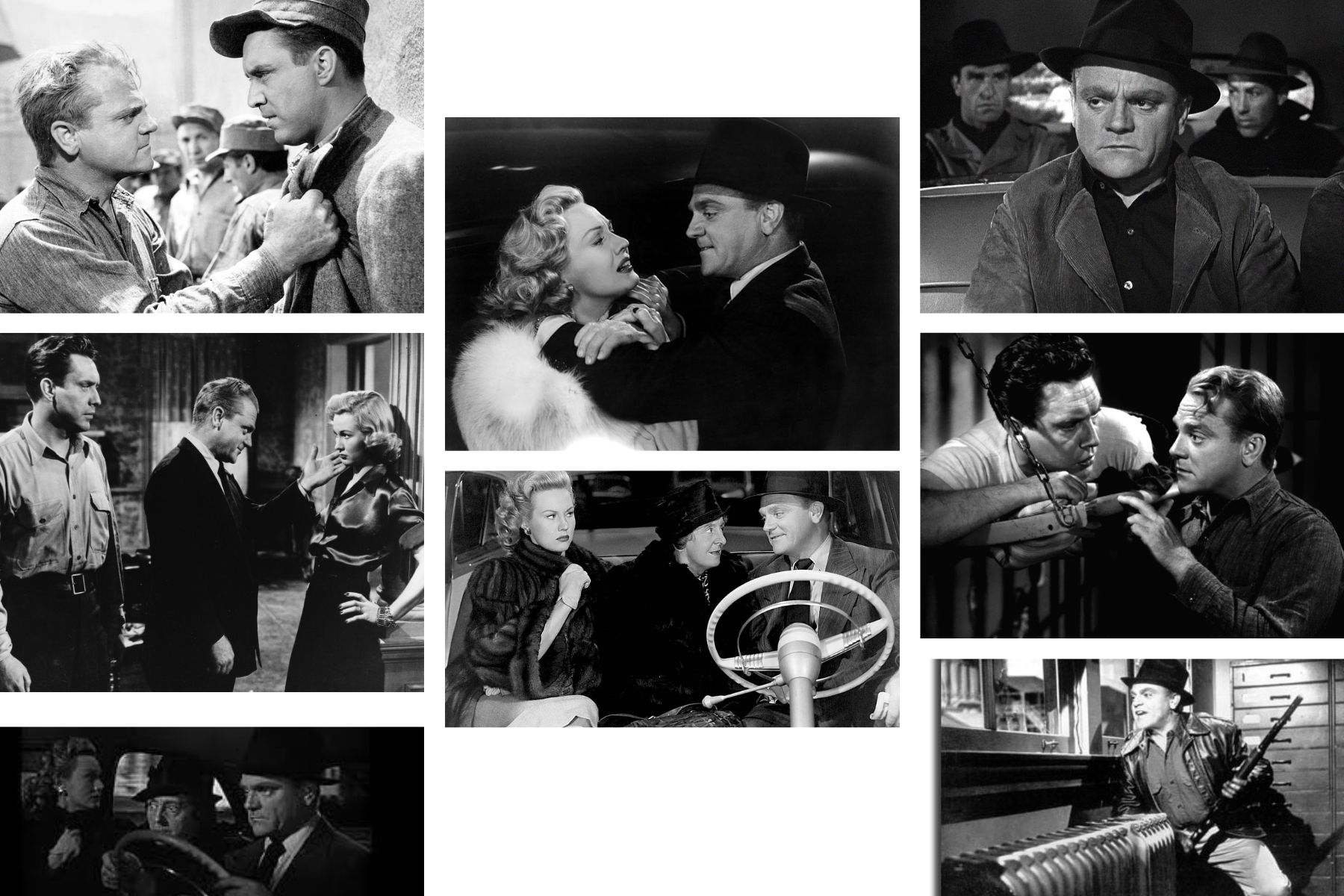
James Cagney was only 5 foot 5 inches tall, but he commanded the attention and wielded the presence of a giant. When he walks on screen in a movie everyone focuses on him. He has that confident swagger, that “don’t mess me with me” attitude you can’t look away from.
Every movie I’ve watched this winter for my Winter of Cagney marathon/feature (whatever you want to call it) has only solidified for me what a brilliant actor Cagney was. Were there times that Cagney was Cagney no matter the role? Yeah. Sure. Happens with any actor.
But did that subtle smirk and those heavy-lidded eyes often bring a smile to my face because I knew some sharp or smart-mouth comment was about to come out and I didn’t care if he does it every movie? Absolutely.
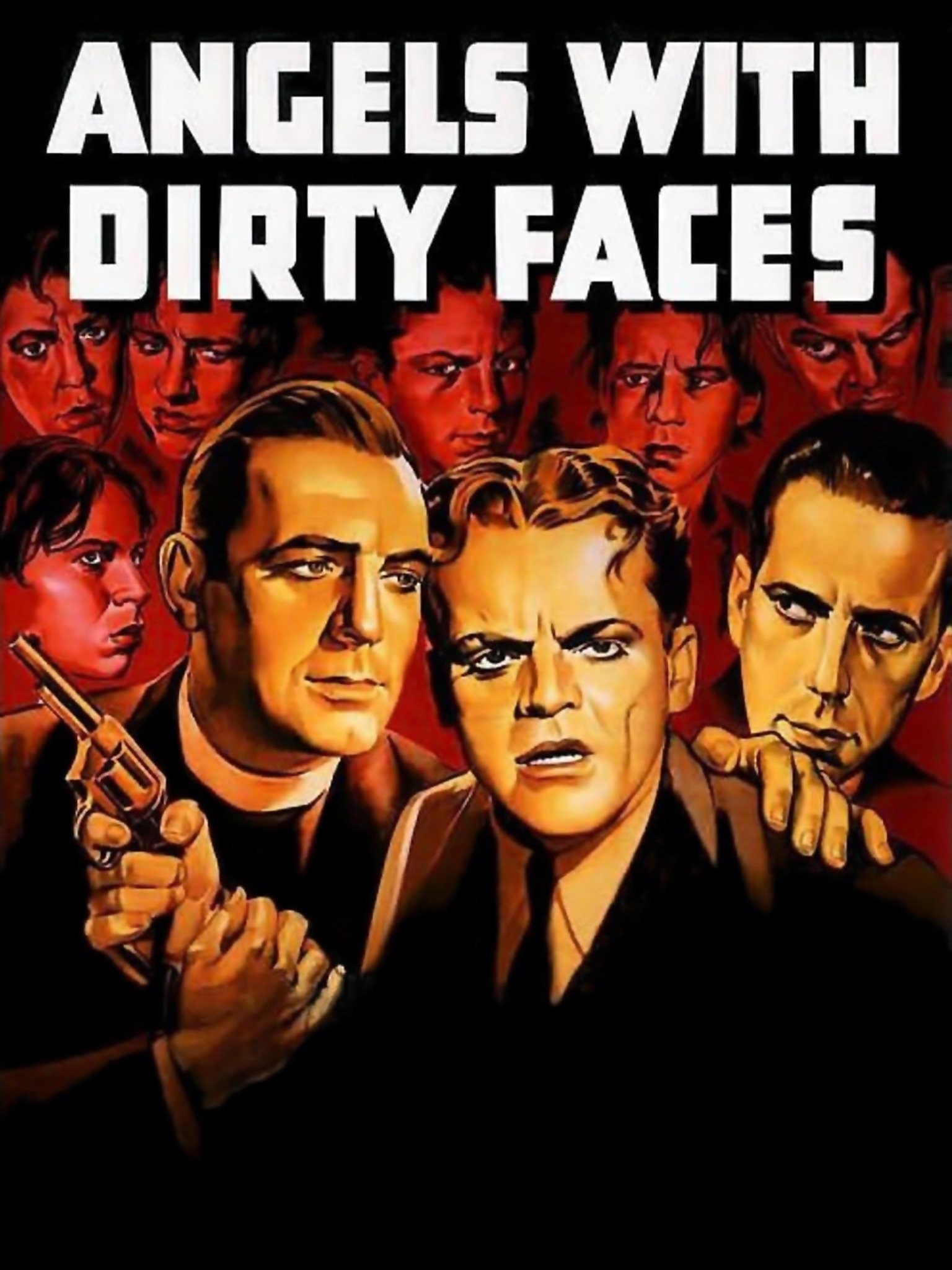
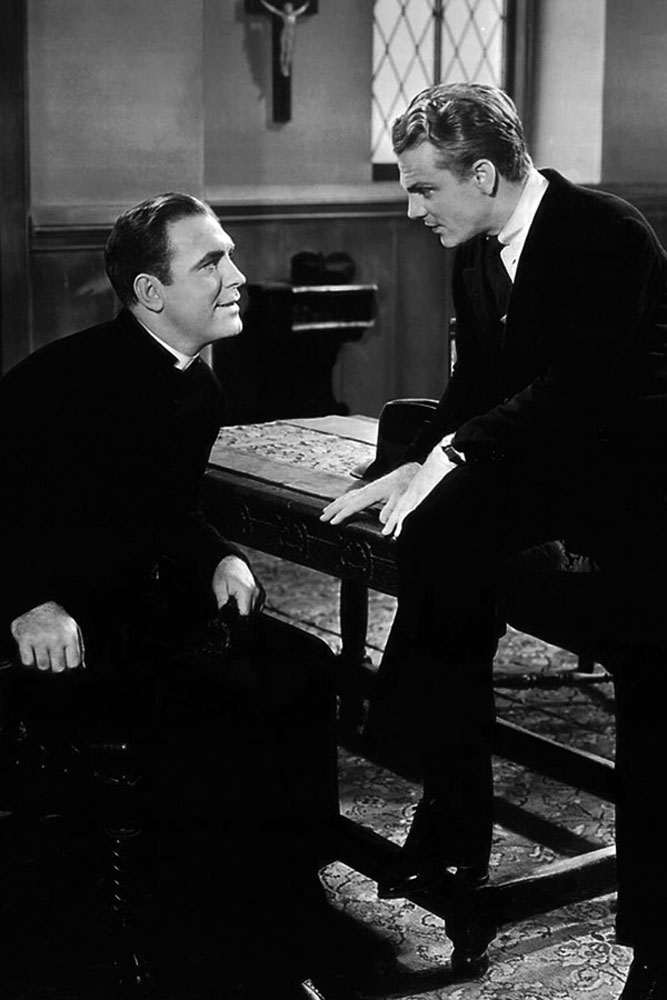
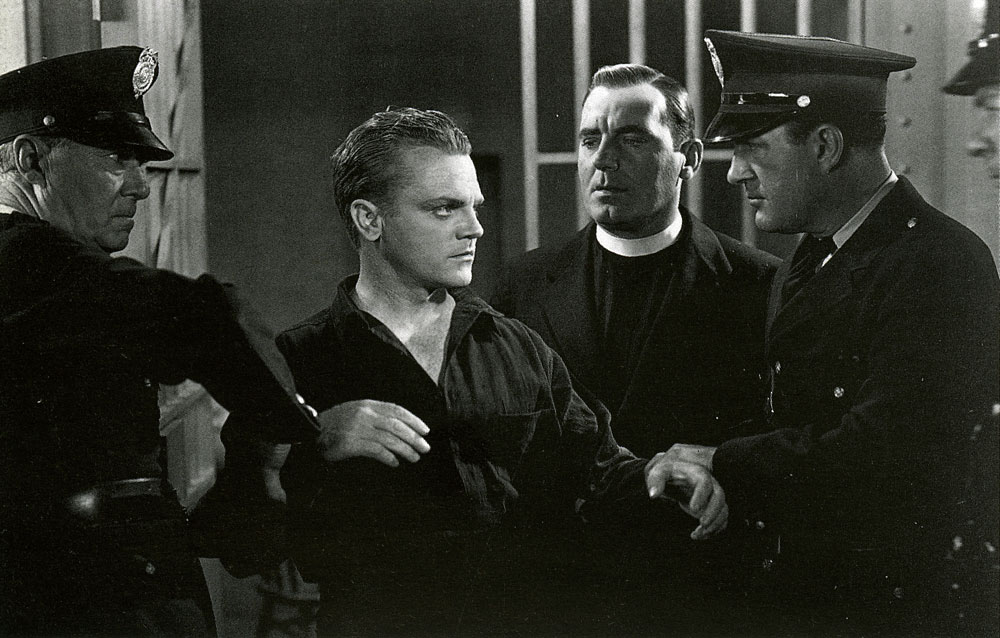
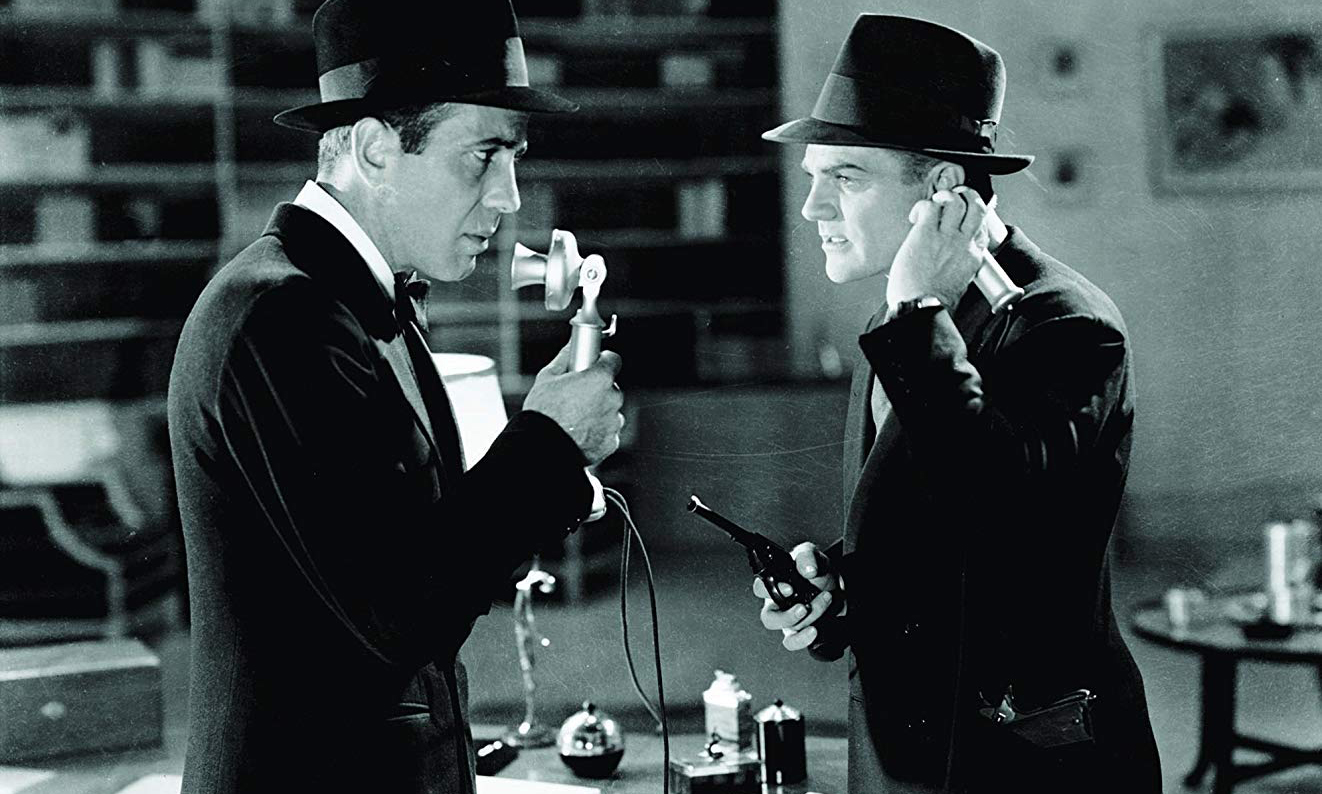
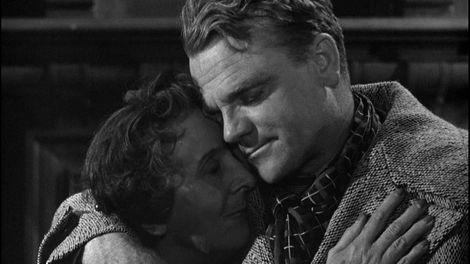
I had to wait two months to watch Angels With Dirty Faces with him, Pat O’Brien and novice at the time, Humphrey Bogart, and had to buy it on DVD but it was worth it. The movie wasn’t what I expected and part of me wanted it to end differently but ultimately, it was a movie about loyalty and friendship between two childhood friends and how even when you think a person can’t change or do the right thing they will for those they love.
That’s why the ending had to be what it was.
It was hard, but it was necessary.
Enough about the ending for now, though, let’s talk a bit about the beginning of the movie and what it is all about overall.
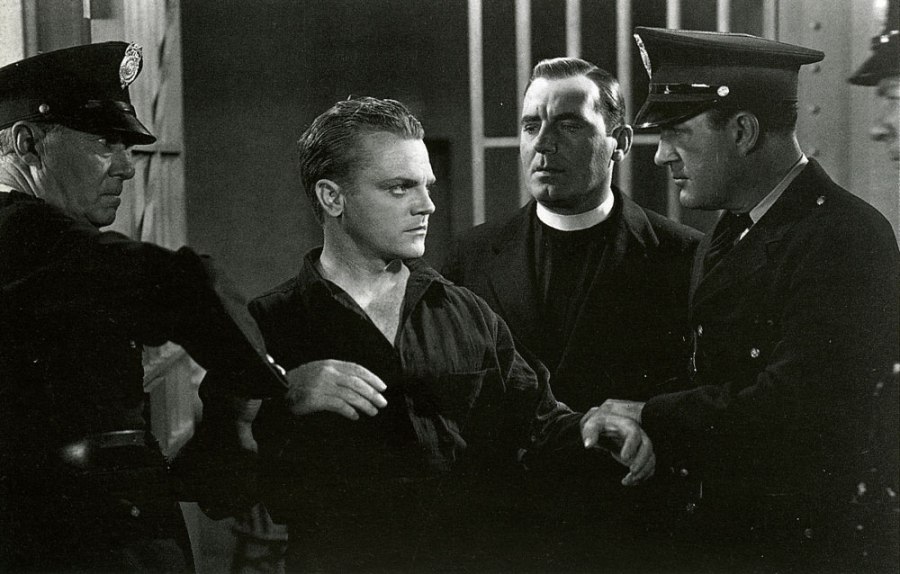
Rocky Sullivan and his best friend Jerry Connelly have gotten into crime at a young age. They try to rob a railroad car and are caught. Rocky ends up getting caught and sent to reform school while Jerry escapes.
This sends the two down different paths, and 15 years later, Rocky is a hardened criminal who just got out of jail for armed robbery, and Jerry has become a priest.
Rocky comes back to the old neighborhood, but not for good reasons. He’s back for the $100,000 his crooked lawyer, Jim Frazier (Bogart), said he’d hold for him until he got out of jail, as long as he took the full blame for the robbery. Frazier helped set up the robbery and is in control of a lot of the crime world, keeps a lot of criminals out of jail, and also blackmails city officials and law enforcement.
Jerry is thrilled to see Rocky, but has no idea how deep he’s still into the crime world.
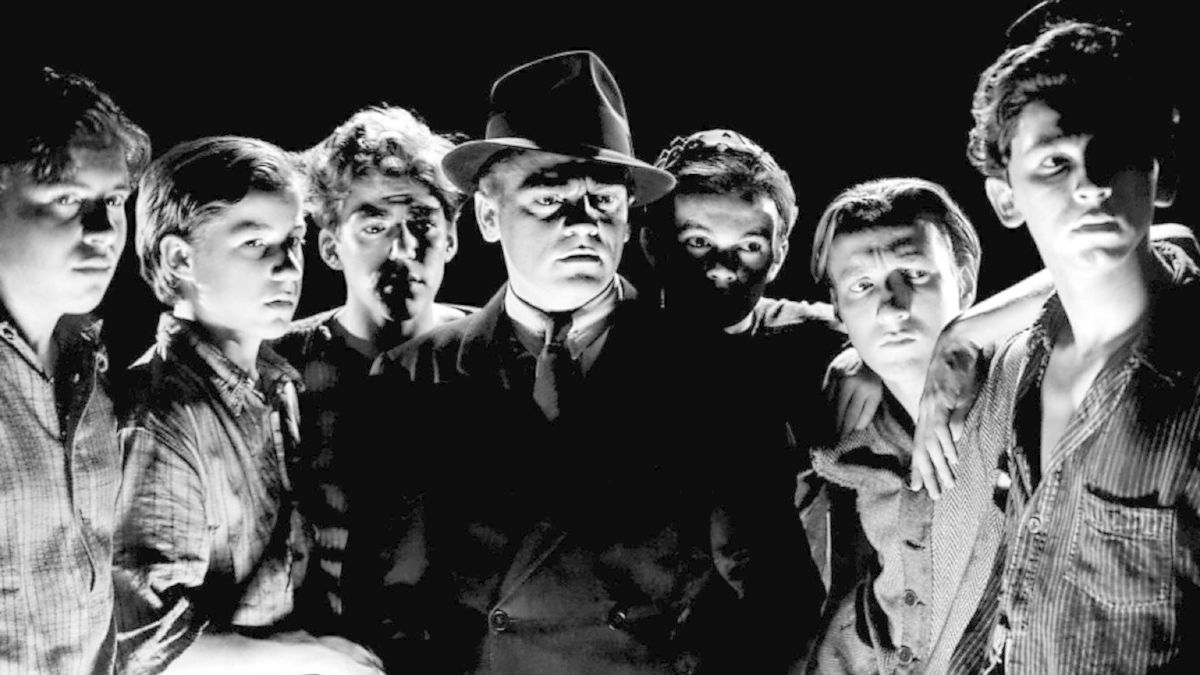
He encourages him to turn his life around and even lets Rocky get involved with mentoring a group of boys known as The Dead End gang.
Here is something interesting my husband read about the “gang.” They were actually an acting troupe who didn’t only appear in this movie, but started on Broadway in a play called Dead End in 1935. From there, producer Samuel Goldwyn brought them to Hollywood to turn the play into a film and then their popularity grew until they were making movies under various names, including the Little Tough Guys, the East Side Kids, and the Bowery Boys, until 1958.
Unfortunately, Jerry learns the hard way that Rocky has not turned his life around and begins a campaign to expose Frazier, Rocky, and everyone who is corrupt in the city.
What will result is two old friends both wanting to save each other from deadly fates.
This aspect of the film is what makes this movie more than your average gangster film. It becomes a psychological study on what two good friends will do for each other.
The film might not have become this if it weren’t for the Hays Code, which was a code set in place in …. By the film industry that required movies to not allow a variety of things to be seen, including glorification of criminals, violence, or sex.
No movie was to make the audience sympathetic to a criminal under the code.
That’s why this movie ended the way that it did and because I wasn’t sure if some of you would want to watch this film, I wasn’t going to show how it ended, but I feel like I have to talk with someone about this ending so this is your WARNING! that I am going to discuss the ending.
Skip this section if you don’t want to know what happens!
Are you ready?
Okay….
Here goes…
Rocky honestly might have been able to go straight or only serve a little time for one of his crimes after he got out of jail but when he overhears Frazier and another criminal say they are going to gun Jerry down to stop him from trying to expose them, Rocky takes matters into his own hands.
He guns them both down, runs off, and is cornered by the police in a warehouse.
Long story short, Jerry convinces him to come out, and Rocky goes to jail for murder.
He doesn’t receive a pardon from the governor, so he has to go to the electric chair. Jerry sees that the boys from The Dead End gang see Rocky as a hero, and he knows that the media is going to be there for the execution (what a different time) so he asks Rocky not to be strong at the end. He asks him to, instead, going yellow — act like a coward. He wants Rocky to look weak at the end so the boys say, “Aw man. That guy was a loser. Being tough didn’t get him anywhere. He died a criminal and a coward. I don’t want to be that way.”
Rocky refuses. He isn’t going out that way and he tells Jerry that.
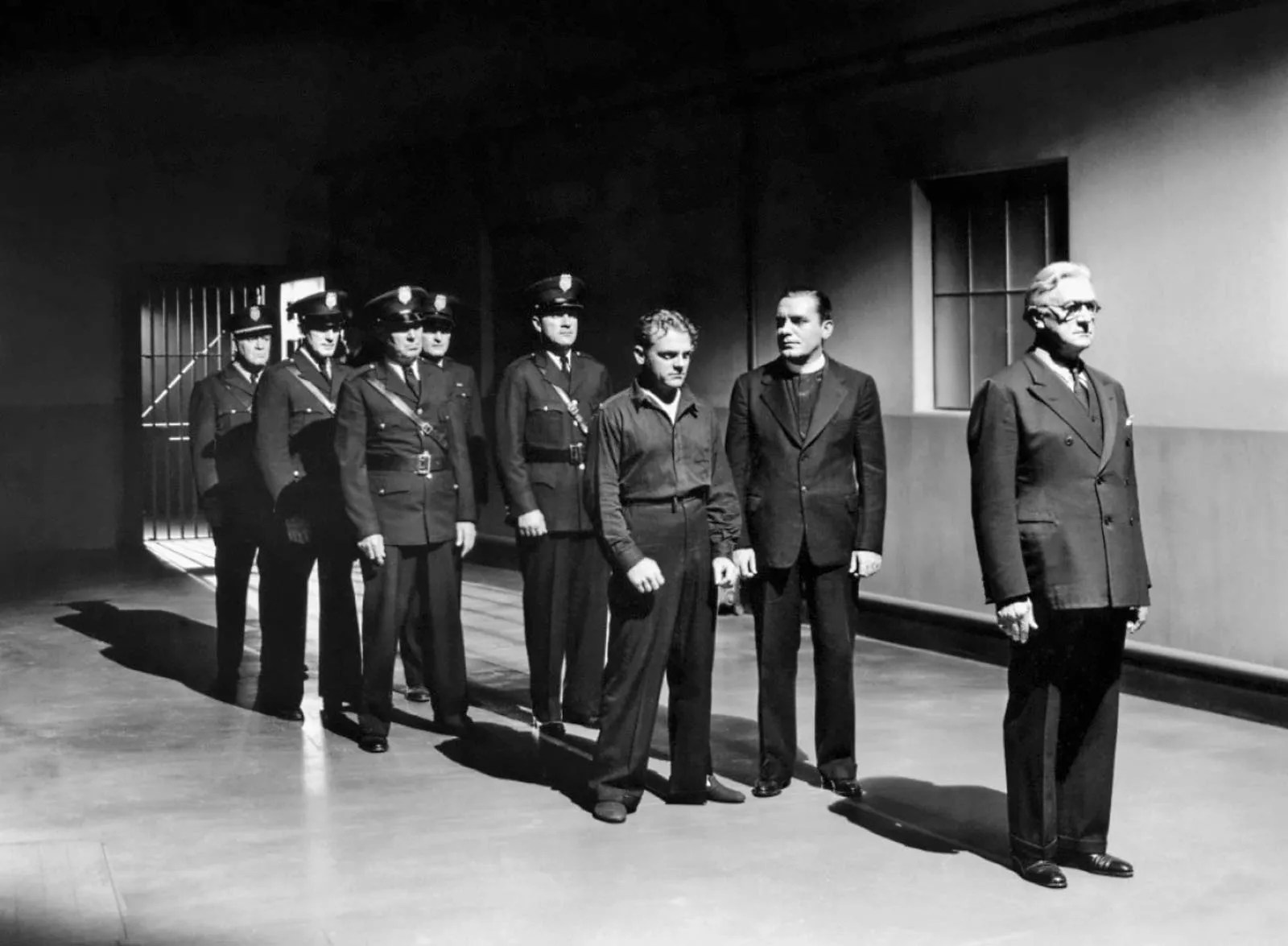
There is this long walk down a dimly lit hallway (the cinematography is just great here by the way) and we viewers are wondering the whole time what choice Rocky is going to make. As he walks into the room with the electric chair he breaks the fourth wall a bit by staring us down.
Then in the end, right before he’s tied into the chair, he cracks. He begs for mercy, says he doesn’t want to die. All we see his shadow on the wall and Jerry’s face, tears in his eyes. He isn’t praying out loud. Rocky didn’t want him to.
“If you’re going to pray, do it silently, okay?”
I actually teared up at the end and again when I was telling my son about the ending because the Hays Code may have forced an ending where Cagney’s character couldn’t look like a good guy but ultimately he still looked good.
It forced an ending where we saw Cagney’s sacrificial love for his friend. He gave up looking like a tough guy with his dying breath because he knew looking like a coward would make his friend happy, make him feel like he was helping those young men.
I do, however, wonder how the movie would have ended if it hadn’t been for the Hays Code. Would Cagney have done the same thing or would he have essentially flipped his friend off (without the actual gesture) and died the way he wanted to? I’m not sure… I think either ending would have made the movie intriguing and thought provoking.
I really like the thoughts of Joseph D’Onfrio in his article for TCM on this:
“Whether the Hays Office was satisfied with the results of Angels with Dirty Faces now means very little. The fact is that audiences have debated the final climactic scenes of the movie for generations. In those scenes, Pat O’Brien, the former child-thief turned priest, asks his old pal Cagney to perform an act of cowardice so The Dead End Kids would not follow in his footsteps. The ending seems to indicate that Cagney finally sees the light and redeems himself by playing role model to the nth degree. Or does he? Are the actions of Cagney only a feeble attempt at mock-redemption? Are the pronouncements given by Pat O’Brien at the picture’s end merely pious bromides? Cagney said he wanted to leave it up to the audience to judge if Rocky Sullivan does what he does at the end to help the Kids or whether he does it simply out of fear and despair.”
Cagney was highly praised for his performance in this film and won his first Oscar for his portrayal of Rocky, which, he wrote in his autobiography Cagney on Cagney, was actually him imitating someone he’d seen on the streets of New York City when he was growing up.
“Rocky Sullivan, was in part modeled on a fella I used to see when I was a kid,” Cagney wrote. “He was a hophead and a pimp…He worked out of a Hungarian rathskeller on First Avenue between Seventy-seventh and Seventy-eighth Streets…All day he would stand on that corner, hitch up his trousers, twist his neck and move his necktie, lift his shoulders, snap his fingers, then bring his hands together in a soft smack. His invariable greeting was “Whadda ya hear? Whadda ya say?” The capacity for observation is something every actor must have to some degree, so I recalled this fella and his mannerisms, and gave them to Rocky Sullivan just to bring some modicum of difference to this roughneck. I did that gesturing maybe six times in the picture – that was over thirty years ago – and the impressionists are still doing me doing him.”
Like other movies Cagney was in, there was some shooting going on and like movies back then, real bullets were used in at least one scene. Cagney had learned his lesson after he was almost gunned down during the filming of The Public Enemy in 1931.
This time he told the director, Michael Curtiz, that he wouldn’t stand in front of a window as ordered and let a machine-gun expert fire away at him, which worked out well since a hail of live bullets shattered a window pane where Cagney’s head was supposed to be.
This would be Cagney and Bogart’s first, but not last time, working together. They appeared together in two more movies in 1939: The Roaring Twenties (1939) and The Oklahoma Kid (1939). In each of the three movies they portrayed rivals.
A little trivia:
Here is a funny tidbit pulled right from an article by D’Onfrio on TCM.com: “The genuine article, the Dead End Kids were hard nosed guys from the slums, who enjoyed being pranksters, and gave everyone a playful hard time while making Angels With Dirty Faces. Rumor had it that on a previous film with Bogart, the Kids poked fun of Bogie’s tough guy movie image and even tore the actor’s pants off in an off-the-set incident, which encouraged him to steer clear of the Kids thereafter. Only Cagney, with a similar background to the Kids, would stand up to them. One day the Dead End ringleader, Leo Gorcey, decided to play around and ad-lib a scene with Cagney. In his autobiography, the actor wrote, “I gave Leo Gorcey a stiff arm right above the nose – bang! His head went back, hitting the kid behind him, stunning them both momentarily. Then I said, “Now listen here, we’ve got some work to do, so let’s have none of this ******* nonsense….Understood?” “Yeah,” they said. One of the kids turned to Gorcey and said, “Who the hell you think you got there – Bogart?”
***
Pat O’Brien and James Cagney were good friends in real life and made several movies together, including a screwball comedy about Hollywood producers called Boy Meets Girl.
***
The original previews for the movie included a newsreel that featured the signing of the Munich Peace Pact and a speech by FDR about peace at the World Fair.
I often forget to share where I found a movie, but I will tell you that this time I could not find this movie streaming anywhere. I had to buy a Blu-Ray of it off of Amazon but it was worth it. There are extras on the Blu-Ray that I watched last night.
The original trailer and the cartoon that was shown at the beginning in theaters were on there, along with the trailer for Boy Meets Girl, the newsreel, a musical short, “Out Where The Stars Begin”, a looney toons feature called Porky & Daffy, commentary by Dana Polan, and the Lux Radio Theater Broadcast of the movie from 1939.
My husband said we should buy more Blu-Ray’s and DVDs so we can get the extras and I agree. We decided we will be buying one or a set once a month.
So this is the end of my Winter of Cagney. I didn’t get to watch Man of Many Faces since I couldn’t find it streaming but I hope to buy the Blu-Ray of it soon.
Up next I’ll be watching some Bette Davis movies but I won’t be starting them until April.
If you enjoy the kind of content on my blog and all that goes into it, you can support my writing for $2.99 a month or a single donation. Learn more here: https://lisahoweler.com/support-my-writing/
This Winter I’ve been watching James Cagney movies.
I’ve switched the movie I was going to write about last week with the one I was going to write this week because I was going to watch the DVD of Angels With Dirty Faces I picked up, but I’ve been waiting for a night to watch it with The Husband, and that hasn’t come.
In the end, I decided to wait to watch that movie with him because he would like to see it as well, and it will be fun to watch together.
Angels with Dirty Faces stars Cagney with Humphrey Bogart, and Bogie is one of my husband’s favorite actors.
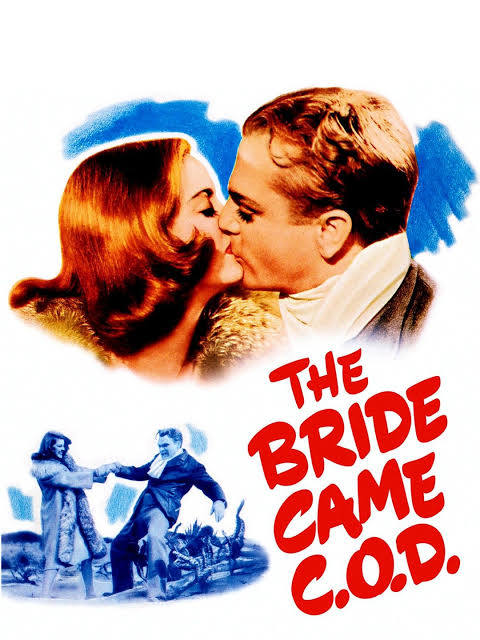
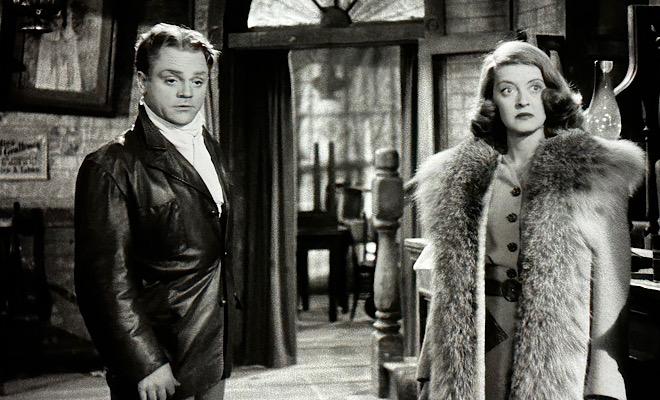
The Bride Came C.O.D. with Cagney and Bette Davis was a perfect substitute for this week, though.
It was a delightfully fun movie, and I needed it this week, so I’m glad I made the trade.
I will be watching this movie again with him soon, though, because it was just too much fun and should be watched with others.
This is a slapstick comedy where Cagney and Davis were both trying their acting talents at something a little different.
First, the premise: Davis is playing Joan Winfield, an heiress who makes impulsive decisions, and her latest impulsive decision is marrying Alan Brice (Jack Carson), a famous singer and band leader. The marriage announcement comes at just the right time for gossip and entertainment broadcaster named Hinkle who needs a big story.
He talks Brice into marrying Joan right away because it will make a great story for his broadcast.
The only issue is that Joan is on the phone with her father when Alan announces his engagement to Joan to the audience at the club and she is trying to work up the courage to tell her father she’s engaged.
Their call is cut short and she never tells him, but Hinkle arranges for her and Alan to go to a small airport to be flown by a private plane to Las Vegas where they can be married.
Steve Collins, a notorious womanizer who pretends he is married with children so he doesn’t get roped into marriage by women who like to date married men, owns the airport and the main plane. He’s never paid for the plane though and the finance company now wants it back. Steve’s handy man, Pee Wee (George Tobias) tells him that Hinkle has arranged for their plane to take a famous couple to Las Vegas and Steve wonders if they will even have a plane to take them in.
Collins tries to think of a way to get the money and has no ideas until Joan’s father, oil tycoon Lucius K. Winfield (Eugene Pallette) calls the airport to try to reach his daughter and Collins strikes up a plan with Winfield to make sure his daughter doesn’t make it to Las Vegas to marry Alan Brice.
If Collins pulls off the delay, meeting Winfield with his daughter in tow in Texas instead, Winfield will pay Collins the money he needs to pay off the plane and keep the airport in business.
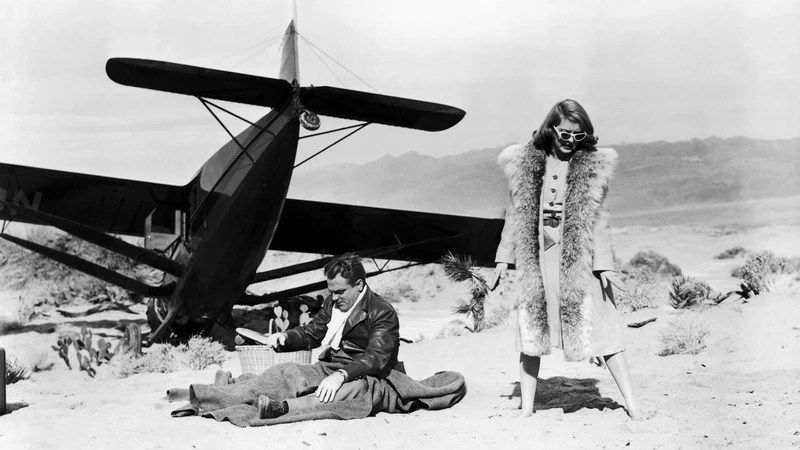
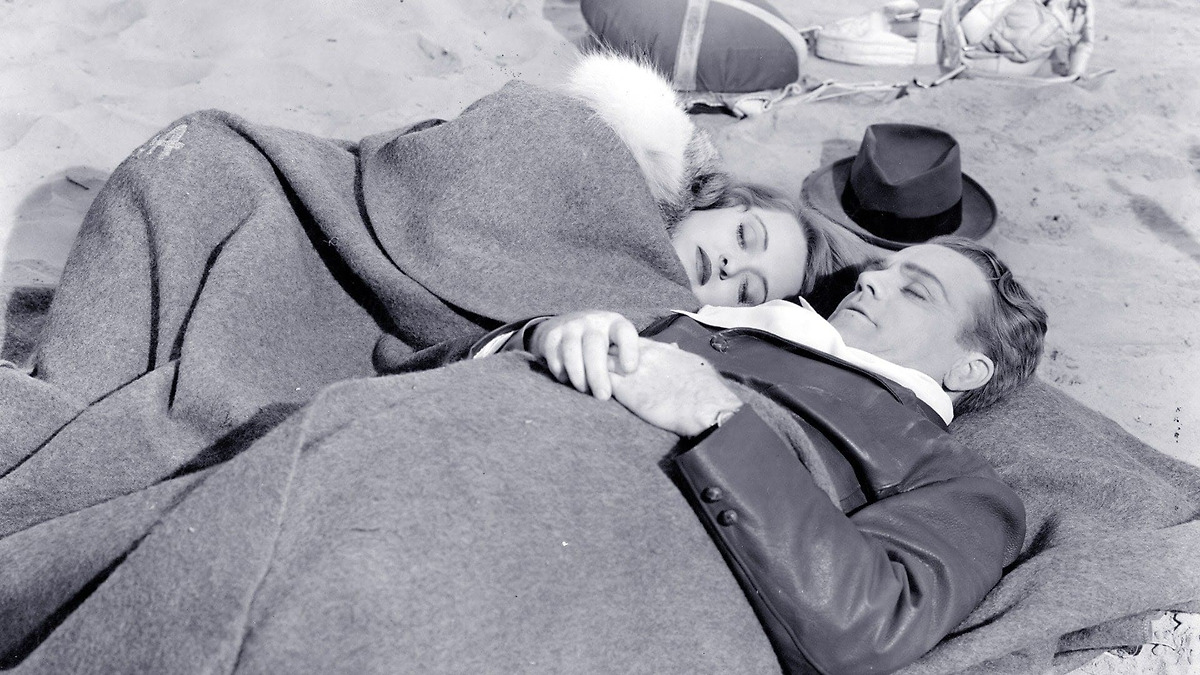
The first task at hand is to get rid of Hinkle and Alan which PeeWee helps Collins with. With them out of the way, Collins jumps in the plane and takes off with Joan, his plan to fly her to Texas. Unfortunately, Joan isn’t too happy with this arrangement and tries to escape, causing the plane to crash in the desert.
Here we will be introduced to Pop Tolliver (Harry Davenport), who I just loved.
I loved a lot about this movie.
It was very witty and fun, with some great lines.
Bette Davis was supposed to be 23 in the film which I found a little unbelievable but then again, Bette always looked older to me than she was.
She was actually 33 when this movie was made.
According to Frank Miller from TCM (yes, my go-to-source), Cagney made the movie on the heels of Strawberry Blonde because he wanted to break out of gangster roles.
Ann Sheridan, Ginger Rogers, and Rosalind Russell were considered for Davis’s role but when she expressed interest in trying out, Hal Willis, the producer of the movie, went to bat for her.
“In addition, she was eager to re-team with Cagney, who like her had a history of battles with the Warner Bros. management,” Miller wrote. “They had not worked together since 1934, when they teamed for the minor comedy Jimmy the Gent. Some biographers have suggested that the studio was punishing her with the film because of her notorious temperament, while others have suggested she may have wanted to emulate Katharine Hepburn, who had been equally successful in serious and comic roles. Also possible is that she was drawn to the film’s obvious similarities to It Happened One Night (1934), another tale of a runaway heiress saved from a bad marriage by the love of a simple working guy.”
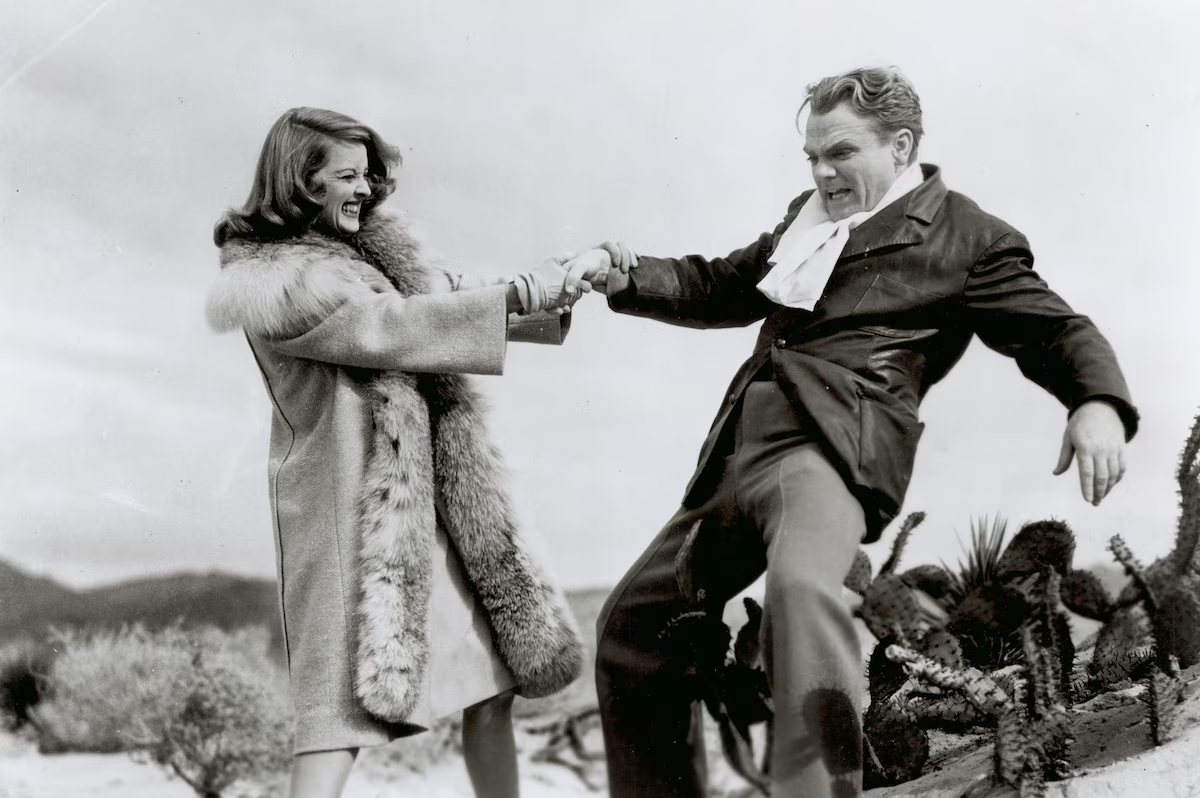
There was a lot of trouble with the movie, including the writing and the fact Cagney wasn’t a fan of the sweltering heat at the shooting location of Death Valley.
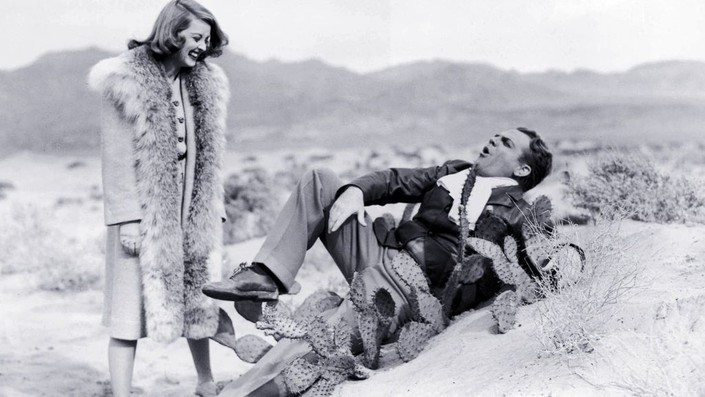
Davis also wasn’t happy because while a stunt double was supposed to take the fall into a cactus for her, she had a fall of her own and ended up with 45 cactus quills having to be removed from her behind.
Neither actor was very fond of the movie years down the road and even critics bashed it with one saying, “Okay, Jimmie and Bette. You’ve had your fling. Now go back to work.”
As for me, I found the film a lot of fun and ended up snickering at the silliness and the exchanges between our main characters.
And as I said above, Harry Davenport really added some charm to the film for me.
Have you ever seen this one?
I found it for rent on Amazon Prime but it is also available on HBO Max, Hulu, YouTube, and AppleTV.
Next week I’ll wrap up my Winter of Cagney with Angels With Dirty Faces and two weeks after that I’ll start a bi-weekly movie watch of Bette Davis films.
If you want to catch up on the other Cagney films I’ve watched this winter you can do so here:
If you enjoy the kind of content on my blog and all that goes into it, you can support my writing for $2.99 a month or a single donation. Learn more here: https://lisahoweler.com/support-my-writing/
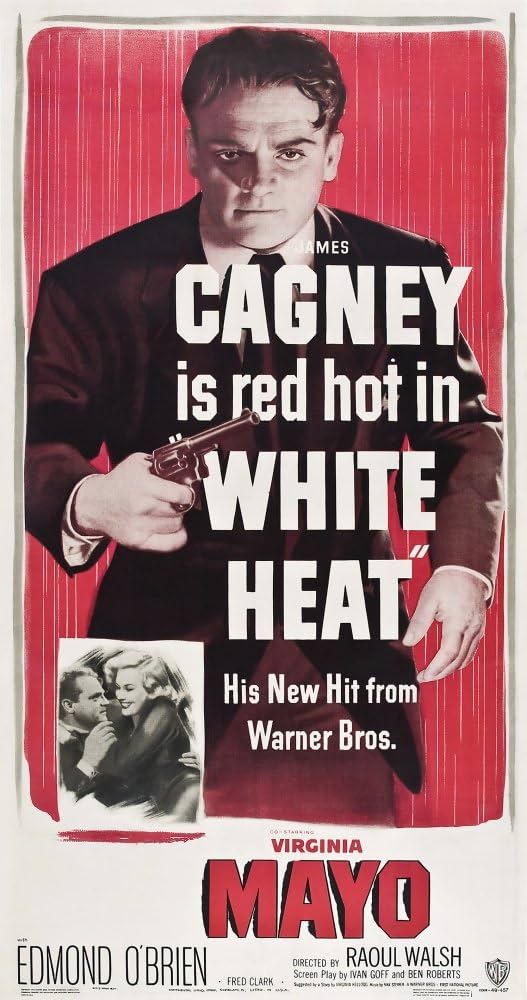
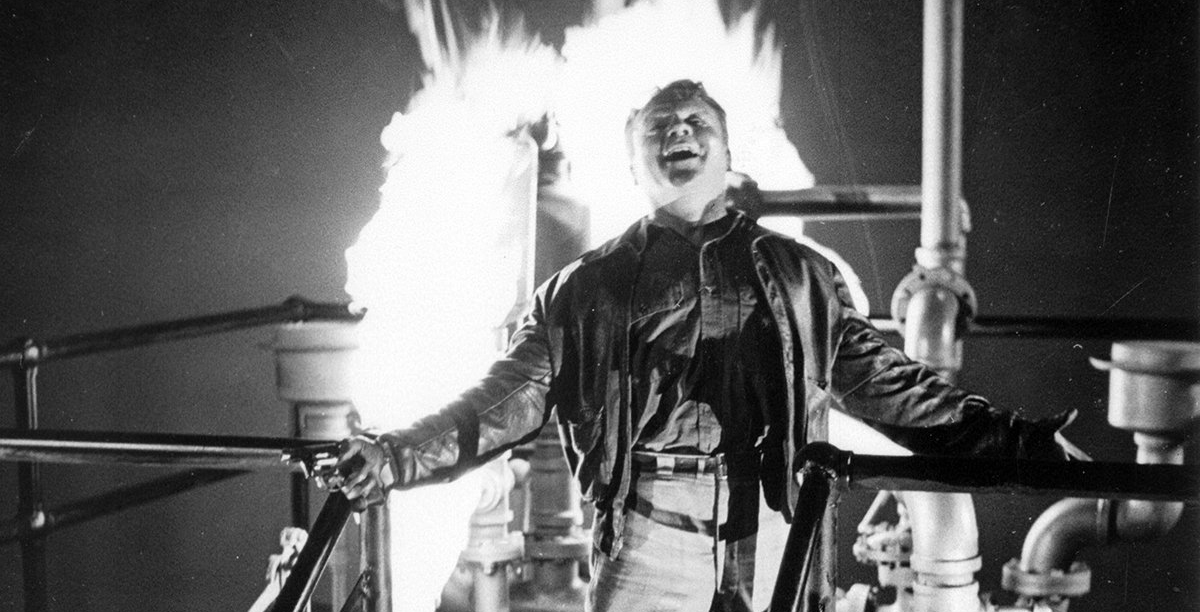
I’m watching James Cagney movies this winter and last week I watched one of his most acclaimed movies — White Heat (1949).
The movie is considered by film critics to be one of the best gangster films of all time.
As I often do, I’ll start this post with an online description of the movie:
“Gang leader Cody Jarrett (James Cagney) lives for his mother, planning heists between horrible headaches. During a train robbery that goes wrong, Cody shoots an investigator. Realizing Cody will never be stopped if he knows he’s being pursued, authorities plant undercover agent Hank (Edmond O’Brien) in Cody’s cell.”
This description is wrong, though, because the investigator is shot after the robbery. But the conductor is shot by Cody.
All that aside, the robbery does go wrong, partially because a member of the gang is horribly burned. The gang has to hide out and we learn that Cody is very close to his mother, who helps him plan crimes. Closer than he is to his wife who is very lazy and sleeps a lot.
This isn’t an inappropriate relationship like Hamlet or Macbeth or whichever play that was, but Cody relies on Ma for a lot — including helping him when raging headaches hit him and practically debilitate him. The gang believes his headaches are the same mental illness his father had.
His mother doesn’t want him to let the gang see him that way because he will look weak.
It doesn’t matter if he looks week because his gang is ready to turn on him and take the money they stole from the train and cut him out of the deal no matter what.
He doesn’t know this, but he does know they have to split so the police don’t find them.
They have an injured gang member whom Cody orders one of his men to shoot. The man can’t do it, though, and leaves the burned man. The man still dies, and when he is found it is reported to the police, who eventually connect him to the gang.
A police officer sees Cody’s mom out by chance and they try to follow her back to the motel Cody, his mom and wife are staying at. She loses them but the police eventually find her car and corner Cody who shoots the investigator in the arm.
Cody is able to escape with his mom and wife, but finally decides if he really wants to shake the police, he will have to give himself up. He’s not going to admit to the big crime, though. He’s going to say he committed another crime that another criminal he knows pulled. He’ll only get about two years for that crime and it will be his alibi for the other crime. He couldn’t have robbed the train if he was committing a less serious robbery in another state, he says.
His wife and mom don’t like the idea, for different reasons.
His wife likes the idea a lot more when she realizes that her husband being in jail in another state will give her time with her husband’s second hand man, who she’s been having an affair with.
Cody’s plan works — sort of. The police figure out what he is trying to do, though, and still want to pin the first crime on him so they send an undercover cop into jail with him to try to make friends with him and find out where he hid the money from the train heist.
I’ll leave it there, so I don’t spoil what happens, but I am going to have to give a big spoiler here to discuss in the paragraph following this next one so if you don’t want to know, you need to stop here.
This movie was dark, intense, and while Cody Jarrett was a horrible man and easy to hate, I also couldn’t help feeling a little sorry for him because he felt crime was the only way to make a living.
SPOILER ALERT!!
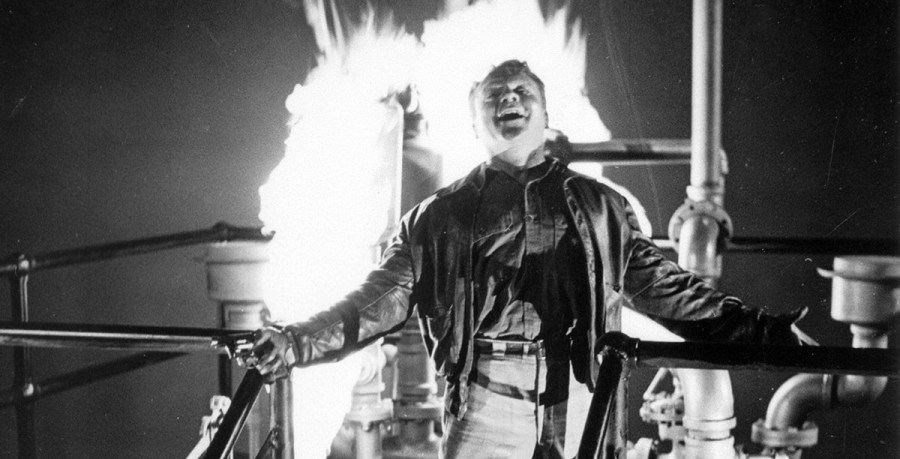
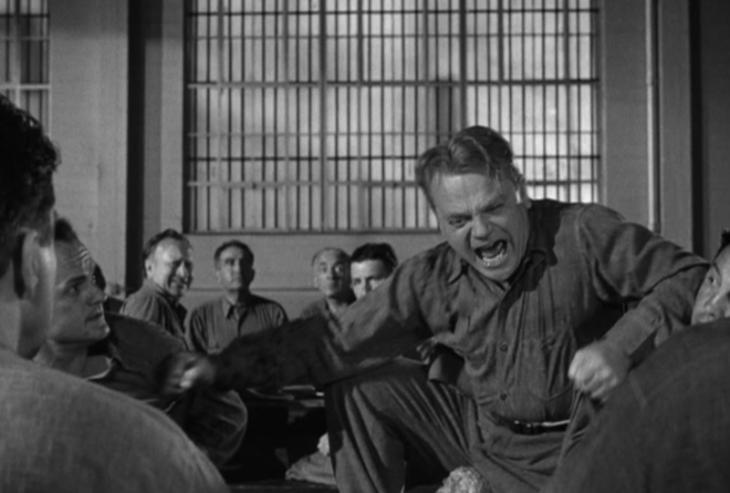
Also, the one person who loved him and he loved dies halfway through the movie. I won’t say how his mom dies but it is her death that leads to a much-talked-about scene where Cody absolutely flips out after he finds out she’s gone.
What is interesting about this scene is a couple hundred extras were used as the inmates inside the cafeteria and none of them were told what Cagney was going to do. Most of the shocked faces focused on during that scene were authentic because they were kept in the dark about Cagney’s plans. Some of them really thought Cagney had flipped out.
Another scene we need to talk about happens at the end. Throughout the movie Cody’s mom always ends their conversations by saying, “Top of the world, son! Top of the world!”
This is a line that has been used in pop culture references and parodies for years and I never knew what it was. Now I do and it’s honestly quite heartbreaking. There is so much Cody could have done with his life and not only did he choose crime but his own mother encouraged him to do so.
Cagney came back to Warner Brothers for this film after leaving for several years to start his own movie-making business with his brother. When that failed, he accepted an offer from Warner Brothers, even though Jack Warner really didn’t want him back — mainly because he needed the money.
Warner famously called Cagney, “that little b******.”
Cagney famously said of Warner in Rolling Stone Magazine, “I used to like to walk out on him, frankly, whenever my contract didn’t suit me. I’d cuss him out in Yiddish, which I had learned from Jewish friends in my days at Studyvesant High School. Drove him wild. ‘What’d he say?!’ he’d yell. ‘What’d he just call me?!’”
Their arguments mainly started over Cagney’s contracts in the 30s.
Rob Nixon wrote for TCM.com that White Heat is considered Cagney’s last good gangster film.
“An exciting, dynamic film in its own right, White Heat also stands out as the flaming finale to the era of stark, fast-paced crime films made famous by Warner Brothers and James Cagney (among other stars) from the 1930s on films in which the focus was on the often violent but charismatic gangster rather than the law enforcement officials who hunt him,” Nixon wrote. “It was also the apotheosis of Cagney’s brilliant career, a kind of summing up of the memorable outlaw characters he had created. His projects that followed in the 1950s were mostly lackluster affairs, and the cocky, pugnacious star audiences had come to love was glimpsed infrequently in such films as Love Me or Leave Me and Mister Roberts (both 1955).”
The film was directed by Raoul Walsh and in addition to Cagney it starred Virginia Mayo, Edmond O’Brien, and Margaret Wycherly as Ma.
Many scenes, such as the one mentioned above were adlibbed by Cagney or Walsh.
One of those was when he got annoyed at Mayo (his wife) and he was supposed to just glare at her but instead Walsh told Cagney to kick her off the chair she was standing on. For me, this showed how nasty and heartless Cody really was – as if the opening scenes hadn’t already shown that.
The story for the movie was written by Virginia Kellogg and she was nominated for an Oscar for it, but didn’t win and no one else was nominated. Over the years, though, the film has been praised and named as the fourth best gangster movie by the American Film Institute, has been quoted or parodied too many times to count and in 2003, the American Film Institute named Cody Jarrett in its list of the best heroes and villains of the past 100 years.
I have to be honest and say that the end of the movie annoyed me. I don’t want to give it away but it was a typical movie from the 40s and 50s with the whole idea of the bad guy suffering and the “good guys/cops” being the heroes was very cliché.
In many ways there was nothing good that was going to come for Cagney’s character, though, so things ending badly for him was probably the only way for things to go.
Next week I will be watching Angels With Dirty Faces with Cagney and Humphrey Bogart. To end the event I will be watching The Bride Came C.O.D. (which will move me into my Spring of Bette Davis).
You can read about the other movies I watched by clicking the links below:
If you enjoy the kind of content on my blog and all that goes into it, you can support my writing for $2.99 a month or a single donation. Learn more here: https://lisahoweler.com/support-my-writing/
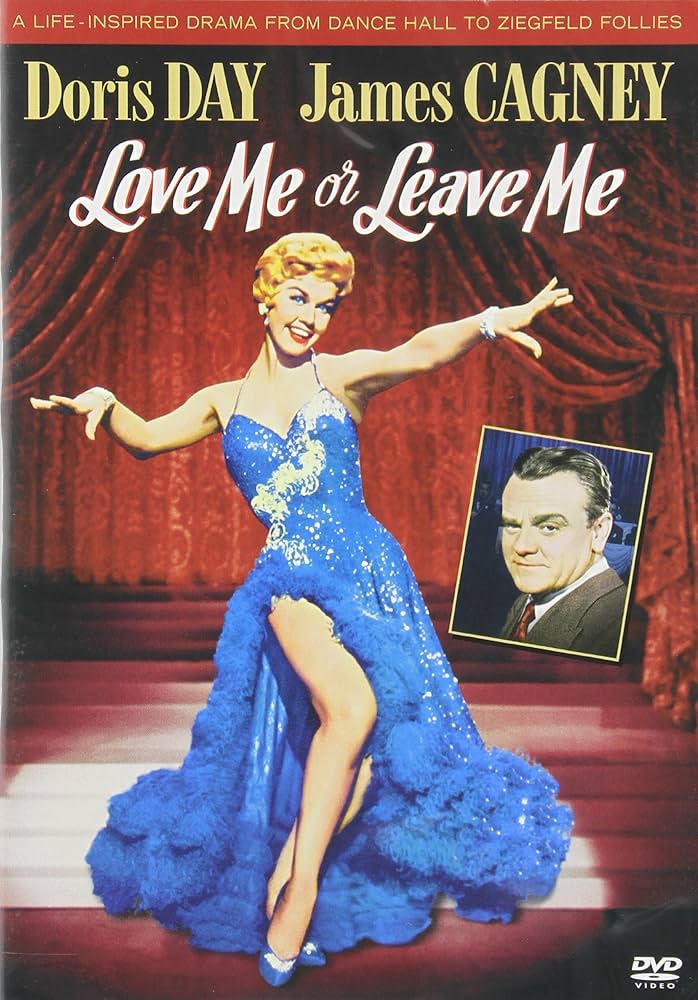
This week, my pick was Love Me or Leave Me (1955).
This was a hard one to watch because Cagney was such a jerk in it. I started it not knowing a thing about the true story, so I kept hoping he would transform and become a nicer person before the end of the film.
That certainly did not happen, even though the makers of this movie tried to make things seem nice and tied up at the end.
First, an online description:
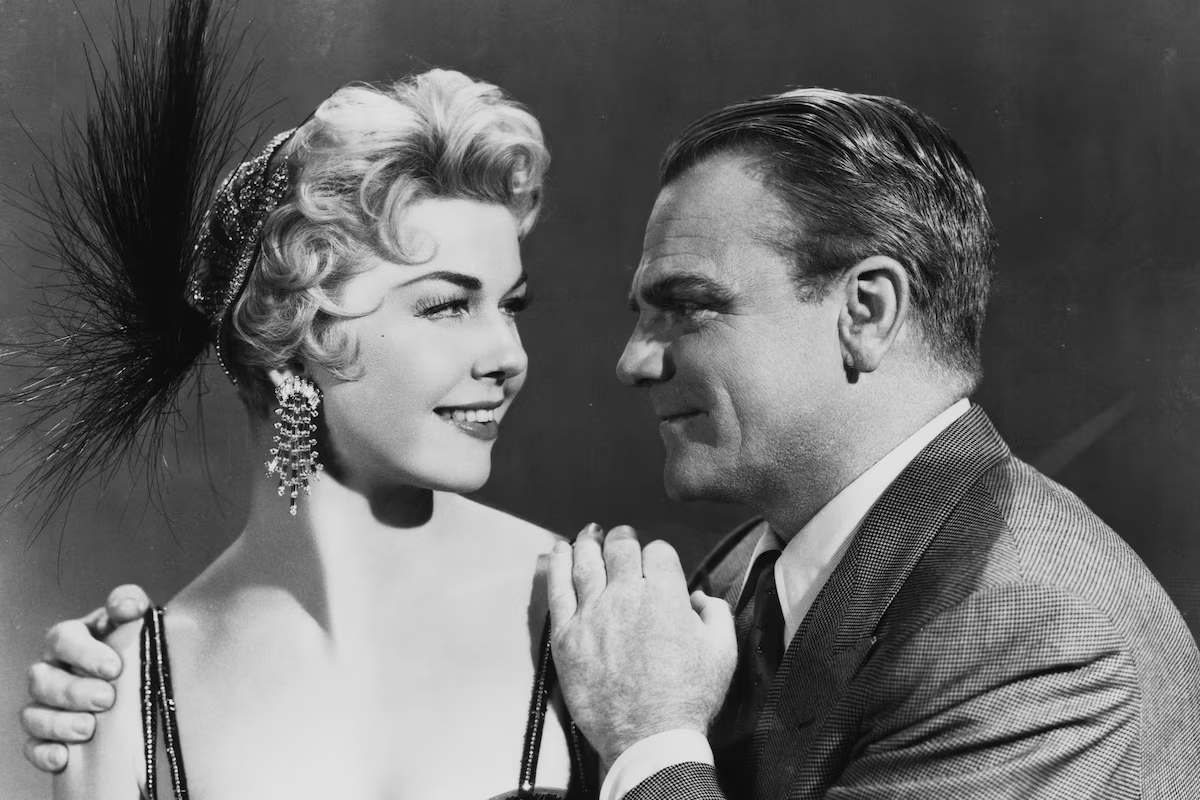
During the 1920s, a small-time Chicago criminal, Martin Snyder (James Cagney), discovers a beautiful dancer, Ruth Etting (Doris Day), after she’s fired from her job at a nightclub. Under Martin’s management, Ruth works her way to the top of the entertainment industry, eventually becoming a famous jazz singer and Broadway actress. But as Ruth’s popularity grows, Martin’s obsessive and controlling behavior begins to threaten her success and happiness.
This movie was shot in technicolor so don’t let any black and white photos I share here fool you. It was directed by Charles Vidor.
This movie starts with something that was in another movie I just watched this week — men at clubs paying to dance with girls. They were called taxi dancers or dancehall dancers. https://en.wikipedia.org/wiki/Taxi_dancer
It doesn’t go beyond dancing, that I know of, but I had no idea this was a thing in the 1920s, 1930s, and 1940s or, well, ever. There were girls who were hired as dancers and were employed by clubs. Men would pay to dance with a woman for a dance or a few or the night.
Lucille Ball apparently did this before she went into acting and it is the job her character has in the movie from 1946. I’ll be sharing about this movie at some point here on the blog.
In this movie, Doris Day is a taxi dancer who is fired after the man who pays to dance with her gets a little too handsy…if you catch my drift.
Cagney sees her firing and her and he’s immediately hooked.
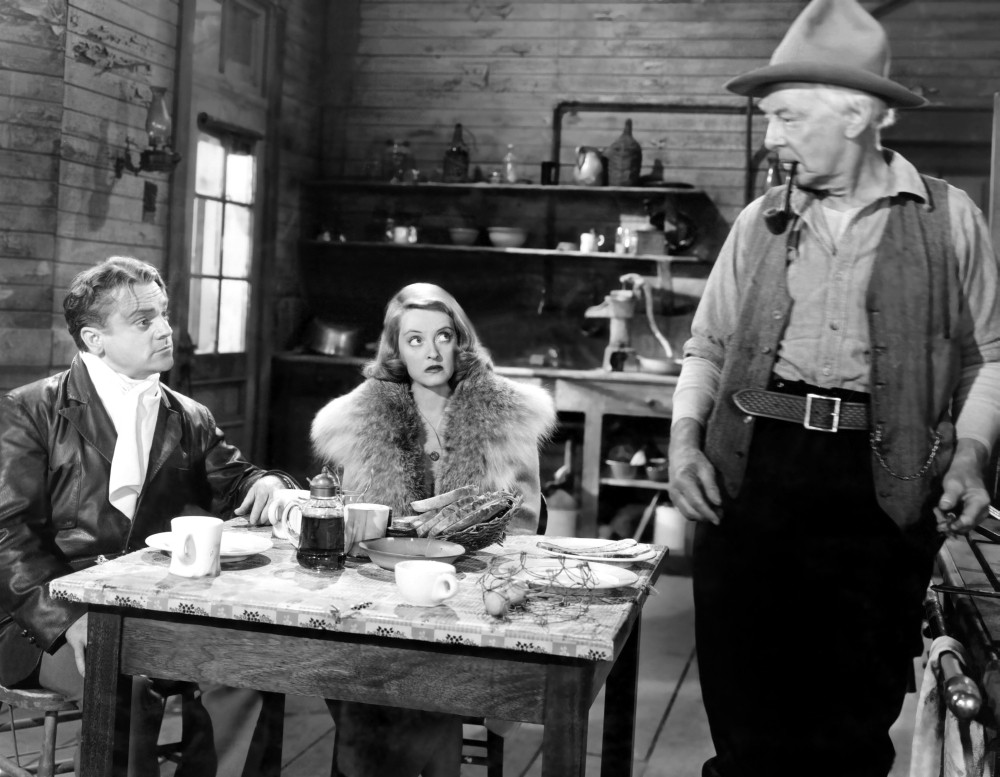
Cagney is playing Martin “Marty” Snyder, a small time Chicago gangster who also dabbled in the entertainment business.
He is definitely physically attracted to Ruth, and at first, all he wants to do is get her a new job at one of his places as a dancer so he can make her one of his girls. He wants to take her to Florida with him. To stay with him. Wink. Wink. Nudge. Nudge.
Ruth doesn’t want to be a dancer or his lover, though. She wants to be a singer, and when she tells him this, he finds a way to make her a singer. One way he does that is by hiring a piano player named Johnny Alderman, who works at his club as her singing coach.
Of course, she and Johnny start to fall in love, but Marty is oblivious to this and keeps finding ways to boost Ruth’s career.
He seems to think that if he does that, she’ll eventually want to thank him and sleep with him. This movie was released in 1955, so none of these things about sleeping with him are said directly, but they are implied.
There are a lot of singing sequences in this movie, but I have to agree with Roger Fristoe who wrote an article for TCM.com, and said the movie isn’t really considered a musical despite the singing. It is, instead, a dramatic biography of Ruth Etting.
Cagney and Doris Day were in a previous musical together in 1950 —The West Point Story.
I’ve never been a huge fan of Doris Day or her singing, and I do NOT know why! There is something about her that just rubs me wrong. My previous impression of her was changed while watching this movie because she really does an amazing job as Ruth in this movie, or at least as far as I know, since I’ve never seen footage of Ruth Etting.
Doris made me feel so horrible for Ruth that I had to look for the real story of her.
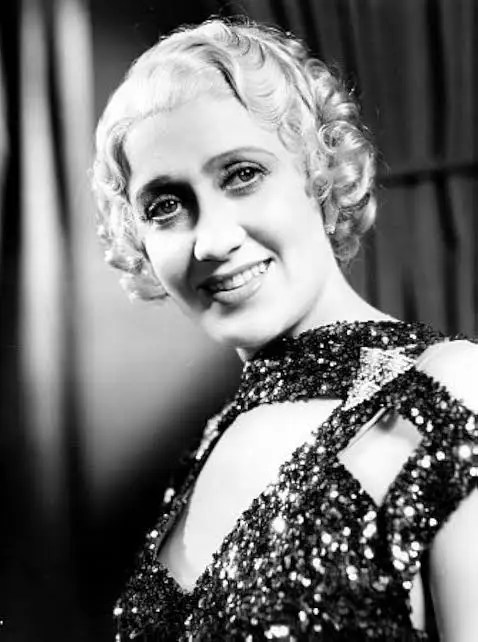
Ruth Etting
It was depressing to find out that her experience with Martin, whose real name was Moe Snyder, was even worse, darker, and more complex than this movie portrayed.
In the movie, there is a culminating event that shows us even more of the true character of Marty and in real life there was one as well. I won’t tell you what happens in the movie but in real life Moe held Ruth, his adult daughter, and Ruth’s boyfriend hostage. Eventually, his daughter was able to get ahold of a gun, shot at the floor in front of her father, and then held the gun on him until the police arrived. It’s a little less dramatic in the movie.
Ruth Etting lived into her 80s and would have been in her 60s when the movie came out. She reportedly said she felt that Doris played her a little harder and tougher than she really was and she said she never worked as a dancehall girl, suggesting the wrote that into the movie simply so they could use one of Etting’s songs, “10 Cents A Dance” in the movie.
“They took a lot of liberties with my life, but I guess they usually do that kind of thing,” Etting said.
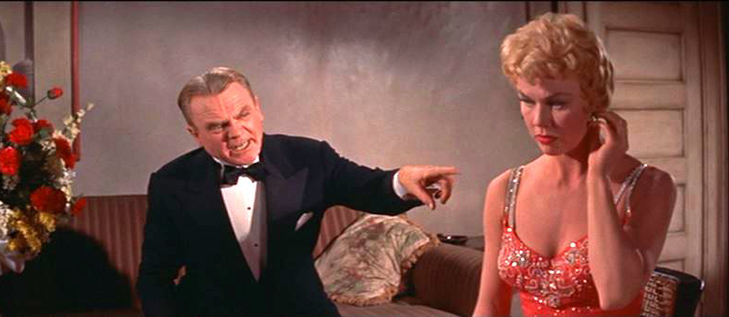
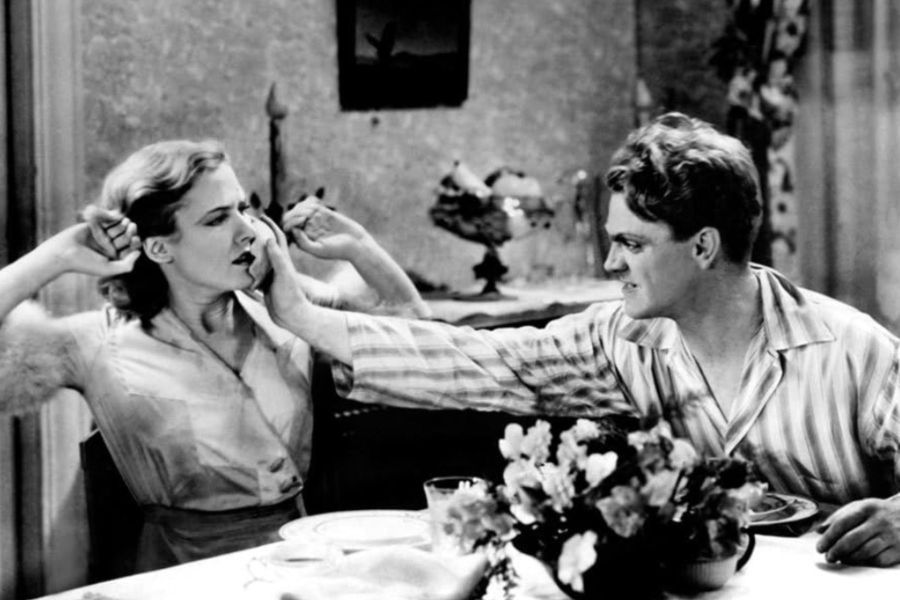
There is a violent scene between Doris and Cagney at one point in the movie that was shocking, but, according to Doris, would have been more shocking if they had kept what Doris and Cagney actually filmed.
“He attacks me savagely, and the way Cagney played it, believe me, it was savage,” she was quoted as saying in her biography. “He slammed me against the wall, ripped off my dress, my beads flying, and after a tempestuous struggle, in which I tried to fight him off with every realistic ounce of strength I had, he threw me on the bed and raped me. It was a scene that took a lot out of me but it was one of the most fully realized physical scenes I have ever played…it wasn’t until I saw the movie in its release that I became aware that most of the scene had been cut.”
It had been cut because of the censors.
This was a movie that broke Doris out of her normal good-natured, bubbly roles, and the studio did worry that her fans would revolt at the idea of her in anything so gritty.
They didn’t need to worry since the movie earned six Oscar nominations, including a third Best Actor nomination for Cagney.
It ended up winning the Academy Award for Best Writing, Motion Picture Story.
Of Doris’ performance, Cagney said in a biography about him that he watched the movie again in 1980, and “Just saw something I hadn’t noticed before. There are no other women to speak of in the cast. Doris is so very much alone, which heightens the effect of the male world upon her. How many nice girls there are, and were, in this business that were just so afflicted by the presence everywhere of intimidating males.’“
My impression of Cagney’s character is that he was a sad man who didn’t know how to get what he wanted without bullying people.
He loved Ruth Etting and was so afraid of losing her that he abused her mentally, emotionally, eventually physically, and sexually.
Ruth went for it because she wanted to be famous, and he was getting her to where she wanted to go.
I found it sad that not only did Ruth have to go through an abusive relationship with a “Marty” but Doris did as well.
According to TCM.com, “A final irony about Love Me or Leave Me is the fact that the relationship between Ruth Etting and Marty Snyder had some disturbing parallels to the relationship between Doris Day and her husband Marty Melcher. Like Snyder, Melcher also controlled Day’s business affairs, made creative decisions for her even though he had no musical experience, and lived through her work. When Melcher died in 1968, Day discovered that he had mismanaged her entire life savings of $20 million dollars, leaving her completely broke.”
While this was a well-acted and written film, I can’t say it is one I would want to watch again because of the tough subject matter. I noticed in this movie, as I have in other Cagney movies, that a lot of Cagney’s acting is done with his eyes and that signature smirk.
Next up in my Winter of Cagney is White Heat. I have heard a lot about this one and am really looking forward to it.
Here is my full revised list for the Winter of Cagney (I had to move some things around when I couldn’t find two of the movies in my original list streaming, and also haven’t yet ordered the rather expensive DVDs):
Today I am continuing reviews of The Thin Man movie with Myrna Loy and William Powell.
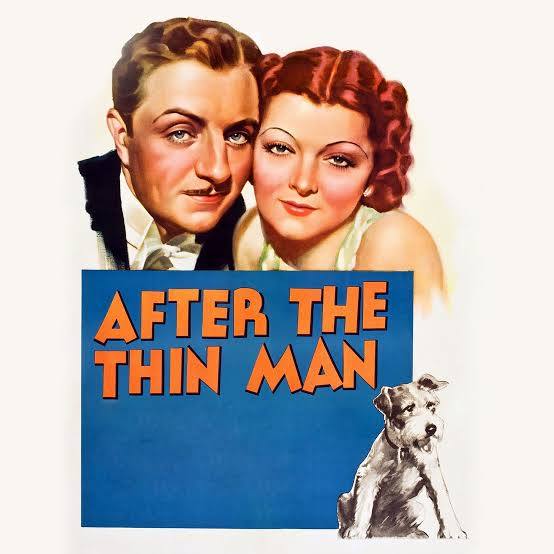
This time around, we have the second movie, After The Thin Man. W.S. Van Dyke returned to direct the second film.
We start this sequel right where we left off at the end of the first movie.
In that movie, we ended with Nick and Nora Charles heading back to California from New York City where Nick solved a case in his old stomping grounds.
A little recap, on who Nick and Nora are. Nick is a former private detective who married Nora, an heiress. She inherited a bunch of money from her family so he now manages that money for her and has retired from being a PI.
Nora wants Nick to get back into being a private investigator again so she pushes him into helping out the family of a former client in the first movie.
The movie opens with Nick and Nora still on the train back from New York. When they get off the train, journalists are waiting for them and want to know all about the case Nick solved. Nick and Nora are exhausted, though, so they just want to get home and take a nap.
The only problem with this is that when they get back to their house a party is going on. Their staff is holding a party to welcome them home.
Even before the party is over, they still want sleep but they aren’t going to get it because Nora’s Aunt Katherine calls and asks them to come to a New Year’s Eve party at her house that night.
We soon learn that Nora’s cousin Selma needs help finding her missing husband, who is also a philandering jerk.
In this movie, we see a lot more of Nora’s family and find out that not only are they totally crazy, but they also don’t like Nick. At all.
Nick is very “common” to them and Nora’s aunt especially looks down on him.
There is a hilarious scene toward the beginning of the movie that underscores this perfectly and even had my teenager – who only watched that scene — laughing.
Nick and Nora arrive at the aunt’s house and there are a bunch of other elderly relatives there who become horrified when Katherine says Nora is coming with her husband.
“Oh my! Not him! You said you’d never invite him again!” one woman says with a gasp.
When the butler announces their arrival, Katherine reminds everyone to be nice and one woman says, “I really feel for poor Nora.”
Outside the door, Nick is grumbling and mumbling next to Nora.
Nora asks, “What are you muttering to yourself?”
Nick replies, “I’m trying to get all the bad words out of my system.”
There are so many funny moments in this one, but there is also a very intriguing, and somewhat dark mystery. You will realize how dark the mystery is when you reach the end of the movie.
This movie is also one of Jimmy Stewart’s earliest movies. He plays a close friend of Nora’s cousin. It’s interesting to see him so young and he really stretches his skills in this one, foreshadowing his future as a leading man.
Asta, the Charles’ dog, plays a bigger role in this one. The movie starts with him finding out his dog wife has cheated on him with the neighbor dog and has puppies by him. Yes…it’s a bit of an awkward bit, but Asta chases the neighbor dog back home a couple of times during the movie.
Asta’s real name was Skippy, by the way, which I mentioned in my post about The Thin Man. The dog also appeared in Bringing Up Baby with Cary Grant and Katharine Hepburn and The Awful Truth with Cary Grant and Irene Dunn.
He was sometimes called Asta instead of Skippy in public appearances and in movie credits.
Skippy, a Wire Fox Terrier, portrayed Asta for the first three movies. Other Wire Fox Terriers trained by his trainers appeared in the other three movies.
Sometimes sequels to movies aren’t as good as the first one but that’s not the case for this one.
“After the Thin Man belongs on a short list of great sequels that, while recycling elements that made the original popular and worthy of a sequel in the first place, also expands on that foundation,” said Brian Eggert from Deep Focus Reviews.
Of Myrna and William Eggert wrote: “The two exude limitless chemistry and sophistication in their sharing of countless private jokes, endearing flirtations, blissful irresponsibility, deftly comic asides, and, of course, their ever-partying lifestyle, lubricated by regular doses of alcohol.”
Dashiell Hammett, who wrote the book the first movie was based on, was asked back to help husband and wife writers Albert Hackett and Frances Goodrich work on the screenplay.
Sadly, he’d started drinking in between the first and second movies and started making demands that every secondary character from the first movie be called back for the second.
That couldn’t be done since the production was moved from New York to San Francisco.
Tension then began to develop between him and the studio and he was fired.
TCM.com shares this story about Hammett and Myrna: “In her book Being and Becoming, co-written with James Kotsilibas-Davis, Loy recalls a memorable evening with the famous detective writer: “Hammett was an attractive kind of angular man, compelling and rather like the operatives of his stories. He told me that he’d fashioned Nora after his friend Lillian Hellman, which I found interesting….As we talked that evening, Dash drank heavily and began turning a little green. He went on and on about Lillian, while aiming overt passes at me, lunging and pawing, with my lover beside us….Dash could be intransigent, but, by God, they got him downstairs and sent him home in a studio car. That was a great disappointment to me, because I really wanted to talk to the man. I never got the chance again — Metro let him go soon after that. Apparently, he couldn’t handle the job.”
I thought it was weird that despite being nominated for an Oscar for writing the first movie, Hackett and Goodrich wanted to kill Nick and Nora off at the end of After The Thin Man so they wouldn’t have to write another movie in the series.
When the studio rejected this, they did something else at the end of the movie that they thought would kill the series. I won’t share what so if you haven’t seen the movie, you will be surprised.
Suffice it to say, their attempt to sabotage the series failed. The next movie, Another Thin Man, came out in 1939.
Getting Myrna and William for the sequel was a bit of a challenge because Myrna’s worth was higher by then. She’d been named Queen of the Movies since the last movie and after being paid half of what William was in the first movie she asked for a salary closer to his.
Because Myrna and William had already had four previous movie successes beyond The Thin Man movie, MGM gave her what she wanted.
I’m watching James Cagney movies this winter and up this week is The Public Enemy (1931), which was moved up in my list because I could not find Angles with Dirty Faces streaming anywhere! I was very disappointed because I really wanted to see it. I am going to look for that and Man of Many Faces (which I also could not find streaming) on BluRay or DVD so I can watch them sometime in February.
The Public Enemy is a bit of somber movie, more so than the previous movies I watched.
It appears to be a life lesson for would-be hoodlums, based on the warning at the beginning and end of the movie. The producers wanted everyone to be sure to know they weren’t glorifying criminals by making this movie, but instead warning people of what happens when they become one.
I strive not to place spoilers in my posts about the movies I watch but I will say this movie indeed showed the rough life that criminals have, usually self-inflicted.
The movie starts when our main characters — Tommy Powers (Cagney) and his friend Matt Doyle (Edward Woods) — are young boys.
They’ve already started a life of crime by sneaking into the movies and stealing buckets of beer. They steal little items and become pickpockets, and as they grow, the crimes grow with them.
The two go from being a couple of stooges for various crime bosses to leading the way in some major criminal actions, including creating a monopoly on beer production.
This was Cagney’s fifth movie and is said by film buffs to have catapulted him into a string of gangster roles he later worked hard to get out of.
This movie included one of his most infamous scenes – shoving a grapefruit in the face of his girlfriend – to show how far he’d fallen and how unfeeling he’d become. More about that a little later.
Tommy Power is the second son in the family and lives in his older brother’s shadow.
He and his brother are raised by their mother. I don’t know if we are told what happens to his father, but his father does whip him in the beginning for stealing skates and says he doesn’t care if he goes to jail.
This movie is honestly just so well done. You really need to take your time to watch it and catch some of the subtleties in the scenes.
There is one scene where Tommy and Matt go to talk to Putty Nose, a gang leader who once convinced them to a do a job for him, promising nothing would go wrong.
I’m warning you now that there are spoilers ahead —
The job went wrong and Putty Nose disappeared. Tommy and Matt have been looking to get revenge on the guy for years and now they’re big shots in the crime world.
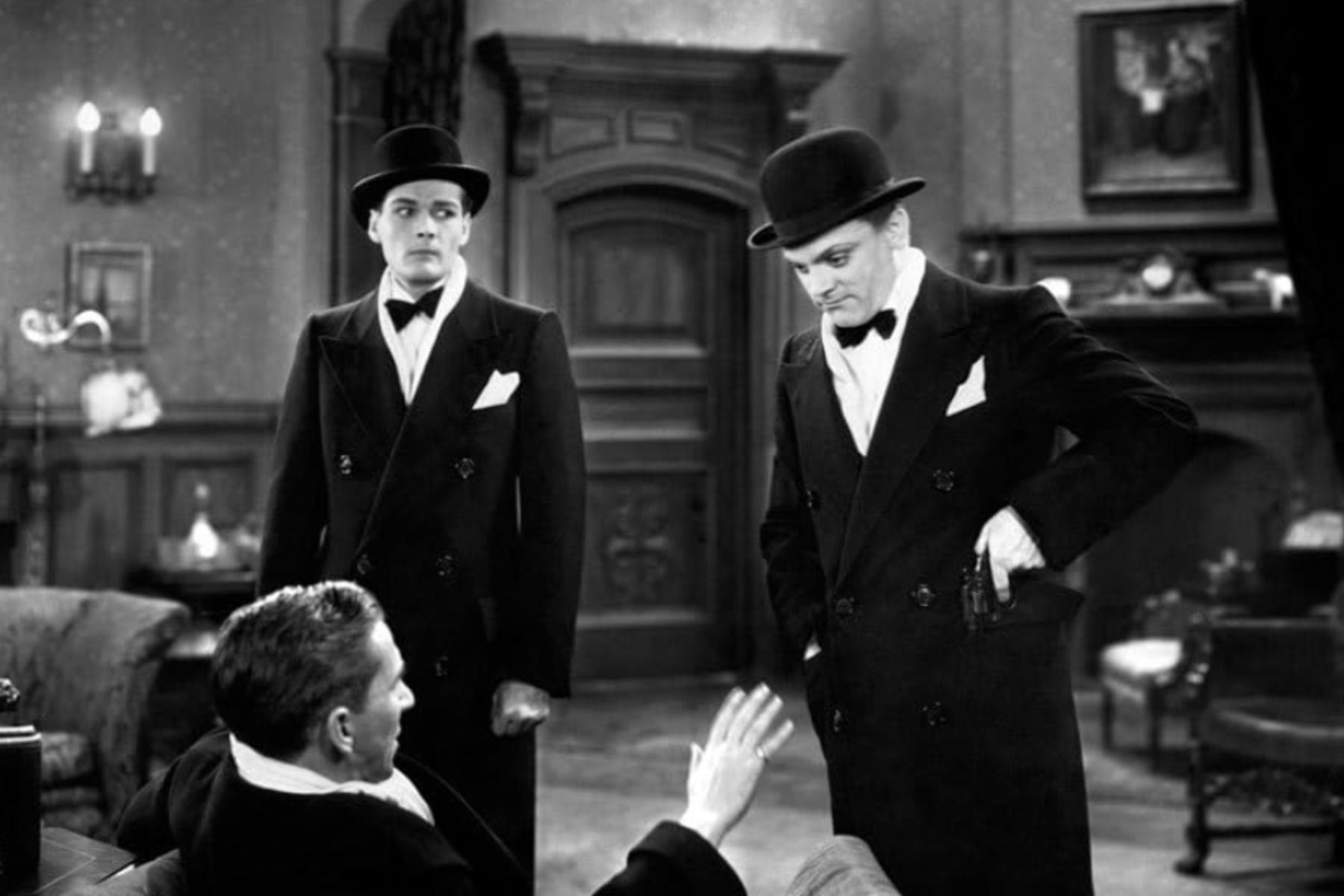
They track Putty Nose down and he starts begging for his life. Tommy and Matt are just standing there in nice dress clothes, fanc wool winter coats, and bowler hats, stone-faced for the most part, while Putty Nose begs the not to kill him. This is after Matt’s wedding, I should add.
The guy reminds them he knew them when they were kids and asks if they remember a song he used to play for them that they loved. He goes to the piano and starts playing, and Tommy has this friendly smile while he walks over to stand behind Putty Nose while he plays. Tommy keeps smiling and nodding and then slowly pulls a gun from the inside of his jacket while the camera pans away to Matt standing by the door.
There’s a gunshot and then —something I didn’t notice but my son did — you hear Putty Nose try to finish the song through a gurgling noise. Yikes. Then there is the sound of his body sliding across the piano keys and then to the floor.
It’s all off-camera, and it almost makes it more impactful because the camera is focused not Putty Nose dying but on how Matt’s expression changes from emotionless to ever-so-slightly dazed and horrified.
A few seconds after we hear the thud of the body hitting the floor, Tommy walks back into frame and says, “I’m going to go give Gwen a call. She’s probably home by now,” while he opens the door to leave.
He doesn’t look back, he doesn’t comment on what just happened. There is no remorse at all. It’s like he just stepped on a bug on the sidewalk while walking down the street, and he’s on to the rest of his life now.
Cagney pulls the scene off just brilliantly.
Like he pulls it off the whole movie. He makes the viewer both hate and love Tommy — feel sorry for him and not feel sorry for him at all.
Tommy makes his own bed, and he has to lie in it — literally at one point.
He is a man who wants it all and wants to be important, but, in the end, can’t hold on to anything that is important to him.
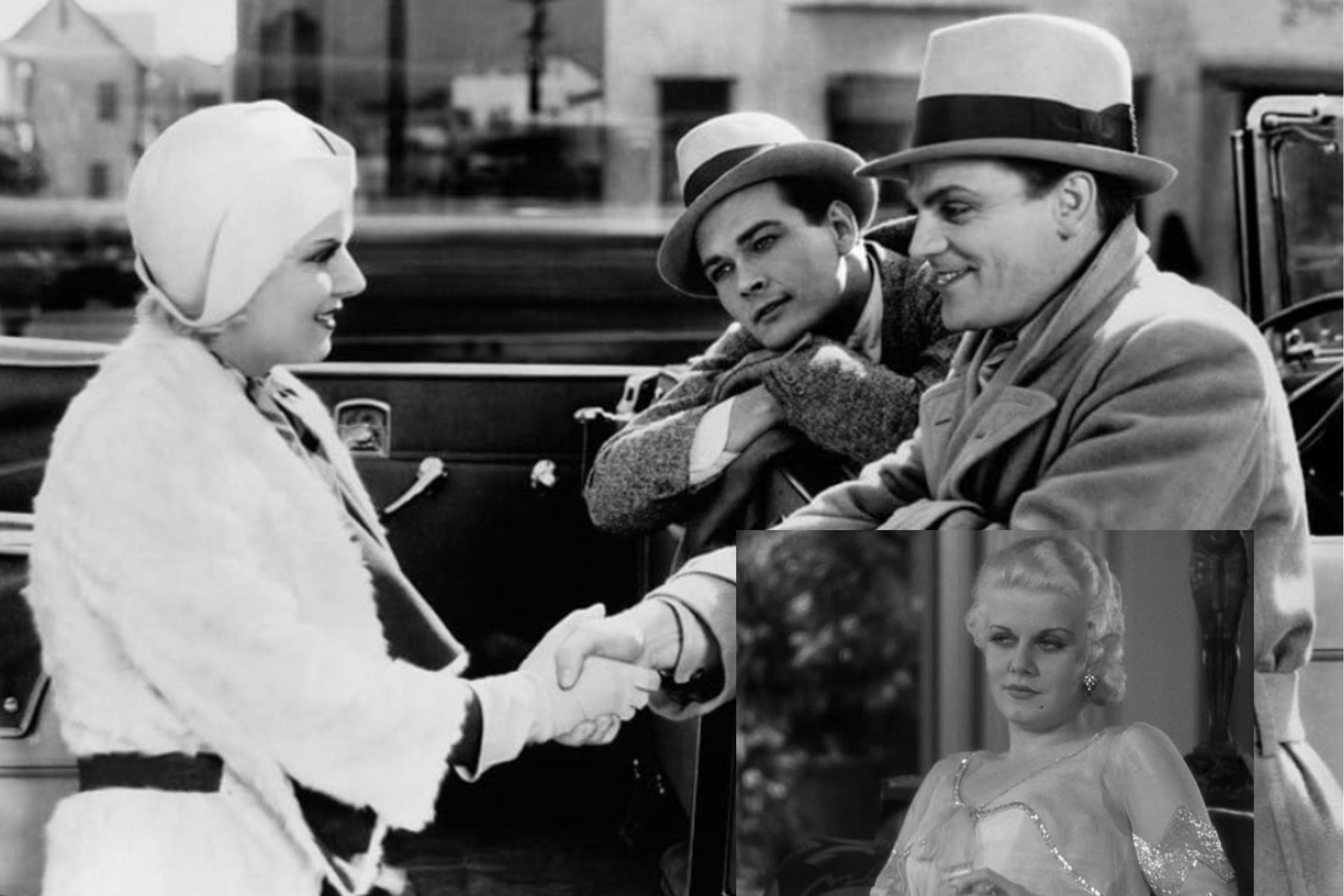
Jean Harlow is in this one as well, and I know she was supposed to be a big star back then, but my husband walked in and said, “She was so overrated,” and I based on this performance, I would have to agree.
I was not blown away by her, even though the scene with her was interesting because she sat on a settee, half on Cagney’s lap, while telling him what kind of man she thought he was and running her fingers along his neck and pressing his face into her cleavage. It was a very sensual scene for a movie made in the 1930s. From what I read, she wasn’t wearing bras under her dresses either.
According to an article written by Rob Nixon on TCM.com, Cagney once asked her, “How do you keep those things up?” in reference to her breasts.
“I ice them,” Harlow said, and then left to just what she’d said she did.
This was definitely a movie made before the strict film codes went into effect.
I was surprised to learn during my research that Cagney almost didn’t get the role of Tommy Power. Instead, he was initially cast as the quieter Matt Doyle, and Woods was cast as Tommy.
“But director William Wellman had seen Cagney’s tough performance in Doorway to Hell (1930),” Nixon wrote in his article. “And after three days of shooting – and much urging by screenwriters John Bright and Kubec Glasmon – he realized a big casting mistake had been made. Luckily, producer Darryl Zanuck allowed the two actors to switch roles, otherwise film audiences would have been robbed of one of the most ferocious and iconic performances of the decade, perhaps of all Hollywood history.”
This movie was not free of injuries for the actors.
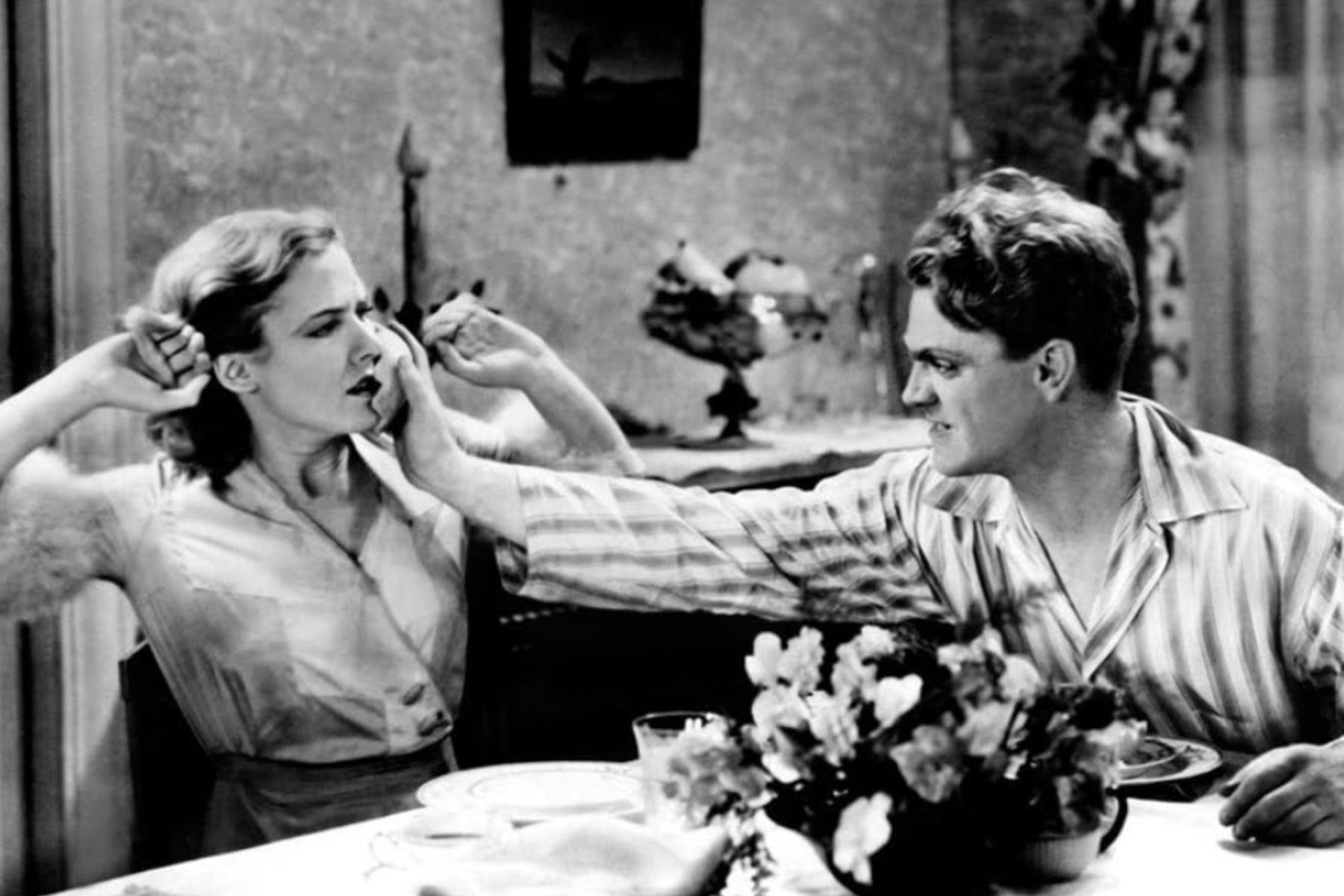
One of the most famous scenes in the movie is where Tommy shoves a grapefruit in the face of his girlfriend when he’s mad at her. This was based on a real-life incident of a Chicago gangster named Earl Weiss who once slammed an omelet into his “jabbering” girlfriend’s face.
It was decided this was too messy, so it was suggested a grapefruit be used.
“What happened next depends on who tells the story,” Nixon wrote on TCM.com. “[Actress] Mae Clarke said Cagney was only supposed to yell at her in the scene and that the actor surprised her with his impulsive use of the breakfast food. Cagney claimed the grapefruit had been decided on beforehand but that it was supposed to brush past her at an angle that would only appear to be a bona fide attack. Whatever the truth, when the time came to get the shot, Cagney smashed the grapefruit directly (and painfully, the actress said) into her face, and Clarke’s very real look of horror and surprise was recorded for posterity.”
Cagney faced his own pain, though, when Donald Cook, who played his brother, hit him for real during one scene, knocking him across the room and causing Cagney to lose a tooth. Cagney theorized that Clarke had put him up to it as revenge but he never proved it and production moved on without any more incidents, despite the fact — I can’t even believe I’m reading this — that real bullets were used in some of the shooting scenes.
The movie was based on Bright and Glasmon’s novel Beer and Blood. Yes, I would love to find it! They were nominated for an Oscar for their screenplay for the movie.
There were some really great lines in the movie, one of them being when Tommy’s brother comes back from war and accuses Tommy of running a business of “blood and booze.”
Tommy shoots back: “Your hands ain’t so clean. You killed and liked it. You didn’t get them medals for holding hands with them Germans.”
Have you ever seen this movie? If so, what did you think of it?
Here is my revised list for the rest of the Winter of Cagney:
This winter I am watching James Cagney movies for a “Winter of Cagney” marathon through the months of January and February.
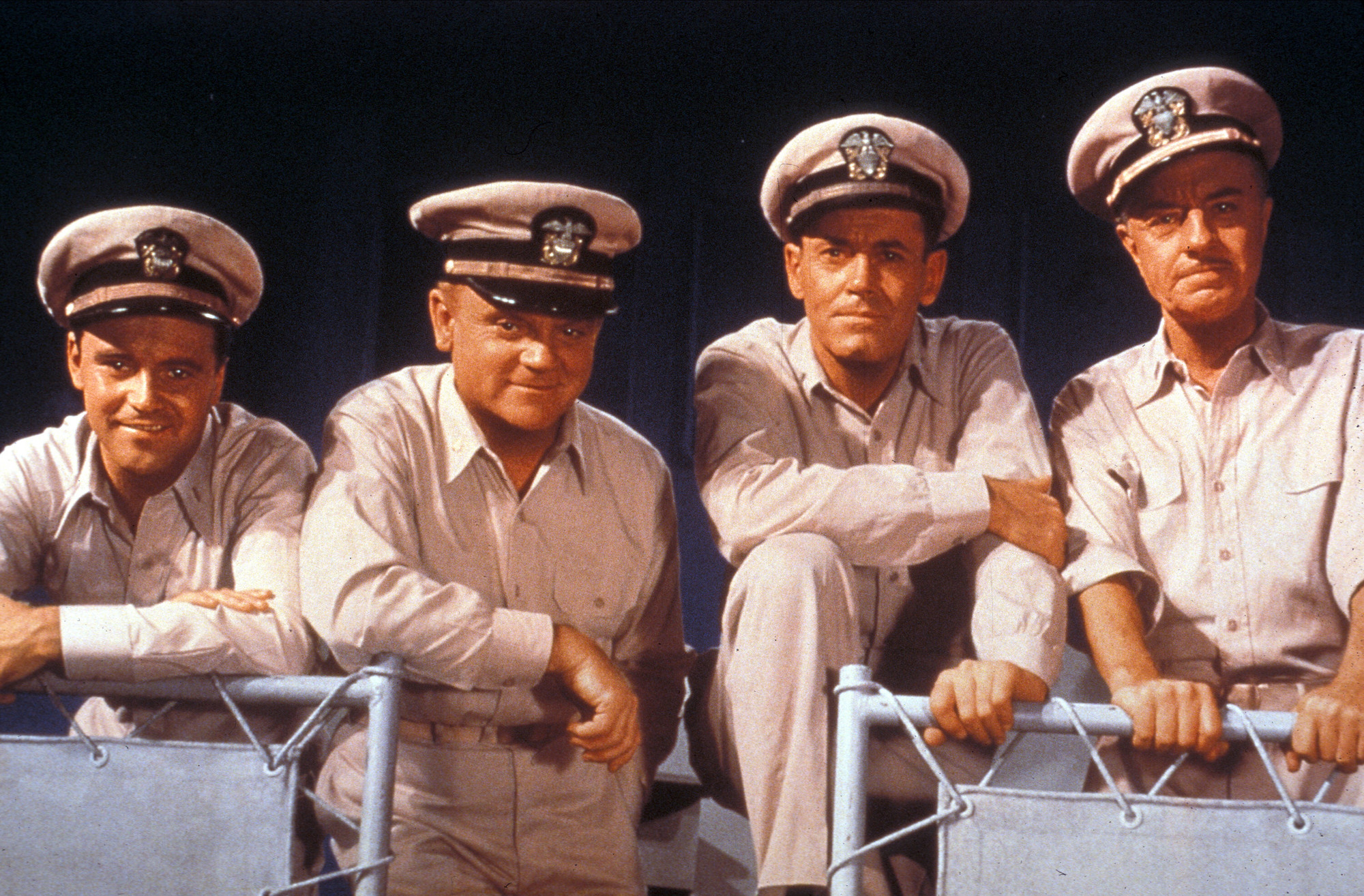
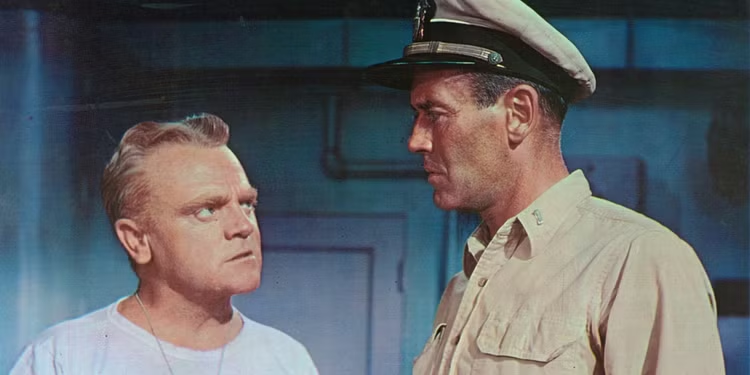
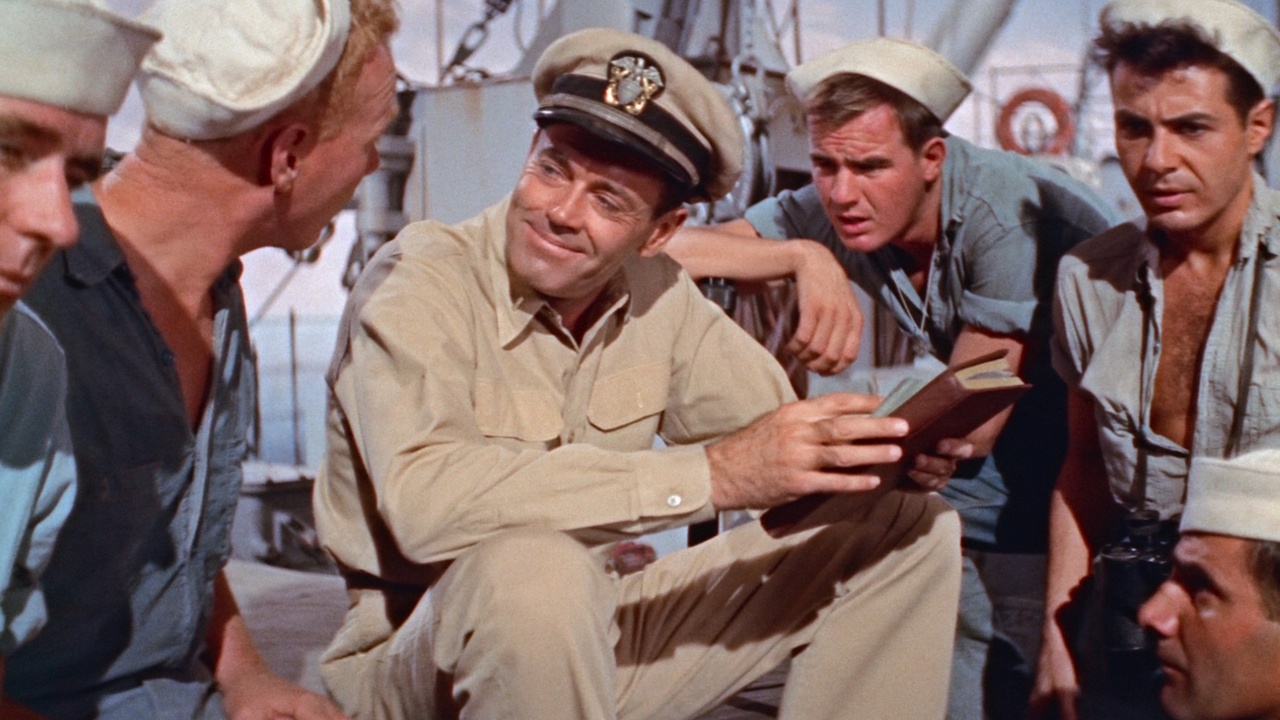
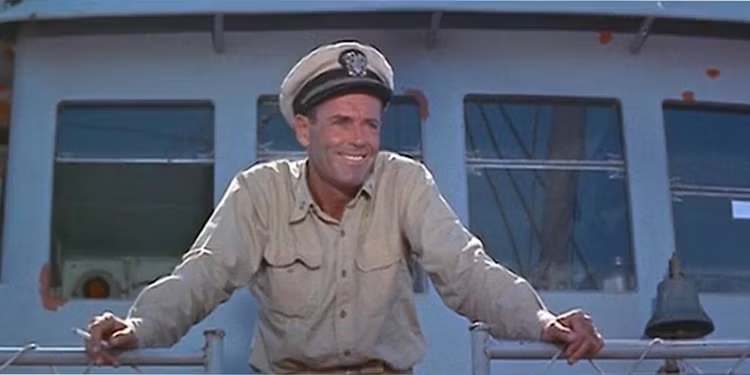
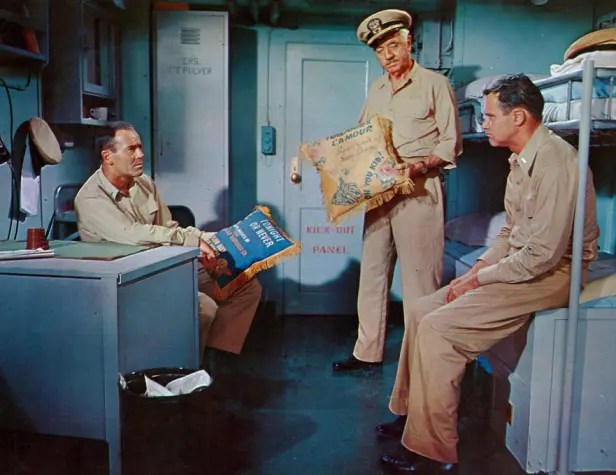
Up this week is Mister Roberts, a 1955 film that couldn’t see to figure out its’ identity. I was told it was supposed to be a comedy/drama ,but I felt a lot of it was more of a drama with a few comedic moments tossed in.
I also wasn’t bowled over by Cagney’s presence in this one. He seemed more like a caricature of himself or his previous characters and that may be because of the fraught relationship he and much of the cast had with the director, John Ford. More on that later.
Just because I wasn’t overly impressed with the movie, doesn’t mean I hated it or it was all bad. Not at all. In fact, it had some nice messages along the way and it was mildly entertaining. It simply wasn’t my favorite Cagney movie of the few I have watched so far.
The movie was based on the Broadway play which was based on a novel by Thomas Heggen.
Heggen and Joshua Logan wrote the stage play, which debuted in 1948 and was very successful with Henry Fonda in the role of Mister Roberts, which he also played in the movie.
This was a movie where Cagney was a secondary character with Fonda as the main star.
William Powell and Jack Lemon rounded out the cast.
This movie takes place toward the end of World War II on a United States Navy cargo ship called the Reluctant that is stationed in the backwater areas of the Pacific Ocean. The ship is affectionately and not-so-affectionately also called The Bucket by the crew.
The ship has not seen any military or war action and this is infuriating to the executive officer/cargo chief, Lieutenant (junior grade) Douglas A. “Doug” Roberts (Henry Fonda).
He spends most of his time trying to shield the depressed crew from the unpopular and task master captain, Lieutenant Commander Morton, played by Cagney while also filing transfers to get him off the ship and into the war.
He hates the idea that he and the men of the ship are sitting in the middle of the ocean, not seeing any action while Morton simply shouts orders and waters his ridiculous palm tree that he keeps in a small pot on a balcony near his office. Morton refers the transfers to higher ups because regulations require him to but he always advises the transfer requests to be ignored so they are.
Ensign Frank Thurlowe Pulver spends most of his time on ship hiding in his bunk to avoid the captain but repeatedly says he will one day light a fire cracker “under the old man’s bunk” to get back at him for always being mean to the crew. Instead of ever doing anything bold, though, Pulver wilts under Morton’s shouts.
William Powell appears in his last feature film as the doctor on board the ship and spends much of his time dealing with crew members who make up illnesses so they don’t have to keep working under Morton’s rule.
Roberts feels the men need some rest and relaxation and leave but Morton always refuses to give it to them.
Roberts finally finds a way to get orders for some R&R time behind Morton’s back, but when Morton finds out what’s going on he’s furious and tells Roberts the only way they can have the leave is if Roberts agrees to stop filing transfer requests and starts doing everything Morton tells him to.
The idea behind this one is a good one, but I wasn’t really feeling Cagney in the role. It almost felt like he was relegated to this secondary part, even though some critics praised his portrayal of the mentally-off captain.
One thing that probably didn’t help this movie was the fact that the director, John Ford, started the filming out with aggression and was replaced halfway through due to an argument with Fonda where Ford punched Fonda in the face, as well as emergency gallbladder surgery for Ford.
Ford’s tension with the actors may be why there was so much underlying tension throughout the movie.
Ford couldn’t even get along with Cagney, and let him know they probably wouldn’t get along right from the beginning.
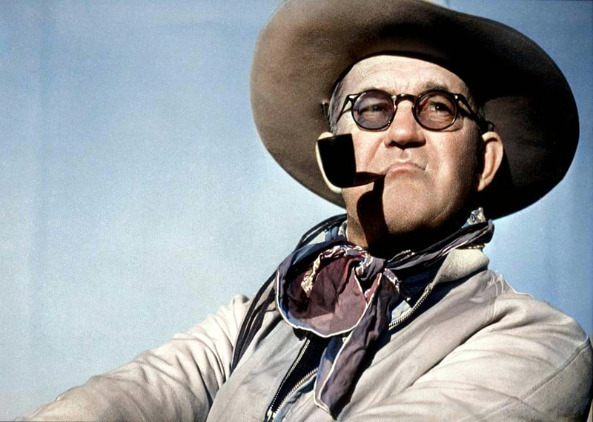
Director John Ford
When Ford met Cagney at the airport, the director told the actor they would probably “tangle asses.” Cagney said he was shocked by the comment.
“I would have kicked his brains out,” Cagney said later. “He was so g******* mean to everybody. He was truly a nasty old man.”
The next day, Cagney was slightly late on set, and Ford was furious. Cagney allegedly interrupted Ford’s ranting by saying, “When I started this picture, you said that we would tangle asses before this was over. I’m ready now – are you?”
Ford reportedly walked away and he and Cagney had no further issues. Good thing too since Cagney had once been a champion boxer in the Bronx before becoming an actor.
Ford was replaced by Mervyn Leroy.
Joshua Logan also helped to direct, bringing his experience of having directed the original production on Broadway, but was uncredited in the film.
I was not overly impressed with Lemmon in this movie, so I was really shocked to read that he won a best supporting actor Oscar for his role.
According to the Warner Bros Fandom site, Lemmon and Cagney became close friends during filming.
“During the production of the film, Lemmon began a long-term friendship with Cagney which continued until Cagney’s death in 1986,” an article on the site reads. “Prior to his appearance in his first film, years before Mister Roberts, he started in live television. In one particular performance, Lemmon decided to play his character differently. He decided to play the character left-handed, which was opposite to his own way of movement. With much practice, he pulled off the performance without anyone noticing the change. This change even fooled Lemmon’s wife at the time. A few years went by and Lemmon met Cagney on their way to Midway Island to film Mister Roberts. They introduced themselves, and Cagney chimed in, “Are you still fooling people into believing you’re left handed?” They had a great laugh and a strong friendship was born.”
I wouldn’t really say I would skip this movie when watching Cagney movies, but, for me, I’ve seen better.
This was his last movie with Warner Bros, which is the studio where he’d spent most of his career.
A bit of trivia or facts about the film:
Henry Fonda was not the first choice for the role of Mister Roberts, even though he had played the role on Broadway. The producers felt that he had been away from film for too long (eight years) and wouldn’t be a box office draw, but also that he was too old for the role. The character was supposed to be in his 20s but Fonda was 55 at the time of the film.
Spencer Tracy turned down the role of Morton.
Ford used his Navy connections to find one of the old cargo scows to use for the story’s setting and boat; cast and crew were all sent to Midway Island for exterior shooting.
Though Ford apologized to Fonda for swinging at him, Fonda never looked at his former friend the same way again and they never worked together again.
The movie was 1955’s third highest box office hit.
The next year Ford made what many consider his greatest movie, The Searchers.
The movie was remade for TV in 1984 with Kevin Bacon as Mister Roberts
Up next week I am watching Angels With Dirty Faces, one of Cagney’s early movies with Humphrey Bogart.
If you would like to follow along with my Winter of Cagney and watch some of the movies yourself, here is my schedule for the winter:
If you write book reviews or book-related blog posts, don’t forget that Erin and I host the A Good Book and A Cup of Tea Monthly Bookish Blog Party. You can learn more about it here.
On Thursdays, I am part of the Weekend Traffic Jam Reboot blog link party. You can find the latest one in the sidebar to the right under recent posts.
I also post a link-up on Sundays for weekly updates about what you are reading, watching, doing, listening to, etc.
If you would like to support my writing (and add to the fund for my daughter’s online art/science classes), you can do so here.
Hello! Welcome to my blog. I am a blogger, homeschool mom, and I write cozy mysteries.
You can find my Gladwynn Grant Mystery series HERE.
For the next month or so I will be sharing posts here and there about The Thin Man movies with William Powell and Myrna Loy.
The series is my favorite movie series of all time. The six movies kick off with The Thin Man (1934).
The Thin Man will be 91 years old this year and, to me and many others, it still holds up.
This cozy mystery masterpiece has hit the Top 100 movies list from a variety of film organizations and critics over the years and for good reason. My family owns the DVD set of all six movies so we can watch any of the movies any time we want.
If you haven’t seen this movie or the five sequels involving witty, often intoxicated, private detective, Nick Charles (William Powell), and his equally witty and mouthy wife, Nora Charles (Myrna Loy), then you’re missing out.
Each of the six movies is full of mystery, zaniness, misunderstandings, mishaps, and hilarious interactions between Nick and Nora and everyone else. Oh and a crime or two is mixed in too.
The crimes themselves, and how they were committed, are a bit dark at times, but never graphic or gruesome and the darkness is always overshadowed by the Charles’ antics.
The pairing of Powell and Loy was the ticket for success in the 1930s as they were in a number of movies together and are still considered one of the best movie couples of all time.
Their first film was Manhattan Melodrama (1934) and directed by the same director of The Thin Man, W.S. “Woody” Van Dyke.
The Thin Man is based on a book by Dashiell Hammet and as the movie starts, we find Nick has retired from being a Private Investigator in New York City to help oversee Nora’s wealth as an heiress in San Francisco. This leaves Nick with a lot of time on his hand to go drinking, goof off and do some general carousing, though never with women because he is completely and utterly devoted to Nora.
Nora would like him to get back to work, though, so when they go back to New York for a visit and Nick’s former client, Clyde Wynant (who is later described as simply a thin man — hence the name of the book/movie), goes missing. His daughter Dorothy comes to Nick for help, Nora gently, and later not-so-gently, suggests he help.
What makes this movie such a fun one that might bring an occasional gasp from viewers is that it is a pre-Hays Code movie. That means it was filmed before a bunch of rules went into affect about what can and cannot be shown or said in movies. That’s why there were a couple comments from some of the characters in this that had me gasping and then laughing.
For example:
Nick: I’m a hero. I was shot twice in the Tribune.
Nora: I read where you were shot 5 times in the tabloids.
Nick: It’s not true. He didn’t come anywhere near my tabloids.
Before I forget, what makes these movies even more fun is the addition of Asta, the couple’s wife-fox terrier, who also acted in Bringing Up Baby with Cary Grant and Katherine Hepburn and The Awful Truth with Irene Dunn and Cary. He’s a fun addition who always adds to a scene. At one point Nick tells a criminal, (Summarizing here): Stay right there or my dog will get you. He’s vicious.”
All the while Asta is finding a place to hide under a table.
Asta’s real name was Skippy, by the way, and there are some fun stories about him, but I will share more about Asta/Skippy in future posts about the series.
So back in the beginning of the movie, before we even see Nick and Nora, Dorothy Wynant goes to her inventor father to tell him she’s getting married.
During that conversation we learn that Clyde cheated on Dorothy’s mother years ago with his secretary and they are now divorced. Later we will see that divorce really wasn’t such a bad thing because the ex-wife is absolutely batty.
Anyhow, shortly after Dorothy told her father she was getting married, we learn that Clyde Wynant’s former secretary and mistress, Julia Wolf, has stolen $50,000 worth of bonds from his safe. Those were going to go to Dorothy for her wedding gift. Clyde immediately suspects Julia, goes to her apartment, and finds her with a man named Joe Morelli.
Julia confesses she took the bonds, but she can’t give them back. She already spent $25,000 of them.
Clyde isn’t a very nice man and tells her she better get the $25,000 back or she’ll pay. He then leaves for a business trip and presumably never returns because three months later, Nick is out at a bar back in NYC for a visit when he runs into Dorothy who tells him her father is missing. She asks if Nick will help find him but Nick brushes her off by saying he’s sure her father will show up.
Things change later while Nick and Nora are throwing a party and Dorothy shows up to say Julia has been murdered and she truly feels her father is in danger. Now Nora pushes Nick to help out.
“You know, that sounds like an interesting case,” she says to Nick. “Why don’t you take it?”
Nick chuckles. “I haven’t the time. I’m much too busy seeing that you don’t lose any of the money I married you for.”
The really quirky and memorable characters show up when Dorothy goes to visit her mother, Mimi, who — like I said above — is crazy, but also is married to a loser, jobless husband named Chris. Living with her mother is her Mama’s Boy macabre-obsessed brother Gilbert.
Gilbert is a bit of a nerd who walks around with a book and shows everyone how smart he is by using very big words and even bigger theories about things. He’s also a smart mouth.
At one point, he asks one of the cops: “Could I come down and see the body? I’ve never seen a dead body.”
The cop asks why he’d want to, and he says, “Well, I’ve been studying psychopathic criminology and I have a theory. Perhaps this was the work of a sadist or a paranoiac. If I saw it, I might be able to tell.”
Dorothy’s mother, Mimi, is self-focused and selfish and though she was cheated on and might have been a victim in any other movie, she’s a total mess in this movie. Her biggest worry is losing access to her ex-husband’s money, which she has been able to hold on to through alimony. When Julia is murdered, she sees an opportunity to get even more of her ex-husband’s money.
Going back to Nick and Nora … What makes them so memorable, beyond their amazing banter, is how they show that adventure, sex, and adoration doesn’t end after the wedding bells ring. I love how affectionate and playful they are throughout the series.
The writing for them is absolutely outstanding, which is probably because the screenwriters (Frances Goodrich and Albert Hackett) were told to focus less on Hammet’s story and more on the banter between the couple.
Some of my favorite exchanges:
Nora Charles: How many drinks have you had?
Nick Charles: This will make six Martinis.
Nora Charles: [to the waiter] All right. Will you bring me five more Martinis, Leo? Line them right up here.
——————
Nick Charles: Oh, it’s all right, Joe. It’s all right. It’s my dog. And, uh, my wife.
Nora Charles: Well you might have mentioned me first on the billing.
______________
Lieutenant John Guild: You got a pistol permit?
Nick Charles: No.
Lieutenant John Guild: Ever heard of the Sullivan Act?
Nora Charles: Oh, that’s all right, we’re married.
______________
Nora Charles: Pretty girl (about Dorothy Wynant)
Nick Charles: Yes. She’s a very nice type.
Nora Charles: You got types?
Nick Charles: Only you, darling. Lanky brunettes with wicked jaws.
_______________
Nora Charles: All right! Go ahead! Go on! See if I care! But I think it’s a dirty trick to bring me all the way to New York just to make a widow of me.
Nick Charles: You wouldn’t be a widow long.
Nora Charles: You bet I wouldn’t!
Nick Charles: Not with all your money…
According to information online, Hammett based Nick and Nora’s banter upon his rocky on-again, off-again relationship with playwright Lillian Hellman and the book itself on his experience as a union-busting Pinkerton.
MGM tried to prevent Myrna Loy from being cast in The Thin Man by telling director Van Dyke that he could have her “only if she was finished in three weeks to begin shooting Stamboul Quest (1934),” according to TCM. Van Dyke not only completed Loy’s scenes but all of the production somewhere between 12 and 18 days.
“Known as “One-Take Woody,” Van Dyke often did not bother with cover shots if he felt the scene was right on the first take, reasoning that actors “lose their fire” if they have to do something over and over,” Rob Nixon wrote for TCM. “It was a lot of pressure on the actors, who often had to learn new lines and business immediately before shooting, without the luxury of retakes, but Loy credited much of the appeal of The Thin Man to Van Dyke’s pacing and spontaneity.”
It was Van Dyke, with that whole desire of his to create natural reactions, who worked out Loy’s classic entrance into the bar and restaurant at the beginning of the movie — all her packages spilling on to the floor as Asta pulls her down the hall toward Powell.
Loy was told about the scene right before they shot it.
Van Dyke took a similar approach with Powell by telling him to take the cocktail shaker, go behind the bar, and walk through one of the early scenes while the crew checked lights and sound.
Powell did so and ad-libbed some comments to the crew as he worked out the scene. Before he knew it VanDyke yelled “That’s it! Print it!”
The director had had the cameras rolling the whole time.
He liked his actors as relaxed and natural as possible which is why a scene of Nick shooting the ornaments off the tree was added into the movie because “Powell playfully picked up an air gun and started shooting ornaments that the art department was putting up.”
I couldn’t find quotes from Powell about working with Van Dyke but there are quotes about working with Powell because he loved working with her.
“When we did a scene together, we forgot about technique, camera angles, and microphones. We weren’t acting. We were just two people in perfect harmony,” he said. “Myrna, unlike some actresses who think only of themselves, has the happy faculty of being able to listen while the other fellow says his lines. She has the give and take of acting that brings out the best.”
You can find plenty of opinions and articles about this movie online, most of them positive.
The Blonde at the Film wrote on her blog in 2014, “The Thin Man (1934) is a truly delightful mystery-comedy chock full of snappy dialogue, fantastic stars, art deco sets, magnificent costumes, enough mystery to make it suspenseful, and enough alcohol to give you a sympathy hangover.”
Christopher Orr wrote for The Atlantic: “As Nick and Nora, Powell and Loy subverted the classic detective film with comic aplomb and presented an impressively modern vision of marriage as an association of equals. They were also cinema’s most glamorous dipsomaniacs, a reminder of a bygone era when Hollywood could still imagine that charm, taste, and good humor might go hand-in-hand with the copious consumption of distilled spirits.”
His opinion of the mysteries in this movie and the others is fairly accurate, even though not altogether positive: “The mysteries themselves tend to be somewhat disappointing–needlessly convoluted, with solutions that often hinge on a last minute revelation or “clue” of dubious import (for example, whether or not someone announced themselves before opening a door). Rather, the chief pleasure of the films is in spending time with Nick and Nora as they tease, cajole, and romance their way toward the conclusion.”
Film critic Roger Ebert wrote of The Thin Man, “William Powell is to dialogue as Fred Astaire is to dance. His delivery is so droll and insinuating, so knowing and innocent at the same time, that it hardly matters what he’s saying.”
He continued: “Powell plays the character with a lyrical alcoholic slur that waxes and wanes but never topples either way into inebriation or sobriety. The drinks are the lubricant for dialogue of elegant wit and wicked timing, used by a character who is decadent on the surface but fundamentally brave and brilliant.”
Have you seen The Thin Man? What did you think of it?
Up next (at some point) I will be writing about the next movie in the series, After The Thin Man.