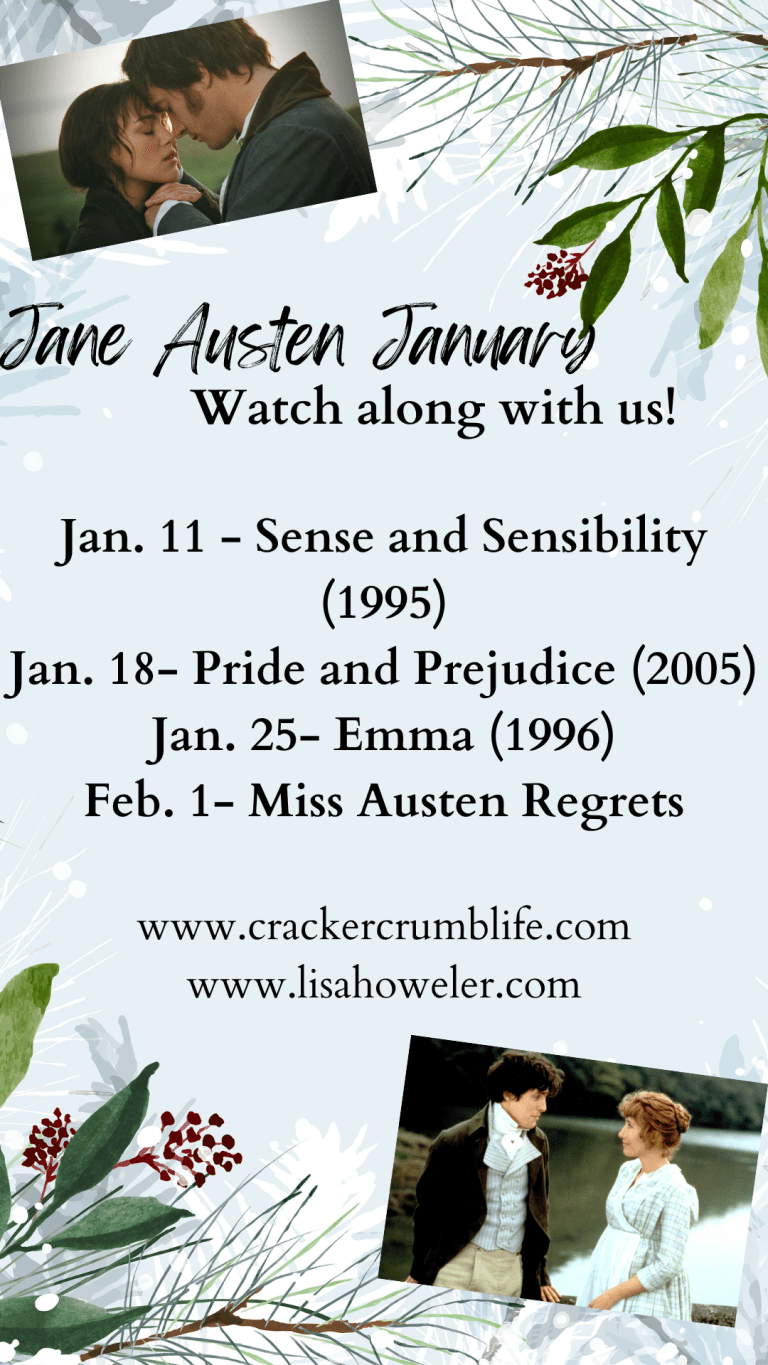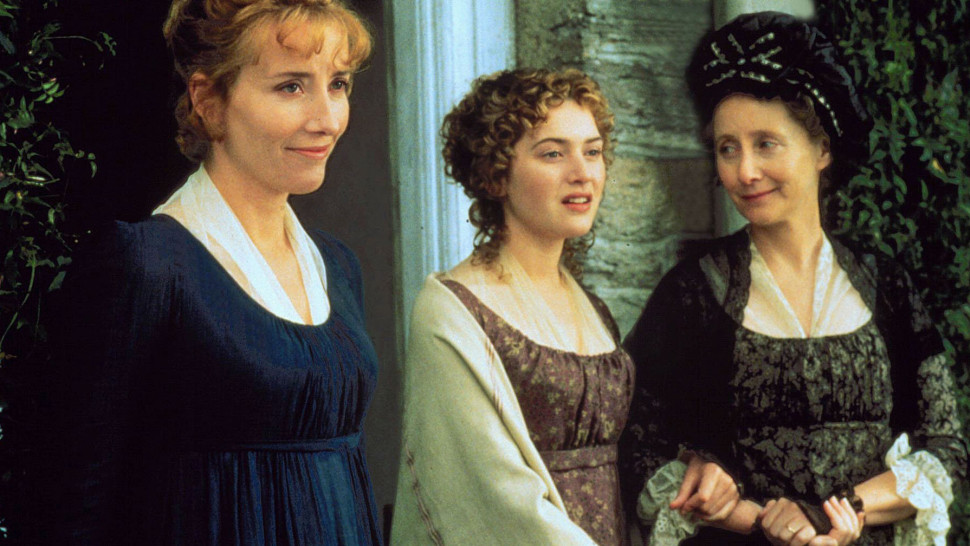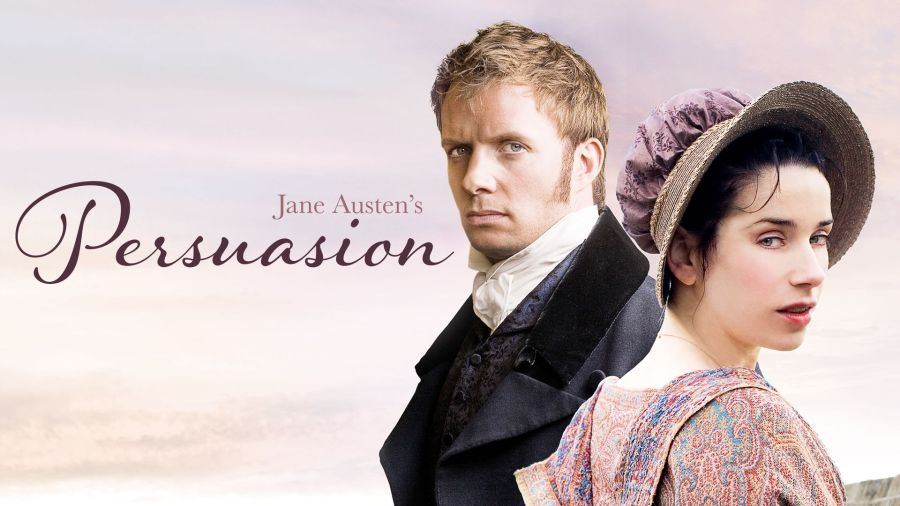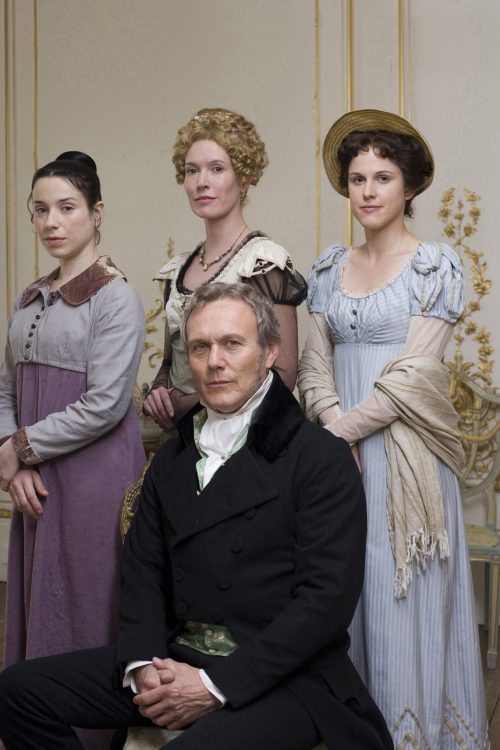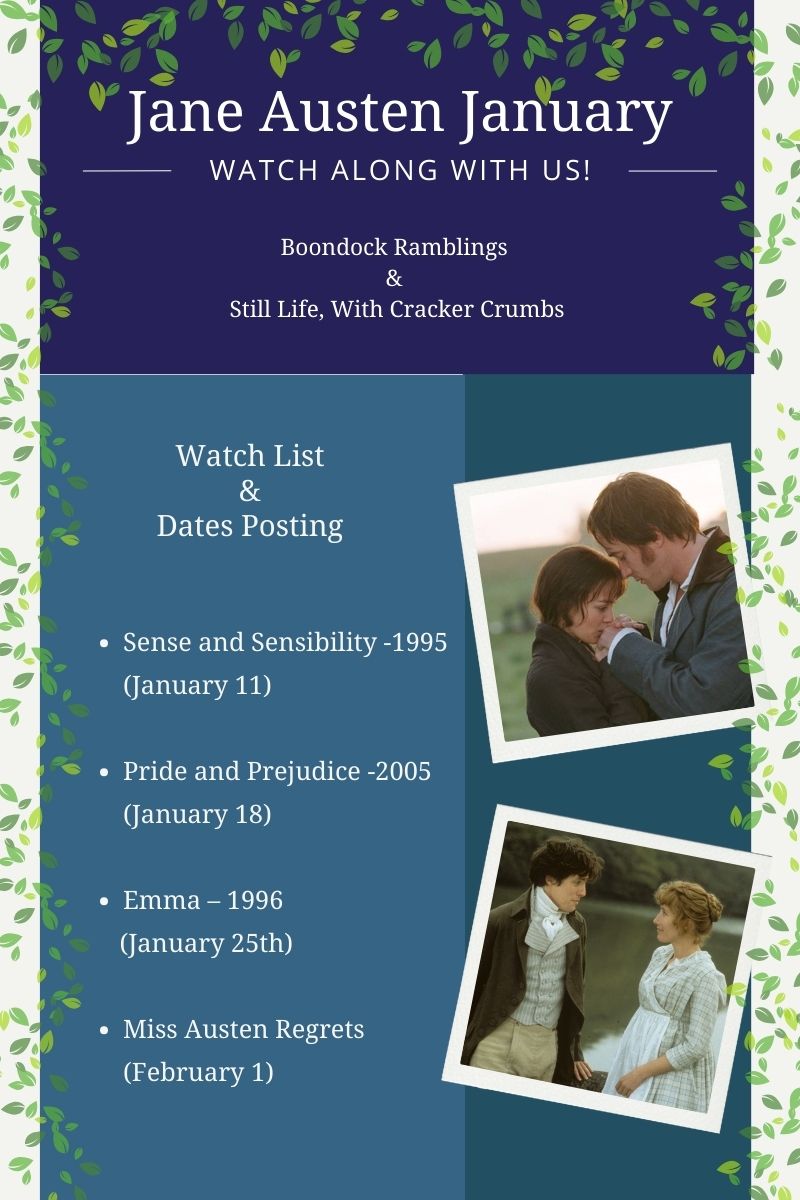
For the month of January, Erin from Still Life, With Cracker Crumbs and I watched a movie adaptation of Jane Austen books for our link up for Jane Austen January (you can find the link to our past posts at the top of the page).
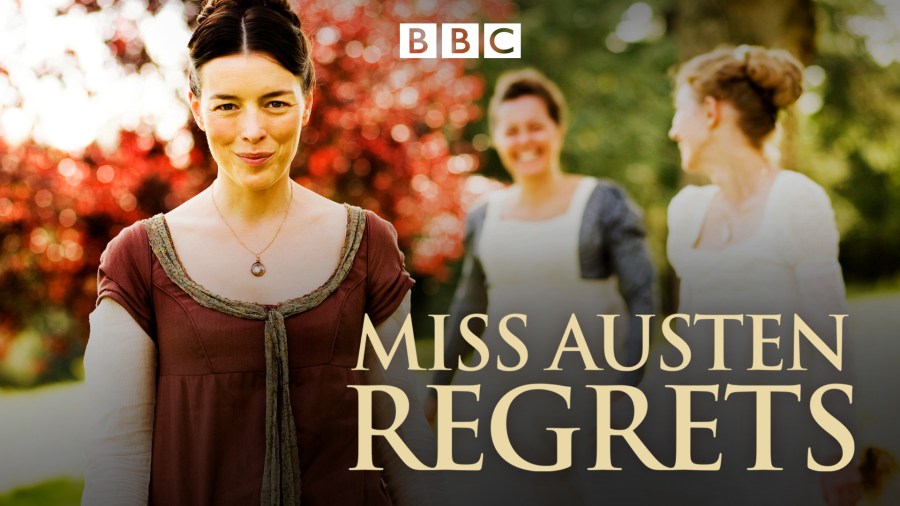
Erin has been unable to participate the last two weeks so this week I watched Miss Austen Regrets (2007) by myself.
I enjoyed this movie over any of the others we watched. The movie was the semi-biographical (biopic) story of Jane Austen — not the polished, proper, and fantasy versions we see in her books (though there is a great deal of realism in them as well). Of course, there was a lot of fiction in this movie as well, since there isn’t a ton of information known about Jane’s real life.
This movie follows Jane later in life, exploring why her chances at love like she wrote about were never fully realized. Those chances either slipped away or she pushed them away according to the movie and other accounts. Taking creative license, mixed in with some truth, the movie weaves in the story of Jane’s niece with her own. Fanny Knight a wide-eyed young woman who has romanticized love partially because of her aunt’s books.

Through Fanny and Jane’s interaction, we are led through a bittersweet journey that carries the viewers through a series of regrets by Jane, that she may or may not have really had in life.
The story was beautifully presented, not because of beautiful settings or scenes, though there were those too, but because of the emotions, we lived with a woman we know very little about other than what we read between the lines of fictitious prose. That prose within novels she wrote became so popular there is now a new cinema adaptation of her work every other year and thousands upon thousands of fan fiction based on the books she wrote and released in her short 41 years.
When this movie ended, I actually had to pause to process it all and to stop crying over the ending.
There is way too much about Jane’s history to share in one blog post or in one movie so this movie specifically focused on Jane’s later life and this blog post will do the same. One thing I should mention is that we don’t know a lot about Jane’s personal life because her sister burned tons of letters Jane sent to her. Some historians believe Jane wrote thousands of letters to her sister Cassandra over the years, but in the end, only about 150 survived and many of those were redacted or cut apart to keep certain information out of the public eye.

Some historians surmise that Cassandra wanted to protect the privacy of her sister. Jane was known to be very blunt and straightforward in her commentary and it is possible she was a bit opinionated about some in the family or others the family knew and Cassandra didn’t want people to see those comments. Or she might have wanted to protect Jane’s love life from a curious family and public.
Either way, some vital information that would have shed even more light on who Jane was in her personal life is no longer available.
What we have in Miss Austen Regrets is a fictionalized telling of what Jane may have been like, what may have happened between her and her family, and how she may have felt as she became ill.

I think that Jeremy Loverling who directed it and Gwenyth Hughes, who wrote the screenplay, did an amazing job weaving an imaginative story with a bit of historical facts that we do know mixed in.
One of the biggest messages of this movie, starring Olivia Williams as Jane, is that we shouldn’t confuse fiction with real life. This point is driven home several times but first when Jane tells her niece, portrayed by Imogen Poots (that’s an unfortunate last name, right?), “”My darling girl. The only way to get a Mr. Darcy is to make him up.”
The other message is that a woman should marry for love not for protection and wealth, like when Jane tells her niece, “Fanny, do anything but marry without affection.”
She tells Fanny this when Fanny asks Jane for advice on a man who she feels will propose to her – John Plumtre, who was played by a curly-headed blond Loki – er, I mean Tom Hiddleston. That was a bit shocking to me because I’m used to an older Tom with darker hair but here he was – all in his young, blond glory and totally out of character for me as an anxious 17th century man.

Jane tells her niece she likes to flirt and that’s why she never married. Viewers can tell there are a variety of reasons Jane never married and one of them is because she’s afraid she will no longer be able to write if she is married and taking care of children.
Later Jane runs into a man – Rev. Brook Edward Bridges, played by Hugh Bonneville — who reminds her that he wanted to marry her and would have cared for her, her sister, and her mother. He’s such a tender character and he becomes even more tender when he sees she is not feeling well later in the movie. It is clear that he has always loved her and still loves her, even though he is now married to someone else.

I had to find out more about him so I did a deep dive online and found this article about letters between Cassandra and Jane that hints Edward did propose at one time. It also mentions Edward’s wife who Jane wrote: “for her health, she is a poor Honey—the sort of woman who gives me the idea of being determined never to be well—& who likes her spasms & nervousness & the consequence they give her, better than anything else”
She used Edward’s wife as the basis for the sister of the main character in Persuasion – a woman who used her supposed illnesses for attention.
Ironically, Edward Bridges passed away five years after Jane at the age of 46. His wife lived another 40 years, despite all her “ailments”.
If rumors are true and similar to what happened in the movie, Jane didn’t have an easy go of it with her difficult mother who always held a grudge against her for not marrying someone wealthy to take care of them.
Watching this movie gave me an entirely different impression of the woman whose books I have resisted because of her fans who have what I saw as a silly obsession. Whether some aspects of the movie are true or not, I can now see that there were most likely many elements of Jane’s own life that she used for her books. Some of those were joyful moments, some heartbreaking, but all made up her life and allowed her to give readers a tiny glimpse into her life through her novels.
If some of what was shared is true, I think Jane believed that someday she would find love like she’d written about before her death. Before she could, though, she became sicker and too weak.

I have to agree with what Walter Scott wrote in his diary in 1926 after rereading Pride and Prejudice for the third time.
“That young lady had a talent for describing the involvements and feelings and characters of ordinary life, which is to me the most wonderful I ever met with. The Big Bow-wow strain I can do myself like any now going; but the exquisite touch, which renders ordinary commonplace things and characters interesting, from the truth of the description and the sentiment, is denied to me. What a pity such a gifted creature died so early!”
We really did lose her too soon.
If you want to read about where this made-for-TV movie (which I thought was better than most movies on the big screen) was filmed you can read the post from Joy from Joy’s Book Blog. This concludes our Jane Austen January. Thank you to everyone who participated in it! I hope you will check out the links at the link up above. The link party closes on Saturday.
Have you seen this movie? What did you think of it?