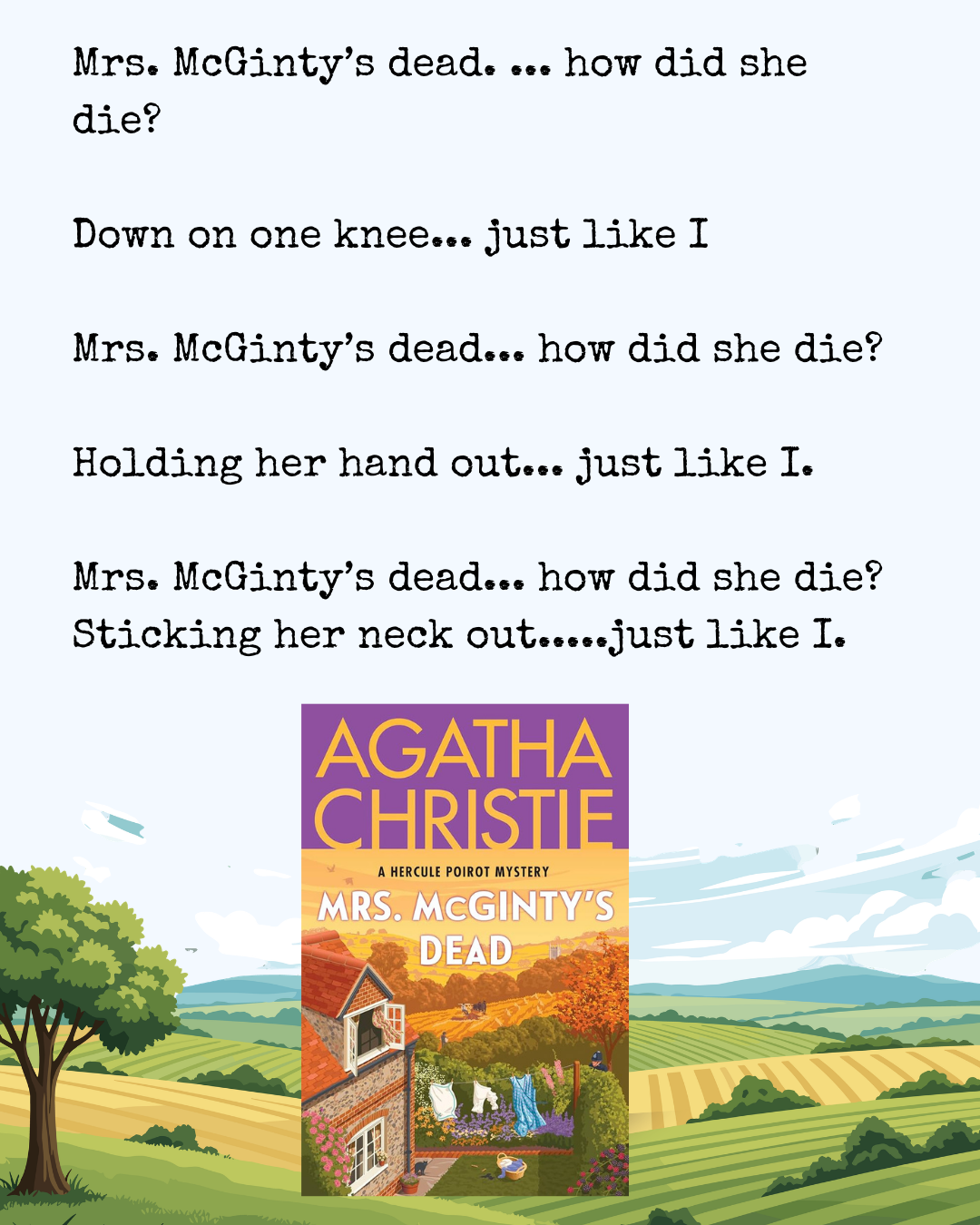
Mrs. McGinty’s Dead by Agatha Christie is a Hercule Poirot mystery, which I enjoyed, despite the fact it did not feature Captain Hastings. This was the first book I have read without him.
I love Hastings and was concerned not having him would make me dislike the book but luckily Superintendent Spence and the mystery writer Mrs. Adriane Oliver ended up getting involved in the mystery as well and they were fun additions. Mrs. Oliver was the most fun.
This was a mystery with two other mysteries mixed in.
The book also features a spoiler in it about Poirot’s future as I think maybe Agatha liked to channel herself a bit through Mrs. Oliver, but more about that later. I’ll give you a warning before I get to that part too.
The story involves Poirot investigating the murder of Mrs. McGinty, a landlady and house cleaner whose tenant, James Bentley, was convicted of her murder and is about to be hung when the superintendent calls Poirot because he’s having doubts that Bentley is guilty.
Poirot isn’t sure how to investigate a murder that happened months ago but agrees to try. He begins to unravel a mystery within a mystery as he finds out that three days before she was murdered, Mrs. McGinty read a clipping from a notorious gossip paper that featured the story of four women connected to decades-old crimes.
She even wrote a letter to the paper to say she had found a similar photo that would prove one of her neighbors was one of the women in the article. Even though her terrible spelling caused the paper to reject the letter, it was found after her murder.
Poirot is intrigued by her letter and her assertions that one of the former criminals or victims lives in the town.
Together he and Spence try to figure out who in the area might be a former 12-year-old girl who killed someone with a meat cleaver, a mistress whose married employer/boyfriend killed his wife, a wife whose husband was killed by a man who loved her, or the wife of a criminal offered the chance to leave the country and start over.
Where does this book foreshadow the future of Poirot?
If you don’t want to know about the last Poirot book, don’t read any further.
According to various sources, Agatha Christie wrote about the death of Hercule Poirot long before the final book in the series. She actually wrote about him dying somewhere between 1941 and 1943 and locked it in a safe for 30 years. She wrote it so early because she was concerned she might not survive World War II and wanted to be able to end her characters life on her own terms and not at the hands of a different writer.
In this book, Ariadne talks about her own character, how she can’t stand him, and it is suggested to her how she can dispose of him in a future book, after she dies.
“How do I know?” said Mrs. Oliver crossly. “How do I know why I ever thought of the revolting man? I must have been mad! Why a Finn when I know nothing about Finland? Why a vegetarian? Why all the idiotic mannerisms he’s got? These things just happen. You try something — and people seem to like it — and then you go on — and before you know where you are, you’ve got someone like that maddening Sven Hjerson tied to you for life. And people even write and say how fond you must be of him. Fond of him? If I met that bony, gangling, vegetable-eating Finn in real life, I’d do a better murder than any I’ve ever invented.”
Robin Upward gazed at her with reverence.
“You know, Ariadne, that might be rather a marvelous idea. A real Sven Hjerson — and you murder him. You might make a Swan Song book of it — to be published after your death.”
Sound familiar? It’s well-known that Agatha grew sick of Poirot (though I couldn’t find the actual source of this statement anywhere online – do any of my blog readers know where it came from?) calling him something along the lines of “a detestable little man” so Ariadne’s description of her character seems to fit. And then the hint at how he might be killed off…again very familiar to Agatha’s plan.
Many of Ariadne’s quotes remind me of what Agatha probably thought about writing ficition, or even just writers in general.
I am sure I will read more of Ariadne in future books, and it will be interesting to see even more similarities between her and Agatha.
Agatha gave Poirot a wry sense of humor and that was on full display in this book as in others. I always love when he tells someone who he is an expects them to be shocked or excited, but instead they are often confused or have no clue who he is.
““His name, he noted with chagrin, made no particular impression on her. The younger generation, he could not but feel, were singularly lacking in knowledge of notable celebrities” ― Agatha Christie, Mrs. McGinty’s Dead
Overall, I enjoyed the book, as I said, but there were quite a few characters and it did get challenging to keep them all straight.
As with Christie’s other books, this is a pretty quick read that will lead you down a few paths until Poirot, and we, reach the right one.
Welcome to the A Good Book & A Cup of Tea (A Monthly Bookish Link Party)!! This link-up is for book and reading posts or anything related to books and reading (even movies based on books!).
1. For Bloggers, you can link unlimited posts related to books and reading. They can be older posts or newer posts. These can be posts about what you’re reading, book reviews, books you’ve added to your shelf, reading habits, what you’ve been reading, about trips to the bookstore, etc. You get the drift.
2. Link to a specific blog post (URL of a specific post, not just your website). Feel free to link up any older posts that may need some love and attention, too.
3. Please visit at least two other bloggers on this list and comment on their posts. Have fun! Interact! Get some book recommendations.
4. Readers can click the blue button below to visit blog posts.
5. If you add a link you are giving me permission to share and link back to your post(s).
Please be sure to visit other posts in the link-up and support each other!
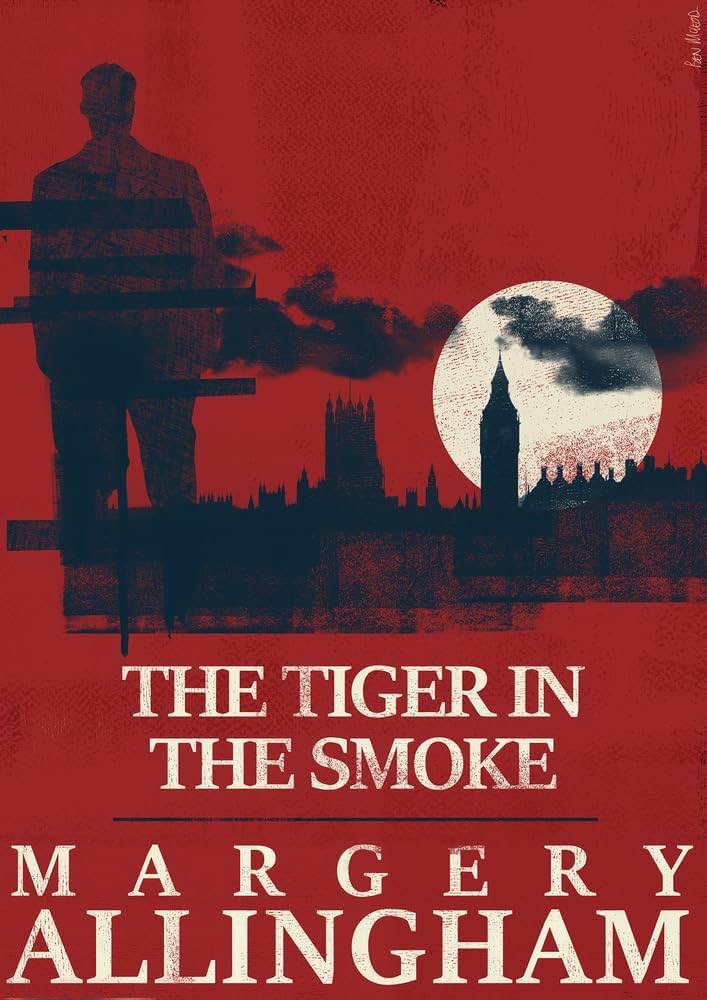
This was my first Margery Allingham book, and I was very impressed with her writing style and storytelling.
This book is called by Golden Age mystery enthusiasts one of her best. It is the fourteenth book in the Albert Campion series, but Campion isn’t really in this book as much as I expected him to be.
First, a little bit of a description that I pulled off Goodreads:
A fog is creeping through the weary streets of London—so too are whispers that the Tiger is back in town, undetected by the law, untroubled by morals. And the rumors are true: Jack Havoc, charismatic outlaw, knife-wielding killer, and ingenious jail-breaker, is on the loose once again.
As Havoc stalks the smog-cloaked alleyways of the city, it falls to Albert Campion to hunt down the fugitive and put a stop to his rampage—before it’s too late . . .
This one is more of a psychological thriller than a detective mystery with Allingham walking us through the story through action but also a lot of mental contemplations of four different characters, Campion being one but on a smaller scale.
Our characters are Havoc, Geoffrey Leavett, Canon Avril, Inspector Charlie Luke, Campion, and Meg Elgenbrodde.
Points of views are offered for most of them but not consistently, which sounds confusing, but it really isn’t.
If you have read detective or Golden Age mysteries from the 1930s to the 1960s, then you know there is a lot of what we writers call “head hopping.” The author hops in and out of various characters heads, telling us what each one is thinking in the same scene. These days we writers are told to never head hop. Stick to one character’s point of view per scene. If you want to show the thoughts of another character, then wait until a scene break of a new chapter.
Back in the old days, there were less rules, so authors just wrote whatever they wanted to and however they wanted to and readers just went with it. Sure, it could get confusing,s but if the story was strong enough no one cared.
I found myself nervous through a lot of this book as characters seemed to put themselves in the most precarious situations.
We start the book with Meg and George in a car together, talking about Meg preparing to go to a meeting with a man who insists he is her husband who died during World War II, which ended several years before. The man has been sending her letters. Meg and George are supposed to be married soon, so of course this development is unsettling to them both.
Meg takes her cousin, Campion, a private detective, and London Police Inspector Charlie Luke to meet with the man.
I won’t tell you if the man is really her husband or not, because I don’t want to give anything away, but I will say that there is a mystery involving her husband and a treasure and it is tied to Havoc, an evil man who has killed many, just escaped jail, and will kill again to get what he wants.
I loved opening this book up on my Kindle when I had time to read it and had a hard time putting it down. I hope to get a paperback copy at some point so I can reread it.
There are some really well-written lines and paragraphs in it.
Here are a few I enjoyed:
“He was watching her, trying to appraise her reaction. The face she turned to him was both disappointed and relieved. Hope died in it, but also hope appeared. She was saddened and yet made happy.”
The rumbling ceased abruptly and a clipped schoolmasterish voice remarked acidly: “Very tood of you to bother about my immortal soul, Chief Inspector. I’m afraid I’d ceased to concern myself about yours.”
“Then he dropped lightly to the ground and a smile split a wide thin-lipped cat’s mouth in which the teeth were regular and beautiful.
‘Dad’s back,’ he said, and his voice was smooth and careful. Only the shadow flitting like a frown across his forehead and his pallor, which was paper-like, betrayed his weariness. His spirit danced behind his shallow eyes, mocking everything.”
His beauty, and he possessed a great deal, lay in his hands and face and in the narrow neatness of his feet. His hands were like a conjurer’s, large, masculine, and shapely, the fingers longer than the palms, and the bones very apparent under the thin skin.”
He was a man who must have been a pretty boy, yet his face could never have been pleasant to look at. Its ruin lay in something quite peculiar, not in an expression only but something integral to the very structure. The man looked like a design for tragedy. Grief and torture and the furies were all there naked, and the eye was repelled even while it was violently attracted. He looked exactly what he was. Unsafe.”
When he came to the part which was most important of all to him that night, he paused and said it twice. ‘Lead us not into temptation but deliver us from evil.’
That was it. That was what he meant. Lead us not into temptation, for of that we have already enough within us and must resist it as best we can in our own way. But deliver us, take us away, hide us from Evil. From that contamination of death, cover us up.”
I am looking forward to reading more of this series.
Have you read any of Allingham’s books?
Also, I just found out there was a movie based on this book made in the UK in 1956. You know that I am going to have to find it and watch it!
‘”Isn’t it better to have your heart broken than to have it wither up?” queried Valancy. “Before it could be broken it must have felt something splendid. That would be worth the pain.”‘
Note: I have removed the password from this post so it is more accessible, but be warned that there are spoilers about the book ahead!
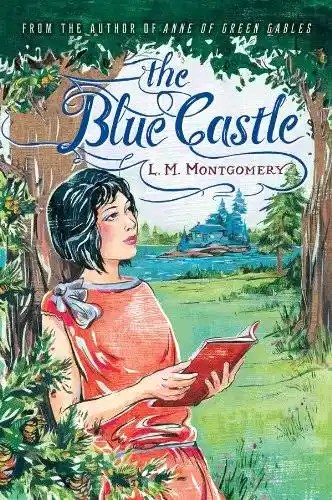
I read The Blue Castle on a whim last year and was surprised by how much I loved it. So much I am rereading it again this year.
Why do I love this book so much?
For one, I love how whimsical it is. I love how it starts out with us in the pits of despair and slowly we are taken on a journey that will leave us questioning the moments in life where we let others tell us our dreams weren’t worth dreaming
I love the sweet romance of this book and how Valancy wants love but when she finds it, it is not the grand, showy love she imagined in her dreams, but is instead grounded, secure, and a friendship that blossoms into love.
I love how Valancy steps out from under the thumb of her mother and family to find freedom to be herself. She learns how to live life the way she wants to live it before the option is taken away from her.
Today I am going to review the first ten chapters of the book and I’m going to be honest, these chapters are a bit melancholy as we are told that Valancy is depressed and hopeless many times within these pages. Some readers might be tempted to give up on the book at this point, but I pushed through and if you are reading this, you did too. Aren’t you glad? I am!
I truly feel that this book is most likely one of the most autobiographical of all of Lucy Maud Maud’s books, though I know she herself said Emily of New Moon was the most autobiographical.
Lucy wrote this book after her husband was diagnosed bipolar and she was dealing with depression. I am certain there must have been many times she escaped inside her head to her blue castle during this time and beyond.
This book was so eye-opening and really, in many ways, life changing for me. It made me think about my own life and how many times I have decided not to do something simply because I know I am expected to do certain things certain ways or because I know negative comments will be made by family members.
The idea of a woman being jolted awake to the fact she’s never really lived and that only she can change that by a difficult medical diagnosis is a fascinating idea for a story to me. That story inspired others, including me, to change their lives like Valancy did, even without a medical diagnosis.
There are so many good quotes in his book but the defining one has to be the one she reads in John Foster’s book, Magic of Wings: “Fear is the original sin. Almost all the evil in the world has its origins in the fact that someone is afraid of something. It is a cold, slimy serpent coiling about you. It is horrible to live with fear and it is of all things degrading.”
Bam.
Those words are what will eventually spur Valancy into taking control of her own life so she can really live before she dies.
She begins to really live by slowly rebelling against her controlling family, especially her mother. Her family is used to her doing what they think she should do. They are used to her being obedient and quiet and boring.
I think that valancy’s first act of rebellion is to cut down a rose bush that is called “Doss’s Rose Bush.” Her nickname is Doss and the bush never blooms, much like Valancy’s life. She finds a knife in the garden shed and rips the bush out of the ground in defiance of it never having bloomed from her.
The rebellion and out-of-character behavior become easier after that.
Soon she decides she will no longer do the things she doesn’t want to do. Her mother can pout, but Valancy is done, and what strikes me personally is that Valancy decided this at 29, and it took me until I was 48.
I have hit a point in my life where I like to remind myself that I am an adult ,and if I don’t want to go somewhere or do something, I don’t have to, even if people in my life think that I have to or should.
I can’t believe it has taken me so long to shrug it off when I know someone in my life might be upset I didn’t do what they want. I don’t have to do what others want or expect of me.
What a freeing feeling.
In these first ten chapters, Valancy finds that feeling and soars emotionally because she’s finally shedding the oppressive presence of her mother and other relatives over her life. She’s finally pursuing what she knows will make her happy.
I am not saying I think we should do what makes us happy at the expense of others but there are times we do have to stop caring what others think and just live.
A few things I loved about these chapters:
How Valancy got the courage to go to Dr. Trent instead of the doctor her family normally went to.
Her decision not to let her mother tell her what do anymore, and the moment she finally stands up to her mother.
I love how the rebellion and realizations start slowly and just keep building.
Another aspect I find interesting in these chapters is how she compares herself to her cousin Olive so much. Olive is prettier and men and the family love her. Yet she is also single and in her mid to late 20s, so Valancy doesn’t understand why everyone seems to think Olive is so wonderful.
This is foreshadowing for future chapters in the book, but I won’t tell you any more than suggesting you keep in mind the phrase, “The grass isn’t always greener on the other side,” when it comes to Olive in the future.
One note on how this book is written — it is mainly third person but our author breaks the fourth wall a few times, like here, when she talks about Valancy’s changing lovers in her daydreams.
“I don’t say Valancy deliberately murdered these lovers as she outgrew them,” she writes in chapter 1. “One simply faded away as another came. Things are very convenient in this respect in Blue Castles.”
Here are some of my favorite quotes from the first ten chapters:
About the lovers in her blue castle:
“At twelve, this lover was a fair lad with golden curls and heavenly blue eyes. At fifteen, he was tall and dark and pale, but still necessarily handsome. At twenty-five, he had a clean cut jaw, slightly grim, and a face strong and rugged rather than handsome. Valancy never grew older than twenty-five in her blue castle, but recently — very recently — her hero had reddish, tawny hair, a twisted smile, and a mysterious past.”
On her 29th birthday, and realizing all she is afraid of:
“Afraid of her mother’s sulky fits — afraid of offending Uncle Benjamin — afraid of becoming a target for Aunt Wellington’s contempt — afraid of Aunt Isabel’s biting comments—afraid of Uncle James’ disapproval — afraid of offending the whole clan’s opinions and prejudices —afraid of not keeping up appearances —afraid to say what she really thought of anything — afraid of poverty in her old age. Fear — fear — fear she could never escape from it. It bound her and enmeshed her like a spider’s web of steel. Only in her Blue Castle could she find temporary release. And this morning Valancy could not believe she had a Blue Castle. She would never be able to find it again. Twenty-nine, unmarried, undesired — what had she to do with the fairy-like chatelaine of the Blue Castle? She would cut such childish nonsense out of her life forever and face reality unflinchingly.”
““But though she was not afraid of death, she was not indifferent to it. She found that she resented it; it was not fair that she should have to die when she had never lived.”
“She made a discovery that surprised her; she, who had been afraid of almost everything in life, was not afraid of death. It did not seem in the least terrible to her. And she need not now be afraid of anything else. Why had she been afraid of things? Because of life.”
“She found she resented it; it was not fair that she should have to die when she had never lived. Rebellion flamed up in her soul as the dark hours passed by —not because she had no future but because she had no past.”
“Fear is the original sin,” wrote John Foster. “Almost all the evil in the world has its origin in the fact that someone is afraid of something. It is a cold, slimy serpent coiling about you. It is horrible to live with fear; and it is of all things degrading.”
What are some of your favorite moments in the first ten chapters?
Do you think that Valancy becomes a little too callous and maybe even a little rude to family as she works out how to be free of them or do they deserve the treatment they receive?
Do you have a favorite quote from these chapters?
The next blog post will cover Chapter 11 to 23 and won’t be up until February 27 so if you are behind and following these posts as they are first posted, you have plenty of time. If you are following these posts somewhere down the road, read the next post whenever you are ready!
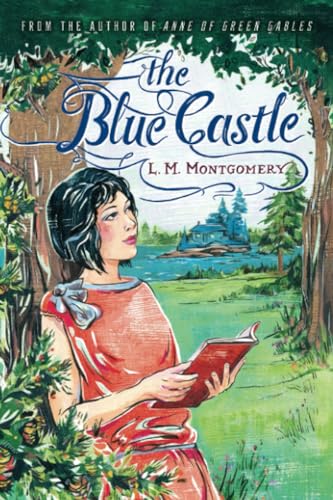
I am re-reading The Blue Castle by L.M. Montgomery and decided I would write some blog posts for anyone who wants to read along with me. I originally was going to write these posts only in February, but I they will stretch into March as well now. One, I am behind on reading the book and two, that means I am behind on writing the blog posts I wanted to write for this read-along.
There will be spoilers in the chapter review posts posts so you are warned.
My plan was to password protect any of the posts with spoilers, but readers were having a hard time commenting so I removed the password protection. Scroll past them at your own risk if you have not read the book yet and want to.
If you don’t have time to read the book this month, don’t worry. These posts will be up for you to look at anytime.
A little history of our author
For this first post, I’m going to give a little background on our author and the book.
Here is a description of the book from Goodreads for those unfamiliar with it:
An unforgettable story of courage and romance. Will Valancy Stirling ever escape her strict family and find true love?
Valancy Stirling is 29, unmarried, and has never been in love. Living with her overbearing mother and meddlesome aunt, she finds her only consolation in the “forbidden” books of John Foster and her daydreams of the Blue Castle–a place where all her dreams come true, and she can be who she truly wants to be. After getting shocking news from the doctor, she rebels against her family and discovers a surprising new world, full of love and adventures far beyond her most secret dreams.
The book is considered to be one of a few books written for adults by L.M. Montgomery, the author of Anne of Green Gables and a series of books about Anne, which are considered children’s books. They are very long children’s books, I do have to say though, and I can’t imagine today’s kids reading all of the books in the series because the ones after Anne are very wordy. Good, but wordy. And old-fashioned wordy at that too.
I am going to put a disclaimer in here for anyone who tries The Blue Castle for the first time. The first ten chapters are a bit repetitive with how depressed and oppressed our main character is. I urge you to not give up because slowly you are going to notice subtle changes in Valancy that are going to become not-so-subtle changes and eventually all-out rebellious changes that will forever change her life. In other words, the book picks up by chapter 11, and the chapters are short. Fear not!
Okay, now back to a bit of history about our author.
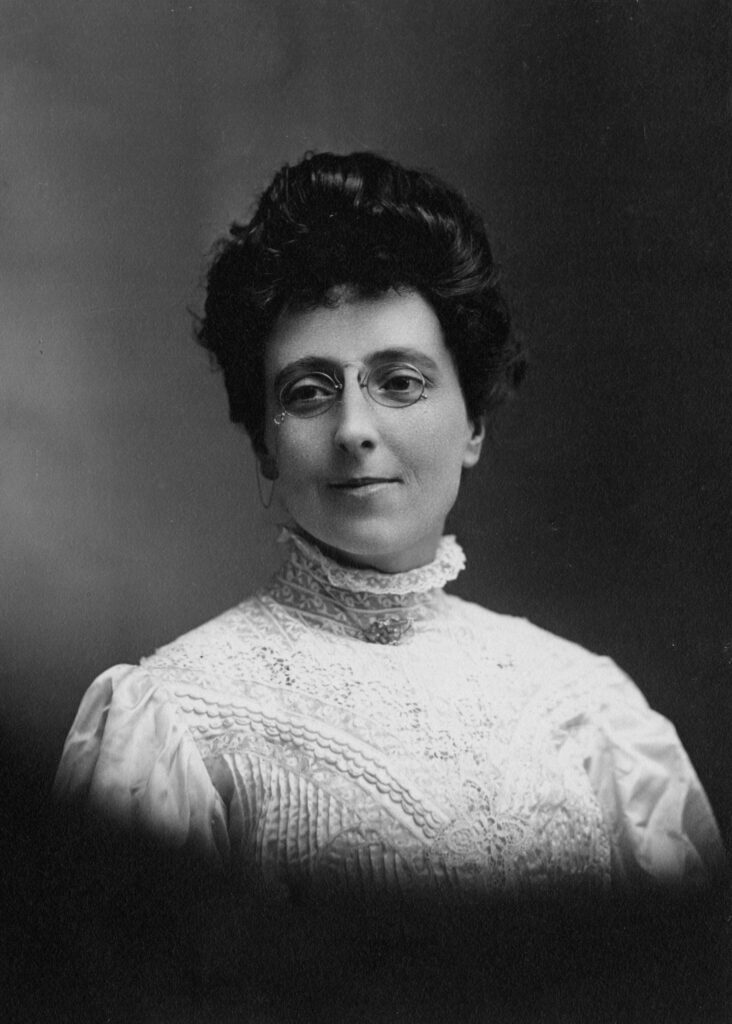
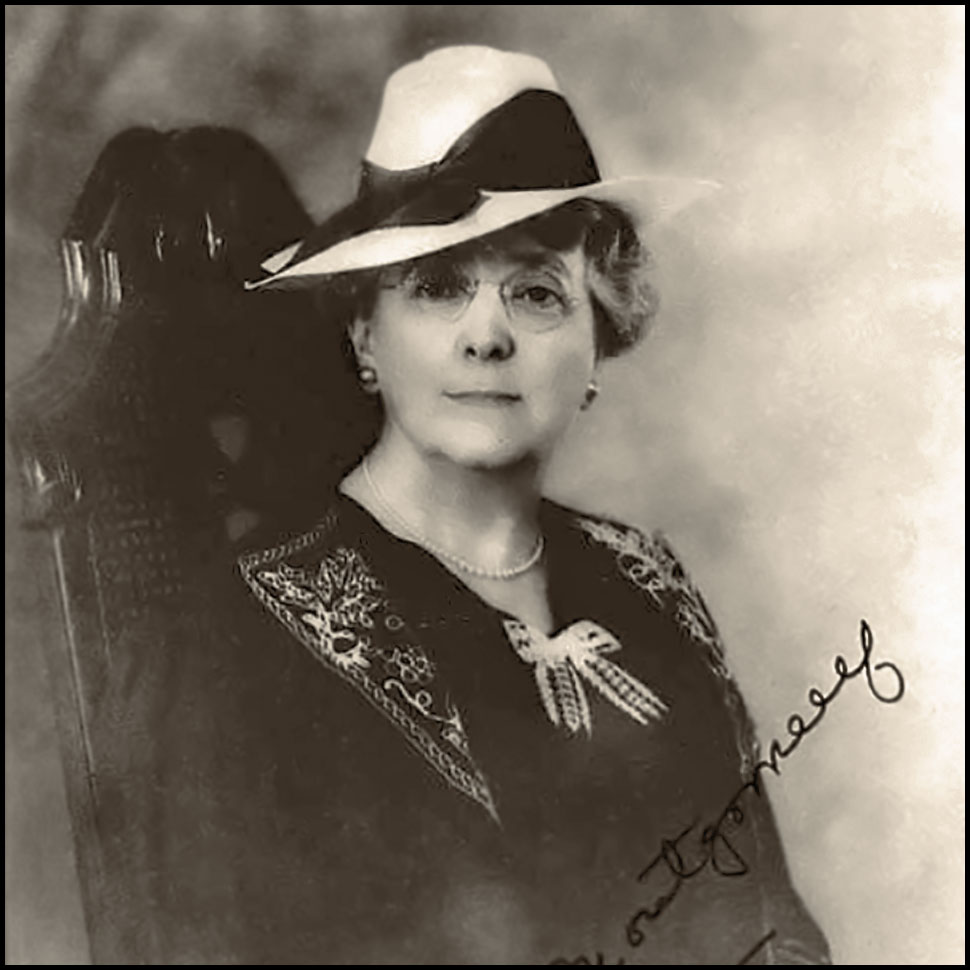
Many of you probably already know that L.M. stands for Lucy Maud.
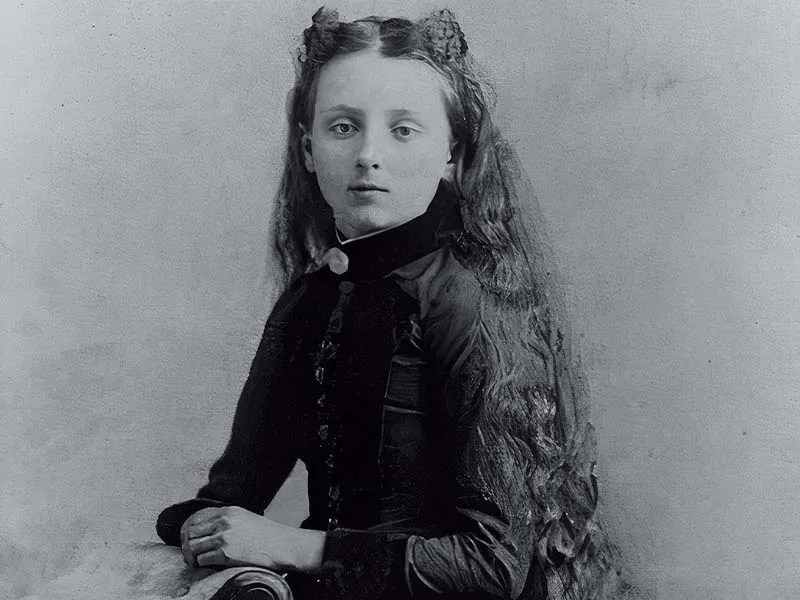
Lucy Maud Montgomery was born in 1874 in New London, Canada. It was called Clifton, Canada at that time.
She had a sad beginning with her mother dying from tuberculosis when Lucy Maud was almost two. Her father left her in the care of her mother’s parents, Alexander and Lucy Maud Wooner Macneill of Cavendish and then moved to Prince Albert, Saskatchewan and remarried. He never returned for his daughter, who was called Maud after she moved in with her grandparents since her grandmother’s name was also Lucy.
Reading about her early life helped me better understand why Lucy Maud was able to write Anne Shirley’s story so well. No, Lucy Maud was not adopted in the strict sense of the word. She had parents and she lived with family after her mom passed and her father left, but an orphan spirit remained within her.
Lucy Maud was an only child living with her 50-something grandparents so her imagination, nature, books, and writing became her friends.
She started keeping a journal and writing poetry at the age of nine. She became more serious about her journal writing at the age of 14.
She completed her early education at a one-room school near her grandparents’ home, spending only one year with her father and his new wife in Prince Albert.
It was while in Prince Albert that she had her first published piece, a poem called On Cape LeForce, appear in a Prince Edward Island newspaper.
Lucy Maud eventually earned a teaching degree and taught school for three years, six months of those on Prince Edward Island, before she returned to Cavendish to care for her grandmother after her grandfather died. Sound familiar at all, Anne fans?
Lucy Maud remained with her grandmother for the next thirteen years, with the only break being a nine-month period in 1901-1902 when she worked as a proof-reader for The Daily Echo in Halifax. She wrote many of her popular works while living with her grandmother but first wrote stories or articles for various magazines and publications, working her way up until she was earning $500 a year, which was a hefty sum back then.
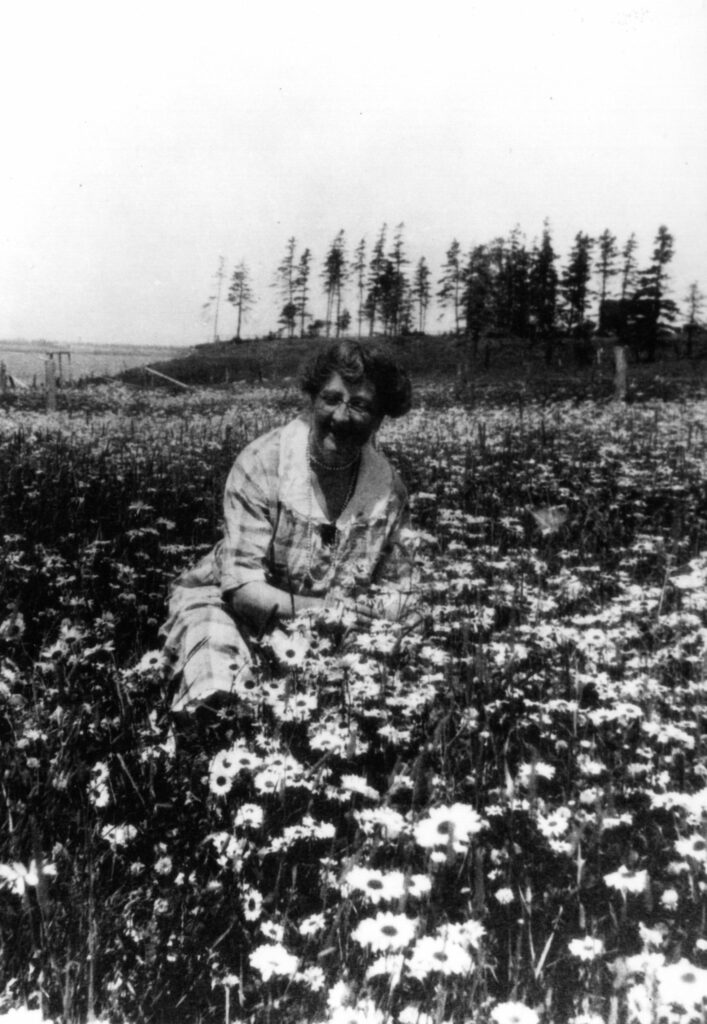
She wrote her first and most famous novel, Anne of Green Gables in 1905 but it was not published until 1908 due to it repeatedly being rejected by publishers who had no idea it would become such a beloved novel and, in the future, a cultural phenomenon. It would also bring a great deal of tourism to Prince Edward Island, where the book took place and where Lucy Maud lived for the first half of her life.
Source: Canadian Geographic
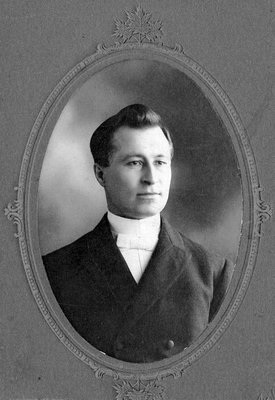
When her grandmother died, Lucy Maud married Rev. Ewan McDonald, who she’d actually been secretly engaged to since 1906.
I wish I could say her marriage was a good one but in truth it was not very happy and Lucy herself wrote in her journal sometime after the wedding, “When it was all over and I found myself sitting there by my husband’s side … I felt a sudden horrible onrush of rebellion and despair. I wanted to be free!”
Lucy definitely wanted to be free years later when she and her husband both struggled with their mental health. Her with depression and him with “manic-depressive insanity” (now known as bi-polar) which he was diagnosed with after World War I.
Rev. Macdonald
Mental illness was considered shameful at the time, so Lucy hid her and her husband’s condition. Sometimes she wrote his sermons so he could read them in church and if he was incapable of even reading them, she told everyone he’d had to go out of town..
After I found all this out, I realized one reason she wrote a book about a woman trying to break free of her mundane and difficult life after she was married was because she desperately wanted to escape her real life. She essentially said so in a 1925 journal entry.
“I have enjoyed writing it very much. It seemed a refuge from the cares and worries of my real world.” (Feb. 8, 1925)
When she finished it, she wrote, “I am sorry it is done. It has been for several months a daily escape from a world of intolerable realities.” (Mar. 10, 1925)
Marriage did bring at least something good to Lucy Maud.
Children. She had two sons (Chester Cameron in July 1912 and Ewan Stuart in October 1915 with a stillborn birth (Hugh Alexander, in August 1914 ) in between. Being a mom what she had always wanted and she wrote in her journal that motherhood “pays for all.”
She did not, however, enjoy being the wife of a minister, preferring to write in her locked front parlor, to visiting with the people of the town they moved to, pulling her from her beloved Prince Edward Island.
“To all I try to be courteously tactful and considerate, and most of them I like superficially,” she wrote in her journal, “but the gates of my soul are barred against them. They do not have the key.”
While many readers of Lucy Maud’s work would call the first Anne book (yes, there is a series of eight books featuring Anne or her family) the best she’s written, Lucy Maud herself favored Emily of New Moon because the story of a young girl trying to be a published writer when her family was so scandalized at the idea, mirrored Lucy Maud’s own life so closely.
Lucy Maud had an Aunt Emily, but she most likely based mean Aunt Elizabeth in Emily of New Moon on her Aunt Emily, many scholars say.
A cousin, the daughter of Aunt Emily, said her mother once tossed down a copy of A Tangled Web, another “adult” book by Lucy Maud, and said, “I’m ashamed to know her!”
While it’s never been made clear why Emily didn’t like her niece’s writing, some Lucy Maud scholars think it is because Emily longed to be a writer herself but couldn’t because of society’s constraints.
If you would like to read more about Lucy Maud’s life, by the way, you can pick up her memoir, The Alpine Path, which I hope to pick up someday or The Gift of Wings by Mary Henley Rubio, considered to be the definitive biography of her life. I also hope to read that one too. Much of what we know now about Lucy Maud came from her memoir and her own diaries, which Rubio used as the sources for her book.
“Forty years after Montgomery’s death, her inner life was finally revealed through her personal diaries, notebooks, scrapbooks, private correspondence and original manuscripts, all donated to the University of Guelph by her youngest son, Stuart,” Rosemary Counter wrote for Canadian Geographic in 2024. “Through them, Rubio and the close-knit community of Anne scholars would dive well beyond her books and deep into the mind of their author. For nearly a century, by design, if you knew Anne, you knew Montgomery. But all that was about to change.”
Lucy Maud suffered with anxiety at night. She often paced her floors, unclenching and clenching her hands.
She was known to take a cocktail of various drugs to help her anxiety and depression, and in 1942, after sending her manuscript, The Blythes are Quoted, off to her publisher, she took one of those cocktails, lay down, and never woke up again. She was 67.
As far as anyone in the family knew, her death was a total accident.
A couple of years ago, though, a news story came out with information from Lucy’s granddaughter, who wanted the public to know that even though the story had always been that Lucy accidentally overdosed, the family had lied out of embarrassment. There had actually been a note written by Lucy that may or may not have been a suicide note.
“May God forgive me and I hope everyone else will forgive me even if they cannot understand.”
Her son, Stuart, pocketed the note to protect her reputation, but 60-years-later Stuart’s daughter, Kate Macdonald Butler, wanted anyone suffering from mental illness to know they were not alone and could reach out for help, something Lucy Maud felt she couldn’t do.
Lucy Maud and The Blue Castle
According to Rubio, Lucy Maud was always considered a children’s book author, so when she published The Blue Castle, people were a bit thrown off.
“Its mature subject got it banned for children in a number of places” Rubio said. “While she was censored for mentioning an unwed mother (who dies, no less), young writers like [Morley] Callaghan were earning praise for sympathetic treatment of down-and-outers and prostitutes.”
Despite the backlash, The Blue Castle was a success. She wrotein her journal on Jan.22, 1927 that she received a letter from her publisher, Mr. Stokes, saying that “they have done so well with it that he wants me to write another similar to it as soon as possible.”
Some readers say A Tangled Web was that “similar book.”
Sometime in the 1990s, The Blue Castle became popular again and it has been on the reading lists of many classic book readers ever since.
If you would like to read my impressions of chapters 1 to 10 you can click this link and you will be brought to a password protected post. If you have read the book and want to discuss it with me the password is simply the word BLUE.
I am re-reading The Blue Castle by L.M. Montgomery and decided I would write some blog posts for anyone who wants to read along with me.
Originally I was going to write these posts for the month of February, focusing on ten chapters a week, but I am probably going to also share post into March as well now. One, I am behind on reading the book and two, that means I am behind on writing the blog posts I wanted to write for this read along.
I seem to always bite off more than I can chew, and had considered canceling these posts, but I really like the book and want to share it with others so I am going to let go of my desire to present my thoughts on the book in a certain way go and just get to posts when I can.
There will be some spoilers in some these posts so my plan is to alert readers if there is a spoiler and to password protect any spoiler posts.
I will post my first two posts Friday. One will be about L.M. Montgomery and the book and the other will be password protected and will discuss the first ten chapters.
I will give you the password in case you want to read the post.
Otherwise it will be hidden from other blog readers who might not want to see an unexpected spoiler.
The password for all the discussion posts will be BLUE.
If you don’t have time to read the book this month, don’t worry. These posts will be up for you to look at at anytime.
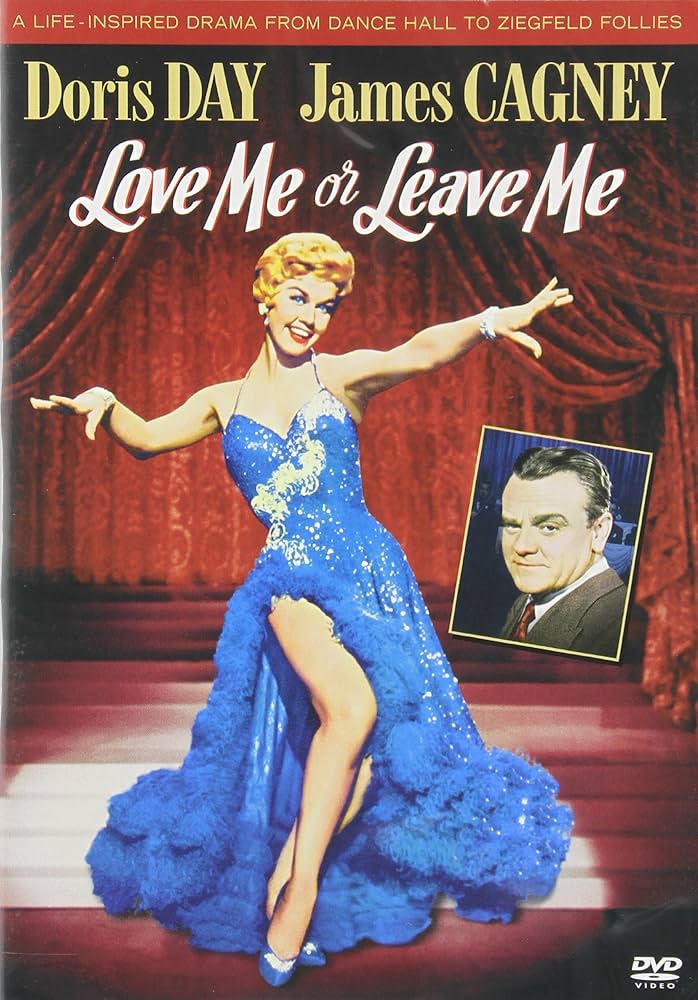
This week, my pick was Love Me or Leave Me (1955).
This was a hard one to watch because Cagney was such a jerk in it. I started it not knowing a thing about the true story, so I kept hoping he would transform and become a nicer person before the end of the film.
That certainly did not happen, even though the makers of this movie tried to make things seem nice and tied up at the end.
First, an online description:
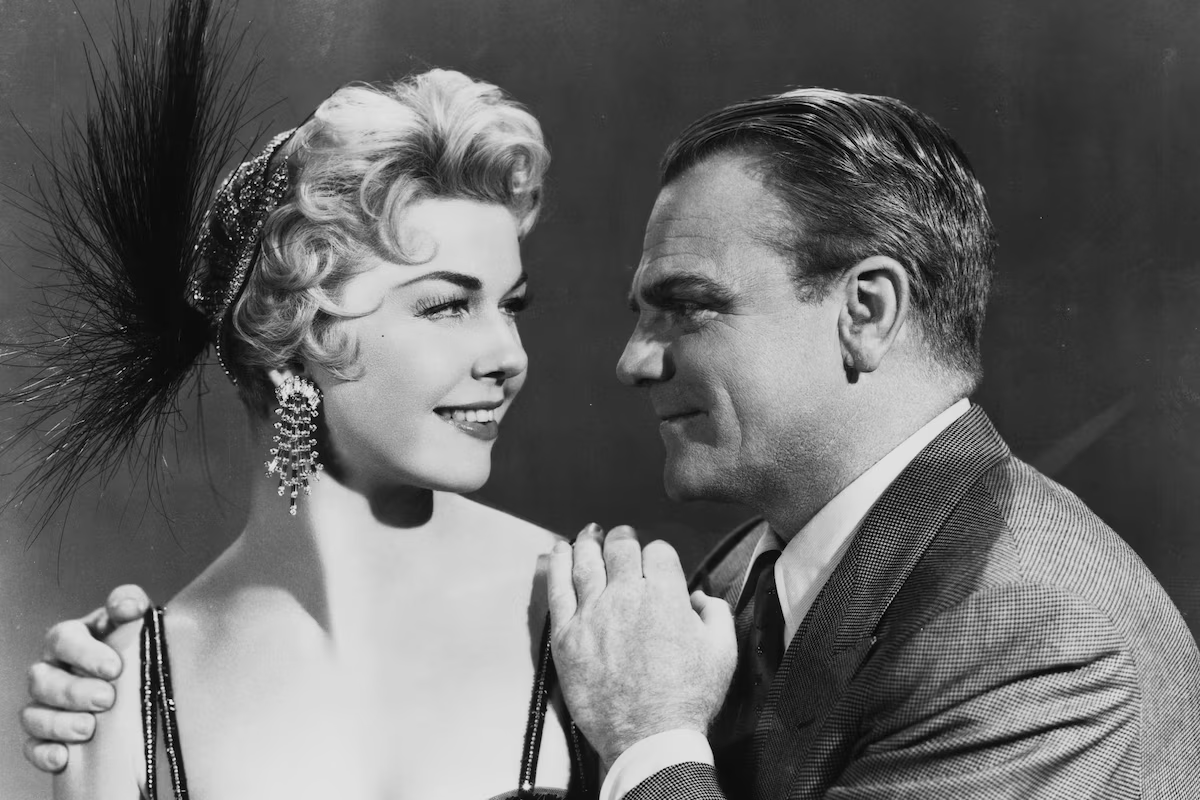
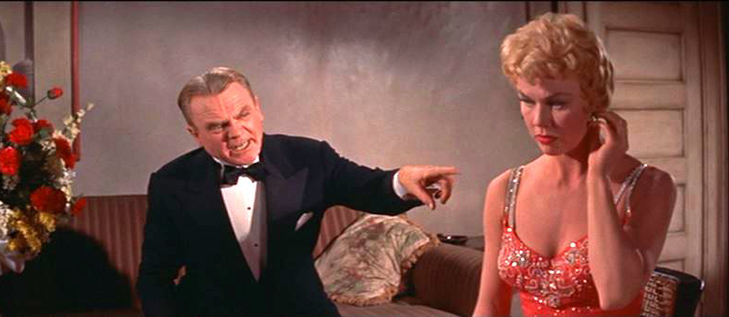
During the 1920s, a small-time Chicago criminal, Martin Snyder (James Cagney), discovers a beautiful dancer, Ruth Etting (Doris Day), after she’s fired from her job at a nightclub. Under Martin’s management, Ruth works her way to the top of the entertainment industry, eventually becoming a famous jazz singer and Broadway actress. But as Ruth’s popularity grows, Martin’s obsessive and controlling behavior begins to threaten her success and happiness.
This movie was shot in technicolor so don’t let any black and white photos I share here fool you. It was directed by Charles Vidor.
This movie starts with something that was in another movie I just watched this week — men at clubs paying to dance with girls. They were called taxi dancers or dancehall dancers. https://en.wikipedia.org/wiki/Taxi_dancer
It doesn’t go beyond dancing, that I know of, but I had no idea this was a thing in the 1920s, 1930s, and 1940s or, well, ever. There were girls who were hired as dancers and were employed by clubs. Men would pay to dance with a woman for a dance or a few or the night.
Lucille Ball apparently did this before she went into acting and it is the job her character has in the movie from 1946. I’ll be sharing about this movie at some point here on the blog.
In this movie, Doris Day is a taxi dancer who is fired after the man who pays to dance with her gets a little too handsy…if you catch my drift.
Cagney sees her firing and her and he’s immediately hooked.
Cagney is playing Martin “Marty” Snyder, a small time Chicago gangster who also dabbled in the entertainment business.
He is definitely physically attracted to Ruth, and at first, all he wants to do is get her a new job at one of his places as a dancer so he can make her one of his girls. He wants to take her to Florida with him. To stay with him. Wink. Wink. Nudge. Nudge.
Ruth doesn’t want to be a dancer or his lover, though. She wants to be a singer, and when she tells him this, he finds a way to make her a singer. One way he does that is by hiring a piano player named Johnny Alderman, who works at his club as her singing coach.
Of course, she and Johnny start to fall in love, but Marty is oblivious to this and keeps finding ways to boost Ruth’s career.
He seems to think that if he does that, she’ll eventually want to thank him and sleep with him. This movie was released in 1955, so none of these things about sleeping with him are said directly, but they are implied.
There are a lot of singing sequences in this movie, but I have to agree with Roger Fristoe who wrote an article for TCM.com, and said the movie isn’t really considered a musical despite the singing. It is, instead, a dramatic biography of Ruth Etting.
Cagney and Doris Day were in a previous musical together in 1950 —The West Point Story.
I’ve never been a huge fan of Doris Day or her singing, and I do NOT know why! There is something about her that just rubs me wrong. My previous impression of her was changed while watching this movie because she really does an amazing job as Ruth in this movie, or at least as far as I know, since I’ve never seen footage of Ruth Etting.
Doris made me feel so horrible for Ruth that I had to look for the real story of her.
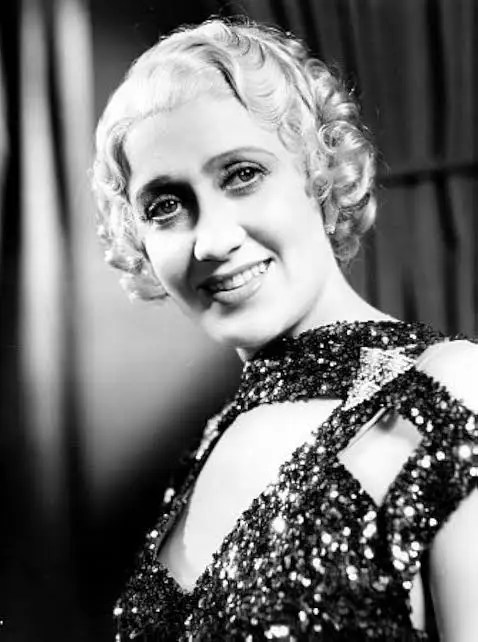
Ruth Etting
It was depressing to find out that her experience with Martin, whose real name was Moe Snyder, was even worse, darker, and more complex than this movie portrayed.
In the movie, there is a culminating event that shows us even more of the true character of Marty and in real life there was one as well. I won’t tell you what happens in the movie but in real life Moe held Ruth, his adult daughter, and Ruth’s boyfriend hostage. Eventually, his daughter was able to get ahold of a gun, shot at the floor in front of her father, and then held the gun on him until the police arrived. It’s a little less dramatic in the movie.
Ruth Etting lived into her 80s and would have been in her 60s when the movie came out. She reportedly said she felt that Doris played her a little harder and tougher than she really was and she said she never worked as a dancehall girl, suggesting the wrote that into the movie simply so they could use one of Etting’s songs, “10 Cents A Dance” in the movie.
“They took a lot of liberties with my life, but I guess they usually do that kind of thing,” Etting said.
There is a violent scene between Doris and Cagney at one point in the movie that was shocking, but, according to Doris, would have been more shocking if they had kept what Doris and Cagney actually filmed.
“He attacks me savagely, and the way Cagney played it, believe me, it was savage,” she was quoted as saying in her biography. “He slammed me against the wall, ripped off my dress, my beads flying, and after a tempestuous struggle, in which I tried to fight him off with every realistic ounce of strength I had, he threw me on the bed and raped me. It was a scene that took a lot out of me but it was one of the most fully realized physical scenes I have ever played…it wasn’t until I saw the movie in its release that I became aware that most of the scene had been cut.”
It had been cut because of the censors.
This was a movie that broke Doris out of her normal good-natured, bubbly roles, and the studio did worry that her fans would revolt at the idea of her in anything so gritty.
They didn’t need to worry since the movie earned six Oscar nominations, including a third Best Actor nomination for Cagney.
It ended up winning the Academy Award for Best Writing, Motion Picture Story.
Of Doris’ performance, Cagney said in a biography about him that he watched the movie again in 1980, and “Just saw something I hadn’t noticed before. There are no other women to speak of in the cast. Doris is so very much alone, which heightens the effect of the male world upon her. How many nice girls there are, and were, in this business that were just so afflicted by the presence everywhere of intimidating males.’“
My impression of Cagney’s character is that he was a sad man who didn’t know how to get what he wanted without bullying people.
He loved Ruth Etting and was so afraid of losing her that he abused her mentally, emotionally, eventually physically, and sexually.
Ruth went for it because she wanted to be famous, and he was getting her to where she wanted to go.
I found it sad that not only did Ruth have to go through an abusive relationship with a “Marty” but Doris did as well.
According to TCM.com, “A final irony about Love Me or Leave Me is the fact that the relationship between Ruth Etting and Marty Snyder had some disturbing parallels to the relationship between Doris Day and her husband Marty Melcher. Like Snyder, Melcher also controlled Day’s business affairs, made creative decisions for her even though he had no musical experience, and lived through her work. When Melcher died in 1968, Day discovered that he had mismanaged her entire life savings of $20 million dollars, leaving her completely broke.”
While this was a well-acted and written film, I can’t say it is one I would want to watch again because of the tough subject matter. I noticed in this movie, as I have in other Cagney movies, that a lot of Cagney’s acting is done with his eyes and that signature smirk.
Next up in my Winter of Cagney is White Heat. I have heard a lot about this one and am really looking forward to it.
Here is my full revised list for the Winter of Cagney (I had to move some things around when I couldn’t find two of the movies in my original list streaming, and also haven’t yet ordered the rather expensive DVDs):
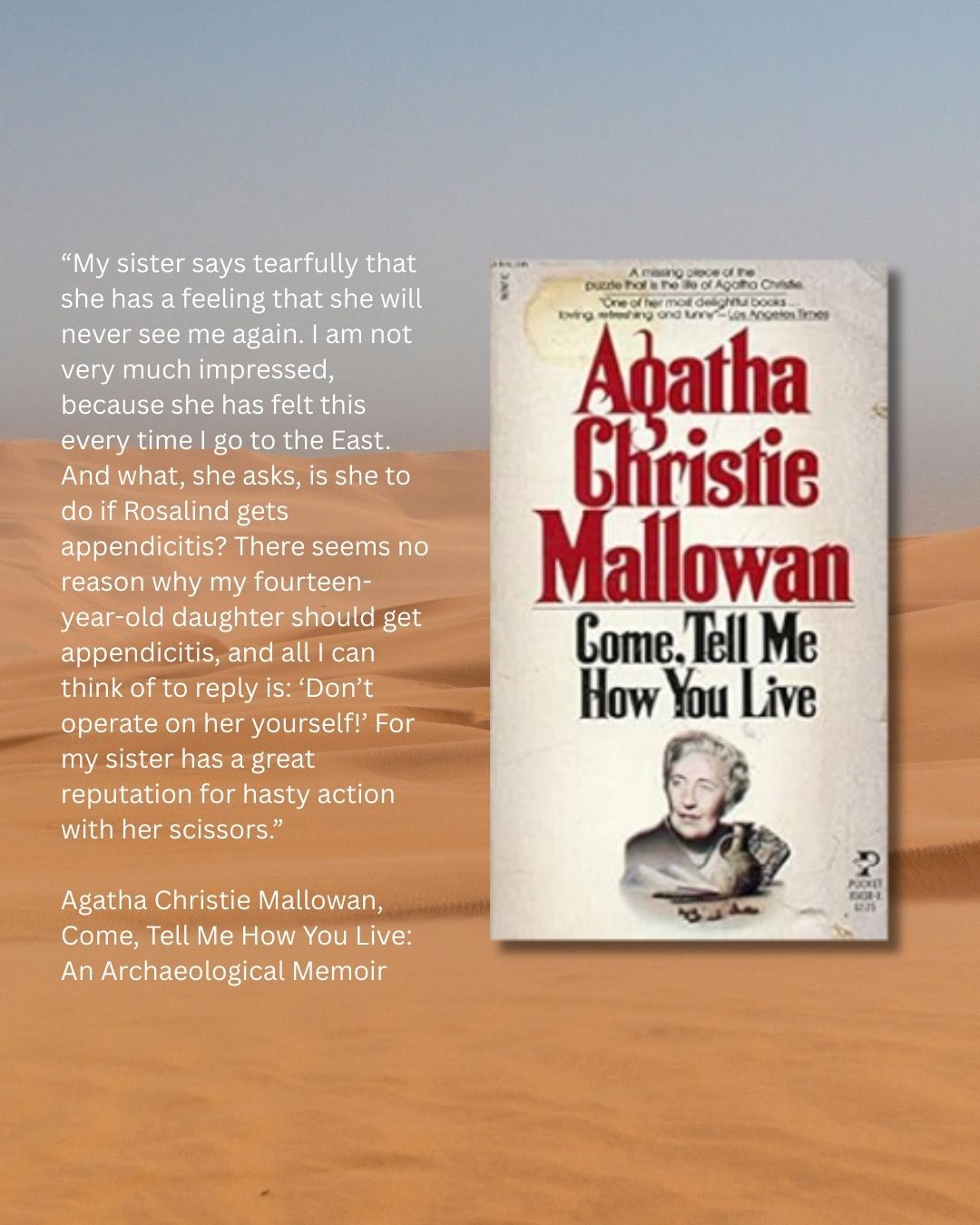
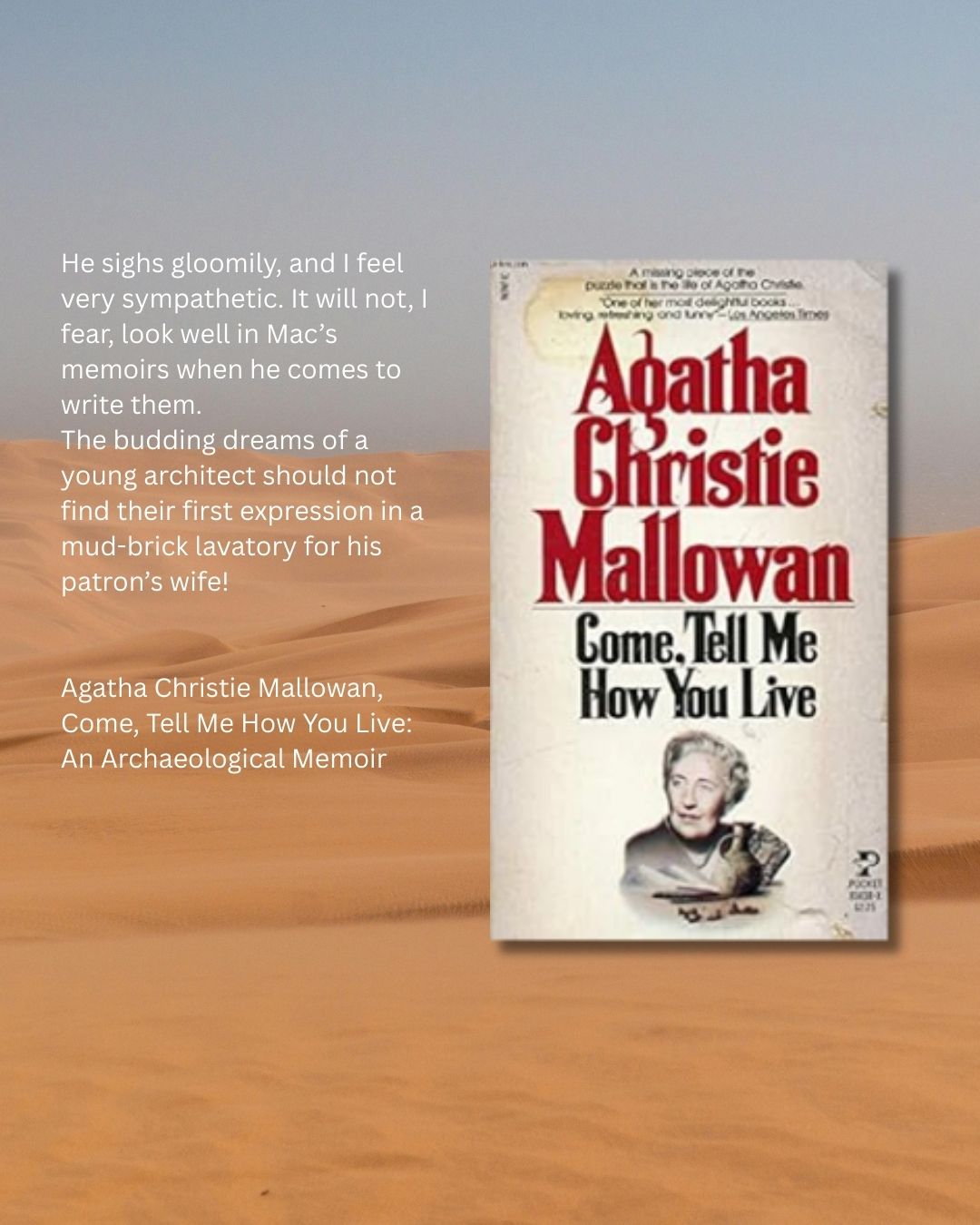
I’m surprised more people don’t talk or write about Agatha Christie’s non-fiction books, especially Come, Tell Me How You Live, which reveals so much of her witty sense of humor.
Of course, she only wrote three non-fiction books — this one, her autobiography, and The Grand Tour, a collection of her letters and photographs from her 1922 tour to promote the British empire.
Christie writes this book under her full name of Agatha Christie Mallowen, with Mallowen being the name of her second husband and she’s wrong in her introduction.
I don’t read non-fiction often so I wasn’t sure I would enjoy this one but when the opening pages describe Agatha looking for outfits she can wear on her husband’s archaeological dig in Syria and the clerk lets her know they might not be able to accommodate her larger size, which Agatha handles hilariously, I knew I had to keep going.
As Agatha says in the intro of this book, “This is not a profound book. It will give you no interesting sidelights on archaeology, there will be no beautiful descriptions of scenery, no treating of economic problems, no racial reflections, no history. It is, in fact, small beer — a very little book, full of everyday doings and happenings.”
This book does actually include some beautiful descriptions and a few interesting sidelights on archaeology.
Agatha started writing this book before World War 2 and finished it afterward, sending it out into the world to be published.
As I mentioned already, the book begins with Agatha looking for traveling clothes. Her humor immediately kicks in.
“Shopping for a hot climate in autumn or winter presents certain difficulties. One’s last year’s summer clothes, which one has optimistically hoped will “do”, do not “do” now the time has come. For one thing, they appear to be (like the depressing annotations in furniture removers’ lists) “Bruised, Scratched, and Marked.” (And also Shrunk, Faded, and Peculiar!). For another — alas, alas that one has to say it! — they are too tight everywhere.
So, to the shops and the stores and:
“Of course, Modom, we are not being asked for that kind of thing now! We have some very charming little suits here — O.S. in the darker colors.”
I’m guessing O.S. means oversized because Agatha then writes: “Oh, loathsome O.S. How humiliating to be O.S.! How even more humiliating to be recognized at once as O.S.!”
If I have done my math right, Agatha would have been around 45 at the time this trip was taken.
She and her husband, Max, traveled to Syria and Iraq. Max was an archaeologist and Agatha actually met him on an archaeologist dig in 1930, years after divorcing her cheating first husband, Colonel Archibald Christie.
What’s so fun about this book is how Agatha writes about different she and Max approach situations in life, with her being a bit more high strung and him being laid back and acting like everything will turn out all right. Agatha was about 15 years older that Max, I might add, which I did not realize while I was reading the book. I read that while I was researching for the review. No wonder he seemed so aloof and laid back. He was still young and a bit naïve in some ways.
In addition to sharing details of her marriage, Agatha also writes about the quirky men who travel with her and her husband.
I would not be surprised if some of the people they worked with or met along their travels popped up in Agatha’s mysteries.
Mac, her husband’s architect assistant, gets the bulk of the secondary character playback throughout the book and it is hilarious. His full name was Robin Maccartney.
Mac is extremely serious, a perfectionist, and also lacks any sense of humor.
Agatha and Max traveled off and on between 1935 and 1936, with stays in Syria long enough that they had a house remodeled for them to stay in. Mac, an architect by trade, has been designing blueprints for Agatha’s bathroom.
“I ask Mac that evening at dinner what is fist architectural job as been.
“This is my first bit of practical work,” he replies. “—your lavatory!”
He sighs gloomily, and I feel very sympathetic. It will not, I fear, look well in Mac’s memoirs when he comes to write them.
The budding dreams of a young architect should not find their first expression in a mud-brick lavatory for his patron’s wife!”
Agatha shares some of her most savage lines in the book when she is writing about Mac, who almost seems uptight and perfect to be human at times.
It isn’t until he can’t light a gas lamp that he has a meltdown which Agatha says reveals his humanity.
“I steal a glance at him when another five minutes have gone by. He is getting warm. He is also looking not nearly so superior. Scientific principal or no scientific principal the petrol lamp is holding out on him. He lies on the floor and wrestles with the thing. Presently he begins to swear… A feeling that is almost affection sweeps ove me. After all, our Mac is human. He is defeated by a petrol lamp!”
Agatha writes that from that point on, Mac is one of them, someone who can easily get frustrated and swear about it.
Agatha did take her typewriter and some manuscripts with her and writes about working on a book while there. One of their friends, Louis Osman, an architect and member of the archaeological team, who was affectionately nicknamed “Bumps” by the group, and who Agatha simply calls “B” in her book, came into her office one day to chat, but she wants him to leave because she’s in the middle of writing a murder scene.
“He goes into the drawing office and talks to Mac, but, meeting with no response, he comes sadly into the office, where I am busy on the typewriter getting down to the gory details of a murder.
‘Oh,’ says B. “you’re busy?”
I say, ‘Yes,’ shortly.
“Writing?” asks B.
‘Yes’ (more shortly).
‘I thought, perhaps,’ says B wistfully. ‘I might bring the labels and the objects in here. I shouldn’t be disturbing you should I?’
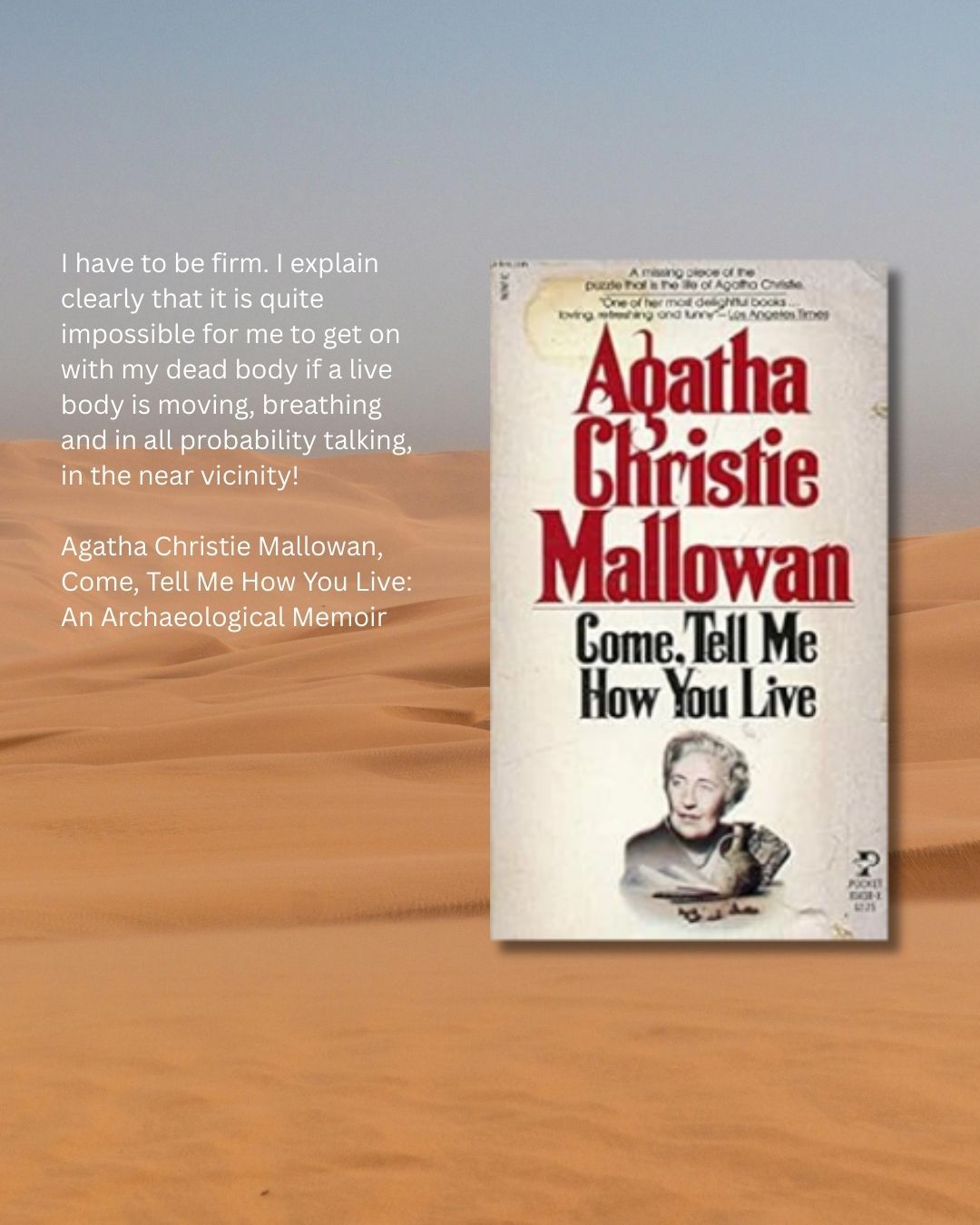
I have to be firm. I explain clearly that it is quite impossible for me to get on with my dead body if a live body is moving, breathing and in all probability talking, in the near vicinity!
Poor B goes sadly away, condemned to work in loneliness and silence. I feel convinced that, if B ever writes a book, he will do so most easily with a wireless and a gramophone turned on close at hand and a few conversations going on in the same room!”
Agatha also tells about the women of the middle east and how they want to get to know her and learn more about her. I was surprised to learn in this section that Agatha had had a series of miscarriages over the years, which may be one reason she and Archie only had one daughter.
There are some parts of the book I found a tiny bit slow but so much of it was so fascinating that I didn’t mind a little bit of slowness
I really enjoyed Agatha’s recollections and her thoughts about the faith of the people compared to the faith of the people in England.
I also found it interesting to read her views on public education, which would probably surprise people today.
After sharing about watching some of the village children play and experiencing every day life she wrote:
“I think to myself how happy they look, and what a pleasant life it is like the fairy stories of old, wandering about over the hills herding cattle, sometimes sitting and singing. At this time of day, the so-called fortunate children in European lands are setting out for the crowded classroom, going in and out of the soft air, sitting on benches or at desks, toiling over letters of the alphabet, listening to a teacher, writing with cramped fingers. I wonder to myself whether, one day a hundred years or so ahead, we shall say in shocked accents: ‘In those days they actually made poor little children go to school, sitting inside buildings at desks for hours a day! Isn’t it terrible to think off! Little children!’”
Have you ever read this one or any of Agatha’s non-fiction books?
I am currently re-reading The Blue Castle by L.M. Montgomery and have decided to read the book with my blog readers in the month of February, if you/they so wish.
I will be posting about the book throughout the month and will offer posts where we can discuss the chapters we’ve read and the book as a whole once or twice a week.
I plan to write a bit about the book and why I enjoyed it, as well as a little background on how others feel about the book, to kick things off on February 1.
I’m looking forward to discussing this book, one of my favorites, with all of you!
If you don’t know what the book is about, here is a quick description of the book that is so different than her Anne books:
An unforgettable story of courage and romance. Will Valancy Stirling ever escape her strict family and find true love?
Valancy Stirling is 29, unmarried, and has never been in love. Living with her overbearing mother and meddlesome aunt, she finds her only consolation in the “forbidden” books of John Foster and her daydreams of the Blue Castle–a place where all her dreams come true and she can be who she truly wants to be. After getting shocking news from the doctor, she rebels against her family and discovers a surprising new world, full of love and adventures far beyond her most secret dreams
If you write book reviews or book-related blog posts, don’t forget that Erin and I host the A Good Book and A Cup of Tea Monthly Bookish Blog Party. You can learn more about it here.
On Thursdays, I am part of the Weekend Traffic Jam Reboot blog link party. You can find the latest one in the sidebar to the right under recent posts.
I also post a link-up on Sundays for weekly updates about what you are reading, watching, doing, listening to, etc.
Hello! Welcome to my blog. I am a blogger, homeschool mom, and I write cozy mysteries.
You can find my Gladwynn Grant Mystery series HERE.