Educationally Speaking: A homeschool update

If you’re new here, you might not know that I am a homeschool mom.

I am homeschooling a fifth grader (my daughter) this year since my oldest (my son) graduated last year. We have homeschooled since 2018.

For the sake of the blog, I refer to my daughter as Little Miss.

Little Miss and I started some lessons in early and mid-August this year and then jumped into lessons more earnestly in September. In Pennsylvania, school can begin any time after July 1. Some parents homeschool all-year-round and then take breaks in the middle of the year around the holiday seasons. As long as students are taught for 180 days or 900 hours throughout the year, then homeschool parents are meeting the requirements under the law.

I started lessons early to allow for a longer break around Christmas and in case our school days were thrown off at all by my parents health, which has been steadly getting worse lately.

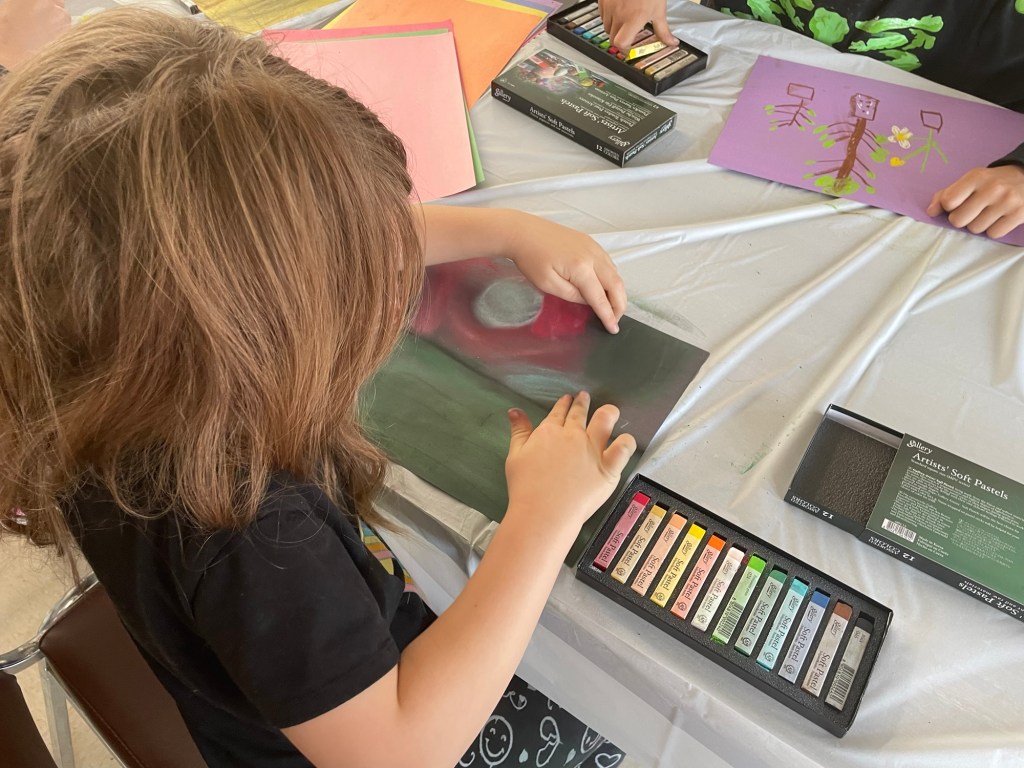
Part way through September I rediscovered Outschool and signed Little Miss up for a  painting class, which she absolutely loves. I say rediscovered because I did purchase one class on there for my son years ago. I’m not sure why we never tried it again.

Little Miss loves her painting class so much I added a drawing class last week with the same teacher.

First, though, what it is Outschool? Second, I am not being sponsored in any way by Outschool to mention it in this post. I’m simply sharing what we are doing for homeschool this year.

Outschool is a site that offers online, live or pre-recorded classes, for students of all ages.

Classes are held through Zoom and there are a variety of topics and subjects offered.

The teachers are independent contractors of sorts so it’s important to really study what the teacher is offering and if it is a good fit for your student.

Each teacher requires they be able to see the student at least once at the beginning of a live class to be sure that they are really talking to a student. There are other security measures in place to keep the learning environment safe. Little Miss likes that the classes are live and she can interact with the teacher and other students during the classes.

We do have to pay for the classes. With my son I took one class and paid for the class I wanted to take. Now the site offers a monthly credit program and then you can purchase extra credits as you go along and each class is worth a certain amount of credits.

The credit program works okay but sometimes some of the classes are quite a few credits and that can get a bit expensive.

In addition to the art classes, I also signed Little Miss up for an animal club that meets Thursday nights. She liked that class so much we went with a Zoology club that is held earlier in the same day, with the same instructor.

I also added a hands-on science class which features a very enthusiastic teacher and a lot of information. Little Miss enjoys the projects but not listening to why the experiment works.

So, altogether Little Miss is taking five Outschool classes, mixed in with the subjects I am teaching her — three science classes and two art classes.

I am also teaching her math (well, actually CTCMath out of Australia teaches her math), English (reading, grammar, spelling, handwriting), and history.

For history we are using the Beautiful Feet curriculum, which focuses on teaching history through literature. I’ve gone a little rogue for the Civil War section of the curriculum because the book they recommended seemed very, very depressing. But, in their defense, the curriculum is aimed at children a couple years older than Little Miss. She’s a bit advanced in her literature, though, so I decided I could use the curriculum as a jumping off point and make it our own. I remove books or supplement with additional books where needed.

The Civil War-themed book we are reading is about two young girl friends — one from the South and the other from the North — who exchange letters during the war. It’s called Secrets of Civil War Spies by Nancy LeSourd.

We also will have classes with our local 4-H once a month, but they haven’t started yet. I tried to get her into more classes or programs in other 4-H programs, but the 4-H program from the county next to us won’t pick up the phone or return my calls. I looked at 4-H because I liked the idea of “clubs” that would meet once a week or even a couple of times a month. Instead, the 4-H in our county holds clubs that teach one thing only for a couple of months. In the winter certain classes (which they refer to as a club) meets maybe once a month. It doesn’t really make it possible to form friendships, but I am sure it will still be nice to attend them anyhow.

Little Miss also attends a church program once a week at our former church.

Writing all of this out helps me to feel a little less concerned about our homeschooling line-up this year. I sometimes worry we are not doing enough for school but when I really look at what we have planned, I realize we are.

What I like about how we homeschool is that we participate in a variety of different styles of education while also having the flexibility to spend more time with Little Miss’s grandparents and for her to spend time exploring the subjects she enjoys. Right now, that subject is art and animals.

I’m excited to see what other subjects she will like to expand on as the school year continues.
Educationally Speaking: Looking back at our homeschool year

I am absolutely floored that this school year is over and I know I say that every year but this year really did fly by.

As I always do at the end of a school year, I sit here feeling as if I didn’t do enough, teach enough, or find enough educational opportunities. Looking back through photographs and the paperwork I’ve gathered together for our end-of-the-year portfolio, though, we did a lot more than I realized.

This was The Boy’s final year of school and he did a lot less for me than I wanted to but he was also enrolled in a building and construction class at the local technical school and gained way more experience and education there than I could have offered him.

We did work on some English reading, including Sherlock Holmes and Beowulf, but he also read or listened to several books independently throughout the year. He also researched quite a bit of history on the Byzantine empire on his own and then learned about how to paint Warhammer models.

Many afternoons were also spent helping his grandfather with various home DIY projects and property upkeep and he helped the local cemetery association clean up the cemetery, including the gravestones

While he isn’t yet sure how he wants to use the education he received there, he will always have that knowledge in his future, whether it is for an occupation or in his everyday life.

He’s taking some time off and easing into his next step, something his dad and I support.

He still has a couple of things to write up for me and then his portfolio, which I will present to our state-certified evaluator next week, will be done.

Little Miss and I had a lot more variety in our education this year with not all of it focused on worksheets or physical curriculum. We studied subjects in a more relaxed way, spending more time on subjects that interested us instead of feeling like we had to quickly move ahead.

We did use some curriculum, such as BJU for English and The Good and The Beautiful for science. We also accessed an online curriculum called CTC Math for our math course, and combined that with The Good and the Beautiful, Math with Confidence, and worksheets.

For history and literature, we read historical fiction, including The Sign of the Beaver, Johnny Tremain, The Littlest Voyageur, and Caddie Woodlawn, while watching or reading supplemental material for the subjects each of those books dealt with.

We mixed lessons about Pennsylvania history in with our regular history. We are required to teach history about our state at some point during our children’s elementary school years, but I focus on Pennsylvania and local history at some point in the year, every year.

This year we had the added information about our family fighting in the Civil War, which I researched more of as I wrote a couple of blog posts about that subject.

In the beginning of the year, we attended a two-month art class sponsored by the local library and led by a local artist. He honestly did not teach much at all (and I probably would not attend a class with him again), but having the chance to interact with other children was the main benefit of that experience.

We also attended a couple of field trips with the local homeschool group. That group only met once a month, though, so the opportunity for socializing was not as strong as I had hoped.

Next school year we hope to join a local co-op for some more hands-on learning and interaction with other homeschool students.

There was a time of adjustment for Little Miss that is continuing because one of her homeschool friends was sent to public school this year. That left her without friends to interact with, which is one reason we have signed her up for VBS events, 4-H clubs, and library events this summer.

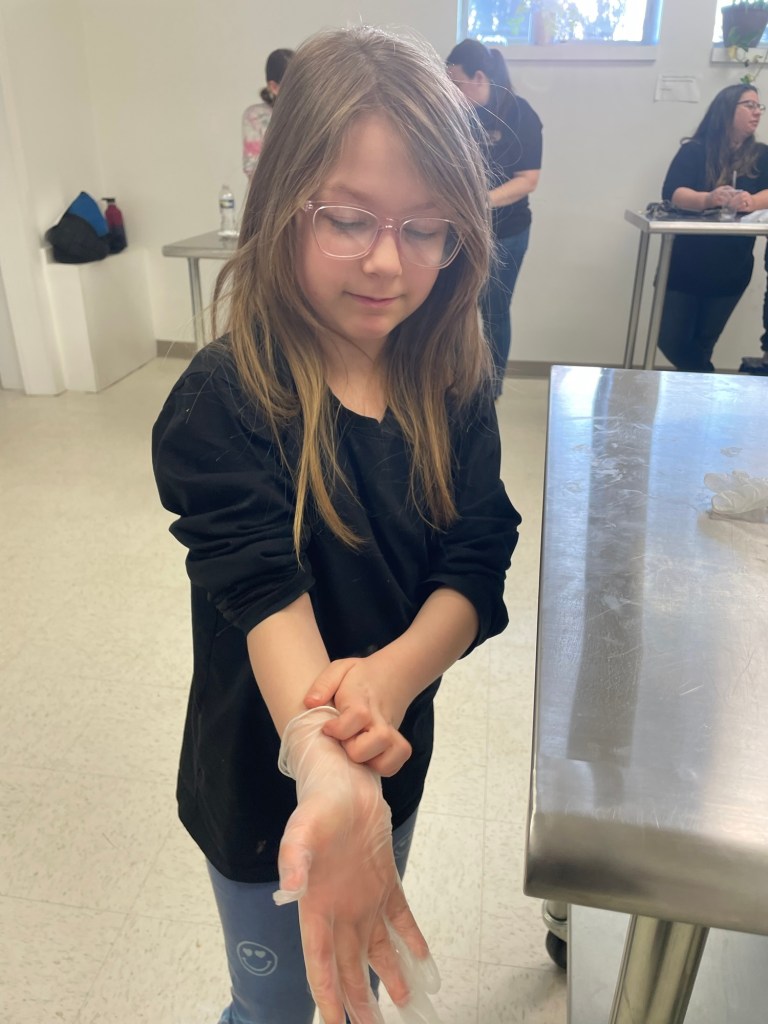
She participated in a 4-H cooking class in the spring, which she thoroughly enjoyed.

We read books either together or separately throughout the year. Little Miss read two and a half Harry Potter books this past school year. She’s almost done with the third.

Together we listened to Caddie Woodlawn by Carol Ryrie Brink and The Magician’s Nephew by C.S. Lewis. Out loud to her, I read The Saturdays and The Four-Story Mistake by Elizabeth Enright and Miracle on Maple Hill by Virginia Sorenson, as well as Johnny Tremain by Esther Forbes (later learned this is usually read by eighth graders), The Sign of the Beaver by Elizabeth George Speare, and The Littlest Voyageur by Margi Preus. We also listened to part of Miracle on Maple Hill on Audible.

In the 2025-2026 school year we plan to use some curriculum but also leave ourselves open for more exploration and relaxed education. This doesn’t mean Little Miss will be left to do whatever she wants, when she wants, but she will have more of a say in what she learns and how.

She will be in fifth grade, and I want her to have a more relaxed educational experience that will let her feel less like education is a chore and instead make it feel like it is something fun and exciting to do.

I’m researching curriculum now and have already been given some great ideas in groups and by Erin from Still Life, With Cracker Crumbs, who homeschools her son Wyatt.

We are also starting homeschooling activities in July this year, instead of August. In Pennsylvania you can count any activities held after July 1 toward the next year’s hours/days so if we participate in anything remotely educational this summer, I will be counting that toward our final hours. This will allow Little Miss and I to take breaks throughout the school year at any time we need to, without losing educational time.

Honestly, every day offers some sort of education, but I am not the kind of parent who can do something very minor and count that toward school. I know some parents would count a walk down the street as PE and call it a day, but I feel there needs to be active learning of some kind going on for it to count as a full day of school.

What is nice about homeschooling is that there is no real wrong way to do it (unless you sit your kid in front of a gaming device all day, every day, and teach them nothing). There are a variety of avenues to reach the ultimate goal of homeschooling, which is to provide a child with a well-rounded and complex educational experience that goes beyond the four walls of a classroom.

I am excited to see what the 2025-2026 school year will bring us and I’ll try to keep my blog readers updated on it better than I did this school yar.


Lisa R. Howeler is a blogger, homeschool mom, and writes cozy mysteries.

You can find her Gladwynn Grant Mystery series HERE.

You can also find her on Instagram and YouTube.

Educationally Speaking: Looking back at our school year as we near the end of it

Sometimes I don’t want to share about my family’s homeschooling journey on my blog because it opens me up to criticism by those who don’t understand homeschooling but then I reminded myself these posts aren’t for them. They are for the other parents who also homeschool and might need ideas or encouragement or just another homeschooler to relate to.

I would say that this year for school is the closest year we’ve come to doing a more natural flow of learning instead of focusing solely on the use of a set curriculum. I wouldn’t go so far as to say we are doing what some  homeschoolers call “unschooling” but fairly close.

The Boy is a senior this year and attending a local technical school, so the majority of his education this year has been the building and construction class he is taking. We have also been doing some English, which is the only other credit he needs to complete his high school experience.

Our state-certified homeschool evaluator will sign a diploma for him at the end of the school year.

Little Miss is a fourth grader this year and we are tackling all of the subjects throughout the week, but not every day.

Math is one subject we do almost every day, if not every day, so I can make sure she remembers the concepts. We will be doing math during the summer this year as well.

We use the CTC Math site for our math lessons and really enjoy it. A short instructional video is provided and then the student is asked to complete some questions on the subject that was presented. If several of the questions are missed or if the parent or student  feels they need to do more questions, that option is available.

What I like about CTC Math is how we can access any lesson from any grade level from Kindergarten to twelfth.  So, if we need to go back to review something from an earlier grade, no matter how far back, we can do that.

No, I was not paid for this endorsement. Ha! But I wish it was!

For English we have a hodge podge curriculum this year. We are using a workbook from BJU and also reading quality middle grade historical fiction.

That historical fiction also works for our history lessons. Those books are a jumping off point for history lessons through videos, worksheets etc. Those books are also a jumping off point for science, language arts, art, writing, and many other topics that stem from them.

So many ideas can stem from subjects or topics raised within a fictional story.

For science we are utilizing curriculum from The Good and The Beautiful and branching off from there for other topics.

A lot of our schoolwork this year has involved various discussions which have turned us into looking up topics to explore them further.

For example, this week Little Miss and I were watching a video about giraffes from The Good and the Beautiful curriculum which focused on the two classes of ungulates.

The video quality was very professional but Little Miss felt that the color was off in some scenes. I argued it was the lighting but she said to me, “I just wonder how they got so much footage of so many rare giraffes. So many of them look axanthic.”

“I’m sorry? Excuse me?” I responded.

“They look axanthic,” she said, emphasis on the word axanthic.

“I – I don’t even know what that means.”

She sighed heavily, as if I should really know this already at my age.

She said, “It’s the removal of the yellow and red pigmentations in an animal’s coloring.”

I didn’t even know how to spell the word, but knew I needed to look this up. I kept finding xanthic, which is the yellow coloring in an animals coat or skin.

She, however, did her own search somehow and showed me this on her phone (which is for use only on WiFi and doesn’t have a line connected to it, in case you are curious):

Little Miss loves videos on animals, especially reptiles. She watches a show called Snake Discovery and retains tons of information about reptiles from it and this is where she learned the term.

One thing I am learning more and more through this homeschooling journey is that children will retain information related to subjects they are interested in.

This is why my son retains information about architecture and art, video game lore, model painting, and history related to the Byzantine and Roman Empires.

He has been studying the Byzantine and Roman Empires on his own this year.

In addition to the curriculum or “organized” lessons we do, Little Miss has also taken part in a two month art class sponsored by our library, a cooking class sponsored by our local 4-H, and various other activities sponsored by the local library.

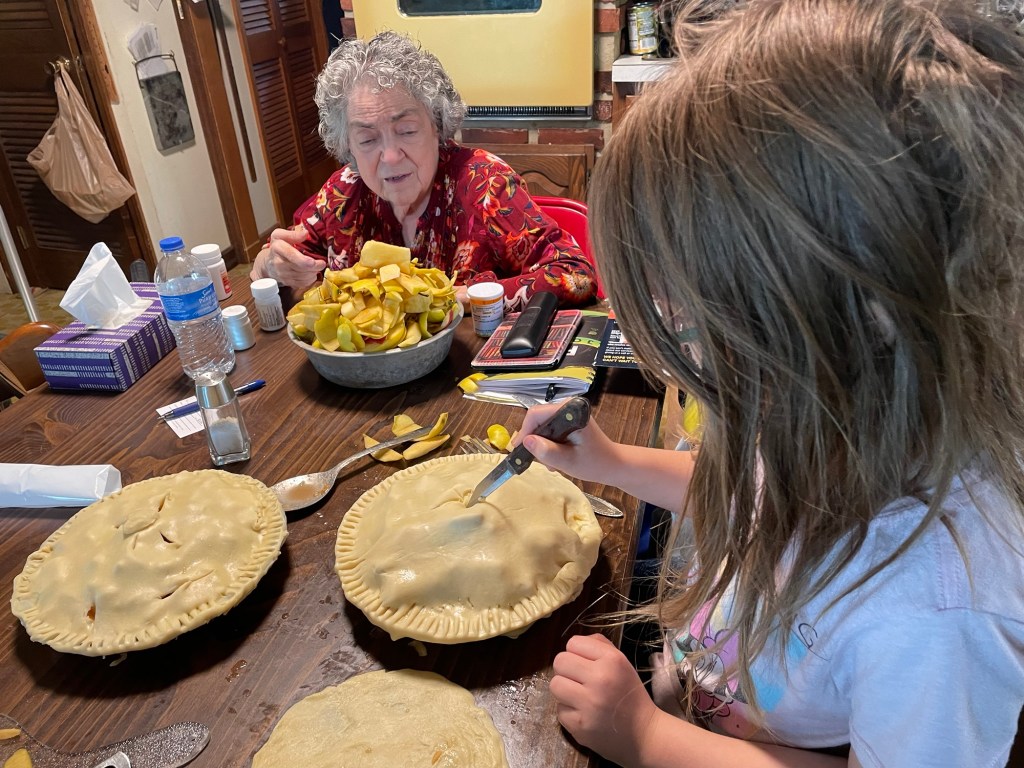
She also learns a lot from her grandparents (my parents) through visits and helping them around the house. Earlier in the school year we interviewed my mom about life when she was growing up and we hope to do that a bit more before the school year ends and also add my dad into the mix. We also cooked apple pies for The Boy and The Husband for their birthdays and Mom helped with tips for the process.

Art is something we do anywhere from one to three times a week because Little Miss loves to paint — mainly with acrylics.

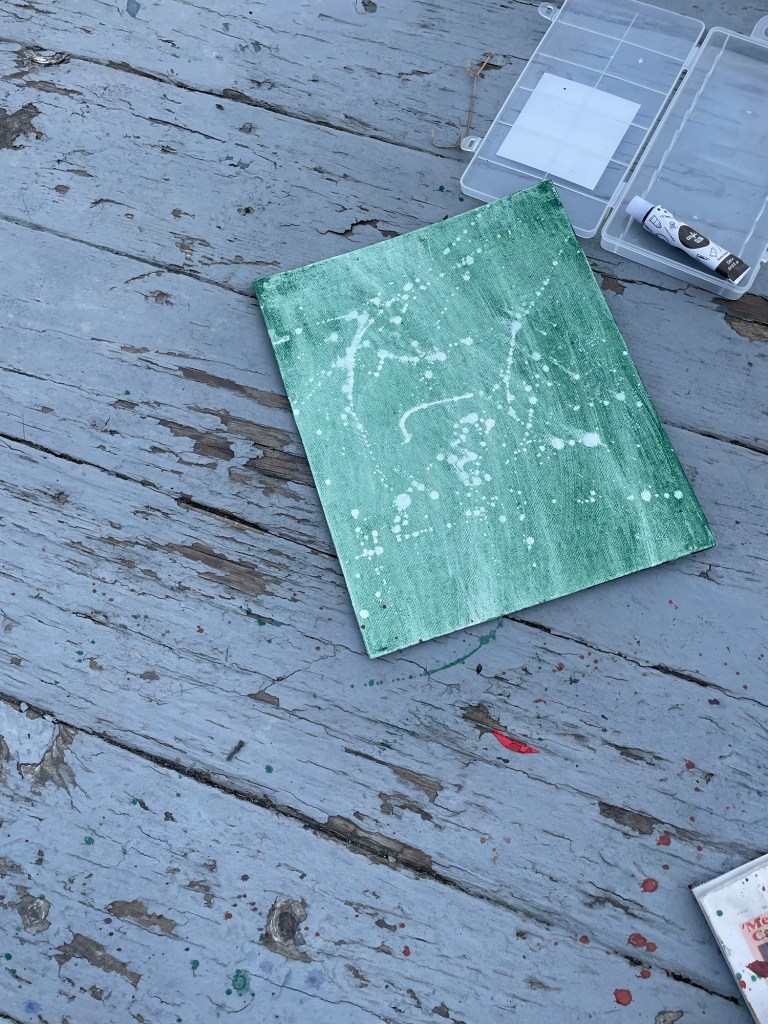
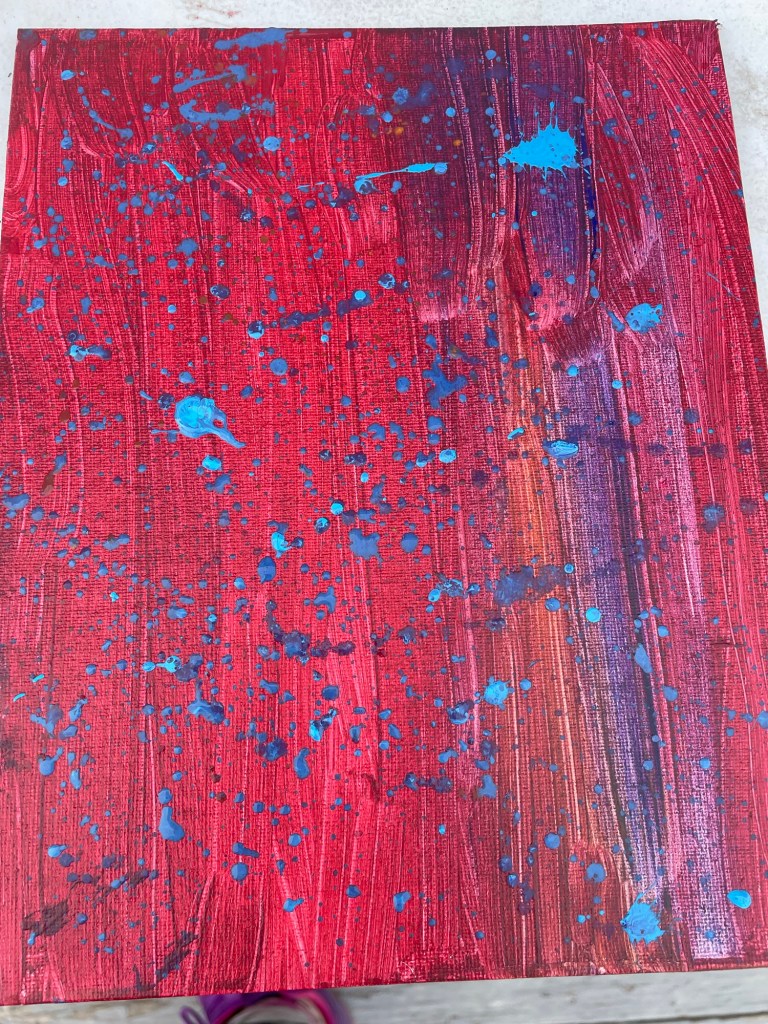
Last week I took advantage of a nice weather day and suggested we take some canvases we had picked up and practice “splatter painting” on the back porch. I had a technique I had watched an artist use on YouTube that I wanted to show Little Miss but she has her own technique that she wanted to show me. We traded techniques and just did our own thing for an hour or more and it was the most relaxed I’d been all week.

It felt great to simply let loose and create art without strict rules or my usual perfectionism in having to make a picture look just right.

I have also been dabbling in water colors so Little Miss and I tried some water color paintings the week before.

We discovered we are going to need some higher quality paper if we are going to continue our experiments in that medium.

Little Miss had found an online game that helps with her learning music. We focused on music more in the beginning of the school year and last year.

In our state the homeschool law states that we must teach art and music at some point in a child’s elementary school years, but does not stipulate we have to do it every year.

Last year Little Miss and I focused almost entirely on literature and art for our final month and we will most likely do that again this year, but I will continue math lessons to make sure we don’t have to review as much at the beginning of next school year.

I think that wraps up our homeschool update for now. I am working on another post about my thoughts on education in general and will most likely share a wrap up post at the beginning of summer when our school year is complete.

Educationally Speaking: The end to another homeschool year

It felt so weird yesterday morning when I realized I didn’t have to plan our homeschooling week out and I also didn’t have to get ready to argue with Little Miss about lesson time.

It felt weird and also freeing. I literally did a bit of a dance in my kitchen while warming up my tea as it hit me that I can take it easy most days for another two months.

Speaking of taking it easy, I want to take it easy even during homeschooling next year, especially after talking to my evaluator and realizing homeschooling doesn’t have to be as strict as I have been making it.

“You realize you only have to teach these subjects at some point during grades kindergarten to sixth right? You don’t even have to teach every subject every year, let alone every day.”

I’m paraphrasing that by the way. That’s not an exact quote.

I will be teaching the core subjects every year, of course, but as she pointed out to me – most public schools in my state are focused on reading and math and a small amount of science or history before sixth grade. Apparently, I am an overachiever because I have been teaching math, reading, science and history every day, every year since kindergarten with Little Miss and she is going into third grade this year.

I’ve now been told that, yes, I should teach those subjects throughout the year but I can break it up however I’d like. I can take a month and only focus on English or Math or I can mix things up and teach science a couple of times a week.

The reason I would most likely offer math, especially, every day, is that is a subject where concepts need to build upon one another and be consistent to be sure it is in the brain. It’s more of a subject where practice is very important.

The Boy is another story.

I have to make sure he takes certain courses before he graduates, whether those classes are taught every day or not. I’m also the one who determines if he graduates. Both me and my evaluator, to be more specific. And, well, if we really get technical, the school district does have to sign off on what I submit to them as well, but it’s unusual for them not to approve what a state-certified evaluator signs off on.

I need credits in certain subjects for The Boy from 9th to 12th grade. It’s four credits in English and three in Math, Science, and Social Studies, as well as two years of arts and humanities.

Those credits can be met by either about 120 hours of learning and studying time on the subject (including activities and independent reading) or they can be at least 80 percent completion of a textbook.

He will be attending a trade school for high school students in the fall and part of what he learns there will most likely count toward those credits as well.

The Boy will need two more credits in English and Science. He only needs one more in math and history/social studies. I told him this means that his senior year will mainly be attending the trade school and arts and music. I’d say he liked the sound of that but he’s a teenager, so I mainly just received a grunt in response.

I am hoping to incorporate more art and music into schoolwork for both the kids next year. I really enjoyed being able to focus on artists, composers, and musical instruments throughout much of May with Little Miss.

I hope to be able to incorporate at least a semester of music lessons for The Boy in addition to planned art classes.

I have a feeling I’ll be hammering out all those details in the next two and a half months, even when I am supposed to be taking a break from it all.

In end of the year news, Little Miss and I read 34 books together with two of them being read on her own. The Boy and I read two together. It was one of those years where there were a lot of other things focused on. They were both good, deep reads, though: The Adventures of Huckleberry Finn and The Fellowship of the Ring.

When we start school up again – either in the middle of August or the beginning of September, it will be our sixth year of homeschooling. It’s insane to even think it has been that long. What a ride it has been. We’ve definitely had trials, tears, and some doubts, but in the end it has been one of the best decisions we ever made.

The Boy and Little Miss have had more time to explore their interests and also to spend time with their aging grandparents and avoid some of the more stressful situations that can develop at public school.

If we had to do it again, we definitely would.

Educationally Speaking: Homeschool update. On our way to summer break and taking a more relaxed approach to learning

We are on our last month of homeschooling before summer break and to say we all have summer brain is an understatement. Not even the teacher is focused all the way in on school right now. Because of our lack of focus, I have decided to dial down the strict workbook and textbook-heavy subjects for this month, but we will still be doing them twice a week.

I got to mid-April and realized I hadn’t focused as much on the arts as I need to in order to meet the requirements for the state we are in so I decided we would make May an art month. That means more lessons on artists (Monet, Cezanne, Picasso) and musicians (composers like Bach, Beethoven, and Mozart) throughout our week and fewer lessons on math, science, and history. We will still be doing those last three subjects, just not every day.

This is a relief for Little Miss who is so dramatic when I tell her it is time for her math lesson. You would think I would have told her it is time to clean the toilets at a frat house.

She often runs and hides, pulling a blanket over her head in a homemade fort she made by turning our couch to face the wall and hanging the veil-like curtains across it.

Once she sits down and does it, however, she really doesn’t have any major issues with doing the math.

She isn’t a fan of having to write letters either so that has also been a struggle this past year. I need this summer break as much as her.

However, I have told her she will need to do some math during the summer so that she doesn’t have to jump back into it cold in August when we start up again. I’m also considering starting school a month early this year. This will allow us to take more breaks throughout the school year at times when we feel beat down by the mundane routine of daily lessons.

I have been the most relaxed about homeschooling this year than in any previous year. I have finally started to accept that homeschooling is not simply school at home. It is not bringing the traditional idea of public school into your home.

We homeschool so we can break away from a system we do not feel is conducive with the need for children to be free to focus on their passions and to learn at their own pace. Homeschooling parents bring their children home to learn for a variety of reasons, but at the core of it is that the child is not thriving or might not thrive in the traditional environment.

For us, homeschooling has offered more opportunities for learning beyond the scope of a daily lesson. It has allowed us to take a subject my child is interested in and explore it beyond one moment in time in their education. It has also allowed us to go visit or go help my parents whenever is needed, which has been invaluable to us, especially to my son who is very close to his grandfather.

Resting on my newfound acceptance that homeschooling doesn’t have to look like a traditional public school day, we started taking a much more relaxed approach to our homeschool days sometime in March. We did math and reading lessons, but history was reading historical fiction and watching videos and then simply talking about history. Math was lessons in our book but also on ABC Mouse for the youngest. The oldest does his math online so there wasn’t much of a change for him. Reading or English has been some actual lessons about parts of speech and grammar but it has also been simply reading books out loud to each other, discussing hard words when we get to them or discussing what we read.

I read a post on Facebook recently by … that reminded homeschooling parents that homeschooling can happen at any time of the day. She wrote that you don’t have to read to your child only during the day and count that as a time of learning. Read-aloud sessions can happen at night before bed while waiting in the car, or pretty much anywhere at any time.

Life lessons and skills can be taught throughout the day.

Homeschool is a 24/7 type of education that doesn’t require a desk or a book or four walls around a child. It is a constant flow of information and knowledge that can come through the everyday journey of life.

With all that being said, yesterday Little Miss and I watched videos about Mozart while she made slime. We read Mrs. Piggle-Wiggle before bed for our English reading.

Today we have a homeschool gathering at the local library.

Tomorrow we will be painting in the style of Monet while watching videos about him and the other impressionists or while listening to Mozart. We will also probably read some from The Cabin Faced West for history and do a math lesson or simply go on ABC Mouse and have her play some games there related to what we’ve been learning in Math.

The Boy will be reading Fellowship of the Ring and working on a research project and also preparing some Minecraft creations for the art requirements under the homeschool guidelines for our state. Then he will go to work as a dishwasher at a local restaurant, which I see as another educational opportunity and an activity that fits in well with homeschooling.

Later in the week, we will be watching art history videos, and videos about famous composers, and I will be encouraging him to continue bass lessons at home since we are taking a month off from his formal bass lessons (which were 45 minutes away and a bit expensive for us this month).

This month, both The Boy and Little Miss will also be studying music from a book I ordered that is set to arrive today.

I am absolutely loving this freestyle type of learning that incorporates music and the arts into our academic lessons. It’s something I plan to do more of during our next school year.  

Educationally Speaking: Homeschooling allows for the downtime some kids need

I’ve written before about why I like to homeschool, and this past week highlighted a couple of those reasons perfectly.

When Little Miss had a major dental procedure due to a soft enamel issue the week before last, I backed off strict homeschool lessons for a few days afterward. Giving her time to recover was possible because of the flexibility of homeschooling. There was no pressure for her to get back into class even though she was having some discomfort and trouble eating.

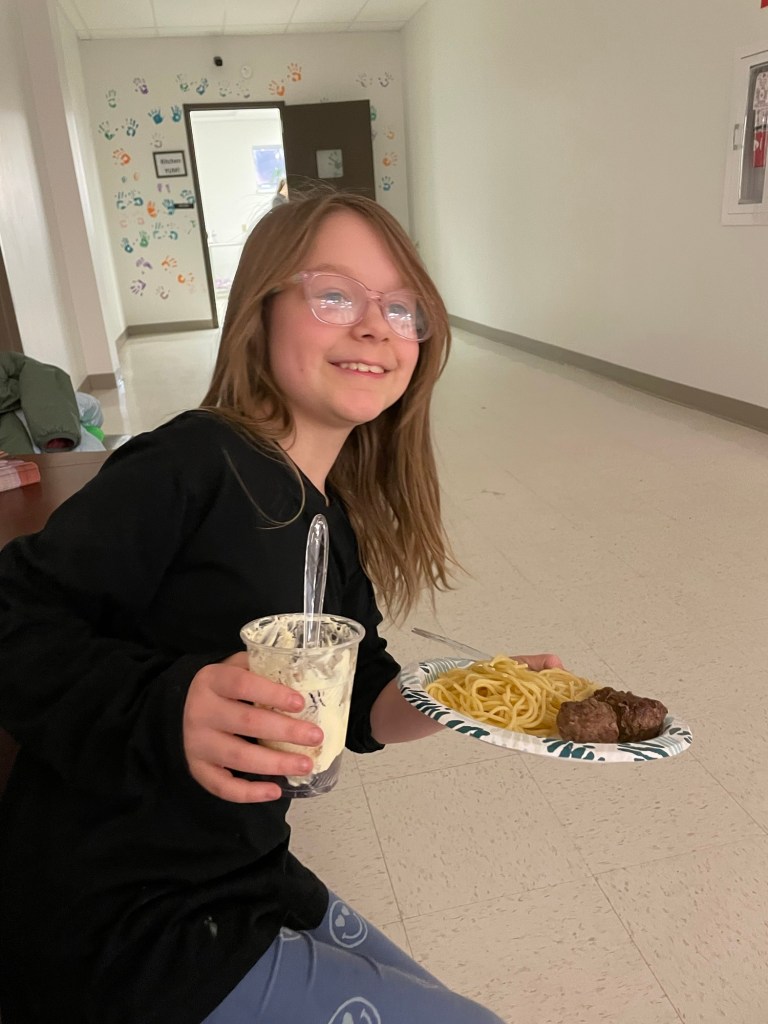
We spent a lot of time reading books, picture and otherwise, snuggling, watching educational shows, playing with Legos or outside, making slime, painting or just chatting.

On Tuesday Little Miss’s friends were off school because of snowy weather. This gave her a chance to visit with them via the phone and cheer her up after a difficult few days of recovering. We did a little bit of school that day but not as intensive as some days.

We were grateful that pain wasn’t a large part of Little Miss’s recovery. Being unable to eat normally was part of the recovery process, unfortunately.

This left me anxious for two or three days until I decided to make some soups from scratch that would add protein and nutrients to Little Miss’s diet.

She lived on Jell-O, pudding, yogurt drinks, and my homemade soups for about three days. On the fourth day, she discovered she could eat tater tots without pain. On Wednesday she was back to eating almost completely normally.

As someone who was educated in public school, it has been hard for me to change my mind about school needing to be six hours of instructional time, even though that isn’t how many hours students really spend on academics in public school anyhow when you figure in time in  homeroom, lunch, extracurricular activities, study halls, and for the younger children, recess.

When you cut out the time on the bus, homeroom, recess, etc., school really only takes 1-3 hours depending on the day. Children who are homeschooled can do their work without having to wait for the rest of the class to catch up or slow down. They can get their lessons done and the rest of the day is theirs to do what they want with (within reason, of course).`

I’ve really had to work hard to change my mindset about education overall in the last couple of years actually. I’m very much still stuck in the mindset that we have to do “book learning” during our school day, every day, versus simply reading books, doing art, or exploring nature and learning on some days.

However, last week I let a lot of that go. I reminded myself that educating a child is a long  term commitment that goes beyond what they learn from a textbook.

I also reminded myself that healing from something that was traumatizing to a child is about much more than physical healing.

Little Miss needed emotional comfort as much as she needed her gums to be comforted and in order to do that I had to back off heavily pushing math and science lessons that she could easily make up after her recovery was complete.

The time we spent cuddling on the couch with a book or watching an educational show instead of opening up the textbook was even more important than academic learning.

There are many ways you can enrich your child’s education without doing set curriculum for times when they need some one on one time.

A few ideas:

  • Read educational or simply entertaining books to them.
  • Watch educational or enriching shows together.
  • Create art together  
  • Take a walk together in the woods or somewhere outside to see what you find and can turn into a lesson.
  • Do only the simplest lessons from your curriculum
  • Visit their grandparents
  • Simply hold them and cuddle them as much as they want

Educationally Speaking: when it is a bad thing your child was brought up watching Wild Kratts

She makes sure I know how much she knows about animals anytime I tell her we are going to study animals for our science lesson.

I choose animals because I know they interest her but every time I choose animals as our subject I brace myself for her to say what she always says, “I already know that about . . .” whatever animal we are studying.  

Last week when I started an amphibians and reptiles curriculum she rolled her eyes.

“I already know all about them already,” she told me.

So I asked her a couple of questions I had a feeling she wouldn’t know. She narrowed her eyes at me and admitted she didn’t know everything about the particular amphibians we were talking about but then decided I needed to learn something too. She asked me what the difference between tortoises and turtles were. I told her I wasn’t sure so she ticked off several differences, which I can only assume she learned on Wild Kratts.

She’s been watching this show since she was probably two.

“It’s great,” I thought back then. “She’s learning while being entertained.”

The problem came when she actually started taking in all the information and regurgitating it. Now we are here in second grade and she sometimes does know a lot of what I am teaching her about the animals, but sometimes she doesn’t. Getting her to listen to see if she knows what I’m going to teach her, or not, has been a bit of a challenge.

Luckily, she’s starting to take a chance and listen to the lessons and seems to actually be enjoying them.

On the day we learned about snakes we had a game to play with the lesson and she loved it. There were a lot of questions she didn’t know the answer to and it seemed to, at first, deflate her a little, but, then, once she knew the answers she was proud to play the game again with her dad and show him what she’d learned.

One day, she decided I needed to learn what the difference was between crocodiles and alligators. So she made me watch a Wild Kratts episode that talked about the differences. I said, “But wait. I’m supposed to be teaching you.”

She said, “Well, you’re teaching me and I’m teaching you. It’s a win-win. See?”

Then she clapped her hands together.

That’s what’s been so much fun about homeschooling. Learning with my kids.

Yes, Little Miss. It’s been a win-win.

Educationally speaking: Children of the Longhouse and The History of Lacrosse


Little Miss and I have been studying Native American history for the last month or more while reading Children of the Longhouse by Joseph Bruchac. I found a curriculum to use with the book that is very simple and includes science, health, and language arts along with history lessons. This allowed us to branch off into other subjects while reading.

The book focuses on Ohkwa’ri and Osti:stia, two Iroquois children, or, yes, children of the longhouse. The siblings are twins (check) and Ohkwarri is on the cusp of becoming a man. He’s also become the target of one of the boys in the village after he overheard the boy conspiring with his friend to attack a neighboring tribe and told the village council about it.

Here is a brief description of the book:

When Ohkwa’ri overhears a group of older boys planning a raid on a neighboring village, he immediately tells his Mohawk elders. He has done the right thing—but he has also made enemies. Grabber and his friends will do anything they can to hurt him, especially during the village-wide game of Tekwaarathon (lacrosse). Ohkwa’ri believes in the path of peace, but can peaceful ways work against Grabber’s wrath?

I agree with this review on The Home Librarian about the book: “If I had one complaint about the book, it’s a minor one. There is a glossary with pronunciation guide that was incredibly helpful. However, it’s tucked at the back of the book so I didn’t realize it was there until about half way through the book when I came across a word and wondered if there was a pronunciation guide. It would have been better to put it up front so the reader knows it’s there and so you first see how to pronounce the names Ohkwar’ri (Oh-gwah’-li) and Otsi:stia (Oh-dzee-dzyah).”

It is easy to see from the picture on the front of the book and from the description of the game that Tekwaarathon(pronounced Day-gwaah-la-ton) is actually lacrosse. I had no idea until I read this book that Lacrosse was passed down from Native Americans. Well, let’s say I had a very vague idea it was somehow connected to Native American culture, but I had forgotten it over the years. Like maybe I heard it somewhere one day when I was young, but I didn’t really remember much about it until we started this book.

At first, the book was slow and overly descriptive in some parts in my opinion. I suggested we skip past those parts but Little Miss said she liked even the slow parts so I plowed through them and then ended up liking them. I felt bad that I was impatient for the story to pick up and get to the game already and finally reminded myself that the book was as much about presenting Iroquois culture as it was about the action of the game. There are 13 long chapters in the book and it took us until chapter 12 to get to the actual game scenes. That chapter did not disappoint either. In fact, when we finished the book yesterday, Little Miss said, “Read it again!”

I have declined to read it again at this time but may do so later. I did enjoy the book, but the chapters were quite long and we need to move on to another history-based book for a new unit next week. I may read the book to her at night, however.

The curriculum we used provided us with various historical, scientific, and artistic videos and sites. One of the resources that fascinated me was a video about the history of lacrosse:

This prompted me to hop on the interwebs and read a bit more about the history of the game and its connection to the  Haudenosaunee or Iroquois people. First, I found out in the video that the French called the Haudenosaunee Iroquois. They weren’t always called Iroquois. I had no idea their name had been changed by the French.

Second, I had no idea the game was being played in 1100. Tekwaarathon, by the way, is pronounced nothing like it looks like so that was a lot of fun to try to pronounce while reading it to Little Miss.

According to History.com, “The early versions of lacrosse matches played by Native American nations included 100 to 1,000 men or more using wooden sticks, sometimes with net baskets or pockets attached, and small, deer hide-wrapped balls. Deer sinew formed nets.  Borderless fields could span miles, and games could last days.”

In our book, the author talked about the bruises and cuts on the main character’s face as he competes in the game and the injuries that many of the men had while playing.

Women did occasionally play the game as well and definitely play it these days.

Some Native Americans believed the Creator gave the game to them as medicine and entertainment. They played for a variety of reasons, one being to lift the spirits of someone who was sick, which is why the game was played in The Children of The Longhouse.

If you watch the video, you will see that the name of the game was changed to lacrosse by French missionaries because they thought the stick resembled the cross carried by bishops during religious ceremonies.

Somewhere along the line the game became more of an exclusive game that was mainly played by the elite or the wealthy. In 1859, Canada adopted Lacrosse and it was made their national sport for a while but as we all know that was later replaced by hockey.

You can read more about the game’s fascinating history on History.com.

I’m so glad I veered off the strict curriculum I had been using and went a bit rogue by choosing a historical fiction book we could use as a jump-off point into history lessons. When I decided to do Little Miss’s history this way, I knew I wanted to focus on Native American history for at least a month and move on to other early history for another month but I wasn’t sure which book I would use.

I can’t remember how I stumbled on The Children of the Longhouse, but I’m glad it did. It not only allowed me to teach Little Miss about our nation’s first real settlers but also enlightened me to their culture and history. That’s one of the aspects of homeschooling I enjoy the most – being able to learn right along with the kids.

If you have a historical fiction book for children you think we should dive into next, let me know in the comments.

Additional Educationally Speaking Thoughts

If you’re new here, I’m a homeschooling mom to an 8-year-old daughter and a 16-year-old son. I shared a little bit about our homeschool journey in a brief post last week.

On Sunday I was going to the kitchen for some hot cocoa when I looked at a book on the table that Little Miss had picked up at the library sale on Friday. It was a level two chapter book.

“Ooh,” I thought to my homeschool mom-self. “I can use that for reading aloud this week during reading/English lessons.”

Immediately something Little Miss said to me the week before came to mind right after that thought. It was something she said when I asked her to read two poems out loud for me.

“Mom, you already know I know how to read. Why are you making me read this out loud?”

Ahem.

Well, she had a point.

Why was I making her read it out loud?

Practice, I suppose.

Because reading out loud helps to make sure you are saying words right, I guess.

Or is it really because the curriculum said to do it and I’m – as I told a friend this week – a rule follower.

Rules are good.

Rules are often necessary.

Rules aren’t always made to be broken.

Buuuut….

I am homeschooling for a reason and part of that reason is to allow my children to learn at their own pace – whether that is fast or slow.

If Little Miss or The Boy already have a concept down, then it really isn’t necessary or conducive to their learning to keep making them repeat that skill over and over. The exception to this is in math, of course. I think the repetition of math lessons is important to keeping facts straight and fresh in the mind and to build up to other concepts.

Now, I don’t mean that I shouldn’t keep repeating or showing her grammar rules and similar items, but, yeah, if she already knows how to read, I need to stop making her read out loud to prove that she can do what she can already do and has been doing for two years now.


And, yeah, she had a point.

What am I doing? She gets the concepts. She knows it. Review the spelling rules with her and .. yes… move on. We’re good.