Welcome to the Weekend Traffic Jam Reboot where we offer a place for bloggers to link up and get a fresh set of eyes on their posts. We also feature one blog a week, letting our readers know about the blog and providing a link so readers can learn more about them.
Look for the post to go live about 9:30 PM EST on Thursdays.
Temperatures warmed up a little bit this week and it was so nice to be able to step outside and not immediately feel like my fingertips were going to fall off from the cold.
This week we did have high winds, however, and that made me nervous because we have a very, very tall and old maple tree in front of our house and I’m always worried it is going to fall on our house (or our neighbors!). We haven’t been able to take it down because tree-cutting companies have been telling us that removing it will be in the thousands and we don’t have that money laying around, sadly.
I hope that you will look through the links and click on some and find a new blogger or two to follow.
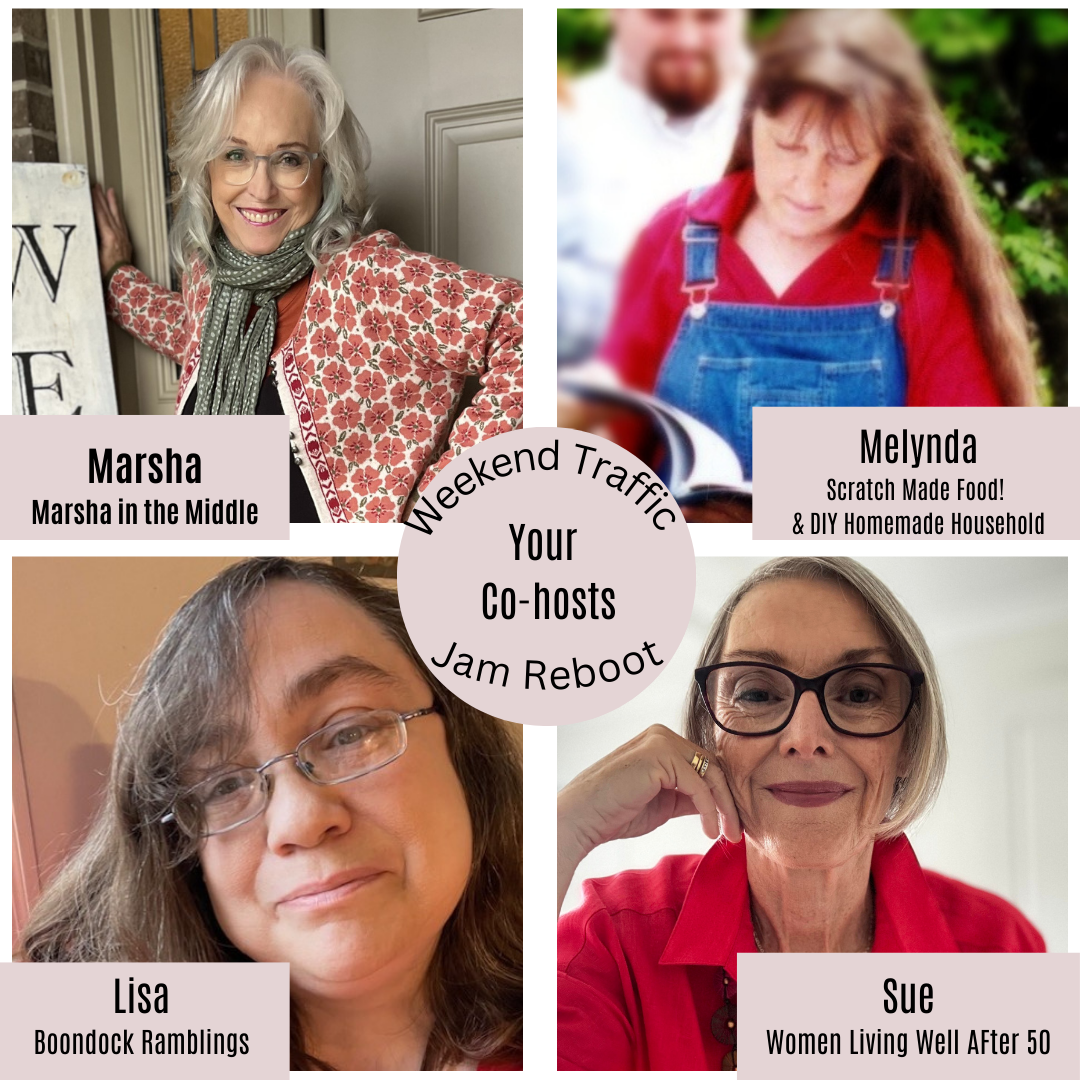
First, I’ll introduce you to our hosts:
Marsha from Marsha in the Middle started blogging in 2021 as an exercise in increasing her neuroplasticity. Oh, who are we kidding? Marsha started blogging because she loves clothes, and she loves to talk or, in this case, write!
Melynda from Scratch Made Food! & DIY Homemade Household – The name says it all, we homestead in East Texas, with three generations sharing this land. I cook and bake from scratch, between gardening and running after the chickens, and knitting!
Lisa from Boondock Ramblingsshares about the fiction she writes and reads, her faith, homeschooling, photography and more.
Sue from Women Living Well After 50 started blogging in 2015 and writes about living an active and healthy lifestyle, fashion, book reviews and her podcast and enjoying life as a woman over 50. She invites you to join her living life in full bloom.
We would love to have additional Co-Hosts to share in the creativity and fun! If you think this would be a good fit for you and you like having fun (come on, who doesn’t!) while still being creative, drop one of us an email and someone will get back with you!
WTJR will be highlighting a different blogger each week this year! We invite you to stop by their blog, take a look around and say hello! This week we spotlight …
Thank you so much for joining us for our link-up! Please remember that this is a link-up where you can share posts from the previous week or posts from weeks, months, or years ago. All we ask is that they be “family-friendly”.
This winter I am watching Douglas Fairbanks Jr. movies for fun and this week I watched The Young in Heart. It was such a refreshing change after the disaster I felt Gunga Din was last week.
This movie was full of hilarious moments, charming characters, sweet transformations, and hopeful overtones.
I absolutely loved Douglas in this one. He played a more prominent role that in Gunga Din and was simply … shall I sound completely cheesy? Yes, I shall. He was completely delightful.
At one point I texted my friend Erin that a drunk Douglas is adorable.
You’ll have to watch the movie to know what I mean. I found this one for free on YouTube.
The Carlton family, of which Douglas is a part of in this movie, are not people you would want to know in real life. They are swindlers and grifters. They mooch off and manipulate people to scrape by in life.
We open the movie in the French Riveria with Douglas’s character (Rick) ready to marry a young woman whose father is rich.
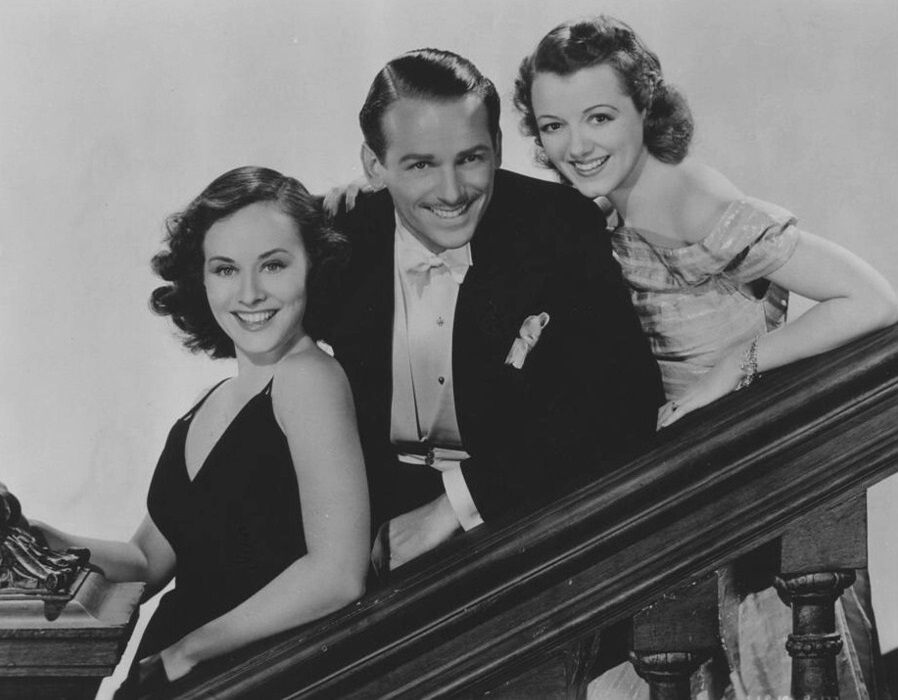
The rest of Rick’s family — father Col. Anthony “Sahib” Carleton (Roland Young), mother Marmey Carlton (Billie Burke), and daughter George-Anne (Janet Gaynor) — are thrilled with this plan because they know it will also set them all up for a rich life. George Anne might be even more thrilled because then she can marry a poor Scottish man who she’s fallen in love with, and the rest of her family will support her financially.
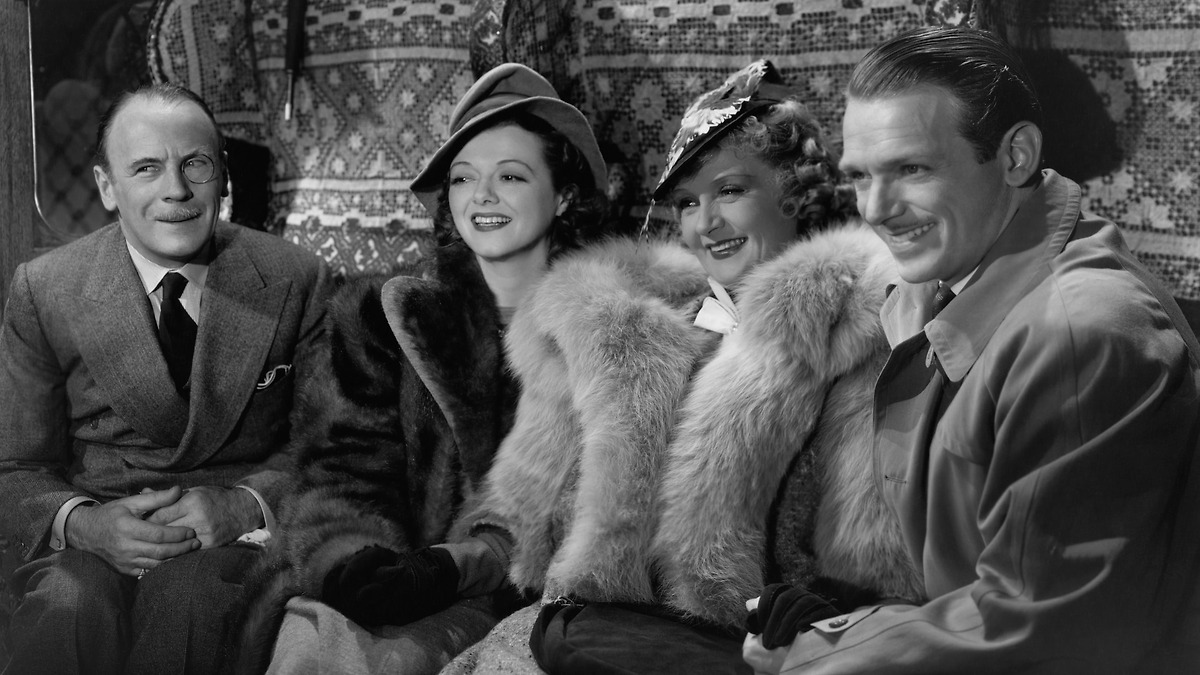
Everything falls apart, though, when the police find out about the family and reveal their conniving ways to the family of Rick’s future wife. The family is told to get out of France and end up on a train where they meet a ridiculously sweet woman (Minnie Dupree) who has only recently come into a great sum of money.
Ironically, her last name is Fortune. George-Anne sets out to swindle the woman out of paying for their lunch but the plan expands as the woman explains she lives alone in a big mansion left to her by a former suitor. She is saying how lovely it would be if all of them came to stay with her when there is a train derailment. Their car tips and at first Rick and George-Anne believe the old woman has died. She’s still breathing so the siblings carry her from the car and George-Anne covers her with her own coat.
We begin to wonder if the family is rotten through and through and are still playing things up as the woman later recovers and invites the family to come live with her.
They take her up on the offer and an odd friendship begins to form between them all. Soon George-Anne begins to feel guilty about what they are doing so she suggests to the family that if Miss Fortune believes they are a respectable family she will be more willing to let them live there and maybe even leave them money when she leaves. To play up this ruse she suggests the men get actual jobs and she and her mother act like caretakers and women who don’t swindle people out of money.
This is all very baffling to the family, which has always cheated and stolen for a living. When the men decide George-Anne’s plan might work and go to look for jobs, the scenes that follow are some of the most hilarious tongue-in-cheek moments I’ve seen in a movie.
Spinning around in the background of the family’s drama is the romance between George-Anne and Duncan Macrae (Richard Carlson), who she originally considered marrying when she thought he was rich. Duncan learned she was a con-artist along with everyone else and was shattered but still ends up chasing her down on the train back to London to tell her he still loves her.
She tells him to get lost, believing he’s much too good for her and . . . well, you’ll have to see where all that ends up.
Rick is also having his own romance with Leslie Saunders (Paulette Goddard), a secretary and the engineering business he applies at for a job.
This is the second – or shall I say third – movie I’ve watched in recent months with Billie Burke and there is no mistaking that voice if you have seen The Wizard of Oz.
Yes, she is Glenda the Good Witch.
The screenplay for this movie was written by Paul Osborn and adapted by Charles Bennett from the serialized novel, The Gay Banditti by I. A. R. Wylie. That title certainly would have had a different connotation in the modern day, eh?
Anyhow, the novel appeared in parts in The Saturday Evening Post from February 26 to March 26, 1938.
The movie released in November of the same year. They certainly worked fast back then.
I found it interesting when I read that Broadway actresses Maude Adams and Laurette Taylor screen-tested for the role of Miss Fortune and that the footage is the only audio-visual samples that existed of both of them.
The movie was produced by – can you guess? Because it feels like every movie I write about lately is produced by him.
Yes. David Selznick. The man who produced what is considered one of the biggest movie triumps in the world — Gone with the Wind.
This movie was one of many he produced leading up to Gone With The Wind. The Prisoner of Zenda, which I wrote about a couple of weeks ago, was another. Goddard was actually rumored to be being considered to play Scarlet O’Hara in Gone With The Wind, which later, of course, went to Vivien Leigh.
While I was watching the part of the movie where Mr. Carleton goes to apply for a job, I was fascinated by the fancy car they showed. It was spinning like a pig on a spit at the front of the building and it was a very modern looking car and a very modern looking set up altogether.
The six-passenger 2-door sedan Flying Wombat featured in that scene was actually the one-of-a-kind prototype Phantom Corsair. The Phantom Corsair concept car was built in 1938 and designed by Rust Heinz of the H. J. Heinz family and Maurice Schwartz of the Bohman & Schwartz coachbuilding company in Pasadena, California.”
I also found it interesting that this was Gaynor’s last movie before retiring while she was at the top of her career. She made one last movie in 1957 called Bernardine.
Like I said above, I loved this movie. It was just what I needed to watch this week with so much sadness going on in the world. There was a lot of humor from all the cast but Douglas really had me smiling throughout. Not only because he is my latest old Hollywood star crush (watch out Paul Newman!).
Have you seen this one? What did you think of it?
Up next for my Winter of Fairbanks Jr. is: Having Wonderful Time (February 6)
The rest of the movies I will be watching include:
Today is a day of relaxing and taking part in the Crafternoon zoom event with some other ladies and Erin from Still Life, With Cracker Crumbs. We are going to do crafts and chat on Zoom. It should be fun.
I am still reading the same books but have added Frankenstein which I will start this week to read with The Boy for school. I had planned to start reading it last week but got caught up in Christy and Bourdain: The Definitive Oral Biography by Laurie Woolever. I won’t lie — I am probably going to listen to Frankenstein on Audible with Dan Stevens narrating it. I’ve already listened to about five minutes and after seeing him in The Man Who Invented Christmas, I know he can pull off the voices and intonation needed for the story.
In February I hope to read more of Little Men by Louisa Mae Alcott, The Thursday Murder Club by Richard Osman, and The Sign of the Twisted Candles by Carolyn Keene.
The Husband is reading a book by Nelson Demille that I forgot the name of.
Little Miss is reading Harry Potter: The Prisoner of Azkaban.
Last week I watched Gunga Din. Yeah…so that was interesting … and I blogged about it. I also watched a lot of Edwardian Farm and an episode of All Creatures Great and Small (the newer ones).
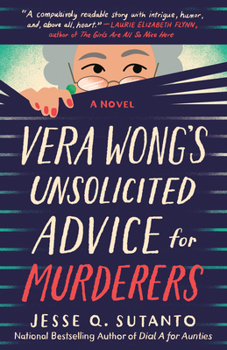
I am getting ready to release Gladwynn Grant Shakes The Family Tree, the third book in my cozy mystery series February 19 (or maybe sooner). If you want to know more about it or pre-order an ebook copy, you can click HERE.
This Friday I will also start sharing a serial version of the first book in the series Gladwynn Grant Gets Her Footing. Blog readers can follow along each week or choose to purchase the book instead on Amazon.
This past week our area was plunged into an arctic cold that had me wishing I could wrap myself in a cacoon of blankets and only crawl out to use the potty and get snacks.
I spent much of the beginning of the week acting like anyone who stepped outside our door into the arctic cold would immediately turn into ice and shatter.
“Don’t go out there!” I’d cry. “It’s so cold and you could get hypothermia! Frost bite!”
“Mom,” The Boy would say. “I’m just going to get some wood from the woodpile. Chill.”
Our animals stared forlornly out the windows at the snow that fell right before the temps dropped into single digits. Sometimes the cats would stare sadly at the back door and I would let them out. Sometimes less than ten minutes later they were looking in the window in our kitchen from the outside, their little faces panicked, as if I didn’t just tell them it was deathly cold outside.
Our cats have been curling up in front of the woodstove on most days and nights. They are much more cuddly than in warmer weather, as I have mentioned before. The youngest, Scout has even started curling up with me in the mornings before I am out of bed and it is during one of these cuddle sessions this morning that I was reminded how evil cats are. I am convinced they are sorcerers or sorceresses.
What Scout does is climb on my chest already purring. Then she bumps her nose against my nose and licks my chin. Her eyelids are all heavy and she sniffs the pillow next to me, bumping her head against my cheeks and chin and then finally curling up against my arm, next to my neck and shoulder. She snuggles as close to my face as she cans and begins to purr more in earnest, all while watching me with half-open eyes, drawing me into her spell.
Sometimes she stretches her legs and paws out across my chest and purrs more, urging me into a deep sleep after I have already said I need to get out of bed and get the fire started.
“No,” she seems to say. “You will lay here. You will fall into a deep, all-consuming slumber. You will be delayed in starting your day. Why? Because I, your cat overlord, demand it. You are losing willpower. You are growing warm, cozy, and, most importantly, sleep. There you go. That’s right. Don’t fight it. Ignore the dog. She can pee later. What you need is me, your warm cat overload, your warm blanket, and the dreams of walking in a peaceful forest that I am now planting in your head. That’s right…you’re getting sleepy….”
Sometimes I wake up and she’s snoozing next to me – like she got some of her magic sleep dust on herself. Other times I wake up and she’s gone, and I wonder if she cast her spell so she can get up to some mischief elsewhere in the house.
This morning I fought her hard and finally managed to crawl out of bed and find some sunlight coming into our living room, which is welcome, but misleading since it is still only 25F (-3C), which is much better than 8F (-13).
It was so cold last week that not even our furnace, woodstove, and electric heat upstairs could seem to drive the cold out of our rooms.
I spent most of the week locked inside, watching Edwardian Farm, All Creatures Great and Small, and old movies.
I also read quite a bit.
On Thursday I was finally able to break free (“ I want to break free…I want to break free….” Sorry. I always end up humming songs with lyrics that matched what I just said. I know. I’m weird.) and go visit my parents while The Husband stayed at home and suffered through the cold the kids had had earlier in the week. I hadn’t seen my Mom since January 8 and had only briefly seen my dad during that time. Either it was too cold or I had sick children and was worried I’d be next and pass whatever virus we had on to them.
Somehow, I either managed to avoid the illness or had such minor symptoms that it did not hit me as hard.
At my parents I looked through a bunch of old photo albums and found some interesting photographs. One of those photographs I will share in a future blog post to tie up my posts about letters written between my great-great grandfather and his brothers during the Civil War.
Other photographs are photos I have seen many times over the years. They are from a photo album that my grandmother said belonged to Ivy, her aunt. I don’t know if Ivy took all of the photographs, but Grandma said she believed that she took some and collected the others. There are photographs of her sisters and my grandmother and her sister when they were babies. My grandmother was born in 1909 and Ivy died in 1915 so Grandma didn’t really remember her, but she remembered stories about her. Ivy passed away at the age of 29 from a kidney condition.
Based on the photographs of her and others in the book, she seemed like a very adventurous and fun person.
My favorite photo of her is this one:
This is her and her sister Carmen.
Second is this one:
I also like this one and wonder what she’s doing in this photo.
And I love this posed shot with these four women, though there was nothing written in the album to tell me who they are. I think one is Ivy and maybe Carmen again.
I just love their poses and the artistic elements of this shot.
The album, by the way, is made with photographs glued to black pages with no plastic to protect them.
I used to sit in the floor of my grandma’s living room, haul that album and other old loose photos out of a box and just pour over them. They fascinated me — the outfits, expressions, locations I could recognize from the tiny village I grew up in – a portal to life long ago.
There used to be a train station in the little village (which is only a few houses and an old church and cemetery) I grew up in. There is a path by the creek that is overgrown but yet still features a cleared path where the train tracks used to be and that never seems to grow over no matter how many years have passed. Parts of the stone used to build the railroad bridge is still located there, but most of the railroad tracks themselves are gone.
There is one photo in this book of a group of women and a few men sitting along the tracks and the platform. As I was preparing this post I noticed I had not taken a photo of that photo so I can’t share it here. That’s probably because it was a pretty dark photo – so dark I could barely make out the three men sitting behind the women in all white.
In the photo, though, I can recognize the exact spot it was taken even though it was 116 years ago. Behind the group, to the left would be the field where cows now roam and beyond that field is the house that I grew up in — a house built maybe 150 years ago.
The house is still standing but in not great shape and no longer owned by us.
The photographs that really interest me in this book are the unique ones. The ones where no one is looking at the camera or if they are they are doing so it is in a playful way.
There is one photo where we can see a man through the bushes and I imagine he is on his way to the shore of the pond that used to be there behind the cemetery.
I have created this story in my mind that Ivy took that photograph of him secretly because she had a crush on him, or maybe they were an item. Further on in the book there is a photo of her with this same man. They are sitting in the buggy of a horse and carriage.
Maybe they weren’t “an item.” Maybe they are related somehow, but I don’t think I’ve ever seen the name in the genealogy.
It’s always made me wonder if they ever had a relationship, but it ended because of her health issues. She never married before she passed away.
I’d better stop rambling about family history or this blog post could go on for a long time.
This is a subject I find myself blathering about to people who probably consider faking a heart attack just to get away from me.
We are expecting cold weather again this upcoming week but we have nowhere to go, other than maybe visiting my parents once or twice.
What have all of you been doing? How is the weather where you are? Do you have anything exciting going on during the upcoming week?
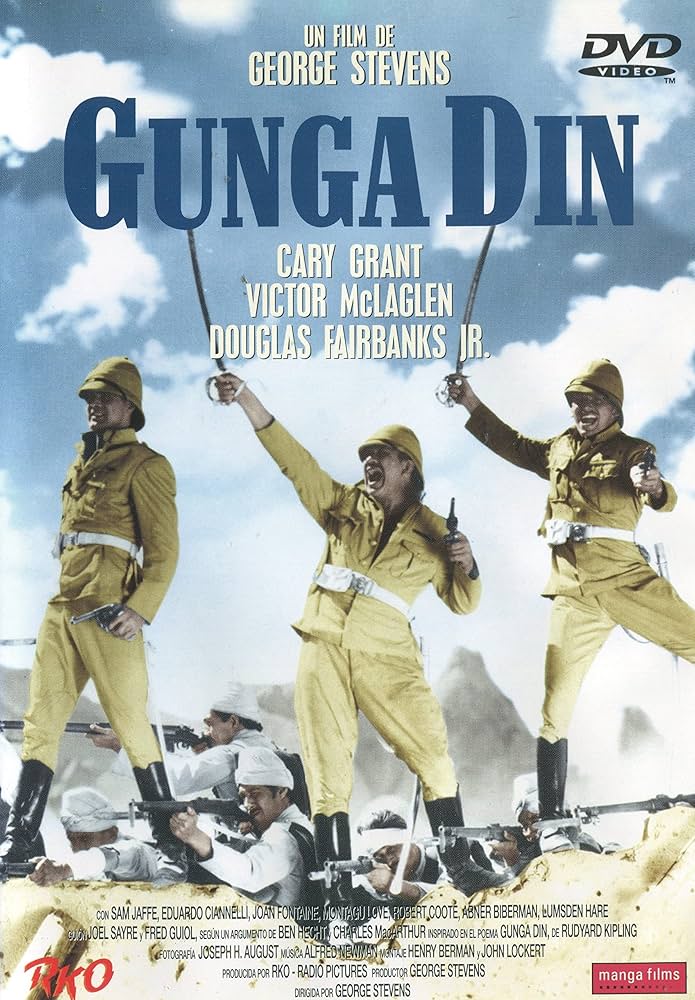
Up this week for the Winter of Douglas Fairbanks Jr. is Gunga Din (1939), said to be one of his most famous movies.
I am going to let you know right up front that I rarely hate classic movies that I watch, but I pretty much hated this movie. This movie was a train wreck for me from beginning to end. Possibly a bit of a racist train wreck at that. It had a severe identity crisis — it wasn’t sure if it was a comedy or a drama.
For me this movie was Gunga Do..n’t.
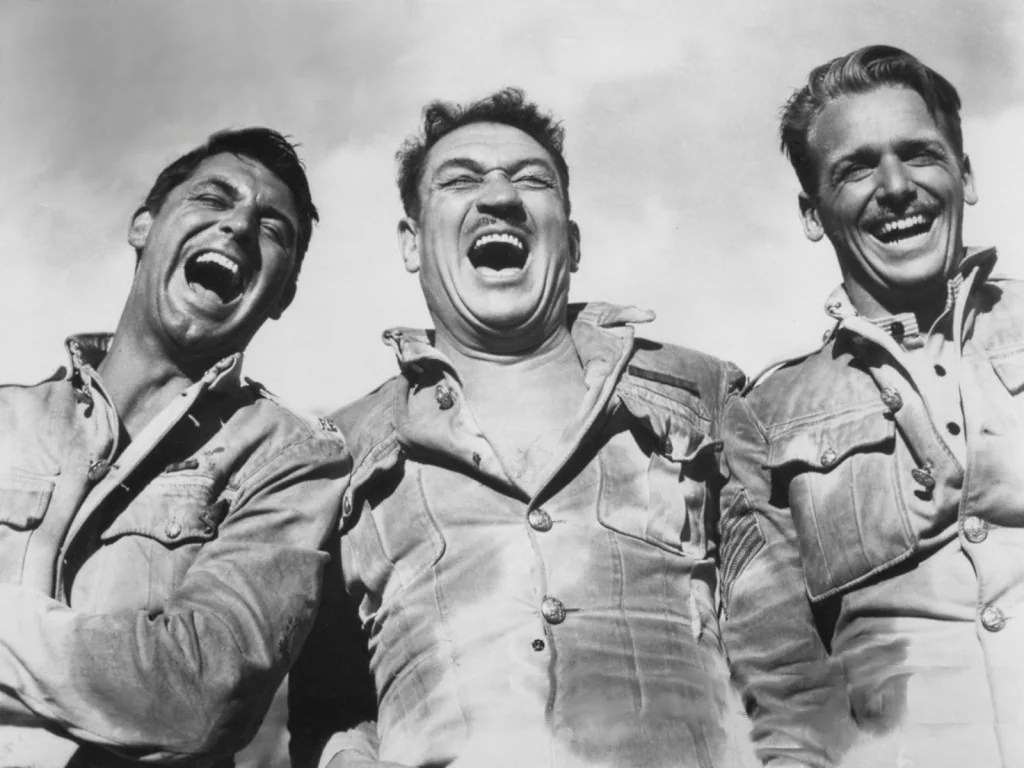
When I first started it I thought, “Two of my favorite actors. Cary Grant and Douglas Fairbanks, Jr! Be still my heart!!!”
As I continued it, I thought things like:
“Are these guys supposed to be British?”
“What accent is that? Is he trying to do an accent? Why is he trying to do an accent?”
“Why didn’t they let the Irish actor just have an Irish accent? His British accent is horrible.”
“Douglas looks bored out of his mind and like he wishes he could get out of his contract.”
“Is that a white man painted brown to look Indian? And that one too? And that one? And…
First a snippet of the synopsis of the movie from TCM.com:
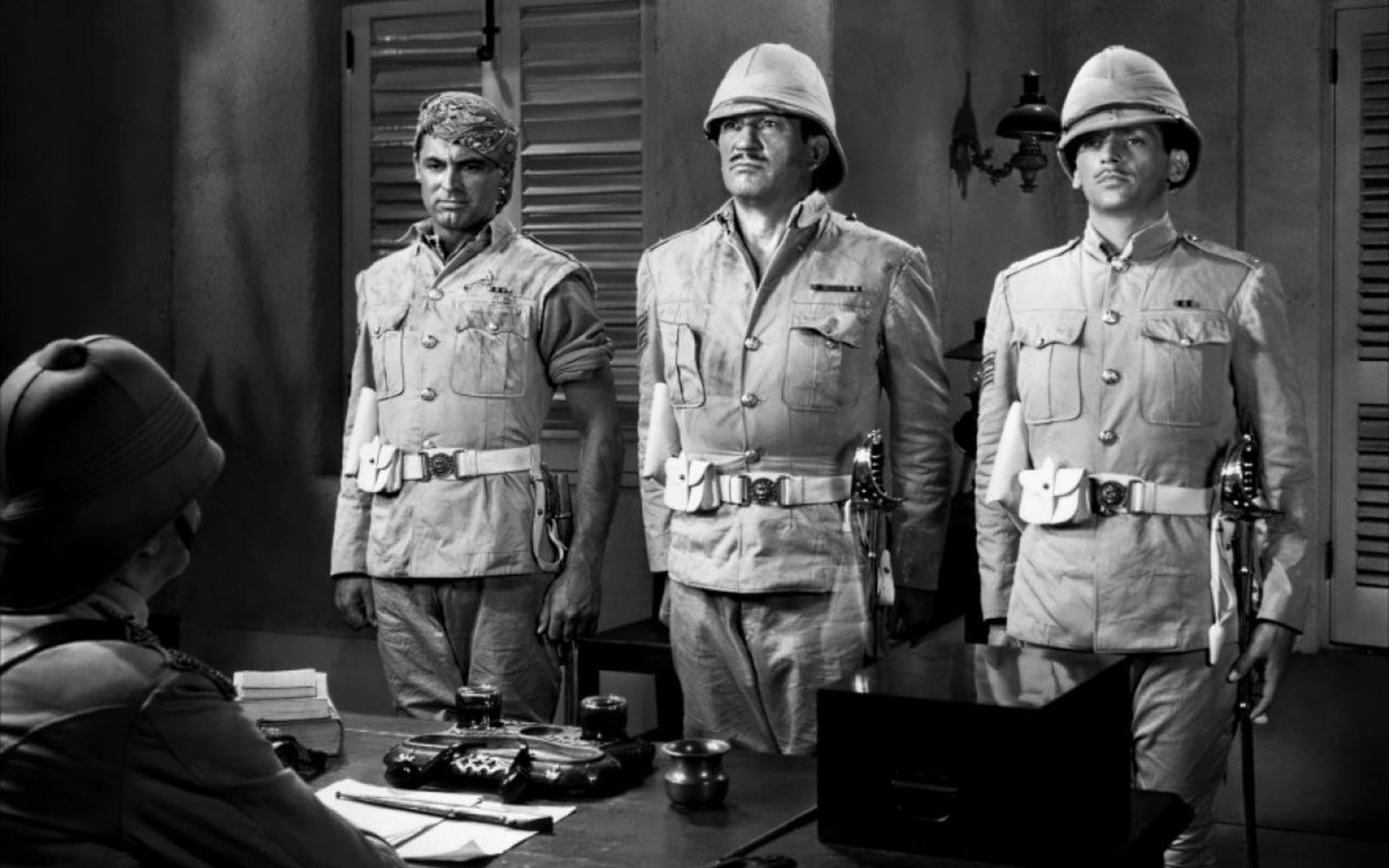
In an encampment of Her Majesty’s Lancers in Colonial India, the commanding officer (Montagu Love) is distressed by the cutoff of communications from an outpost ten miles distant. He wants three of his most dependable sergeants to embark on an investigative mission; however, the trio must first be pulled away from a bar brawl to receive their orders. The comrades in arms include the calculating Cutter (Cary Grant), ever dreaming of finding a cache of riches; the grizzled veteran MacChesney (Victor McLaglen); and the gentlemanly Ballantine (Douglas Fairbanks, Jr.), whose sole focus is his imminent discharge and marriage to his fiancée (Joan Fontaine), much to the chagrin of his comrades.
Among the troops taken on the mission is the humble bhisti Gunga Din (Sam Jaffe), for whom life would hold no greater honor than to serve as regular Army. They arrive at the outpost to find the streets empty; the soldiers’ rousting of the homes turns up one small cluster of ostensible survivors.
Cutter’s drunken fixation with a legendary golden temple leads to a one-sided slugfest with MacChesney, a stint in the brig, and an audacious escape courtesy of Din and MacChesney’s beloved pet elephant. In their flight, Cutter and Din discover the mythical temple which, as they unfortunately learn too late, is also the gathering place of a criminal sect devoted to the Hindustani goddess of destruction Kali. Cutter offers himself to the cult to buy Din time to escape, and the quest for his rescue drives Gunga Din to its rousing conclusion.”
I don’t know what to say about this movie. I really don’t. It was a mix between a comedy and drama with a lot of racist undertones against the Indian people who Great Britain took over for no reason other than greed and power.
Then at the end they acted like these three idiots were heroes, when half of the people who died wouldn’t have if Cary’s character hadn’t been looking for gold.
To me it was a great big statement on imperialism and while the movie was trying o portray British patriotism I found it fairy sickening to watch them gun down Indians whose land it was in the first place.
And the music playing throughout this movie tried to make it seem like it was a goofy romp, even while the footage before our eyes tried to play it off as a serious epic. I was so thoroughly confused.
Also, Douglas Fairbanks Jr. looked so bored in much of this movie. It was like he was trying to figure out what was going on with the rest of us.
The movie was overbudget and took longer to film than promised, according to an article on TCM.com.
“Filming began in June of 1938 and was set to last for 64 days. Due to the working methods of director Stevens and to a studio anxious to produce its most prestigious picture to date, Gunga Din would ultimately go over budget, miss its release date of Christmas, 1938, and the shooting schedule would stretch well beyond the allotted 64 days to a total of 104 days.”
The movie was shot in the deserts of Lone Pine, California, and temperatures of up to 115 degrees took a toll on the cast and crew.
A number of scenes that involved journalist and poet Rudyard Kipling — who wrote the poem and short stories that the movie was based on — were cut at the request of his widow who knew that at that time audiences would have been shocked and laughed at the idea of a journalist being embedded with the army. This is something modern audiences wouldn’t even blink an eye at today.
I found it interesting that author William Faulkner worked on the original screenplay for $750 a week. I guess I always thought of him as more highbrow than writing screenplays for movies. In the end it wasn’t his screenplay that was used, but instead one by Charles MacArthur and Ben Hecht.
The expenses paid out for the movie was one reason the movie ended up costing the most of any movie that the RKO Studio had made so far at $1.9 million. Of course it wasn’t the most expensive movie released that year. That went to Gone With The Wind produced by David Selznick’s Selznick International Pictures and Metro-Goldwyn-Mayer with $3.8 million.
Gunga Din only brought in $2.8 million but was re-released in 1941 and again in the 50s and gained back even more of it’s production costs over the years.
While I thought Douglas looked bored in this movie, he looked back on it with fondness, even though a biography on Cary reports that the veteran actor stole a scene from Douglas so Cary would look better.
From TCM.com: “In his biography Cary Grant: A Touch of Elegance, Warren G. Harris relates a story from the set in which “…Grant deliberately cheated Douglas Fairbanks, Jr., out of one of the most memorable moments in the picture. In a rooftop scene, Fairbanks had to wrestle with a native, pick him up and hurl him into the street below. Grant coveted the bit himself, so he told his co-star, ‘Doug, you really shouldn’t do this. It looks like you’ve killed the guy. It wouldn’t help your image. And you know your father would never have done such a thing on the screen.'” The ruse worked, and when Stevens asked for a volunteer for the shot, Grant jumped at the chance.”
This didn’t stop Douglas from still admiring Cary though because he later told another biographer writing about Cary: “ . . . .the most generous player I’ve ever worked with. He wasn’t just taking his salary. He was concerned that the picture be a good picture. He thought that what was good for the picture was good for him, and he was right. He was very shrewd that way. He was a master technician, which many people don’t realize, meticulous and conscious of every move. It might have looked impetuous or impulsive, but it wasn’t. It was all carefully planned. Cary was a very sharp and intelligent actor who worked out everything ahead. I called him Sarge or Sergeant Cutter, and he called me Ballantine right to the end of his life.”
There are other reviews online bothered by the racist undertones of the movie and just the confusing antics of the three main characters.
“I can see how the film would be epic at the time,” writes the author of Opus.ing.com. “But in this day and age, where epics are tossed off every six months or so, it’s hard to look past the film’s dated-ness and timely flaws. Not an unenjoyable film, but if you’re looking for a “classic” epic, you may wish to look elsewhere — and if you’re looking for an honest, unromantic view of British imperialism, you’ll definitely want to look elsewhere.”
This author also noticed Cary’s accent issues: “Far too much time is spent on the hijinks of the three officers, played by Victor McLaglen, Douglas Fairbanks Jr., and Cary Grant (whose accent seems to change with every scene), such that the titular character, an Indian bugler who wants more than anything to prove himself a soldier, easily becomes overshadowed.”
When I describe Cary’s accent issue, think Kevin Costner in Robin Hood: Prince of Thieves.
Yeah.
That bad.
TCM admits that there have always been issues with the movie regarding it’s political correctness (for lack of a better term). The film was even banned in India.
“But as a pure adventurous lark,” writes TCM’s Jay Steinberg. “Gunga Din holds up as well now as then, and retains its place amongst the top films of 1939, Hollywood’s greatest year.”
If he thinks so….I will just agree to disagree.
Have you ever seen this one? What did you think of it?
Up next for my Winter of Fairbanks Jr. is: The Young At Heart
The rest of the movies I will be watching include:
Welcome to the Weekend Traffic Jam Reboot where we offer a place for bloggers to link up and get a fresh set of eyes on their posts. We also feature one blog a week, letting our readers know about the blog and providing a link so readers can learn more about them.
I hope that you will look through the links and click on some and find a new blogger or two to follow.
First, I’ll introduce you to our hosts:
Marsha from Marsha in the Middle started blogging in 2021 as an exercise in increasing her neuroplasticity. Oh, who are we kidding? Marsha started blogging because she loves clothes, and she loves to talk or, in this case, write!
Melynda from Scratch Made Food! & DIY Homemade Household – The name says it all, we homestead in East Texas, with three generations sharing this land. I cook and bake from scratch, between gardening and running after the chickens, and knitting!
Lisa from Boondock Ramblingsshares about the fiction she writes and reads, her faith, homeschooling, photography and more.
Sue from Women Living Well After 50 started blogging in 2015 and writes about living an active and healthy lifestyle, fashion, book reviews and her podcast and enjoying life as a woman over 50. She invites you to join her living life in full bloom.
We would love to have additional Co-Hosts to share in the creativity and fun! If you think this would be a good fit for you and you like having fun (come on, who doesn’t!) while still being creative, drop one of us an email and someone will get back with you!
WTJR will be highlighting a different blogger each week! We invite you to stop by their blog, take a look around and say hello! This week we spotlight …
Thank you so much for joining us for our link-up! Please remember that this is a link-up where you can share posts from the previous week or posts from weeks, months, or years ago. All we ask is that they be “family-friendly”.
“I have not had a letter from you in a long time so I thought I would write to you and see if you were well and inquire as to how brother Charles is getting along. I have been uneasy for his welfare as our prisoners get very bad treatment at Belle Island and Richmond.”
Letter to William Grant from his brother John G. Grant, Washington DC, Dec. 22, 1863
When some people research the past, they find it interesting but are somewhat disconnected from what happened. They may read something sad and say, “Oh, well, how awful.” They feel down for a bit, and they move on.
When you research your family history, though — reading letters from them, getting to know them through those letters and photos of them — it all becomes a bit more personal. Suddenly you, or shall I say that “I” feel very close to the people I am reading about and about the world they lived in.
More than once I have teared up, choking back a sob, thinking of the suffering my family faced as I’ve read letters, journal entries, or biographies of their lives.
There was history all around me growing up. When I was a child there was a large, old trunk in the closet in my bedroom. I had no idea what it was and used to prop up my stuffed animals on it.
It wouldn’t be until years later I would learn the trunk belonged to my great-great grandfather, John G. Grant, a Civil War vet, and held American flags, and other memorabilia from my great-great grandparents and their family inside. After the war, John became a doctor and before that he was a letter carrier for the Union Army in Richmond after the war. I’m not sure where the bloodletting set and the letter carrying case of John’s was stored but I know they are with my dad now.
John mentioned his trunk in a letter from August 20, 1862, where he also foreshadows his interest in the medical field.
“I should like to have my chart of Frenology (sic). I think I put in my little trunk upstairs, or else it is about the house somewhere. I suppose you know what book I mean. I used to call it my Frenology book. Please get it and send it to me as soon as you get this letter.”
He was stationed at an Army training camp near Germantown, Pa. at the time.
In case you are curious, phrenology is: “the detailed study of the shape and size of the cranium as a supposed indication of character and mental abilities.”
When I was in college, and after my family had moved in with my paternal grandmother, she and I were looking at historical documents and pulled out some old papers from under her bed. We found a large, original poster that appeared to show all the battles John Grant had fought in. It stated that it had been presented to his family sometime after he was discharged from the Army.
Grandma was thrilled and fascinated. Either she’d forgotten or didn’t realize the poster was there. My history-loving aunt, Eleanor, drove down from her farm in Upstate New York, took the poster and had copies made for all of my grandmother’s children, grandchildren and great grandchildren. One is hanging on my wall in our house today. I believe my dad has the original.
When I read the letters written during the Civil War between my great-great-grandfather and his half-brothers I find myself thinking of the history of this time period that I’ve read in textbooks – how it wasn’t history for them but reality.
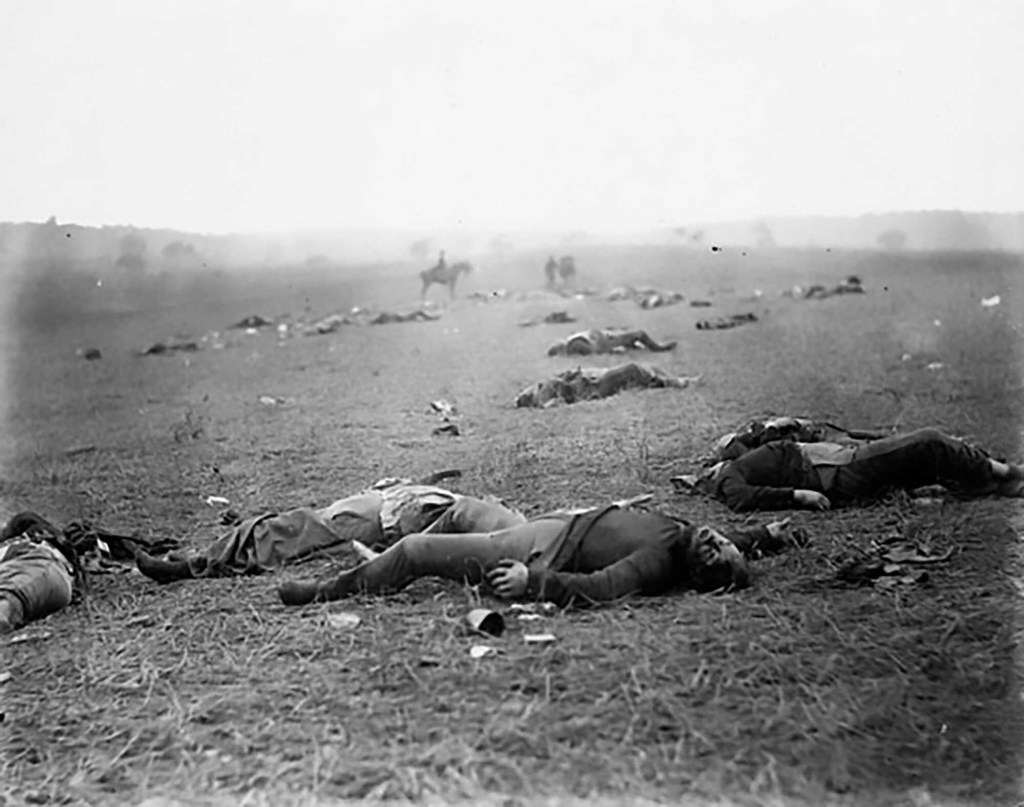
One of the hardest realities my great-great grandfather and his half-brother, William Grant, had to face would come when they learned that their brother, Charles, had been taken prisoner by the Confederates shortly after the Battle of Gettysburg.
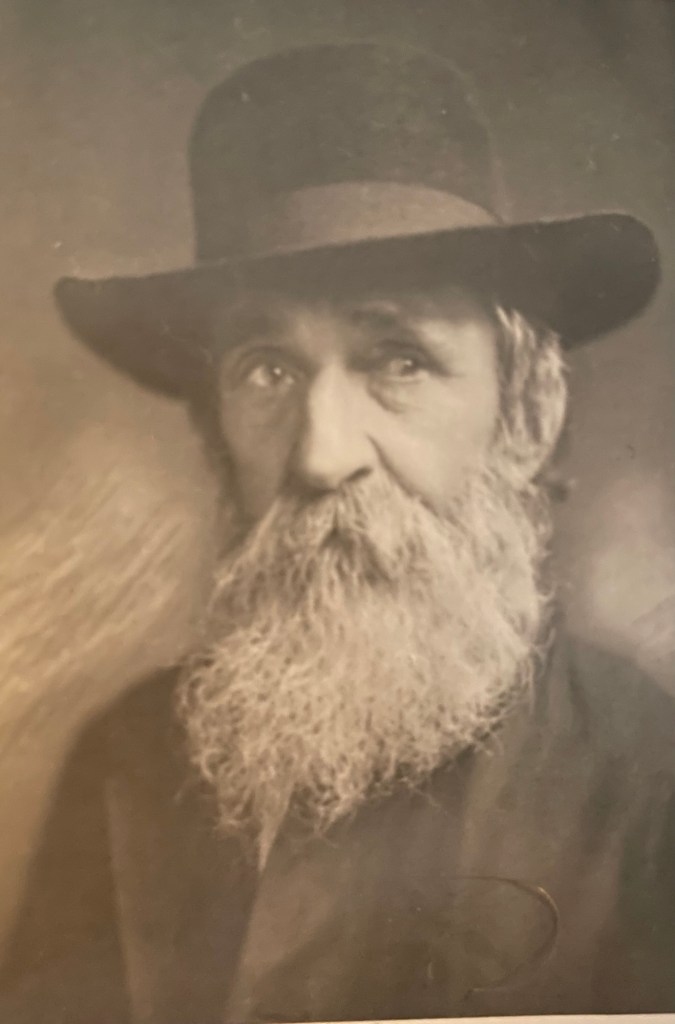
(This photo is undated and unlabeled, but we believe it is Charles Grant. It is the only known photo of him. William Grant tried many businesses to make a livelihood, especially after the war started and the economy was suffering. One business he tried was making photo cases. This is most likely one he made).
In my first blog post about these letters I wrote about John and William visiting Charles in the hospital. This would have been 1861. I’m not sure what Charles had that left him in a weakened state, but I do know he would eventually be released from the hospital. I figured out his age to be about 31 at the time he was in the hospital.
I mentioned part of Charles’s letter to John in an undated letter in my previous post:
“If things do not get better before next winter, there will be a great amount of suffering among the working people,” he wrote in that letter. “The factory where I work is running but two and three days in a week and has been for the past two months and the hands are not making more than $10 or $12 a month and that amount will not go far down here.”
“Thousands who one year thought themselves in good circumstances are now as poor as beggars and who has caused all this but the men who are now the leaders of the Rebel forces and fighting against the best government on the face of the earth. They seem determined if they cannot rule this great nation to the interest of negro slavery to ruin it.”
He ends the letter with a little bit of family business:
“You want to know where Uncle William lives. The last I heard from him he lived in Laraneeburgh, Indiana. I sent you two papers within the last two months. I posted one last night when I got your letter. It had been lying in the office for some time as the new postmaster did not know what part of town I lived in and could not send it to me. This will account for me not answering sooner, but I must bring my letter to a close with sending my love and best respects to you and all the folks.
Farewell,
Charles Grant.”
No one in the family has been able to tell me how John, William, and their mother would find out Charles had been taken captive right before the Battle of Gettysburg, but somehow, they knew.
John wrote to William Dec. 22, 1863.
“I have not had a letter from you in a long time so I thought I would write to you and see if you were well and inquire as to how brother Charles is getting along. I have been uneasy for his welfare as our prisoners get very bad treatment at Belle Island and Richmond.”
It was not until 47 years later that William would be told the full story of what happened to his brother and that by the time John wrote that letter, Charles had been dead for at least 18 days.
I’m not sure the full story of how Meville H. Freas of Germantown, Pa. found out that William was looking for more information about Charles. I believe the family story is that it was a letter that William wrote to a newspaper near Germantown toward the end of this life, that clued Melville into the fact William didn’t know what had actually happened to Charles.
Toward the end of his life, well into his 90s, William was looking for a place to be buried and wrote letters to a couple of newspapers talking about his need for a burial plot. Meanwhile, his family in our little town, was willing to give him a place and wrote him letters to that effect. In the end, he was buried in a cemetery near the veterans home he was living at in Erie, Pennsylvania.
William Grant
William and Charles had grown up outside of Germantown and stayed in that area for most of their lives.
William would later learn that Charles had enlisted in the Army in Germantown with Melville Freas, Phillip W. Hammer, George Shingle, and Lewis Vogle.
After spending nine months in Libby Prison, Melville Freas was the only one to return home alive.
“January 19, 1910
Comrade Wm. Grant
My dear esteemed friend. A few words about your brother Charles. We were in the same company A of the Bucktails. We fought in the same first days fight in Gettysburg and we were both taken prisoners when leaving Gettysburg as prisoners of war. A Reb Major put us all in line and read to us an order and wanted to parole us, but our government forbid it so we had to go to Richmond and your brother Charles said, ‘I will never live to go back.’
And he did not.
We were put on Belle Isle on July 24, 1863 and I was with him and we both were moved from Bell Isle sick together. We went into Richmond on November 1, 1863 and put in a tobacco warehouse on the (unreadable) floor. No one came to see what ailed us so I said, “Charley, let us lay down and go to sleep and when I awoke in the morning Charley was dead by the side of me.
What he died of I cannot say. I notified the officers in charge and he was taken away and buried and I could not say where, but on the outskirts of the town. Philip W. Hammer was our drum major. He also was captured in the same fight and died at Richmond, Va. I have seen Mrs. Sallie Hammer several times since his death and talked with her concerning him.
Poor Phil — the last time I seen him he had traded his blue uniform for a Reb uniform and a little something to eat. You see we were ‘a starving to death. These men died as prisoners: Charles Grant, Lewis Vogle, George Shingle, and Philip W. Hammer. I was paroled March 21, 1864.”
He also writes about killing someone’s dog and eating it, but that’s not important to our part of the story.
It’s hard to read or understand Melville’s last sentence but further research from a newspaper article our family had and from articles I found online, shows that Melville built a monument in the Ivy Hill Cemetery in Germantown in honor of his friends, including Charles. First, it was a smaller monument and later he had a statue of himself in full Union uniform placed at his future grave. Those articles also stated that Melville was paroled from the Confederate prison in Andersonville, Ga. And that is possible because the prisoners from Libby were moved to Andersonville in February 1864.
Melville had each of the names of his friends who died inscribed on both stones and each Memorial Day he would march in full uniform to the cemetery. One article said he even took his children and later grandchildren with him.
From an article in a Philadelphia paper from May 1917 after listing all the Memorial Day (called Decoration Day back then) events that would be going on:
“And finally, as he has done for many years at 5:00am on this Decoration Day, Melville Freas, Civil War veteran and former private of the 150th Pennsylvania Volunteers went to Ivy Hill Cemetery, loaded his rife with blank cartridges and fired a salute under the statute he had carved of himself which sits atop the grave he will one day rest in.”
As I mentioned above, John had visited Charles in 1861 and he was recovering from something doctors called The Grave (if my aunt transcribed that from the old fashioned hand writing correctly) so I believe he was most likely weakened still in 1863 when we was captured. That’s why he told Melville he would not make it back.
I’ve wondered over the years about what Libby Prison would have been like for Union prisoners of war, and I can tell you, after only a little research, it was not a good place to be held prisoner at or to be a guard at. Belle Isle was just as bad. Illnesses like typhoid and lack of food made conditions miserable for both prisoners and guards.
Libby Prison (left) was a three-story brick warehouse at Cary and Canal Street that was taken over by the Confederate government and became Richmond’s most notorious prison, next to Belle Isle (right).
By 1863, the South was losing, especially after Gettysburg, and because of that, people were starving everywhere.
You will recall that in his letter Melville said his government forbade the men from being paroled instead of being taken prisoner. I did some research on this, and it was because once President Abraham Lincoln emancipated the slaves in 1863 it meant that any African Americans, soldiers or otherwise, held by the Southern armies were now free. This infuriated the Confederacy who argued that those African Americans who fought as soldiers for the Union and were captured were runaway slaves and would be sold back into slavery instead of being taken prisoner.
This (rather long…sorry) excerpt from an article on the National Park Service web site under the section of the Fort Pulaski National Monument explains it fully.
“When the Civil War first broke out in 1861, few expected it to last beyond a few months. As the war dragged on, however, realities had to be faced, among them the question of what to do with prisoners of war. Over the first two years of the war, the prisoner of war experience was fairly limited. Most captured soldiers were held for only a few months before being released. One option for release was for the soldier to be paroled—temporarily released on the condition they remain in a certain area and not return to the war effort. Many officers were also exchanged—traded for an opposing prisoner of equal rank and returned to the war.
Everything changed in 1863. On January 1, 1863, President Abraham Lincoln issued the Emancipation Proclamation. All enslaved peoples held by states in rebellion were now free. The United States also began the enlistment of African American men into the military. This act enraged the Confederacy who accused the United States of “inciting service insurrection.” As the new United States Colored Troops (USCT) began reaching the front lines, the Confederate Congress issued the Retaliatory Act. This act declared that USCT units would not be treated as soldiers. Instead, Black soldiers would be handed over to state authorities where many would be sold into slavery. The white officers of these units, the act declared, were to be treated as inciting a slave rebellion and “shall, if captured, be put to death.”
With this act, the Confederacy officially refused to treat Black soldiers as combatants when captured. In response, the United States called for a cease of all prisoner exchanges until all soldiers were treated equally as prisoners of war. The Confederacy refused, thus beginning a shift in the prisoner-of-war experience. Suddenly, captured soldiers were being held long-term. Both sides had to create a system of large prison camps to house the thousands of prisoners of war.”
I have a feeling that my family, among many others, felt that had it not been for the Confederacy’s refusal to return their black soldiers, Charles, and many Union and Confederate soldiers, might have come home alive.
One letter from John G. was to, I believe, his stepfather, though I’m not sure since no name is mentioned and addresses what should happen to those many in the Union saw as traitors. It is dated Sept. 6, 1864. John was in Germantown, Pa. at the time.
“I see the convention at Chicago have nominated Gen. McClellan much to the chagrin of the Copperheads who wanted to nominate (unreadable because of the old handwriting) or Gov. Seamor – so you see by the Democrats split and that will proved to be like it was when Lincoln was elected. I have nothing against McClellan, but do not like the platform which the Chicago convention was formed for him to stand on. Upon that platform the Democrats are willing to shake hands with Jeff Davis (that arched traitor) over the graves of our dead comrades who have fallen by his hands and to form a peace with him on almost any terms and more than this yet to take him back to the home of our good old country and pardon him and give him equal rights with ourselves, which should never happen.”
John continued, “Jeff Davis deserves to be hung rather than have our sympathy. Now you will see by this if there is any gentleman about Gen. McClellan or if he cares anything for the thousands of his fellow soldiers who have fallen on every side of him in defense of their beloved country. He certainly will not accept the nomination on such a platform as this, and if he does accept it, on that platform, I am afraid he will never be elected.”
As an aside here, Davis was pardoned in 1868 but McClelland had nothing to do with it because he lost to Abraham Lincoln, who, of course, was assassinated only four months into his second term.
(Abraham Lincoln and Gen. George McClellan)
While researching Melville Freas, I found an article sharing a letter Melville received from a confederate guard at Libby Prison and then Melville’s response. It was an eye-opening letter, adding to the information I’d already learned about Libby Prison and other confederate and Union prisons during that time.
“Melville H. Freas, 248 East Haines street, has received a letter from a former Confederate soldier who stood guard over Mr. Freas when he was a prisoner at Richmond, Va., at the time of the Civil War. The letter was inspired by a newspaper article which Mr. Freas wrote recently protesting against the erection of a monument to Wirz, commandant of Andersonville prison. This article was copied in a Richmond newspaper where it caught the eye of H. C. Chappel, of Amelia Court House, Va., and he wrote as follows to Mr. Frees:
“Dear Old Comrade on the Other Side:
I read a short sketch of yourself in the Richmond Times and learned you had been a prisoner on Belle Isle. No doubt I have looked in your face many a time. The battalion I belonged to guarded there from August 1863 to March 1864.
We had hard times there, as well as the prisoners. We ate the same grub, and had to stand the cold without wood to make a fire, and no chance to get away. But we would go to the iron works and warm up.
I guarded at Libby prison early in 1863. There we got the best grub, and more of it, than any time during the war. The prisoners were all officers, and never gave us any trouble.” Do you remember the guard, all well dressed in deep blue pants and gray jackets, with gray caps? They composed the Twenty-fifth Battalion. We had got acquainted with many of your boys. It was positively against orders to trade with the prisoners, but we did it all the same; and when we got back to camp those that were caught were called out and sent to the guard house and court martialed.
Don’t you remember that dark rainy night when Colonel Dahlgren reached the river above the island? I happened to be on guard that night. Several of your men asked me what that firing was about, and I told them a war lie. I told them it was over in the city of Richmond and that our battalion was sent to the front and we had to stay on guard.
There didn’t seem to be much sickness in the prison camp, as very few were buried on the island. I remember seeing fifty graves at the hospital. They had only two small tents.
I can truthfully say I never ill-treated any prisoner. No doubt some crank or a mean devil would do it but it was against orders from our officers.
Freas did write the man back, sharing a little more of his journey and he was cordial and thanked him for the letter, but I would imagine it must have been hard for there to be forgiveness after the war. Our nation was split apart — shattered beyond recognition.
It’s split apart in many ways now, but I hope that it will never be so split that it will bring fellow countrymen against fellow countrymen or brothers against brothers.
I know that for some of us, this is already happening, but I pray we learn a lesson from our ancestors about how to lick our wounds, heal our hearts, admit our wrongs, or at least recognize them on both sides of issues, and restore our relationships before it is too late.
Today’s prompt is to share The Ten Most Recent Additions to My Book Collection (or to your to-read list!)
This one wasn’t too hard for me to do because I had ordered five from Thriftbooks right after Christmas and before that there was a used book sale at our library and I picked up a few (I promise it was actually just a few this time).
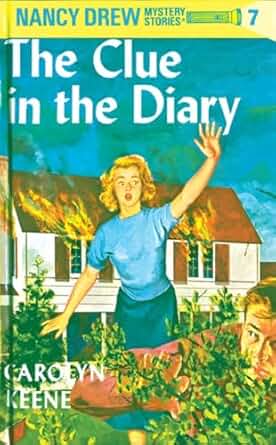
1. The Clue in the Diary (Nancy Drew, Book 7) by Carolyn Keene
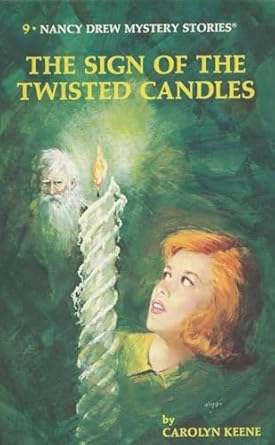
2. The Sign of the Twisted Candles (Nancy Drew, Book 9) by Carolyn Keene
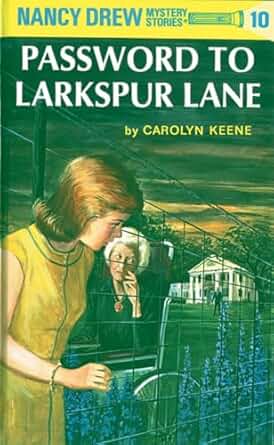
3. The Password to Larkspur Lane (Nancy Drew, Book 10) by Carolyn Keene
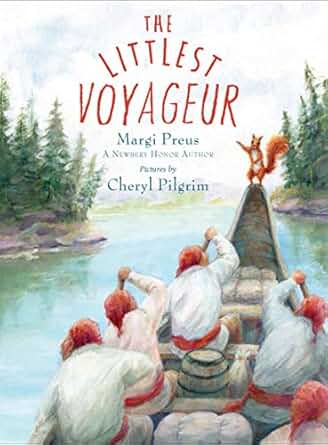
4. The Littlest Voyageur by Margi Pereus
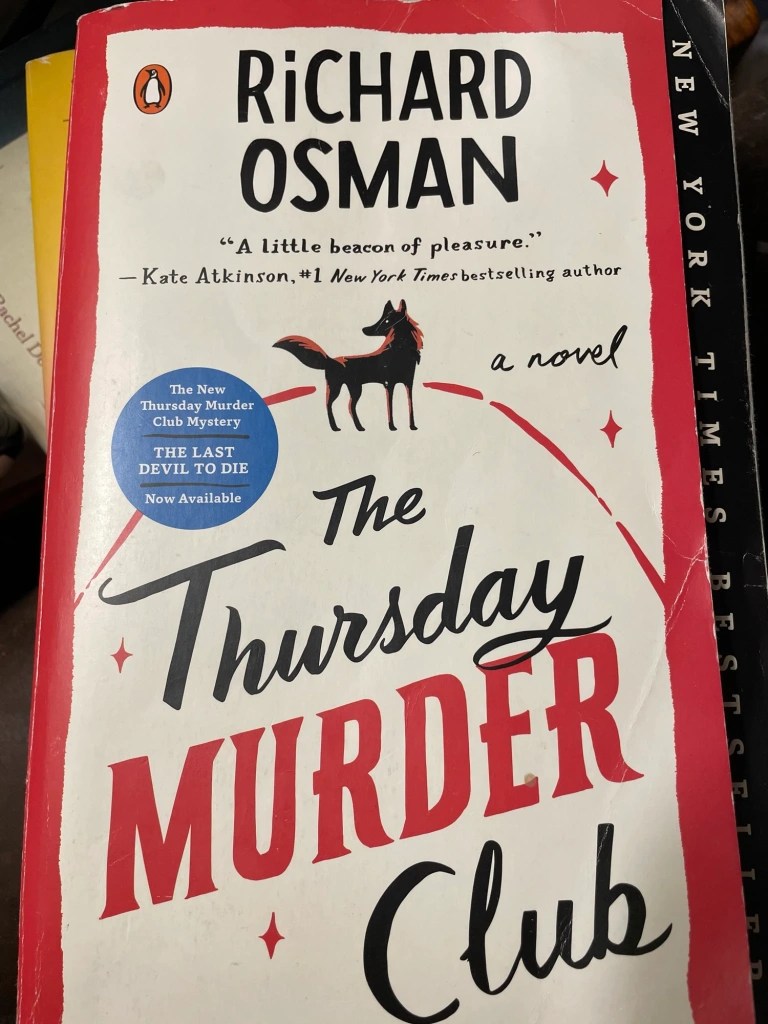
5. The Thursday Murder Club by Richard Osmond
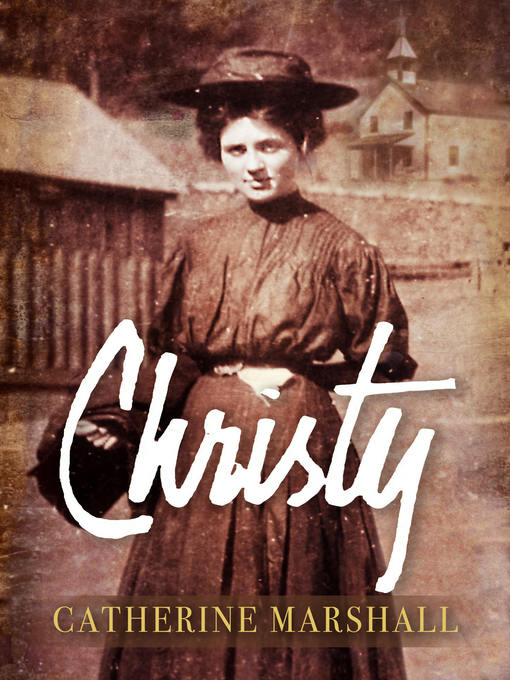
6. Christy by Catherine Marshall
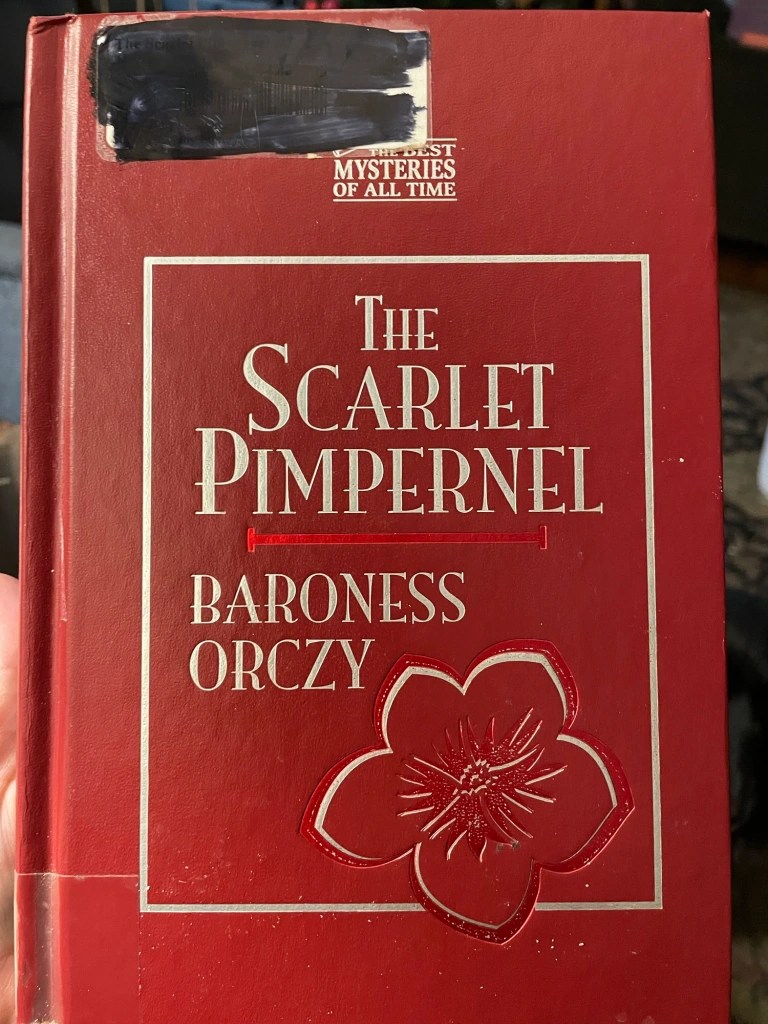
7. The Scarlet Pimpernel by Baroness Orczy
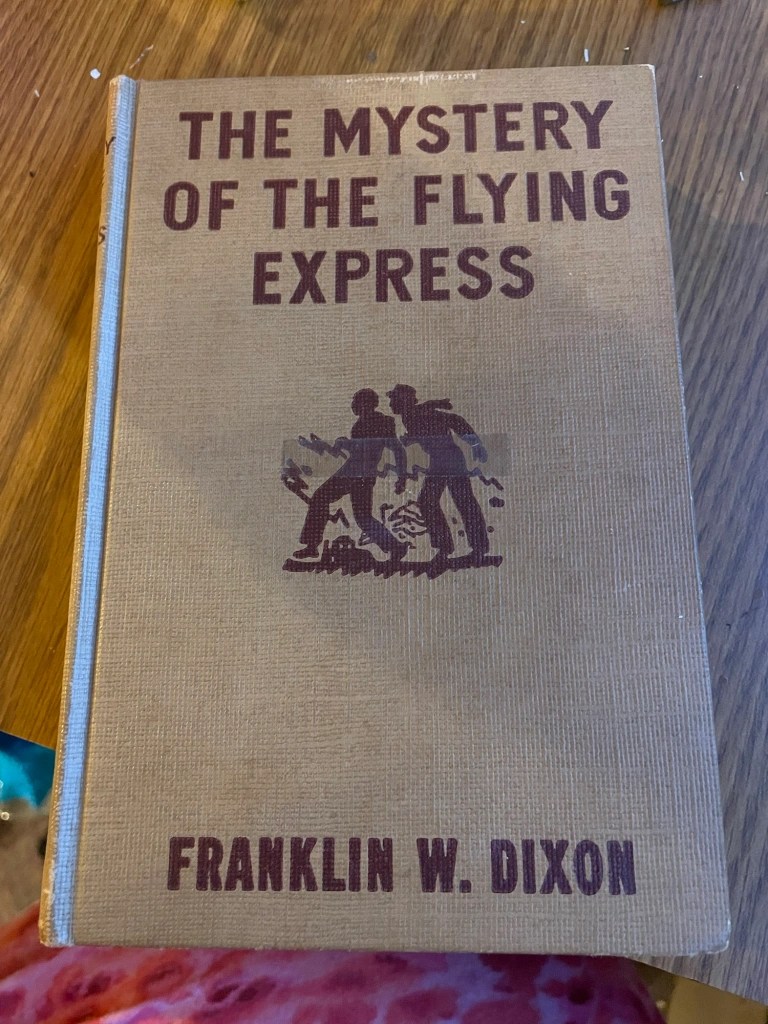
8. The Mystery of The Flying Express by Franklin W. Dixon (this was an original copy by husband picked up for me at a used bookstore)
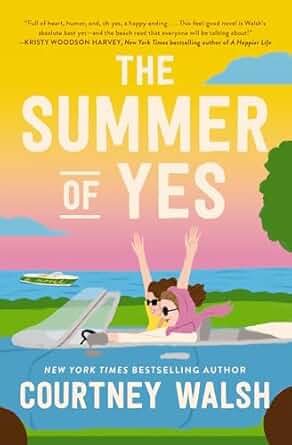
9. Summer of Yes by Courtney Walsh
10. The Lord of the Rings: The Two Towers by JRR Tolkien
Have you read any of these? What are your last ten additions to your TBR?